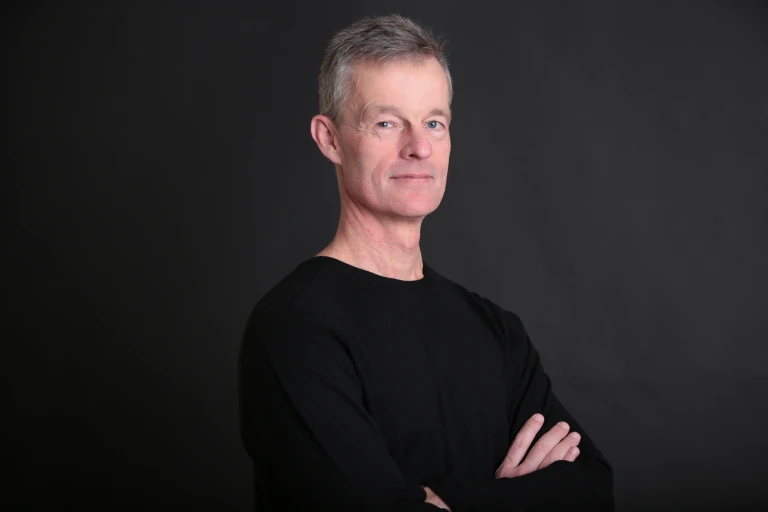
I am Tilo Plöger de Àjàgùnnà, a Bàbálórìṣà and Bàbáláwo, author and the founder of DAILY IFÁ. My work brings the study of Ifá and Òrìṣà into conversation with contemporary life: how we understand ourselves, care for relationships and accept responsibility for the world we share.
My practice is rooted in Afro-Brazilian Candomblé. My professional life has also taken me through chemistry, economics and international business. Living between those settings has given me a continuing question: what changes when knowledge becomes something we practice, rather than something we simply possess?
A path between Brazil and Germany
I was born in São Paulo and now live near Munich, Germany. My Candomblé initiation took place in Rio de Janeiro, at Casa do Caboclo Pena Branca, Ilê Àṣẹ Jagum. The spiritual lineage I follow connects with Casa Branca in Salvador, Bahia.
Today, I lead a spiritual house near Munich. That work places teaching alongside the ordinary responsibilities of community: listening, keeping commitments, making time and learning how to be present for another person.
Distance has shaped the way I study. Living in Europe while maintaining a connection to a spiritual home in Brazil made the need for accessible, carefully organized knowledge especially tangible. Books and digital tools can support that relationship. The experience of a community gives their words another dimension.
I approach African and diasporic traditions with attention to their histories and differences. Yorùbá Ifá, Brazilian Candomblé, Cuban religious traditions, Umbanda and other paths have relationships worth exploring. Each also has its own settings, authorities and forms of practice. Understanding a connection begins with learning to see those distinctions.
Why I created DAILY IFÁ
DAILY IFÁ grew from the wish to make a substantial body of learning easier to enter and return to. A reader may arrive through an Odù received in initiation, a question about an Òrìṣà, a philosophical problem or simple curiosity. The task is to offer an intelligible beginning and enough context for a serious next step.
The website brings together reference articles, specialist essays and pathways into the Academy. The newsletter makes room for a more continuous conversation. My books allow a subject to develop at greater length. These are related ways of studying, with different rhythms and purposes.
The aim is to help a reader engage with a teaching thoughtfully. A myth may open a question that a definition leaves closed. A historical account may challenge an assumption about what a tradition has always been. A familiar idea may become more demanding when we ask how it changes our conduct.
Writing, research and responsibility
My books and essays explore Odù Ifá, Òrìṣà traditions, divination, ritual and the ethical and philosophical questions that connect them to daily life. Much of that work involves bringing material from different languages and settings into a form readers can navigate.
I distinguish my interpretation from the traditions and authors on which I draw. The narratives of Ifá and the Òrìṣà belong to histories of transmission larger than any one writer. Compiling or retelling them carries an obligation to acknowledge that inheritance and to identify a source where it can be established.
On DAILY IFÁ, a source should help a reader understand a particular claim. An account of an object, a scholarly argument, a lineage teaching and a contemporary reflection provide different kinds of knowledge. A reference gains strength when those differences are clear.
The same responsibility applies to revision. Errors in a name, a translation or an attribution deserve correction. Substantial changes should be identifiable. A confident voice is most useful when it remains willing to listen and learn.
Ways to study with DAILY IFÁ
-
Articles and knowledge: Reference pages and specialist essays on philosophy, history, ritual and the diaspora.
-
The 256 Odù: Sixteen families with separate studies for the individual Odù.
-
The Òrìṣà Chronicles: The Academy sequence and its accompanying reading.
-
The newsletter: Ongoing reflections and conversation through DAILY IFÁ on Substack.
-
Books: Longer studies and collections that allow a subject to unfold in greater depth.
Where books, videos, prayers and music extend a subject, they can become further paths from its reference page. Each addition should serve the study and make its context clear.
An invitation
You are welcome to begin with the question you already carry. Read slowly. Notice the part that resists an easy explanation. Return to a story after your circumstances have changed. Bring what you learn into a relationship, a decision or an act of care.
For me, that is where study becomes a practice: when understanding begins to shape the way we live with one another.
Contact: info@daily-ifa.blog
Newsletter: www.daily-ifa.news
Books, teaching and listening
My writing offers different ways into the tradition. The Odù studies organize individual signs; the Òrìṣà myth collections give particular figures more space; The Orisha Chronicles offers a literary path into sacred storytelling. The Orishas and the Human Soul develops an interpretive conversation with spiritual psychology. These are distinct kinds of reading, and their differences matter.
Browse my books by subject. The catalogue links to Amazon, where you can choose the edition and format. Traditional narratives remain part of inherited bodies of knowledge; my role includes compilation, retelling and interpretation rather than authorship of the traditional myths.
For ongoing study, visit DAILY IFÁ ACADEMY. Supporting Subscribers can also explore ASK IFÁ & ÒRÌṢÀ, an AI-assisted companion for questions and further reflection. The newsletter and membership overview explains the different ways to participate.
Follow DAILY IFÁ on Instagram and YouTube. My prayer and music recordings provide another way to spend time with the tradition; the listening links below lead to the Spotify catalogue.