Before the first verse is remembered, before the divining chain reveals its geometry, something quieter happens.
A person sits.
They sit with questions and debts, with grief and ambition, with a message that broke their heart still glowing on a screen, with medical results folded and refolded, with the pressure of tomorrow pressing against the ribs—and still, they sit before the mat. In Hope in Odù Ifá (Themes Across Odù Ifá), that act is named as the first movement of hope: not a mood, but a decision.
In Ifá, two forces live very close to each other, like neighboring fires that can warm the same home—but they do not burn the same way:
Both are essential. Both can be misunderstood. And both, when disciplined by Odù, become less like “beliefs” and more like ways of walking.
This article draws its framing primarily from Babá Tilo de Àjàgùnnà’s books Faith in Odù Ifá and Hope in Odù Ifá—and from the internal logic Ifá itself insists on: Orí, ìwà (character), relationship, consequence, remedy, and the sixteen-gate cycle from Òg̀bè to Òfún.
1) Faith in Ifá (ìgbàgbọ́): not blindness, but participatory trust
In many modern contexts, “faith” can sound like one of two extremes: either naïve certainty, or a demand to stop questioning. Faith in Odù Ifá argues that Ifá rejects both. To consult Ifá is not to leap into a void; it is to enter a conversation of knowings—signs, verses, experience, self-knowledge, and the whisper of Orí all participating together.
That framing matters, because it defines ìgbàgbọ́ as something active:
- Faith is a stance rather than a slogan.
- Faith is trust with responsibility, not trust as passivity.
- Faith honors intelligence, then asks intelligence to accept that life contains more than analysis can hold.
The book uses a phrase worth carrying into any serious conversation about spirituality: faith is trans-rational. It does not insult the intellect. It extends the intellect—into symbol, story, intuition, and ancestral wisdom—without banishing critical thinking.
And then it adds a crucial layer: not-knowing. Odù provides a map, but the map is not the territory; storms arrive, blessings surprise, people change, plans fracture. In those moments, faith is not a set of conclusions. It is relationship—to Orí, to Òrìṣà, to elders, and to life itself.
2) Faith as covenant: Orí, ìwà, and belonging
If modern culture often frames faith as private opinion, Faith in Odù Ifá frames it as covenant. Before birth, Orí makes agreements: gifts, challenges, family, time, place, and a web of relationships. Destiny is not presented as a prison, but as a score of music a life is meant to interpret with freedom and skill.
To have faith, in this sense, is to honor the covenant, and to treat existence as entrusted rather than owned. The result is not vague spirituality; it becomes ethical architecture:
- Odù Ifá speaks constantly about ìwà (character).
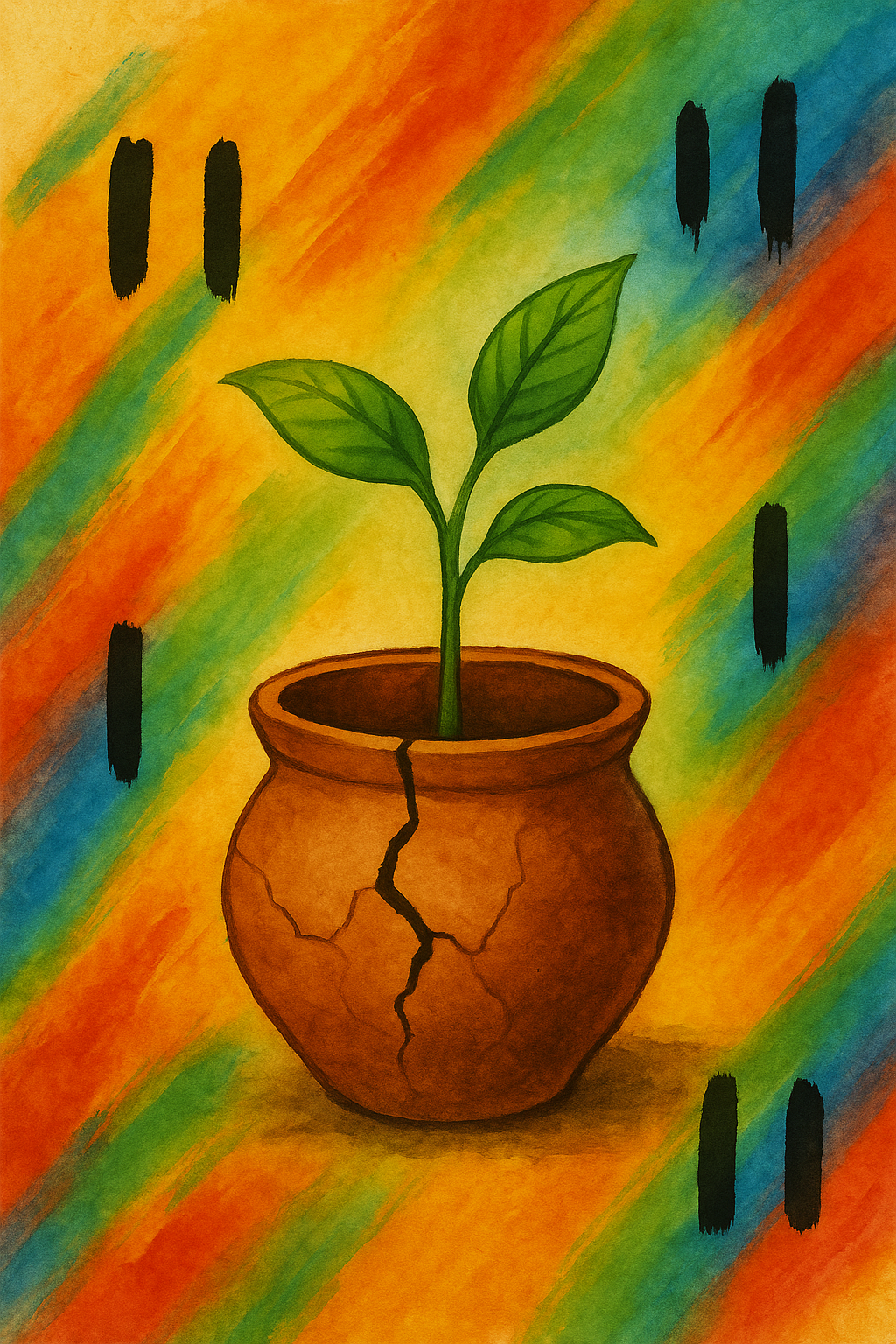
- A brilliant destiny with poor character is like a beautiful pot with a cracked base: whatever is poured in will leak.
- Faith without character becomes sentiment that evaporates when convenient; character without faith becomes dry duty—worthy, but brittle. FAITH
The same covenant is also communal. The divination mat is not merely a private diagnostic tool; it is a shared reality—families consult together, communities seek guidance, initiates carry each other through hard seasons. Faith, then, is not only “I believe.” It is “We belong.”
This is where Ifá becomes very modern in the best way: faith is not escapism. It is relational responsibility—the repair of bonds, the honoring of promises, the willingness to be shaped.
3) Hope in Ifá (ìrètí): not a guarantee, but a disciplined future-facing force
If faith is covenantal trust, hope is covenantal movement.
Hope in Odù Ifá begins with a scene that many readers recognize instantly: someone sits before the mat carrying paperwork, grief, exhaustion, and confusion. Hope begins there—not as a slogan, not as a mood, but as the decision to come and sit.
The book defines hope as more than emotion:
- a way of relating to destiny,
- a refusal to let the last painful event become the final meaning of one’s life,
- the insistence that Òrìṣà have not spoken their final word,
- the sense that Orí is still listening and àṣẹ is still moving beneath the surface of things.
A line from the Introduction sharpens this into an Ifá-shaped definition:
Hope is itself a kind of divination: “Let us ask again. Let us listen again. Let us change something.”
That last clause—change something—is where Ifá separates hope from fantasy.
4) Hope stands between Òrún and Ayé: firm destiny, flexible destiny
Hope in Odù Ifá places hope precisely between Òrún and Ayé—between what was set in motion in the unseen and what is still free to choose on earth. The image is elegant: Orí carries destiny like a sealed letter, but the letter is not read in one sitting. It is opened crisis by crisis, relationship by relationship, blessing by blessing.
That framing prevents a common misunderstanding. Hope is not the denial of consequence. It is the conviction that consequence is not the only force in the universe.
The book then names a hinge-principle that sits at the heart of Ifá counseling:
Ifá teaches that destiny is both firm and flexible.
Odù announces danger, yet offers remedy; reveals blessings, yet demands alignment. Hope lives in that “yet.”
In other words: hope is not passive wishing. It is the courage to cooperate with the remedies.
5) Faith and hope: neighbors, not twins
Here is a clean distinction that works in real life:
- Faith (ìgbàgbọ́) answers: Whom do I trust? What covenant holds my life?
- Hope (ìrètí) answers: Why should I keep going? What is still possible if I do my part?
Both are relational. Both include Orí. They require ìwà. But they aim at different pressures in the human heart.
Faith emphasizes relationship and meaning
Faith is the decision to treat the universe as meaningful: causes and consequences matter, character and destiny intertwine, Orí chose this life for a reason even when the reason is not yet visible, and bonds with Òrìṣà and ancestors are real—not merely metaphor.
So, Faith also survives what many people are too polite to name: disappointment, betrayal, and the “problem of evil” biting hard. One chapter in Faith in Odù Ifá states it with adult clarity:
“Faith is not a contract that guarantees comfort. Faith is a covenant that keeps relationship alive through conflict.”
That single sentence protects faith from becoming spiritual marketing.
Hope emphasizes change, repair, and the “yet”
Hope wants a tomorrow that is not merely a copy of the worst of today. It does not demand that life be easy. It demands that life remain conversational—a living tension between what was set in motion and what can still be negotiated through effort, sacrifice, and realignment.
Their characteristic dangers
Ifá disciplines both:
- Faith can decay into blind loyalty or into self-betrayal. Faith in Odù Ifá argues for “lucid loyalty”—trust that sees clearly, holds boundaries, and refuses manipulation.
- Hope can decay into fantasy or into “shortcut addiction.” Hope in Odù Ifá explicitly says hope must be guided, tested, and sometimes refused—because certain “easy paths” are tricks, and certain forms of despair invite disaster.
6) The sixteen-gate school: how Odù trains faith and hope
Ifá rarely teaches abstractly for long. It teaches by movement—through the sixteen principal Odù as gates of lived experience.
The sixteen gates of hope
Hope in Odù Ifá names the full cycle as gates through which hope enters the world: Òg̀bè, Òyèkú, Ìwòrì, Òdì, Ìròsùn, Òwónrín, Òbàrà, Òkànràn, Ògúndá, Òsá, Ìkà, Òtúrụ́pòn, Òtúrá, Ìrètè, Òṣé, Òfún. HOPE IN ODU IFÁ
The book then offers a powerful condensation: Five Faces of Hope—a set of signposts large enough to remember, broad enough to apply:
- Òg̀bè — hope as light
- Òyèkú — hope as night
- Ìwòrì — hope as question
- Ìrètè — hope as responsibility
- Òfún — hope as completion, the white horizon HOPE IN ODU IFÁ
This is important because it prevents a cheap definition. Hope is not “always bright.” Sometimes it looks like boundaries (Òdì), surgery and difficult decisions (Ògúndá), discernment in the house of secrets (Òsá), or fierce truth and consequences (Ìkà).
And it ends with a concrete image: the city outside is still the same—traffic, rent, inequality, messages on the phone—but something in the person walks differently: not a guarantee, but a path. HOPE IN ODU IFÁ
The sixteen movements of faith
Faith in Odù Ifá frames the same sixteen-house architecture as sixteen ways faith “learns to breathe.”
The emphasis changes:
- In Òg̀bè, faith is the courage to begin—incarnation as a “yes” to existence.
- In Òyèkú, faith learns to sit in darkness among ancestors and endings.
- In Òdì, faith becomes fidelity—boundaries and vows as protection of what is sacred.
- In Ìròsùn–Òsá, faith matures through betrayal and disillusionment into lucid loyalty.
And in Ògúndá, faith becomes one of the most practical things it can become: responsibility with endurance—not optimism, but “the refusal to abandon partnership” between Orí, Òrìṣà, community, and one’s own sweat.
7) A mythic glimpse: hope as action, not argument
One canonical ìtàn in Hope in Odù Ifá portrays Òrúnmìlà under social exile: allies withdraw, invitations vanish, doors close quietly. Òrúnmìlà does not argue for acceptance. He goes to the mat, receives Òg̀bè-Òyèkú, and performs what is prescribed—even burning his hands to inscribe the pattern anew. Gradually, without debate, the people return. HOPE IN ODU IFÁ
The philosophical lesson is sharp: Ifá does not always say “convince them.” Sometimes it says: realign what is unseen—character, covenant, remedy, the hidden structures of relationship—and let the visible follow. HOPE IN ODU IFÁ
That is hope as method.
8) A simple practical diagnostic (Ifá-aligned, non-secret)
In everyday life, the difference between faith and hope can be felt in the kind of sentence the heart is able—or unable—to speak.
- When the inner sentence is “I cannot trust”, the wound is primarily in faith: covenant, relationship, belonging, Orí.
- When the inner sentence is “I cannot see tomorrow”, the wound is primarily in hope: movement, remedy, the “yet,” the willingness to ask again.
Ifá does not reduce either wound to mere psychology. It treats them as lived spiritual realities with ethical consequences—and with remedies that begin, often, in the smallest possible step: returning to the mat, returning to responsible action, returning to Orí.
Closing: faith as covenant, hope as a way of walking
Faith (ìgbàgbọ́) is the covenantal “yes” that keeps relationship alive—even when the road is veiled, even when language fails, even when betrayal has bruised devotion.
Hope (ìrètí) is the covenantal “yet” that refuses to let the last painful event become the final meaning of a life—and cooperates with remedy rather than waiting for rescue.
Held together, they produce a particular kind of strength: not certainty, but direction.
And direction—more than comfort—is what Odù offers to those who are brave enough to sit.