
Bori gives ritual attention to Orí, the head understood as more than the visible part of the body. In Candomblé discussions, it is commonly described as feeding or nourishing the head. The expression joins a concrete language of food and care to a religious understanding of the person's particular life. It asks how someone can be sustained in their own direction, among the relationships and obligations through which that life unfolds.
This study follows the principally Ketu account in Bàbálórìṣà and Bàbáláwo Tilo Plöger de Àjàgùnnà's The Sacred Candomblé, read alongside Where the Sacred Takes Hold and a situated account from Casa de Oya in Goiânia. Houses differ in their liturgies and in the place of bori within initiation. The subject here is the meaning of that care, the people and materials through which it becomes tangible, and the distinctions a reader needs before discussing a particular rite with a house.
Whose head is being addressed?
Orí names the head, but its religious significance reaches into questions of individuality, destiny and orientation. A person has a life that cannot be transferred wholesale to another person. Others may teach, advise or assist, yet they cannot simply take over the living of that life. Attention to Orí places that particular person at the center of a religious relationship without imagining them as isolated from everyone else.
This is why Orí and orixá de cabeça need to be distinguished. The latter concerns a person's relationship with a particular Òrìṣà. The two questions are closely connected in Candomblé, but replacing one term with the other loses an important distinction. Nourishing Orí is not merely another way to say that an offering has been made to the person's principal Òrìṣà.
Emília Guimarães Mota makes this distinction explicitly while writing as researcher and ekedi of Casa de Oya. Her account places bori among the early activities of feitura in her Ketu house, while acknowledging other settings in which it occurs outside that process. The statement is valuable because its religious location remains visible. Mota, 2022.
Nourishment means a relationship of care
Feeding is an unusually concrete way to think about spiritual attention. It concerns what is received, the conditions of receiving it, and the person who makes the care available. In bori, food is not simply a picturesque metaphor added to an inward exercise. Material preparation and religious address belong to the act itself.
Babá Tilo's account places calm, steadiness and the strengthening of the head at the center of the rite's purpose. These are religious aims in his exposition, rather than measured clinical outcomes. They help explain why the event is arranged around attention to a person instead of around the display of a spectacular experience. What matters is the relation being tended.
A human interpretation follows from that emphasis. Someone who is accustomed to being useful to everyone else may find receiving care difficult. Their usual competence does not eliminate their need for support. Bori gives that receiving a religious form: other people prepare, accompany and attend. This reflection does not translate Orí into a psychological mechanism. It makes intelligible why being cared for can itself carry spiritual seriousness.
Bori and feitura are related but distinct
The distinction between bori and initiation deserves particular attention because the rites may occur close together. In the book's account, care for Orí precedes other major initiatory work. Yet the author also insists that bori does not by itself constitute the complete path of initiation into the Òrìṣà. Sequence and identity are different questions.
A useful comparison is between preparing someone to carry a relationship and establishing every obligation within that relationship. Preparation may be indispensable in a given house without becoming identical with everything that follows. The same person participates in both, and the acts can support one another, while their purposes remain distinguishable.
The practical consequence concerns explanation before commitment. If a house proposes bori, the person should understand what that particular rite means there, what status it does or does not establish, and what continuing responsibilities are expected. The answer must come from the house concerned. The initiation study offers broader context, while bori requires its own conversation rather than being treated as an undefined first payment toward a predetermined future.
A person can seek care without following one inevitable trajectory
Babá Tilo describes bori as available beyond people already initiated or preparing for feitura. That account opens an important distinction: religious care and initiatory vocation are connected subjects, but one does not automatically settle the other. A person's relationship with a house may be meaningful without every act becoming a stage in an unavoidable progression toward office.
At the same time, a reader should not take that general possibility as permission to assume every house offers bori in the same way. A house has its own inherited liturgy and understanding of whom it can receive. The appropriate inquiry is specific: what is being proposed for this person, in this community, and why?
This specificity respects both parties. The person receiving care can understand their circumstances without exaggerating the rite's implications. The house can explain its responsibilities without being reduced to a service selected from an online menu. A serious relationship has more substance than either a promise that nothing matters afterward or a frightening claim that one act automatically determines the rest of someone's life.
The mesa de bori makes care visible
The expression mesa de bori directs attention to an arrangement made for the rite. In Babá Tilo's description, prepared foods, water, flowers and cloth contribute to a setting of nourishment and calm. Their presence cannot be understood fully by counting ingredients. Each belongs within a liturgy that also involves address, permission, teaching and the care of the person.
The arrangement makes an otherwise abstract claim tangible. Someone has taken time to gather what is needed, prepare it properly and establish a place where another person will receive attention. Material abundance can therefore express a relationship rather than luxury. Its meaning depends on how it is offered and received, not on how impressive a photograph appears.
For the reader, the useful question is what the arrangement does within the house's understanding of care. A public description can identify categories of materials without supplying a procedure. Reconstructing a ceremony from a shopping list would omit the very relationships that give the materials religious direction. Knowledge of what something is does not automatically include knowledge of who may use it or how it should be addressed.
The white cloth is more than a background
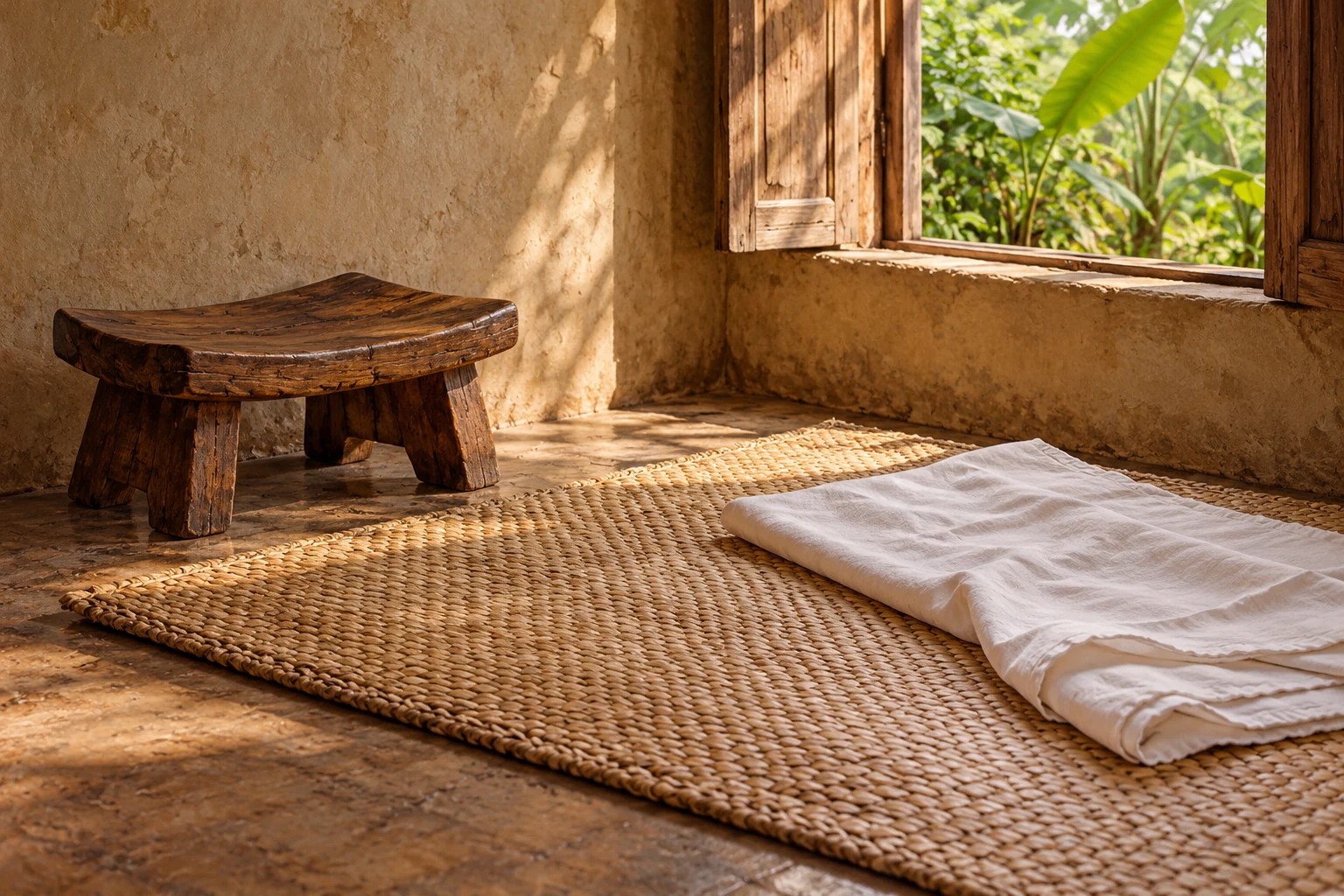
Babá Tilo gives particular attention to the toalha de bori, the cloth used in the rite. He links its whiteness and protective use to peace and to the religious world of Obàtálá. Its significance is enacted through care for the person, including covering and warming in his description. It is a material through which attention becomes bodily perceptible.
This is a good example of why symbolism needs a verb. Saying “white means peace” is less informative than noticing how a cloth is prepared, placed, kept or used to cover someone. The meaning does not reside only in an abstract color association. It becomes intelligible through an action and a relationship.
The human interpretation is equally concrete. A cloth can mark the difference between being exposed to an audience and being attended to by people entrusted with one's wellbeing. It can help make an occasion recognizable as care. That does not mean every white textile has the same sacred status or that copying its appearance reproduces bori. The material belongs to the rite through its place in the house's religious work.
The whole person remains present
Although the head receives central attention, Babá Tilo's account also recognizes feet, heart and other dimensions of embodied life. The head is not treated as an isolated intellectual organ floating above a body. Direction, movement, generation and life are related within the religious account, even where Orí has particular importance.
That emphasis helps avoid translating bori into a generic exercise in positive thinking. A person eats, rests, moves and depends on others. Their spiritual concerns occur within that embodied existence. The ritual's seriousness does not require the body to disappear behind an abstract idea of consciousness.
It also gives a productive question for reflection: what would it mean to care for the person who must actually carry a decision? Someone can sincerely desire a new responsibility while lacking time to rest or support at home. Naming those circumstances does not refute religious purpose. It allows the purpose to be discussed in relation to a whole life. This is a human interpretation of care, not an alternative ritual or a diagnosis of what someone's Orí requires.
Rest has a social foundation
The book describes forms of withdrawal and rest around bori. Duration and organization are particular to the rite being discussed; they should not be lifted into one universal timetable. What the description makes especially clear is that rest is supported. A person can step back because others remain attentive to the setting and its needs.
This changes the familiar image of retreat as solitary self-improvement. There may be a quiet person at the center, but there are also people preparing food, maintaining order, answering practical questions and carrying responsibilities outside the focal moment. Their work makes the quiet possible. The religious act includes that surrounding field of care.
The practical arrangements deserve early discussion. Someone may need to organize work leave, transport, childcare, accessibility or ongoing healthcare. These are ordinary facts about the person who will participate, not distractions from the sacred subject. A house's ability to receive someone responsibly includes understanding what support is needed before, during and after the period of attention.
People carry the liturgy
Bori takes place through people with recognized responsibilities. The Iyalorixá or Babalorixá has a role in discerning and conducting the work, while others may prepare, assist and accompany according to the house's organization. The event depends on learned competence as well as goodwill. Knowing how to care includes knowing when to consult someone else.
The presence of several roles also makes the person's relationship with the community visible. Receiving food from a house is different from arranging similar materials alone. The people involved have undertaken responsibilities toward the person and toward the religious life they maintain. Their authority has a setting and an inheritance.
A beginner can therefore ask whom to approach with practical concerns and who will explain the period afterward. That is more useful than trying to judge the entire liturgy from a photograph. A well-framed question seeks understanding appropriate to the relationship: what do I need to know in order to participate responsibly, and who can help me understand it? Respect for specialized knowledge and clear communication can support each other.
Permission is part of the meaning
In Babá Tilo's treatment, attention to the head involves asking and listening rather than merely imposing an act on a passive recipient. Divinatory consultation and the house's recognized religious judgment help determine what is appropriate. This makes discernment part of the rite's meaning, instead of something replaced by a standard arrangement chosen in advance.
The language of permission also has a human dimension. A person should be able to understand what has been proposed, state relevant circumstances and distinguish agreement from fear. Religious authority can explain a recommendation without turning uncertainty into humiliation. Questions asked in good faith help people carry a commitment more consciously.
These two dimensions should remain connected without being confused. A person's informed agreement is not a substitute for the religious permissions recognized by the house; religious permission is not a reason to disregard the person's understanding. The care concerns this particular person. Treating them as interchangeable with an idealized ritual subject would weaken the very attention to individuality that makes Orí central.
Related rites do not collapse into one name
The appendix of The Sacred Candomblé distinguishes bori from other forms of attention to Orí, including obì d'água and reforço de Orí. The public value of noting those names is conceptual: care for the head is not described as one undifferentiated act. Different forms can have distinct scope, preparation and religious purposes.
Those descriptions should not become a menu from which a reader chooses the strongest or cheapest option. A shorter rite is not necessarily a lesser expression of care, and a more elaborate rite is not automatically more suitable. Appropriateness concerns the person, the house and the judgment through which the recommendation is made.
It is equally unhelpful to assume that similarly named rites in different communities are identical. Ask which source describes the practice and what distinction it is making. A term can be an entrance to conversation while remaining insufficient to determine the content of the rite. The study of obì offers further context for a sacred material whose presence in different settings does not erase differences of use and authority.
Spiritual strengthening is not a medical claim
The book uses a developed spiritual vocabulary of strength, balance and the condition of Orí. That language belongs to its religious interpretation. It should not be converted into a claim that bori diagnoses neurological conditions, treats psychiatric disorders or replaces medical care. A website cannot determine a person's condition through a description of how their head feels.
The distinction allows religious experience to be taken seriously without making it answer a question for which it supplies no clinical evidence. Someone may understand a rite as profoundly sustaining and still need treatment, medication, rest or practical support. These forms of attention can be discussed together without requiring one to invalidate the other.
The human issue is whether the person is being heard in their actual circumstances. If someone describes distress, a thoughtful response makes room for their spiritual interpretation while attending to the immediate problem. A religious explanation should not make them less able to describe pain, ask for help or continue necessary care. The responsibility to the person remains larger than the wish for a single satisfying explanation.
Caring continues beyond the focal ceremony
A rite has an occasion, but its meaning can reach into the person's subsequent conduct. Babá Tilo connects care for Orí with daily attention and with the broader task of living one's direction. This does not mean that every private gesture is bori. It means the ceremonial act belongs within an understanding of life that continues after the special setting ends.
A useful reflection concerns what someone has learned about receiving and sustaining support. Can they recognize limits before exhaustion becomes their normal condition? Can they distinguish an obligation they have accepted from one they imagine they must carry alone? Can they remain answerable to others without abandoning their own understanding? These questions do not prescribe a religious conclusion; they give the theme of care a human duration.
The house's actual follow-up remains specific. Any instructions, resguardo or continuing responsibilities should be explained by the people who undertook the rite. An educational article can help someone remember which questions need asking. It cannot replace that relationship with a list assumed to apply everywhere.
Hospitality also appears in the care of Orí
The book places Sará beside its discussion of care for the head. In that account, someone offers food and drink to other people with an intention of blessing. The outward movement of hospitality belongs near the inward attention to an individual. Care can involve what a person gives through a shared occasion as well as what they receive during focused ritual attention.
This does not make Sará and bori identical. It shows how the wider religious discussion joins nourishment, exchange and relationship. The person is not understood only as the recipient of a private spiritual improvement. Other people remain present as participants in the conditions through which a life is sustained.
For reflection, the connection asks how giving and receiving are balanced. Someone may be comfortable offering hospitality while finding dependence difficult; someone else may receive help without noticing its labor. Neither observation diagnoses a spiritual condition. It opens a practical question about reciprocity: how can a person acknowledge the care that has made their own capacity possible, and contribute in ways they can actually sustain?
Repetition requires a reason
Babá Tilo notes that some houses recommend recurring bori. The qualification matters: a described custom is not a universal schedule for every reader. Frequency concerns a person's circumstances and the religious judgment of the community. An article cannot determine that a missed anniversary has caused misfortune or that repeating a rite will resolve a particular problem.
The helpful conversation concerns the purpose of a proposed repetition and the responsibilities it involves. Understanding why a house recommends an occasion supports more conscious participation. A recurring practice can become an enduring form of attention, but it still addresses a person whose circumstances may change. Continuity has substance when the relation is renewed thoughtfully, rather than when the calendar is used to generate fear.
The head that receives must also live
Orí keeps the individual visible within a dense network of sacred and human relations. Another person can advise, prepare or accompany, but the recipient still returns to their own life. This is why nourishment should not be imagined as a transfer of all responsibility to a priest, an object or a ceremony. Care can support the person without taking their place.
Read The Sacred Candomblé for the author's developed account of Orí and ritual organization, and Where the Sacred Takes Hold for the connection between material presence and situated responsibility. The dedicated Orí study develops destiny and personhood, while the study of orixás and trance keeps related concepts distinct.
For personal notes, Personal Exploration can help organize reflections and questions; it does not conduct bori or identify a required rite. Further study is available through the Academy collection. The aim of learning is a clearer conversation about this person's care, with the community that can actually undertake it.
Sources and further reading
- Tilo Plöger de Àjàgùnnà, The Sacred Candomblé. Supplied substantive sections on Orí, daily care, bori, the distinction from initiation, and the appendix's related rites consulted. Principally Ketu interpretive foundation; no liturgical recipe or clinical claim is reproduced.
- Tilo Plöger de Àjàgùnnà, Where the Sacred Takes Hold. Supplied chapters on the inward head, material presence and Casa de Oya consulted for personhood, relationships and care.
- Emília Guimarães Mota, “‘Omolu quer todo mundo no Olubaje’: o cotidiano de um terreiro goiano durante a pandemia”, Equatorial 9(16), 2022, pp. 1–25. Full article consulted, particularly its explicitly situated distinction between Orí and orixá de cabeça and its account of bori within Casa de Oya's feitura.