
Òfún Ọ̀ṣẹ́ is a mixed Odù in Ifá’s 256-part corpus. Òfún Ose’s selected material links a traveling messenger’s forgotten words with a young person’s search for a father who once concealed his status. In the first, a parrot’s timely intervention preserves a message and gains enduring recognition; in the second, a ring becomes evidence of a connection neglected by a ruler. Both ask how identities and obligations are carried across distance, and what acknowledgment requires after another person has sustained the relationship’s missing work.
A question to carry through the study: What sign or reminder carries an obligation that someone has allowed themselves to forget?
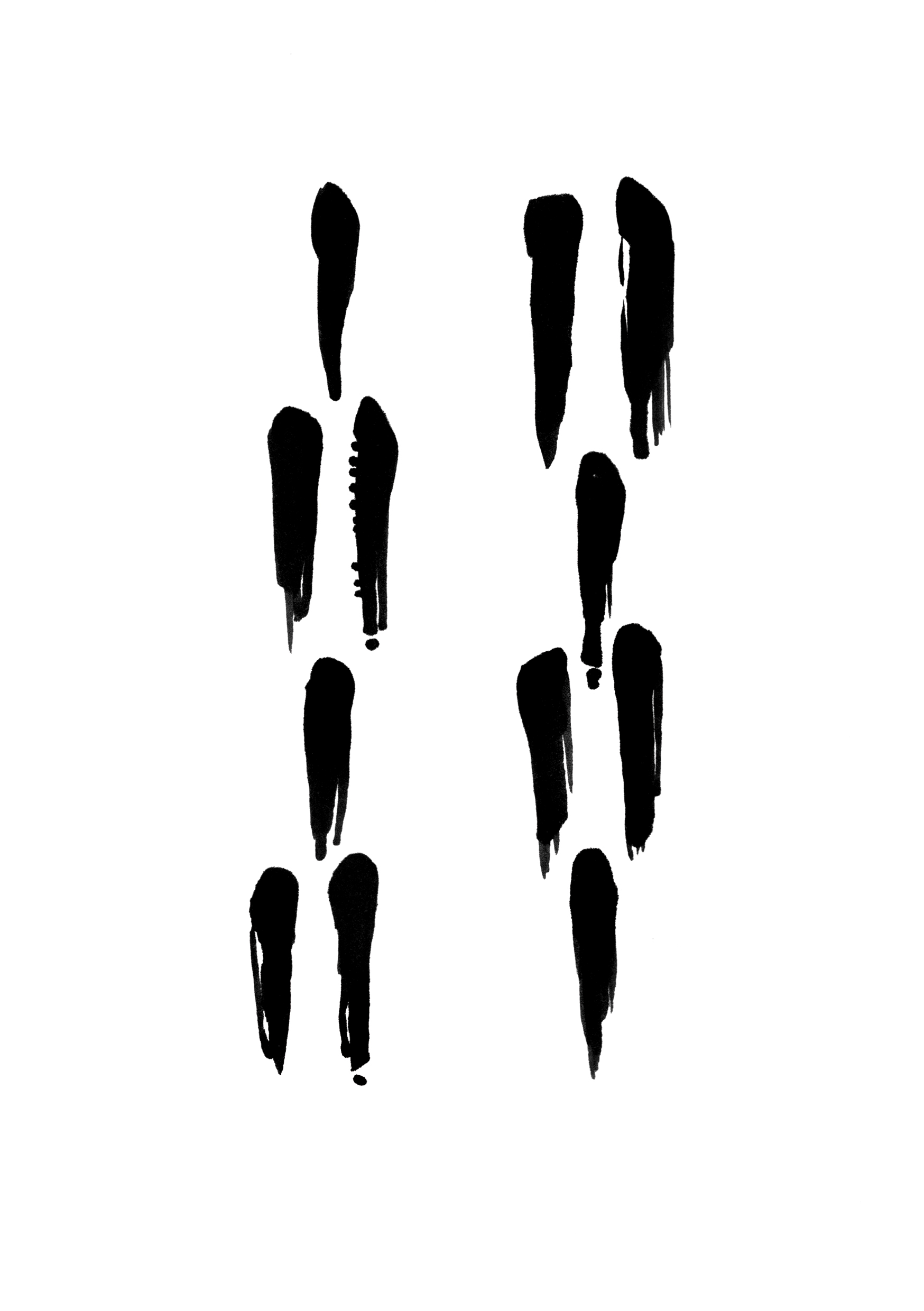
This Academy reads the right column first, then the left. Each row carries a single or double mark.
Where this Odù belongs
Òfún Ọ̀ṣẹ́ belongs to the Òfún family in this Academy’s study sequence. It is a mixed Odù, distinct from Ọ̀ṣẹ́ Òfún. The order matters. Its teaching is approached through its own narratives, rather than by adding two general descriptions of the principal signs together.
Key Òrìṣà and sacred relationships
The figures below are selected for their roles in the accounts discussed here. They offer connected reading paths through the tradition.
-
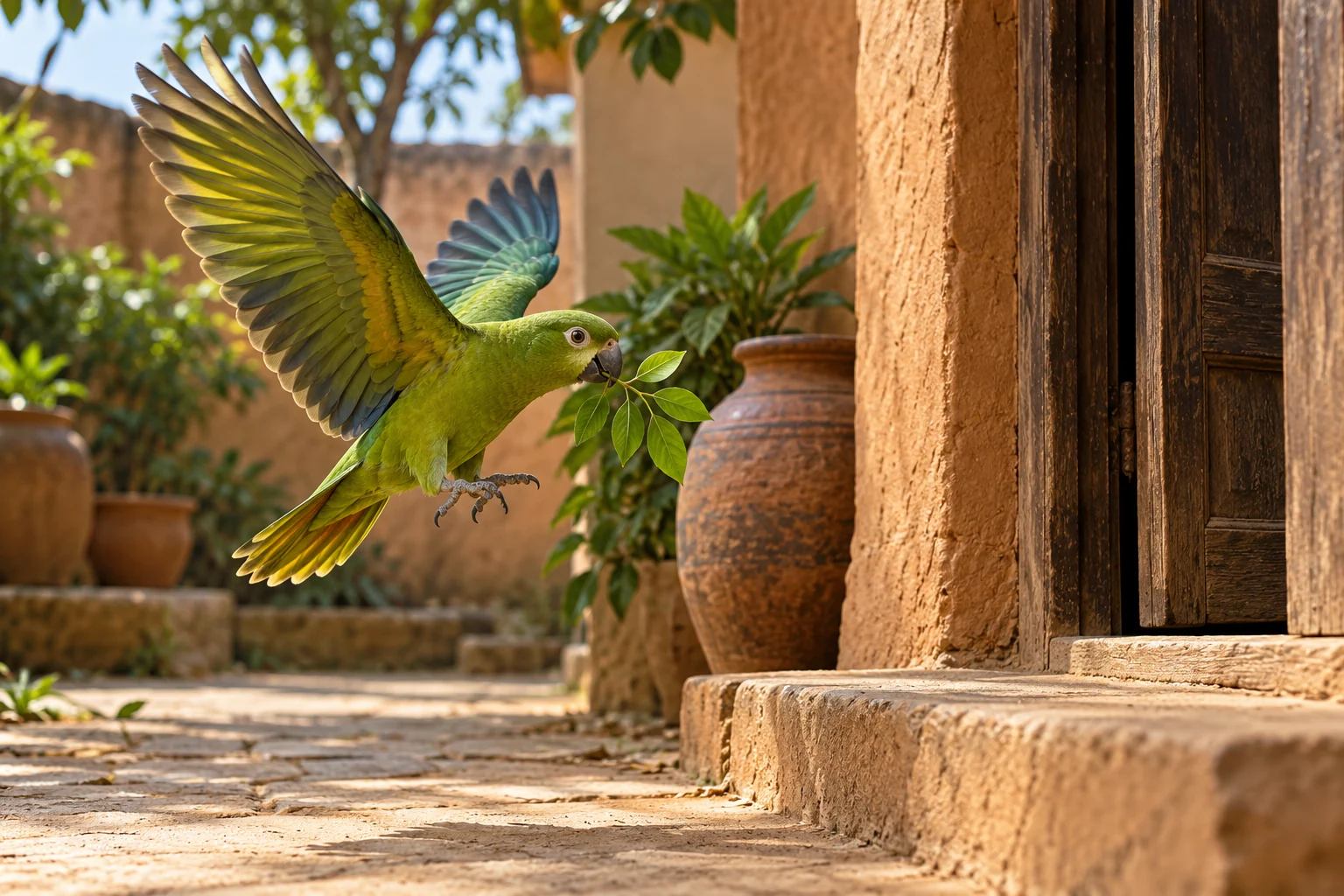
Obàtálá. Obàtálá travels carrying messages but begins to forget; his parrot helper notices the missing support and brings it in time, later receiving acknowledgment in the crown’s feathers.
-
Ọ̀rúnmìlà. Òrúnmìlà counsels the messenger about failing memory and later advises the young person seeking the identity of his father, preceding an encounter in which a ring supplies recognition.
Key myths and their meanings
The helper brings what the messenger forgot
Obàtálá carries messages of wisdom from place to place but struggles to remember them. He consults Òrúnmìlà with Agonren, his parrot assistant, and receives a form of support. Before an important visit he leaves it behind. Opponents gather expecting a failure that will cost him his office, but Agonren notices the omission and arrives in time. Obàtálá establishes the bird’s feathers in his crown as a lasting acknowledgment.
The narrative joins memory to a network of assistance rather than treating it as a wholly solitary faculty. The helper remembers the conditions that let the official speaker perform, while rivals treat a lapse as an opportunity to seize his role. Its useful questions concern support, accessibility, and credit. The source’s particular plant-related aid stays within religious narrative and should not be presented as a treatment for memory loss or a recommendation to use a substance.
Narrative setting: Cuban/Lukumí patakín identified in the selected account; no individual narrator is named.
A ring identifies an unfulfilled promise
A ruler traveling with companions hides his rank while sheltering from a storm. He forms a relationship with a dancer, gives her a ring, and promises to return. He leaves and forgets, while she raises their child with a story that the father was a trader who died. As the boy grows, he seeks his identity through Òrúnmìlà. A later encounter during the ruler’s hunting journey exposes the ring, enabling recognition and assistance.
The physical token outlasts an obligation the powerful adult has neglected. The child’s search reveals the unequal burden: the mother and child live with the consequences while the ruler resumes his ordinary freedom. Recognition changes the ending but does not erase those years or prove that every abandoned child will find a parent. Later writing can ask what repair requires beyond acknowledgment and avoid adopting the source’s stigmatizing label for birth outside marriage.
Narrative setting: Cuban/Lukumí patakín identified in the selected account; no individual narrator is named.
Olobutu loses the birds’ kingship and Okin succeeds
Olobutu, identified as king of the birds on the farm, receives divination that his head will carry him toward a position of destiny, but that a religious response is needed against displacement. He does not perform the response. Once made king, he does not do well, and the birds remove his title and install Okin. The red garment associated with the declined response remains visible as a mark on Olobutu’s neck. Commentary leaves Olobutu’s species unidentified, describes Okin as a white bird, and relates its valued feathers to royal crowns. The unit joins a succession account with explanations of visible bird markings.
The head’s favorable movement toward destiny does not guarantee the permanent possession of an office. The account places the possibility of displacement beside initial elevation, making religious response and the actual exercise of kingship consequential after a favorable opening. Its short statement that Olobutu does not do well should not be expanded into an invented catalogue of crimes. Nor does the surviving red mark prove that beauty or red clothing is inherently disqualifying. The verse connects that particular garment with the response he declined and Okin with the new kingship.
A contemporary interpretation can ask how a person sustains responsibility after attaining status, but the sacred logic is more specific than a performance review: divination, the head’s path, and a neglected response organize the succession. The accompanying bird and crown commentary enriches the account without establishing a dated political event, a precise identification of Olobutu, or an independently verified origin of every royal feather practice.
Narrative witness and setting: Passage explicitly labeled William Bascom, presenting Yoruba material in a Portuguese rendering; its language does not make it a Brazilian witness.
Abonun repays the waiting seller and feeds those who dismissed him
Abonun is poor and old, mocked by relatives as someone whose possibilities are finished. After consultation, he acquires the animal for his religious response on credit and shares food with his household. Unable to pay when the debt comes due, he goes into the forest to hide. There he breaks through the ground into a place of beads. Returning home, he finds the seller waiting and pays with beads, which the seller accepts fearfully. A later scene shows him wealthy and hosting a feast whose song invites those who thought him finished. Commentary explains the seller’s fear of suspected stolen property.
The favorable discovery does not erase the existence of a creditor or the distress created by an unpaid obligation. Abonun first hides because he cannot pay; the seller waits and initially fears the unexpected form of payment. Keeping that perspective visible prevents the story from becoming a simple celebration of taking risks with another person’s goods. Within the religious narrative, consultation and response precede the changed fortune, while the discovered beads supply its concrete means. The final feast transforms the earlier judgment that an old poor person has no remaining future into a public invitation to eat.
A contemporary interpretation can examine social dismissal and the responsibilities of restored prosperity without recommending debt as a spiritual investment. The source does not prove that every late-life hardship ends in riches, that hidden valuables may lawfully be taken, or that the beads’ archaeological origin is known. Its particular reversal remains a narrated event, not a financial method or a verified excavation report.
Narrative witness and setting: Passage explicitly labeled William Bascom, presenting Yoruba material in a Portuguese rendering rather than a separately identified Brazilian tradition.
What was born in this Odù
“Born” can name an explicit traditional origin association or what emerges through a story: a capacity, relationship, practice or order of life. Interpretations drawn from a narrative are labelled below, so their basis remains clear.
Clothing
Selected traditional source association.
The explicit origin list places dresses or clothing in this sign. That supports a local association with visible presentation and social recognition, without inventing a particular garment, gender rule, or historical origin of dress from the selected narratives.
Oratory
Selected traditional source association.
The source names oratory as a beginning and supplies a separate narrative about teaching and public speech. Here it can connect entrusted messages with listening and acknowledgment, while remaining a symbolic origin claim rather than a universal history of rhetoric.
Correlations to life dimensions
These questions bring the selected stories into contemporary life. They are interpretive invitations for study.
Work and resources
The parrot’s intervention makes a public performance possible but occurs largely outside the audience’s view. Work systems can support memory and reliability through shared preparation, then acknowledge those who maintain the conditions under which a recognized speaker succeeds.
Reflect: Whose preparation is hidden behind your visible performance?
Relationships and family
The ring becomes meaningful because it connects a public ruler with a private promise. Family responsibility should not depend solely on whether a child can produce a surviving object or an accidental encounter that forces recognition.
Reflect: What responsibility should be honored before someone has to prove the relationship?
Character and inner life
Forgetting appears in two different forms: the messenger’s lapse and the ruler’s abandonment of a promise. Keeping them distinct prevents all failures of memory from being treated as moral negligence, while still asking what deliberate follow-through requires.
Reflect: Is this a need for better support, or an obligation you have avoided maintaining?
Community and responsibility
The crown preserves a helper’s contribution, and the ring discloses an overlooked connection. Communities can use public acknowledgment to repair invisibility, while also asking what practical support must accompany symbolic recognition after harm or exclusion.
Reflect: What should follow a public acknowledgment so that it changes someone’s circumstances?
A deeper reading of the sacred relationships
A favorable head does not abolish religious responsibility
Olobutu’s head is said to carry him toward destiny, yet the same counsel warns of displacement. Initial elevation and continuing possession of office are therefore different matters in the selected witness. Abonun’s reversed fortune also follows consultation and response rather than arising from social confidence alone. These accounts preserve religious action as a consequential relation without describing it as unlimited control over every later event. A contemporary discussion can ask how hope and responsibility coexist, while avoiding a promise that religious affiliation guarantees status or wealth. The particular causal relations belong to these narratives; they do not supply a way to diagnose a reader’s financial position or explain another person’s removal from office.
The people around a reversal remain participants
The birds collectively remove Olobutu and install Okin, while Abonun’s seller waits for payment and his relatives later receive a public invitation. These participants prevent either account from being only an inward story about one person’s mindset. Status is held among others, debt involves another person’s goods, and hospitality addresses an earlier social judgment. A contemporary comparison can ask whose perspective a triumphant summary has omitted. It should not invent motives for every bird or claim that all relatives immediately repent. The witness reports removal, payment with fear, and an invitation to eat; those concrete acts carry more evidence than a generalized declaration that a whole community finally understands the protagonist.
Visible traces preserve different kinds of memory
Olobutu’s neck mark preserves the declined garment within a succession narrative, while Abonun’s public feast remembers the judgment that his life’s possibilities were over. One memory is located in a bird’s appearance and interpreted through commentary; the other is voiced through an invitation addressed to living critics. Their comparison can support a contemporary question about how a reversal is remembered without treating every visible feature as a moral diagnosis. The source leaves Olobutu’s species unresolved and explains the creditor’s fear rather than demonstrating the beads’ legal or historical origin. A reference should keep those uncertainties alongside the memorable images instead of allowing vivid detail to masquerade as independent factual verification.
Questions that deepen the study
Does destiny guarantee that Olobutu keeps the kingship?
The selected unit explicitly places the head’s favorable movement beside a warning about displacement. Olobutu does not perform the advised response, does not do well after elevation, and loses the title when the birds choose Okin. A careful account should retain those steps without inventing particular offenses or turning the story into a universal explanation of political defeat. The religious logic concerns a favorable opening that still carries responsibility. A contemporary interpretation may compare gaining a role with sustaining it, while remembering that the witness is a bird succession account shaped by divination and commentary, not a documented chronology of a human kingdom.
Does Abonun’s discovery make borrowing a route to spiritual wealth?
The account depicts borrowing within one particular religious narrative, including inability to pay, flight, a waiting seller, and fear surrounding the eventual payment. Those details do not establish a recommended financial strategy. The seller’s perspective is especially important because the unexpected beads initially raise concern about stolen goods, as the commentary explains. Abonun does repay in the story, and later hosts others after his fortune changes. A contemporary reading can value renewed possibility and responsibility without promising that debt will bring supernatural returns or advising readers to acquire ritual materials on credit. The witness offers neither a lending model nor evidence about anyone’s future finances.
Why does the feast invite the people who thought Abonun was finished?
The repeated invitation answers an earlier social judgment about an old poor person’s remaining possibilities. Instead of ending with private possession of beads, the narrative returns prosperity to a scene of eating together. That can support a contemporary interpretation about generosity after humiliation, but the text does not explicitly say that Abonun forgives every relative or that all relationships are repaired. His song keeps the earlier dismissal audible within the invitation. The religious sequence and the creditor’s repayment also remain part of the account. A responsible synthesis should preserve both the welcome and its pointed remembrance rather than flatten the ending into either pure revenge or uncomplicated reconciliation.
What the four narratives reveal together
The added Bascom witnesses deepen Òfún Òṣé through unstable office and renewed possibility late in life. Olobutu receives a favorable prospect but loses kingship after declining counsel and failing in the role; Abonun moves from social dismissal and unpaid debt toward repayment and public hospitality. Their reversals occur among other active participants, including the birds, a waiting seller, household members, and former critics. The accounts preserve divination, the head’s path, and religious response as consequential realities while refusing a simple equation between initial favor and permanent security.
Beside the earlier parrot-assisted acknowledgment and the king’s concealed family history, these units ask how recognition is granted, sustained, lost, and publicly remembered. Contemporary questions about responsibility, aging, debt, and generosity can follow, provided the unverified bird identity, the seller’s fear, and the absence of any financial guarantee remain clear.
Living with this Odù
A continuing life or initiatory relationship
For a person whose received life or initiatory Odù is Òfún Ọ̀ṣẹ́, these witnesses distinguish a visible achievement from the support and unfulfilled obligations around it. Agonren remembers what enables Obàtálá’s public task, while the ring preserves a promise its powerful giver has forgotten. Long-term development can include making acknowledgment durable and asking whose life continues to bear consequences after the official speaker or traveler moves on.
Olobutu’s elevation does not guarantee permanent office, and Abonun’s reversal does not erase the waiting seller’s legitimate concern. A favorable head, religious response and material gain remain situated among other participants. Across changing circumstances, a person may need accessible support, accountability for an old promise or a different relation to people dismissed because of age and poverty. Bascom’s Portuguese rendering remains Yoruba material, not automatically a Brazilian witness. Ifá and sacredly interpreted memory are not replaced by a self-confidence story. The sign predicts no parental reunion, cure for memory difficulty or late-life riches. Its enduring task is to recognize support before crisis, maintain responsibility after success and preserve the perspectives that a triumphant ending might otherwise leave outside the frame.
A particular consultation and its question
When Òfún Ọ̀ṣẹ́ appears in consultation, the accounts can help distinguish a missing capacity from missing support and a token of connection from completion of a promise. Obàtálá’s lapse is addressed through an assistant whose contribution deserves acknowledgment; the ring makes a neglected relationship identifiable without undoing its years of absence. Neither story supplies a clinical treatment or assurance that an abandoned child will receive recognition.
The actual matter may concern office, debt or social dismissal. Olobutu’s initial elevation and later removal involve sacred counsel and conduct after accession, not a fixed entitlement. Abonun’s beads permit repayment, but the seller’s fear and waiting remain part of the encounter. A practitioner can ask what obligation survives a favorable turn and whose perspective has become invisible. Consultation is not permanent identity or a prediction that loss will be repaid abundantly. The actual inquiry determines relevance, while Ifá’s guidance and the head’s path remain religious realities. Contemporary reflection can examine credit, repair and resources without recommending debt as a spiritual investment, assuming lawful ownership of hidden valuables or inventing motives and later reconciliation the sources do not narrate.
Constructive and adverse possibilities
Constructive possibilities include support being recognized before a public failure, an old promise becoming answerable and renewed resources meeting an existing obligation. The birds’ succession makes office a relation among participants, while Abonun’s feast opens hospitality toward those who had dismissed him. Sacred response remains consequential without guaranteeing permanent status.
Adverse possibilities include public authority erasing its helper, a powerful person forgetting another household’s ongoing burden or prosperity being celebrated while debt is ignored. The child’s recognition does not cancel prior abandonment, and the creditor’s payment does not establish the beads’ historical or legal origin. Olobutu’s visible mark cannot make bodily appearance a moral diagnosis. These contrasts can inform constructive and adverse relations in a real consultation without deciding its state. The task is to identify what has changed and which responsibilities remain, rather than treat a reversal as the disappearance of every earlier claim.
An illustrative situation in everyday life
Hypothetically, a senior lecturer depends on an assistant who remembers access needs, materials and appointments. After a public success, the lecturer accepts praise as though no support had been required. A later omission reveals the hidden work. Agonren’s structure invites durable acknowledgment and a reliable arrangement, not a private thank-you only when failure threatens. The ring story adds a separate question about commitments the senior person may have forgotten while others still live with their effects. This is an illustrative modern scenario, not a clinical history or a claim that a substance treats memory loss. It distinguishes an individual lapse from the surrounding network and asks how recognition becomes an ongoing responsibility rather than a momentary response to embarrassment.
Sources and reading context
The first two narrative witnesses
These Cuban/Lukumí stories are selected separately from the section’s polemical Mayombe account, which is not adopted. The ruler narrative is not evidence about any historical king. Memory support remains religious narrative, and no parentage outcome or medical benefit is promised to readers.
Narrative motifs are summarized independently. The life-dimension reflections are contemporary interpretation. How these reference studies are built explains the wider source approach and the distinction between a reference article and personal divination.
Additional named witnesses
- William Bascom. Both selected units are inside the explicitly named Bascom block: the bird succession is numbered 255.1 and Abonun’s reversal 255.3. Their Portuguese rendering is not treated as Brazilian transmission.
No edition or publication date is established by the local attribution. Olobutu remains an unidentified bird, and commentary’s identification of Okin is not extended to every tradition. The bead discovery is not archaeological proof or a lawful-property finding. Credit and religious response do not become financial advice or promised returns.
Bibliographic identification
- William Bascom. Ifa Divination: Communication between Gods and Men in West Africa. Bloomington: Indiana University Press, 1969. Library catalogue record. University library record for the named scholar’s Ifá study; citation does not imply a verified page for every narrative summarized here.
Read the source method and wider scholarly context.
The catalogue links identify published works and their authors. They are separate from proof of an individual episode’s wording or attribution. Contemporary comparisons and the synthesis above are editorial interpretation. The author’s books and Academy companions below provide further study; their sales links are separate from the source references.