
Every argument takes place somewhere. Every promise is made by bodies standing on a world they did not create. Onílẹ̀ opens a study of that shared ground. Earth is more than a resource beneath human activity; it can enter religious life as a presence through which belonging, authority and obligation are recognized.
Earth makes shared support and continuing responsibility visible.
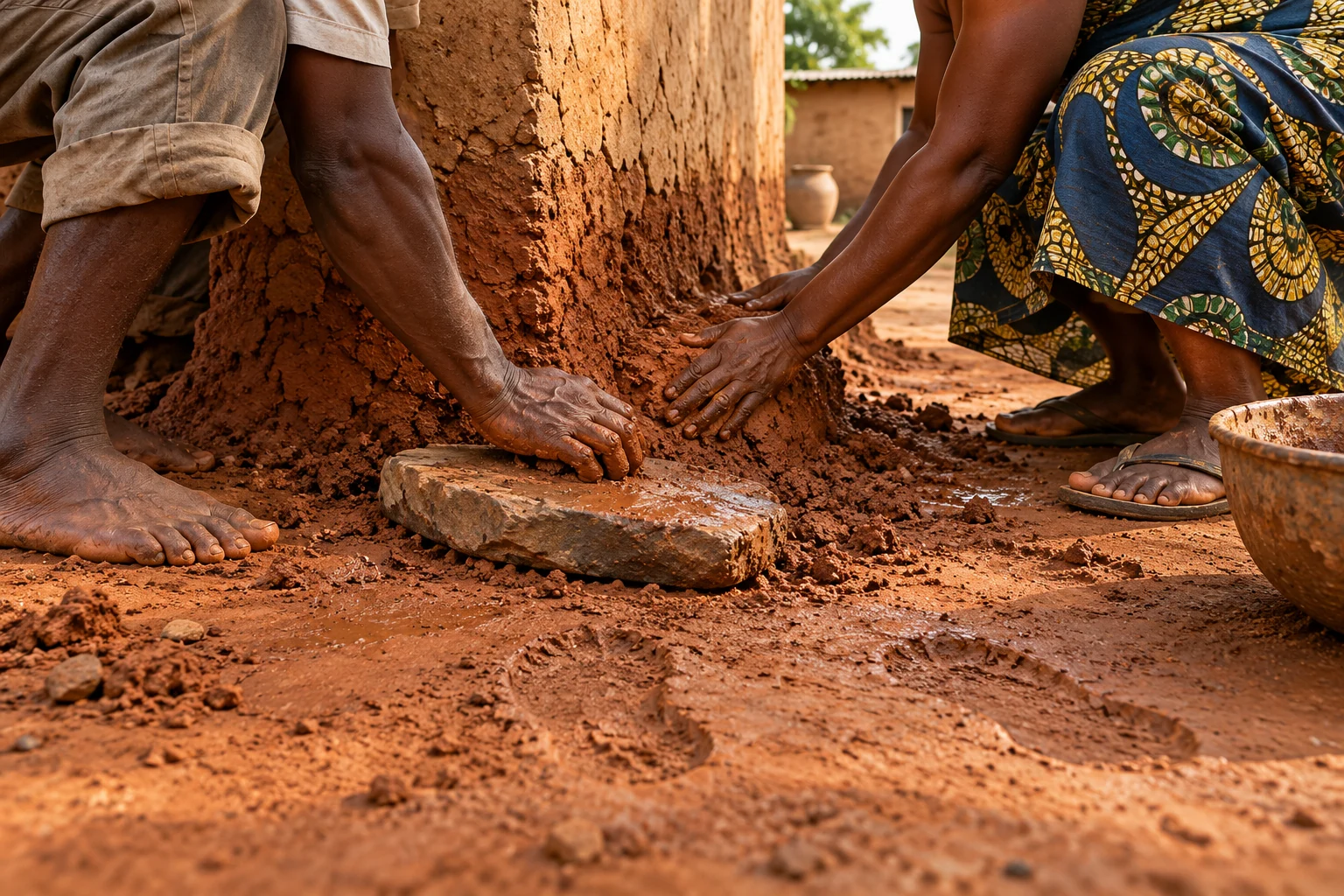
1. Earth and Ògbóni contexts
Public discussion often approaches Onílẹ̀ through earth-related power. Museum records also use onílé for figures connected with Ògbóni institutions. The Princeton collection record and Cleveland Museum object supply particular material contexts.
Care is needed when moving from an object’s catalogue name to a complete theology of one uniformly represented deity. Orthography, local institutions and the relationship between an emblem and a sacred presence matter. A museum label gives a place to begin, not permission to dissolve those distinctions.
2. Key theme: the ground remembers a relationship
Earth can be studied as the condition shared by people who disagree about almost everything else. They still depend on a place that supports their bodies, receives their labor and remains after an individual dispute has passed. A contemporary interpretation can use this image to question the fantasy that personal freedom means having no obligations beyond oneself.
Promises then become more than private intentions. Other people organize lives around what has been said. Breaking an agreement can damage the ground on which future cooperation depends. Restoring it may require an act that others can recognize, rather than an inward declaration that the matter is finished.
3. Land and authority
The language of belonging can protect a community, but it can also be used to exclude. Sacred association with land should not be turned into a casual justification for any political claim. A responsible study asks how a particular institution understands authority and how those affected can be heard.
In modern life, the question also concerns ownership. A legal right to use land does not exhaust the relation to its living conditions or neighboring communities. The ethical application is to consider what shared ground asks of a person beyond what they can immediately extract from it.
4. Religious identity and the scope of this study
Onílẹ̀ belongs to the study of land as a morally charged condition of human existence. The book's combined earth chapter distinguishes this ground from Oke's elevation and Òkò's cultivated yield. That distinction matters: a place can support life before it is owned, developed or made profitable. Onílẹ̀ brings the underlying relation into focus, including dwelling, burial, inherited place and responsibility toward what supports a community. Public object records require particular care. Princeton catalogues a brass figure for the Ògbóni society using onílè in the title.
This verifies the object's institutional identification and material; it does not establish that every similarly named figure is a portrait of one universally represented goddess. Orthography, local terminology and custodial explanation matter. We can hold those facts beside the book's theological interpretation without presenting the catalogue as independent proof of every claim. Contemporary psychological inquiry begins from the difference between occupying a location and feeling entitled to stand within a shared world. That inquiry can illuminate belonging, moral legitimacy and dependence. It cannot decide an actual land claim, establish membership in Ògbóni or convert a person's sense of displacement into a diagnosis about their relationship with the earth.
5. Knowledge that gives the figure depth
5.1 How does earth become a witness?
The book treats earth as witness rather than passive surface. Bodies make promises, cultivate food, build houses and eventually return to ground; human authority operates within that larger dependence. The conceptual movement is important because it challenges the fantasy that power can place itself outside consequence. A person may conceal an action from neighbors while remaining answerable for its effects on the world they inhabit. This is a theological and ethical argument in the book, not a scientific claim that soil records moral intention. A contemporary application can examine the practical ground of trust.
If a community relies on someone's word, that promise becomes part of how other people organize time, resources and expectations. Breaking it can damage more than the speaker's self image. Repair must therefore address the people and conditions affected, rather than stop at private remorse. Onílẹ̀'s witness field sharpens that distinction between feeling forgiven and restoring a dependable shared basis. At the same time, appeals to sacred ground can be used to silence disagreement. An ethically serious reading should ask who is allowed to describe harm, who adjudicates and whether established authority can hear people without inherited standing. Moral ground becomes credible through answerability, not merely through the age of an institution.
Evidence: Princeton University Art Museum, Figure for the Ògbóni society (onílè) — Catalogue identifies a Yorùbá brass Ògbóni figure, probably twentieth century; no complete theology or initiation system supplied; Oláwọlé Fámúlẹ̀ / University of Florida Center for African Studies, Èdè Àyàn: The Language of Àyàn in Yorùbá Art and Ritual of Egúngún — Discussion of Ògbóni earth veneration and distinct institutional drum setting; contextual research, not identity proof for every onílè object.
5.2 What can Ògbóni related material show?
Ògbóni related material gives the subject a social and institutional setting. Princeton's brass figure demonstrates that earth language can inhabit an object made through specialized craft, rather than appearing only in untouched landscape. Fámúlẹ̀'s account situates earth veneration within a distinct association and a differentiated musical world. These sources support learning the relationship among material form, community and authority; they do not authorize disclosure of protected knowledge or reconstruction of membership practices. The distinction helps avoid an easy mistake: a museum object removed from its active setting may look like an autonomous deity image, while its significance depended on use, relationships and local understanding.
The book's crafted matter section offers a suitable interpretive method. Matter carries power through relation and sustained handling as well as through physical properties. A contemporary extension concerns institutions that claim to represent a shared ground. A court, council or family assembly may possess impressive symbols while its actual legitimacy depends on the conduct of those entrusted with them. The object does not act as an automatic guarantee of justice. Learning its setting should make the reader more exact about authority's responsibilities, rather than treating sacred age or costly metal as evidence that every judgment deserves obedience.
Evidence: Princeton University Art Museum, Figure for the Ògbóni society (onílè) — Catalogue identifies a Yorùbá brass Ògbóni figure, probably twentieth century; no complete theology or initiation system supplied; Oláwọlé Fámúlẹ̀ / University of Florida Center for African Studies, Èdè Àyàn: The Language of Àyàn in Yorùbá Art and Ritual of Egúngún — Discussion of Ògbóni earth veneration and distinct institutional drum setting; contextual research, not identity proof for every onílè object.
5.3 Why does burial matter to belonging?
Burial makes earth's supporting and receiving roles inseparable. The place where people live can also hold the dead, creating a continuity that is material, remembered and morally charged. The book places this relation near Onílẹ̀'s field of belonging. It should not be converted into a single universal account of funerary practice, nor into a claim that everybody must return physically to an ancestral town. What it supports is a more demanding question about how the living inhabit a world already shaped by others. Streets, households and fields carry consequences of prior labor and loss.
A person arriving later inherits benefits and injuries they did not individually choose. Contemporary interpretation can distinguish acknowledgment from inherited personal guilt: recognizing a history does not mean pretending to have committed every earlier act. It means asking what present responsibilities arise from continuing to benefit, dwell or govern within its consequences. This matters in family inheritance as well as public land. A property can be legally transferred while unresolved relationships remain. Onílẹ̀'s earth does not settle that dispute by symbolism; it keeps the human and historical relations visible. The article should invite careful listening to those relationships instead of using ancestral language to turn possession into unquestionable entitlement.
Evidence: Princeton University Art Museum, Figure for the Ògbóni society (onílè) — Catalogue identifies a Yorùbá brass Ògbóni figure, probably twentieth century; no complete theology or initiation system supplied; Oláwọlé Fámúlẹ̀ / University of Florida Center for African Studies, Èdè Àyàn: The Language of Àyàn in Yorùbá Art and Ritual of Egúngún — Discussion of Ògbóni earth veneration and distinct institutional drum setting; contextual research, not identity proof for every onílè object.
6. A depth-psychological reading
Interpretive basis: The shared chapter discussion in Babá Tilo de Àjàgùnnà’s The Orishas and the Human Soul, especially “Onílẹ̀, Oke, and Oko”, “Before the Òrìṣà Become Archetypes”, “Metals, Tools, Fire, Cloth, Stones, and the Crafted Body of Power”. Onílẹ̀ has explicit passages in a grouped chapter; the institutional object distinction relies on public museum records. Named psychological lenses are contemporary extensions, not claims of separate chapters.
6.1 Depth psychology: standing without permission
A depth psychological lens can examine the search for an inner basis that does not depend entirely on approval. The book's Onílẹ̀ passages address ground, legitimacy and a rightful place. In an original application, a person who repeatedly asks permission to express an ordinary need may be living as though their presence is provisional. They can occupy a room without feeling entitled to take up space within it. The image of supporting earth offers a way to think about existence before performance: standing does not first require winning an argument about one's usefulness.
Yet this should not slide into the fantasy of absolute self authorization. The same ground supports other people, whose needs and boundaries remain real. Maturity therefore involves a double recognition: I may stand here, and my standing has consequences for those beside me. The shadow named in the book is possessiveness, a tendency to turn security into territorial hardness. A formerly excluded person may seek relief by becoming the gatekeeper who determines who else belongs. The symbol helps make that reversal visible without claiming an inevitable psychological law.
Onílẹ̀'s field becomes ethically alive when stability supports fuller participation rather than a permanent siege. This lens is interpretive language for examining a tension; it supplies neither a diagnosis of insecurity nor a religious test of spiritual ownership.
6.2 Relational development: support without possession
A relational and developmental lens concerns the difference between dependable support and engulfing possession. A home can give someone a secure basis while allowing movement beyond it. It can also make continued belonging conditional on never differing from the group. The book's distinction between rightful belonging and territorial distortion supports this inquiry. In a contemporary family example, an adult child may be told that leaving the family property means rejecting every sacrifice made for them. The emotional conflict is not simply love against independence. It concerns whether gratitude can coexist with a separate life.
Onílẹ̀'s ground offers an image of a basis that enables standing rather than a boundary that confines forever. The corresponding challenge for someone who has experienced repeated moves is different: they may protect themselves by refusing attachment to any place. They depart inwardly before a possible loss can arrive. Neither example establishes a universal response to migration, and neither should be attributed to devotees as a personality trait. The practical interpretive question is what kind of relation makes settlement possible without demanding surrender of personhood.
Support is strongest when its conditions can be spoken and when disagreement need not threaten expulsion. Ground then becomes a shared resource for development, rather than leverage held by the person who claims to own the house.
6.3 Family systems: inherited place and unequal burden
A family systems and collective lens asks how land stories distribute belonging across generations. An inheritance can carry expectations about loyalty, care of elders, burial and the continuation of a household name. Those expectations may sustain solidarity, but they can also assign burdens unequally. One sibling may become the caretaker because others assume that remaining near the land proves an unlimited duty. Another may be excluded because their work occurred elsewhere and is less visible. The book's emphasis on morally negotiated place makes these arrangements discussable.
A contemporary interpretation should stay close to explicit accounts and observable relationships, rather than proclaiming unseen ancestral causes. It can ask who maintained the place, who received authority, whose labor was unpaid and which family stories are missing. Honoring ancestry does not require idealizing every inherited arrangement. The ground can remain meaningful while a harmful distribution changes. This is particularly important when belonging is framed as a scarce privilege: recognizing newcomers need not erase previous inhabitants, and naming dispossession need not become a license to erase someone else.
Onílẹ̀'s field holds the seriousness of place without supplying an easy political verdict. Inner development here means tolerating complexity long enough to hear multiple claims and accepting that a legitimate place carries obligations beyond private comfort. Shared ground asks for memory joined with responsibility.
7. What this relationship means for a person
7.1 In an established devotional or initiatory relationship
An established relationship involving Onílẹ̀ should be described through the actual community that recognizes it. In Ògbóni related settings, institutional membership, custodial authority and earth veneration cannot be inferred from a reader's attraction to the idea of grounding. A public article has no basis for presenting one universal personal head initiation for this figure. The devotional question is instead how an acknowledged relation is carried through conduct, instruction and responsibilities over time. The book's interpretation can accompany that process by asking whether belonging has become more truthful, whether a promise is being honored and whether authority remains answerable to the lives it affects.
For a devotee, the same ground may be experienced through stability, inheritance, conflict or mourning at different stages. Its meaning cannot be exhausted by a reassuring image of safety. The earth also exposes dependence and the limits of possession. That seriousness may deepen a person's response to land, neighbors and the dead without granting them automatic moral superiority. Established relationship can therefore involve learning how to hear correction from those who share the place. Contemporary reflection should remain clearly distinct from institution specific duties, and it should not describe museum access as religious authorization.
A brass figure in a catalogue makes a tradition publicly visible; it does not transfer the relation that gave the object its use. The article's task is to orient attention toward accountable learning and the ethical weight of sustained belonging.
7.2 When the figure becomes relevant in consultation
If Onílẹ̀ enters a consultation, the encounter may draw attention to the ground of a situation: residence, promises, inheritance, community relations or what has been assumed without acknowledgment. These possibilities are interpretive questions, not a list of diagnoses secretly attached to the name. The actual consultation determines which relation matters. Someone facing a family property disagreement may need to distinguish their wish for recognition from the concrete arrangements required for fair use. Another person may have no property dispute at all but may repeatedly agree to obligations they cannot sustain.
In that case the image of standing on one's word could clarify the practical consequences of an unreliable promise. A consultation does not prove that the client's distress is caused by offended earth or establish them as an initiate. It can direct attention without fixing identity. The book's broader method helps keep the levels distinct: divine relation, symbolic image, psychological inference and practical decision are connected but not interchangeable. Useful questions include who shares the consequences, what history has been omitted and what repair could be recognized by those affected.
The answer may require ordinary documentation and conversation as well as whatever religious counsel the trained practitioner considers relevant. Public prose should not decide legal entitlement or prescribe a rite. Its contribution is to show why ground is a relationship in which accountability becomes concrete, rather than merely an inward feeling of being settled.
8. Nature, materials and human knowledge
Onílẹ̀'s ecology is the inhabited ground that supports bodies, receives the dead and carries the material consequences of settlement. Soil is therefore more than a visual emblem of stability. It is implicated in food, drainage, building, access, burial and the ways one household's use affects another. The book's symbolic method requires these relations to remain concrete. The crafted brass figure adds another register: earth veneration can be represented through an alloy and through human skill, so natural and made worlds are not separate sacred categories.
An original environmental reading can ask what ownership leaves out. A legal boundary does not stop water, prevent neighboring exposure or remove dependence on work performed elsewhere. Stewardship begins by noticing those connections. This is a contemporary application, not evidence that every traditional institution maintained a modern conservation policy. It should also resist romanticizing sacred sites: reverence can support protection, but actual ecological outcomes need observation. The social relation is equally important. A place can be maintained physically while people are made insecure within it.
Onílẹ̀'s earth field invites a combined question about the durability of land and the dignity of the lives supported there. Ground remains meaningful through care, fair relation and remembered responsibility.
9. Diaspora, comparison and syncretism
No inspected source establishes a general Catholic saint identification for Onílẹ̀, and none should be introduced to fill an empty correspondence slot. The relevant comparison is already sufficiently complex within Yorùbá contexts: earth as sacred presence, named brass figures and the institutional practices of Ògbóni. Similar wording does not make every object an identical representation or every earth figure a local version of one universal mother. The book explicitly resists that flattening. Comparisons with Nàná's mud, Òkò's field or other earth related powers can illuminate different relations to mortality and sustenance, provided the histories remain distinct.
This is comparative interpretation rather than documented syncretism. The same care applies to psychological vocabulary. Calling earth a maternal image may help explore support, but it cannot erase moral, territorial and institutional dimensions by translating everything into a family romance. A useful article can teach the reader how to recognize an actual correspondence: it needs a specified community, an account of practice and evidence for the relation being claimed. Without those, the honest result is a clear difference and a bounded question. Onílẹ̀'s specificity becomes stronger when the entry keeps earth, ownership, witness and institution in conversation without forcing them into a single familiar label.
Evidence: Princeton University Art Museum, Figure for the Ògbóni society (onílè) — Catalogue identifies a Yorùbá brass Ògbóni figure, probably twentieth century; no complete theology or initiation system supplied; Oláwọlé Fámúlẹ̀ / University of Florida Center for African Studies, Èdè Àyàn: The Language of Àyàn in Yorùbá Art and Ritual of Egúngún — Discussion of Ògbóni earth veneration and distinct institutional drum setting; contextual research, not identity proof for every onílè object.
10. Questions for a fuller understanding
10.1 Does grounding prove spiritual affiliation?
Does the feeling of being grounded prove a relationship with Onílẹ̀? It does not. A psychological experience and an acknowledged religious relation operate at different levels. The book uses ground to examine belonging and ethical basis, while insisting that symbolic resonance cannot replace lineage or divination. Someone may learn from this image without claiming membership in a particular institution or identifying their personal spiritual affiliation. Conversely, a devotee may experience uncertainty without invalidating their established relationship. The useful reflective question is what supports truthful participation in shared life. That can lead to practical inquiry about home, obligations and permission to disagree. It should not become a test that labels every secure person Onílẹ̀ aligned or every displaced person spiritually deficient.
10.2 What does the catalogue establish?
What can a museum's onílè figure actually establish? The Princeton record identifies a specific brass object as a figure for Ògbóni, with a qualified date and a named cultural setting. That is real evidence for material and institutional identification. It does not by itself establish the full meaning of the name, all uses of the object, the membership rules of the association or a universal theology of earth. The proper next move is contextual learning, not unlimited extrapolation. Contemporary interpretation can ask what happens when authority is carried through crafted matter, but should label that inference. Keeping the catalogue's scope visible protects the object from becoming an illustration of claims it never supplied and makes the resulting article more reliable.
11. Correlations to life dimensions
| Dimension | A question for reflection |
|---|---|
| Promises | What have others built their expectations around because I gave my word? |
| Belonging | Does my account of this place recognize everyone affected by it? |
| Resources | What remains my responsibility even when I am legally entitled to take something? |
| Authority | Can a shared institution hear the people whose lives it governs? |
12. Learning the particular institution
Òrìṣà Òkò offers a related but distinct study of cultivation. Nanã Buruku opens earth, age and return through other histories. Personal devotion and knowledge of Ògbóni-related practices require their own accountable teachers. The public study can make the questions clearer without pretending that a general earth metaphor has explained the institution.
13. Sources for the expanded interpretation
Interpretive basis: The shared chapter discussion in Babá Tilo de Àjàgùnnà’s The Orishas and the Human Soul, especially “Onílẹ̀, Oke, and Oko”, “Before the Òrìṣà Become Archetypes”, “Metals, Tools, Fire, Cloth, Stones, and the Crafted Body of Power”. Onílẹ̀ has explicit passages in a grouped chapter; the institutional object distinction relies on public museum records. Named psychological lenses are contemporary extensions, not claims of separate chapters.
-
Princeton University Art Museum. Figure for the Ògbóni society (onílè). Catalogue identifies a Yorùbá brass Ògbóni figure, probably twentieth century; no complete theology or initiation system supplied. Public institutional record or research text inspected; claim scope stated.
-
Oláwọlé Fámúlẹ̀ / University of Florida Center for African Studies. Èdè Àyàn: The Language of Àyàn in Yorùbá Art and Ritual of Egúngún. Discussion of Ògbóni earth veneration and distinct institutional drum setting; contextual research, not identity proof for every onílè object. Public institutional record or research text inspected; claim scope stated.
Onílẹ̀/onílè spelling and object terminology are context dependent. Catalogue metadata does not establish complete theology; no universal head initiation, saint equivalence or land claim is inferred.