Introduction: Look Back Before You Leap (and Stop Letting People Play You)
Source: About Odu Ifá Ogbe Iwori
Some Odù (divination signs) comfort you. Ògbè Ìwòrì doesn’t.
This Odù watches you from both sides of the road. It warns about betrayal with a smile on its face. It tells you: “Yes, you’re blessed. Also yes, people are watching. And some of them are hoping you slip.”
Ògbè Ìwòrì is famous for one core move: look back. Not to live in regret. Not to obsess. But to notice patterns—your patterns, your friends’ patterns, your lovers’ patterns—before the same story repeats.
And when you finally do notice? This Odù doesn’t ask you to become paranoid. It asks you to become precise.
Guiding myth + proverb (with translation + interpretation)
The peanut field that turned into a marriage
Ọ̀rúnmìlà (Ifá’s Òrìṣà of wisdom and divination) wanted a wife. He did what people do when longing hits the chest: he asked Ifá (the sacred divination corpus) for guidance.
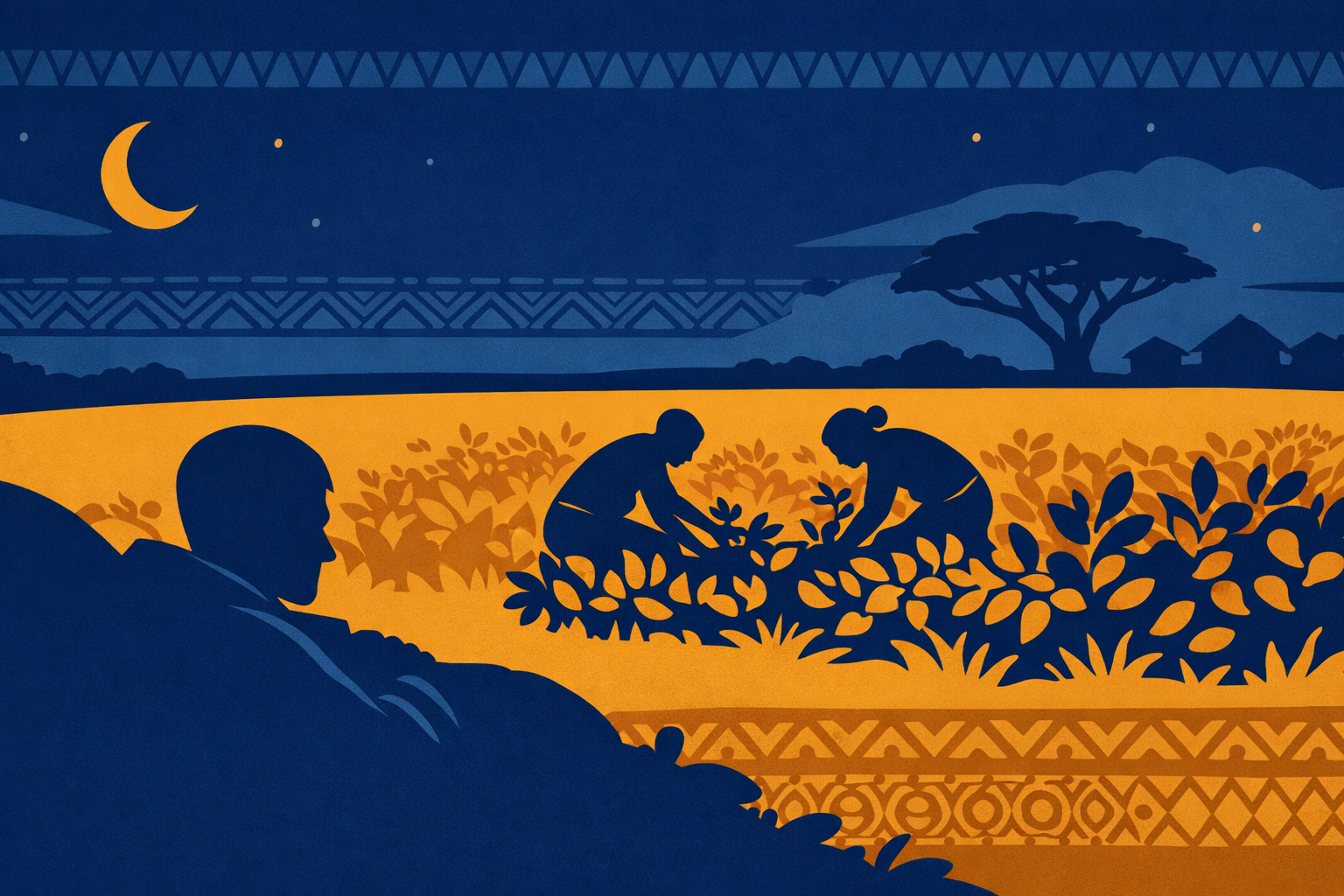
Ifá told him to make ẹbọ (an offering—an exchange of energy and commitment) and to plant peanuts. So he did. He worked the soil. He watched the plants thicken. And he waited for harvest.
Then the theft started.
At first, he blamed animals. Easy target. No awkward conversations. But the digging kept happening, and the losses kept growing. So he hid. He waited. He watched.
And that’s when he caught two young women in the act—hands in the earth, pulling up the peanuts. They begged him not to treat them like thieves. They begged him not to drag them into shame.
Ọ̀rúnmìlà’s response is the whole lesson of Ògbè Ìwòrì: he didn’t ignore what happened, and he didn’t rush into violence either. He questioned them. He listened. Then he offered a hard mercy: “If I forgive you, you don’t steal again.”
They answered with a twist of fate: “If you forgive us, we’d rather join you than be labeled thieves.”
And that’s how the peanut field became a marriage story—desire, discipline, observation, and a surprising turn when truth finally shows itself.
The proverb that runs the whole Odù
Yorùbá: Ògbè sẹ́ nwèhìn bí ajá mi ó pá’kún.
English (sense): “Ògbè, look back—see whether your dog caught the squirrel.”
This isn’t about living in the past. It’s about checking what’s behind your success.
Who’s been feeding off your work?
Who’s been “helping” but secretly steering you into trouble?
What did you ignore because you wanted the outcome?
Ògbè Ìwòrì says: the back of your life matters. That’s where the pattern hides.
What this Odù teaches (core worldview, ethics, psychology, metaphysics)
Ògbè Ìwòrì has a reputation for calling out deception, hidden enemies, disobedience, pride, and relationship traps—while also promising that success can arrive strong after a slow start.
Here’s the worldview in plain language:
- Life is not stable. Momentum changes. A good week can become a messy month. That’s not “bad luck.” That’s reality.
- Your character is your protection. In Ifá language, that’s Ìwà Pẹ̀lẹ́ (gentle, balanced character). This Odù rewards people who stay cool, strategic, and respectful—especially toward elders.
- Spiritual power is real—but so are consequences. Ògbè Ìwòrì speaks openly about Àjẹ́ (witchcraft forces—often framed as social and spiritual manipulation) and also insists that prayer, offerings, and right conduct can protect a person.
- Don’t confuse urgency with destiny. Many people under Ògbè Ìwòrì “start slow” and shine later. The danger is trying to force the timeline—and making avoidable enemies on the way.
Psychologically, Ògbè Ìwòrì is the Odù of:
- pattern recognition
- impulse control
- privacy and timing
- choosing forgiveness without becoming naïve
Metaphysically, it’s also an Odù of roads and locks—the idea that life can feel like “prison” when you ignore counsel, repeat mistakes, or let other people script your choices.
Key myths and happenings (include births of Òrìṣà and/or phenomena when relevant)
Ògbè Ìwòrì doesn’t give one tidy myth. It gives a whole toolbox of stories, each one shaped by lineage (Yorùbá, Cuban, and other diasporic frames appear in the source material). Here are the big happenings that show up again and again:
- The peanut-field marriage: vigilance, theft, forgiveness, and relationships formed through destiny—not fantasy.
- “Look right, look left”: a warning that danger and blessing can approach at the same time—so you stay alert without spiraling.
- The epidemic and the cow’s tail: Ọbàtálá (Òrìṣà of clarity and calm) and Ọ̀rúnmìlà act together to protect children, using symbolism tied to the cow and the tail as protection.
- The mud head and the rain: enemies try to frame fate through a physical object, but rain ruins their plan—showing that the Creator’s will can break human plotting.
- Òṣun and the stolen divination tools: a mythic “theft” of sacred items that points to jealousy, ownership, and the politics of spiritual authority.
- Olu vs. the bullies (and Ọ̀rò’s backing): a story about being robbed, targeted, and pressured—then refusing to fold.
- “The prison” is born here: a strong theme of confinement—literal or emotional—plus the push to protect your freedom through wise choices.
Relevant Òrìṣà in this Odù (who appears, why, what it reveals)
Ògbè Ìwòrì is crowded with Òrìṣà (divine forces—sometimes called “deities,” but better understood as living principles with personality).
Ọ̀rúnmìlà (wisdom, divination, destiny counsel)
He’s the main voice of the Odù. In these stories, he wins by watching, waiting, and choosing the right response—not by brute force.
Èṣù / Elegbá (messenger, crossroads, consequences)
Èṣù (the divine messenger and opener of roads) shows up whenever timing and communication matter—especially when hidden enemies and misunderstandings are in the air.
Daily Ifá also explicitly links Èṣù’s “guardian” quality to Ògbè Ìwòrì. (DAILY IFÁ)
Ọbàtálá (clarity, coolness, elders, order)
Ògbè Ìwòrì repeats the theme: respect elders, avoid needless heat, keep your mind clear. Ọbàtálá represents that cool-headed order.
Ṣàngó (justice, thunder, exposure)
Ṣàngó in thi conflict, reputation, and the moment when hidden things get loud. If you’re being accused, tested, or baited into a fight, Ṣàngó’s presence says: stay honest—because truth eventually makes noise.
Òṣun (sweetness, love, desire, power plays)
Òṣution, and also manipulation. Ògbè Ìwòrì is blunt: sometimes a person approaches with sweetness for revenge. That’s not “romantic mystery.” That’s a warning label.
Ògún (iron, tools, work, e trying me,” Ògún often appears as the force of boundaries and earned authority—especially around work, contracts, and survival.
Ẹ̀gúngún (ancestors, memory, accountability)
Ògbè Ìwòrì leans hard into the idea that ancestors matter—because the past matters. You don’t “manifest” your way out of unfinished family patterns. You address them.
Ọ̀rò (community force, anti-bullying, social order)
In the bullying story, Ọ̀rò shows up as the force that makes attackers back off. It’s not just spiritual. It’s communal: some protections come from right alignment with community and ethics.
Key topics for lived life and development
ment
Ògbè Ìwòrì is not the Odù for sloppy spirituality.
It rewards:
- regular self-checks (especially around pride)
- quiet discipline
- clean boundaries
- respect for elders and teachers
A practical way to live this Odù (without pretendins to ask one question weekly:
“What pattern am I repeating because it’s familiar?”
Then change one small behavior that feeds that pattern.
Love and intimacy
Ògbè Ìwòrì is sharp about love: passion can be real and still be a trap.
It warns about:
- promises that don’t become commitment
- partners who come close to get leverage
- triangles, gossip, and “friends” in your relationship space
The medicine here is not fear. It’s clarity:
- movequestions
- watch actions over words
And if forgiveness is needed, forgive with boundaries, like Ọ̀rúnmìlà in the peanut field.
Family and ancestry
This Odù carries the energyushes you to think:
- What reputation are you building?
- What story will your family tell about you when you’re not in the room?
- Who benefits if you lose your dignity?
The source material also emphasizes not tarnishing your name and honoring elders—because your future self will live inside your current choices.
Health and vitality
Ògbè Ìwòrì mentions illnesstrouble and sexual health concerns in some lineages.
Treat that as a prompt to practice common-sense cmptoms
- get tested when needed
- avoid reckless choices when stressed
In Ifá terms, your body is part of your Orí (inner head/destiny). You don’t “spirit” your way past basic responsibility.
Work, vocation, money, leadership
This is a leadership Odù—but not the flashy kind.
Ògbè Ìwòrì says you may start slow and still finish strong.
It also says: watch your circle in business. Peopl you up, or envy you.
Three street-level rules that match this Odù:
- Doo early.
- Read every agreement twice.
- Don’t let pride make decisions.
And if you’re leading, remember the chant’s edge:
Yorùbá: Ìkúdelémí… Àwò Rokò Olóyù
English (sense): “You don’t kill a priest anyhow—and even less a king.”
Translation aside, the point is clear: *carry y People treat you how you train them to.
Meaning in Ìrẹ̀ and Òṣogbo
Ìrẹ̀ (fortune/blessing, alignment, ease) in Ògbè Ìwòrì often looks like:
- success that arrives after a delayed start
- respect replacing ridicule
- protection that “just happens” because you listened in time
- love that becomes stable because you set standarhe blessing of discernment: you start seeing motives clearly, without needing drama to prove it.
Òṣogbo (challenge/misalignment, friction, warning patterns) in Ògbè Ìwòrì often shows up as:
- betrayal by friends and hidden enemies
- deception in romance (sweet words with sharp intent)
- pride that pushes you into fights you don’t need
- legal trouble, public embarrassment, or “prison” feelings—literal or symbolic
A signature warning in this Orhile another begins. That’s why it tells you to look both ways.
When consultation tends to matter
In many is the kind of Odù that shows up when life is asking for proof of maturity.
Consultation (Ifá divination) tends to matter most when:
- a relationship is moving fast and the stakes are high
- you’re considering a major partnership, investment, or relocation
- rumors, accusations, or hidden competition are circling you
- you keep repeating the same breakup, the same betrayal, the same “how did I miss that?”
- you feel trapped—by obligations, by a job, by a family pattern, by your own habits
This Odù doesn’t ask you to fsthrough the world with your eyes half closed.
Next step
Ògbè Ìwòrì is a grown-person Odù.
It says you can have love, status, money, and respect. But you’ll pay for it with:
- patience
- humility
- timing
- and the discipline to look back before you step forward
And if you’ve been burned already? Good. Now you have data. Use it.
Recommended Deep Dives
If you want to keep studying (without getting lost in random social media takes), start here:
- Èṣù and protection logic. Learn why roads get blocked, why messages get twisted, and how character and timing matter. Read: Orishá Èṣù: The Dynamic Messenger and Trickster. (DAILY IFÁ)
- Ọbàtálá and cool-headed power. This Odù rewards calm authority and respect for elders. Read: Orishá Ọbàtálá: The Peaceful Creator and Father of All Orishas. (DAILY IFÁ)
- The wider Ogbe family. For context on Ògbè as a broader current in Ifá, read: Odu Ogbe in Ifá Divination: Myths, Lessons, and Practices. (DAILY IFÁ)
Deep Dive – More from the author
If you want more Odù breakdowns, myths, and real-life interpretation, follow and support the creator here:
And for a quick external reference tied to today’s mythic core, see: Ọ̀rúnmìlà (Wikipedia)