Introduction – When Truth Chases the Lie (and Your Ancestors Watch the Door)
Source: Myths and Revelations of Odù Ifá Ogbè Ìrosùn
Some Odù (divination signs) feel like a warm lamp. Others feel like a spotlight in your face.
Ogbè Ìrosùn is the spotlight. It’s the sign that asks, bluntly: Are you living in truth—or performing it? Because in this Odù, truth and falsehood don’t just argue. They swap clothes, confuse witnesses, and then show up later with receipts.
And there’s another layer: your people are watching. Not your neighbors. Your Ẹ̀gún (ancestral spirits)—the ones who know your real name, your patterns, and the promises you tried to forget.
Ogbè Ìrosùn is often described as an Odù where lies can “turn true” later, where skepticism can backfire, and where hidden spiritual support (or resistance) from lineage becomes loud.
So let’s talk about what this Odù is really saying—without the vague fluff.
Guiding myth + proverb (with translation + interpretation)
The myth: Bameli and the whale
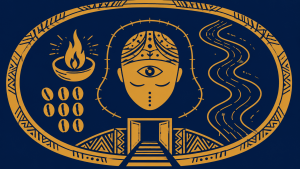
Bameli was an Awó (Ifá priest/diviner). He had one eye, but he could see what most people miss. One day, Ifá fell in his own Odù: Ogbè Ìrosùn. He called other Awó for support, and the message was clear: pray for your life, make the right spiritual repairs, and don’t act like you’re above warning signs.
Bameli did what he knew to do. He followed the path toward the sea. Then the sea swallowed him. Not in a poetic way. In the story, a whale takes him whole. He’s gone. No goodbye speech. No heroic ending. Just silence.
His son comes looking. Three days pass. No father. Then the son checks himself—his own destiny, his own signs—and he sees the same pattern: Ogbè Ìrosùn. He repeats the prayer. He goes to the shore. There he finds a fisherman selling a whale. The son buys the whale and brings it home. He prays again. Then he opens the whale.
And there is his father, alive inside. Here’s the part people rush past: the son tells everyone to leave the room. Not because he’s ashamed. Because some things need privacy to be healed. He stays beside his father to care for him.
Meaning: Ogbè Ìrosùn teaches that spiritual danger can look like random bad luck—until you notice the pattern. It also teaches that rescue doesn’t always come from power. Sometimes it comes from humble repetition: prayer, repair, patience, and respect for what the elders already warned you about.
The proverb (Yorùbá + translation + commentary)
“Òtítọ́ kì í ṣubú.”
“Truth does not fall.”
In Ogbè Ìrosùn, truth might get delayed. It might get mocked. It might even get covered up by a louder story. But it doesn’t fall.
This Odù presses you to stop relying on appearances—your own and other people’s. When truth is your habit, you don’t panic when your mask slips. You don’t need a second life to keep track of what you said.
And that’s the real flex.
What this Odù teaches (core worldview, ethics, psychology, metaphysics)
Ogbè Ìrosùn is often framed as the Odù of truth and falsehood, where two sharp minds face off and perception becomes a battleground.
Here are the core teachings that show up again and again:
1. Truth is an energy, not a slogan. You can say “I’m honest” and still live in distortion—by hiding, dodging, performing, or “forgetting” key details. This Odù calls that out.
2. Your “no” doesn’t erase reality. One of the strangest warnings tied to this sign is that a client may deny what’s said in divination, even lie in the moment, then go home and realize the reading hit anyway. Psychologically, that’s classic: defense mechanisms now, insight later. Spiritually, it’s a reminder that truth keeps moving even when you refuse to look at it.
3. Skepticism can become self-harm. Ogbè Ìrosùn does not ask for blind belief. It asks for discernment. But it warns about a specific kind of skepticism: the kind that shows up as disrespect, testing, or constant suspicion.
4. Ancestral relationships aren’t “extra.” They’re infrastructure. This Odù repeatedly emphasizes honoring the father and lineage—especially if a parent has passed. In plain English: if your roots are thirsty, your branches won’t relax.
5. Privacy is protection. Ogbè Ìrosùn strongly favors discretion—especially around travel plans, whereabouts, and timing—because envy loves a calendar. Even if you don’t think in spiritual terms, this is still good life strategy.
Key myths and happenings (include births of Òrìṣà and/or phenomena when relevant)
Ogbè Ìrosùn doesn’t just talk about “truth.” It shows truth under pressure—inside family politics, spiritual politics, and even divine negotiation.
Yemọja bargains for her child
In one story, Yemọja (mother of waters, often linked with the ocean and motherhood) wants protection for her son. Olófin (a title used for the Supreme authority in some lineages) refuses at first. So she finds leverage—through Òrìṣà-Ọ̀kọ́ (a deity associated with farming, land, and harvest) and the secret of planting yams.
The uncomfortable lesson: devotion doesn’t stop people from being strategic. The higher lesson: knowledge is power, and when you gain it, you’re responsible for how you use it.
The spirit-path you can’t fake
Another myth describes a person in a land devoted only to spirits—no Òrìṣà worship—who gets possessed by an ancestor with strange speech. Eventually the message becomes clear: “Go to Òrúnmìlà.”
Òrúnmìlà (Òrìṣà of wisdom and divination) reads Ogbè Ìrosùn and tells him: your road is to serve spirit and Òrìṣà work, not to force yourself into an identity that isn’t yours. When the man later becomes greedy and tries to grab status he isn’t built for, the Odù shuts it down.
Translation for modern life: Stop trying to win by becoming somebody else.
The “eye” theme
This Odù carries repeated warnings about the eyes—vision, perception, and the consequences of spiritual or ethical blindness. Even if you read that symbolically, it’s consistent: when you refuse to see, life finds a way to make you feel it.
Relevant Òrìṣà in this Odù (who appears, why, what it reveals)
Ogbè Ìrosùn regularly circles a cluster of Òrìṣà (deities) that explain how truth and consequences move.
Òrúnmìlà (wisdom, diagnosis, destiny)
Òrúnmìlà is the stabilizer. In this Odù, he’s the one who reads the hidden problem — envy, disbelief, ancestral pressure, pride—and names the repair path.
Èṣù (messenger, crossroads, consequences)
Èṣù is not “evil.” He’s the traffic system. He makes sure your choices arrive where they’re headed. Ogbè Ìrosùn repeatedly stresses appreciation and respect for Èṣù. It even describes an Èṣù associated with deception and multi-faced messaging — meaning: if you live in double-talk, don’t be shocked when life answers in riddles.
Ọ̀ṣun (sweetness, love, reputation)
Ọ̀ṣun shows up through relationship themes—love, loyalty, temptation, and the social cost of humiliation. In this Odù, sweetness isn’t weak. It’s disciplined.
Ògún (iron, tools, work, straight lines)
This Odù connects to Ògún through work, tools, and the idea that humans learn craft—and consequence—through iron. Ògún is the “don’t play” energy: don’t make a mess and call it destiny.
Ṣàngó (justice, power, reputation)
Ṣàngó is the court. When truth and falsehood clash, Ṣàngó brings the thunder of outcomes.
Yemọja and Òrìṣà-Ọ̀kọ́ (motherhood and harvest)
Their myths in this Odù underline something practical: protection for children, legacy, and the hard bargains people make to secure the future.
Key topics for lived life and development
Spiritual development
Ogbè Ìrosùn favors people who are intuitive — dreamers, readers of patterns, people who “just know.” The tradition often links this Odù with strong spiritual perception and even divination ability. But it also comes with a warning: don’t turn gifts into ego.
Try these grounded practices (no theatrics required):
- Keep a dream log for 30 days. Patterns matter more than single dreams.
- Reduce oversharing. Less “announcement,” more “alignment.”
- Build a simple ancestor routine: water, prayer, gratitude. Consistency beats intensity.
Love and intimacy
This Odù does not do well with double lives. It speaks bluntly about betrayal, secret partners, jealousy, and the way hidden relationships can collapse a home. The spiritual logic is simple: secrecy creates unstable energy. Unstable energy attracts chaos.
Healthy expression under Ogbè Ìrosùn looks like:
- clear agreements
- clean endings
- honesty before escalation
- protection of dignity (yours and your partner’s)
And yes, this Odù can also touch themes of gender expression and relationship structure. Handle that with care and safety—not shame. The core issue is still the same: be truthful so nobody gets trapped.
Family and ancestry
Ogbè Ìrosùn pushes one message hard: don’t forget your father and your benefactors.
That can mean:
- repairing a strained relationship while there’s still time
- honoring a deceased parent with prayer and remembrance
- refusing to rewrite your origin story because it’s inconvenient
This Odù treats ungratefulness like a spiritual leak. Not because “the ancestors are petty,” but because gratitude keeps the channel open.
Health and vitality
Ogbè Ìrosùn is often associated with:
- stomach stress and confusing symptoms
- “blood” concerns (which can mean health, lineage, or emotional wounding)
- strong warnings around eyesight and perception
Keep it practical:
- If you have vision changes, get medical care. Immediately.
- If stress lives in your gut, stop calling it “normal.”
- If grief is constant, treat it like an illness that deserves support.
Ifá doesn’t replace medicine. It adds a second lens: what your body is trying to tell your life.
Work, vocation, money, leadership
A powerful theme in this Odù: success outside your hometown. People tied to Ogbè Ìrosùn are often described as receiving more honor and stability when they expand beyond their original environment. That’s not “move away or fail.” It’s: don’t let familiarity limit your destiny.
Money themes here often involve:
- profitable ventures (especially when done with humility and planning)
- help from respected people and patrons
- leadership roles that come with scrutiny
The trap is pride. Ogbè Ìrosùn can gift talent and visibility. It can also punish arrogance.
Meaning in Ìrẹ̀ and Òṣogbo
In Ifá language, Ìrẹ̀ (fortune/blessing, alignment, ease) and Òṣogbo (challenge/misalignment, friction, warning patterns) aren’t “good vs bad.” They’re weather reports for the soul.
Ìrẹ̀ signatures in Ogbè Ìrosùn
When this Odù lands in Ìrẹ̀, look for:
- an open road through relocation or expansion (new market, new city, new circle)
- recognition, titles, and respect earned over time
- strong spiritual perception used wisely
- protection from major life disruptors when repairs are made early
The vibe of Ìrẹ̀ here: calm confidence. You don’t need to lie. Your life speaks.
Òṣogbo signatures in Ogbè Ìrosùn
When it lands in Òṣogbo, the warnings get sharp:
- betrayal and surveillance (people watching, plotting, envying)
- home conflict that feels like a “revolution”
- obsession, persecution, or heavy ancestral pressure
- damage from secrecy in love
- spiritual or psychological “blindness” (refusing to see, refusing to listen)
- risk around deep water themes (often framed as “be careful with the sea”)
The vibe of Òṣogbo here: agitation and denial. You keep arguing with reality. Reality keeps winning.
When consultation tends to matter
People usually don’t seek Ifá when things are easy. They seek it when patterns get loud.
Ogbè Ìrosùn tends to matter in consultation when:
- you’re stuck in a loop of dishonesty—your own or someone else’s
- you suspect envy, betrayal, or “friends” who don’t clap for you
- your dreams are intense, repetitive, or involve the deceased
- family history feels like it’s repeating through you
- a relationship is being fed by secrecy and fear
- health concerns show up around vision, stress, or stomach problems
- you’re considering a big move, a new career direction, or public leadership
This is also a strong Odù for people who are “called” to spiritual service but keep trying to live like that call doesn’t exist.
Next step
Ogbè Ìrosùn doesn’t ask you to be perfect. It asks you to be clean. Clean words. Clean choices. And clean relationships. And clean gratitude.
If you take one thing from this Odù, take this: truth is a protection. Not because it makes you morally superior, but because it keeps your life from splitting into two stories that fight each other.
And if you’ve been living split? Good. Now you know what to fix.
Recommended Deep Dives
If you want to connect Ogbè Ìrosùn to the bigger map, start here:
- Read the broader foundation of Ìrosùn as a destiny current: Odu Irosun: The Flow of Consciousness, Legacy, and Divine Order. (DAILY IFÁ)
This helps you understand why lineage, memory, and “blood themes” show up so strongly. - Study the crossroads logic of Èṣù: Orishá Eshú: The Dynamic Messenger and Trickster. (DAILY IFÁ)
If your life feels like mixed messages, start here. - Ground relationship lessons through Ọ̀ṣun: Orishá Oshun: Goddess of Love, Beauty, and Fertility. (DAILY IFÁ)
Sweetness is a skill. This Odù expects you to learn it.
More from and about the author
If this kind of Ifá writing helps you, stay close:
- Watch: YouTube (Daily Ifa)
- Get weekly essays: Daily Ifá newsletter
- Listen: Spotify
- Read the books: Amazon US | Amazon BR
Further Reading (links)
- Odu Irosun: The Flow of Consciousness, Legacy, and Divine Order (DAILY IFÁ)
- Odu Ogbe in Ifá Divination: Myths, Lessons, and Practices (DAILY IFÁ)
- Orishá Eshú: The Dynamic Messenger and Trickster (DAILY IFÁ)
- Orishá Oshun: Goddess of Love, Beauty, and Fertility (DAILY IFÁ)
- Ifá (Wikipedia)
- Ọ̀ṣun / Oshun (Wikipedia)
- Ṣàngó / Shango (Wikipedia)