Introduction – Be the Light at Home Before You Try to Shine Outside
Source: Myths and Revelations of Odù Ifá Ogbè Òwónrín
Some Odù (divination signs) talk about winning.
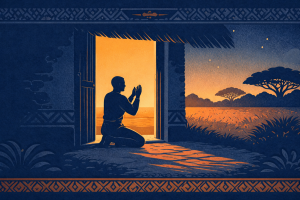
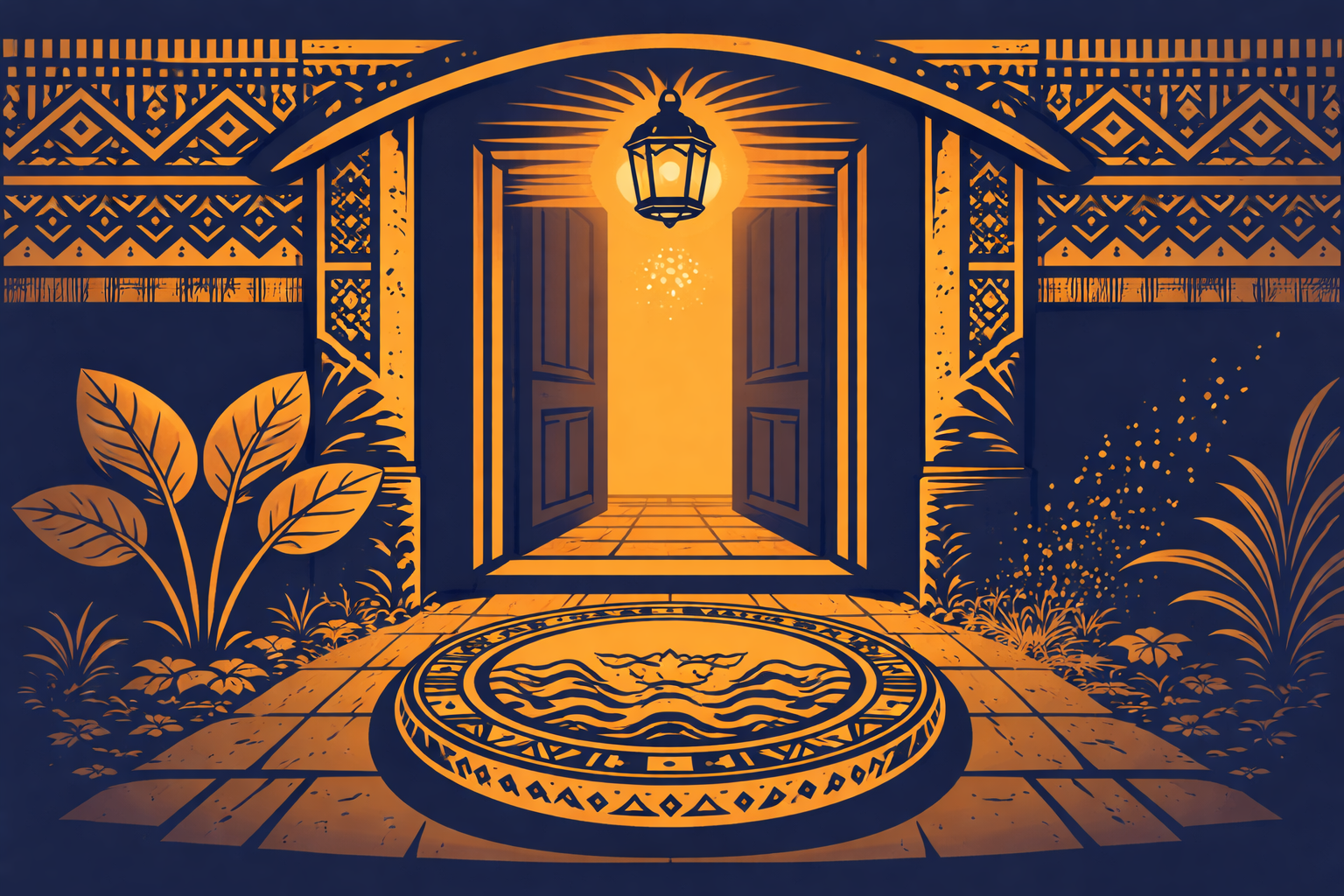
Ogbè Òwónrín talks about where you’re trying to win. It doesn’t care how polished you look in public. It cares what your home feels like when the door closes. Because Ogbè Òwónrín is obsessed with ilé (home/household as your spiritual base). In this sign, your house isn’t just a place you sleep. It’s a mirror. It shows your real habits, your real respect, and your real priorities.
This Odù also has a sharp edge: it warns about envy that lives close, gossip that travels fast, and “unexpected chaos” that can flip plans in a day. Not to scare you. To train you. So if life has felt like:
- you keep building, but results stay “in the air”
- your family has tension nobody names
- people smile, but something feels off
- the road opens… and then chaos hits
…Ogbè Òwónrín has something to say.
Let’s walk it in plain language, with tradition-respect and real-life application.
Guiding myth + proverb (with translation + interpretation)
A guiding myth: The harvest, the brothers, and the powder
In some Afro-diasporic lineages, there’s a story about three brothers linked to Èṣù (the crossroads messenger and keeper of consequences). They farm side by side. Same soil. Same sun. And same season.
One brother’s yams come out perfect. People praise him. His harvest sells fast. The other two brothers don’t ask how he did it. They don’t improve their own work. They get bitter. So they do what jealousy always does when it’s too proud to learn: they sabotage.
At night they sprinkle powder in his field to spoil the harvest. Quietly. Like cowards. But the successful brother notices the pattern. He doesn’t panic and he protects his water source and his boundaries. He watches the timing and he stays disciplined. And when the sabotage finally comes to light, it doesn’t just expose the jealous brothers. It exposes their smallness.
What Ogbè Òwónrín is teaching here: envy usually doesn’t come from strangers first. It comes from people who think your win makes them look bad. And if your home base is weak—if your boundaries are messy—envy finds the opening.
This Odù isn’t telling you to fear your family or friends. It’s telling you to stop being naïve about human behavior. Keep your life clean. Keep your plans protected. Let results speak.
A proverb that locks the lesson
“Iná níta, òkùnkùn nílé.”
Translation: “Light outside, darkness at home.”
Ogbè Òwónrín doesn’t tolerate performative goodness. It pushes a simple question: If you’re generous, are you generous at home? If you’re wise, are you wise with your partner and children? And if you’re spiritual, are you spiritual when nobody claps? Because in this Odù, the house is the test.
What this Odù teaches (core worldview, ethics, psychology, metaphysics)
Home-first spirituality
Ogbè Òwónrín teaches “home-first” not as a moral slogan, but as spiritual engineering. If your ilé (home) is unstable, your blessings don’t settle. They hover. You feel busy, but nothing lands. You feel “almost there” all the time.
This sign favors:
- routine over drama
- steady care over big speeches
- private integrity over public image
Boundaries are holy
This Odù warns about talkers—people who can’t hold your story safely. It also warns about being the talker yourself. In plain terms: if you spread your own business everywhere, you make it easy for envy to track you. Ogbè Òwónrín rewards discretion:
- fewer announcements
- fewer “updates” to people who don’t help
- more quiet building
Expect the unexpected
A classic theme in this Odù is sudden chaos—things that pop up “out of nowhere.” But this Odù doesn’t treat chaos like a curse. It treats chaos like weather. If you expect storms, you build better roofs. If you expect plot twists, you keep options. And if you expect messy people, you set tighter boundaries. That’s not pessimism. That’s leadership.
Orí matters more than the crowd
Orí (your inner head—your personal destiny-self) is a key concept when working with Ogbè Òwónrín. It is the part of you that chooses your road and responds to life’s pressure. This Odù pushes you back to personal responsibility:
- What do you keep repeating?
- What do you keep excusing?
- What do you keep avoiding at home?
If the answer is “a lot,” Orí is asking for discipline.
Key myths and happenings (include births of Òrìṣà and/or phenomena when relevant)
Different lineages preserve different “happenings” inside Ogbè Òwónrín. So I’m going to name themes without pretending every house teaches it the same way.
The slow destroyer: termites and hidden damage
Some teachings link this Odù to the termite: not because termites are “evil,” but because they show how destruction can happen quietly. That’s the warning: if your home has hidden resentment, hidden betrayal, or hidden disrespect, it eats the foundation from inside. One day the wall cracks and everybody acts surprised.
Ogbè Òwónrín says: don’t wait for the crack.
The stinger lesson: power without restraint
Another theme that often shows up is the scorpion’s sting—power that can protect or destroy. This matters for leadership. If you have authority in your family, your workplace, or your community, Ogbè Òwónrín asks: Are you using power to guide? Or are you using power to punish? This Odù does not bless sloppy power. It blesses clean power.
Ancestor continuity: the clay-and-death logic
Many Ogbè Òwónrín teachings tie strongly to Ẹ̀gún or Ẹ̀gún-gún (ancestors, ancestral spirits). In some stories, the sacred objects of ancestor work are linked to clay and earth—because clay holds both creation and return.
The point isn’t “be spooky.” The point is: your lineage is real. Family patterns are real. The dead still shape the living through memory, values, trauma, and protection. If you ignore that, you don’t become “free.” You become unconscious. And unconscious people repeat the same story.
Relevant Òrìṣà in this Odù (who appears, why, what it reveals)
Èṣù: the doorway and the consequences
Èṣù (messenger of the crossroads, keeper of consequence) is central here. Ogbè Òwónrín is obsessed with thresholds:
- who you allow into your home
- what energy crosses your doorway
- what you tolerate “just to keep peace”
Èṣù doesn’t only punish lies. He reveals weak systems. If the door is weak, the house suffers. If your boundaries are weak, your life gets noisy.
Ọ̀ṣun: sweetness with discipline
Ọ̀ṣun (sweet water, love, beauty, diplomacy) shows up whenever an Odù talks about social survival and relationship ethics. Ogbè Òwónrín isn’t telling you to be harsh. It’s telling you to be smart. Sweetness is not naïveté. Sweetness is skill. Ọ̀ṣun teaches:
- how to calm conflict without surrendering truth
- how to protect dignity
- how to attract support without begging for it
Ọbàtálá: clean character and restraint
Ọbàtálá (clarity, ethics, calm authority) fits Ogbè Òwónrín because this Odù is strict about integrity inside the home. When your household is messy, you can’t fake peace with rituals alone. You need behavior change:
- honest conversation
- reduced addiction and reckless habits
- more structure
- fewer excuses
That’s Ọbàtálá work.
Ṣàngó and Yemọja: justice and lineage protection
Ṣàngó (justice, thunder, reputation) appears when conflict must be resolved cleanly. Ogbè Òwónrín can expose gossip and false testimony. Ṣàngó energy is the part that brings consequences to public lies.
Yemọja (mother of waters, lineage, protection) connects to home, family, and the emotional “ocean” inside a household. When Ogbè Òwónrín shows up, the question often becomes: is the home being protected, or slowly flooded?
Key topics for lived life and development
Spiritual development
Ogbè Òwónrín favors spirituality that works in real life.
That looks like:
- stronger daily routine (sleep, meals, prayer, calm)
- better boundaries (what you share, and with whom)
- fewer public spiritual “performances”
- more private consistency
If you want one simple practice: build a “home check-in.” Once a week, ask:
- Is my home calmer than last month?
- Do I speak with respect in my own house?
- Am I bringing outside stress inside?
- Am I neglecting my people while chasing approval?
Ogbè Òwónrín answers those questions fast.
Love and intimacy
This Odù pushes relationship maturity.
It favors:
- clear agreements
- steady loyalty
- calm problem-solving
It warns against:
- secret behavior
- flirting that creates chaos
- partners who “love you” mainly for access, money, or status
Under Ogbè Òwónrín, love works best when it’s private, honest, and structured. Not hidden. Private. Hidden love is fear. Private love is protection.
Family and ancestry
This is a big family Odù. It speaks to household conflict, misunderstandings, and “wars” that start over small things and then grow teeth. What helps:
- stop recruiting outsiders into family drama
- stop speaking to win; start speaking to repair
- stop repeating inherited patterns “because that’s how we are”
Ancestor work (Ẹ̀gún) becomes powerful here when it is steady and respectful:
- simple prayers
- clean water
- gratitude
- remembrance
No big theater required.
Health and vitality
Ogbè Òwónrín often shows up around stress-related symptoms and issues that worsen when the home environment is chaotic. Two grounded takeaways:
- If your chest, breath, or coughing symptoms are intense or unusual, medical care matters.
- If your vision changes or you have persistent pain, treat it as serious.
Ifá is not a substitute for medicine. It’s a second lens that asks: what life pressure is your body carrying? This Odù also pushes caution around overindulgence—especially alcohol and habits that weaken judgment. When judgment slips, chaos gets easier to enter.
Work, vocation, money, leadership
Ogbè Òwónrín can bring prosperity, but it doesn’t bless sloppy planning. It rewards:
- finishing what you start
- protecting your plan from gossip
- being consistent even when praise is slow
- keeping home life stable so money can settle
It also warns about “projects in the air.” That’s the plan you talk about for months but never execute. This Odù doesn’t want more vision boards.
It wants receipts.
Meaning in Ìrẹ̀ and Òṣogbo
In Ifá language:
- Ìrẹ̀ means blessing, alignment, ease, things flowing.
- Òṣogbo means challenge, friction, misalignment, warning patterns.
Neither is “good person / bad person.” It’s the weather report.
Ìrẹ̀ signatures in Ogbè Òwónrín
When this Odù shows in Ìrẹ̀, it often looks like:
- stability at home that supports public success
- enemies talking, but failing to land damage
- unexpected chaos turning into advantage because you stayed calm
- support from elders, family, or patrons when you stay respectful
Signature feel: you’re steady, so life steadies around you.
Òṣogbo signatures in Ogbè Òwónrín
When this Odù shows in Òṣogbo, the same themes become sharper:
- gossip becomes “evidence”
- home conflict escalates fast
- envy and sabotage get closer
- recklessness, addiction, or oversharing opens doors you can’t easily close
- sudden chaos becomes actual risk (accidents, losses, broken trust)
Signature feel: the house is loud, and nothing settles.
When consultation tends to matter
Ogbè Òwónrín tends to matter in consultation when:
- the home feels divided and nobody wants to say why
- a project keeps stalling for no clear reason
- you suspect envy, sabotage, or false friends
- you’re planning travel, relocation, or a major life change and timing feels unstable
- relationship tension keeps cycling without resolution
- health concerns rise alongside heavy stress and household conflict
In these moments, consultation isn’t about “predicting the future.” It’s about diagnosing patterns and choosing repairs with discernment.
Next step
Ogbè Òwónrín is simple, but it’s not easy. It asks for one brave move: stop performing your life and start structuring it.
Be the light at home first. Then the outside shine doesn’t cost you your peace. And if “unexpected chaos” is part of your road, don’t curse the road. Learn it. Train for it. This Odù respects the person who stays calm and prepared.
Recommended Deep Dives
If you want to go deeper with clean context, these are worth your time:
- The mythic frame for this Odù: Ògbè Wọ̀nrin: The Sage Without Children
This story is great for thinking about legacy, destiny, and what “children” can mean beyond biology. - Doorway logic and consequence: Orishá Eshú: The Dynamic Messenger and Trickster
Ogbè Òwónrín makes more sense when you understand thresholds, messages, and cause-and-effect. - Clean character and restraint: Orishá Obatalá: The Peaceful Creator and Father of All Orishas
This Odù punishes sloppy power. Ọbàtálá teaches clean power.
More from the author
If this style of Odù breakdown helps you, keep studying with the creator across platforms:
- Watch: YouTube (Daily Ifa)
- Get weekly essays: Daily Ifá newsletter
- Listen: Spotify
- Read the books: Amazon US | Amazon BR
For a solid external baseline on the crossroads principle, here’s a reliable reference: Èṣù (Wikipedia).
Further Reading (links)
- Ògbè Wọ̀nrin: The Sage Without Children
- Orishá Eshú: The Dynamic Messenger and Trickster
- Orishá Obatalá: The Peaceful Creator and Father of All Orishas
- Orishá Oshun: Goddess of Love, Beauty, and Fertility
- Orishá Shango: The Orishá of Thunder, Fire, Justice and Life Force
- Ifá (Wikipedia)
- Èṣù (Wikipedia)