
Ìká Ìròsùn is a mixed Odù in Ifá’s 256-part corpus. Ìká Ìrosùn centers a guardian called Osun, whose name must be distinguished from Oshún. In one story this unrecognized visitor exposes arms trafficking and compromised officials; in another, a council identifies advance warning as the support its members lack. The origin list connects Osun’s preparation with keeping cattle in enclosures. The focus is the difference between containing a danger and keeping the people responsible for warning free enough to recognize it.
A question to carry through the study: Who is expected to warn us, and what could prevent that warning from being heard?
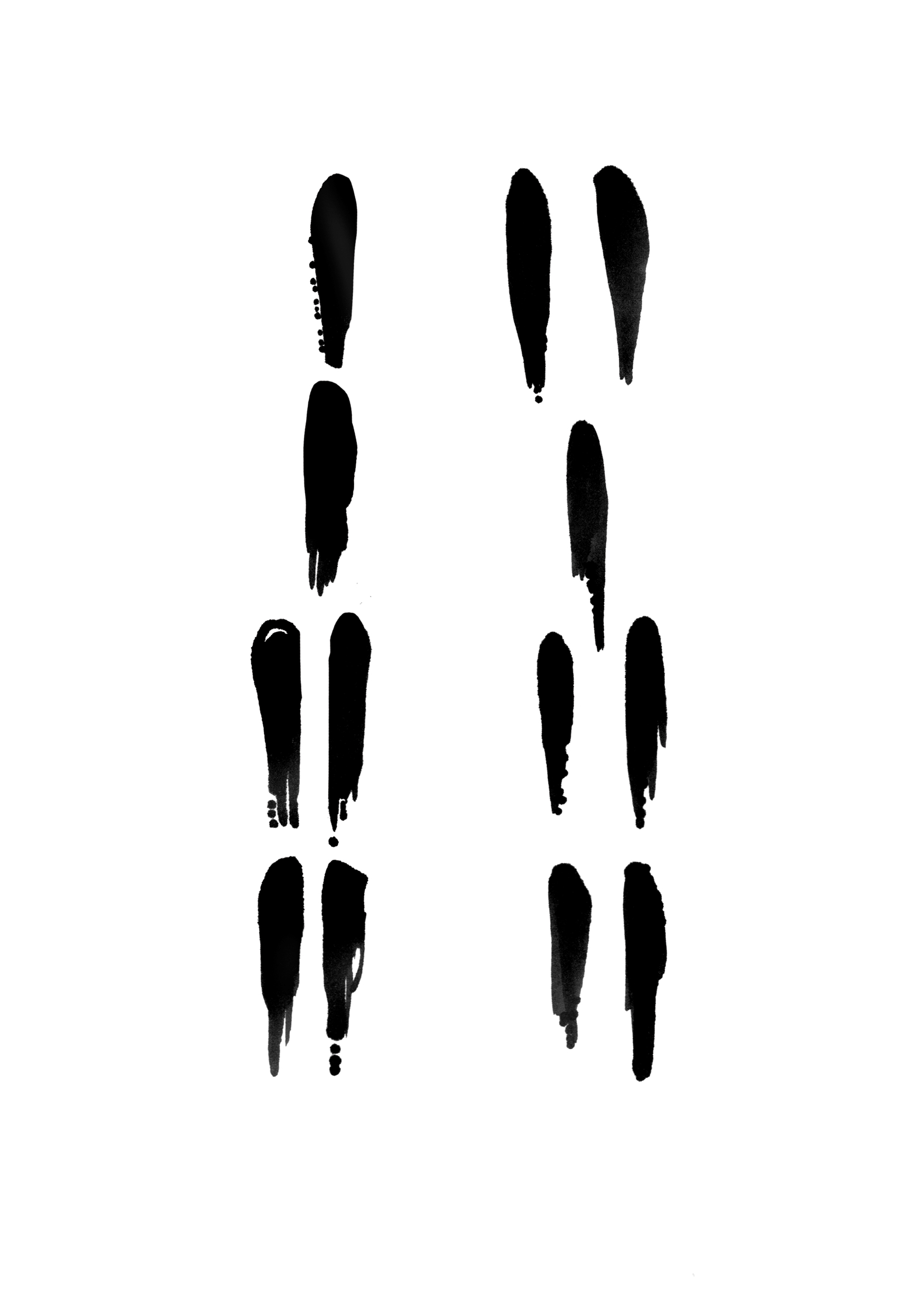
This Academy reads the right column first, then the left. Each row carries a single or double mark.
Where this Odù belongs
Ìká Ìròsùn belongs to the Ìká family in this Academy’s study sequence. It is a mixed Odù, distinct from Ìròsùn Ìká. The order matters. Its teaching is approached through its own narratives, rather than by adding two general descriptions of the principal signs together.
Key Òrìṣà and sacred relationships
The figures below are selected for their roles in the accounts discussed here. They offer connected reading paths through the tradition.
-
Obàtálá. Obatalá governs the troubled town and authorizes an unknown visitor to address corruption; he later honors the intervention through a public memorial of its material symbol.
-
Èṣù. The narrative differentiates Eshu, who guides Osun toward the hidden gathering, from Elegbá among the compromised officers; that local naming should not be harmonized silently.
-
Ògún. Ogún is among the officers implicated in the concealed weapons traffic and later agrees to end it; his role illustrates compromised authority within this particular town.
Key myths and their meanings
The unknown visitor finds the weapons
A town suffers theft and smuggling while Obatalá’s own officers escape proof of involvement. Osun arrives quietly and offers help. Guided by Eshu, he locates a gathering that reveals the officers’ part in trafficking weapons for conflict against their ruler. He confronts them, obtains a promise to end the activity, and has the weapons surrendered. He then disappears rather than accept a share of rule.
The intervention works by reaching information the formal authority cannot obtain through its compromised staff. Its ending combines practical disarmament with an informal agreement that leaves unanswered how future compliance is checked. The visitor’s refusal of office separates useful service from personal advancement. Crucially, this Osun is the guardian or sacred staff figure of the account, not an interchangeable spelling for the river deity Oshún.
Narrative setting: Cuban/Lukumí narrative in the accounts considered here; no individual author established for this passage.
The council asks for advance warning
Babaláwo gather before Olofin to discuss what they need for their work. When asked what would help amid the dangers they face, they propose different answers without grasping the question. Ika Roso finally identifies the missing function: someone or something that will announce an abnormal condition before it overwhelms them. Olofin accepts the proposal, and the account explains their relationship with Osun as a warning presence.
The story distinguishes responding after damage from maintaining an attentive signal beforehand. It also makes the useful proposal emerge from a council rather than one person’s isolated certainty. A warning system is not a guarantee of safety and requires people willing to interpret it. The we can discuss vigilance and institutional attention while leaving the source’s sacred mechanism within its religious setting.
Narrative setting: Cuban/Lukumí narrative in the accounts considered here; no individual author established for this passage.
The father’s house remains a source of arriving good fortune
Orunmila asks whether the good things associated with his father’s house will be lost. The verse answers through a divinatory response that he hears and completes. Its later voice celebrates benefits that remain and others that come toward him, with praise passing from the beneficiary to the diviners and onward to Ifá. Repeated cocoyam-and-water imagery gives arrival a material rhythm, rather than supplying a detailed journey or inheritance dispute. The introductory gloss also refers to benefit from abroad. The narrative’s center is therefore continuity and reception: what is already linked to the ancestral household can endure while further good things approach through the maintained sacred relation.
The account is not simply about acquiring more. Orunmila’s initial question concerns whether an existing relation will lose its efficacy, and the response joins retention with arrival. That distinction deepens the earlier warning-guardian narratives, where a community needs advance notice and a compromised government needs its protective function restored. In each, wellbeing depends partly on maintaining a relation already present rather than finding an entirely new power. The African verse makes the father’s house and Ifá explicit sources within that continuity.
A contemporary interpretation may examine inherited resources or translocal support, but should not translate the ancestral household into financial property alone. Its spiritual and familial meaning exceeds the inventory of objects it might contain. The repeated plant-and-water image also should not become a claim that benefits arrive automatically by natural attraction. The witness presents a completed sacred response and praise, while leaving the actual arrangements of inheritance, travel, and household consent largely unrecorded.
Narrative witness and setting: African Ifá verse in the explicitly named Ayo Salami division, transmitted with Yoruba text and a Spanish rendering in the compilation.
A farmer’s tools cannot stand in for the harvest he does not live to receive
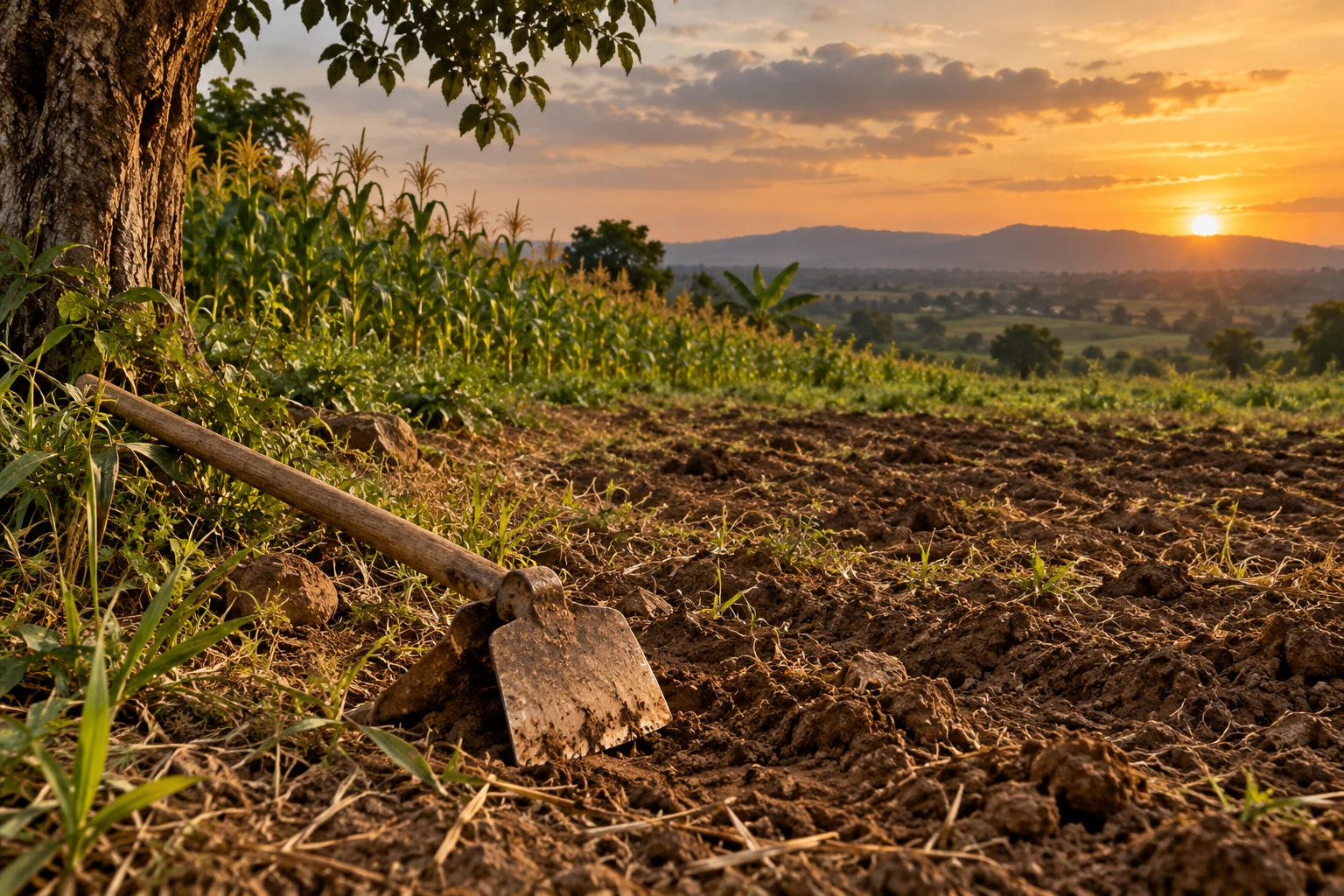
Alao of Igbesa prepares to take up uncultivated land and expresses a desire for the good things of life. Counsel addresses a threat to his continuation, but he does not complete the response. A sudden event takes his life, and the verse ends with the hoe, normally an instrument of work, becoming the object beneath his head in the field. Repeated reflections imagine what a farmer might relinquish if he knew he would not witness the crop. The account gives no detailed cause of death or intervening biography. Its narrated contrast is between preparation for production and remaining alive to receive and share its result.
The verse gives material ambition a temporal limit without declaring cultivation itself mistaken. The hoe and other working objects matter because they are oriented toward a future their owner expects to inhabit. Their final placement exposes the difference between possessing means and reaching fulfillment. Within the religious account, neglected counsel is consequential; the sudden event should not be explained away as ordinary occupational risk alone. Yet the passage does not authorize a reader to infer a sacred failure whenever a farmer dies.
The earlier guardian stories provide a useful comparison: advance warning has a purpose precisely because waiting until loss may leave another kind of response necessary. The patrimonial verse supplies the positive counterpart, maintaining a route through which benefits can endure and arrive. Contemporary interpretation can ask whether the pursuit of output has obscured the conditions of continued life, but the actual cause of Alao’s death is not supplied and must not be invented to make the moral more vivid.
Narrative witness and setting: African Ifá verse in the explicitly named Ayo Salami division, transmitted with Yoruba text and a Spanish rendering in the compilation.
What was born in this Odù
“Born” can name an explicit traditional origin association or what emerges through a story: a capacity, relationship, practice or order of life. Interpretations drawn from a narrative are labelled below, so their basis remains clear.
Preparation of Osun
Selected traditional source association.
The origin list assigns the preparation or charge of Osun to this sign. This concerns a specific Cuban guardian object or figure; its contents and procedure are not reproduced, and it is not relabelled as Oshún.
Cattle kept in enclosures
Selected traditional source association.
The source associates the sign with placing cattle in stalls and becoming sedentary. The classification can support reflection on containment and settled responsibility without claiming a historical origin of animal husbandry.
Correlations to life dimensions
These questions bring the selected stories into contemporary life. They are interpretive invitations for study.
Work and resources
The weapons trade continues because people inside the governing structure profit from it. The narrative supports examining conflicts of interest among those tasked with protecting resources, rather than treating an official role as proof of reliability.
Reflect: Who benefits from the disorder they are meant to prevent?
Relationships and family
The council’s request is for a dependable warning relationship. Such support requires permission to report an unwelcome fact without first proving loyalty through silence or agreement with the most powerful person. The council identifies warning as a function it does not possess.
Reflect: Can someone close to me raise a concern without being treated as disloyal?
Character and inner life
The quiet visitor’s conduct contrasts with authority obtained through reputation alone. The story allows recognition to follow useful work, while his disappearance complicates any assumption that service must culminate in personal promotion. The unknown visitor declines the offered share of government.
Reflect: What would I still contribute if no title followed?
Community and responsibility
Advance warning and weapons surrendered are different achievements. A community needs both information about emerging danger and a way to verify that the concrete conditions producing it have changed. The surrendered weapons are visible evidence beyond the officers’ promises.
Reflect: How will a warning lead to an accountable response?
A deeper reading of the sacred relationships
Ifá’s concern includes keeping a life capable of receiving its portion
The first verse presents Ifá’s answer to a question about benefits linked to the father’s house. The second makes an unfinished response consequential before cultivation can become harvest. Neither treats blessing as a detached commodity that can be acquired while the person’s continuation is ignored. The earlier Cuban guardian accounts likewise give protection an active role in warning and restoring a community’s relation to danger. This comparison explains spiritual responsibility rather than replacing it with a secular safety plan. The recipient, ancestral house, diviners, guardian, and Ifá belong to distinct relations in the witnesses. A contemporary discussion can ask about sustaining conditions, but should preserve the particular agencies through which the sources understand a life’s portion as retained, approaching, or left unrealized.
The interval between a signal and an outcome is valuable time
The council’s request for a warning presence makes an interval before harm religiously meaningful. The Alao verse shows that production plans can be overtaken before their intended result, while the patrimonial verse portrays continuity that allows arriving benefits to be received. The corruption narrative adds a different interval, during which apparently legitimate officers conceal the route of weapons. A contemporary lens can ask what becomes possible while there is still time to respond and who has access to the signal. This is not a claim that every loss could have been prevented by greater attention. The sources describe particular warnings and outcomes. Their value lies in distinguishing notice, interpretation, and effective response rather than treating foreknowledge as automatic safety.
A named source of benefit should not be reduced to its material contents
The father’s house in the African verse includes a continuing relation from which good things approach; the guardian in the Cuban accounts includes an active capacity to warn and confront concealed disorder. Describing one only as inherited property and the other only as an alarm would lose their sacred standing. Alao’s tools show the converse danger: material objects are real and necessary, but cannot by themselves supply the future toward which they are directed. A contemporary comparison can hold both points together. Spiritual relations should not be abstracted away from the things through which they are lived, and useful things should not be asked to guarantee a living continuity they do not possess independently of the person and their sacred responsibilities.
Questions that deepen the study
Is the father’s house merely a promise of inherited wealth?
The verse includes wealth among approaching benefits, but its initial concern is the continuity of a relation to the father’s house rather than a documented estate. It joins that relation with completed counsel and praise returning toward Ifá. A reference can therefore discuss inheritance in a wider familial and spiritual sense while admitting that the passage gives no property dispute, testament, or distribution among heirs. Contemporary readers may ask what makes an inherited relation fruitful and responsibly maintained. They should not be told that a particular family will provide money, marriage, or children because of a general sign article. Those are narrated blessings within this witness, not individualized forecasts.
Why does the hoe at the end carry more meaning than a failed crop?
The account does not say the cultivation lacked technical skill or that the field could not produce. It shows the worker absent from the future the tools were meant to support. The hoe’s changed function makes that interruption concrete and places mortality inside the account of production. Within the religious verse, the uncompleted response is part of that history. A contemporary interpretation can ask whether living continuation has been overlooked in pursuit of output, but should not invent a cause of death or blame actual people for sudden loss. The image concerns an unrealized relation between labor and benefit, not a technical lesson about a particular crop or implement.
How should Osun’s guardian role remain distinct from Oshún here?
The earlier Cuban narratives describe a warning presence and a material guardian associated with identifying abnormal conditions and confronting concealed weapons. The river deity Oshún is not thereby an actor in those episodes, even where an editorial heading uses a confusing transliteration. The new African verses add Ifá’s concern with continuity and protection but do not erase that distinction or supply a universal identity for the guardian across traditions. A clear reference can explain each named function and its evidence before making comparisons. That prevents a shared spelling from manufacturing theology and lets readers see how warning, ancestral benefit, and mortal time contribute differently to the sign’s selected accounts.
What the four narratives reveal together
The additions give Ìká Ìrosùn a temporal depth beyond detecting immediate disorder. One verse asks that an ancestral route of good fortune remain active and describes benefits arriving through completed counsel. The other places a farmer’s desired harvest beyond an interrupted life, with the hoe becoming a final image of unrealized production. The earlier guardian and anti-corruption narratives add warning and the exposure of compromised protection. Together they distinguish the presence of resources, the approach of benefit, the time to respond, and the living capacity to receive an outcome.
Their spiritual orders remain particular: Ifá, the father’s house, divinatory responsibility, and the Cuban warning guardian are not interchangeable mechanisms. Contemporary reflection can ask what continuity needs maintenance without making mortality a moral diagnosis, collapsing Osun into Oshún, or turning a compact verse into a personal promise about the next event in a reader’s life.
Living with this Odù
A continuing life or initiatory relationship
For someone whose received life or initiatory Odù is Ìká Ìròsùn, warning and continuation can become sustained questions. The town's officers use their position to evade proof, while Osun's quiet intervention makes concealed weapons visible without seeking a share of rule. The council account identifies advance warning as a function distinct from strength after a crisis. The father's house verse adds continuity through a maintained relation to Ifá, while Alao's unfinished harvest makes production insufficient if the person does not remain to receive its result.
Over time, character may develop through creating room for a warning before it becomes overwhelming and distinguishing continuity from an assumption of permanent safety. The inward temptation may be to treat vigilance as distrust or the intention to produce as evidence that every other condition has been met. These witnesses do not forecast theft, death or inherited wealth. They preserve Osun as a warning presence rather than Oshún, and keep divine counsel and sacred response active. Carrying the sign may invite a more exact relation to information, ancestral connection and the full duration of an undertaking, so preparation includes the life that must continue beyond its first visible effort.
A particular consultation and its question
A consultation can distinguish a warning function from accusation, an established source of benefit from a new gain and readiness to work from continuation to harvest. Osun's account asks whether the people responsible for enforcement are also implicated in what remains concealed. It cannot establish that a client's officials are corrupt. The council narrative asks what would make an abnormal condition perceptible early enough to matter, rather than merely adding force after it becomes public. The father's house verse locates continuing and arriving good within Ifá, not a guarantee that inheritance is secure.
Alao's death supplies a sparse religious contrast whose missing cause must not be invented. A practitioner may ask what information, relation or condition has been omitted from an apparently well prepared plan. Contemporary reflection can examine the route by which a concern is heard, whether those receiving reports are independent and who expects to share the eventual result. A situational result does not confer an identity of permanent danger. Its meaning remains with the actual reading, while the narratives sharpen the distinction between hearing a signal, finding evidence, preserving a relation and being able to receive the benefit of one's own labor.
Constructive and adverse possibilities
Constructive unfolding can include concealed weapons being surrendered, a warning presence finding its proper place and benefits continuing through an acknowledged relation to Ifá. Osun's withdrawal also distinguishes useful intervention from acquiring rule. Adverse movement appears where officers conceal their own involvement or work begins without the continuation addressed in counsel. Alao's death must not be turned into blame for real workers harmed in the field, and the source supplies no cause for a modern diagnosis. Iré and osogbo require the actual consultation rather than a calculation of tools, property or intention.
The witnesses show that a household may retain benefit while still needing warning, and that production can be materially prepared yet remain incomplete. Religious agency and the vulnerable duration of a life both belong inside that distinction. The warning function needs a route into responsible attention.
An illustrative situation in everyday life
Hypothetically, a cooperative buys equipment and secures land for a long cultivation project. Its members celebrate readiness, but the person receiving safety and financial reports is also responsible for several unrecorded purchases. A junior member's early concerns are dismissed as disloyal. The council and weapons structures ask whether warning can reach someone independent enough to act. Alao's harvest adds a broader question about continuation beyond the initial investment, without predicting death or a failed crop. The members feel that confidence is necessary to begin; the junior member fears becoming the source of delay. This is an illustrative interpretation. The external problem is not simply a shortage of effort but an information arrangement that may prevent the group from knowing what its future depends upon.
Sources and reading context
The first two narrative witnesses
The source headings mistransliterate the guardian as Ọ̀ṣun, but the narratives concern Osun and a warning staff, not Oshún. No unsupported deity key is forced for that figure. The Cuban-labelled account also differentiates Eshu and Elegbá within its plot; their roles remain as presented.
Narrative motifs are summarized independently. The life-dimension reflections are contemporary interpretation. How these reference studies are built explains the wider source approach and the distinction between a reference article and personal divination.
Additional named witnesses
-
Ayo Salami. Both the patrimonial-fortune and Alao verses occur in the explicitly named African witness division.
-
Cuban/Lukumí-labelled collection. The prior guardian and concealed-weapons narratives supply distinct comparisons of warning and restored protection.
The verses give no detailed inheritance arrangement or cause of Alao’s death. Their repeated plant and tool images are retained without botanical or clinical claims. The guardian Osun remains distinct from Oshún despite an inconsistent heading, and no individualized prediction is inferred from the blessings or warning.
Bibliographic identification
- Ayo Salami. Ifá: A Complete Divination. Lagos: NIDD, 2002 catalogue record. Library catalogue record. Bibliographic identification of the named author and work; the edition behind the transmitted account remains to be matched.
Read the source method and wider scholarly context.
The catalogue links identify published works and their authors. They are separate from proof of an individual episode’s wording or attribution. Contemporary comparisons and the synthesis above are editorial interpretation. The author’s books and Academy companions below provide further study; their sales links are separate from the source references.