
Ìká Òwónrín is a mixed Odù in Ifá’s 256-part corpus. Ìká Òwónrín’s selected stories concern the resources that keep households and villages alive. An elephant destroys cultivated fields until a hunter organizes collective resistance; thieves take the source of nourishment for Obatalá’s children. In both, power is judged through its effect on dependents rather than its size or daring. The listed nails, totems, and religious images add a material dimension of outward marks, protection, and representation without resolving the tales’ severe punishments.
A question to carry through the study: Whose ordinary sustenance is placed at risk by the way power is being exercised?

This Academy reads the right column first, then the left. Each row carries a single or double mark.
Where this Odù belongs
Ìká Òwónrín belongs to the Ìká family in this Academy’s study sequence. It is a mixed Odù, distinct from Òwónrín Ìká. The order matters. Its teaching is approached through its own narratives, rather than by adding two general descriptions of the principal signs together.
Key Òrìṣà and sacred relationships
The figures below are selected for their roles in the accounts discussed here. They offer connected reading paths through the tradition.
-
Ọ̀ṣọ́ọ̀sì. Oddé organizes the villagers, hunts the crop-destroying elephant, and distributes its usable substance while keeping the tusks; the hunter figure’s specific naming is retained with contextual limits.
-
Obàtálá. Obatalá provides nourishment for his three children, seeks advice about theft, and reacts severely when the source of their food is stolen.
-
Ọ̀rúnmìlà. Orunmila warns Obatalá to safeguard his possessions before the theft; the narrative does not explain whether or how the warning could have prevented the loss.
Key myths and their meanings
The fields require a collective defense
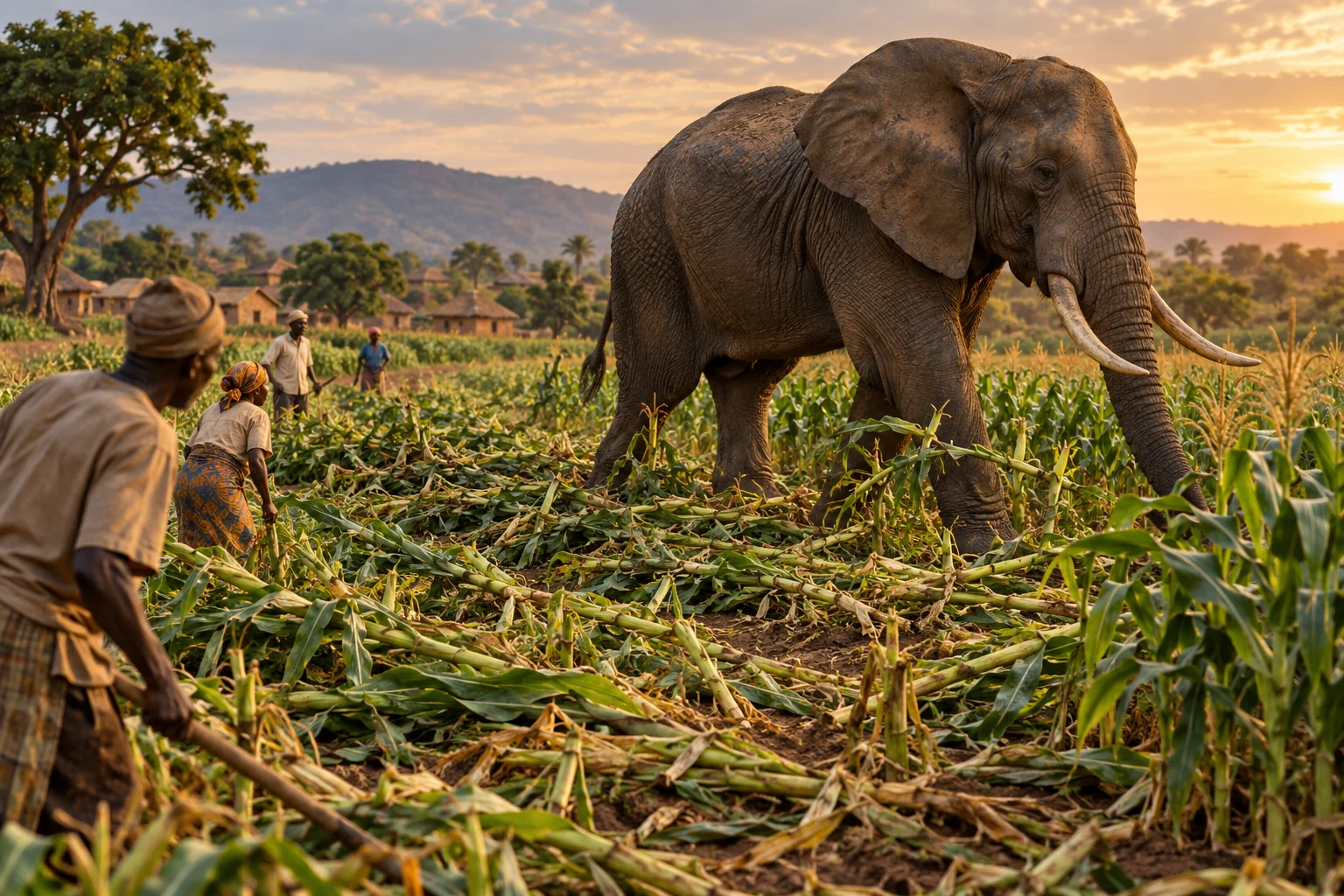
An elephant travels through cultivated land, destroying crops and leaving a village short of food. When the damage reaches the hunter Oddé’s neighborhood, he gathers people from the surrounding settlements and organizes a hunt. After the elephant is killed, he keeps the tusks and distributes the rest among the people. The tale makes destructive strength answerable to the many households whose work it has undone.
The crop loss matters before the elephant’s punishment: it transforms private displays of power into a collective survival problem. The distribution of the animal’s substance partly reverses deprivation, although the hunter reserves the prestige material. A contemporary reading can examine that allocation without adopting the story as wildlife policy or endorsing killing as the ordinary response to a powerful person who causes harm.
Narrative setting: Cuban/Lukumí narrative in the accounts considered here; no individual author established for this passage.
The stolen source of children’s food
Obatalá feeds three sons from the milk of a goat kept at home. Three thieves trouble the wider town, and Orunmila warns him to protect what belongs to him. Despite precautions, they steal the goat, depriving the children of nourishment. Obatalá responds with a curse, and the account says that the thieves’ capacities are permanently damaged. The story connects household theft with a wider failure of community safety.
This tale gives a stolen possession an immediate human meaning: children lose what sustains them. Its punishment, however, associates disability with moral retribution, which should be recognized as a limitation of the source rather than repeated as an explanation of disability. The defensible analytical focus is the harm caused to dependents and the need for protection that extends beyond private ownership.
Narrative setting: Cuban/Lukumí narrative in the accounts considered here; no individual author established for this passage.
Aláaka’s children flourish in a relation with the hill
Aláaka receives counsel while bringing her children toward Oke, rendered as a hill in the Spanish text. She responds and proceeds to the hill’s base, where the verse describes further births and successful nourishment of the children. Praise passes from Aláaka to the named diviner and from the diviner toward Ifá. The passage is compact: it records a directed movement, a completed sacred response, a place of continuation, and acknowledgment of the relation that makes the outcome meaningful. It does not identify Aláaka’s species, describe a medical intervention, or narrate the children’s later occupations, so those details cannot be supplied from the title’s general language of wellbeing.
The movement toward Oke should not be reduced to selecting a healthier physical environment. The verse names a relation disclosed through divination and completed through response, and its Yoruba and translated forms do not exhaust the place’s sacred meaning in the same way. At the same time, the excerpt does not justify constructing a complete theology of Oke from one brief episode. Its specificity lies in nourishment becoming possible in a directed place. That deepens the earlier Obatalá story, where stealing the milk-giving goat interrupts children’s ordinary continuation, and the elephant story, where damaged crops threaten a wider settlement.
The three accounts place care in a material relation without making food merely secular or divine support merely symbolic. Contemporary reflection can ask where dependents can actually be sustained, while preserving the source’s spiritual explanation and avoiding a promise that relocation to a hill ensures children’s health or that households experiencing illness have chosen the wrong place.
Narrative witness and setting: African Ifá verse in the explicitly named Ayo Salami division, transmitted with Yoruba text and a Spanish rendering in the compilation.
A captive’s remembered family history reaches the king’s mother
Ikubolaje has children in different towns through successive marriages. Later war brings two sons as captives to the town where a younger brother, whom they have never met, has become king. They are bound in the palace courtyard. During the night one recalls their mother’s history aloud and laments not knowing where the younger brother lives. Their mother hears the account, summons the king, and asks him to listen. He recognizes the men as his brothers, orders them released, and receives them into his household. The verse ends in shared rejoicing and praise of the diviners and Ifá, without detailing a prior consultation or a wider release of all captives.
The rescue depends on a history that military classification has not preserved. The men appear as prisoners, but their recitation makes another relation audible to someone able to recognize it. The younger king’s initial ignorance is not explained as contempt: he has never met them. His mother’s presence and memory are therefore indispensable, not incidental sentiment. The verse’s framing places release within Ifá’s work against captivity and disorder, while the narrated human acts show how that result comes through hearing and acknowledgment.
Compared with the earlier crop-defense story, collective power here initially creates the danger rather than immediately protecting the vulnerable. Compared with Obatalá’s threatened children, the mother does not need to acquire a new resource; she must make a dispersed lineage known. Contemporary interpretation can examine recognition and testimony, but should not invent a universal abolition of captivity. The source frees these kin and leaves the status of others unrecorded, which is an important limit on any broader political claim.
Narrative witness and setting: African Ifá verse in the explicitly named Ayo Salami division, transmitted with Yoruba text and a Spanish rendering in the compilation.
What was born in this Odù
“Born” can name an explicit traditional origin association or what emerges through a story: a capacity, relationship, practice or order of life. Interpretations drawn from a narrative are labelled below, so their basis remains clear.
Fingernails and toenails
Selected traditional source association.
The origin list locates nails here. They are an outward bodily feature in the source’s associative system, but the selected stories do not supply an explanation of their emergence or a basis for medical claims.
Totems and religious images
Selected traditional source association.
Religious images and the term totem appear in the list. Their scope is not explained, so the association should remain local instead of collapsing diverse African and diaspora image traditions into one category.
Correlations to life dimensions
These questions bring the selected stories into contemporary life. They are interpretive invitations for study.
Work and resources
The elephant erases cultivation rather than producing an alternative source of food. The tale supports assessing the material cost of conduct that appears impressive or powerful from the actor’s own perspective. The elephant repeatedly destroys the results of cultivated labor.
Reflect: What work will somebody else have to repeat because of this action?
Relationships and family
Obatalá’s loss matters because the goat feeds children. The story supports looking beyond ownership to dependency: a damaged resource can affect people who had no role in the dispute or theft. The stolen goat supplies the children’s ordinary nourishment.
Reflect: Who depends on the thing being treated as a replaceable possession?
Character and inner life
The elephant’s assumed superiority prevents it from reckoning with coordinated resistance. Strength becomes poor judgment when it encourages a person to ignore the cumulative effects of smaller harms across many people. The hunter succeeds through villagers assembled from several settlements.
Reflect: What response might emerge when people affected by my conduct compare their experiences?
Community and responsibility
Oddé’s organization and distribution make defense communal, though the tusks remain his. The narrative invites questions about how those who lead collective protection should account for the benefits and recognition they retain. The tusks and the distributed substance have different recipients.
Reflect: How will the outcome of shared effort be distributed fairly?
A deeper reading of the sacred relationships
Ifá’s narrated fulfillment can work through place and remembered relation
Aláaka’s movement toward Oke and the captives’ release are both framed through praise returning to Ifá, but their effective relations differ. One concerns a disclosed place where children are sustained; the other concerns a lineage made audible across a war-created classification. The captivity verse does not supply every earlier ritual act, so the reference should not invent one to make its sacred structure more familiar. The earlier Obatalá account also joins divine protection with a concrete source of nourishment, while the hunter’s collective defense concerns cultivated land. These witnesses give spiritual responsibility material and social expression without making those expressions interchangeable. Contemporary interpretation should follow the relation actually narrated before translating fulfillment into a generic concept of resilience or communal support.
A public classification can hide a history known elsewhere
The two brothers become prisoners before anyone at court recognizes their kinship to the ruler. Their recited history does not manufacture a new relation; it supplies knowledge that the present category has omitted. The older stories likewise make visible possession incomplete as evidence: a stolen goat is more than property because children depend on it, and an elephant’s size is not a measure of its right to destroy cultivated fields. A contemporary lens can ask what a current label conceals about contribution, dependence, or earlier connection. That comparison does not make every unverified claim true. In the captivity account a mother with relevant memory hears a specific history, and the king acts after recognizing it rather than simply rewarding a persuasive stranger.
Nourishment and release require different forms of attention
Aláaka’s children need a place and continuing provision; the bound brothers need their relation to be heard and their restraints removed. Obatalá’s children need protection of what feeds them, while the village needs a response to repeated destruction of crops. These are not four instances of one undifferentiated kindness. Each requires identifying what is missing and who can change that particular condition. The religious accounts provide the relevant divinatory and divine relations, and the narrated actions make their consequences concrete. A contemporary reflection can ask whether a helper is offering the response they prefer or the one the situation requires. It should not imply that recognition alone feeds children or that material aid alone resolves captivity whose governing relation has not changed.
Questions that deepen the study
Can the hill episode be used to recommend a place for raising children?
Not as a general geographic prescription. The verse gives Aláaka a particular relation with Oke through counsel and response, then records nourishment and praise. The Spanish rendering as a hill does not establish that elevation itself causes wellbeing or that every family should move. A reference can explain the spiritual significance of a directed place while admitting how little independent detail the excerpt supplies about that place. Contemporary readers may ask whether dependents have the conditions they need, but should not receive a clinical or environmental guarantee. The story’s source-specific sacred relation, rather than an invented general rule about terrain, is what makes its movement meaningful.
Why is the mother necessary when the king already has power to release the captives?
Power does not automatically supply the knowledge required to use it. The king has never met the two men, while their mother can recognize the history recited in the courtyard and direct him to hear it. Her role connects dispersed children and allows an existing relation to become actionable. Within the verse this release is celebrated in relation to Ifá, not presented as self-sufficient royal benevolence. A contemporary interpretation can ask what knowledge lies outside an institution’s classification and whose memory can make it available. It should not conclude that every captive is a hidden relative or that family recognition resolves the condition of all others held by the same authority.
What keeps the new release story distinct from the earlier collective defense?
The village’s hunt responds to actual destruction of its food-producing land, while the war in the new verse delivers relatives into captivity without the king knowing who they are. Collective force is protective in one narrated relation and a source of danger in another. The difference should not be smoothed into a general claim that the powerful are either always guardians or always aggressors. A contemporary answer needs to identify what the force does, who is affected, and what information governs the response. The sacred framing remains particular to each account, and the source gives no universal political theory that would make one outcome settle all questions raised by the other.
What the four narratives reveal together
The additions bring Ìká Òwónrín’s earlier concern with sustenance into a disclosed place and a remembered lineage. Aláaka’s children flourish through a specific relation with Oke and Ifá, while captive brothers are released when their history reaches a mother and king able to recognize it. The earlier elephant and stolen-goat stories add damaged fields and interrupted household nourishment. These accounts distinguish needs that are often merged under a general language of protection: food must be produced and retained, a place must sustain dependents, and a restraint must be removed after a hidden relation becomes known.
Their spiritual realities remain active even where human listening or agricultural work is prominent. Contemporary interpretation can examine classification and care without turning the hill into medical geography, the reunion into universal emancipation, or bodily suffering in the punitive older tale into an explanation of disability.
Living with this Odù
A continuing life or initiatory relationship
A received life relationship with Ìká Òwónrín can make shared sustenance more significant than isolated strength. The elephant's movement destroys many households' cultivated work, so defense becomes collective. The stolen goat is not merely property; its loss interrupts the children's food. Aláaka's verse supplies a different configuration of nourishment through a directed relation to the hill and Ifá. The captives' remembered family history then changes their standing when a mother hears them and brings the king into recognition. Across a life, character may develop through seeing what a possession supports, whose work a force destroys and which voice is able to reconnect a separated relation.
The inward temptation may be to notice the powerful actor while overlooking those who depend on a source of food, or to assume that people presented as captives have no history beyond that status. These witnesses do not predict theft or establish kinship as a complete solution to captivity. They retain the sacred relations and limited outcomes of their accounts. Carrying the sign may invite responsibility for a network of nourishment and recognition, while refusing to make disability in the thieves' punishment a moral explanation of actual human bodies.
A particular consultation and its question
In consultation, the sign's narratives can differentiate damage to a common livelihood, the loss of a household's sustaining source and a history that has not reached the person able to act. The elephant story asks what coordination is necessary when separate households face the same destructive force. The goat account asks what an object or animal actually provides before its loss is evaluated. Aláaka's verse connects successful nourishment with a particular place and sacred response, without describing a treatment or species that can be supplied by inference.
The captives' history asks who must hear an account for a status to change. A practitioner cannot announce that an unknown captive is a king's relative or that family recognition will free everyone. The actual question may concern provision, collective defense, missing information or a relation obscured by distance. Contemporary reflection can ask who is carrying the cost, what continuity requires and which listener can receive the neglected history. A situational result is not a permanent identity of vulnerability. Religious agency remains part of the witnesses, while the modern interpretation preserves their limits and does not turn violent punishment into a practical response or a forecast.
Constructive and adverse possibilities
Constructive unfolding can include coordinated protection of crops, nourishment continuing through a sacred relation and remembered kinship becoming audible to someone able to interrupt captivity. Adverse movement appears when destructive strength erases shared labor or theft deprives dependents of a sustaining source. The king's brothers are released, but the verse does not establish a wider emancipation; joy within one household cannot settle the condition of every captive. Likewise, the thieves' damaged capacities remain narrative punishment rather than an ethical explanation of disability. Iré and osogbo need the actual religious context.
The witnesses ask whose life becomes possible through a resource or a hearing, not merely who wins. Shared provision and recognition can change a configuration substantially while leaving wider inequalities that the account does not resolve. The unreleased captives remain outside the narrated household celebration.
An illustrative situation in everyday life
Hypothetically, several small farms suffer damage from a powerful neighbor's repeated use of a shared route. One family also loses the equipment that keeps children's meals available during harvest. The elephant and goat structures distinguish damage to collective livelihood from the loss of a specific sustaining source. During a meeting, a displaced worker explains a family history that had never reached the person deciding access. The captive narrative adds attention to who can hear an account, without promising kinship or release as a universal solution. This is an illustrative interpretation. The farmers feel isolated and the worker feels reduced to a temporary label. The practical question is how coordinated protection and an accurate hearing can preserve the lives behind visible property and status.
Sources and reading context
The first two narrative witnesses
The selected Cuban-labelled tales appear in edited English. Oddé is treated as a hunter association rather than equated with every form of Oshosi. The goat is mistranslated as a calabash in one gloss; the milk context supports retaining the animal. Disability is not moralized as a real-world consequence.
Narrative motifs are summarized independently. The life-dimension reflections are contemporary interpretation. How these reference studies are built explains the wider source approach and the distinction between a reference article and personal divination.
Additional named witnesses
-
Ayo Salami. Both the Aláaka/Oke and dispersed-family captivity verses occur in the explicitly named African witness division.
-
Cuban/Lukumí-labelled collection. The earlier elephant/crops and Obatalá/nourishing-goat accounts provide distinct comparisons of provision and protection.
Aláaka’s species and Oke’s full identity are not supplied by the translated excerpt. The captivity verse records praise but not every prior consultation or a general release of prisoners. Repeated names vary in spelling. No geographical health claim, punitive explanation of disability, or universal political settlement is inferred.
Bibliographic identification
- Ayo Salami. Ifá: A Complete Divination. Lagos: NIDD, 2002 catalogue record. Library catalogue record. Bibliographic identification of the named author and work; the edition behind the transmitted account remains to be matched.
Read the source method and wider scholarly context.
The catalogue links identify published works and their authors. They are separate from proof of an individual episode’s wording or attribution. Contemporary comparisons and the synthesis above are editorial interpretation. The author’s books and Academy companions below provide further study; their sales links are separate from the source references.