
Ìká Òtúrá is a mixed Odù in Ifá’s 256-part corpus. Ìká Òtúrá juxtaposes a faithful dog that unintentionally reveals a hiding place with a father distressed by the lack of unity among his children. The first story warns that affection does not guarantee good judgment in an emergency. The second locates reassurance in a shared capacity that can outlast the parent. The origin list names parental concern for children’s future, making succession and continuity more specific concerns than generalized anxiety.
A question to carry through the study: What understanding must accompany goodwill for it to protect the people it intends to help?
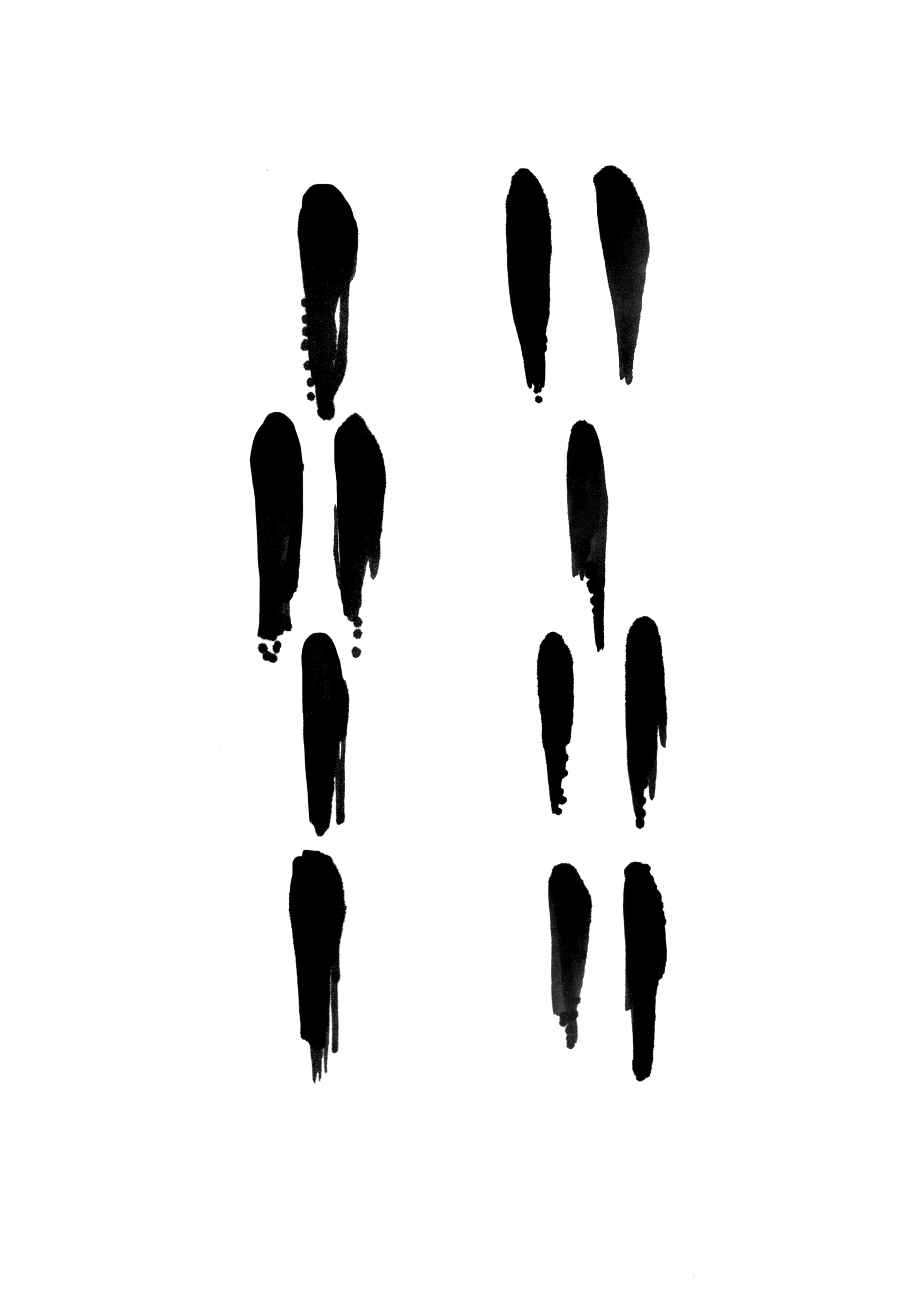
This Academy reads the right column first, then the left. Each row carries a single or double mark.

Where this Odù belongs
Ìká Òtúrá belongs to the Ìká family in this Academy’s study sequence. It is a mixed Odù, distinct from Òtúrá Ìká. The order matters. Its teaching is approached through its own narratives, rather than by adding two general descriptions of the principal signs together.
Key Òrìṣà and sacred relationships
The figures below are selected for their roles in the accounts discussed here. They offer connected reading paths through the tradition.
-
Ọ̀rúnmìlà. Orunmila warns the king before the dog reveals him and later receives the anxious father with Oduduwa; his counsel concerns preparation and the family’s shared continuity.
-
Odùdùwà. Oduduwa hears the father’s worry about divided children, accompanies him to consultation, and remains with the community after a process that strengthens their unity.
Key myths and their meanings
The loyal dog reveals the hiding place
A king ignores Orunmila’s warning about a coming conflict. When the war arrives and he loses, he hides beneath an overturned jar. Those searching cannot locate him, but his dog runs repeatedly between the hidden king and the people. Its movement draws their attention to the hiding place, and the king is found and killed. A loyal bond becomes the route by which his concealment fails.
The dog’s action is not betrayal in intention; it lacks understanding of the danger created by seeking or maintaining contact. The tale supports distinguishing goodwill from situational judgment. Its fatal outcome should not become a warning against friendship or keeping an animal. The more precise question is what information and preparation those close to a person need when ordinary signs of attachment could expose something sensitive.
Narrative setting: Cuban/Lukumí narrative in the accounts considered here; no individual author established for this passage.
A father cannot choose an heir to unity
An Awó has seven dissatisfied sons and fears what will happen when he can no longer protect them or entrust his knowledge to someone. He asks Oduduwa for help. Together they consult Orunmila, and a collective religious process is followed by stronger ground and improved cooperation among the sons. The father’s relief comes from their capacity to act together, while Oduduwa remains associated with the land’s continuing stability.
The story’s central fear is not death alone but an unfinished structure of responsibility. The father cannot solve it simply by naming a favorite child; the descendants must change how they relate to one another. The source frames this through ritual and divine presence, but we can examine shared stewardship without promising a cure for anxiety or prescribing a ceremony to reconcile a family.
Narrative setting: Cuban/Lukumí narrative in the accounts considered here; no individual author established for this passage.
Òrúnmìlà’s covered ikin retain an active voice
Òrúnmìlà prepares to enter ilédì without announcing it to everyone. The verse frames the movement through the image of an elder walking carefully at night. He receives advice to offer sacrifice and is described as reflective while his representatives continue divination. At ritual service he requests sustenance and receives it. The episode ends in favorable life and praise. A later glossary in this same named collection explains ilédì through divinatory ikin covered in a vessel. That explanation clarifies the closing image of someone covered yet able to speak: the narrative represents continuing sacred presence rather than an account of an institution abandoned by its founder.
The collection’s own glossary gives a specific way to understand the vessel image, and that witness is stronger than guessing from the unfamiliar term alone. Within this rendering, covered ikin provide the material focus through which Òrúnmìlà’s continuing voice and reception remain intelligible. This is a collection-specific explanation, not permission to equate every use of ilédì across traditions with a single object or ceremony. The represented structure joins reduced visibility, continuing divination by representatives, and directed sustenance. The cautious elder image associates that condition with attentive movement rather than disappearance from relationship.
Its religious logic cannot be reduced to the psychological memory of an absent teacher: the sacred person remains able to request and receive. A contemporary reading can examine mediation or authority beyond public visibility, provided it retains the ikin’s sacred reality within the account. The glossary clarifies terminology without adding a new narrative event, identifying a historical institution, or establishing a death, burial, or initiation sequence that the supplied verse never narrates.
Narrative witness and setting: African Ifá verse in the explicitly named Ayo Salami division, transmitted with Yoruba text and a Spanish rendering in the compilation.
Guinea worm brings a war of immobilization
The guinea worm travels from heaven toward earth carrying war. It is advised to offer sacrifice, and its arrival is described as a search for people to immobilize. A repeated image compares two short pieces of wood striking until they reduce one another to powder. The human-facing prayer asks protection from the worm’s disabling effect and urges a prudent response to trouble. The passage does not narrate an individual patient’s history, a cure, or the worm’s acceptance of counsel. It combines antagonistic movement, grinding contact, and petition for protection, with bodily vulnerability made explicit inside its sacred account of danger.
The two pieces of wood do not identify a particular war or supply a complete theory of illness. They give an image of contact that destroys the participants’ capacity to remain intact. Beside the guinea worm’s announced purpose, that image permits an interpretation of conflict as a process that can immobilize more than the person who begins it. The verse’s religious response is equally explicit: protection is sought through Ifá, and the adversarial agent is addressed in prayer. That must be represented without asserting that a ritual replaces care for disease or that disability demonstrates a moral failure.
The passage does not say that a named sufferer provoked the worm, and it should not be made to accuse people whose circumstances it never narrates. Its contribution to the sign study is a serious account of vulnerability alongside the cautious elder’s movement. Prudence has a bodily horizon here; the possibility of being stopped belongs to the stakes of the prayer rather than a decorative metaphor for inconvenience.
Narrative witness and setting: African Ifá verse in the explicitly named Ayo Salami division, transmitted with Yoruba text and a Spanish rendering in the compilation.
What was born in this Odù
“Born” can name an explicit traditional origin association or what emerges through a story: a capacity, relationship, practice or order of life. Interpretations drawn from a narrative are labelled below, so their basis remains clear.
Parental concern for children’s future
Selected traditional source association.
The origin list explicitly identifies worry about descendants’ future. The selected father narrative gives this concern an institutional form through knowledge, property, and cooperation; it is not treated as a diagnosis of parental anxiety.
The ace or first position
Selected traditional source association.
The second list item is simply as. Its meaning is uncertain in the excerpt and may refer to an ace or a leading position. The ambiguity is retained rather than expanded into an invented doctrine of rank.
Correlations to life dimensions
These questions bring the selected stories into contemporary life. They are interpretive invitations for study.
Work and resources
The father’s worry includes who can receive what he has built. The story supports planning for continuity through shared knowledge and relationships, rather than assuming that property alone will ensure a stable future. The father worries about both his knowledge and his children.
Reflect: Who can carry the work if the present holder of responsibility is absent?
Relationships and family
The dog story shows attachment without enough context, while the father story seeks informed cooperation among relatives. In both, a bond becomes protective only when behavior responds to the actual situation. The dog’s attachment persists without understanding the king’s concealment.
Reflect: What do people close to me need to understand before trying to help?
Character and inner life
The father’s uncertainty cannot be resolved solely through more private effort. His relief follows a change in the group, suggesting that some worries reflect a genuine gap in shared responsibility rather than an individual failure to feel calm.
Reflect: Which worry points to a conversation or agreement that has not happened?
Community and responsibility
Oduduwa’s continued presence marks stability as ongoing work. Family unity is presented as a capacity to maintain a place together, not simply temporary agreement while the parent is watching. Oduduwa remains connected with the place after the immediate resolution.
Reflect: What arrangement will still work when the person holding everyone together steps back?
A deeper reading of the sacred relationships
Continuing sacred presence differs from public visibility
Òrúnmìlà’s representatives continue their divinatory work while the account describes his less public position, reflective activity, request, and received sustenance. The same collection’s glossary relates ilédì to ikin covered in a vessel, giving the final image a specific sacred material context. Its religious logic therefore cannot be captured by saying that an institution merely remembers a former leader. A sacred presence remains active through this represented exchange. The article can explain that relationship while declining to reconstruct a death, burial, or historical institutional transition absent from the passage. The terminology clarification supports the reading of the existing events; it does not supply additional events or a universal equivalence for every tradition using the word.
Prudence concerns the conditions of movement
The careful elder at night moves rather than refusing every journey. The worm passage, by contrast, fears movement turned into immobilization through destructive contact. These two images make prudence a question about conditions and consequences, not simple slowness. The earlier dog story adds another complication: loyalty itself can disclose a hidden position when others follow the animal. The earlier father’s divided heirs show that occupying a shared inheritance does not automatically yield coordinated action. An analytical comparison can therefore ask how movement, concealment, and collective direction interact. The answer remains situated in each narrative. None gives a universal instruction either to hide, to remain publicly visible, or to avoid every uncertain undertaking.
Prayer names vulnerability without supplying a patient’s blame
The guinea worm is addressed as an agent whose harmful purpose should not be realized. The verse’s petition makes protection a serious religious concern while leaving individual patients absent from the story. That absence matters. A modern article should not add a narrative in which an unnamed disabled person must have ignored counsel or caused conflict. The source supplies a warning, an adversarial journey, and an appeal, not a diagnosis of someone’s past actions. Respecting its religious explanation therefore also requires respecting its scope. Contemporary reflection may consider how destructive confrontation can constrain a community’s capacity to act, but that interpretation cannot transform actual bodily impairment into proof of anyone’s character or spiritual standing.
Questions that deepen the study
What can responsibly be said about ilédì in this account?
The verse represents entry into ilédì, continuing divination by representatives, ritual provision, and Òrúnmìlà’s capacity to request. A later glossary in this same collection explains the term through ikin covered in a vessel, explicitly naming their place in Ifá worship. That clarification makes the closing image of covered but continuing speech intelligible without inventing a burial or institutional retirement. It should be scoped as the collection’s explanation rather than a universal definition across every lineage. The article can therefore discuss sacred material presence and mediated exchange confidently at that level, while leaving any unprovided ceremonial sequence, historical date, or separate institutional setting outside the reconstruction.
Does the guinea worm passage describe a successful cure?
No individual cure is narrated. The account identifies a threatening agent, its journey, and its intended immobilizing effect, then calls for protection and addresses that agent in prayer. The difference between petition and reported cure should remain explicit. This preserves the religious seriousness of the appeal without adding a result the text never gives. Nor does the verse establish a contemporary account of transmission or clinical treatment. For the article, its strongest contribution is the relation between prudence, destructive encounter, and bodily vulnerability within the divinatory world represented. Any discussion of present health care would require different evidence and should not be manufactured from this brief narrative.
How do the four episodes complicate the idea that concealment ensures safety?
The earlier loyal dog exposes the king’s hiding place, demonstrating that an affectionate relationship can make concealment porous. Òrúnmìlà’s quiet entry into ilédì has a different structure: reduced visibility coexists with continuing sacred provision and authorized representatives. The father’s heirs face a problem of coordinated authority rather than a hiding place, while the worm account fears destructive encounter. These distinct episodes cannot establish a universal rule that secrecy either protects or harms. Their comparison instead asks what relationships accompany withdrawal and what channels remain active. A concealed position is not isolation from every influence, and continued contact can carry sustenance, disclosure, responsibility, or danger depending on the actual account.
What the four narratives reveal together
The earlier royal narratives concern a hiding place disclosed through a loyal dog and an inheritance whose sons cannot unify by entitlement alone. The Salami passages add forms of movement and presence beyond immediate visibility. Òrúnmìlà’s covered ikin remain a focus of active exchange while representatives continue divination; the guinea worm approaches earth with a threatening purpose against which protection is sought. Together the four accounts make safety and continuity relational questions.
Concealment is affected by attachment, authority by coordination, sacred material presence by continuing exchange, and bodily movement by hostile encounter. The comparison should preserve these mechanisms rather than impose one rule about secrecy or caution. It should also retain the religious force of Òrúnmìlà’s active presence and the prayer against harm. This collection’s glossary clarifies ilédì without supplying a burial narrative or establishing that every tradition uses the term identically.
Living with this Odù
A continuing life or initiatory relationship
A received life relationship with Ìká Òtúrá can make loyalty and continuation more demanding than good intention. The dog's attachment gives searchers information that destroys the king's concealment; affection does not supply understanding of the situation. The seven sons require a shared future rather than a father's choice of one person to carry everything. Òrúnmìlà's covered ikin retain an active voice through representatives and sustenance, so withdrawal from public view is not abandonment. The guinea worm verse supplies a different movement of antagonism and immobilization, requiring petition without narrating an individual cure.
Over time, character may develop through distinguishing helpful fidelity from action that unwittingly exposes someone, and succession from an attempt to reproduce one person's control. The inner difficulty can include fear that a relation ceases when its familiar form changes or insistence that sincere loyalty must be beneficial. These witnesses do not predict fatal betrayal, disability or family unity. They preserve sacred presence and the ground's relation to Oduduwa as particular religious claims. Carrying the sign may invite attention to how knowledge, representatives and communication let a relation continue without requiring every participant to act identically or remain permanently visible.
A particular consultation and its question
In consultation, the actual question can distinguish misunderstood loyalty, a fragile collective future, continuing sacred representation and an entanglement that wears down those involved. The dog's movements ask what information an affectionate action conveys to others; it is not a warning that all loyal companions betray. The sons' account asks whether the future depends on cooperation that no single heir can substitute for. The ilédì verse concerns covered ikin with an active divinatory voice, not a leader who has simply deserted an institution. The worm passage preserves bodily vulnerability and prayer while supplying no treatment history or medical guarantee.
A practitioner can examine what needs to be understood, carried or released without announcing a client's hidden fate. Contemporary reflection may ask who knows the conditions of an action, how representation is sustained and whether repeated contact is becoming mutually destructive. A situational result is not a permanent identity of danger or dependency. The religious interpretation remains grounded in the actual reading, while these witnesses clarify the difference between presence and visibility, fidelity and information, and a future carried together rather than imposed through one person's unresolved fear of leaving.
Constructive and adverse possibilities
Constructive movement can include collective cooperation, acknowledged sacred continuity and a prudent response to vulnerability. The covered ikin image permits relation to remain active without continuous outward display. Adverse movement appears when good intention exposes concealment or unrelieved contact becomes grinding immobilization. The king's death must not become a forecast about a reader's loyal relationships, and the worm's danger must not be moralized into a cause of actual illness. Iré and osogbo require contextual religious interpretation. The narratives ask what a relation actually does under present conditions rather than whether its motive sounds admirable.
A shared future may need different forms of presence, and protection may require accurate communication. Neither public activity nor quiet withdrawal settles the question without the sacred and human relations through which each is carried. Understanding the circumstances can change what loyalty responsibly requires.
An illustrative situation in everyday life
Hypothetically, an assistant repeatedly checks on a colleague who is temporarily staying out of a contentious meeting. The visible visits inadvertently reveal where the colleague is, despite sincere concern. Meanwhile, a retiring founder tries to secure an organization's future by choosing one successor instead of helping the team cooperate. The dog and sons structures distinguish affection from informed action and succession from a shared capacity. The covered ikin image adds a different possibility: a relation may continue through recognized representatives without its source being publicly visible. This is an illustrative interpretation, not a prediction of violence or a secular explanation of sacred instruments. The external task is to clarify what each action communicates and what arrangements can sustain continuity after the familiar form changes.
Sources and reading context
The first two narrative witnesses
The selected Cuban-labelled Spanish narratives are distinct despite nearby duplicate dog versions. The second origin term is ambiguous and is marked accordingly. Fatal plot consequences and ritual restoration remain religious motifs, not predictions, instructions, or guarantees about family outcomes.
Narrative motifs are summarized independently. The life-dimension reflections are contemporary interpretation. How these reference studies are built explains the wider source approach and the distinction between a reference article and personal divination.
Additional named witnesses
- Ayo Salami. Explicit Ìká Òtúá A and B divisions provide Òrúnmìlà’s entry into ilédì and the guinea worm’s threatening journey. The local spelling Òtúá is preserved as transmitted within canonical Ika-Otura.
The same collection’s glossary explains ilédì through covered ikin; this is not asserted as a universal definition. No burial or historical institutional transition is narrated. The worm passage contains a prayer, not a reported individual cure. No Brazilian provenance is inferred.
Bibliographic identification
- Ayo Salami. Ifá: A Complete Divination. Lagos: NIDD, 2002 catalogue record. Library catalogue record. Bibliographic identification of the named author and work; the edition behind the transmitted account remains to be matched.
Read the source method and wider scholarly context.
The catalogue links identify published works and their authors. They are separate from proof of an individual episode’s wording or attribution. Contemporary comparisons and the synthesis above are editorial interpretation. The author’s books and Academy companions below provide further study; their sales links are separate from the source references.