
Òbàrà Òyèkú is a mixed Odù in Ifá’s 256-part corpus. Obara Oyeku contrasts deliberate trespass with a refuge sought amid marital conflict. A tortoise tries to disguise defiance as reverence after discovery. In another episode, threatened waterbirds receive practical knowledge of a muddy habitat while pursuing hens become trapped. The latter story does not hold the roaming husbands equally accountable. That imbalance is a substantive issue for interpretation, not a reason to prescribe resignation to betrayal.
A question to carry through the study: Are you seeking a workable boundary, or a punishment that will keep the conflict moving?
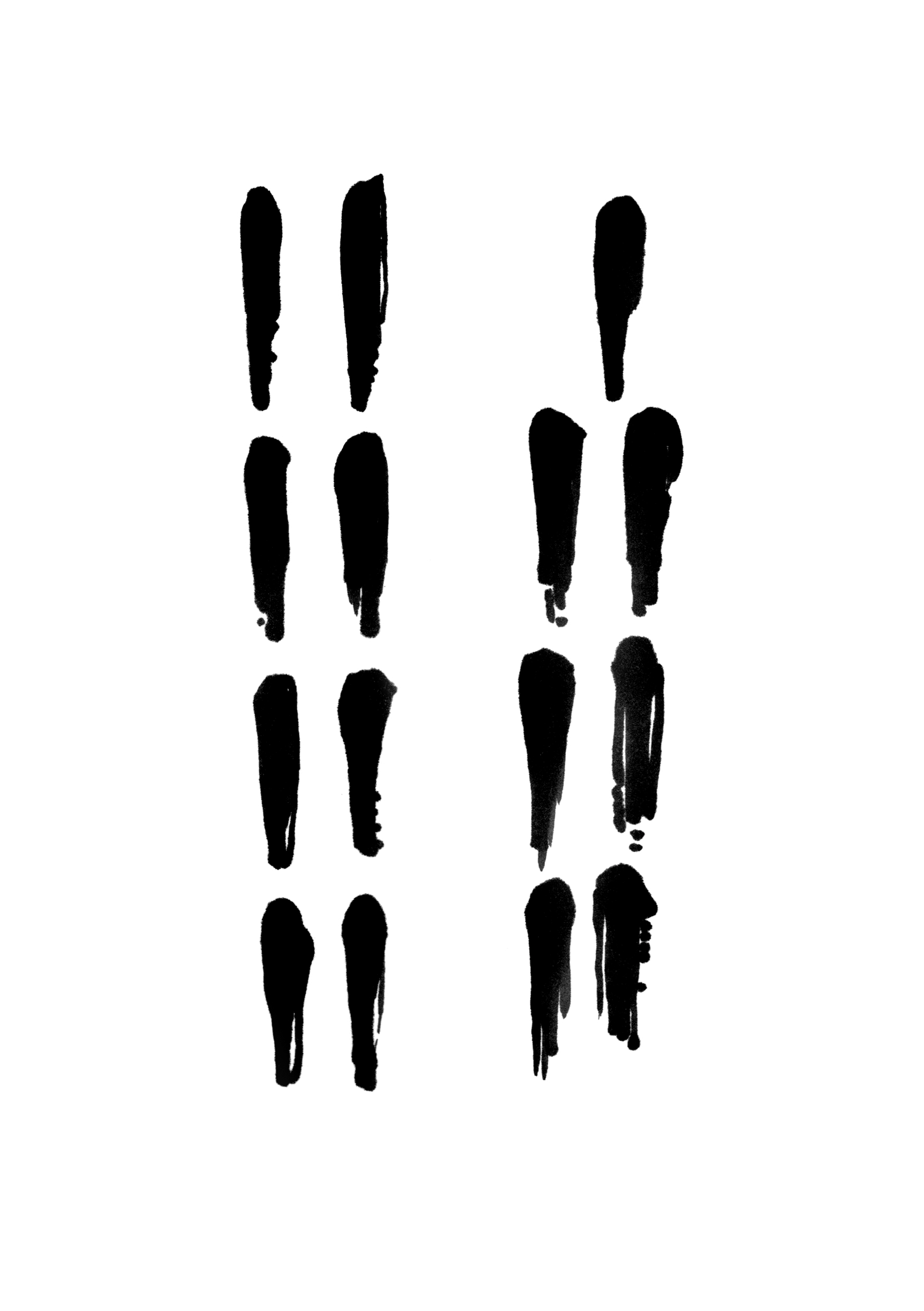
This Academy reads the right column first, then the left. Each row carries a single or double mark.

Where this Odù belongs
Òbàrà Òyèkú belongs to the Òbàrà family in this Academy’s study sequence. It is a mixed Odù, distinct from Òyèkú Òbàrà. The order matters. Its teaching is approached through its own narratives, rather than by adding two general descriptions of the principal signs together.
Key Òrìṣà and sacred relationships
The figures below are selected for their roles in the accounts discussed here. They offer connected reading paths through the tradition.
-
Yemọja. She receives the threatened waterbirds and directs them toward Orunmila, beginning a chain of assistance rather than personally settling the dispute.
-
Ọ̀rúnmìlà. He identifies a route of protection for the waterbirds; the narrative makes consultation a step toward relocation within a dangerous conflict.
-
Èṣù. He teaches the waterbirds how to live in and leave the muddy refuge, later supplying information to the roosters who search for their wives.
Key myths and their meanings
Reverence after discovery
A tortoise questions a prohibition on a particular road and recruits other animals to cross it. When confronted, it prostrates itself before the authority it defied. The response condemns the gesture as opportunistic and turns its low manner of movement into a lasting consequence.
The useful tension lies between respect chosen freely and respect displayed only when consequences arrive. Nevertheless, the account does not explain why the road was closed. An article can examine consistency of conduct without claiming every prohibition is just. The animal’s bodily form belongs to an etiological religious tale, not an account of zoological development.
Narrative setting: Cuban/Lukumí patakín in a multilingual source compilation; no individual narrator is established.
A refuge with difficult exits
Waterbirds targeted by jealous hens seek help and move to a river habitat. Esu shows them how to negotiate its unstable ground. The hens pursue them at night and become trapped. Meanwhile, the roosters continue seeking new partners, leaving the original source of the conflict largely unchanged.
Safe relocation depends on learning the terrain, not simply finding somewhere hidden. The ending also distributes consequences unequally: the pursuers suffer while the roosters continue their behavior. Preserve that unresolved injustice. A contemporary reflection can emphasize safety and informed boundaries without repeating the source’s attached advice that an injured spouse should accept the situation.
Narrative setting: Cuban/Lukumí patakín in a multilingual source compilation; no individual narrator is established.
The thunderer’s exclusion has no sufficient charge
Shango is barred from the assembly of other divine powers. Following consultation, Esu asks the group what offense warrants the severity of its response. The explanation centers on Shango’s frank speech rather than an adequately stated wrong. Esu argues for his importance, and the powers invite him back. Shango does not immediately accept; the group must approach him further before the dispute is resolved. The episode gives exclusion and re-entry a sequence and distinguishes collective confidence from a defensible reason. It is different from the earlier tortoise’s forbidden-road crossing and the waterbirds’ physical refuge in unstable river ground.
The sanction has become acceptable to the group without an adequate account of what it answers. Esu’s question does not deny that an assembly may have boundaries; it asks whether this particular boundary has a sufficient ground. Shango’s reluctance then prevents reconciliation from being told entirely on the group’s timetable. Reopening a door is not automatically the same as restoring a relationship. The earlier tortoise account imposes a lasting consequence for challenging an unexplained prohibition, so comparison reveals that authority is not uniformly self-validating throughout the archive.
The waterbird narrative contributes another unresolved matter: some participants bear costs while the original marital actors avoid equal scrutiny. These comparisons can inform contemporary questions about sanctions and repair, but Shango and Esu should retain their sacred personhood. The new story is not only an employee grievance dressed in divine names, nor does it make every blunt statement virtuous or every excluded person automatically right.
Narrative witness and setting: Translated excerpt in the multilingual compilation’s expressly attributed Cromwell Osamaro sequence, with Yoruba/Bini-facing material. The compilation’s language is not evidence of a Brazilian tradition.
Succession depends on a carving and a returned judge
A deceased carver’s son and trained servant compete over a title through a specialized work. The son had neglected his father’s craft, while the servant learned closely. Ogun, a superior judge of carving, had previously left after envy followed his success and must now be recalled. The son consults and seeks ancestral assistance, receiving instruction in a dream. The servant’s work omits a decisive feature, while the son’s matches it. Ogun identifies the accurate form and the son receives the title. The outcome combines lineage, apprenticeship, ancestral transmission, and expert judgment without giving each claim the same kind of authority.
The servant possesses the more substantial ordinary history of training, making the outcome more difficult than a simple claim that hard work is rewarded. Within the sacred account, the father can teach after death, and that instruction has a visible result which Ogun examines. The ancestor’s agency should not be dismissed as a metaphor for inherited confidence. Yet the dream does not retroactively make the son’s earlier neglect into apprenticeship, and the servant’s work deserves to remain visible.
The contest also requires a community to seek expertise it previously made unwelcome when Ogun departed. Succession therefore depends on more than the two applicants. A contemporary reader can ask what the test actually measures: descent, accuracy, readiness to hold office, or a combination. The story joins these, while analysis can distinguish them. It grants one outcome without establishing a universal hereditary rule or making any reported dream sufficient evidence of a present claim to authority.
Narrative witness and setting: Translated excerpt in the multilingual compilation’s expressly attributed Cromwell Osamaro sequence, with Yoruba/Bini-facing material. The compilation’s language is not evidence of a Brazilian tradition.
What was born in this Odù
“Born” can name an explicit traditional origin association or what emerges through a story: a capacity, relationship, practice or order of life. Interpretations drawn from a narrative are labelled below, so their basis remains clear.
Intoxicating smoking
Selected traditional source association.
The only explicit origin item concerns smoking intoxicating substances. It is a historical association in this compilation, with no detailed origin narrative selected; it should not become a ritual instruction or health claim.
Learned refuge
Contemporary interpretation from the selected myth.
A contemporary interpretation sees a workable refuge emerging when the waterbirds learn how to move through unstable ground. This is drawn from the narrative, not asserted as a traditional born-list item.
Correlations to life dimensions
These questions bring the selected stories into contemporary life. They are interpretive invitations for study.
Work and resources
The waterbirds need situated knowledge of their new environment. A refuge that is safe for informed residents may be dangerous to uninformed newcomers.
Reflect: What practical knowledge would make a change of setting sustainable?
Relationships and family
The roosters’ role remains unresolved while the hens and waterbirds bear the consequences. Relationship analysis should include who initiated and who carries the conflict.
Reflect: Whose behavior is escaping scrutiny?
Character and inner life
The tortoise’s sudden submission follows discovery. The episode distinguishes appearing respectful from maintaining consistent conduct when unobserved.
Reflect: Would your stated principle survive without witnesses?
Community and responsibility
The muddy refuge ends an attack but does not repair the larger relationship system. Protection and reconciliation are different accomplishments.
Reflect: What would accountability require after immediate danger ends?
A deeper reading of the sacred relationships
Ancestral teaching becomes visible in workmanship
Inside the carving witness, death does not end the father’s capacity to assist his son. Consultation leads toward the ancestral relationship, and the dream conveys a needed feature. Ogun then recognizes the completed object; he does not merely accept an invisible assertion of descent. The religious logic therefore joins spiritual transmission with workmanship capable of inspection. Modern interpretation should not replace the ancestor with a psychological mechanism, while an unqualified appeal to revelation would also miss the actual test. The story holds the two together. A contemporary question about fair succession can follow from that arrangement without claiming that all traditions establish office through the same combination of lineage and craft.
Separation has several different initiators
The tortoise chooses a prohibited route, the waterbirds flee a threat, Shango is excluded by an assembly, and Ogun leaves after the hostility generated by his success. The shared outward condition of being apart therefore carries different responsibilities. A return might need safe ground, a defensible explanation, a repaired welcome, or the recognition of indispensable skill. No generic rule that isolation is always dangerous or independence always virtuous does justice to the cases. A reference study can trace who initiates a separation and what sustains it. The religious relations remain particular while the contemporary comparison asks whether re-entry actually addresses the cause rather than only restoring the previous arrangement.
The authority to interpret a sign is situated
The tortoise’s low gesture is read as opportunism, river ground as usable refuge, and a small carved feature as decisive evidence. The same act of interpretation cannot be assigned to one undifferentiated observer. Local knowledge helps the waterbirds, Esu questions the assembly’s charge, and Ogun judges workmanship. Shango’s frankness, by contrast, is treated as a reason for exclusion without enough explanation. These differences support a disciplined inquiry into what a sign can establish and who is positioned to read it. They do not imply that all appearances mislead. The study gains depth when it explains an interpretation’s grounds instead of supplying a list of symbols with fixed meanings.
Questions that deepen the study
Why does Shango refuse the first invitations?
His response gives the excluded person a role in determining whether a relationship has been repaired. The group’s change of mind does not erase its earlier collective action, and Esu’s defense cannot entirely substitute for the assembly’s own approach. The witness eventually resolves the dispute, but retains an interval in which Shango does not have to accept its timetable. A contemporary analogy may distinguish an invitation from restored trust. That is not a universal instruction to reject reconciliation or withhold forgiveness. The account’s force comes from a particular sequence: a weakly grounded sanction, a question that exposes it, and an approach that must become more than formal.
Does the carving contest prove that ancestry always outranks training?
The narrative grants the son the title, but its grounds include an effective ancestral teaching, a visible test, and Ogun’s expert recognition. The trained servant’s claim remains substantial enough to make the contest difficult. A careless summary would erase that claim and convert one sacred succession into a universal defense of hereditary privilege. A fuller study can describe the religious result faithfully while asking what the test is designed to establish and why the community needs a previously alienated judge. It should neither dismiss the dream as unreal within the witness nor treat any present report of a dream as sufficient authority over others.
What do these witnesses add to the earlier refuge motif?
They show that distance from a group is not only a physical safety problem. The waterbirds need knowledge of terrain, Shango needs an adequate account of exclusion, and the craft community needs to welcome back a judge it drove away. Each case has a different missing condition. The added material does not repair the waterbird account’s gendered injustice by implication; that ending remains unsettled. Its contribution is comparative precision. A route of return appropriate to a threatened fugitive cannot simply be applied to an excluded divine person or an expert whose work the community now needs. Relation and responsibility must be described at their own scale.
What the four narratives reveal together
The added witness makes belonging and return more discriminating themes than a simple warning against disobedience. Shango’s exclusion exposes an assembly unable to name a sufficient charge; the carving contest joins a son’s ancestral access with a servant’s acquired skill and a displaced judge’s expertise. The earlier tortoise and waterbird accounts retain their harsh authority and unequal consequences. Together the four stories offer different tests of a relation’s legitimacy, without making them interchangeable.
Divine agency remains specific: Esu questions and mediates, an ancestor continues teaching, and Ogun recognizes workmanship. Contemporary concerns about accountability and fair access can clarify those arrangements while remaining a distinct layer of interpretation. The study should not force every separation to end in submission or every inherited claim to prevail. Its depth comes from asking what each return needs and which participant’s claim the ending still leaves unresolved.
Living with this Odù
A continuing life or initiatory relationship
For a person whose received life or initiatory sign is Òbàrà Ọ̀yẹ̀kú, separation can require different responses at different times. The waterbirds leave a threat and need usable knowledge of their refuge; Shango is excluded without an adequately stated offense and need not return simply because the assembly reopens its door. Ogun's departure removes expertise the community later needs. These accounts make it important to ask how distance arose before interpreting it as either failure or freedom. A lasting engagement with the sign can develop judgment about safety, a defensible boundary and the conditions under which renewed participation becomes truthful.
The carving succession also resists a single rule about deservingness. The servant's apprenticeship matters, while the son's ancestral assistance becomes religiously effective and produces work Ogun can inspect. A person need not deny sacred agency to ask what a particular test establishes. Nor does descent erase the history of learning. Long-term character can include consistency between expressed respect and prior conduct, but the tortoise's opportunistic submission does not prove every prohibition just. The received sign becomes a field of responsibilities around authority and repair, rather than a prediction that the person must always be exiled, inherit office or win a contest.
A particular consultation and its question
In a particular consultation, Òbàrà Ọ̀yẹ̀kú can help distinguish refuge from exclusion and invitation from repair. A question about returning to a group requires attention to what caused the separation. Did the person escape danger, receive an unexplained sanction or leave because their contribution had become unwelcome? The waterbirds' learned terrain, Esu's challenge to the assembly and Ogun's recalled expertise illuminate different conditions. A practitioner should not apply a general demand for reunion before identifying which arrangement is relevant.
A succession question raises another distinction among lineage, demonstrated accuracy and accumulated training. The carving witness preserves the ancestor's actual assistance and Ogun's inspection; it does not make any present claim of a dream sufficient evidence for office. The servant's preparation also remains part of the story even though it does not secure the title. Consultation can make these claims discussable without announcing the outcome of an unknown dispute. The tortoise episode adds a question about respect offered only after discovery, while leaving the reason for the prohibited road unexplained. A meaningful reading remains tied to its question and religious context, rather than assigning permanent identity as rebel, outsider, rightful heir or wronged expert.
Constructive and adverse possibilities
Constructive unfolding might involve a defensible examination of exclusion, a refuge whose terrain is understood, and the return of expertise on terms that acknowledge the earlier rupture. In Shango's account, Esu does more than encourage confidence: he acts within the assembly's sacred relations. In the carving witness, ancestral instruction and Ogun's capacity to judge become effective together.
Adverse unfolding could mean demanding respect only when caught, pursuing others into danger, reopening membership without repairing its causes or treating descent as if it erased apprenticeship. The waterbird ending also leaves unequal responsibility unresolved; the roosters' continued behavior cannot be quietly excused. These contrasts do not determine the state of an actual reading. They keep several possible arrangements visible and prevent reconciliation, authority or success from being called beneficial without asking whose safety, labor and account of events the outcome recognizes.
An illustrative situation in everyday life
In a hypothetical workshop, a skilled craftsperson leaves after persistent hostility. Years later, the group needs an expert to evaluate two successors: a founder's child and a longtime apprentice. Inviting the departed craftsperson back does not itself repair the earlier treatment, and family descent does not answer what the test measures. The Ogun and carving motifs help distinguish these questions while preserving the source's separate ancestral agency. Shango's reluctance to return adds the importance of the excluded person's timetable. The example offers no prediction about who should receive the role. It asks the group to make its criteria and its attempt at repair explicit, so a practical need for expertise does not masquerade as a complete reconciliation.
Sources and reading context
The first two narrative witnesses
The Cuban accounts contain gendered judgments that require contextual treatment. Only one explicit origin item is available in the inspected list, so the origins section is intentionally limited. No medical, marital, or substance-use instruction is inferred from these narrative motifs. Additional emergence motifs are explicitly contemporary interpretations drawn from the selected narratives, not traditional origin-list claims.
Narrative motifs are summarized independently. The life-dimension reflections are contemporary interpretation. How these reference studies are built explains the wider source approach and the distinction between a reference article and personal divination.
Additional named witnesses
- Cromwell Osamaro Ibie. The surrounding sequence is expressly attributed to Cromwell Osamaro. These selected episodes are read through the multilingual compilation’s translated renderings; exact edition and original translation chain remain unverified.
The attribution is explicit, but edition and original translation chain remain unverified. The carving’s restricted technical detail is not exported. Ancestry, dreams, exclusion, and refuge remain particular religious accounts, without a personal forecast or universal rule of succession.
Bibliographic identification
- C. Osamaro Ibie. Ifism: The Complete Work of Orunmila. Lagos; multivolume publication beginning 1986. Library catalogue record. Related bibliographic record for the named narrative witness. Exact volume, edition and page of the transmitted account have not been independently matched.
Read the source method and wider scholarly context.
The catalogue links identify published works and their authors. They are separate from proof of an individual episode’s wording or attribution. Contemporary comparisons and the synthesis above are editorial interpretation. The author’s books and Academy companions below provide further study; their sales links are separate from the source references.