
Ògúndá Òfún is a mixed Odù in Ifá’s 256-part corpus. Ogunda Ofun pairs two brothers’ unequal outcomes at a river with a ruler’s transformation of prisoners to preserve a denial. Both stories challenge the reliability of visible results. Wealth tempts one brother to imitate an act whose conditions he does not understand; transformed captives allow a powerful person’s statement to appear true. The narrative questions concern unequal access, coercion, and who controls what can be recognized as evidence.
A question to carry through the study: Who has the power to change the conditions while insisting that everyone judge only the final appearance?
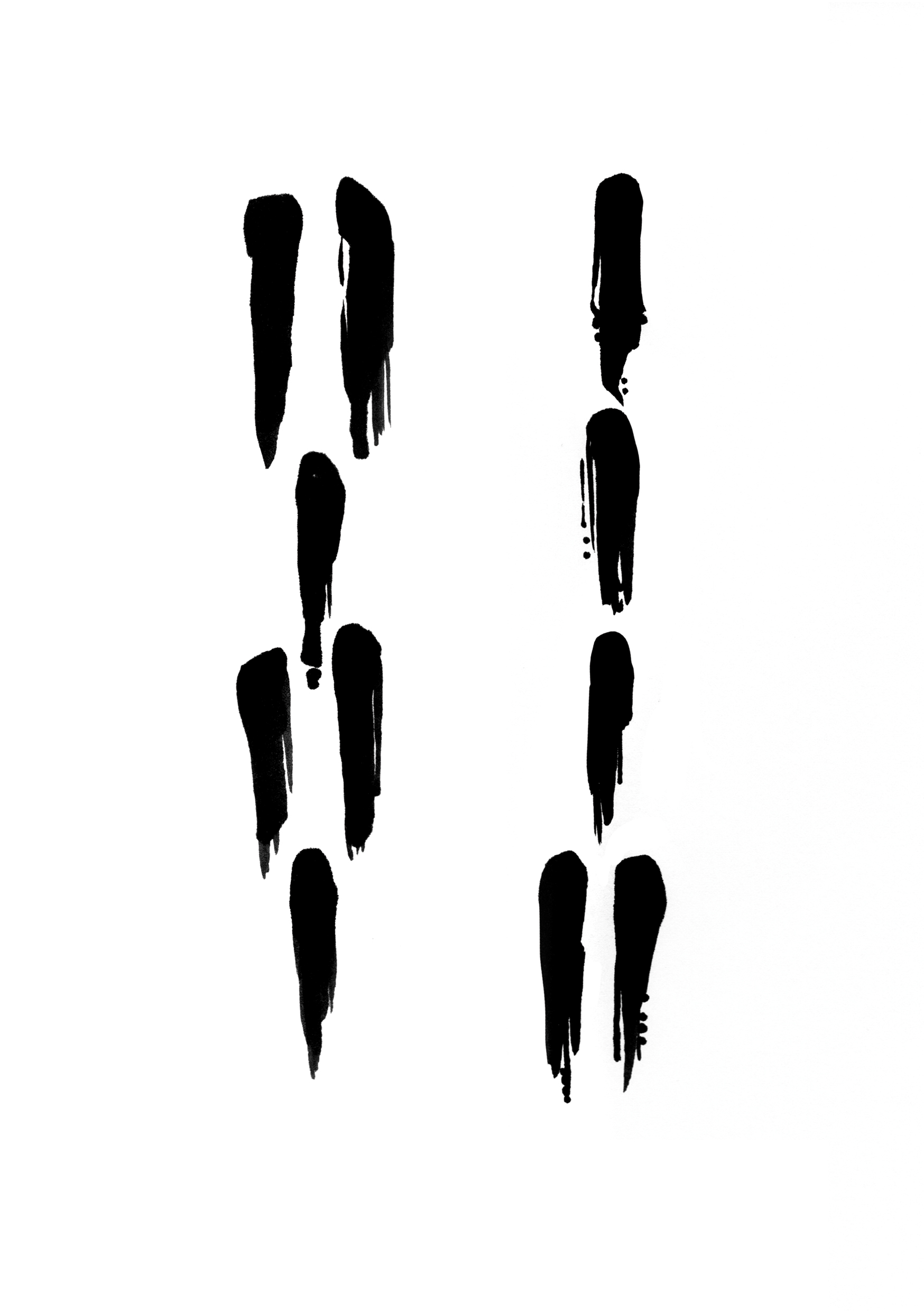
This Academy reads the right column first, then the left. Each row carries a single or double mark.

Where this Odù belongs
Ògúndá Òfún belongs to the Ògúndá family in this Academy’s study sequence. It is a mixed Odù, distinct from Òfún Ògúndá. The order matters. Its teaching is approached through its own narratives, rather than by adding two general descriptions of the principal signs together.
Key Òrìṣà and sacred relationships
The figures below are selected for their roles in the accounts discussed here. They offer connected reading paths through the tradition.
-
Èṣù. He organizes the brothers’ river encounter and coordinates the unequal outcome with Oshun. This is a punitive and manipulative role rather than an uncomplicated lesson in fairness.
-
Òṣun. She confines the disfavored brother within the river after the attempted imitation. The source’s harsh consequence is contextualized, not recommended or universalized.
-
Ọ̀rúnmìlà. He hears the prisoners and asks about their release, continuing to attend to evidence that the ruler initially denies.
Key myths and their meanings
One leap does not share the same terms
A mother treats two brothers differently after a dream and their differing conduct. Esu then draws their attention to a river’s promise of power. One enters and returns with wealth. The other imitates the visible act but does not return to ordinary life; Oshun keeps him within the water under a prior arrangement.
The imitator sees an outcome but not the concealed terms producing it. This supports scrutiny of copied success, while the divine favoritism and severity remain ethically troubling. The story does not justify unequal treatment among actual siblings or make obedience a guarantee of safety. A river’s real hazards must not be inferred from a sacred reward-and-punishment plot.
Narrative setting: Cuban/Lukumí patakín in a multilingual source compilation; no individual narrator is established.
The captives no longer look human
Orunmila hears people confined by Olofin and asks about their release. Olofin denies holding people, then describes the captives as pigs. When Orunmila enters, their transformed appearance matches that claim. The narrative presents transformation as a way for the ruler’s words to remain technically true while the earlier sounds remain unexplained.
Authority controls both confinement and the form in which evidence becomes visible. The ethical question is not solved by a statement’s narrow factual consistency. A critical article can ask how categorization hides coercion and removes people from concern. The ending’s comparison between pigs and human bodies is mythic, not a biological explanation or permission to dehumanize prisoners.
Narrative setting: Cuban/Lukumí patakín in a multilingual source compilation; no individual narrator is established.
The serpent ancestor’s clothing becomes renewal
A serpent ancestor consults before assuming responsibility for the forest’s snakes. The concern is the continuing condition of the offspring. He undertakes a sacred response involving his own clothing and receives a means to share with the next generation. The narrator explains the snakes’ shedding of skin and renewed appearance through that relation rather than through repeated illness. This is a compact sacred etiology joining parenthood, covering, and continuity. It does not establish a medical claim, a biological origin of molting, or a promise that a reader can prevent illness through clothing, an object, or a repeated ritual act.
The covering has a different role from the earlier transformed prisoners’ appearance. In that account, bodily form helps a ruler make a denial seem true; here, an ancestral relation gives the offspring a way to continue through renewal. The river brothers add another uneven change in which visible wealth tempts imitation without shared conditions. These comparisons prevent transformation from becoming a single virtue or warning. Within the new witness, sacred response and the ancestor’s relation to descendants are effective, not merely metaphors for resilience.
A contemporary interpretation can ask what a generation passes on and how a familiar covering can change without ending continuity. It should not turn the skin image into advice to embrace illness or assume that actual vulnerability proves a parent’s neglect. The episode remains narrow: the source gives a particular sacred history, while its biological and human applications require limits the researcher cannot supply by narrative confidence alone.
Narrative witness and setting: Translated excerpt in the multilingual compilation’s expressly attributed Cromwell Osamaro sequence, with Yoruba/Bini-facing material. The compilation’s language is not evidence of a Brazilian tradition.
The omitted relation is corrected before the journey continues
A practitioner prepares extensively before entering earth, but Esu stops the journey because his own relation has not been addressed. The practitioner explains that the diviners did not tell him; they acknowledge the omission and correct it. Esu then accompanies and advises him about a successful career whose standing must remain related to other practitioners. Later exclusion and obstruction lead to a feast, a changed association, and renewed prosperity. The account includes troubling claims about a wife and a night meeting, which remain specific to its plot. Its first movement is especially clear: an incomplete instruction is recognized by the advisers rather than assigned wholly to the traveler’s bad conduct.
The opening distributes responsibility more carefully than a generic tale of a client refusing advice. The practitioner has acted on what he was given, and the advisers’ omission becomes explicit. That makes correction possible without inventing a moral failure the source does not state. Within the witness, Esu still has an effective claim and role; acknowledging an instructional error does not make the sacred relation unreal. The later career adds a different problem of community, reciprocity, and membership. A contemporary interpretation can ask how expertise corrects itself and how success remains connected to a wider religious field, while refusing to adopt the appended instruction that a reader’s spouse belongs to a harmful group.
The earlier ruler’s transformed captives also shows how authority can manipulate what counts as truth, and the river brothers expose unequal conditions behind a copied success. The new episode therefore offers an important contrast: an authority can admit a missing part and revise guidance rather than change the evidence to preserve an appearance of infallibility.
Narrative witness and setting: Translated excerpt in the multilingual compilation’s expressly attributed Cromwell Osamaro sequence, with Yoruba/Bini-facing material. The compilation’s language is not evidence of a Brazilian tradition.
What was born in this Odù
“Born” can name an explicit traditional origin association or what emerges through a story: a capacity, relationship, practice or order of life. Interpretations drawn from a narrative are labelled below, so their basis remains clear.
Unequal terms behind imitation
Contemporary interpretation from the selected myth.
A contemporary interpretation sees unequal access to opportunity emerge when one brother copies an outcome without sharing its concealed conditions. This is an ethical reading of the river story, not a traditional born-list claim.
Authority controlling the visible category
Contemporary interpretation from the selected myth.
A contemporary interpretation identifies control over recognition when transformed captives make a denial appear true. This emergence motif names the narrative problem of evidence under coercive authority, not an inherited origin association.
Correlations to life dimensions
These questions bring the selected stories into contemporary life. They are interpretive invitations for study.
Work and resources
The second brother imitates a visible windfall without access to its conditions. A celebrated result does not provide a complete model for another person’s decision.
Reflect: What hidden condition makes an apparent success difficult to copy?
Relationships and family
The family begins with comparison and unequal permission. Disagreement about conduct should not erase a child’s basic dignity or opportunity to be heard.
Reflect: How can a family address conduct without assigning permanent roles?
Character and inner life
Orunmila continues listening after an official denial. Attention to an unresolved observation can resist a powerful person’s preferred account.
Reflect: What fact still needs an explanation?
Community and responsibility
Transformation changes the category through which captives are seen. Public responsibility includes asking who benefits from a label and what it conceals.
Reflect: Whose treatment changes when your group changes their name?
A deeper reading of the sacred relationships
A sacred claim can remain valid when instruction is incomplete
The traveler’s advisers acknowledge that they omitted Esu’s relation, and the response is corrected before the passage continues. Within the witness, this admission does not invalidate divination as a whole or make Esu’s agency a human invention. It identifies a particular gap in transmission. The serpent ancestor likewise shares a received means with offspring, while the earlier river outcome depends on conditions not available to the imitator. A spiritually grounded lens can therefore distinguish a sacred order from a human carrier’s completeness. Contemporary discussion of accountable expertise can follow, but should not replace the divine claim or make one correction a universal reason to dismiss all practitioners.
Transformation can preserve, conceal, or differentiate
The snakes’ covering supports renewal, the ruler’s changed captives conceal confinement, and the river brothers receive radically different outcomes from outwardly similar acts. The practitioner’s later association changes another kind of position, within a religious community rather than a body. These are not four examples of one fixed transformation principle. A contemporary study should ask what is maintained, what is hidden, and what relation makes the change effective. The religious accounts remain particular about their agencies and conditions. Their depth is diminished if every altered form is praised as growth or treated as proof that a visible identity can be discarded without consequence.
Authority can correct a gap or preserve its own appearance
The advisers’ acknowledgment contrasts sharply with the ruler who transforms captives so a denial appears true. The river episode also withholds the same conditions from two apparent imitators, making the visible result insufficient to explain the arrangement. The serpent ancestor supplies another form of responsibility, one directed toward descendants rather than the preservation of public status. A contemporary lens can compare these uses of authority without claiming the source offers a universal institutional theory. The spiritual realities remain active. The question is how a participant responds when a claim is incomplete: by admitting and repairing it, concealing the underlying condition, or defining a relation that can continue honestly.
Questions that deepen the study
Why does the advisers’ admitted omission matter?
It prevents the traveler from being falsely described as someone who simply refused the required relation. The source says the instruction was incomplete and the advisers acknowledge that fact. A reference study should preserve it because it gives religious expertise a capacity for correction rather than compulsory infallibility. Esu’s claim remains effective within the witness, so the admission does not empty the sacred world. A contemporary reader can ask how guidance is revised when something was missed. That is different from either blaming the client automatically or treating one imperfect instruction as proof that no religious knowledge can be trusted.
Does skin renewal offer a human promise of freedom from illness?
No. The account gives a serpent lineage a sacred etiology through an ancestor’s response and a transmitted means. It does not establish a medical mechanism or a guarantee for actual people. A contemporary interpretation can consider continuity through a changed covering, while retaining the living ancestor and offspring as the narrative’s own persons. The source’s shortness also matters: it does not narrate a complete philosophy of bodily resilience. The study should not expand it into a claim that disease reflects failed preparation or that accepting a particular material will make a reader invulnerable.
How do the new episodes change the earlier concern with appearance?
They add two different alternatives to misleading form. The serpent’s changed covering sustains continuity, while the advisers correct a missing instruction openly. The transformed captives, by contrast, let a ruler maintain a denial, and the river brothers’ visible similarity conceals unequal conditions. A contemporary reference can therefore distinguish renewal, correction, concealment, and imitation rather than treating appearance as one problem. Within the religious witness, each has particular agencies and responsibilities. That specificity is more useful than a universal claim that all change is liberating or all authority deceptive, and it preserves the source’s genuine contrast between admitted limits and an appearance of unbroken power.
What the four narratives reveal together
The added witness makes Ogunda Ofun’s transformations more discriminating. A serpent ancestor’s shared response gives changed covering a continuity function, while a traveler’s blocked departure reveals advisers willing to acknowledge an omission. The earlier river brothers and transformed captives retain unequal conditions and manipulated evidence. Religious agency remains active, especially Esu’s claim and the ancestral relation, while contemporary analysis can distinguish a corrected gap from a concealed truth. The four accounts do not make every transformation renewal or every authoritative statement complete. Their depth lies in what a change preserves, which participant knows its conditions, and how a person or institution responds when its claim is shown to be partial. The later night-meeting and marital applications remain localized plot elements rather than a diagnosis of readers or a universal account of Ifa community.
Living with this Odù
A continuing life or initiatory relationship
For a person who has received Ògúndá Òfún in a life or initiatory setting, outwardly similar acts can rest on unequal or undisclosed conditions. The river brothers do not share the terms behind a visible leap, while the ruler changes captives' form so a denial can remain narrowly consistent. Across changing institutions and opportunities, these narratives can develop attention to the relation behind an appearance rather than treating visible success or technical truth as a complete explanation.
The serpent ancestor and corrected journey offer other uses of authority. Renewal passes through an acknowledged relation to descendants, and advisers admit that their instruction omitted Esu rather than making the traveler wholly culpable. Long-term character can include correcting a gap without pretending the sacred claim was unreal or the human carrier infallible. The sign does not justify unequal treatment of actual siblings, dehumanize confined people or promise bodily renewal through a prescribed act. It asks whether transformation preserves continuity, conceals coercion or changes a position under different terms. The attributed practitioner's later community issues remain distinct from the source's unsupported accusation about a spouse, which cannot become a personal finding or universal guidance.
A particular consultation and its question
In consultation, Ògúndá Òfún can help distinguish missing instruction from refusal. The practitioner acts on what was given, and the advisers acknowledge their omission before the journey continues. A practitioner interpreting a current question can preserve that distribution of responsibility rather than turn every incomplete response into the client's bad conduct. Esu's effective claim remains part of the sacred witness even when human transmission requires correction.
The river and captives add different evidentiary problems. One person copies an outcome without knowing its terms; another authority controls confinement and the appearance under which evidence can be inspected. The serpent's renewed covering instead supports continuity within a compact sacred etiology, not biological or medical instruction. Consultation can ask what has been omitted, what a statement narrowly establishes and whether authority repairs a gap or preserves its image. It cannot determine that the client's sibling is favored by hidden terms or a spouse belongs to a harmful group. A particular result does not assign permanent identity as imitator, captive or corrected practitioner. Its interpretation remains specific to the actual question and the witness's differentiated agencies.
Constructive and adverse possibilities
Constructive relations may admit a transmission gap, make correction possible before continuing and pass on a received means in responsibility toward descendants. The advisers' acknowledgment does not dissolve the sacred order or Esu's role. It distinguishes an effective relation from the completeness of one human instruction.
Adverse unfolding could involve copied success without shared terms, technical truth used to conceal confinement or a transformed appearance treated as a sufficient account of what happened. The river's severe asymmetry cannot justify human favoritism, and the serpent's renewal cannot guarantee prevention of illness. These contrasts do not assign the state of a real reading. They ask whether authority can revise its account and whether a change preserves, conceals or differentiates, without calling every transformation growth or making a source's unsupported spouse allegation a finding about an actual household.
An illustrative situation in everyday life
In a hypothetical training process, a participant follows every instruction but is stopped because a prerequisite was never communicated. The advisers' admission distinguishes an instructional omission from deliberate refusal and allows the process to be corrected. A neighboring program instead changes its terminology so a denied opportunity no longer counts under the wording of its promise. The transformed-captives motif helps examine that second use of authority without equating the programs or inventing hidden facts. This illustration does not dismiss expertise because it can err. It asks whether an institution can acknowledge what was missing and repair it, or whether it alters the visible category to protect an appearance of complete accuracy while the underlying condition remains unchanged.
Sources and reading context
The first two narrative witnesses
The inspected opening supplies a thematic list rather than an explicit born list. Two emergence motifs are contemporary interpretations of the selected Cuban stories, and the card remains partial. Coercion, unequal outcomes, and animal transformation are examined critically, without biological explanations or personal predictions.
Narrative motifs are summarized independently. The life-dimension reflections are contemporary interpretation. How these reference studies are built explains the wider source approach and the distinction between a reference article and personal divination.
Additional named witnesses
- Cromwell Osamaro Ibie. The surrounding sequence is expressly attributed to Cromwell Osamaro. These selected episodes are read through the multilingual compilation’s translated renderings; exact edition and original translation chain remain unverified.
The snake account is a sacred etiology, not zoology or medicine. The later practitioner biography contains gendered and night-group allegations that are not applied to real spouses. The advisers’ omission is kept explicit, and no ritual details, restricted substances, or personal forecasts are supplied.
Bibliographic identification
- C. Osamaro Ibie. Ifism: The Complete Work of Orunmila. Lagos; multivolume publication beginning 1986. Library catalogue record. Related bibliographic record for the named narrative witness. Exact volume, edition and page of the transmitted account have not been independently matched.
Read the source method and wider scholarly context.
The catalogue links identify published works and their authors. They are separate from proof of an individual episode’s wording or attribution. Contemporary comparisons and the synthesis above are editorial interpretation. The author’s books and Academy companions below provide further study; their sales links are separate from the source references.