
Òsá Òbàrà is a mixed Odù in Ifá’s 256-part corpus. The selected Òsá Òbàrà stories connect the misuse of power in marriage and governance. A prosperous man treats protection as permission to mistreat a partner; a ruler gives his laboring population inadequate support. Intervention comes through relatives and Òrìṣà, but the second tale ends uneasily when the people reject Shangó’s proposed response. The single explicit origin, intelligence prevailing over force, is therefore best read as a question of judgment rather than simple triumph.
A question to carry through the study: What does my authority require me to provide to those affected by it?
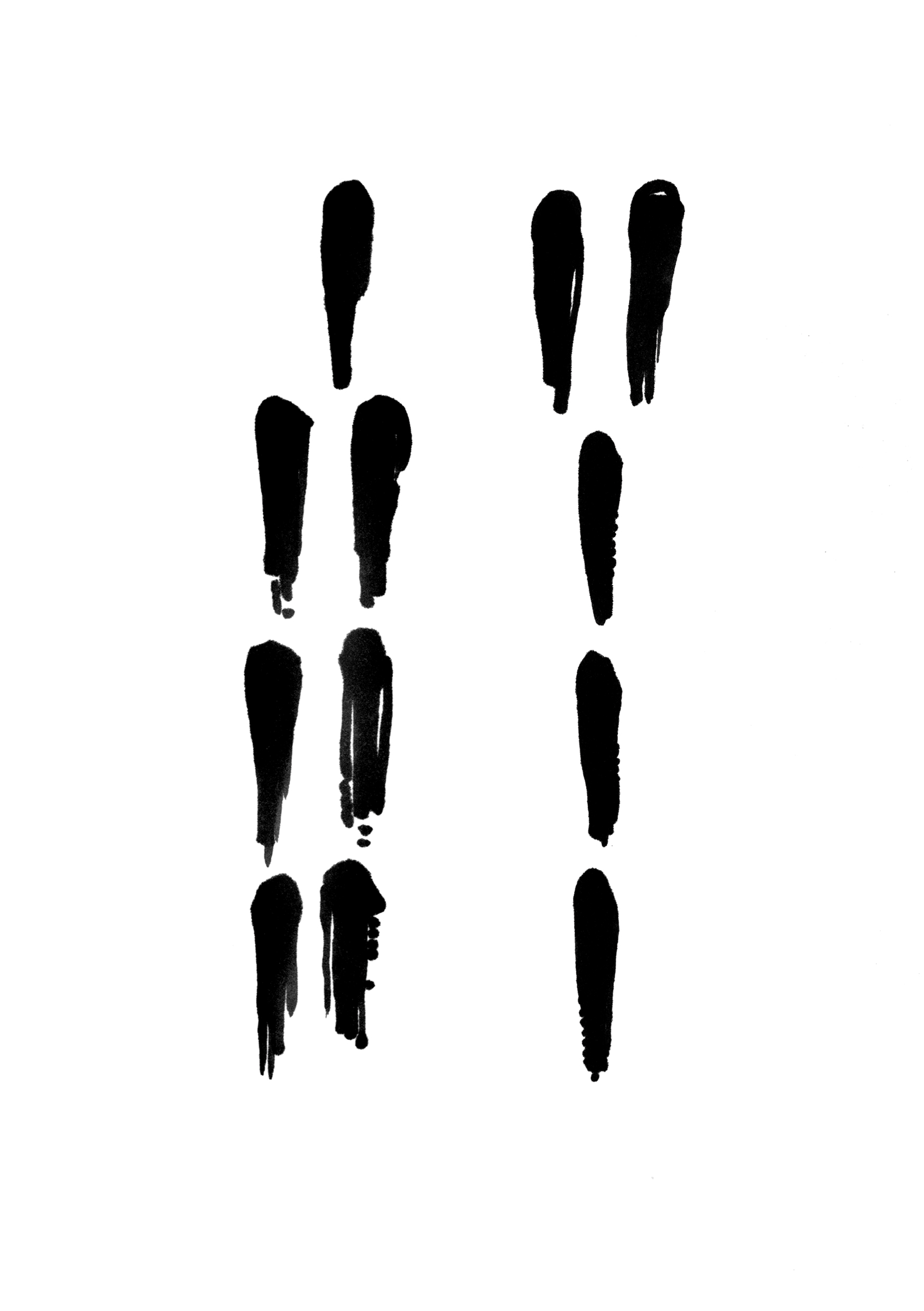
This Academy reads the right column first, then the left. Each row carries a single or double mark.

Where this Odù belongs
Òsá Òbàrà belongs to the Òsá family in this Academy’s study sequence. It is a mixed Odù, distinct from Òbàrà Òsá. The order matters. Its teaching is approached through its own narratives, rather than by adding two general descriptions of the principal signs together.
Key Òrìṣà and sacred relationships
The figures below are selected for their roles in the accounts discussed here. They offer connected reading paths through the tradition.
-
Ọya. Oyá’s connection to the mistreated woman makes the aggressor’s conduct a matter of responsibility beyond his private household; the narrative demands respect and acknowledgment of harm.
-
Yemọja. Yemayá protects the frightened man and awakens him from the disturbing dream, but her protection does not excuse his treatment of women or replace accountability.
-
Ṣàngó. Shangó confronts a ruler’s neglect and arranges food with Eleguá and Osain; his later anger reveals the difficulty of intervention when the population rejects his preferred outcome.
Key myths and their meanings
Prosperity mistaken for permission
Osa Bara becomes proud of success and dismisses his elders, assuming his advantages cannot be lost. He mistreats his wife and another woman associated with Oyá. A frightening dream prompts his mother to seek help and take him to Orunmila. The consultation identifies protective relationships around him while requiring him to recognize the woman he has harmed and change how he treats her.
The ethical center is responsibility for mistreatment, not fear of supernatural punishment alone. The man has access to several protective figures, yet this network does not make him entitled to dominate another person. His mother’s intervention creates an opening, but the account gives limited space to the woman’s own voice. A careful reading acknowledges that limitation when discussing repair or forgiveness.
Narrative setting: Cuban/Lukumí narrative in the accounts considered here; no individual author established for this passage.
A neglected population refuses its rescuer
A son of Ogún governs a village whose people work hard but receive poor nourishment. Eleguá and Osain bring the situation to Shangó, who seeks out Ogún and then visits the village. While the ruler hides, the visitors feed the population and its condition improves. Once the ruler is found, Shangó asks whether he should kill him. The people refuse, and Shangó withdraws angrily.
The story challenges both exploitative rule and a rescuer’s expectation of gratitude or obedience. Feeding people addresses an immediate need; offering execution as the next choice creates a different moral problem. The population’s refusal cannot automatically mean approval of deprivation. The unresolved ending is useful precisely because it leaves open the gap between helpful intervention, political consent, and a reformer’s desire to control the result.
Narrative setting: Cuban/Lukumí narrative in the accounts considered here; no individual author established for this passage.
The horse reaches the height others assumed was available
A large company of animals prepares to climb a hill for recreation and the benefits awaiting above. They receive counsel before the ascent, but Horse alone responds to it. During the journey Eshu makes the climb defeating for the others, who cannot reach the summit. Horse receives the strength and speed needed to complete the route and gathers what has been placed there. The remaining animals regret their earlier refusal. The account then links Horse’s different standing among humans to this episode, giving a continuing relation an origin in sacred responsiveness rather than simply explaining it through bodily size or ordinary competitive ability.
The ascent makes success relational from its beginning. Horse does not merely possess a better body; the narration explicitly gives Eshu a role in how the same landscape becomes passable for one participant and exhausting for others. That religious logic should not disappear into a modern slogan about preparation. At the same time, a reader need not treat the successful animal’s exclusive access as a universal account of deserved reward. The story’s interest is the difference between assuming an invitation guarantees arrival and recognizing the sacred obligations through which an opportunity becomes effective.
Beside the earlier government story, where a laboring population receives inadequate food, the shared height introduces a distinct issue: access may be announced collectively while the capacity to reach it is differently constituted. An editor should not confuse those two arrangements or use one to justify the other. The source supplies neither a detailed system of fair competition nor the voices of all animals beyond their regret.
Narrative witness and setting: Portuguese rendering in the explicitly headed Cromwell Osamaro revelations; an African Ifá witness mediated by the compilation, not a Brazilian provenance established by language alone.
A town benefits for years without fulfilling its promise
Orunmila travels to Oshogbo after neglecting counsel about ingratitude. He helps a distressed population, but the promised compensation does not arrive during a long stay. When he prepares to leave and again receives no response, consultation reconnects the difficulty with his earlier omission toward Eshu. A belated sacred response brings Sankpana and Shangó into the conflict. Their intervention leads the town to seek forgiveness and ask Orunmila to return. Relations are restored through acknowledged obligations, but he ultimately settles elsewhere. The narrative explains a difference in local sacred presence through that history rather than assuming the repaired relationship requires his permanent residence.
The account gives unpaid service a theological history, not merely a labor dispute. Orunmila’s own neglected exchange with Eshu matters alongside the town’s broken promise, so responsibility is distributed without making the two acts identical. Sankpana and Shangó are active participants whose intervention changes what the population will acknowledge. Their power should be explained from within this witness while the narrative’s collective suffering remains a serious tension, especially for people who did not decide to withhold payment.
The ending is equally important: accepting apology does not compel Orunmila to remain. Repair can restore a relation without restoring its previous geography. This addition deepens the earlier stories of protective mothers and disputed rule by distinguishing help, compensation, divine intercession, and continuing affiliation. Contemporary interpretation can ask how beneficial work is honored, but the story cannot be made into a guarantee that unpaid helpers will receive vindication or that present illness proves communal ingratitude.
Narrative witness and setting: Portuguese rendering in the explicitly headed Cromwell Osamaro revelations; an African Ifá witness mediated by the compilation, not a Brazilian provenance established by language alone.
What was born in this Odù
“Born” can name an explicit traditional origin association or what emerges through a story: a capacity, relationship, practice or order of life. Interpretations drawn from a narrative are labelled below, so their basis remains clear.
Intelligence over force
Selected traditional source association.
The sole explicit origin states that intelligence dominates force. The selected stories complicate that ideal through failed judgment and unresolved consent; it should not be turned into a claim that cleverness makes every intervention just.
Responsibility after protection
Contemporary interpretation from the selected myth.
As a contemporary interpretation, protection becomes accountable when the prosperous man must acknowledge mistreatment rather than rely on divine favor. This is a relational lesson emerging from the selected plot, not an additional traditional claim of origin.
Correlations to life dimensions
These questions bring the selected stories into contemporary life. They are interpretive invitations for study.
Work and resources
The ruler receives labor without adequately sustaining those who work. The concrete economic question is the relationship between contribution and provision, rather than a vague claim that prosperity automatically indicates good leadership. Food provision changes before the ruler’s position is settled.
Reflect: What do the people producing this value receive in return?
Relationships and family
The prosperous man’s mother helps him face conduct he had dismissed. Family advocacy becomes useful when it supports accountability, but protection can also become a shield if it centers only the aggressor’s discomfort. The mother’s concern initiates consultation without erasing her son’s conduct.
Reflect: Does support here make responsibility easier to face or easier to avoid?
Character and inner life
Osa Bara assumes that enduring advantage proves he is beyond correction. The dream interrupts that certainty, offering an opening to examine arrogance before the person interprets every warning as an attack on status. Osa Bara relies on prosperity to dismiss his elders.
Reflect: What privilege am I treating as evidence that my behavior needs no review?
Community and responsibility
Shangó’s useful aid does not secure agreement with his preferred punishment. A community’s needs, its consent, and the helper’s frustration remain distinct considerations, even when the existing ruler has clearly failed. The population’s refusal leaves the intervention without a settled outcome.
Reflect: Can assistance continue when recipients choose a different next step?
A deeper reading of the sacred relationships
Eshu makes access effective rather than merely announced
The horse story and the Oshogbo account both give Eshu a decisive place between a stated possibility and its actual realization. All animals can intend to climb; Horse’s answered counsel makes the route effective. Orunmila can possess the capacity to help; his own sacred omission leaves the promised return unsettled until the relationship is addressed. This is more specific than an abstract claim that effort is rewarded. Divination identifies obligations that continue to structure action, and exchange with a divine mediator affects how a capacity can become a fulfilled outcome. The earlier Cuban narratives likewise portray protection as relational, though they emphasize particular mothers, spouses, and governing powers. Their differences should remain visible rather than assigning one identical mechanism to every story.
Recognition does not require continued possession of the helper
The town’s request for Orunmila to return comes after it has depended on him while ignoring the promised compensation. He accepts a restored relation but does not grant an unlimited claim on his presence. That distinction clarifies the earlier man’s assumption that prosperity and protection permit mistreating a woman: receiving benefit does not turn the giver or protector into a permanent possession. The governance account adds another boundary when Shangó withdraws after the population rejects his proposed outcome. These departures are not equivalent, since their reasons and power relations differ. Together they permit careful inquiry into whether gratitude, consent, and continuing service have been improperly bundled into one expectation that a beneficiary or helper cannot refuse.
The many affected by a conflict among the few
The horse’s exclusive arrival leaves the other animals outside the benefit, while the Oshogbo confrontation extends from an unpaid specialist and local authorities to a whole population. The earlier village tale also makes residents depend on the relationship between their ruler and visiting powers. These are different scales of consequence. A useful contemporary lens asks who made a decision, who can revise it, and who experiences its result without having chosen it. The sacred accounts need not be flattened into a modern political program to make that distinction visible. Their scenes retain divine agency and collective belonging, but they also leave room to ask whether a story has allowed the least powerful affected participants to speak about the settlement.
Questions that deepen the study
Is Horse simply the most hardworking animal in the story?
The passage does not establish a contest of ordinary labor. Horse is distinguished by a response to counsel, and Eshu changes how the route can be traversed. Describing the animal as merely more diligent would erase the account’s religious explanation. A contemporary reader can still ask about preparation and receptiveness, provided these are named as interpretive applications rather than the entire cause of the outcome. The benefits at the summit also remain largely unspecified, so an editor should avoid turning the tale into a precise promise of wealth or status. Its narrow distinction concerns an announced possibility becoming effective through an acknowledged sacred relationship.
Does Orunmila’s eventual vindication settle the unpaid-service problem completely?
It changes the relationship by producing apology and renewed exchange, but the ending does not erase the years of nonpayment or require him to live in Oshogbo permanently. The difference in later sacred presence preserves memory of the dispute even after repair. Within the account, Eshu, Sankpana, and Shangó participate in that outcome; it is not simply a human negotiation. Contemporary reflection can ask what compensation and acknowledgment should follow benefit without treating the narrated suffering as an acceptable enforcement strategy. The source gives a religious history of particular places, not a method by which a real helper should threaten a community into honoring a debt.
How do these stories deepen the claim that intelligence matters more than force?
They show that effective judgment includes recognizing relationships that force cannot substitute for. Horse’s body does not explain the changed route without Eshu. Orunmila’s ability to help does not by itself secure reciprocal fulfillment. The earlier ruler’s neglect and the prosperous man’s mistreatment similarly expose the limits of position treated as self-sufficient. This does not make calculation superior to devotion: divination and sacred exchange are precisely what the African-attributed witness presents as necessary knowledge. A contemporary interpretation can distinguish foresight from domination, but should avoid claiming that the narratives promise every thoughtful person victory or portray every defeated participant as intellectually deficient.
What the four narratives reveal together
The additions extend Òsá Òbàrà from the household and village into the route of an ascent and the history of a town’s sacred affiliations. Their common concern is not power rejected in favor of a purely human ethic. It is power whose effects depend on relationships that participants have acknowledged or ignored. Horse reaches a height through answered counsel; Orunmila’s work becomes reciprocally fulfilled only after his own relation with Eshu and the town’s relation with him are addressed.
The earlier mistreatment and governance accounts add different questions about protection, consent, and nourishment. They do not all resolve by the same kind of intervention. In particular, withdrawal may follow an apology or a refusal, and the reasons matter. A strong reference should preserve those different sacred logics while asking, as contemporary interpretation, how help is recognized and how its ongoing terms remain open to agreement.
Living with this Odù
A continuing life or initiatory relationship
A received life relationship with Òsá Òbàrà can make benefit and entitlement recurring tests of power. The successful man's protective network does not give him permission to mistreat women. The village's need for food does not make its population obliged to accept Shangó's proposed execution of the ruler. Horse's ascent locates effective access in sacred responsiveness rather than bodily advantage alone, while the Oshogbo account shows that years of beneficial service can coexist with an unfinished obligation to the helper. These are distinct configurations. Over time, character may develop through asking whether success has become an excuse to stop hearing others, and whether helping has become a claim to govern the outcome.
A person may need to receive correction while prospering, or to leave after an apology without denying that repair occurred. The latter is especially important in Orunmila's final change of residence. Carrying the sign does not predict ingratitude or vindication. It offers a changing measure of what power actually nourishes, which obligations sustain it and whose consent remains independent of gratitude. Eshu, Sankpana and Shangó retain their religious agency, including difficult collective consequences that no modern comparison should smooth into a simple reward system.
A particular consultation and its question
In consultation, these witnesses help distinguish mistreatment, neglected provision, unequal access and unpaid assistance. The actual question is needed before any of those becomes relevant. A person who has helped a group may identify with Orunmila's unfulfilled promise, yet the village narrative asks a corrective question: has the helper begun treating gratitude as permission to choose for everyone? The successful man's story asks whether protective relations have been used to avoid responsibility for conduct. Horse's ascent raises sacred responsiveness and the conditions through which an invitation becomes effective, without making exclusive success a universal proof of merit.
A practitioner can explore who has promised what, who receives the benefit and which decision belongs to those being helped. The Oshogbo witness also distinguishes reconciliation from a requirement to remain in the same place. Specific divine action remains part of that account; it does not authorize a claim that a real community's illness proves ingratitude. A temporary result need not establish a personality of pride or a destiny of rejection. It can direct attention to a particular discrepancy between help, consent and compensation, with inward examination serving rather than replacing the actual religious interpretation.
Constructive and adverse possibilities
Constructive movement can involve wrongdoing being acknowledged, nourishment reaching a neglected population and a broken promise being made visible within sacred relations. It can also include a departure after repair, as Orunmila's restored relation does not require permanent residence. Adverse movement appears when prosperity is treated as immunity from criticism or when a rescuer cannot tolerate the recipients' independent choice. The laboring villagers' refusal of execution is not evidence that they approve of deprivation. Horse's exclusive arrival also should not be used to justify the villagers' unequal conditions. Iré and osogbo require the actual reading rather than a verdict based on victory or loss. The narratives make power answerable to those affected, while preserving difficult religious consequences and voices the sources leave largely unheard. Nourishing someone does not establish ownership of their decision.
An illustrative situation in everyday life
Hypothetically, a consultant spends years helping a community association under a promise of later payment. When payment fails, the consultant offers a drastic solution to the group's leadership problem and expects immediate agreement. The members refuse that solution while acknowledging the debt. The Oshogbo account helps distinguish the genuine unpaid obligation from the village narrative's separate question of political consent. The consultant feels both exploited and entitled to decide what happens next. This is an illustrative interpretation, not a promise of divine vindication or punishment. A responsible resolution might include clear acknowledgment and settlement while allowing the consultant to leave. Repair need not restore the old geography, and gratitude need not require accepting every act proposed by the person who helped.
Sources and reading context
The first two narrative witnesses
The source explicitly labels these Cuban revelations, but the English narratives include modern expansions and no securely established individual author. Only one origin is explicit in the selected list. This study retains the troubling political ending and avoid translating threats into personal predictions. Added emergence motifs are explicitly distinguished from traditional origins.
Narrative motifs are summarized independently. The life-dimension reflections are contemporary interpretation. How these reference studies are built explains the wider source approach and the distinction between a reference article and personal divination.
Additional named witnesses
-
Cromwell Osamaro. The animals’ ascent and Oshogbo ingratitude episodes occur in the explicitly headed African-attributed division.
-
Cuban/Lukumí-labelled collection. The earlier mistreatment and neglected-village stories provide distinct household and political comparisons.
The African witness is presented in Portuguese translation. Sankpana is retained under the source’s name without an inferred equivalence. The account’s local shrine explanation is evidence of its narrative claim, not independent verification of present religious distributions in Oshogbo or Ikirun.
Bibliographic identification
- C. Osamaro Ibie. Ifism: The Complete Work of Orunmila. Lagos; multivolume publication beginning 1986. Library catalogue record. Related bibliographic record for the named narrative witness. Exact volume, edition and page of the transmitted account have not been independently matched.
Read the source method and wider scholarly context.
The catalogue links identify published works and their authors. They are separate from proof of an individual episode’s wording or attribution. Contemporary comparisons and the synthesis above are editorial interpretation. The author’s books and Academy companions below provide further study; their sales links are separate from the source references.