
Òtúrúpòn Òbàrà is a mixed Odù in Ifá’s 256-part corpus. Òtúrúpòn Òbàrà’s selected narratives place Orunmila in sharply different positions. In a peanut field he conceals a theft and uses access to Olofin to silence a witness; before a proud king he turns an intended humiliation into a period of service that earns public recognition. Cement and a ceremonial association with vegetation appear among the origins. The specific interpretive tension is whether authority joins people through benefit or protects itself by controlling their account.
A question to carry through the study: What would the people affected say if they could describe this action without my explanation controlling it?
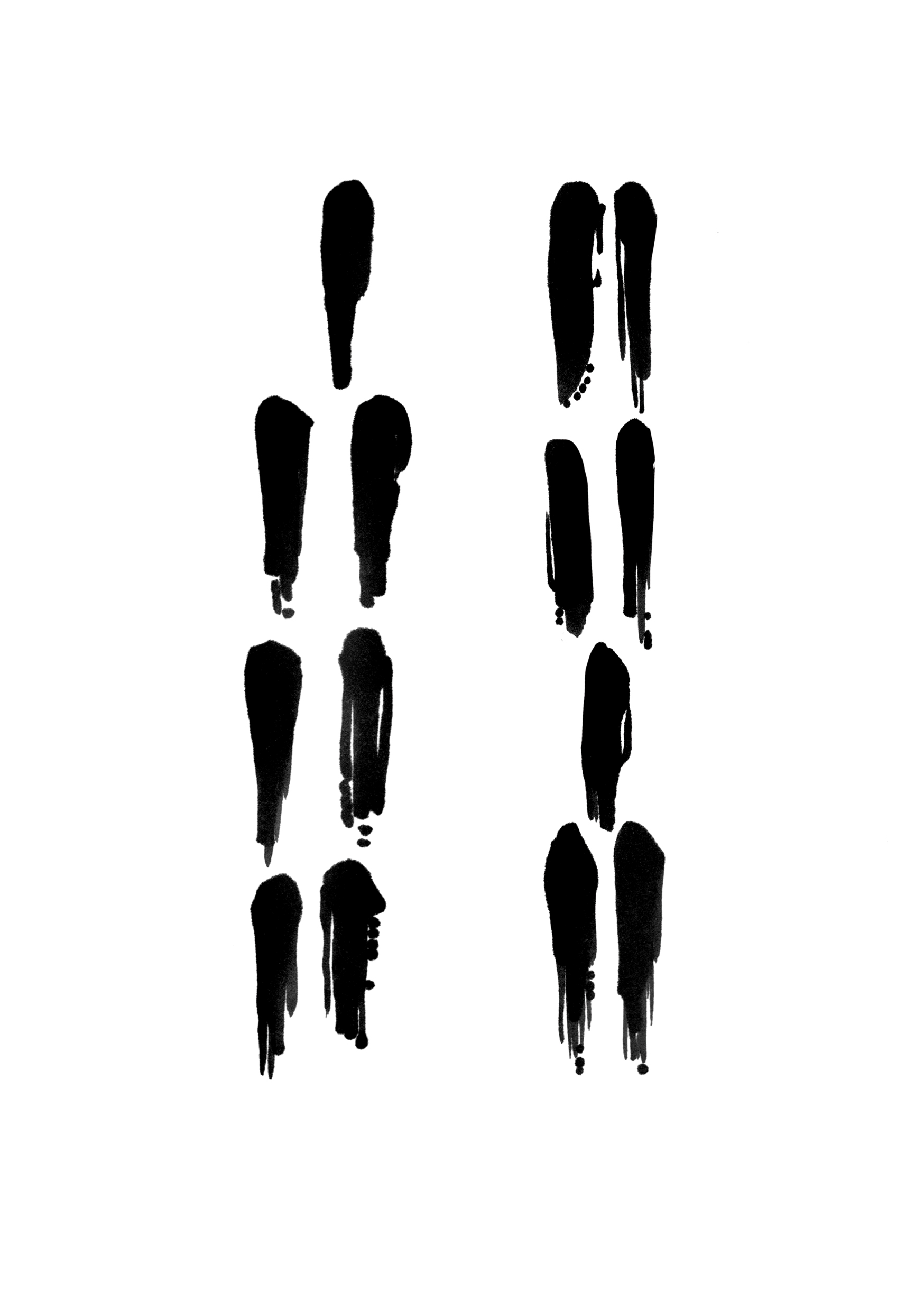
This Academy reads the right column first, then the left. Each row carries a single or double mark.

Where this Odù belongs
Òtúrúpòn Òbàrà belongs to the Òtúrúpòn family in this Academy’s study sequence. It is a mixed Odù, distinct from Òbàrà Òtúrúpòn. The order matters. Its teaching is approached through its own narratives, rather than by adding two general descriptions of the principal signs together.
Key Òrìṣà and sacred relationships
The figures below are selected for their roles in the accounts discussed here. They offer connected reading paths through the tradition.
-
Ọ̀rúnmìlà. Orunmila conceals wrongdoing in the peanut account but meets a humiliating marriage demand through publicly valued service in the king story; the contradiction should be retained.
-
Èṣù. Eshu informs Orunmila about Olofin’s search for him, creating the access later used to remove a witness; the passage does not make him the originator of the concealment.
Key myths and their meanings
A guard becomes the inconvenient witness
Orunmila’s pregnant wife wants peanuts from a field they do not own. When the guarding goat objects, Orunmila offers part of the produce to gain silence. Eshu then tells him that Olofin needs help for his daughter. At court Orunmila identifies the field’s guard as necessary for the response and prevents it from speaking. The story links a religious origin account with the suppression of evidence about a personal theft.
The revered protagonist’s action remains ethically troubling and should not be reframed as successful protection against an enemy. The guard initially performs its duty, while proximity to authority lets the accused control the witness’s future. The question is abuse of an advisory role and the danger of decisions based on a specialist’s undisclosed interest. Ceremonial killing and bodily procedure are not reproduced.
Narrative setting: Cuban/Lukumí narrative in the accounts considered here; no individual author established for this passage.
The king’s humiliating demand reverses
A king rejects his daughter’s suitors by imposing an excessive payment. Orunmila and the princess choose each other, and he brings his entire capital, but the king adds a requirement that he beg publicly for three months. Orunmila instead makes his house a place where people receive assistance. His reputation and resources grow, and he returns with a crowd whose recognition makes the king acknowledge him as worthy of rule.
The contrast with the peanut story is productive: public witnesses here reveal a contribution rather than being silenced. The king tries to make dependency a spectacle that improves his own moral appearance. Orunmila changes its meaning through service, though the princess’s own voice remains limited after her initial preference. The episode supports scrutiny of shifting conditions imposed by someone who does not intend any answer to be sufficient.
Narrative setting: Cuban/Lukumí narrative in the accounts considered here; no individual author established for this passage.
Ikúyèbá’s public work receives protection and support
Ikúyèbá, called a child of Agùnnàre, laments the absence of favorable things. Divination directs a sacred response involving abèbè and Èṣù. He complies and moves through the town dancing. The verse associates continuing Èṣù devotion with carrying the object and receiving money at places visited. Its refrain celebrates the turning aside of death, loss, and Ajogún. The prose also relates the client’s work to speech and to the legs needed for moving in pursuit of sustenance. It does not narrate a previously diagnosed impairment or a cure. The account joins ritual response, mobile performance, material support, and the preservation of effective movement.
The Spanish translation mechanically renders the offering object through words for enthusiasm, while the Yoruba repeatedly supplies abèbè. That lexical difficulty should not be disguised with an invented elaborate costume or apparatus. The secure action is a sacred response followed by mobile dance, received support, and declarations that harmful powers have turned aside. Within the account, speech and legs are linked because the client’s livelihood requires moving between audiences. Protection therefore concerns the actual capacities through which the represented work occurs, not a detached promise of generic success.
Èṣù is explicitly involved in the religious relationship and should not be reduced to a symbol of networking or performance confidence. A contemporary reading can consider the dependence of public work on bodily movement, audiences, and material acknowledgment. It must also keep the prose’s protective wish distinct from a narrated clinical recovery. No bodily history is supplied, and the text gives no basis for presenting impairment as laziness, moral failure, or evidence of a neglected offering.
Narrative witness and setting: African Ifá verse in the explicitly named Ayo Salami division, transmitted with Yoruba text and a Spanish rendering in the compilation.
Itú’s companion turns knowledge of ritual against the guide
Itú knows the route to Ilé Ifè, and Òdàrà begs to accompany him. Òdàrà is skilled in difficult speech and ritual practice. Upon arrival, the people are consulting about their domestic troubles. Òdàrà uses his linguistic skill to declare Itú the required sacrificial victim. The people seize and sacrifice the guide who enabled the journey. The closing verse associates the outcome with neglected sacred obligations, while the prose distinguishes the risks of following another traveler from taking someone along oneself. No rescue or later punishment of Òdàrà is narrated. The episode ends in betrayal and death rather than a recovered friendship or a corrected ritual decision.
The companion’s competence is real within the narrative, but competence does not establish trustworthiness. The person who receives access through Itú’s knowledge gains a position from which to redirect the destination’s ritual inquiry against him. The account thus makes interpretation itself a site of danger: an authoritative declaration determines whose body will bear the purported solution. The article should report human sacrifice plainly as the represented event without reproducing procedural details or treating the episode as a present religious authorization. The source’s closing explanation concerning neglected obligations also belongs in the account; removing it would replace its religious causality with a solely modern betrayal story.
An additional contemporary interpretation can examine manipulation of expertise and the vulnerability of someone whose practical contribution is indispensable but whose voice does not control the decision. That reading must not invent a formal trial, a translation dispute, or a later reckoning. The witness supplies a horrifyingly effective utterance and an ending in which the guide is not saved.
Narrative witness and setting: African Ifá verse in the explicitly named Ayo Salami division, transmitted with Yoruba text and a Spanish rendering in the compilation.
What was born in this Odù
“Born” can name an explicit traditional origin association or what emerges through a story: a capacity, relationship, practice or order of life. Interpretations drawn from a narrative are labelled below, so their basis remains clear.
Cement
Selected traditional source association.
Cement is explicitly named as an origin. It supplies a material association with durable joining, but the selected stories do not explain a technical invention or authorize a historical construction claim.
Vegetation placed with a ceremonial animal
Selected traditional source association.
The origin list names an association between herbs and an animal in a ceremony. It is retained only at the level of material classification, without the preparation, sequence, or claims of efficacy.
Correlations to life dimensions
These questions bring the selected stories into contemporary life. They are interpretive invitations for study.
Work and resources
The king keeps adding conditions after the original payment is met. The story supports recognizing a negotiation in which requirements are used to preserve control rather than define a reachable and honest agreement. The added begging condition follows payment of the requested capital.
Reflect: What evidence shows that meeting the stated condition will actually settle the matter?
Relationships and family
The princess’s future is controlled through demands designed to humiliate a suitor. Her initial mutual attraction matters, but the account leaves limited space for her later agency; that absence deserves recognition. The princess initially expresses a preference the king tries to obstruct.
Reflect: Who is being negotiated about without continuing participation in the decision?
Character and inner life
The two Orunmila stories prevent an easy claim that a respected role guarantees just conduct. Self-assessment requires considering whose benefit an action serves and which inconvenient facts its explanation leaves out. The peanut guard’s testimony would expose a concealed personal interest.
Reflect: What part of the story would challenge my preferred image of myself?
Community and responsibility
A crowd can verify service, while silencing a guard prevents verification of wrongdoing. Public presence matters only when people can contribute independent information rather than merely confirm the account of the most powerful speaker. The crowd accompanies a contributor whose work it has experienced.
Reflect: Can witnesses speak about what they know without being selected for agreement?
A deeper reading of the sacred relationships
Religious speech can protect or be weaponized within the accounts
Ikúyèbá’s response joins Èṣù devotion, mobility, and the averting of harmful powers. Òdàrà’s declaration places Itú inside a sacrificial demand that ends his life. Both passages treat ritual knowledge and speech as consequential, yet their consequences are radically different. A study should preserve the sacred reality of that efficacy while refusing to equate every skilled speaker with a trustworthy guide. The second account’s closing attribution to neglected obligations remains part of its explanation, not an editorial verdict about actual victims of violence. Contemporary reflection can examine expertise and responsibility, but the source’s religious logic and its disturbing represented outcome must both remain visible rather than being reduced to a neutral lesson about communication.
Practical guidance and interpretive authority are different powers
Itú knows how to reach Ilé Ifè, while Òdàrà knows forms of speech and ritual. Their cooperation in travel does not distribute authority equally at the destination. Once the city’s inquiry begins, the companion’s interpretive role overrides the guide’s contribution and turns him into an object of the proposed remedy. This distinction makes the betrayal more precise than a generic warning against friends. The account concerns unequal capacities that become differently valuable across a changed setting. An analytical comparison can ask who can provide access and who can define what an arrival means. It should leave the unspecified reason for Itú’s absent objection or failed resistance unstated rather than inventing his consent.
The body can carry a livelihood or be made to bear a proposed solution
Ikúyèbá’s legs and speech enable movement through the town, where support is received. Itú’s body, by contrast, is designated as the means through which others will supposedly improve their affairs. These are distinct relations between bodily presence and communal benefit. The earlier guard’s inconvenient witness and the king’s humiliating demand likewise involve power exercised over someone whose participation matters to another’s aims. A contemporary comparison can examine the difference between supported agency and instrumentalization. It must remain grounded in the named actors and actual events, without making illness or mobility a moral ranking. The first account seeks protection of capacity; the second shows its guide deprived of the power to determine his own fate.
Questions that deepen the study
Does Ikúyèbá recover from a diagnosed condition of the legs?
No diagnosis or prior incapacitation is narrated. The prose asks protection for the legs through which the client moves to sustain himself, while the verse shows dance, circulation, offerings, and support. The article should keep protection distinct from a reported cure. It can discuss the religious relationship through Èṣù and the material conditions of speech-based work without making medical claims. The awkward Spanish rendering of abèbè is another reason to remain close to secure events rather than invent an apparatus or treatment. The represented outcome is favorable movement and the turning aside of harmful powers, not clinical evidence about the cause or remedy of an actual impairment.
Does Itú’s knowledge of the road protect him at the destination?
It enables the journey but does not secure his position in the city’s ritual inquiry. Òdàrà’s different knowledge becomes decisive there, and he directs it against the person who brought him. That shift is the narrative’s specific betrayal. An article should not turn it into a claim that guides are generally naive or that ritual specialists are inherently malicious. Itú and Òdàrà are particular actors in a particular outcome. The absence of rescue also matters: the supplied story does not correct the declaration or punish the betrayer afterward. Its religious closing explanation remains present, while the ethical analysis can examine the misuse of a competence that the text itself acknowledges.
How should the article represent the human sacrifice without normalizing it?
It should state that the people seize and sacrifice Itú after Òdàrà’s declaration, identify the episode as a transmitted narrative, and examine the betrayal and claimed ritual authority. Euphemism would conceal the outcome, while procedural detail or present endorsement would exceed the research purpose. The source’s religious explanation should be reported at its actual scope, not projected onto real victims as proof of neglected obligations. Contemporary ethical interpretation can address instrumentalization and responsibility as an additional lens. The text provides no successful appeal, later rescue, or punishment that resolves the discomfort. Leaving those absent is part of representing the witness accurately rather than repairing it into a safer or happier story.
What the four narratives reveal together
The earlier guard and humiliating royal demand expose the consequences of being placed under another person’s power. The African passages extend that concern into public livelihood and ritual interpretation. Ikúyèbá’s protected movement allows speech, dance, and received support to sustain his life; Itú’s useful knowledge brings a companion to a city where that companion’s declaration makes the guide expendable. Their contrast makes competence ethically consequential without making it automatically benevolent.
The sacred logic remains explicit in Èṣù devotion, divinatory response, harmful powers turned aside, and the second verse’s closing explanation. Contemporary reflection can examine supported agency and instrumentalization while refusing to turn the violent outcome into present authorization. The article should also preserve its unresolved ending: Itú is not rescued, Òdàrà is not shown punished, and an authoritative-sounding pronouncement is not thereby established as a trustworthy act of care.
Living with this Odù
A continuing life or initiatory relationship
For someone carrying Òtúrúpòn Òbàrà through a received life or initiatory relationship, public authority and the power to name a situation may require sustained examination. Orunmila suppresses a guard's testimony in one witness, while in another he turns a humiliating demand toward public assistance and recognition. The same sacred name therefore does not settle the ethics of every act. Ikúyèbá's mobile performance receives support within a specific sacred relation, while Òdàrà turns linguistic and ritual competence against the guide who made the journey possible. Over time, character may develop through distinguishing service from control of evidence, and persuasive authority from truthful speech.
The inward temptation can include using one's reputation to make a private need invisible or assuming that the person who knows the route also controls how arrival will be interpreted. These witnesses do not predict betrayal or make religious expertise inherently suspect. Their sacred obligations and protection remain active, while their violent and ethically incompatible outcomes remain visible. Carrying the sign can invite a changing responsibility to those whose voices one's authority can amplify or silence, especially when a public claim has consequences for a person who cannot easily contest it.
A particular consultation and its question
In consultation, the actual question can distinguish a witness being suppressed, a humiliating condition being transformed, mobile work requiring support and a companion abusing the power to interpret. The peanut narrative asks whether a claimed religious necessity conceals the specialist's personal responsibility. The princess's choice and public assistance ask a different question about recognition beyond a ruler's degrading demand. Ikúyèbá's verse preserves sacred protection and material support without diagnosing a prior impairment. Itú's death supplies a grave limit: skill in difficult speech does not make the claim it produces just, and no rescue is narrated.
A practitioner cannot infer that an unknown guide will be betrayed or that public generosity guarantees elevation. Contemporary reflection can ask who defines the problem, what evidence can still be heard and what access has been granted to another person's expertise. A situational result is not a permanent identity of victimhood or deception. Its religious meaning depends on the actual reading. The narratives help examine the outer configuration of speech, reputation and vulnerability while refusing to make a sacred actor's name or a favorable public outcome automatically certify ethical innocence.
Constructive and adverse possibilities
Constructive movement may include help becoming publicly useful, humiliating terms losing their control and work receiving support within acknowledged sacred relations. Adverse movement appears when expertise silences evidence or a traveler uses acquired access to make the guide disposable. Itú's death and the guard's suppressed testimony cannot be smoothed into deserved consequences merely because neglected obligations also appear in the source. Iré and osogbo require the actual religious interpretation, not a verdict from reputation or rhetorical success. The witnesses keep service and deception distinct even when the same named figure occupies incompatible roles. Their contemporary relevance lies partly in asking who can challenge a consequential declaration, and whether the people who made a journey or project possible retain agency once another person controls the account of what should happen next.
An illustrative situation in everyday life
Hypothetically, a guide brings a persuasive expert into a community to help address an ongoing problem. Once there, the expert identifies the guide as the source of the difficulty and prevents contrary testimony from being heard. Elsewhere, another adviser gains genuine recognition through public assistance rather than accepting a ruler's demand for humiliation. Itú's and the peanut structures ask how interpretive authority can turn access into vulnerability; the generosity account prevents all expertise being reduced to abuse. This is an illustrative interpretation, not a prediction of violence or a finding that a real specialist is dishonest. The inward conflict is trust in impressive speech. The external task is to preserve an independent hearing for the person whose contribution enabled the encounter.
Sources and reading context
The first two narrative witnesses
The selected Cuban-labelled Spanish narratives portray the same sacred figure in incompatible ethical roles. This is retained as a source tension. The material origin entries are not expanded into invented myths, and no ritual sequence, punitive bodily detail, or claim of medical efficacy is included.
Narrative motifs are summarized independently. The life-dimension reflections are contemporary interpretation. How these reference studies are built explains the wider source approach and the distinction between a reference article and personal divination.
Additional named witnesses
- Ayo Salami. Explicit Òtúrúpòn Òbàrà A and B divisions provide Ikúyèbá’s mobile livelihood and Itú/Òdàrà’s journey. Yoruba abèbè clarifies that the Spanish enthusiasm wording is mechanically awkward, though no elaborate object description is inferred.
The first passage has an awkward object translation and no narrated clinical recovery. The second explicitly ends in human sacrifice; no rescue, consent, or later reckoning is supplied. Religious causality is reported within the story, not assigned to actual victims.
Bibliographic identification
- Ayo Salami. Ifá: A Complete Divination. Lagos: NIDD, 2002 catalogue record. Library catalogue record. Bibliographic identification of the named author and work; the edition behind the transmitted account remains to be matched.
Read the source method and wider scholarly context.
The catalogue links identify published works and their authors. They are separate from proof of an individual episode’s wording or attribution. Contemporary comparisons and the synthesis above are editorial interpretation. The author’s books and Academy companions below provide further study; their sales links are separate from the source references.
Continue within the family
Previous study: Òtúrúpòn Òwónrín · Next study: Òtúrúpòn Òkànràn