
Ìká Ìwòrì is a mixed Odù in Ifá’s 256-part corpus. The bat’s new wings give Ìká Ìwòrì a precise image of incomplete change: escape from being trampled does not yet supply direction. The second selected story shows Ogún’s desire for palm wine expanding into pursuit and devastation, with the drink finally revealing a troubling sacred history. Together these narratives distinguish obtaining a power or satisfaction from knowing how to live with it. Orientation is the sign’s single explicit origin association.
A question to carry through the study: What guidance or restraint still needs to develop alongside the ability I have gained?
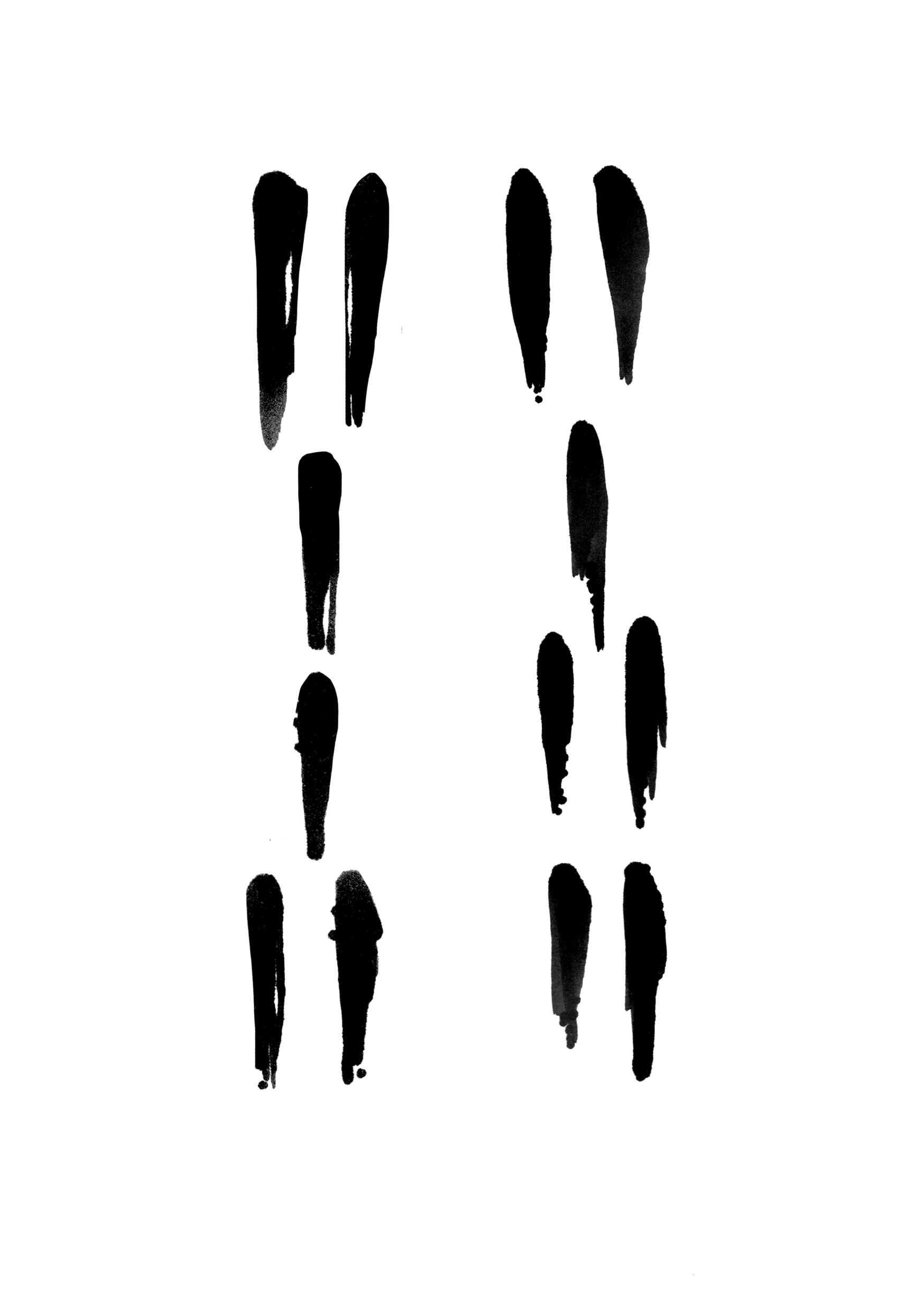
This Academy reads the right column first, then the left. Each row carries a single or double mark.

Where this Odù belongs
Ìká Ìwòrì belongs to the Ìká family in this Academy’s study sequence. It is a mixed Odù, distinct from Ìwòrì Ìká. The order matters. Its teaching is approached through its own narratives, rather than by adding two general descriptions of the principal signs together.
Key Òrìṣà and sacred relationships
The figures below are selected for their roles in the accounts discussed here. They offer connected reading paths through the tradition.
-
Ọ̀rúnmìlà. Orunmila gives Bat the means of flight but the work remains unfinished; he also advises Ogún and later interprets the troubling origin associated with the wine.
-
Ògún. Ogún pursues palm wine through escalating anger, capture, and violence, then confronts an account of the drink that links satisfaction with the harm used to obtain it.
-
Obàtálá. Obatalá responds to the captured Akuaro at the point of suffering, marking a protective intervention that contrasts with Ogún’s pursuit; related forms are named separately in the story.
Key myths and their meanings
Wings without a completed direction
Bat begins without wings and is trampled and mistaken for a mouse. It seeks Orunmila, follows the first part of the counsel, and gains flight. Believing the entire difficulty has been solved, it does not return to complete the process. The story distinguishes a new ability from the orientation, steadiness, and discrimination needed to use it, leaving Bat mobile but still unable to direct its own life well.
The source’s image need not be treated as a factual account of bat senses. Its analytical value is the difference between relief from one constraint and completion of a wider change. The account also comes from the adviser’s perspective, so continued dependence on consultation should not be presumed without question. The useful issue is identifying unfinished capacities rather than declaring every partial success invalid.
Narrative setting: Cuban/Lukumí narrative in the accounts considered here; no individual author established for this passage.
A desired drink carries a history
After a political struggle, Ogún settles near Ife and demands palm wine. When it is not given, he pursues a specialist able to transform into a bird, eventually capturing and harming him. Violence spreads to the settlement. Later the damaged palm yields wine, and Ogún seeks Orunmila’s explanation. The account connects the drink with an ancestral sacred presence and the disturbance of the head.
The narrative makes desire and force causally connected: wanting a resource becomes an assertion that others must provide it. The drink’s final appearance does not make the earlier actions justified. Its complex divine names and transformations should remain local to this version. A careful reading concerns entitlement, escalation, and the memory carried by a resource, not an invented historical or pharmacological explanation of alcohol.
Narrative setting: Cuban/Lukumí narrative in the accounts considered here; no individual author established for this passage.
Three trees differ over the clothing they were asked to offer
Apá, Iroko, and Ope Eluju receive counsel as a group before entering the world. The requested offering is described as their own clothing. Apá and Iroko reject the idea of surrendering it, while Ope does so. The verse then explains a continuing difference: people repeatedly remove the covering of the refusing trees, understood as bark, while Ope is not stripped in the same way. The introductory address asks three companions to identify one another and respond together, while the narrated outcome records only one completing the response. Its claim concerns a sacred history of covering, vulnerability, and differentiated continuation rather than a botanical classification established independently of the verse.
The account makes an immediate relinquishment protect against a repeated later loss. That is more specific than a generic instruction to be generous: the requested covering belongs to the being’s own form, and refusal is answered through the history of that same covering. The religious logic understands the material and the sacred relation together. It should not be flattened into a commercial transaction in which any object buys immunity. The group address also complicates individual success. A shared possibility is presented, but one companion’s completion cannot be assumed to stand for all three.
Beside the earlier Bat story, the addition gives clothing another role: sheets become a capacity for flight, while a tree’s covering becomes the site of a continuing obligation. In both, an outward form participates in a life but does not explain the whole relation. Contemporary interpretation can ask about collective commitments and deferred costs, while the source’s claims about stripping remain mythic accounts rather than scientific statements about every named tree.
Narrative witness and setting: African Ifá verse in the explicitly named Ayo Salami division, transmitted with Yoruba text and a Spanish rendering in the compilation.
A temporary refuge is converted into possession
A pregnant Dog has no dwelling and asks her friend and ritual relation Quail for shelter until the birth. Quail agrees. After the puppies arrive, Dog asks to remain until they are strong enough to leave, and Quail extends the welcome. When that later point arrives and Quail again asks the household to depart, Dog attacks and drives the host out. Quail consults Orunmila, who recalls an earlier warning but does not promise recovery of the house. He offers help against destitution instead. The episode therefore distinguishes the original need, the extended agreement, the violent appropriation, and the narrower assistance still available after the loss.
The danger is not inherent in pregnancy, hospitality, or friendship. It arises when a bounded refuge is converted into a claim that the host can no longer revise. The successive requests are important because they show how an arrangement changes over time rather than revealing a single malicious act at the door. The sacred relation is also particular: Orunmila’s prior counsel is remembered, but his later response does not mechanically undo history. That limit makes the account richer than a promise that returning to consultation always restores everything.
The earlier Bat account likewise distinguishes an initial improvement from a completed development, while the palm-wine narrative shows an unchecked demand making others bear its costs. Contemporary interpretation can examine boundaries and remedy, but should not repeat the source’s personal prohibition as a universal ban on providing shelter. Quail’s kindness does not make Dog’s violence deserved, and assistance after dispossession can remain meaningful even when restoration is not narrated.
Narrative witness and setting: Cuban/Lukumí-labelled narrative in the supplied multilingual collection; no individual author is established for this passage.
What was born in this Odù
“Born” can name an explicit traditional origin association or what emerges through a story: a capacity, relationship, practice or order of life. Interpretations drawn from a narrative are labelled below, so their basis remains clear.
Orientation
Selected traditional source association.
Orientation is the sole explicit origin, expanded elsewhere with the modern word radar for bats. The association is a religious image of direction and discrimination, not a scientific account of echolocation or a fixed personal deficit.
Ability distinguished from readiness
Contemporary interpretation from the selected myth.
As a contemporary interpretation, the bat’s unfinished change generates a distinction between new capacity and the orientation required to use it. This is not a traditional origin claim about education or a factual explanation of bat behavior.
Correlations to life dimensions
These questions bring the selected stories into contemporary life. They are interpretive invitations for study.
Work and resources
Bat acquires a useful capacity without completing the broader task. A practical question is which supporting skills, feedback, and routines must accompany a new tool before it reliably serves its purpose. Bat gains flight before the wider transformation is complete.
Reflect: What remains unfinished even though the first improvement is visible?
Relationships and family
Ogún’s unmet desire becomes a demand upon an entire settlement. The story supports recognizing when frustration has crossed into an assumption that other people owe satisfaction regardless of their circumstances or consent. The village cannot satisfy the demand that Ogún treats as owed.
Reflect: Am I asking for cooperation or treating another person as an instrument?
Character and inner life
Relief can produce premature certainty, while frustration can produce escalating force. The two stories invite attention to these different moments when a person stops assessing the situation accurately. The two stories place certainty after relief and during frustration.
Reflect: Which feeling is making me assume I already understand enough?
Community and responsibility
The wine episode gives a sought resource a remembered history of harm. Communities can ask how the benefits they receive are connected to the treatment of those who produced, guarded, or lost them. The palm’s later yield retains a troubling narrative memory.
Reflect: What history should remain visible when this resource is enjoyed?
A deeper reading of the sacred relationships
A completed response is particular to its recipient and relation
The trees are addressed together, but Ope’s completed offering does not erase the other trees’ refusals. Quail’s later consultation also remains tied to an earlier counsel and an already changed situation. These episodes understand sacred efficacy as a continuing relation, not a general mechanism detached from history. The earlier Bat story makes that distinction through incomplete work after receiving flight, while the Ogún account ties a desired drink to a specific sacred past. A reference should explain these differentiated responsibilities from within their witnesses before introducing contemporary language about follow-through. Neither one person’s participation nor one completed action automatically settles every other relation, and the sources do not provide a universal timetable by which all losses must be reversed.
What a covering enables and what it cannot settle
The tree verse understands bark as clothing, Bat receives sheets as wings, and Quail’s house temporarily covers another household. These are not merely decorative similarities. Each covering makes a capacity or safety possible and also becomes a point where dependence can be misunderstood. Bat assumes that flight completes the whole development; the refusing trees try to retain a covering whose later loss becomes recurrent; Dog treats shelter as possession. A contemporary comparison can ask whether a useful form has been mistaken for a finished relation. The accounts’ sacred terms remain different, however, and an editor should not derive one universal symbolism of fabric, bark, and walls. Their particular histories determine what each covering protects, exposes, or fails to resolve.
The remedy after harm may be narrower than the original prevention
Orunmila tells Quail that recovering the house is no longer the assistance he can provide, while still responding to the danger of destitution. That distinction avoids two equally reductive readings: that all sacred help must restore the exact previous state, or that failure to restore it means there is no help left. Bat’s incomplete change also leaves a remaining task after a real gain. The palm-wine account carries a troubling history into the resource Ogún finally obtains, so acquisition does not erase prior harm. A contemporary lens can distinguish prevention, reversal, adaptation, and acknowledgment. It should not make Quail’s dispossession a desirable lesson, but can preserve a form of care that continues after an irreversible change has occurred.
Questions that deepen the study
Does the tree verse mean that any immediate sacrifice prevents later loss?
The account makes a particular relation between the trees’ own covering, a specific counsel, and a repeated stripping. It does not establish an interchangeable formula for every present decision. The introductory group address also distinguishes what all three could complete together from what one actually completes. Within the witness, the offering is spiritually effective, but that efficacy has an identified recipient and history. A contemporary reader may compare short-term relinquishment with longer-term exposure, provided the comparison does not turn into a guarantee of safety. The named trees and bark imagery belong to the verse’s religious explanation; they are not independent botanical proof or a universal financial principle.
Why does Orunmila help Quail without promising the house back?
The narrative differentiates the changed condition from the assistance still possible within it. He recalls prior counsel, states that restoration is not available in this account, and responds to the risk that dispossession will become destitution. That is a meaningful limit rather than an admission that no sacred relationship remains. A contemporary discussion can use the distinction to ask what care is needed after a loss that cannot simply be undone. It should not blame Quail for the other household’s violence or treat a personal source prohibition as a general rule against sheltering people. The story supplies a particular boundary problem and a narrower later remedy, not a universal policy.
How do the additions clarify the difference between capacity and direction?
Bat’s flight provides a capacity without completing the guidance needed to use it. The tree verse shows another form that must be held within a continuing sacred relation, and Quail’s house shows a material capacity whose terms of access change over time. Ogún’s pursuit of wine adds the danger of treating another person’s capacity as something owed. Together they ask what relation makes an ability, resource, or shelter usable without closing off responsibility. Contemporary interpretation can name direction, consent, and limits as distinct questions. The accounts themselves also require attention to divination, sacred material, and remembered counsel; those spiritual conditions should not be replaced by a purely managerial concept of planning.
What the four narratives reveal together
The additions extend Ìká Ìwòrì through coverings and the time of a relationship. Three trees receive a shared invitation but do not share the same response; a host extends refuge and later loses control of the terms. The earlier Bat and palm-wine stories add a genuine capacity mistaken for completion and a desired resource pursued through unchecked demand. These are not all warnings to withhold or all praise of surrender. Their religious logics distinguish offering, unfinished development, remembered counsel, and the sacred history carried by a material form.
Contemporary reflection can examine collective commitment and the remedy still possible after harm, but should preserve the sources’ different limits. In particular, Quail does not recover the old house, and Ope’s outcome does not make the other trees’ response disappear. A reference gains depth by leaving those differences active rather than deriving one general promise about protection.
Living with this Odù
A continuing life or initiatory relationship
For someone whose received life or initiatory Odù is Ìká Ìwòrì, increased capacity does not end the question of orientation. Bat gains flight and mistakes that first change for a completed relation to counsel. Ogún's desired drink carries a history that appetite and force do not initially recognize. The trees' clothing verse distinguishes a sacred response before earthly exposure, while Quail's extended shelter becomes a violent loss of the host's home. Over time, character may develop through asking what a new ability permits, what remains unfinished and whether compassion has become an unbounded transfer of control.
The inward tension can include relief at an initial success, shame about refusing a vulnerable person or insistence that an available substance has no history beyond one's desire. These accounts do not explain natural animal behavior or prescribe suspicion toward guests. Their religious relations remain active, including the head, ancestral presence, Ifá and the narrower help offered after dispossession. Carrying the sign offers changing questions about completion and terms, rather than a prediction of instability. A person may need to return for orientation after gaining freedom, or recognize that assistance after loss need not restore the exact place that existed before.
A particular consultation and its question
In consultation, these witnesses help distinguish gaining capacity from knowing how to use it, and providing shelter from surrendering agency over a household. Bat's wings ask what part of a process has been treated as finished too soon. The palm wine account asks what history and sacred relation a demand overlooks; its complex names should not be collapsed into one universal identity. The trees' verse locates differentiated exposure within counsel rather than independent botanical fact. Quail's story asks when an agreement was extended, what its endpoint meant and how need became appropriation.
A practitioner should not use the latter to blame a person for being violently dispossessed or to declare that every guest poses danger. The actual question may concern training, hospitality, appetite or help after a loss. Contemporary reflection can clarify what remains possible without promising complete restoration. A situational result is not equivalent to a lifelong unstable identity. The religious interpretation must preserve Orunmila's response and the sacred histories rather than convert them into a stock instruction about caution. Its value may lie in recognizing an unfinished direction or an agreement whose terms have changed while the person still acts as though the first arrangement remains intact.
Constructive and adverse possibilities
Constructive unfolding can involve completing orientation, recognizing a substance's sacred history and receiving the assistance still possible after a serious loss. The trees' differentiated response also preserves the relation between vulnerability and prior counsel within its verse. Adverse movement appears when a first gain licenses abandonment of the remaining process, appetite becomes violent entitlement or hospitality is converted into possession. Quail's account does not restore the house, so help must not be described as if every injury is reversed. Iré and osogbo require the actual reading rather than an assumption that movement means freedom or that generosity secures safety. These witnesses distinguish capacity, direction, covering and dwelling as related but different conditions. Their human relevance includes honest limits to repair, while their sacred agency remains more than a psychological lesson in setting boundaries.
An illustrative situation in everyday life
Hypothetically, a newly trained professional gains access to powerful equipment and assumes that the ability to operate it completes the need for supervision. At home, a temporary guest repeatedly extends a stay without agreeing to a clear endpoint. Bat's structure asks what orientation remains after a new capacity; Quail's story asks how an initial act of care has changed into a different arrangement. The person feels liberated in one setting and guilty about requesting clarity in the other. This is an illustrative interpretation, not an accusation that a real guest will become violent. The practical distinction is between an unfinished learning process and an agreement needing renewed consent. Neither is settled by the fact that the first stage felt successful or generous.
Sources and reading context
The first two narrative witnesses
The bat narrative is Cuban-labelled Spanish; the palm-wine account is an edited English version with complex local divine naming. Obalufón and Olufón are not silently collapsed into one universal Obatalá form. Only one explicit origin is given, and natural-history or medical claims are excluded. Added emergence motifs are explicitly distinguished from traditional origins.
Narrative motifs are summarized independently. The life-dimension reflections are contemporary interpretation. How these reference studies are built explains the wider source approach and the distinction between a reference article and personal divination.
Additional named witnesses
-
Ayo Salami. The three-tree verse and its group address stand within the explicitly named African witness division.
-
Cuban/Lukumí-labelled collection. The Quail/Dog refuge narrative is separate from the earlier Bat and palm-wine motifs and has no established individual author here.
The tree verse is interpreted through its own covering imagery, not treated as botanical verification or merged with Brazilian tree traditions. The Quail account records a limited later remedy. No personal shelter prohibition, medical claim, or claim that another person’s violence is deserved is adopted.
Bibliographic identification
- Ayo Salami. Ifá: A Complete Divination. Lagos: NIDD, 2002 catalogue record. Library catalogue record. Bibliographic identification of the named author and work; the edition behind the transmitted account remains to be matched.
Read the source method and wider scholarly context.
The catalogue links identify published works and their authors. They are separate from proof of an individual episode’s wording or attribution. Contemporary comparisons and the synthesis above are editorial interpretation. The author’s books and Academy companions below provide further study; their sales links are separate from the source references.