
Ìká Òyèkú is a mixed Odù in Ifá’s 256-part corpus. Ìká Òyèkú’s selected stories contrast determined technique with determined self-certainty. Orunmila cuts steps into a steep hill to reach a ceiba that other powers could not approach. An influential father, by contrast, insists on a plan for his sons despite repeated warnings and seeks a specialist whose claim of supreme knowledge confirms his wish. The sign’s ancestor-food origin frames the seriousness of continuity without making lineage alone a guarantee of sound judgment.
A question to carry through the study: Am I adapting my method to a real obstacle, or seeking someone who will endorse a fixed desire?
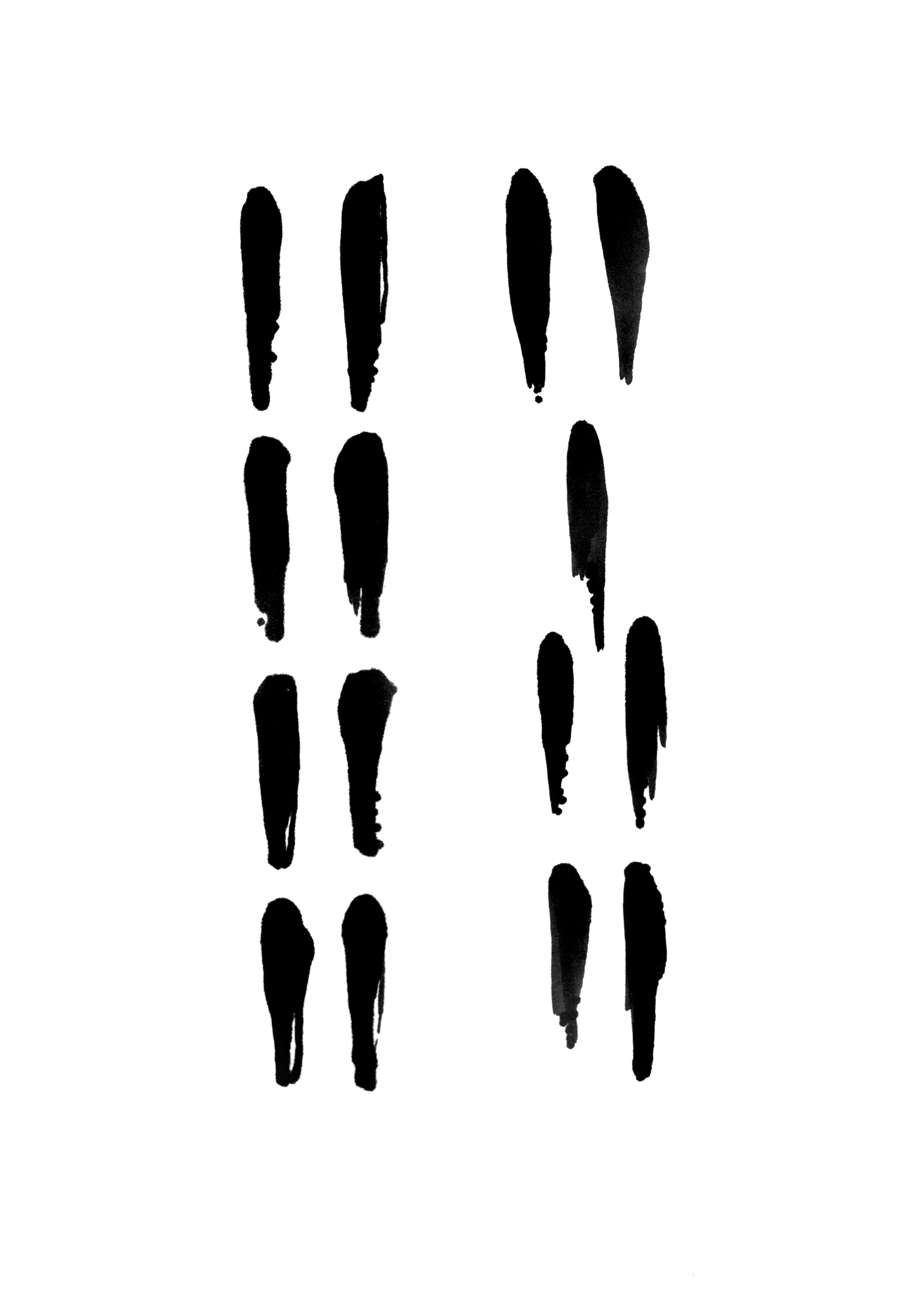
This Academy reads the right column first, then the left. Each row carries a single or double mark.

Where this Odù belongs
Ìká Òyèkú belongs to the Ìká family in this Academy’s study sequence. It is a mixed Odù, distinct from Òyèkú Ìká. The order matters. Its teaching is approached through its own narratives, rather than by adding two general descriptions of the principal signs together.
Key Òrìṣà and sacred relationships
The figures below are selected for their roles in the accounts discussed here. They offer connected reading paths through the tradition.
-
Òrìṣà Òkò. Orisha Oko grants Ogba Orilaye powers and repeatedly cautions him about his sons; his presence connects specialized authority with limits that the recipient refuses to accept.
-
Ṣàngó. Shangó joins Orisha Oko in warning the father and later receives his body; his role makes neglected counsel central to the fatal outcome of this version.
-
Ọ̀rúnmìlà. Orunmila reaches the ceiba by making an ascending path with tools after direct climbing fails, turning an apparently inaccessible task into a sequence of workable steps.
Key myths and their meanings
A father seeks the answer he wants
Ogba Orilaye receives powers from Orisha Oko and Shangó but is warned not to initiate his sons into Ifá. He remains determined and travels with Elegbá to another land. There a diviner acknowledges the danger yet boasts that his own superior power can handle it. The sons are initiated, and the father dies. The story makes parental ambition, specialist confidence, and warnings that nobody wants to hear converge.
The narrative should not be used to impose a prohibition on children or a prediction about initiation. Its ethical issue is the search for confirming authority after limits have already been stated. The second specialist’s boast mirrors the father’s refusal to reconsider. Elegbá’s facilitation is also morally mixed, preventing the tale from becoming a simple opposition between wise patrons and an isolated foolish client.
Narrative setting: Cuban/Lukumí narrative in the accounts considered here; no individual author established for this passage.
Steps cut toward the ceiba
Orunmila needs leaves from a ceiba high on a steep hill. Other Òrìṣà return unable to obtain them, and his own first approach also fails. Instead of relying on a stronger direct climb, he uses a hoe and machete to cut an ascending series of steps around the slope. He reaches the tree and returns with the leaves, gaining acknowledgment from those who had mocked his attempt.
The story gives technique a concrete shape: it changes the route rather than denying the obstacle. Orunmila succeeds after meeting the same difficulty as everyone else, so the lesson is not innate invulnerability. The image supports incremental planning and appropriate tools. Its ceremonial setting remains part of the account, but the study does not disclose the preparation or claim the leaves possess a verified therapeutic effect.
Narrative setting: Cuban/Lukumí narrative in the accounts considered here; no individual author established for this passage.
A pre-earth response is remembered in fulfilled elderhood
The verse presents Olota Ika Oyeku preparing to move from heaven into earthly life. The requested response concerns enough time to remain, grow old, and accomplish a life. Olota hears and completes it. The later scene is one of elderhood, dancing, and acknowledgment: the beneficiary praises the diviners, who direct praise to Ifá. The closing address extends toward named communities and travelers, describing protection of the person called Akapo as Ifá’s active concern. Opening images of elephant and buffalo figures and carried bags remain part of the praise frame, but the excerpt does not develop them into a separate adventure or a detailed biography.
The important relation is between duration and fulfillment. Long life is not narrated merely as a number of years isolated from a calling; the time allows accomplishment and later acknowledgment of the relation that supported it. That is the witness’s religious claim, not a clinical promise. The ordered movement of praise also matters: success does not end with the beneficiary crediting only himself, but returns through the diviners toward Ifá. Compared with the earlier father who insists on initiating his sons despite warnings, this verse presents responsiveness before a desired future rather than consultation recruited to ratify an already fixed plan.
The opening imagery should not be forced into a coherent cosmology that the translated excerpt does not explain. Its reference to carried Qur’an bags is evidence of the wording transmitted here, but cannot establish a whole theory of Islamic and Ifá relations. Contemporary reflection can ask what makes time usable and gratefully remembered while preserving the specific pre-earth and divinatory order of the account.
Narrative witness and setting: African Ifá verse in the explicitly named Ayo Salami division, transmitted with Yoruba text and a Spanish rendering in the compilation.
A search for lineage reaches an active relation with Death
Ika regularly provides food within a relationship with Ikú and wants to know the identities of his father and grandfather. Oshún, who prepares the food, becomes curious about what happens after it leaves her work. When she approaches the sacred activity, a grandmother figure called Asofuelo appears in the air and announces a grave consequence for Ika’s wife. Ika responds within the ritual relation, diverts Ikú from Oshún, and expresses acknowledgment after the danger is averted. The account then records further demands for nourishment from named powers. The episode ends with continued responsibility rather than announcing that the encounter has made Death permanently absent.
The narrative makes ancestral inquiry and mortality part of a living sacred relation, not an abstract philosophical curiosity. Food connects household labor with powers whose activity Oshún has not previously seen, and the grandmother’s appearance does not simply provide the requested genealogy. It changes the immediate stakes of knowledge. Ika’s later response protects his wife while leaving obligations active, so protection is not described as emancipation from every exchange. The account differs from the earlier ceiba episode, where a material route can be constructed to reach the needed leaves, and from the father’s story, where insistence on a desired initiation ends disastrously.
These are different limits around access, not a universal condemnation of inquiry. Contemporary interpretation can ask how people participate in activities whose full terms they do not know, especially when one person prepares what another presents. It should not make Oshún’s curiosity a reason that danger is deserved or turn this local narrative into a general restriction on women’s sacred knowledge.
Narrative witness and setting: Cuban/Lukumí-labelled narrative in the supplied multilingual collection; no individual author is established for this passage.
What was born in this Odù
“Born” can name an explicit traditional origin association or what emerges through a story: a capacity, relationship, practice or order of life. Interpretations drawn from a narrative are labelled below, so their basis remains clear.
Food for ancestors
Selected traditional source association.
The explicit origin list assigns feeding Egun to this sign. It marks a relationship with the dead within the Cuban compilation, without proving that all ancestor practices begin here or share one procedure.
An ascending route made by increments
Contemporary interpretation from the selected myth.
As a contemporary interpretation, a workable path emerges when Orunmila cuts steps around the steep hill. The motif values adaptive technique without claiming the traditional invention of stairs, a scientific method, or a universal prescription for sacred trees.
Correlations to life dimensions
These questions bring the selected stories into contemporary life. They are interpretive invitations for study.
Work and resources
The ceiba account turns a difficult objective into a sequence of accessible steps. A method can change while the purpose remains stable, especially when repeated effort along the same route has already failed. Orunmila encounters the same steep slope before changing his method.
Reflect: What intermediate step would make this objective reachable?
Relationships and family
The father’s desire for his sons’ future dominates his hearing of advice. Care can become controlling when the imagined outcome matters more than understanding why the proposed path may be unsuitable. The father continues searching after repeated warnings about his sons.
Reflect: What do I need to understand before deciding another person’s future?
Character and inner life
A boast of superior knowledge becomes attractive because it confirms a desired answer. The narrative supports examining whether confidence is being mistaken for competence precisely when uncertainty feels hardest to tolerate. The second specialist’s boast provides the reassurance the father seeks.
Reflect: Would I trust this assurance if it challenged rather than confirmed my wish?
Community and responsibility
Both tales concern specialist knowledge, but only one shows a method that can be examined. Communities benefit when expertise explains its path and limits rather than relying solely on claims of unmatched power. The steps make the route observable rather than merely asserted.
Reflect: What makes this specialist’s judgment accountable to more than their own confidence?
A deeper reading of the sacred relationships
Protection remains an active relation rather than a final exemption
Olota’s fulfilled elderhood is explicitly connected with a completed pre-earth response and praise returning toward Ifá. Ika’s diversion of Ikú similarly leaves further obligations of nourishment rather than erasing Death’s place. The earlier father narrative makes unheeded divine counsel consequential, while the ceiba story locates an effective material method inside consultation. These are several forms of dependence within sacred life, not one universal transaction. The reference should explain who is addressed and what continues after the immediate outcome. Contemporary discussions of autonomy can then be added without implying that maturity means having no further relations or that protection must always be measured by the complete absence of danger. In these accounts, acknowledgment and continued responsibility are themselves parts of fulfillment.
Not every request for knowledge receives the same kind of answer
The father wants his sons initiated and seeks a specialist who will proceed. Orunmila wants ceiba leaves and changes the route by which he reaches them. Ika wants genealogy and encounters a grandmother’s intervention in a relation with Death. Olota receives counsel about a future life rather than a detailed account of every event within it. Together they distinguish confirmation, technique, encounter, and guidance as different responses to inquiry. A contemporary reading should ask what kind of knowledge is sought and whether the answer actually belongs to that category. It should not infer that a spiritual manifestation must provide a complete factual genealogy or that a successful technique authorizes every desired access to sacred things.
Household contribution can precede access to sacred explanation
Oshún prepares food before she understands how Ika uses it within his relation with Ikú. That asymmetry makes participation more complex than a simple division between an initiated actor and an uninvolved observer. The earlier father’s sons are likewise the subjects of a plan whose meaning is largely negotiated by adults, while Olota’s closing praise places the beneficiary within a wider chain of teachers and divine support. These scenes permit a contemporary question about how responsibilities are communicated to those whose work or future is involved. The question need not deny religious distinctions of knowledge. It asks how those distinctions coexist with actual dependence on another person’s labor, consent, or capacity to understand the consequences of participation.
Questions that deepen the study
Is the elderhood verse mainly a promise that no one will die?
Its wording links a long enough earthly life with accomplishment and later praise, but it does not remove mortality as a condition. The account is a particular fulfilled response to counsel before arrival, not a medical or personal guarantee offered to every reader. Its closing focus on Ifá’s work for Akapo makes protection an ongoing relation rather than a possession held independently of the sacred order. Contemporary reflection may ask what opportunities and responsibilities make time meaningful, while avoiding a judgment that people whose lives end early have failed to honor Ifá. The excerpt gives neither that accusation nor a systematic explanation for every mortal outcome.
Does Oshún’s curiosity make her responsible for the danger?
The narrative gives curiosity a place in the sequence but does not justify treating harm as deserved. She already contributes the food used in Ika’s sacred relation, so her wish to understand its destination is not the same as a wholly external intrusion. The source presents a dangerous encounter with active powers and Ika’s response within that order. A contemporary interpretation can ask how knowledge and contribution are related without overriding the tradition’s distinct sacred boundaries. It should also retain the limit that the translated account does not explain every reason for the grandmother’s action or specify a general rule for who may know what.
What distinguishes a patient route from a refusal to hear limits?
Orunmila’s ceiba ascent changes the method after an obstacle, whereas the father’s initiation plan changes advisers in order to preserve a desired outcome. Olota responds before entering the life he hopes to accomplish, and Ika’s later encounter requires a specific sacred response rather than persistence with the original genealogical question. These are different orientations toward guidance. A contemporary reader can ask whether a new step is learning from what has been disclosed or merely searching for confirmation. The answer should remain tied to the particular relation and evidence. The stories do not make every limit permanent or every act of persistence admirable, and their divine agencies cannot be replaced by a generic slogan about patience.
What the four narratives reveal together
The additions deepen Ìká Òyèkú through the relation between a life’s duration, sacred knowledge, and continued obligation. Olota’s elderhood is a fulfilled pre-earth response remembered through praise. Ika’s search for lineage reaches powers whose demands remain active after Oshún is protected. The earlier father and ceiba accounts add an insistently pursued plan and an adaptable route to a necessary resource. These are not one rule about obeying every limit or one promise that persistence always prevails.
They preserve distinct ways divine counsel, material technique, ancestral presence, and mortal time enter a life. Contemporary questions about participation and the purpose of inquiry can be explored as additional interpretations, provided the reference does not invent a genealogy, erase Death’s continuing place, or treat a compact longevity verse as a guarantee. Their differences give spiritual depth without requiring a universal doctrine the witnesses do not supply.
Living with this Odù
A continuing life or initiatory relationship
A received life relationship with Ìká Òyèkú can make the distinction between a viable path and a desired answer recurring. The father seeks another specialist after counsel contradicts his ambition, and the specialist's confidence intensifies rather than resolves the danger. Orunmila's ascent toward the ceiba shows another response to resistance: the route is changed through work rather than forced through the same failed approach. The Salami verse locates fulfilled elderhood in a remembered pre-earth relation, while the lineage search keeps nourishment and Ikú active after one danger has passed.
Over time, character may develop through learning when persistence is intelligent adaptation and when it is refusal to hear. The inner difficulty can include a wish to secure a child's future through one's own plan, or the fear that accepting a limit means abandoning a calling. These witnesses do not make initiation generally dangerous or promise long life through copied actions. Sacred counsel, Ifá's protection and the continuing relation with Death remain specific. Carrying the sign offers a changing question about what a path actually requires, and whether the desired outcome has made a person deaf to the conditions through which it could responsibly be approached.
A particular consultation and its question
In consultation, the actual question can be examined through the difference between changing method and shopping for permission. The ceiba steps address a real difficulty by creating another route. The father's journey seeks someone willing to override a warning, and the confident specialist's claim must not be taken as proof of capacity. A practitioner cannot infer from these stories that a client's initiation or parental plan will cause death. The narratives help ask what evidence or counsel has been displaced because it is unwelcome. The elderhood verse supplies a separate positive relation to Ifá, while the lineage witness shows that a successful diversion of danger does not end every obligation.
Oshún's preparation and curiosity also make hidden sacred activity a relational issue, not merely an individual's private accomplishment. Contemporary reflection can ask what knowledge is needed, who is exposed and what responsibility continues after the immediate question is settled. A situational result does not define a permanent personality of pride or fear. It can clarify a particular route and its conditions, while preserving the difference between practical adaptation, sacred standing and an attempt to make an authority endorse an already decided outcome.
Constructive and adverse possibilities
Constructive movement can include patient route making, remembered sacred response and acknowledgment after a danger has been averted. The ceiba story's work is specific: failure prompts a different means of approach rather than a louder declaration of power. Adverse unfolding appears when parental ambition and specialist pride reinforce each other against an unwanted warning. The lineage narrative also leaves continuing demands, preventing a successful intervention from becoming permanent exemption from mortality. Iré and osogbo require the actual reading and cannot be decided from persistence alone. A person may need to continue differently or to accept a limit. The source's fatal consequence is not a forecast, and its elderhood celebration is not a guarantee. Both preserve the importance of relationship to Ifá rather than an autonomous capacity to force every desired future.
An illustrative situation in everyday life
Hypothetically, a parent wants a child admitted to an intensive training program despite repeated advice that the present arrangement is unsuitable. A consultant promises that exceptional methods can overcome any limit. In a separate project, the parent encounters a technical obstacle that genuinely can be addressed by redesigning the route. The father's search and ceiba steps distinguish seeking permission from adapting responsibly. The inner conflict is the fear that a changed plan proves parental failure. This is an illustrative interpretation, not a prediction of death or a claim about a child's suitability. The external question is what the warning actually concerns, whether the specialist can substantiate the promise and which part of the goal could be pursued through a different, viable path.
Sources and reading context
The first two narrative witnesses
The selected Cuban-labelled Spanish stories give specific roles to Orisha Oko, Shangó, and Elegbá without universalizing their relationships. Only one explicit origin is present. The father’s death and initiation warning remain narrative elements, and the ceiba episode is not converted into a ritual or medical prescription. Added emergence motifs are explicitly distinguished from traditional origins.
Narrative motifs are summarized independently. The life-dimension reflections are contemporary interpretation. How these reference studies are built explains the wider source approach and the distinction between a reference article and personal divination.
Additional named witnesses
-
Ayo Salami. Olota’s pre-earth and elderhood verse occurs in the explicitly named African witness division.
-
Cuban/Lukumí-labelled collection. The Ika/Ikú/Oshún episode supplies the new ancestral and mortal encounter, distinct from the earlier father and ceiba narratives.
The elderhood verse is compact, and its opening elephant, buffalo, and Qur’an-bag imagery is not expanded into unrecorded doctrine. The Ika narrative is an edited English rendering with incomplete explanations of the grandmother’s action. No procedure, genealogy, gender rule, or longevity prediction is supplied.
Bibliographic identification
- Ayo Salami. Ifá: A Complete Divination. Lagos: NIDD, 2002 catalogue record. Library catalogue record. Bibliographic identification of the named author and work; the edition behind the transmitted account remains to be matched.
Read the source method and wider scholarly context.
The catalogue links identify published works and their authors. They are separate from proof of an individual episode’s wording or attribution. Contemporary comparisons and the synthesis above are editorial interpretation. The author’s books and Academy companions below provide further study; their sales links are separate from the source references.