
Ìrẹtẹ̀ Ọ̀ṣẹ́ is a mixed Odù in Ifá’s 256-part corpus. The selected Ìrẹtẹ̀ Ọ̀ṣẹ́ episodes locate envy in acts that damage another person’s capacity to live and work. A winning singer is driven from his home by a jealous competitor, while Ọ̀rúnmìlà’s productive fields are attacked beneath the visible crop. The responses differ: Obatalá uncovers personal intimidation, and the agricultural narrative turns compromised growth toward renewal. Both invite attention to hidden conditions behind an outcome rather than treating success or failure as a complete explanation.
A question to carry through the study: What condition beneath visible performance needs attention before you judge the result?
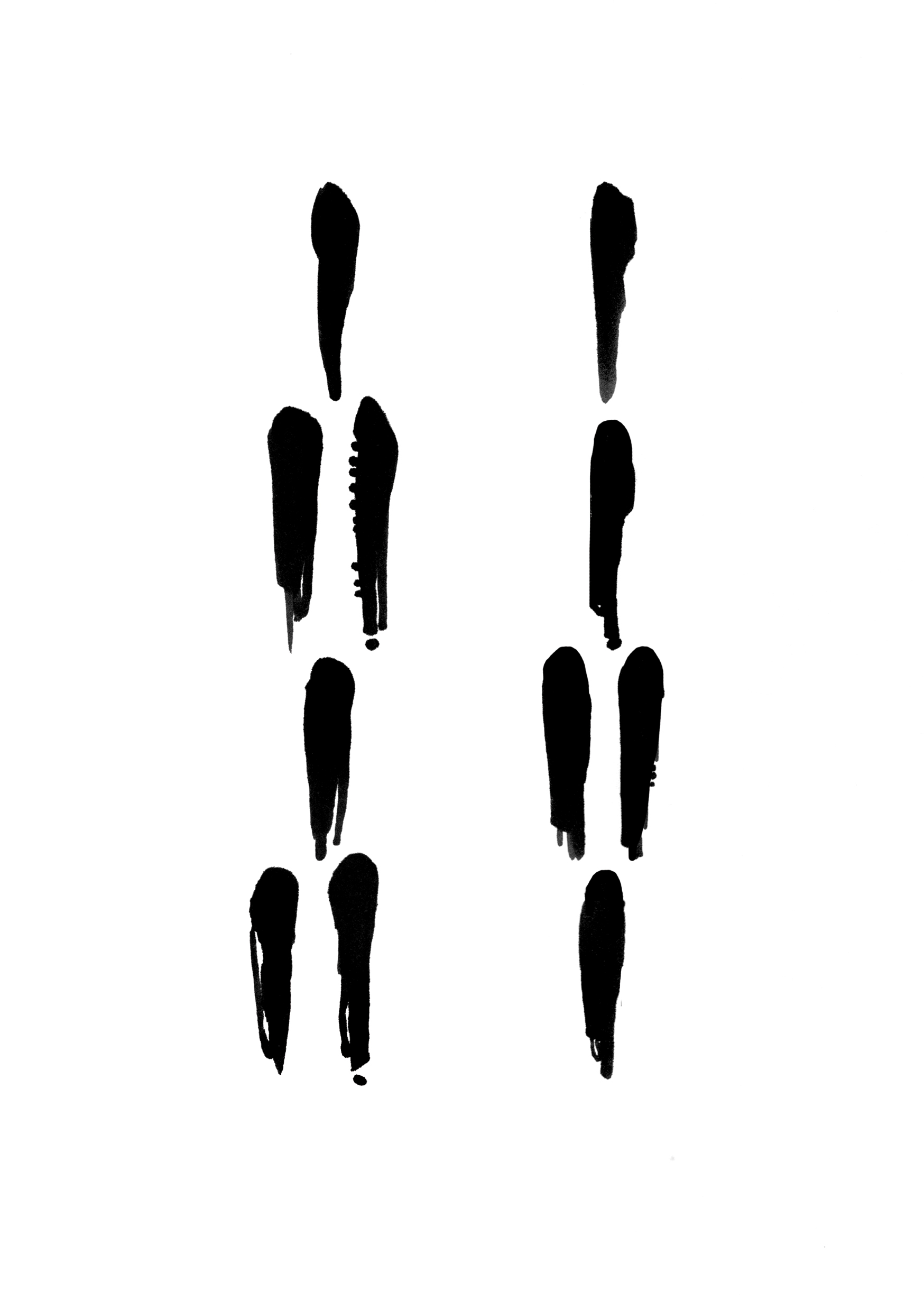
This Academy reads the right column first, then the left. Each row carries a single or double mark.
Where this Odù belongs
Ìrẹtẹ̀ Ọ̀ṣẹ́ belongs to the Ìrẹtẹ̀ family in this Academy’s study sequence. It is a mixed Odù, distinct from Ọ̀ṣẹ́ Ìrẹtẹ̀. The order matters. Its teaching is approached through its own narratives, rather than by adding two general descriptions of the principal signs together.
Key Òrìṣà and sacred relationships
The figures below are selected for their roles in the accounts discussed here. They offer connected reading paths through the tradition.
-
Obàtálá. Obatalá organizes the birds’ competition, later checks their needs and discovers the winner’s intimidation; his role moves from evaluator of talent to witness of harm.
-
Ọ̀rúnmìlà. Ọ̀rúnmìlà helps the reserved singer prepare and appears as the farmer whose fields are undermined; consultation precedes the narrative’s change in the damaged agricultural cycle.
-
Èṣù. Eleguá is sent to find the missing singer and meets him on the way to the competition; his bounded role connects absence with inquiry rather than assuming disrespect.
-
Òsanyìn. Ọ̀sányìn acts as the envious saboteur of productive fields in the selected agricultural episode; this antagonist role belongs to the telling and does not exhaust the deity’s wider identity.
Key myths and their meanings
The winning voice is forced into the rain
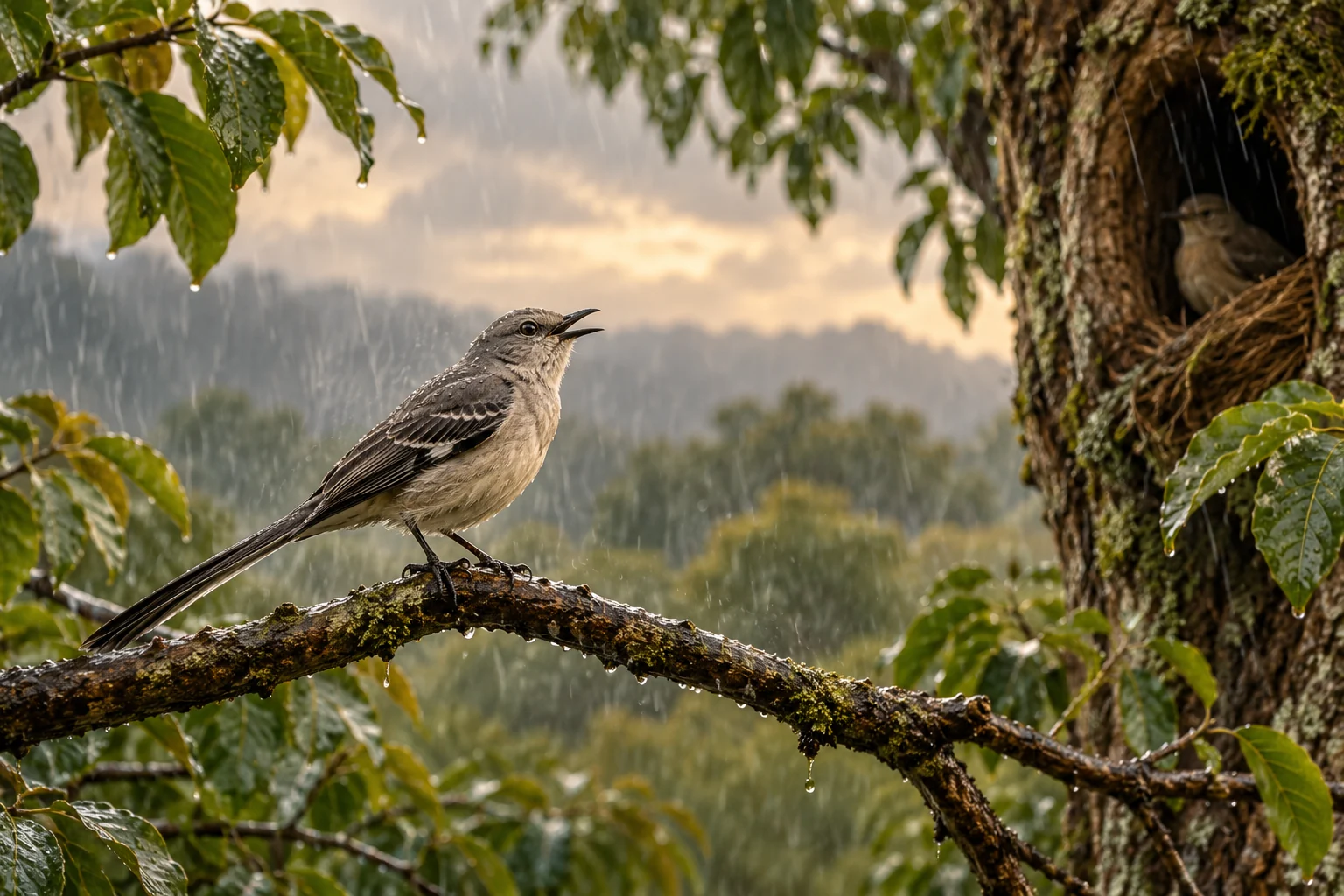
Obatalá arranges a singing competition among birds. A reserved mockingbird receives help preparing, then wins through his capacity to reproduce the others’ songs. A disappointed competitor later threatens him and occupies his home, leaving him outside in the rain. When Obatalá checks on the birds, the frightened winner initially expects another attack. Once the threat is revealed, Obatalá confronts the occupier and condemns his conduct.
Public recognition does not protect the singer’s private safety. The most revealing detail is his fear of the person arriving to help: intimidation has changed his expectation of ordinary contact. We can keep that consequence visible without accepting the source’s equation of bad conduct with ugliness. The evaluator’s later visit also shows why responsibility continues after prizes and rankings have been announced.
Narrative setting: Cuban compilation, mockingbird and cotunto episode.
The attack begins where the harvest cannot be seen
Ọ̀rúnmìlà’s harvests surpass those of neighboring lands. Ọ̀sányìn envies that success and introduces harmful creatures into the growing environment, attacking vegetation through its roots. Quality declines and crops fail. Consultation leads to a destructive transformation of the compromised growth; in the narrative the remains then enrich the soil. The episode connects an attack on production with a changed cycle in which damaged material becomes part of renewal.
The story shifts attention from judging the crop to examining the conditions that produced it. Its renewal image can support analysis of salvage and changed cycles, but the described response should not become agricultural or pest-control advice. The account’s use of microbes reflects the compilation’s explanatory vocabulary, not evidence for disease mechanisms or proof that poor harvests result from another person’s envy.
Narrative setting: Cuban compilation, Ọ̀sányìn and Ọ̀rúnmìlà’s fields episode.
The hunter calls his dogs from the tree spirits' enclosure
A hunter receives divination concerning a woman he will meet. A trader buys his game and later invites him to her home as a prospective wife. She persuades him to leave his dogs and visible weapons behind. His existing wife urges him to conceal a knife. In the forest, trees greet the visitor, revealing her relation to hostile tree spirits; the paths close against the hunter. He climbs a tree and calls his three dogs. They arrive from home and defeat the spirits, enabling his return. An accompanying note connects their rescue role with the earlier sacred preparation.
The visitor changes the meaning of familiar social relations without openly announcing her nature. Trade becomes courtship, and courtship supplies the argument for separating the hunter from the companions that normally protect him. His existing wife recognizes a practical danger before the forest reveals the sacred one, but the account does not credit the concealed knife with the rescue. The dogs answer his call and defeat the spirits. The explanatory note explicitly treats this as a case in which something associated with sacrifice becomes instrumental in accomplishing the protagonist's aim.
Protection therefore operates through a narrative relationship between divination, prior preparation, and helpers who act when called. A contemporary interpretation may examine how intimacy can be used to suspend ordinary precautions. That reading should remain attached to this particular predatory spirit's conduct, without turning the tale into a general claim that women, traders, or prospective spouses conceal a comparable nature.
Narrative witness and setting: William Bascom section, printed selection 175–1; an African Ifá account in Portuguese transmission.
Orunmila returns to capture the leopard named by his pupils
Before traveling, Orunmila forbids his apprentices to undertake divination in his absence. They nevertheless consult when a warning concerns the king, identify Irete Ose, and name a leopard among the requirements. The community locates one, but the pupils cannot capture it; one dies in the attempt. A troubling dream prompts Orunmila to consult and return quickly. He captures the leopard and carries it back, suffering scratches as he does so. The account identifies these marks with the four eyes of divining palm kernels. The leopard is then brought for the king's sacred exchange.
The narrative distinguishes identifying a requirement from having the authority and capacity to carry it through. The apprentices' declaration creates a concrete responsibility: the community asks those who named the leopard to obtain it. Their failure is costly, and the source does not erase the pupil's death when the teacher later returns. Orunmila's response involves both sacred knowledge and effective action. His dream leads to consultation, consultation prompts a rapid return, and he then solves the practical problem while accepting bodily risk.
The scratches connect this event with the material objects through which divination continues. That connection gives the account an etiological dimension beyond a lesson in professional supervision. A contemporary interpretation can discuss the responsibilities attached to advice, but it should retain the narrator's account of dreams, divination, and Orunmila's exceptional return. The story does not establish that the pupils decoded the sign incorrectly; their demonstrated failure concerns completing what they prescribed.
Narrative witness and setting: William Bascom section, printed selection 175–2; a narrative explaining the four eyes of divining palm kernels.
What was born in this Odù
“Born” can name an explicit traditional origin association or what emerges through a story: a capacity, relationship, practice or order of life. Interpretations drawn from a narrative are labelled below, so their basis remains clear.
Harm without benefit
Selected traditional source association.
The formal origin list names harm done without useful return. Beside the two envy narratives, this points to damage whose purpose is reducing another’s standing or capacity, rather than resolving a shared problem; it remains a source association, not a personal accusation.
Prepared skill becomes an audible public voice
Contemporary interpretation from the selected myth.
As a contemporary interpretive emergence, the singer’s quiet preparation becomes recognizable talent before an audience. This is grounded in the story rather than claimed as a traditional origin entry or a rule that every reserved person conceals exceptional ability.
Correlations to life dimensions
These questions bring the selected stories into contemporary life. They are interpretive invitations for study.
Work and resources
The agricultural episode separates output from the hidden conditions of growth. That distinction can inform assessment of failed work: investigate resources and environment before assuming lack of effort or competence. The supernatural attribution to envy is not required for that practical question.
Reflect: What condition of production has changed beneath an apparently familiar task?
Community and responsibility
Obatalá returns after the competition to ask what the birds need. That follow-through reveals harm no award could prevent. A community responsible for evaluating people should also consider whether recognition exposes someone to retaliation or exclusion.
Reflect: What support remains necessary after someone has publicly succeeded?
Relationships and family
The singer’s home is taken through intimidation, and he expects violence when approached again. The story supports listening to fear without treating it as irrational, while asking what would restore control over ordinary space and contact.
Reflect: What would help a threatened person feel able to choose who enters their space?
Character and inner life
The rival cannot tolerate another singer’s distinction and converts disappointment into coercion. The concrete ethical threshold is the move from feeling envy to damaging another’s shelter or livelihood, a distinction that permits honest acknowledgment of emotion without excusing action.
Reflect: What action would keep disappointment from becoming someone else’s loss?
A deeper reading of the sacred relationships
Sacred preparation becomes active through particular helpers
The hunter's dogs are not introduced only when the danger begins. They belong to his hunting life, are deliberately excluded by the visitor, and return when he calls from the threatened tree. The printed explanatory note links the number and identity of the rescuing animals with the earlier sacrificial passage. Within this religious logic, preparation is not an abstract payment after which events unfold independently; its efficacy becomes visible through the helpers' decisive action. The note leaves an apparent tension between sacrificed dogs and living rescuers rather than explaining their physical continuity. That tension should remain acknowledged instead of being repaired through an invented resurrection episode.
Naming a requirement creates responsibilities beyond interpretation
The apprentices can announce an Odù and a requirement, but the king's people then demand that they obtain the leopard they have named. The narrative shifts from verbal authority to the difficult work needed to complete a sacred response. Orunmila eventually provides that missing capacity, though his return cannot reverse every consequence of the pupils' conduct. A contemporary professional reading can examine the gap between issuing advice and assuming responsibility for its implementation. The source's religious setting remains essential: the problem begins with unauthorized divination in a royal crisis, not simply with inexperienced hunters entering dangerous terrain. Knowledge is tested through what the declared remedy actually requires.
The diviner's wounds are remembered in the divining objects
The leopard scratches Orunmila while he carries it, and the narrator identifies the resulting marks with the four eyes found on the palm kernels used in divination. The accompanying note explicitly confirms that this explains those features of the kernels. The account thus gives the objects a remembered relationship to a dangerous act undertaken for the king. Their significance includes the divine figure's embodied involvement in securing the sacred requirement. This is an origin explanation within the transmitted religious narrative, rather than a botanical account of seed formation. It should not be reduced to decorative symbolism or presented as an empirically demonstrated mechanism of palm development.
Questions that deepen the study
Does the knife concealed on the older wife's advice rescue the hunter?
The narrative does not report the hunter using the knife after he conceals it. His older wife's intervention shows that someone in his existing household questions the new visitor's demand that he travel unprepared. The actual escape, however, follows his call to the three dogs, their arrival, and their defeat of the tree spirits. Keeping those functions separate preserves the account's sequence: warning and precaution are present, but the rescuers are explicitly identified. Adding a knife fight would create an unsupported event and weaken the printed note's connection between the dogs and the earlier sacred preparation.
Do the apprentices fail because they identify the wrong Odù?
The selected account does not say their identification of Irete Ose is wrong. Its explicit criticism begins with their undertaking divination despite Orunmila's instruction to wait. The next demonstrated failure is their inability to capture the leopard they have named among the requirements. Orunmila eventually brings that same animal for the king's sacred exchange, which gives no basis for inventing a correction to the sign or replacing the stated requirement. Their story consequently raises questions about authorization, readiness, and responsibility beyond accurate declaration. The distinction matters because a plausible interpretation alone may not complete the obligations created by giving counsel.
What do the four eyes of the palm kernels remember in this account?
They are linked to scratches made by the leopard on Orunmila as he carries it after capture. The explanation appears both in the narrative and in an accompanying note, so the connection is explicit rather than a contemporary symbolic invention. It associates the divining objects with the danger and bodily involvement required to complete the king's sacred response. Readers can consider how religious objects preserve an account of divine action through their visible features. That interpretation should retain the stated origin story while distinguishing it from a scientific description of the plant or a universal explanation shared by every lineage.
What the four narratives reveal together
The Bascom selections connect divinatory preparation with the difficult actions that make rescue possible. The hunter survives through companions the predatory visitor tried to exclude; the apprentices discover that declaring a requirement does not give them the capacity to fulfill it. Helpers matter in both accounts, but they enter through different relationships: dogs answer their master's call, while Orunmila returns after a dream and consultation to repair an absence of competent action. Neither ending removes all vulnerability.
The hunter has entered a lethal enclosure, one apprentice dies, and Orunmila himself bears the leopard's scratches. The palm kernels subsequently preserve an explicit origin connection to that risk. Contemporary questions about manipulation and responsible counsel can deepen these accounts, provided they remain secondary to the active sacred relationships, objects, and forms of knowledge that organize their events. The visible marks consequently connect continuing consultation with an account of assistance, danger, and divine involvement.
Living with this Odù
A continuing life or initiatory relationship
For someone whose received life or initiatory Odù is Ìrẹtẹ̀ Ọ̀ṣẹ́, recognition and responsibility can become continuing questions about what remains outside the celebrated result. The mockingbird wins publicly yet loses private safety, making the evaluator's later attention essential. The damaged harvest likewise requires looking beneath visible output toward conditions affecting its growth. Across a life, a bearer can ask whether judgment stops at a prize or product while the person and sustaining environment remain exposed. Bascom's hunter account adds intimacy used to separate someone from established helpers, and the apprentices' leopard declaration distinguishes naming a requirement from possessing the capacity to complete it.
These are not predictions of sabotage, predatory partners or a fixed teaching role. Cuban plots remain distinct from the Bascom attributed African selections. Dreams, divination, prior preparation and the dogs' effective response retain their religious agency. Contemporary inner development can examine the wish to appear competent, fear shaped by intimidation and the difficulty of accepting support after success. It must not blame the singer for fearing a helper, turn Ọ̀sányìn's local antagonism into a universal relationship or erase the pupil's death because the returning teacher eventually completes the public task and explains marks on divinatory materials.
A particular consultation and its question
In consultation, Ìrẹtẹ̀ Ọ̀ṣẹ́ can distinguish a threatened person from a deficient performance and an accurately named need from an unmanageable commitment. The mockingbird's fear follows intimidation, while the harvest's decline directs attention to underlying conditions rather than proof of the farmer's worth. The hunter's protection depends on a particular relation among consultation, prior preparation and dogs that answer when called; the concealed knife is not credited with rescue. The leopard account does not establish a misread sign, but a failure to carry through what the pupils prescribed.
The actual question determines which distinction matters. A practitioner can ask what happens after recognition, who can complete an announced requirement and whether intimacy is being used to suspend safeguards. These inquiries do not identify actual saboteurs, generalize suspicion toward women or traders, or offer agricultural and clinical instructions. Receiving the sign in consultation differs from a lifelong identity. Its reflective strength is to examine the gap between visible accomplishment and continuing responsibility while preserving spiritual causation. The teacher's exceptional action and bodily risk remain part of the story, not a universal promise that a senior authority can always arrive in time to repair a declaration made beyond another person's capacity.
Constructive and adverse possibilities
Constructive possibilities include checking safety after public success, examining the conditions beneath a damaged result and matching advice with the capacity and authority to complete it. Adverse possibilities include intimidation hidden behind a ranking, isolation through a predatory invitation or a declaration that imposes risks others cannot manage. Actual iré or òṣogbo belongs to the reading. The apprentices may identify the requirement correctly while still failing their responsibility for its execution; correctness alone is not completion. The dogs' sacred relation should remain explicit, while the crop's renewal is not pest control instruction or proof that envy explains actual failures.
Contemporary reflection can retain the difference between condemning an aggressor and moralizing bodily appearance. The singer's changed expectations and the dead pupil remain consequences that a fortunate principal ending does not erase. A helpful response therefore concerns continuing conditions, not simply restoration of the public image or eventual completion of a task.
An illustrative situation in everyday life
Imagine a hypothetical specialist who wins an award while a resentful competitor quietly makes the workplace unsafe. A supervisor praises the visible achievement without checking what happens afterward. Elsewhere, junior advisers identify a demanding technical requirement and publicly commit to it despite lacking the authority and equipment to complete it. A new partner also asks a worker to abandon established supports as proof of trust. The narratives distinguish recognition from safety, identification from execution and intimacy from informed reliance. Anxiety about appearing incapable may keep the advisers from admitting limits, but a senior person's eventual rescue would not erase harm already caused. This is an illustrative contemporary interpretation, not a claim about spiritual attackers or ritual efficacy. Its question is what conditions make an accomplishment livable and an offered prescription responsibly actionable.
Sources and reading context
The first two narrative witnesses
The Cuban compilation’s bodily-disfigurement origin item is omitted to avoid moralizing bodily difference; one contemporary interpretive emergence supplements the retained harm association. The singer’s punishment remains contextual, and the crop episode provides no agricultural, medical or diagnostic instructions. Ọ̀sányìn’s antagonism is specific to the selected plot.
Narrative motifs are summarized independently. The life-dimension reflections are contemporary interpretation. How these reference studies are built explains the wider source approach and the distinction between a reference article and personal divination.
Additional named witnesses
- William Bascom. The printed heading attributes both selected accounts to Bascom and supplies selections 175–1 and 175–2. The first includes a sacrificial-helper note; the second explicitly explains four-eyed divining kernels.
Only the supplied Portuguese transmission and printed Bascom attribution are verified here, not an edition or independent translation. Dog-name meanings are expressly incomplete in its note and are not reconstructed. A further note marks the later prescriptive translation as uncertain; that passage is excluded. The apparent sacrificed-dog/living-dog tension remains visible. No new historical identification, song quotation, animal-capture procedure, or medical claim is supplied.
Bibliographic identification
- William Bascom. Ifa Divination: Communication between Gods and Men in West Africa. Bloomington: Indiana University Press, 1969. Library catalogue record. University library record for the named scholar’s Ifá study; citation does not imply a verified page for every narrative summarized here.
Read the source method and wider scholarly context.
The catalogue links identify published works and their authors. They are separate from proof of an individual episode’s wording or attribution. Contemporary comparisons and the synthesis above are editorial interpretation. The author’s books and Academy companions below provide further study; their sales links are separate from the source references.