
Ìròsùn Òtúrúpòn is a mixed Odù in Ifá’s 256-part corpus. Ìrosùn Òtúrupòn’s selected stories place collective intention beside the difference between claim and skill. Oyeki survives a concealed plot whose participants frighten and confuse one another. In a building settlement, someone publicly belittles the workers, promises to do their work rapidly, and cannot deliver. Òrúnmìlà recommends learning an actual trade. The source’s associations with hearing, wind, and inhabiting difficult places give listening and practical construction a distinctive setting.
A question to carry through the study: What would you need to learn before making the promise you are tempted to announce?

This Academy reads the right column first, then the left. Each row carries a single or double mark.
Where this Odù belongs
Ìròsùn Òtúrúpòn belongs to the Ìròsùn family in this Academy’s study sequence. It is a mixed Odù, distinct from Òtúrúpòn Ìròsùn. The order matters. Its teaching is approached through its own narratives, rather than by adding two general descriptions of the principal signs together.
Key Òrìṣà and sacred relationships
The figures below are selected for their roles in the accounts discussed here. They offer connected reading paths through the tradition.
-
Ṣàngó. Ṣàngó appears in Oyeki’s dream directing him toward consultation, and is credited in the response to the conspiracy. This is a narrative role, not a claim that dreams diagnose actual danger.
-
Ọ̀rúnmìlà. Òrúnmìlà interprets Oyeki’s situation and later challenges a boastful person to learn a trade. His advice concerns both hidden social conflict and an openly failed promise.
-
Èṣù. Eleguá is named within the religious response to Oyeki’s enemies. The association remains limited to the story and is not turned into a prescription for readers who suspect a conspiracy.
Key myths and their meanings
The plot that confuses its own participants
Oyeki is described as peaceful and fortunate, attracting concealed resentment. After a dream and consultation, he changes his habits. Four enemies revise their plan and assign different roles to one another along a route. At the moment of action, fear and confusion undermine their coordination. They gather beneath a tree and turn against one another, ending the danger within the story.
The plot depends on several people maintaining shared intention, timing, and trust. Its collapse exposes the instability of a group organized around resentment. A careful reading does not tell readers that favorable circumstances prove secret enemies exist. It can instead examine the costs of coordinated malice and the difference between observing concrete behavior and imagining a hidden explanation for every difficulty.
Narrative setting: Spanish Cuban-style account of Oyeki.
The promise beyond the speaker’s skill
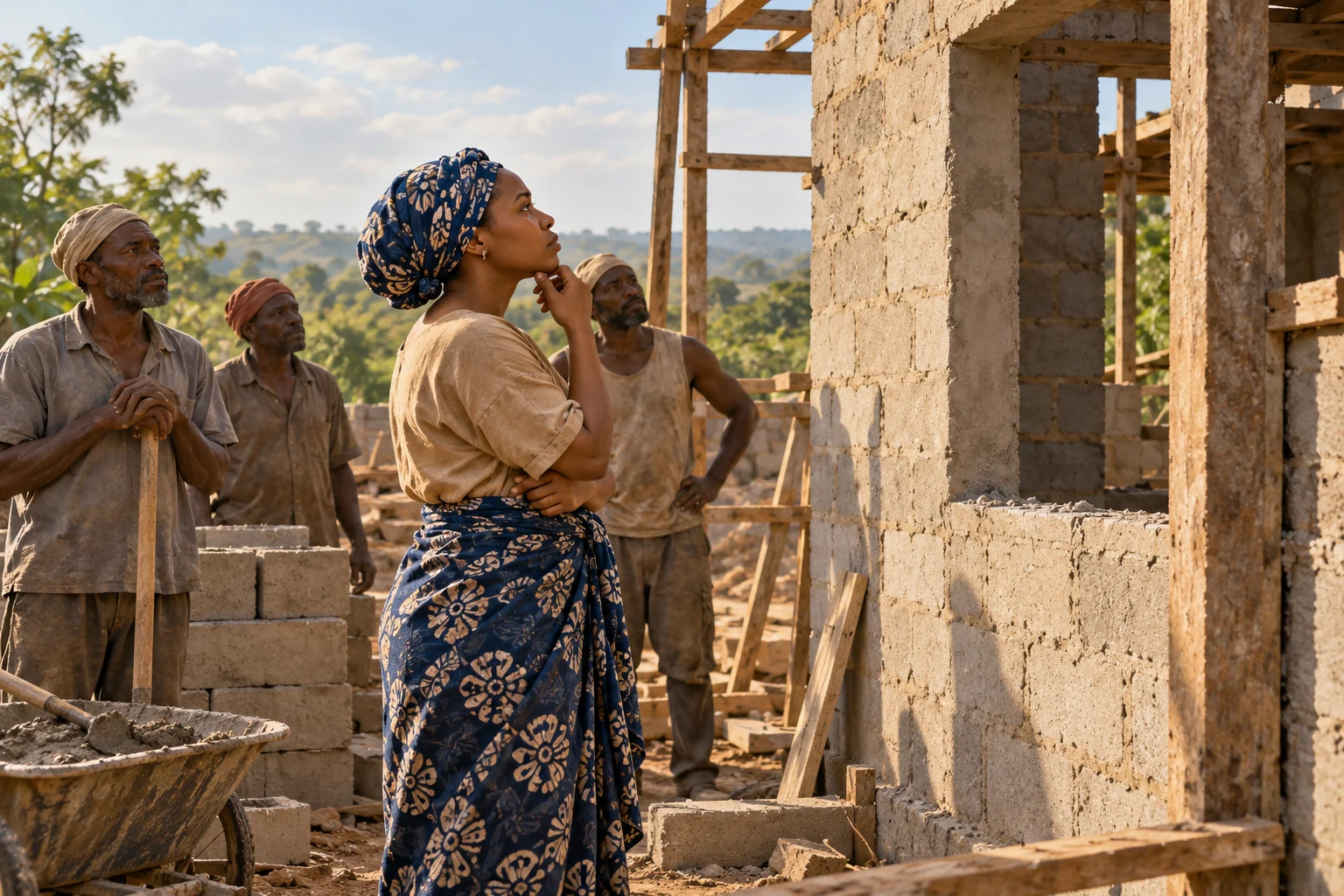
In a town under construction, a woman dismisses the number of workers building a house and claims she can finish the task herself in three days. The supervisor lets her take responsibility. She fails and faces complaint before the community’s leader. Seeking Òrúnmìlà’s help, she is told that speaking about every task is not a substitute for learning a trade; he also tries to lessen the consequences.
The problem is a public commitment unsupported by demonstrated capacity. The lesson should apply to boastful conduct generally rather than to women as a group. Òrúnmìlà’s effort to moderate punishment matters beside his criticism: accountability can identify a gap in skill without making humiliation its purpose. The useful outcome would be learning and a more honest relation between promise and ability.
Narrative setting: Spanish building-settlement account.
Fire’s indispensable help receives no settled gratitude
A compact precedent places Fire before divination while preparing to come into the world. Counsel concerns whether the good it will do will be acknowledged and reciprocated. Fire does not complete the advised response. The account then identifies the earthly outcome as a lack of gratitude for the useful work it performs for human beings and divinities alike. It does not provide an extended dispute, a named ungrateful household, or a later correction. Its concrete motif is a powerful benefactor whose ongoing usefulness does not itself establish a recognized reciprocal relation with those who depend on it.
Fire is treated as an active presence with a pre-earthly relation and a continuing contribution, not merely a symbol for energetic work. The omitted response gives the lack of acknowledgment a religious explanation within this witness. That explanation should not become a claim that every exploited helper has caused the condition by neglect. The source is unusually compact, so its depth must come from careful comparison rather than an invented plot of people mistreating Fire in a particular village.
The earlier boastful builder offers an opposite imbalance: public words promise a contribution that skill cannot sustain. Oyeki’s conspiracy adds another relation, where a fortunate person becomes the target of resentful coordination. The four stories together can distinguish actual benefit, claimed capacity, and acknowledgment. Contemporary interpretation may ask how a community remembers indispensable support, while preserving Fire’s status as a real power in the narrative rather than translating it entirely into a metaphor for a human worker.
Narrative witness and setting: Account explicitly headed Revelações de Cromwell Osamaro
Kinridin’s transformation still needs someone to grant passage
Kinridin receives consultation and a spiritually effective belt before a later crisis. War brings him and other refugees into a royal palace. While others ask for food or water, he seeks a sexual encounter under a condition that would cost his life. When execution is prepared, the belt enables him and the woman to become cat and mouse, hide, and leave the palace. Outside, they regain human form and reach a departing boat. Its rower initially refuses them. The rower’s daughter intervenes insistently, and he finally takes them across. The account ends with the couple living prosperously after these several distinct escapes.
The sacred transformation solves one danger but does not make all further help unnecessary. Kinridin still needs a boat and another person willing to alter its access. This gives the episode a layered account of protection: divination and an effective object, changed bodily form, regained human presence, and third-party compassion contribute differently. The woman’s own perspective on the initial bargain is not adequately narrated, so a careful study should not invent either a full account of consent or a romance that makes every condition harmless.
The story’s escape also differs from Oyeki’s enemies confusing one another; here the threatened person actively changes form and route. Fire’s compact precedent adds the question of whether benefit receives recognition, while the builder’s failed claim cautions against equating an announcement with actual capacity. Contemporary reflection can examine the limits of self-sufficiency, but the spiritual belt must remain more than a metaphor for cleverness, and its use is not a practical method an article can offer.
Narrative witness and setting: Account explicitly headed Revelações de Cromwell Osamaro
What was born in this Odù
“Born” can name an explicit traditional origin association or what emerges through a story: a capacity, relationship, practice or order of life. Interpretations drawn from a narrative are labelled below, so their basis remains clear.
Hearing
Selected traditional source association.
The explicit origin list names the sense of hearing. Beside the failed promise, this offers a local image of listening before assertion, but no biological origin, diagnostic claim, or fixed personality trait should be inferred.
Settlements in inhospitable places
Selected traditional source association.
The source associates the sign with establishing towns in difficult environments. The construction story gives a concrete social setting for shared labor, without documenting a historical settlement or a universal migration teaching.
Wind
Selected traditional source association.
Wind appears as a distinct origin association. It can frame motion and conditions beyond individual control, but the selected narratives do not justify identifying it with a specific deity or inventing an etymology.
Correlations to life dimensions
These questions bring the selected stories into contemporary life. They are interpretive invitations for study.
Work and resources
The construction account makes specialized labor visible by showing that confidence cannot replace it. The workers’ number and pace may reflect knowledge invisible to an outsider who evaluates the task before understanding its requirements. The promise ignores how the work is actually organized.
Reflect: What expertise are you discounting because the task looks simple?
Relationships and family
Oyeki’s account describes false friendship used to gain access. An interpretive discussion should remain grounded in observable conduct and boundaries, avoiding a broad claim that success inevitably makes close companions dangerous or that isolation is always protective.
Reflect: What behavior would justify changing a boundary with someone?
Character and inner life
A promise can become a way to seek recognition before doing the learning that would support it. The story invites admitting a limit early, when revision is still possible and other people have not reorganized their work around the claim.
Reflect: Which promise would be more honest if narrowed today?
Community and responsibility
The supervisor and leader also shape the outcome of an unrealistic commitment. A responsible institution should test capacity and set proportionate consequences, creating a route into learning rather than treating public failure as entertainment or permanent exclusion.
Reflect: How does your community turn failed promises into accountable learning?
A deeper reading of the sacred relationships
Protection operates through more than one sacred or human relation
Kinridin’s belt is prepared through divination and is effective inside the account, yet the boat passage still depends on another household’s decision. Fire’s useful presence likewise does not automatically produce acknowledgment, while Oyeki receives counsel and the boastful builder needs a skill no declaration can supply. These are different limits, not a rejection of divine aid. The religious world makes powers and prepared objects consequential without making them abolish every other relation. A contemporary reading can ask where help remains necessary after a successful intervention, but should not replace transformation with a purely psychological explanation or infer that an actual reader has a comparable object, hidden danger, or prescribed route of protection.
Actual contribution and public claim require different responses
Fire genuinely benefits beings but receives no settled gratitude in the compact precedent. The builder claims a capacity not yet learned and cannot fulfill the announced task. Kinridin possesses a narrated spiritual aid but must still obtain passage, while Oyeki’s fortunes do not make another group’s hostility just. Their comparison distinguishes undervalued contribution from unsupported assertion, and protection from entitlement. Contemporary interpretation can therefore ask what evidence exists before praising, rewarding, or dismissing a person. The spiritual explanations remain specific to each scene, rather than one generic theory that every unrecognized helper or boastful speaker has the same destiny. The source’s range of cases is what makes the questions useful.
A threshold can remain after a dramatic escape
The palace is not the last obstacle in Kinridin’s account. Leaving through transformation brings him to a river where ordinary human refusal can still block movement. The boatman’s daughter therefore contributes something the earlier sacred aid has not replaced. Oyeki’s plot also unfolds across several assigned positions on a route, while the construction account places responsibility after a public promise. Fire’s pre-earthly consultation supplies a different threshold, arrival into a world of recipients. These details support an interpretation of passage as a sequence of relations, not one decisive breakthrough that ends dependence. A source-conscious study can preserve the different agents at each point without making every road or river mean the same thing.
Questions that deepen the study
Why does Kinridin still need the boatman’s daughter?
The transformation allows the pair to leave the palace, but they have returned to human form by the river and cannot simply command a crossing. The daughter changes a decision within her own household, adding an act of human assistance to the earlier spiritual protection. This preserves both contributions rather than treating one as evidence that the other was unnecessary. Contemporary reflection can ask who makes a later stage possible after an apparent escape. It should not convert the daughter’s extreme threat into a suggested tactic, or assume every refusal can be overcome in the same way. Her narrated intervention belongs to this particular sequence of passage.
What can Fire’s brief precedent support without inventing detail?
It supports a distinction between being useful and having a reciprocal relation in which that usefulness is acknowledged. It also explicitly locates Fire’s condition in a pre-earthly consultation and an omitted response. It does not describe a quarrel, a withheld payment, or a final remedy, so those should not be added to make the story longer. Comparison with the builder and Kinridin supplies depth without supplying nonexistent events. A contemporary discussion may examine the value of indispensable support, but must not use the precedent to blame actual helpers for exploitation. Its religious explanation is particular, and the brevity remains an honest source limit.
Does the couple’s prosperous ending justify every earlier choice?
The account narrates escape and later prosperity, but those outcomes do not fill in the woman’s voice or establish that a lethal condition attached to an intimate encounter was just. A careful explanation can affirm the transformation as a religious event within the witness while leaving ethical questions open. The builder’s story likewise distinguishes a result from a claim, and Oyeki’s fortunate circumstances do not justify a conspiracy against him. Contemporary interpretation should therefore resist making success a universal certificate of right conduct. The source gives particular actions and consequences, including several helpers, rather than a complete judgment on every participant’s intention or entitlement.
What the four narratives reveal together
The additions extend Ìrosùn Òtúrupòn beyond the earlier concealed plot and failed building promise into the relation between contribution, aid, and passage. Fire’s genuine usefulness does not automatically receive acknowledgment. Kinridin’s sacred transformation enables escape but leaves a later crossing dependent on another person’s intervention. These witnesses make neither public claims nor dramatic success sufficient to explain an entire life. Their religious logic remains substantial: pre-earthly counsel, spiritually effective preparation, and changed bodily form are actual elements of the source world.
Contemporary reflection can then examine gratitude, skill, and continuing dependence without replacing those elements or treating prosperity as a complete moral verdict. The different lengths of the sources also matter. Fire is a compact precedent with no extended plot; Kinridin is a sequence of thresholds with several contributors. A strong study preserves both forms rather than padding one or simplifying the other.
Living with this Odù
A continuing life or initiatory relationship
Someone carrying Ìròsùn Òtúrúpòn within a received spiritual history can return to the relation between speech and actual capacity. The boastful builder accepts a task without the trade knowledge required to carry it through. Oyeki’s changed habits after a dream and consultation concern another problem altogether: protection within a particular conspiracy, not the ordinary consequence of overpromising. These configurations cannot be reduced to one rule about silence or caution.
Fire’s brief precedent adds useful service whose ongoing value does not establish settled gratitude. Kinridin’s several passages then distinguish one extraordinary means of escape from the later need for another person’s help. The spiritually effective belt does not grant every subsequent access; the rower’s daughter remains consequential. Across a life, reflection may concern making a promise, interpreting a warning, expecting acknowledgment, or receiving assistance after apparent self-rescue. The sign does not make a confident speaker incompetent or identify hidden enemies through a dream. It invites character able to state what has actually been learned, recognize that usefulness does not secure reciprocity, and remember the independent agency of those who make a later passage possible.
A particular consultation and its question
In consultation, Ìròsùn Òtúrúpòn can help distinguish a feared external plot from a responsibility created by one’s own public claim. Oyeki’s enemies belong to a specific narrative; recognizing anxiety cannot establish that a client has such enemies. The builder’s promise instead raises concrete questions about skill, resources, and the terms accepted. A careful discussion does not collapse uncertainty about others into an accusation or uncertainty about competence into shame.
Fire’s account adds a useful distinction between being needed and being acknowledged. Its brevity permits reflection on that gap without inventing a named ungrateful household. Kinridin’s escape adds the limits of a protection: transformation makes departure from the palace possible, yet passage across water still requires the rower and his daughter. The sexual encounter and its threat remain a particular unresolved arrangement, not an invitation to judge contemporary identities or reproduce its terms. A practitioner may examine what has been promised, which help has already mattered, and what further dependence remains. The actual divinatory setting determines relevance. Consultation neither predicts a trap nor grants a permanent identity as neglected benefactor, boastful worker, or person protected from every consequence.
Constructive and adverse possibilities
Constructive unfolding may include speech fitted to competence, attention to a warning without making suspicion limitless, and gratitude that recognizes several contributors to an escape. Kinridin’s belt and the rower’s daughter supply different conditions of passage; one does not render the other unnecessary.
Adverse unfolding can involve a public promise replacing learning, usefulness mistaken for guaranteed acknowledgment, or extraordinary protection interpreted as universal immunity. The conspirators’ confusion is their story’s resolution, not proof that every perceived opponent will defeat themselves. Fire’s unmet reciprocity likewise cannot explain all experiences of neglect. These directions concern what an arrangement makes possible and what remains unfinished. They do not validate a dream as a personal threat, generalize the builder’s gender, or determine an actual reading’s constructive or adverse state. The sacred mechanisms and human choices retain their different scopes.
An illustrative situation in everyday life
Consider a hypothetical organizer who promises to restore a damaged hall in a weekend after dismissing the existing workers as inefficient. Once materials arrive, she discovers skills and conditions she had not considered. A friend solves the first difficulty, and she assumes the rest will now follow. The builder and Kinridin narratives distinguish a claim unsupported by competence from a passage still dependent on additional help. Her inner embarrassment may encourage another exaggerated promise rather than a revised plan. Clarifying the task and recognizing each contributor would address both. This example is not an account of a client or proof that she faces hidden enemies. It shows why one rescued stage does not complete every responsibility in a larger undertaking.
Sources and reading context
The first two narrative witnesses
The selected narratives are Spanish Cuban-style accounts without a securely established author. The boastful character’s gender is not generalized. Conspiracy and dream material remains narrative context, with no diagnostic, predictive, or personal warning offered. Attributions remain locally bounded.
Narrative motifs are summarized independently. The life-dimension reflections are contemporary interpretation. How these reference studies are built explains the wider source approach and the distinction between a reference article and personal divination.
Additional named witnesses
-
Cromwell Osamaro. The later explicit heading in this section covers Fire and Kinridin; the initial global heading is not used to relabel the Cuban material.
-
Spanish Cuban-style narrative sequence. Oyeki and the boastful builder remain the earlier distinct selections.
Fire’s precedent is genuinely short. Kinridin’s intimate bargain and the woman’s agency are incompletely described; neither is normalized or supplemented. The daughter’s threat and belt preparation are not reproduced. The section’s initial broad author heading is distinguished from its later bounded attribution.
Bibliographic identification
- C. Osamaro Ibie. Ifism: The Complete Work of Orunmila. Lagos; multivolume publication beginning 1986. Library catalogue record. Related bibliographic record for the named narrative witness. Exact volume, edition and page of the transmitted account have not been independently matched.
Read the source method and wider scholarly context.
The catalogue links identify published works and their authors. They are separate from proof of an individual episode’s wording or attribution. Contemporary comparisons and the synthesis above are editorial interpretation. The author’s books and Academy companions below provide further study; their sales links are separate from the source references.