
Ìròsùn Òtúrá is a mixed Odù in Ifá’s 256-part corpus. Ìrosùn Òtúrá’s selected stories place Ògún’s tools at the center of disagreement about work and authority. Removing them brings peace, but a later intervention restores them without attending to the original reason for restraint. A second account has Ògún fashion iron divining implements after initiation, creating a conflict over who will continue essential craft work. The narratives make vocation socially consequential while leaving coercion, consultation, and institutional control open to criticism.
A question to carry through the study: Who bears the cost when you change another person’s role without a shared account of why?
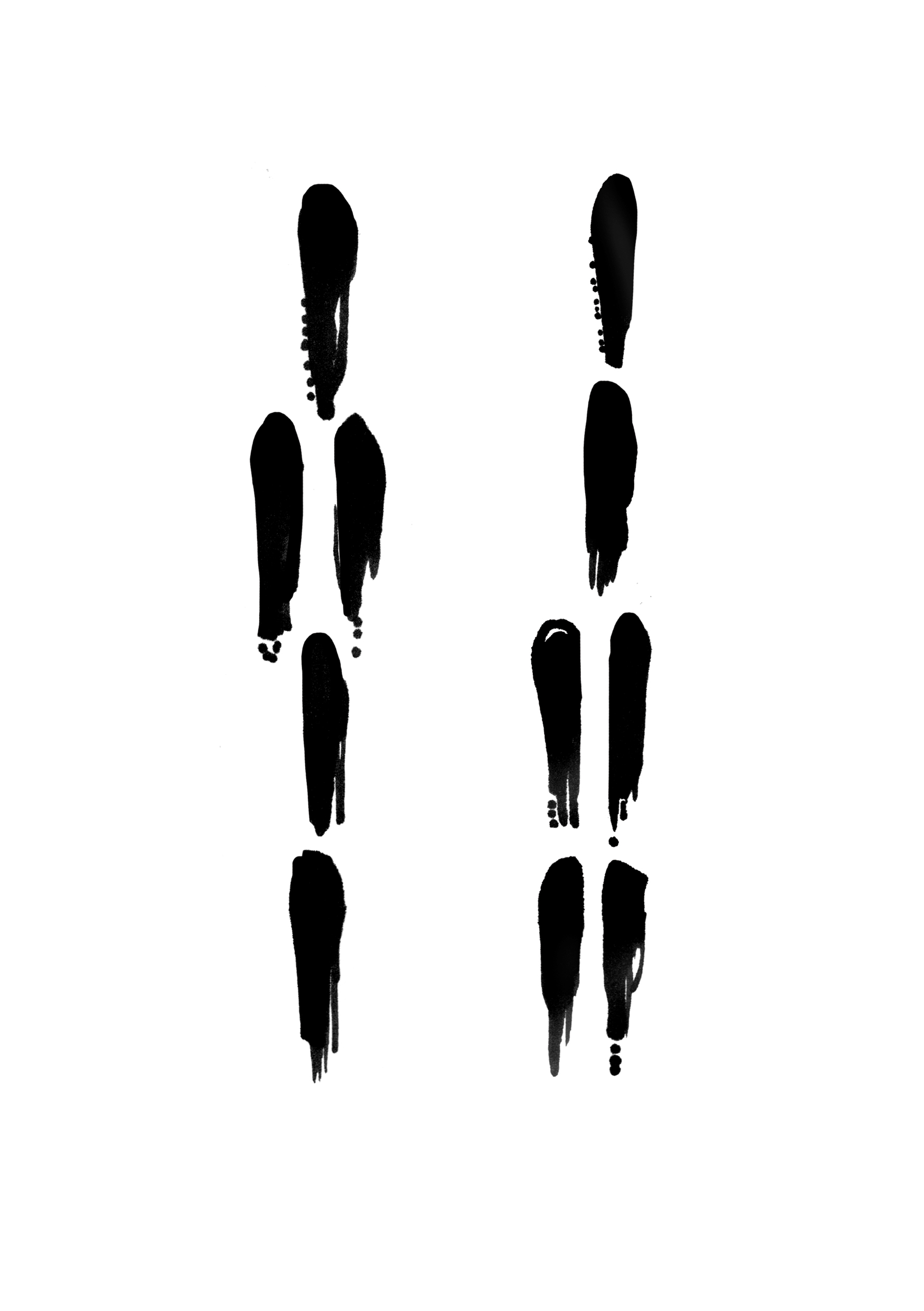
This Academy reads the right column first, then the left. Each row carries a single or double mark.
Where this Odù belongs
Ìròsùn Òtúrá belongs to the Ìròsùn family in this Academy’s study sequence. It is a mixed Odù, distinct from Òtúrá Ìròsùn. The order matters. Its teaching is approached through its own narratives, rather than by adding two general descriptions of the principal signs together.
Key Òrìṣà and sacred relationships
The figures below are selected for their roles in the accounts discussed here. They offer connected reading paths through the tradition.
-
Ògún. Ògún is restrained, redirected, initiated, and then challenged over his tools and work. His changing roles make skill and autonomy central, rather than reducing him to a fixed emblem of violence.
-
Ọ̀rúnmìlà. Òrúnmìlà first redirects Ògún and later initiates him. The accounts show his decisions affecting the wider division of labor and becoming entangled in disputed explanations from Obatalá.
-
Obàtálá. Obatalá or Obanlá intervenes in Ògún’s relation to tools and vocation, then must confront the resulting escalation. The source’s shifting names are retained as a local variant rather than silently regularized.
Key myths and their meanings
Tools restored without the reason for restraint
Òrúnmìlà removes Ògún’s tools and sends him to field work, after which the land is peaceful. Obanlá later meets him and interprets the arrangement as deception or theft. Ògún retrieves the tools and unleashes destructive conflict. When the harm reaches Obanlá, he returns to Òrúnmìlà for help. The account closes by placing Ògún under a renewed relation to the diviner’s authority.
The second intervention changes a settlement without first examining what problem it addressed. The story can support asking for context before undoing another person’s restraint, while still leaving the first settlement open to ethical assessment. Peace secured through control of someone’s means of work raises its own questions of consent and accountability. A destructive reaction does not automatically vindicate every earlier restriction.
Narrative setting: Account explicitly labeled Cuba.
Iron divination and an absent craft
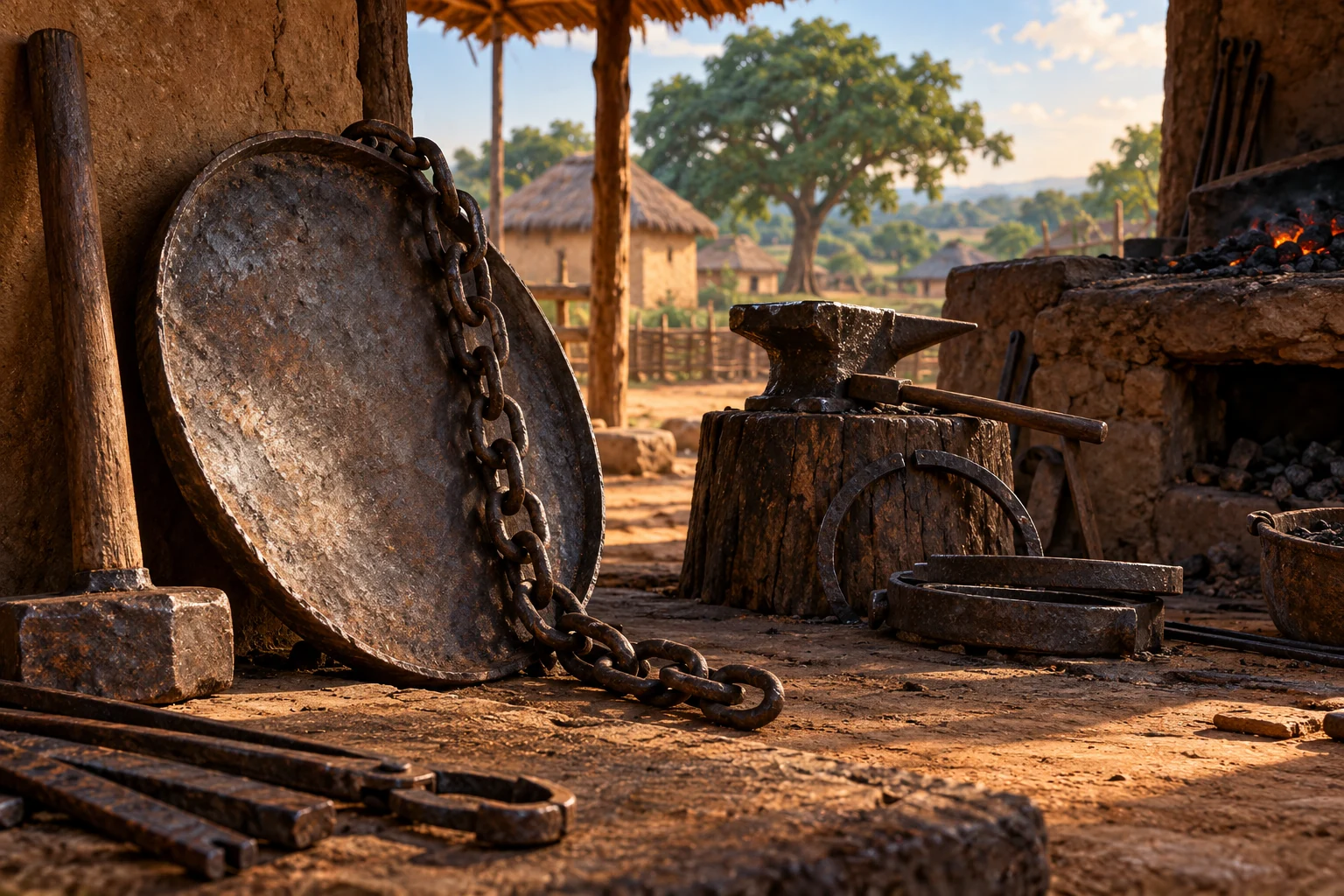
Ògún admires the apparently clean life of Òrúnmìlà and eventually enters Ifá. As a smith, he makes an iron tray and chain whose use creates considerable noise. Obatalá objects that essential manufacturing has stopped. A change in Ògún’s religious implements is made without an explanation he accepts, provoking violence. Obatalá finally calms him through a familiar greeting and explains the community’s need for his craft.
The story asks how a person’s wish for a new role meets a community’s dependence on existing skill. It does not make vocational freedom irrelevant, nor does collective need justify deception. The conflict becomes worse when institutions alter the terms without open discussion. The final explanation arrives only after danger, leaving a question about the consultation that could have occurred before the change.
Narrative setting: Account explicitly labeled Cuba.
The palm answers the question that impressive trees could not
Òrúnmìlà is asked which tree possesses the greatest prosperity. His first answers favor imposing trees, including the iroko, but these are rejected. The answer is the palm, whose usefulness extends across its whole body. Its foliage, liquids, fruit, fibers, kernels, and hard remains enter different kinds of household work and exchange. The episode measures abundance through this distribution of uses rather than through height or outward grandeur. The question therefore becomes a correction of the diviner’s first judgment. A tree that might not initially command the same attention reveals a more extensive capacity to sustain life and activity.
The episode does not merely offer a list of commodities. It makes the correction of judgment part of Òrúnmìlà’s own narrated knowledge. His stature does not eliminate the need to reconsider an answer when the whole subject has not yet been seen. This differs from the earlier story in which Ògún’s instruments are removed to secure peace and then restored when conflict returns: there, the value of a specialized power changes with a political situation. The palm’s value is plural at once.
Its parts circulate through many activities without needing to resemble one another. Contemporary interpretation can use that distinction to question assessments based on one conspicuous attribute. The religious frame should remain visible, however: the dialogue concerns a diviner learning to recognize prosperity within an ordered world, not a modern inventory proving a universal economic ranking of tree species. Nor should the compilation’s vernacular plant names be silently converted into botanical identifications it does not establish.
Narrative witness and setting: Cromwell Osamaro, explicitly introduced in the section
A younger diviner identifies the senior practitioner’s unfinished response
An established royal diviner seeks help for an ailing ruler but has not completed counsel involving Èṣù; the necessary animal is already at his own home. The younger Ìrosùn Ètùrà also consults regularly and acknowledges an obligation he cannot yet complete. When the senior practitioner becomes incapacitated on the palace road, a statesman recommends the younger man. He identifies the older diviner’s omitted response and describes what is waiting in his house. The elder confirms the account. After the response, both the practitioner and ruler recover within the narrative, and the younger diviner receives recognition and royal office.
The reversal distinguishes possession of materials from completion of a sacred obligation. The senior man’s problem is not simply ignorance: he already has access to what counsel required. The younger practitioner, by contrast, has not yet obtained everything but continues to acknowledge the relationship. The account thus gives Èṣù a consequential place in whether knowledge can become effective action. It also makes professional authority answerable to disclosure. The elder’s confirmation matters because the younger man’s rise rests on an identifiable diagnosis rather than unsupported claims of greater power.
Compared with the earlier dispute over iron divination instruments, the episode asks how offices change when a new practitioner demonstrates capacity. The palace reward is a narrative consequence, not proof that religious merit always produces promotion. A contemporary comparison may discuss mentoring, accountability, or unfinished responsibilities, while preserving the witness’s actual claim that sacred relations affect the work and declining to treat royal illness as a diagnostic template.
Narrative witness and setting: Cromwell Osamaro, account of Ajana-oko and the younger Ìrosùn Ètùrà
What was born in this Odù
“Born” can name an explicit traditional origin association or what emerges through a story: a capacity, relationship, practice or order of life. Interpretations drawn from a narrative are labelled below, so their basis remains clear.
Royal palm
Selected traditional source association.
The explicit origin list names the royal palm. This source-specific association can remain visible beside images of standing and support, but the selected narratives do not justify assigning a universal botanical theology to it.
Measured Osun form
Selected traditional source association.
The list names an Osun form measured from knee to floor. This is retained as a local association with proportion and support, without reconstructing the object or conflating Osun with the river deity Òṣun.
Correlations to life dimensions
These questions bring the selected stories into contemporary life. They are interpretive invitations for study.
Work and resources
The community depends on Ògún’s craft, while he wants access to another respected activity. The account makes the distribution of necessary work a collective concern, especially when prestige encourages movement away from essential but less admired labor.
Reflect: Who maintains the essential work when someone changes roles?
Relationships and family
Obatalá’s final appeal uses a familiar parental greeting before explaining the need for Ògún’s skill. Relationship can make dialogue possible, but should not substitute for the explanation that was missing when the disputed decision was made.
Reflect: What explanation should accompany an appeal to loyalty?
Character and inner life
Ògún initially judges another vocation by its visible cleanliness. The story invites attention to the work an observer cannot see, rather than assuming a role is easier because its tools, strain, or responsibilities differ from one’s own.
Reflect: What hidden labor are you overlooking in a role you envy?
Community and responsibility
Both accounts show changes imposed or reversed by authority without shared understanding. Oversight should examine reasons, affected workers, and foreseeable consequences before altering an arrangement, rather than waiting until conflict makes the omitted discussion unavoidable.
Reflect: Who needs consultation before a settlement is changed?
A deeper reading of the sacred relationships
Sacred recognition requires more than having the means
Ajana-oko possesses the required resource yet leaves the prescribed relation unfinished. The younger diviner’s acknowledged inability to complete his own response is treated differently from the elder’s neglect. This distinction belongs to the account’s religious logic: a material object is not equivalent to an enacted obligation, and Èṣù is not a decorative symbol beside an otherwise complete technique. Knowledge, acknowledgment, and action must meet. The earlier iron-instrument dispute also places religious work within relations among powers rather than the isolated possession of equipment. An article can explain this structure without reproducing a procedure or suggesting that an illness in a reader’s life reveals a forgotten offering.
An entire life exceeds its most visible attribute
The palm dialogue makes numerous uses visible after impressive appearance has misled the initial answer. The earlier Ògún narrative likewise shows that a power judged disruptive in one setting may be urgently needed in another. These stories complicate a single scale of usefulness. The palm has simultaneous capacities; Ògún’s implements acquire different significance as circumstances change. The younger practitioner adds a social version of the problem when recognized rank fails to reveal who can help. Contemporary interpretation can therefore examine the criteria used to value a person, practice, or resource. It should still avoid pretending that every overlooked quality must eventually become profitable or publicly honored.
Correction need not erase prior standing
Òrúnmìlà’s first answer about trees is corrected without making him cease to be a diviner. The senior royal practitioner confirms the younger man’s account rather than withholding the information needed for the response. These moments permit a useful distinction between being wrong and refusing correction. In the earlier dispute over instruments, a change in the form of practice also requires an adjustment in recognized work. None of these episodes promises a painless transfer of prestige. They do, however, show that religious knowledge can develop through encounters that alter an established understanding. Contemporary reflection may ask whether a correction is being treated as a threat to identity when it could clarify an actual responsibility.
Questions that deepen the study
Does the palm story say prosperity is simply money?
The tree’s many uses are the stated reason its prosperity exceeds the alternatives first proposed. This includes exchange, but the account also directs attention to practical support distributed across ordinary activities. A careful reading therefore need not collapse prosperity into possession of currency. The palm sustains different kinds of work through distinct parts. That remains a narrative judgment within this witness, not a comparative economic survey of trees. For a contemporary reader, the useful question is what an assessment of abundance includes and omits. The story does not establish a universal formula by which every useful thing, or every helpful person, must become wealthy.
Why is the elder’s confirmation important to the younger diviner’s rise?
The younger man identifies a specific unfinished response and locates its material at the senior practitioner’s house. The elder confirms what has been said, allowing the action to proceed. The narrative consequently makes recognition depend on more than a charismatic claim. Its religious subject is the effectiveness of divination and the consequence of neglected relations; its social form includes testimony from the person whose standing is challenged. A contemporary reading can value that accountability while recognizing that the compilation does not supply independent verification of the event. Nor can its healing sequence be generalized into an explanation of why an actual practitioner or client becomes ill.
How do these accounts deepen the earlier stories about Ògún and divination tools?
The earlier narratives ask how specialized power and the instruments of religious work receive a place within a community. The new accounts add the criteria by which such a place is recognized. The palm requires a fuller view of usefulness, while the younger diviner’s capacity becomes visible through a task that established authority could not finish. Together they make status, equipment, and outward force insufficient measures on their own. This is a comparison of the selected narratives, not a definition of every Ìrosùn Òtúrá verse. A contemporary reader may examine how responsibilities are assigned without assuming that every change of office reenacts a sacred story.
What the four narratives reveal together
The additional accounts broaden Ìrosùn Òtúrá from disputes over specialized instruments and force to questions about recognition itself. The palm’s prosperity is dispersed across its body, and its value emerges when the initial judgment changes. The younger diviner’s ability emerges through an exact account of what a senior practitioner has left unfinished. Neither episode makes appearance or position a sufficient guide. The religious structure also remains specific: divination can disclose an obligation, and a relation with Èṣù affects the passage from available knowledge to effective work.
Contemporary interpretation may ask how a community notices distributed usefulness and receives correction. It should not convert the palm into a guarantee of wealth, the royal healing into a clinical explanation, or the younger practitioner’s promotion into a promise of inevitable recognition. These stories concern consequential acts of discernment within their witness’s sacred world.
Living with this Odù
A continuing life or initiatory relationship
For someone whose received life or initiatory history includes Ìròsùn Òtúrá, possession of capacity and the explanation governing its use can become separate problems. The returned tools unleash conflict when their earlier restraint is interpreted without understanding its reason. Ògún’s iron divination account adds vocation, communal need, and changes made to his implements without an explanation he can accept. These stories do not establish a universal right to confiscate tools or restrict a person’s religious path.
The palm introduces abundance measured through distributed usefulness rather than imposing appearance. The younger diviner adds competence that makes a senior practitioner’s unfinished response visible. Across changing circumstances, reflection may concern why a limitation exists, whose need a vocation serves, what form of value receives attention, or whether experience has become resistance to correction. The person is not defined as dangerous or naturally assigned one craft. The sign invites character able to hear reasons, make reasons intelligible to others, and recognize a capacity even when it arrives without senior prestige. Èṣù, Ògún, and the addressed sacred obligations remain actual agents and relations within the witnesses, not merely names for professional systems.
A particular consultation and its question
In consultation, Ìròsùn Òtúrá helps distinguish a justified question about restraint from a unilateral action that ignores the consequences of release. The tools story leaves a reason for the earlier arrangement that Obanlá does not adequately consider. The iron-divination story adds the opposite problem: essential changes are made without the explanation needed for cooperation. Neither can become a rule that authority is always right or autonomy always sufficient.
The palm asks whether value is being judged through grandeur instead of the many relations a capacity sustains. The younger diviner asks whether rank has obscured a precise unfinished obligation, while also preserving the younger person’s acknowledgment of his own limits. A practitioner may examine what has been withheld, what has been explained, and who is actually competent in the present matter. The sacred response involving Èṣù cannot be replaced entirely by an ordinary performance review. At the same time, the narrative recoveries do not diagnose actual illness or guarantee an outcome. The result belongs to the particular question. It does not assign a lifelong trade, prohibit initiation, or classify the client as someone who must always submit their tools to another’s authority.
Constructive and adverse possibilities
Constructive unfolding may include an explanation that makes responsibility intelligible, recognition of usefulness beyond grandeur, and authority able to confirm a younger person’s accurate account. The senior diviner’s acknowledgment matters because correction becomes a relation rather than merely a public defeat.
Adverse unfolding can involve releasing capacity without understanding its former restraint, altering another’s practice without adequate communication, or treating prestige as evidence that nothing remains unfinished. Ògún’s violence remains a harmful narrative consequence, not the necessary expression of vocation. The palm’s distributed value also does not make a person worthwhile only when many others can use them. These contrasts concern the arrangement through which capacity becomes responsible service. They cannot settle a modern dispute about tools, determine a clinical condition, or assign constructive or adverse status to an unknown consultation by the sign’s name alone.
An illustrative situation in everyday life
Imagine a hypothetical workshop where a skilled technician’s equipment has been restricted after a serious incident. A new supervisor restores it without asking why, then later changes the technician’s role without discussion. Conflict grows around alternating control and release. The two Ògún accounts distinguish the missing reasons in each action. The palm suggests examining the craft’s actual contribution rather than its image, while the younger diviner makes room for a junior worker’s precise knowledge. The technician’s anger does not settle whether either decision was justified. A clear account of the conditions and responsibilities would address the arrangement more directly. This illustration does not defend confiscation or violence; it explores how unexplained authority can endanger useful capacity.
Sources and reading context
The first two narrative witnesses
Both selected narratives are labeled Cuban and contain inconsistent dialogue attribution or shifting Obanlá/Obatalá naming. Only their clear action sequences are summarized. The stories are not treated as universal restrictions on vocation, initiation, or personal autonomy.
Narrative motifs are summarized independently. The life-dimension reflections are contemporary interpretation. How these reference studies are built explains the wider source approach and the distinction between a reference article and personal divination.
Additional named witnesses
- Cromwell Osamaro. The explicit heading precedes both the palm dialogue and Ajana-oko succession episode.
The witness is African in attribution despite its Portuguese rendering; no Brazilian lineage is established. Botanical names remain as given. Later episodes about the practitioner’s wife and a separate textual splice are excluded from these selections.
Bibliographic identification
- C. Osamaro Ibie. Ifism: The Complete Work of Orunmila. Lagos; multivolume publication beginning 1986. Library catalogue record. Related bibliographic record for the named narrative witness. Exact volume, edition and page of the transmitted account have not been independently matched.
Read the source method and wider scholarly context.
The catalogue links identify published works and their authors. They are separate from proof of an individual episode’s wording or attribution. Contemporary comparisons and the synthesis above are editorial interpretation. The author’s books and Academy companions below provide further study; their sales links are separate from the source references.