
Ìwòrì Òbàrà is a mixed Odù in Ifá’s 256-part corpus. A ruler replaces consequences with his own compensation until disorder spreads; a merchant supports an expanding household until his enterprise closes. The selected stories make generosity concrete through money, shelter, and repeated rescue. Their focus is the difference between helping someone and assuming every consequence on their behalf. The source also associates the sign with jealousy and a particular Osanyin office, without establishing universal institutional origins.
A question to carry through the study: Which generous arrangement needs a clear responsibility for the person receiving help?

This Academy reads the right column first, then the left. Each row carries a single or double mark.
Where this Odù belongs
Ìwòrì Òbàrà belongs to the Ìwòrì family in this Academy’s study sequence. It is a mixed Odù, distinct from Òbàrà Ìwòrì. The order matters. Its teaching is approached through its own narratives, rather than by adding two general descriptions of the principal signs together.
Key Òrìṣà and sacred relationships
The figures below are selected for their roles in the accounts discussed here. They offer connected reading paths through the tradition.
-
Ọ̀rúnmìlà. He counsels both the ruler and merchant, distinguishing continued kindness from arrangements in which others repeatedly transfer responsibility and costs onto them.
-
Èṣù. He assists the ruler’s new enforcement at the feast; the resulting detention gives the political narrative a coercive turn that should remain open to scrutiny.
-
Òṣun. Oshun is named in the ruler’s ritual approach alongside Eshu. This is a local association, distinct from the separate Cuban Osun also named in the passage.
Key myths and their meanings
The ruler who pays everyone’s losses
A kind ruler releases offenders after emotional appeals and compensates the injured from his own property. Theft and corruption continue. Other rulers and most ministers criticize him, while an elder directs him to Orunmila. After counsel, he changes his approach. At a feast, Eshu and Osun detain the offenders, and their renewed promises no longer bring automatic release.
The original generosity does respond to victims, but it also disconnects wrongdoing from responsibility. The story’s proposed cure relies on a trap and a rigid good/bad distinction, so it should not become an unqualified model of justice. A useful reading asks what proportionate accountability could protect kindness without allowing repeated harm or abandoning fair process.
Narrative setting: Cuban/Lukumí-labeled patakín in the multilingual compilation; individual narrator and publication history remain unverified.
The household the shop cannot carry
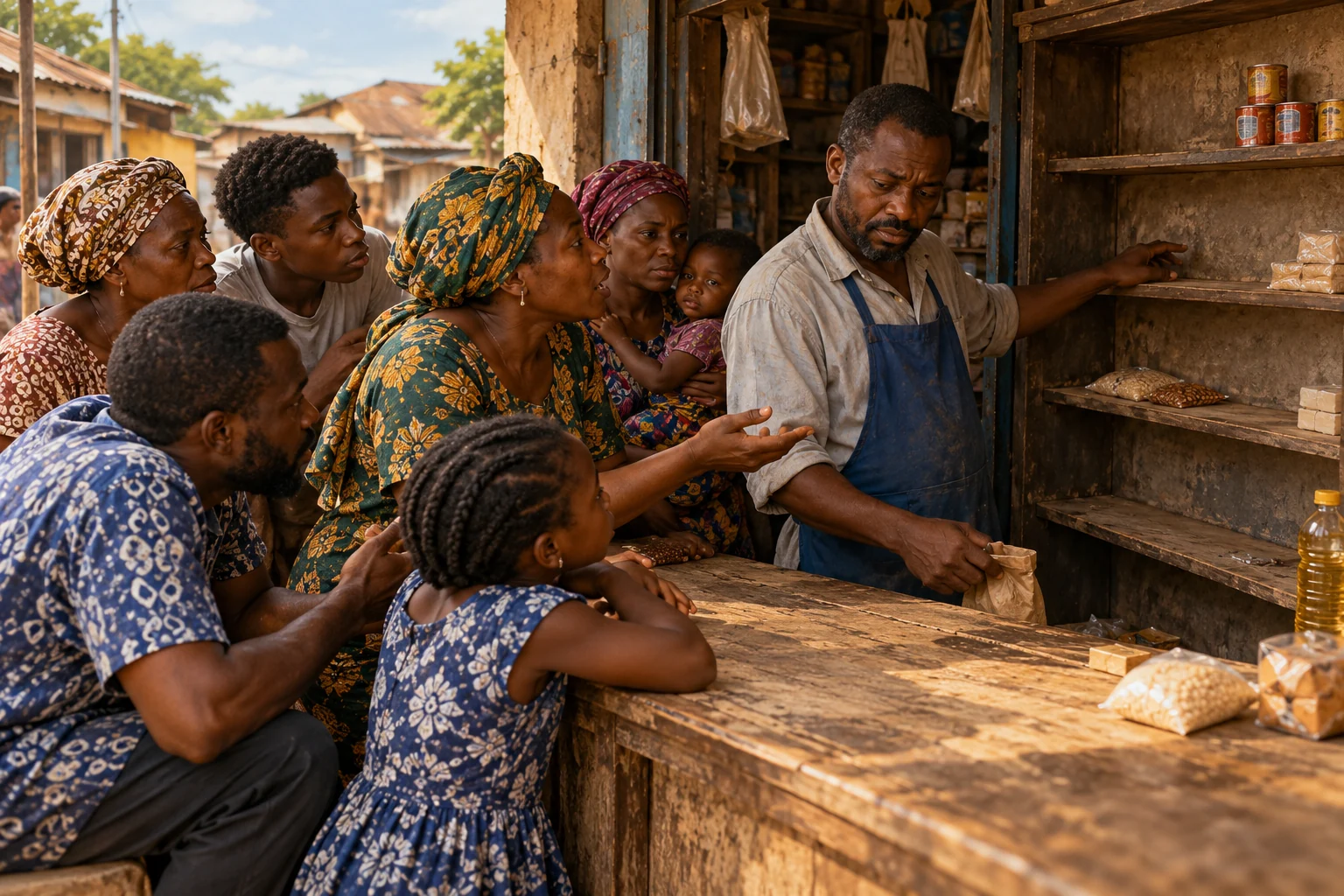
A prosperous merchant lets his sister and her husband move in. She invites the remaining siblings, and he accepts again. The enlarged household exceeds the business’s capacity, but he avoids changing the arrangement. Conflict grows until the shop closes and relatives threaten his place in the house. He eventually dismisses them and reopens, finding that competitors now occupy part of the market.
The delay has a cost that the later boundary cannot fully reverse. This specificity prevents a generic slogan about refusing help: the question is whether an arrangement can sustain the people relying on it. The relatives’ own possible contributions are not explored in the source. The story invites us to ask what shared terms might have prevented dependence from becoming displacement.
Narrative setting: Cuban/Lukumí-labeled patakín in the multilingual compilation; individual narrator and publication history remain unverified.
Oloba’s false royal dress cannot survive verification
Oloba, a trusted page, plans a journey without the king’s authorization despite counsel against impersonation. He fashions a royal outfit from red fruits resembling beads and claims he has come to collect taxes. The town hosts him while gathering payment. As the fruit deteriorates, he burns the guesthouse and demands a replacement bead outfit. Eshu prompts the chief to verify the commission and observes that genuine beads would survive the fire. Oloba receives a replacement but leaves before collecting taxes. Royal officers intercept him, and the king condemns the betrayal of trust. The narrator gives the punishment a severe, fatal conclusion.
The deception succeeds because the town knows Oloba’s real proximity to the king. His false authority is not invented from nothing; it borrows a credible relationship and extends it beyond its authorized scope. The fruit costume also has a material limit, which the fire is meant to conceal. Eshu exposes both weaknesses through verification and attention to what beads would actually do. His role belongs to the religious consequence of neglected counsel, but the account also makes the fraud intelligible through observable inconsistencies.
Contemporary interpretation can discuss the difference between familiarity with an office and authorization to act for it. The king’s execution should remain part of the severe narrative rather than be endorsed as a proportionate modern response. Nothing requires adding a successful tax theft, since Oloba leaves before collection. The supported betrayal concerns his impersonation, destruction of the guesthouse, and extraction of a replacement royal appearance through a fabricated accusation.
Narrative witness and setting: Cromwell Osamaro’s explicitly headed narrative of the favored royal page and the unauthorized tax journey.
Fa recognizes Asen as a necessary partner
Fa works continually in a poor field without improving his condition. After consultation, he is directed toward an arriving stranger and shares prepared food and drink with him. The stranger later accompanies Fa to the palace when the king’s daughter collapses. He demands substantial gifts and her marriage, then transfers her to Fa. The account narrates her recovery after the king complies. Only afterward does the visitor identify himself as Asen and explain that Fa needs his help for effective work. They enter a continuing partnership, and Asen imparts knowledge of leaves. The narrator explicitly connects a bokono’s competence with both divination and remedies.
The revelation comes after hospitality and action rather than through a title announced at the first meeting. Fa gives to the stranger before knowing the full identity of the relationship being formed. The account then distinguishes learning Fa from knowing the remedies associated with Asen, making religious competence composite rather than self sufficient. This is a Fon theological explanation of partnership among sacred powers, not a clinical case report or a general history of herbal medicine. The palace bargain is also unequal: the daughter is given within a royal exchange without a narrated statement of her own wishes.
That detail should not vanish behind an uplifting lesson about generosity. Contemporary interpretation can examine how one expertise recognizes its need for another while marking the ethical limits of the social arrangement. The witness’s central religious claim remains that Asen’s acknowledged participation makes the work effective; it should not be replaced by a secular assertion that Fa merely acquires a useful business contact.
Narrative witness and setting: Bernard Maupoil’s explicitly headed Fon Woli Abla account; Asen is explicitly identified as a vodun.
What was born in this Odù
“Born” can name an explicit traditional origin association or what emerges through a story: a capacity, relationship, practice or order of life. Interpretations drawn from a narrative are labelled below, so their basis remains clear.
Jealousy
Selected traditional source association.
Jealousy appears explicitly in the origin inventory. It is a source association about relational tension, not a personality diagnosis. The selected merchant story provides a different but related question about access, entitlement, and how family expectations can overwhelm an agreed boundary.
The Oluwo Osain office
Selected traditional source association.
The inventory attributes a named specialist office associated with Osanyin to the sign. Preserve the particular institutional association without claiming that all Osanyin traditions share one title, hierarchy, or historical founding event.
Correlations to life dimensions
These questions bring the selected stories into contemporary life. They are interpretive invitations for study.
Work and resources
The merchant’s shop is asked to support a household beyond its capacity. Because no division of contributions is negotiated, an initially generous welcome becomes a continuing drain. The loss of market position after closure makes timing a concrete part of the analysis.
Reflect: When should the arrangement be reviewed?
Relationships and family
Kinship makes the merchant reluctant to name limits, while relatives increasingly act as if support is automatic. The narrative supports asking what each person understands the welcome to include. A fair boundary need not depend on treating relatives as enemies or strangers.
Reflect: What did each person think the welcome promised?
Character and inner life
The ruler and merchant avoid painful refusals, but the avoided difficulty returns in a more damaging form. We can examine the difference between compassion and an inability to tolerate another person’s disappointment, without assuming that every act of mercy enables harm.
Reflect: What feeling makes a necessary limit hard to state?
Community and responsibility
Victims receive compensation, yet repeat offenders avoid consequences. The political story makes accountability a communal issue while its coercive solution remains questionable. A grounded reading can ask how repair, restraint, and due process might be held together.
Reflect: How can repair include responsibility without arbitrary punishment?
A deeper reading of the sacred relationships
A sacred vocation can require complementary powers
Maupoil’s narrator explicitly distinguishes knowledge of Fa from the remedies entrusted to Asen. The partnership therefore does not diminish Fa through a simple failure of confidence; it locates efficacy in an acknowledged relation among powers. Osamaro’s Oloba scene adds Eshu’s role in making a neglected religious warning consequential, while the earlier merciful king and burdened merchant show the limits of a single disposition applied everywhere. A depth treatment can explain these distinct forms of limitation without turning the vodun Asen into an interchangeable name for Osanyin. The excerpt identifies Asen on its own terms and should retain that identity, setting, and religious agency throughout any comparison.
A trusted relationship does not authorize every action
Oloba’s closeness to the king makes his claim believable, but the chief’s direct inquiry reveals that the particular tax mission was never authorized. Asen’s identity, by contrast, becomes explicit after an encounter whose aid leads to a continuing acknowledged partnership. These different disclosures help distinguish borrowed prestige from an actual relation of responsibility. The earlier king’s indiscriminate release of offenders and the merchant’s unlimited assistance likewise show what happens when an existing role is stretched without attention to its conditions. Contemporary interpretation can ask what authority has actually been granted and by whom, while preserving Eshu’s action and Asen’s revelation as religious events rather than treating both merely as administrative lessons.
The form of a gift can conceal an unequal exchange
Oloba turns a fabricated loss into a demand for a real bead outfit. The royal town’s apparent generosity therefore rests on deception. The Asen episode narrates a genuine sacred partnership but also transfers the king’s daughter within a bargain she does not voice. The earlier merchant gives until the shop can no longer sustain its dependents, adding another limit to a simple praise of giving. Contemporary analysis can ask who chooses an exchange, who bears its cost, and which obligations it creates. That inquiry need not deny religious efficacy in the Asen account or excuse fraud in Oloba’s. It keeps the benefits and the unspoken costs visible at the same time.
Questions that deepen the study
Why does the bead detail matter beyond exposing a clever trick?
The distinction between perishable fruit and durable beads makes the borrowed royal appearance materially testable. Oloba’s invented fire loss cannot explain the disappearance of genuine beads, and Eshu points the chief toward that inconsistency and direct confirmation from the king. The sacred warning is therefore fulfilled through a specific exposure rather than an unexplained reversal of fortune. Contemporary readers can consider how credible surroundings make a false claim persuasive, while remembering that the town is deceived through Oloba’s actual position of trust. The narrative’s fatal royal punishment remains a severe conclusion, not an instruction for dealing with misrepresentation today.
Is Asen simply another name for Osanyin in this study?
The selected Fon witness explicitly calls Asen a vodun associated with remedies and locates him within a continuing relation with Fa. It does not identify him with Osanyin. Functional comparison may be possible in a broader study, but synonymy would require evidence that this excerpt does not supply. Keeping the name preserves the local religious account rather than translating every power into a more familiar Yoruba figure. The episode also distinguishes divinatory learning from another field of sacred knowledge. That complementarity can be explained without claiming that a single universal system assigns exactly the same identities and responsibilities across every related tradition.
How do the additions complicate the earlier generosity stories?
The earlier king’s mercy and the merchant’s family assistance exceed the conditions that make their roles sustainable. Oloba shows a different problem: he manipulates hospitality and compensation through a false claim. Fa’s reception of Asen, meanwhile, leads toward a genuine sacred partnership, although the palace exchange has ethically unequal terms. The four accounts therefore make the purpose and conditions of giving more important than a simple division between generous and selfish people. Contemporary reflection can ask what an act actually supports and who has consented to it. The religious witnesses add divine participation and obligation rather than making every exchange a purely secular calculation of costs.
What the four narratives reveal together
The earlier merciful ruler and overburdened merchant expose the limits of a virtue applied without sufficient attention to its consequences. The new accounts broaden that inquiry. Oloba exploits trusted proximity and a convincing appearance, while Eshu brings verification to an unauthorized claim. Fa receives an unknown visitor and discovers that the effective practice of his vocation depends on an acknowledged partnership with Asen. Gifts and assistance are therefore neither automatically good nor automatically suspect.
Their meaning depends on authority, obligation, agency, and the relation they actually create. The spiritual account of Asen remains central even while the daughter’s unvoiced transfer is acknowledged as an unequal social term. Reading these distinct Yoruba/Bini and Fon witnesses together offers depth without manufacturing a universal moral, an equivalence between named powers, or a promise that hospitality will always produce reward.
Living with this Odù
A continuing life or initiatory relationship
For someone whose received life or initiatory Odù is Ìwòrì Òbàrà, generosity may require forms that keep responsibility shared rather than silently concentrated in the giver. The ruler compensates victims while allowing repeated wrongdoing to continue. The merchant’s household expands beyond what the shop can sustain, and a later boundary cannot recover every lost opportunity. Long development can involve making terms visible before compassion becomes an arrangement that displaces its own provider.
Oloba’s royal impersonation adds another distinction between proximity and authorization. A trusted page’s real relationship makes a false extension of authority credible. The Fon Fa and Asen account shows competence as a partnership between distinct sacred powers, yet its palace bargain leaves the daughter’s voice absent. Effective help can therefore be genuine while the social exchange around it remains ethically difficult.
A received sign does not prescribe mass detention or an unlimited right to refuse relatives. Oshun and Cuban Osun remain distinct, as do Asen and Osanyin. Across changing circumstances, the person can ask who carries consequences, what an authorization actually permits, and which complementary knowledge must be acknowledged. Kindness matures through sustainable responsibility and scrutiny of power, not merely a change from permissiveness to punitive certainty.
A particular consultation and its question
In consultation, Ìwòrì Òbàrà can distinguish helping an injured person from paying away another’s responsibility. The kind ruler’s compensation addresses real losses but leaves offenders able to repeat them. The merchant’s household asks whether shelter and support have terms that the underlying livelihood can carry. A practitioner can examine sustainability without assuming that every request from relatives is exploitative or that a harsh exclusion is the only alternative.
Oloba’s costume asks how a credible connection has been extended beyond actual authority. Verification concerns the commission, the material inconsistency, and the destruction used to conceal it. The Asen account asks what kind of partnership makes religious work effective, while keeping the unequal marriage transfer visible. A genuine need for another expertise does not settle every condition on which that help is offered.
The actual result must determine relevance to the visitor. It does not endorse a feast trap, execution, a cure promise, or a universal identification of sacred powers. Consultation can clarify bounded generosity, authorized action, verification, and acknowledged complementarity. It remains a particular question about the arrangement of responsibilities rather than a permanent label of overgiving, fraud, or dependence. Religious effectiveness and proportional judgment must remain separately examinable.
Constructive and adverse possibilities
Constructively, support can preserve both the recipient’s needs and the giver’s capacity to continue. Consequences can remain with those responsible rather than be endlessly transferred into a benefactor’s resources. Verification can distinguish a true relationship from an unauthorized claim made in its name. Distinct sacred expertise can also become an acknowledged partnership rather than a concealed dependency.
Adversely, compensation can make repeated wrongdoing easier, hospitality can expand without a shared basis, and trusted proximity can provide cover for extortion or impersonation. Effective assistance can also be celebrated while the people exchanged within its bargain remain unheard. The narratives’ detention and execution do not supply ordinary justice standards. Iré and adverse conditions belong to the actual reading. Interpretation asks whether a changed arrangement distributes responsibility more clearly or merely replaces an unsustainable kindness with equally unexamined coercive power.
An illustrative situation in everyday life
Hypothetically, a cooperative treasurer repeatedly covers losses caused by a member’s careless ordering because she does not want workers to go unpaid. The kindness addresses immediate harm but leaves the member with no reason or requirement to change. The ruler’s compensation makes that transfer visible. Her own home has also become an informal lodging place for relatives whose costs the cooperative income cannot sustain. The merchant’s household asks for explicit contributions and limits before the enterprise closes. She can protect immediate needs while negotiating a plan that keeps responsibility shared. This hypothetical example concerns sustainable support, not a recommendation for punitive traps or a claim that all relatives become exploiters when generosity lacks written terms.
Sources and reading context
The first two narrative witnesses
Two Cuban stories are used. Oshun and Cuban Osun both appear in the ruler’s passage and are not conflated; only the explicit Oshun association uses the osun key. The story’s mass detention is a narrative action, not an endorsed justice policy or a ritual instruction.
Narrative motifs are summarized independently. The life-dimension reflections are contemporary interpretation. How these reference studies are built explains the wider source approach and the distinction between a reference article and personal divination.
Additional named witnesses
-
Cromwell Osamaro. The named heading governs Oloba’s unauthorized royal impersonation, Eshu’s verification, and the fatal royal judgment.
-
Bernard Maupoil. The Fon Woli Abla heading governs Fa’s encounter with the stranger revealed as Asen.
The palace recovery is a religious narrative, not medical evidence. The daughter’s transfer and Oloba’s execution are contextualized without approval or prescription. Asen is not silently equated with Osanyin, and no edition or historical date is inferred.
Bibliographic identification
-
C. Osamaro Ibie. Ifism: The Complete Work of Orunmila. Lagos; multivolume publication beginning 1986. Library catalogue record. Related bibliographic record for the named narrative witness. Exact volume, edition and page of the transmitted account have not been independently matched.
-
Bernard Maupoil. La Géomancie à l’ancienne Côte des Esclaves. Paris: Institut d’ethnologie, 1943. Library catalogue record. Historical bibliographic context for the Fon Fá witness; Fon and Yorùbá traditions retain their distinct settings.
Read the source method and wider scholarly context.
The catalogue links identify published works and their authors. They are separate from proof of an individual episode’s wording or attribution. Contemporary comparisons and the synthesis above are editorial interpretation. The author’s books and Academy companions below provide further study; their sales links are separate from the source references.