
Ìwòrì Òkànràn is a mixed Odù in Ifá’s 256-part corpus. A fisher keeps gathering beyond what can be sold and is drawn toward a dangerous hidden depth; a controlling father and an impulsive young couple eventually reach a different relationship through time and changed conduct. These stories connect appetite, restraint, and the difference between forcing an outcome and preparing conditions for it. The source’s Olokun masks provide a direct material anchor for the sea episode.
A question to carry through the study: Where is the wish for more preventing you from making good use of what is already available?
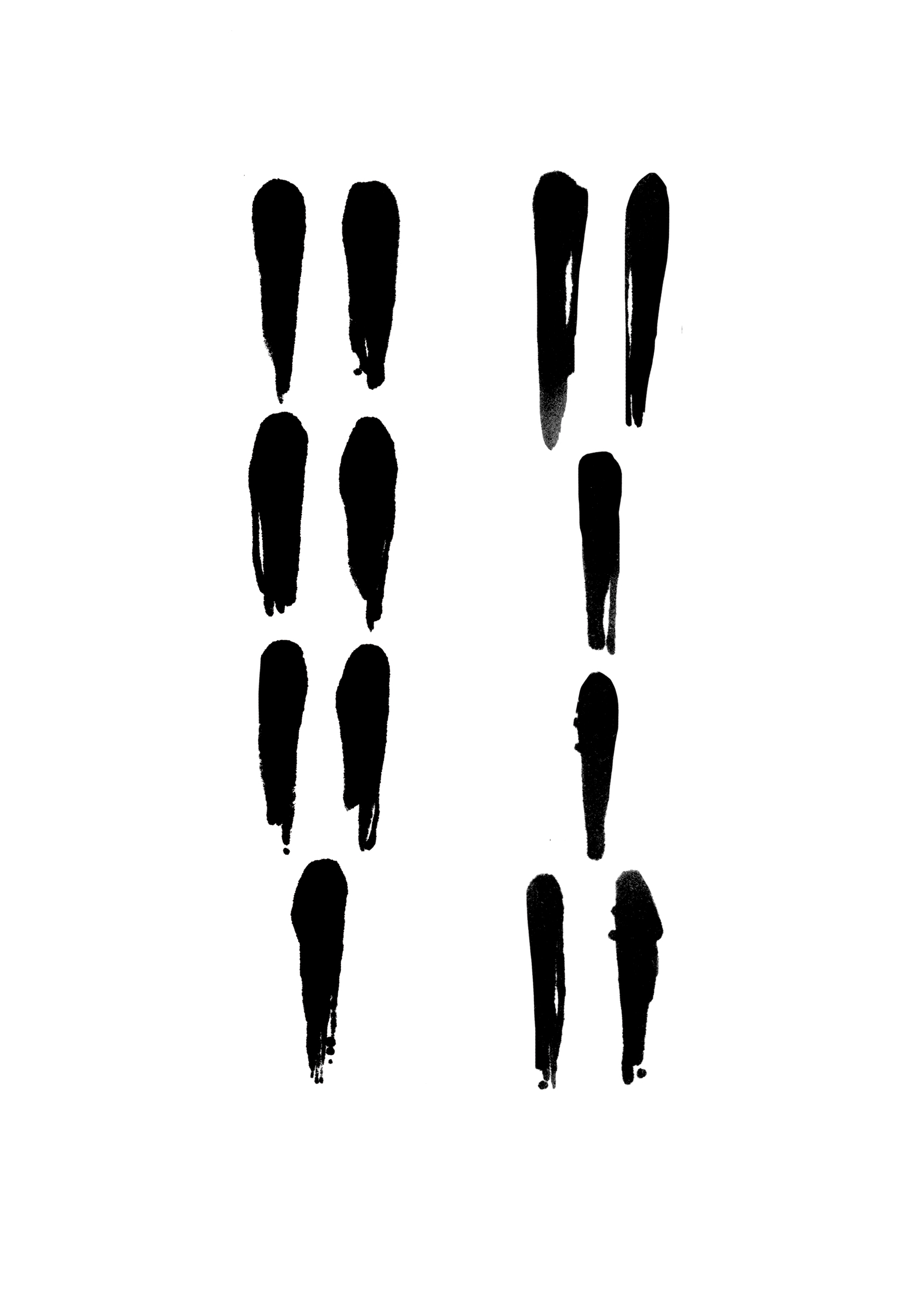
This Academy reads the right column first, then the left. Each row carries a single or double mark.

Where this Odù belongs
Ìwòrì Òkànràn belongs to the Ìwòrì family in this Academy’s study sequence. It is a mixed Odù, distinct from Òkànràn Ìwòrì. The order matters. Its teaching is approached through its own narratives, rather than by adding two general descriptions of the principal signs together.
Key Òrìṣà and sacred relationships
The figures below are selected for their roles in the accounts discussed here. They offer connected reading paths through the tradition.
-
Olókun. He confronts the fisher beneath the sea and removes the mask, making the hidden depth a domain whose access carries limits within this particular narrative.
-
Ọ̀rúnmìlà. He counsels the fisher before the descent and is also associated in the section with patience and family conflict; his advice does not supply a practical water-safety method.
Key myths and their meanings
More fish than can be sold
A fisher repeatedly remains at sea longer because every catch increases the wish for another. Returning late, he finds much of the catch spoiled and cannot profit from it. Another fisher’s account of richer depths intensifies the desire. Despite consultation, he obtains a mask and descends, where Olokun prevents disclosure of the hidden domain and the fisher dies.
The story’s first failure is economic and temporal, before its supernatural ending: accumulation exceeds the capacity to preserve or exchange the catch. That detail grounds inquiry into sufficiency and timing. The mask’s fatal removal is a mythic event, not diving guidance or evidence of a literal underwater encounter. We can avoid translating the tale into a prediction about a reader’s life.
Narrative setting: Cuban/Lukumí-labeled patakín in the multilingual compilation; individual narrator and publication history remain unverified.
The household that changes over time
A father opposes his young daughter’s relationship with a man whose conduct worries him, then confines and watches her. She leaves with the man. Her mother persuades the father not to pursue them. The couple’s life changes as the man abandons gambling and begins steady work. After a child is born, they visit the father, who welcomes the changed household and agrees to the marriage.
The passage presents a resolution through time and observable conduct, but it begins with coercive confinement and an underage relationship. Those are not appropriate models to prescribe. Its useful question is how a family distinguishes concern from control and how reconciliation can respond to actual change rather than to a demand for immediate submission or a guaranteed happy ending.
Narrative setting: Cuban/Lukumí-labeled patakín in the multilingual compilation; individual narrator and publication history remain unverified.
Three egg layers receive the same opening but meet it differently
Guinea fowl, turtle, and snake consult because they do not know how their eggs will open into young. All receive counsel involving Eshu, Shango, and Orunmila, followed by an instruction to stay near enough to observe on the appointed day. Guinea fowl completes the response and watches nearby. Turtle and snake respond only partly and move too far away. Shango calls on Oya, whose light precedes the thunder that opens the eggs. Guinea fowl gathers the young under her wings. The other offspring enter the forest without their parents. The narrator uses the contrast to explain different patterns of parental association.
The same sacred event opens all three sets of eggs, but its outcome depends on the parents’ presence when the opening occurs. The distinction is therefore not simply that one receives a benefit and the others receive nothing. A generative opportunity arrives, and only one parent remains positioned to care for what follows. The account gives Shango and Oya active roles and joins that divine intervention to the earlier response and instruction. Contemporary reflection can discuss readiness to receive a change rather than only asking for it.
That interpretation should not convert the animal etiology into zoology: real turtle, snake, and bird reproduction varies widely, and thunder is not a biological explanation of hatching. Nor should the story become an accusation about a particular parent or a prediction of family separation. Its religious and narrative focus is the relation between requested opening, precise presence, and the care that becomes possible at that moment.
Narrative witness and setting: Cromwell Osamaro’s explicitly headed account of guinea fowl, turtle, and snake.
A refused place in a canoe becomes an acknowledgment of Ori
Iwori Okanran receives guidance before leaving heaven and later consults again before beginning independent religious practice. He is told that his head is good and receives counsel involving the head and Ogun. Remembering an unanswered question, he sets out toward another awo across a river and acknowledges his head before reaching the crossing. A crowded canoe is ready to depart, but the boatman refuses him despite his insistence that room remains. The canoe overturns in midstream. Only the boatman survives by swimming. Iwori Okanran understands his exclusion through the earlier disclosure about his good head and returns to begin his practice.
The protagonist initially interprets refusal as an obstacle to a legitimate journey. Only the subsequent disaster changes its meaning within the narrative. Ori is therefore not presented simply as getting immediate access to what one wants. The good head can be recognized retrospectively through an exclusion that the person was actively trying to overcome. Ogun also remains part of the earlier religious counsel, and the purpose of the journey is continued consultation, so the sacred setting is more specific than a generic belief that everything happens for a reason.
Contemporary interpretation can ask whether an unwelcome limit should be examined before being forced. It must not claim that every rejection conceals protection or that disaster victims lacked a good head. The story gives a particular survivor’s recognition, not an explanation of all water deaths. The crowded condition and boatman’s decision remain concrete narrative facts alongside the religious attribution, without needing to turn one into a denial of the other.
Narrative witness and setting: Cromwell Osamaro’s explicitly headed account of Iwori Okanran’s preparation for earthly practice.
What was born in this Odù
“Born” can name an explicit traditional origin association or what emerges through a story: a capacity, relationship, practice or order of life. Interpretations drawn from a narrative are labelled below, so their basis remains clear.
Olokun’s masks
Selected traditional source association.
The inventory explicitly names Olokun’s masks, and the fisher’s descent centers a mask that enables entry into hidden water. Discuss this as a local religious origin motif without equating a narrative mask with safe diving equipment or a universal Olokun practice.
The beard
Selected traditional source association.
The beard appears as a separate body-origin association. The selected stories do not explain its emergence, so preserve only the inventory’s claim and avoid adding an etymology, a gender hierarchy, or a fixed account of maturity.
Correlations to life dimensions
These questions bring the selected stories into contemporary life. They are interpretive invitations for study.
Work and resources
The fisher loses value because the harvest exceeds the time available to bring it to market. More production therefore produces less usable benefit. This concrete sequence invites reflection on preservation, capacity, and the point at which continued gathering undermines its own purpose.
Reflect: What limit makes the harvest usable?
Relationships and family
The father’s concern becomes confinement, and the daughter’s departure intensifies mistrust. The eventual welcome follows a change in conduct rather than the source describing a successful exercise of coercion. A careful reading should preserve everyone’s agency and the limits of the narrated resolution.
Reflect: What change can be observed without controlling another person?
Character and inner life
The fisher’s desire grows in response to comparison with another person’s catch. The episode isolates a moment when an existing problem is answered by seeking more of the same. The story invites us to ask whether the actual difficulty is quantity or how the quantity is handled.
Reflect: Is more the answer to the problem you have?
Community and responsibility
The mother provides a moderating voice when the father considers pursuit, while the later household returns with evidence of changed habits. The narrative makes reconciliation a process involving several people, not one person’s command. Its sequence should not be read as a guaranteed outcome.
Reflect: Who can help lower the pressure without erasing concern?
A deeper reading of the sacred relationships
Ori can orient a life through limits as well as access
The canoe episode explicitly ties the survivor’s recognition to the earlier disclosure about his head and to the acknowledgment made on the way. This should be explained as a religious relation to Ori, not reduced to self confidence or replaced by a universal claim that every event is secretly beneficial. The eggs account adds another form of orientation: consultation specifies where one must remain when a desired opening arrives. The earlier fisher who overstays and the controlling father offer contrasting failures around timing and movement. A depth treatment can preserve these different sacred and human causes while asking how a person recognizes a limit without assuming that intention alone determines the right action.
An opening creates responsibilities beyond achieving the request
The three creatures seek offspring, but the account does not end when the shells open. Guinea fowl’s nearby presence makes gathering and protection possible, while the others are absent. The earlier father attempts to preserve a daughter through confinement rather than preparing for a changing relation, and the fisher pursues a larger return after a catch has already become vulnerable to time. Contemporary reflection can compare the work after an opportunity with the desire before it. The religious account adds that Shango and Oya open the eggs through a response already sought from sacred powers. Receiving that opening remains different from sustaining the life that follows it.
Refusal and restraint are not interchangeable forms of control
The boatman’s refusal prevents another passenger entering a crowded canoe, while the earlier father’s confinement restricts a daughter whose life changes beyond his control. These actions differ in purpose, knowledge, and consequence. The eggs story adds an instruction to remain nearby rather than move either too far or not at all. Contemporary analysis can therefore ask what a boundary protects and whose movement it restricts before calling all restraint wise. The canoe survivor’s acknowledgment of Ori gives that particular limit a sacred meaning, but the father’s story does not gain the same justification by analogy. The four narratives require attention to concrete relations rather than a general praise of either freedom or obedience.
Questions that deepen the study
Does the canoe story explain why others died?
It narrates how Iwori Okanran recognizes his own exclusion through the earlier disclosure about a good head. It does not give the passengers’ consultations, destinies, or moral histories. Claiming they lacked spiritual protection would add an explanation the witness does not provide. The crowded boat and its overturning are also part of the account, so the religious attribution need not erase the concrete conditions. Contemporary readers can reflect on an unwelcome limit without treating every refusal as a guarantee of safety. The narrative concerns one recognition within a sacred biography, not a rule for judging people who experience a disaster.
Why do turtle and snake lose contact with the young despite hatching?
The account distinguishes receiving an opening from being positioned to respond when it comes. They complete only part of the requested response and then move beyond the instructed range of observation. The thunder opens their eggs too, but no parent is there to gather the offspring. This gives the story a more precise structure than a simple denial of benefit. Its claims about animal behavior remain etiological rather than scientific. A contemporary extension may concern attention after a desired change, but it should not become a judgment that every family separation reflects an earlier spiritual failure or a general instruction about parenting.
How do the four stories distinguish patience from passivity?
The fisher remains too long, the father attempts to prevent change, the egg layers must stay within a precise distance, and Iwori Okanran must accept a refusal he initially contests. No single quantity of waiting explains them. The relevant question is what the relation requires at the particular moment. The added religious narratives make consultation, Ori, Shango, and Oya part of that discernment, while the earlier human conflicts show the cost of narrowing judgment to a desired outcome. Contemporary reflection can ask what attention is needed now rather than simply prescribing more patience. The sources give specific scenes, not a universal timetable for action.
What the four narratives reveal together
The earlier fisher and confined daughter accounts show desired outcomes becoming distorted through overstaying or excessive control. The added witnesses offer more exact relations between intention, timing, and position. Guinea fowl remains near enough to gather the young when Shango and Oya open the eggs, while turtle and snake miss the responsibilities that follow the opening. Iwori Okanran recognizes Ori’s protection through an exclusion he first tries to overturn.
These outcomes should not become a formula that every refusal is good or every separation deserved. Their depth lies in the particular guidance and relation each scene discloses. Religious agency is active rather than ornamental, and contemporary reflection remains a second layer. Read together, the four stories make attentiveness more useful than an abstract opposition between rushing and waiting, freedom and restraint, or effort and acceptance.
Living with this Odù
A continuing life or initiatory relationship
For someone whose received life or initiatory Odù is Ìwòrì Òkànràn, obtaining more may need to be distinguished from being able to receive and use what arrives. The fisher’s catch spoils because accumulation outruns preservation and exchange. The egg layers all experience an opening, but only one remains positioned to gather and care for the young. Long development can involve asking what conditions turn a desired event into sustained life rather than an unmanageable surplus or missed responsibility.
The family’s changed household adds time and observable conduct, while preserving the coercion and underage relationship that make its opening unacceptable as a model. The canoe account then gives a particular religious interpretation to an exclusion that the traveler initially resists. It cannot become an explanation of every other passenger’s fate.
A received sign does not advise dangerous sea exploration, promise that rejection protects, or define every parent through an animal story. Olokun, Shango, Oya, Orunmila, Orí, and Ogun retain distinct agency. Across changing circumstances, the person can ask whether appetite exceeds capacity, whether readiness follows the request for change, and what new evidence would justify revising a relationship without forcing an outcome or declaring hindsight universally providential.
A particular consultation and its question
In consultation, Ìwòrì Òkànràn can distinguish the wish for a larger return from the timing that makes an existing return usable. The fisher’s problem begins before the hidden sea domain: catching continues after the ability to preserve and sell has been exceeded. A practitioner can examine capacity, appetite, and the moment to return without treating the mythic death as a prediction or supplying a diving instruction.
The household narrative asks what observable change could alter a family’s judgment, while leaving confinement and an underage relationship outside acceptable recommendations. The egg layers ask whether those requesting an opening will be present for what follows. The canoe asks whether an unwelcome limit deserves examination before force is used to overcome it, not whether every refused place conceals divine protection.
The actual result determines which concern addresses the question. Its religious explanation may involve head acknowledgment, particular counsel, or named powers without creating a universal personal taboo. Consultation remains a time-bound encounter. It can sharpen the relation between desire and readiness, care and proximity, or reassessment and coercion. The source’s retrospective recognition should not be imposed on people who have suffered accidents or made different choices under uncertainty.
Constructive and adverse possibilities
Constructively, a person can return in time to make a catch useful, remain present for an opening they requested, and revise judgment in response to actual changed conduct. A limit can be examined rather than immediately forced. The narratives give religious relation an active role in readiness and retrospective acknowledgment while retaining material conditions such as spoilage, distance, and crowding.
Adversely, appetite can turn abundance into waste, a desired change can arrive without anyone positioned to care for it, and concern can become coercive control. Hindsight can also become an unjust explanation of others’ deaths or a promise that every refusal was protective. Iré and adverse conditions belong to the particular reading. The motifs ask whether desire has been joined to the capacity to receive, preserve, and sustain what is wanted, and whether a later favorable understanding respects the uncertainty present before events unfolded.
An illustrative situation in everyday life
Hypothetically, a grower keeps harvesting because each basket promises additional income, but arrives at market after customers have left and loses much of the crop. The fisher’s timing makes the problem more precise than a general accusation of greed: accumulation has outrun preservation and exchange. The grower also seeks more orders without arranging help for the delivery day. The egg-layer motif asks whether an opening can be received when it arrives. A revised plan can set a return time and allocate actual care for the new commitments. This hypothetical example concerns sufficiency and readiness, not a technical farming rule, a promise of prosperity, or an interpretation of dangerous travel as a necessary spiritual lesson.
Sources and reading context
The first two narrative witnesses
Two Cuban narratives are selected. The family episode includes coercion and an underage relationship, which are contextualized rather than prescribed. The sea ending remains a mythic boundary story. No diving, medical, marriage, or personal-taboo instructions are transmitted.
Narrative motifs are summarized independently. The life-dimension reflections are contemporary interpretation. How these reference studies are built explains the wider source approach and the distinction between a reference article and personal divination.
Additional named witnesses
- Cromwell Osamaro. The named heading governs the three egg layers and the later predeparture/canoe sequence.
The animal hatching account is not zoology, and the canoe survivor’s recognition does not explain other passengers’ destinies. A Maupoil item inside this section is explicitly headed Woli Turukpen and repeats an earlier exile motif, so it is deliberately not reassigned to this sign.
Bibliographic identification
- C. Osamaro Ibie. Ifism: The Complete Work of Orunmila. Lagos; multivolume publication beginning 1986. Library catalogue record. Related bibliographic record for the named narrative witness. Exact volume, edition and page of the transmitted account have not been independently matched.
Read the source method and wider scholarly context.
The catalogue links identify published works and their authors. They are separate from proof of an individual episode’s wording or attribution. Contemporary comparisons and the synthesis above are editorial interpretation. The author’s books and Academy companions below provide further study; their sales links are separate from the source references.