
Òkànràn Ìwòrì is a mixed Odù in Ifá’s 256-part corpus. Okanran Iwori brings scrutiny to two arrangements that look different from what they are. Olofin stages his own death to test Orunmila, while Shango repeatedly attacks across a river protected against retaliation by a planted barrier. The narratives reward detecting a concealed structure rather than accepting appearances. Yet equalizing the river crossing does not end the war, leaving fairness of conditions distinct from the achievement of peace.
A question to carry through the study: If a rule applies equally on paper, what hidden condition still makes its effects unequal?
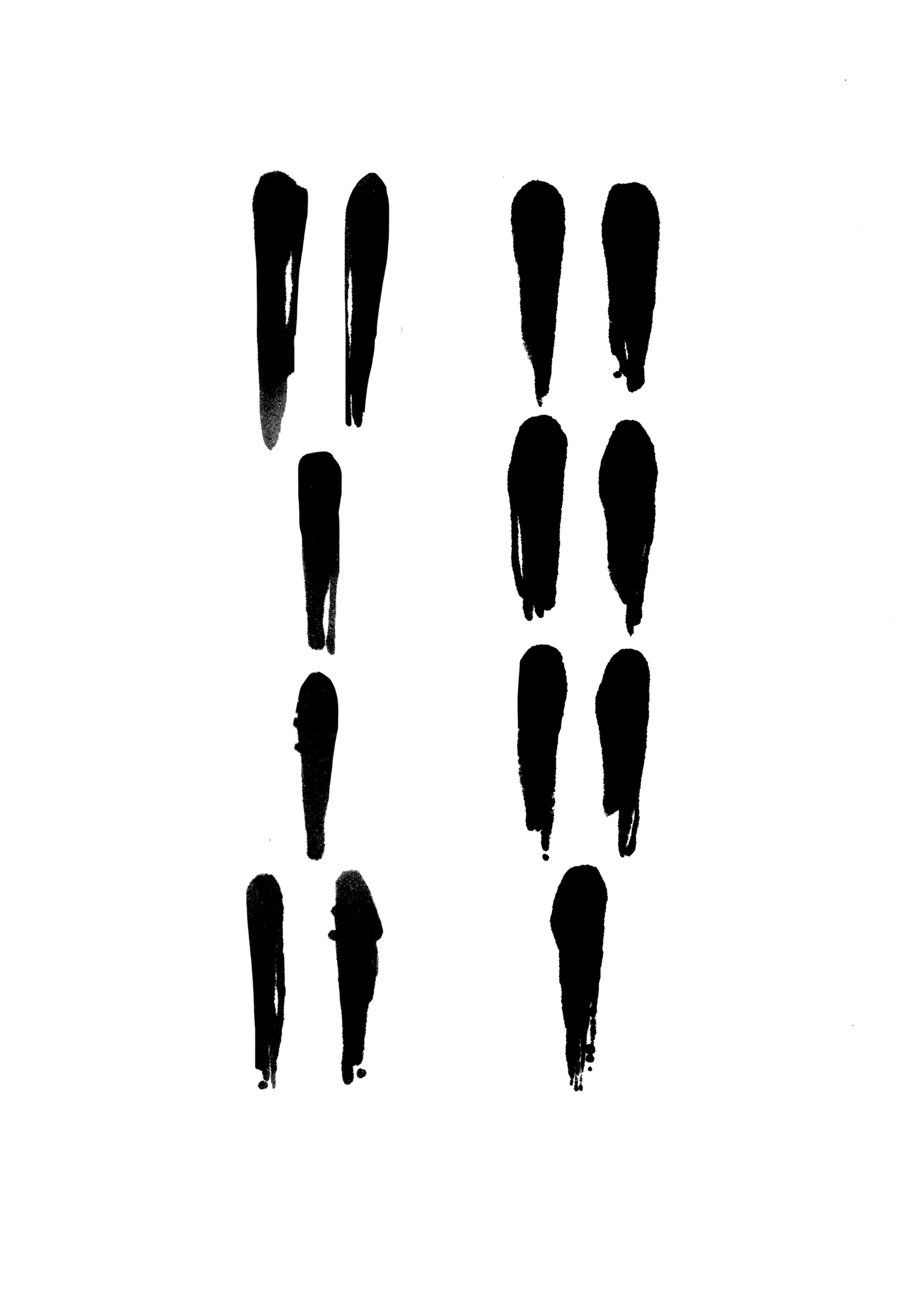
This Academy reads the right column first, then the left. Each row carries a single or double mark.
Where this Odù belongs
Òkànràn Ìwòrì belongs to the Òkànràn family in this Academy’s study sequence. It is a mixed Odù, distinct from Ìwòrì Òkànràn. The order matters. Its teaching is approached through its own narratives, rather than by adding two general descriptions of the principal signs together.
Key Òrìṣà and sacred relationships
The figures below are selected for their roles in the accounts discussed here. They offer connected reading paths through the tradition.
-
Ọ̀rúnmìlà. He recognizes the staged death as a trap and later identifies the river condition that prevents Ogun from meeting Shango on comparable terms.
-
Ògún. He is the disadvantaged rival at the river barrier and seeks counsel after discovering that retaliation is blocked.
-
Òṣun. She changes the river’s condition by removing the obstructing growth. The story makes her attention decisive for equal access across the boundary.
-
Ṣàngó. He creates an asymmetrical advantage by crossing into Ogun’s land while making the reverse movement painful; the ending removes that particular advantage.
Key myths and their meanings
The death that was a test
Olofin pretends to have died in order to examine Orunmila’s knowledge. Others attend the apparent corpse, unaware of the plan. Orunmila consults, approaches in an unexpected manner, and exposes the performance when Olofin reacts. Recognition of his authority follows the successful detection.
The public appearance is convincing because trusted authority created it. The story therefore asks how discernment operates when social consensus rests on incomplete information. It should not become a procedure for judging death or responding to a medical emergency. Its meaningful structure is a staged test, an independent inquiry, and the disclosure of concealed intent.
Narrative setting: Cuban/Lukumí patakín in a multilingual source compilation; no individual narrator is established.
One river, unequal crossings
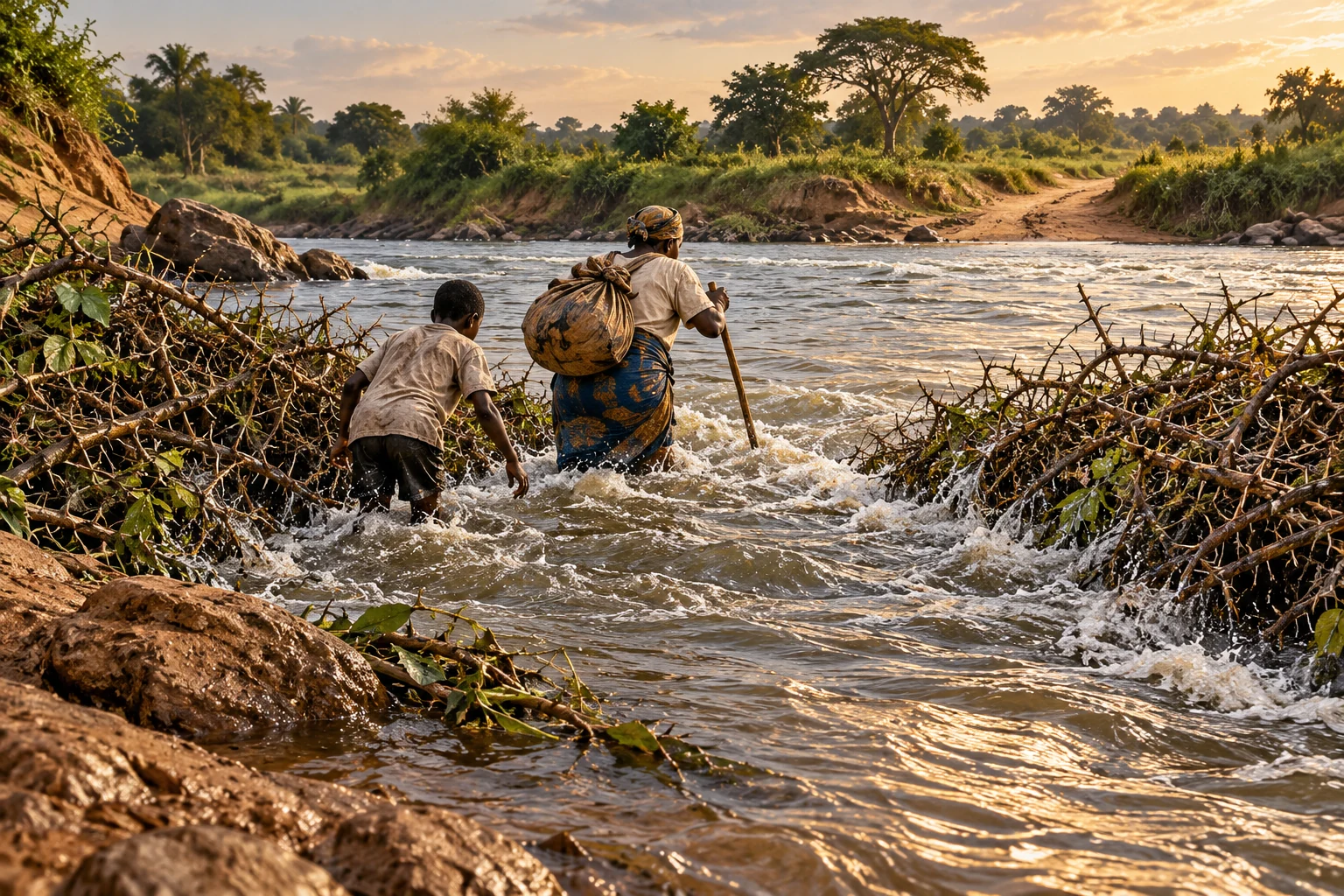
Shango crosses a river to attack Ogun but has planted a painful barrier along its bank to obstruct the reverse journey. Ogun encounters it and consults Orunmila. Oshun awakens to the situation and moves the plants away through a surge of water. Thereafter the two fight under comparable conditions.
The same boundary has served different interests depending on direction. Correcting that asymmetry is a meaningful change, but the source stops at equal combat rather than reconciliation. This is useful for distinguishing fair procedure from a good ultimate outcome. A rule can become less exploitative while the relationship it regulates remains destructive.
Narrative setting: Cuban/Lukumí patakín in a multilingual source compilation; no individual narrator is established.
Rain’s benefits do not secure gratitude
Rain consults before coming to earth and announces the intention to benefit its inhabitants. It rejects the need for further religious preparation, reasoning that a benefactor should not have to secure appreciation. On earth, its water supports crops, moderates heat, and sustains living beings. Yet those delayed in travel or work complain, and people also blame it when it arrives too often or too late. The witness names Esu’s agency in that hostile reception and gives rain a lament as it leaves the clouds. The account holds genuine public benefit and genuine inconvenience together within a sacred etiology of rain’s sound.
Rain assumes that an intention to help will settle the relation between giver and receiver. The story refuses that assumption without making the benefits imaginary. A shower can support a field and interrupt a traveler at once, so appreciation is not simply a matter of everyone perceiving the same effect correctly. Within the witness, Esu also acts upon reception, making the omitted relationship part of why benevolence does not suffice. That religious logic should be explained before reducing the episode to a modern complaint about ungrateful people.
The earlier river episode likewise contains a boundary that affects the two sides differently: Shango’s plants enable his own attacks while preventing Ogun’s response. The staged-death test adds an observer whose public appearance is deliberately arranged. Across these accounts, one visible condition can have different relations to different participants. Contemporary reflection can ask about conflicting effects, while declining to identify a reader as a persecuted benefactor or interpret real weather through personal spiritual approval.
Narrative witness and setting: Translated excerpt in the multilingual compilation’s expressly attributed Cromwell Osamaro sequence, with Yoruba/Bini-facing material. The compilation’s language is not evidence of a Brazilian tradition.
Fire receives a means of renewal
Fire’s life or strength is diminishing, and it consults about that condition. Unlike Rain, it accepts the advised religious commitment. The account then describes renewed vigor and links this sacred response with a material association by which a weakening fire can be revived. No wider competition, adversary, or complete biography is given. The contrast is compact but concrete: a force whose useful existence is not self-sustaining receives support that can become effective again when its strength declines. Later social and marital applications belong to the narrator’s divinatory extension, not to a natural law or a present reader’s promised future.
Fire’s need changes the premise of generosity. It does not begin by assuming that an already beneficial role makes relation unnecessary; it seeks a way for its own efficacy to continue. The witness joins sacred preparation and a material means of revival, rather than asking which one is the true explanation. Contemporary analysis may see an analogy to maintenance, but should not erase the religious connection that gives the means its place in the story. Comparison with Rain clarifies that both powerful natural presences have conditions they do not control alone.
Comparison with the river barrier adds a further distinction: removing an unfair obstacle restores comparable conditions for conflict, whereas sustaining fire renews a capacity without narrating a rival’s defeat. The staged-death episode concerns exposure of a false condition, while Fire addresses a real decline. Keeping those differences prevents every story from being compressed into a single rule that all difficulties are traps or every successful response is an act of opposition.
Narrative witness and setting: Translated excerpt in the multilingual compilation’s expressly attributed Cromwell Osamaro sequence, with Yoruba/Bini-facing material. The compilation’s language is not evidence of a Brazilian tradition.
What was born in this Odù
“Born” can name an explicit traditional origin association or what emerges through a story: a capacity, relationship, practice or order of life. Interpretations drawn from a narrative are labelled below, so their basis remains clear.
The formation of earth
Selected traditional source association.
The only born item names the earth’s formation without an accompanying origin explanation in the inspected list. It should be retained as a local cosmogonic association, not expanded into a geological history.
More equal access across a boundary
Contemporary interpretation from the selected myth.
A contemporary interpretation finds procedural fairness emerging when Oshun removes a barrier that disadvantages only one direction of movement. This is an ethical reading of the episode, not an added traditional origin.
Correlations to life dimensions
These questions bring the selected stories into contemporary life. They are interpretive invitations for study.
Work and resources
The river barrier alters who can act despite a seemingly common boundary. Examine practical access rather than relying only on formally identical rules.
Reflect: Who can actually use the opportunity being offered?
Relationships and family
Olofin’s performance manipulates people who do not know they are being tested. Insight does not remove the ethical question about imposing secret tests on others.
Reflect: Could the same knowledge be gained through a transparent conversation?
Character and inner life
Orunmila consults instead of simply following the crowd’s response. Independent inquiry is different from reflexive disbelief.
Reflect: What specific evidence would clarify the appearance?
Community and responsibility
Oshun’s intervention removes an unfair obstacle but leaves conflict in place. Communities need a further aim beyond balanced hostility.
Reflect: What would move your group from fairer conflict toward peace?
A deeper reading of the sacred relationships
Natural powers remain relational within the witness
Rain and Fire are addressed as participants in a world of divination, obligation, and effective divine agency. Rain’s beneficent intention does not make it independent of that order, while Fire’s diminished vigor can be answered through a sacred relationship joined with material support. Oshun’s river action in the earlier account likewise changes a condition through a divine person’s response. A modern discussion of maintenance or public perception may illuminate one dimension, but cannot replace these claims with an impersonal moral allegory. The religious lens should first explain why a capacity remains answerable to relations even when it appears powerful or useful, without turning that explanation into a scientific mechanism.
The same condition can distribute costs unevenly
Rain nourishes a farm while delaying a journey, and its absence can be blamed by people who previously complained of its presence. The river’s painful barrier advantages Shango while disadvantaging Ogun. The public display of death also creates one apparent situation for unaware attendants and another for the person arranging the test. These are specific forms of asymmetry, not proof that every disagreement is merely subjective. The plots give facts that distinguish positions and intentions. A reference study can therefore ask what each participant actually encounters, who can change the arrangement, and what would count as an adequate response, rather than making the principal figure’s experience the entire account.
Renewal, exposure, and equalization are different results
The fire is renewed, Rain remains troubled by hostile reception, Orunmila exposes a staged event, and Oshun equalizes the river crossing without ending the war. A generic claim that wisdom solves the problem would erase these uneven endings. The source gives different kinds of efficacy whose limits matter. A contemporary analysis can specify whether a response changes capacity, knowledge, access, or a wider relationship. The religious accounts remain intelligible without supplying a completely harmonious conclusion for all. This precision also helps readers avoid treating one favorable outcome as a guarantee that every related condition has been repaired or that a real decline must secretly be a performance.
Questions that deepen the study
Is Rain’s complaint simply that people should be more grateful?
Gratitude is part of the account, but the story also describes different practical effects for different recipients and names a neglected sacred relation. Rain genuinely benefits crops and living beings while sometimes obstructing work or travel. A contemporary reader can acknowledge both rather than treating every complaint as moral failure. Within the religious witness, Esu’s agency further shapes reception, so the story is not exhausted by modern public-relations advice. Its value lies in showing that a beneficent intention does not control every result or response. It does not identify a reader’s critics as enemies or make a weather event a verdict on personal character.
What makes Fire’s renewal a religious account rather than only a practical observation?
The material association appears after consultation and an accepted commitment, inside a sequence that treats Fire as a participant receiving support. The witness does not separate the ordinary means of revival from sacred relation as competing explanations. A reference study can describe that logic without listing a procedure or claiming that the religious sequence constitutes scientific proof. A contemporary analogy about sustaining a capacity is useful only after the story’s own terms are stated. Fire’s renewal is also bounded: the brief passage does not narrate an entire later career, public acclaim, or victory over another force.
Does equalizing the river solve the problem in the earlier narrative?
It removes a specific unfair advantage, but the account ends with the rivals able to fight on comparable terms rather than reconciled. The new Rain and Fire stories help name that limit by providing different kinds of result: mixed public reception and renewed capacity. The comparison shows why fair access, preserved strength, and peace should not be used as synonyms. Within the sacred narratives, divine action is effective in a particular way, and contemporary ethical reflection can ask whether a further change is desirable. It should not invent a peaceful ending the source does not give or dismiss the actual correction because it is incomplete.
What the four narratives reveal together
The added witness makes Okanran Iwori’s concern with appearances and unequal conditions less dependent on rivalry alone. Rain’s benefit reaches people differently and does not secure gratitude; Fire’s decline is real and receives a means of renewal. The earlier staged death and river barrier then supply distinct cases of concealed intent and asymmetric access. Religious agency remains active throughout: consultation, Esu’s influence, and Oshun’s intervention belong to the world described rather than only to later moral interpretation.
Contemporary comparison can distinguish renewal, exposure, equalization, and reconciliation, none of which automatically entails the others. The study should therefore retain uneven outcomes and mixed effects. Its depth lies in explaining what a response actually changes for each participant, while avoiding both a science-like explanation of weather and a universal claim that every complaint reveals ingratitude or every difficulty is a hidden trick.
Living with this Odù
A continuing life or initiatory relationship
For someone who has received Òkànràn Ìwòrì in a life or initiatory setting, a condition can be real yet have different effects for different participants. Rain nourishes crops and obstructs a journey; Shango's river barrier favors attacks in one direction while preventing a response. Across changing responsibilities, a person can learn to examine distributed consequences without deciding that every disagreement is mere perspective. The source supplies asymmetries that can be named and actions that can alter them.
The staged death and weakening fire also demand different responses. One apparent condition is deliberately produced, while the other is a genuine decline answered through sacred relation and material support. Long-term character can include independent inquiry without assuming every problem is a trap, and renewal without treating an already useful role as self-sustaining. The attributed Rain and Fire remain religious participants, including Esu's influence on reception; their stories are not scientific mechanisms. The received sign does not establish a permanently misunderstood benefactor or suspicion of every authority. It asks whether the present need concerns knowledge, capacity or fairness, and whether a successful change repairs the wider relation or only one condition within it.
A particular consultation and its question
A consultation yielding Òkànràn Ìwòrì can help distinguish exposure of a staged condition from support for a real decline. Olofin's test cannot justify treating an actual death or emergency as performance. Fire's renewal likewise cannot supply a literal revival procedure. Their narrative structures can instead help a practitioner ask what kind of evidence the current question contains and what the identified response changes. Independent inquiry, maintenance and equalization are different tasks.
The river and Rain introduce the distribution of effects. Removing Shango's barrier makes combat more comparable without ending the fighting; Rain's benefits remain genuine despite inconvenience to others. Sacred agency matters in each witness: Oshun changes the bank, Esu influences Rain's reception and religious preparation supports Fire. A contemporary discussion cannot replace these with a neutral service model. The consultation may examine whether a claimant's good intention is being mistaken for a complete account of everyone's experience. It does not determine that the client is secretly envied or that complaints must be ingratitude. The result belongs to a particular question, while its interpretation should name whether it concerns capacity, access, information or the still-unrepaired relationship.
Constructive and adverse possibilities
Constructive relations may distinguish an actual need for renewal from a false appearance, recognize conflicting effects and change an unfair condition. Fire accepts support for its diminishing strength; Orunmila's inquiry exposes a staged event; Oshun removes a directional advantage. Their successes are different and do not establish a uniformly harmonious ending.
Adverse unfolding might include expecting benevolent intention to guarantee appreciation, treating an effective role as independent of support or calling equal combat a complete repair. The source's divine agencies remain real within its world without becoming grounds for weather judgments or clinical conclusions. These contrasts do not assign the state of an unknown reading. They ask what an outcome has actually changed and whether another participant still bears a cost that the principal figure's successful response leaves outside its view.
An illustrative situation in everyday life
In a hypothetical public service, a new transport route helps some residents reach work while increasing delays for others. Its organizer feels that criticism denies the good intention and begins treating every complaint as hostility. Rain's mixed reception helps distinguish genuine benefit from uniform effect. The river barrier adds a different question if the route privileges one group's movement while restricting another's return. This illustration does not replace the source's sacred weather relations with urban planning. It asks what each participant encounters and what evidence could support an adjustment. Improving one access problem may be valuable while leaving a wider conflict unresolved, just as equal crossing in the narrative does not itself end the war.
Sources and reading context
The first two narrative witnesses
The single born association limits that field, so the card is partial. The staged-death motif is not medical guidance, and the river episode is not botanical fact. These Cuban narratives preserve distinct roles for Shango, Ogun, and Oshun without treating any one role as universal. Additional emergence motifs are explicitly contemporary interpretations drawn from the selected narratives, not traditional origin-list claims.
Narrative motifs are summarized independently. The life-dimension reflections are contemporary interpretation. How these reference studies are built explains the wider source approach and the distinction between a reference article and personal divination.
Additional named witnesses
- Cromwell Osamaro Ibie. The surrounding sequence is expressly attributed to Cromwell Osamaro. These selected episodes are read through the multilingual compilation’s translated renderings; exact edition and original translation chain remain unverified.
The Fire passage is very brief and its scale is preserved. Weather and bodily-power language remain religious personification rather than science or diagnosis. Later color-based marital predictions are not repeated, and no modern reader is classified as a benefactor surrounded by enemies.
Bibliographic identification
- C. Osamaro Ibie. Ifism: The Complete Work of Orunmila. Lagos; multivolume publication beginning 1986. Library catalogue record. Related bibliographic record for the named narrative witness. Exact volume, edition and page of the transmitted account have not been independently matched.
Read the source method and wider scholarly context.
The catalogue links identify published works and their authors. They are separate from proof of an individual episode’s wording or attribution. Contemporary comparisons and the synthesis above are editorial interpretation. The author’s books and Academy companions below provide further study; their sales links are separate from the source references.