
Òdí Ìwòrì is a mixed Odù in Ifá’s 256-part corpus. Òdí Ìwòrì’s selected stories make perception an ethical problem. A harmful practitioner loses Yekun, whose river transformation and forgiveness open a route toward changed conduct. A chameleon recognizes danger to a friend and then must seek protection for itself. Water can shelter, transform, or threaten in these accounts. Their shared question is how someone sees beyond personal power and takes another being’s suffering or warning seriously.
A question to carry through the study: Whose warning or suffering have you treated as less real than your own intention?
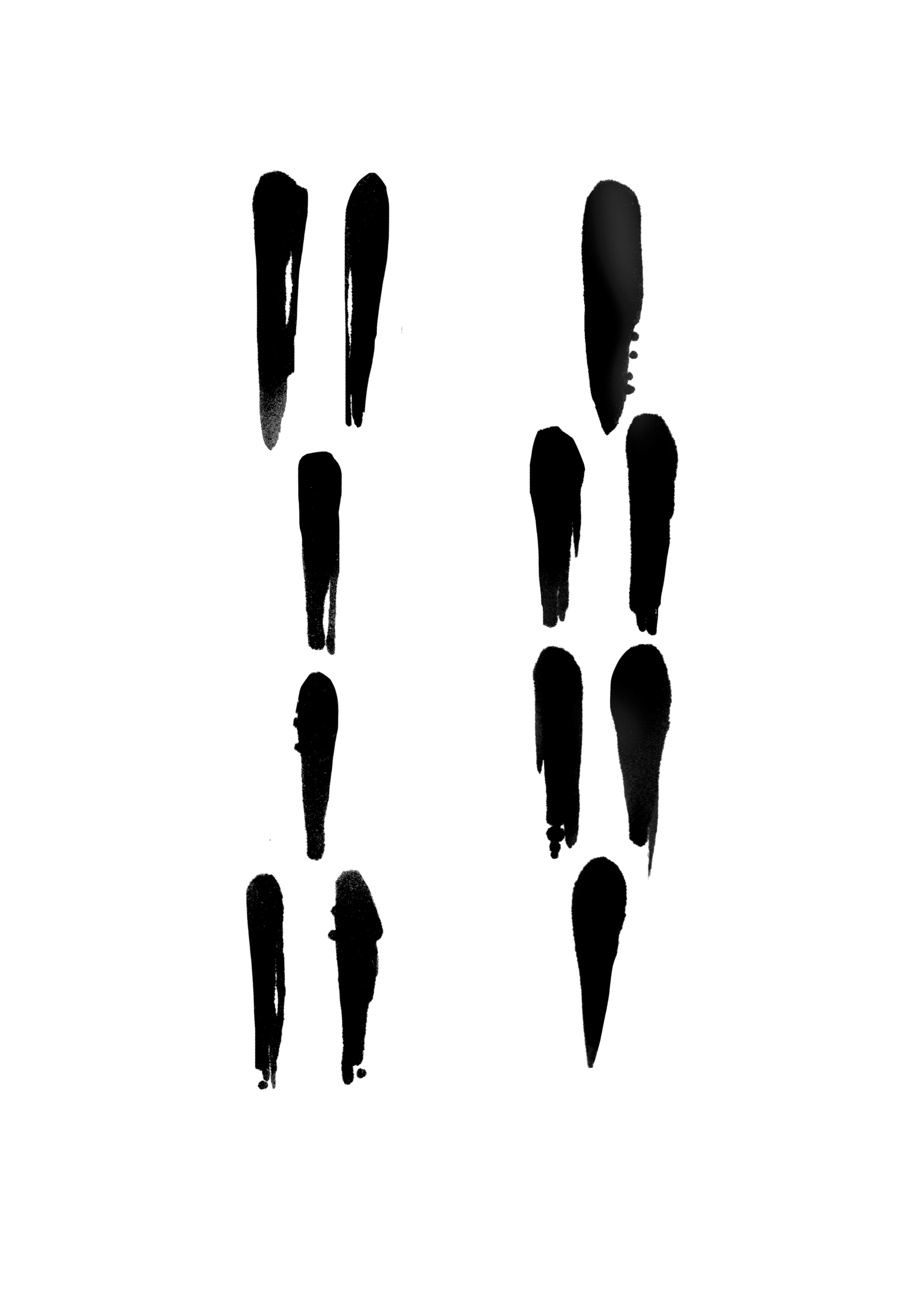
This Academy reads the right column first, then the left. Each row carries a single or double mark.

Where this Odù belongs
Òdí Ìwòrì belongs to the Òdí family in this Academy’s study sequence. It is a mixed Odù, distinct from Ìwòrì Òdí. The order matters. Its teaching is approached through its own narratives, rather than by adding two general descriptions of the principal signs together.
Key Òrìṣà and sacred relationships
The figures below are selected for their roles in the accounts discussed here. They offer connected reading paths through the tradition.
-
Erinlẹ̀. Inle is Yekun’s father and the river-associated presence to whom she brings her distress; the story connects his representation with water flowers and protective transformation.
-
Ọ̀rúnmìlà. Òrúnmìlà becomes the point of consultation both for the remorseful practitioner and for the endangered companions, joining interpretation to a change in response.
-
Olókun. Olókun is the threatening sea presence in the chameleon account. That particular antagonistic role should not be generalized into a statement about Olókun’s character in every tradition.
Key myths and their meanings
The river that receives Yekun
Omologu Odi Oro uses power without restraint and makes his partner Yekun suffer. At the river, her tears become flowering plants and a protective presence takes her beneath the water. His anger returns upon him as blindness. Only after grief and acknowledged remorse does Yekun offer forgiveness and a water-flower secret; he redirects his practice toward helping others.
Transformation begins with Yekun’s removal from harm, not with a demand that she endure until he changes. The ending allows mercy, but does not erase the loss that precedes it. A careful reading can examine accountability and reparative conduct while refusing to turn forgiveness into a duty owed by someone experiencing abuse, or the story’s blindness into a judgment on actual disability.
Narrative setting: Spanish Cuban-style account of Odi Oro.
The watchful chameleon
The chameleon protects Olofin’s son in gratitude for its ability to change color. Learning that Olókun intends to devour the young companion, it seeks Òrúnmìlà’s advice. When that danger is blocked, the threat shifts toward the chameleon. It returns for help and takes its case to Olofin; the sea withdraws and the threatened helper survives.
The protector is not invulnerable merely because it has recognized another person’s danger. The shift of threat makes reciprocal protection necessary. Camouflage, consultation, and higher intervention each have a place; none is treated as an isolated universal solution. The story permits a question about caring for those who monitor danger on behalf of others, while its sea imagery stays within mythic narration.
Narrative setting: Spanish account in the same Cuban narrative sequence.
The family’s excluded son returns to its founding tree
Before earthly birth, a practitioner is warned about difficulty with relatives. Growing up as the eldest child, he is drawn to palm nuts, leaves, singing, and the company of Ifá priests. Initiation brings ostracism because his family prohibits entry into that religious path. Consultation directs him back toward his birthplace. His mother explains that the old household has become desolate, but a tree planted where he was born still survives. He goes there and renews the religious relationship. The account subsequently places him in succession to his maternal grandfather’s office because the family lacks another permitted heir.
The surviving tree makes origin more durable than the family’s current welcome. It is a material witness through which a person rejected by relatives can return without pretending the rejection never happened. The account also describes a gendered succession rule: the mother cannot inherit directly, although her son eventually can. That structure should be stated rather than made invisible behind a generic lesson about honoring roots. Within the religious logic, the return addresses a specific ancestral and earthly condition through consultation and exchange; it is not merely a therapeutic visit to a childhood place.
Read beside Yekun’s river transformation, the story gives a second route out of a harmful arrangement, but the outcomes differ. Yekun becomes unavailable to her former partner, whereas the excluded practitioner eventually reenters familial authority. The source does not establish that either outcome should be required of everyone. Its unresolved question concerns whether renewed succession changes the rule that first made the mother and son’s place precarious.
Narrative witness and setting: Account explicitly headed Revelações de Cromwell Osamaro
Water’s movement restored through an addressed obstruction
Water is created with an extensive place in heaven and earth, yet Èṣù uses stones and rocks to restrict its movement. Rain is withheld, and water cannot reach plants and animals that need it. The water power seeks divination and responds to the counsel given. Èṣù then removes the blockages preventing both rainfall and flow. Crops that had been failing begin to flourish. A prolonged period of rain follows, and the account relates a repeated sound to rain and running water. Its actual narrative concerns the change from an existing but confined power to a power moving through the world.
The problem is not that Water lacks substance or that living beings fail to value it. A relation has been obstructed at the points where capacity becomes circulation. Within this account, Èṣù is a real agent who can close and reopen movement in response to divinatory exchange. Reducing that role to a metaphor for an infrastructure administrator would miss the source’s theology. A contemporary comparison with access can still be useful, but only after the religious mechanism is stated.
The episode also complicates the earlier sea story, where withdrawal of the sea saves the chameleon. Here increased water restores flourishing; there retreat protects a threatened being. Water therefore cannot be assigned a fixed moral value merely from this family of signs. The relevant question is its relation to a particular life and setting. The source’s sound explanation belongs to sacred narration and should not be expanded into an invented linguistic derivation or a meteorological claim.
Narrative witness and setting: Account explicitly headed Revelações de Cromwell Osamaro
What was born in this Odù
“Born” can name an explicit traditional origin association or what emerges through a story: a capacity, relationship, practice or order of life. Interpretations drawn from a narrative are labelled below, so their basis remains clear.
Harmony of nature
Selected traditional source association.
The origin list places natural harmony beside generation and commerce. The selected river and sea stories complicate harmony by showing conflict and transformation; the phrase should not imply a world without danger or unequal power.
Commerce and wealth
Selected traditional source association.
Commerce and wealth are named together in the origin list. They can frame questions about the ethical use of professional skill, especially beside the practitioner who previously harmed others for money.
Having children
Selected traditional source association.
The list names having children as an origin association. This is a sacred account of continuity, not a forecast or a claim that parenthood defines a complete life. in this compilation.
Correlations to life dimensions
These questions bring the selected stories into contemporary life. They are interpretive invitations for study.
Work and resources
Odi Oro’s work becomes destructive when money overrides every limit. His eventual redirection makes the purpose and effects of professional skill more important than the prestige of possessing exceptional knowledge. The changed purpose becomes visible in later conduct.
Reflect: What limit would you keep even if breaking it paid well?
Relationships and family
Yekun’s removal to the river interrupts a harmful relationship. The account allows affection and refusal of continued exposure to coexist, rather than treating love as proof that remaining is required. The river supplies refuge before a reconciliation is possible.
Reflect: What boundary protects care from becoming endurance of harm?
Character and inner life
The practitioner’s remorse becomes consequential only when his conduct changes. His suffering alone is not the narrative’s final repair; the shift toward helping others supplies a different public use for his knowledge. His later practice must give remorse a durable form.
Reflect: What changed action would make an apology credible?
Community and responsibility
The chameleon’s second consultation recognizes the vulnerability of helpers. A community can read the story as a reason to support those who identify threats rather than assuming vigilance makes them immune. The helper’s own exposure changes after the first intervention.
Reflect: Who protects the people who usually protect others?
A deeper reading of the sacred relationships
Divination repairs relations among real powers
In the water account, consultation reveals how an active divine obstruction can be addressed; in the family account it directs a practitioner to the living witness of his birth. These are not simply exercises in self-belief. The powers, places, and exchanges are presented as consequential within the narrated world. The earlier chameleon similarly needs both consultation and Olofin’s intervention, while Yekun’s water flowers carry an actual relation with Inle and Ainá. Preserving that religious reality clarifies the sign’s variety: a river can receive a person, a sea can threaten a companion, water can be blocked, and a tree can retain an origin after a household has emptied. Their meanings arise through relations rather than a single elemental code.
The material witness outlasts the institution
The deserted family house might seem to offer no return, but its founding tree persists. That detail adds a form of continuity different from a current title, a family’s approval, or a practitioner’s professional reputation. Yekun’s water flower also preserves a relationship after her ordinary presence disappears, although it arises through transformation rather than surviving from an earlier event. Comparing the two does not make every plant a psychological symbol. In their respective accounts, these living forms have specific sacred relationships and histories. Contemporary interpretation can ask what remains available when an institution fails a person, while recognizing that the tree and flower are more than interchangeable examples of personal resilience.
Protection may require withdrawal or renewed circulation
The chameleon’s survival depends on the sea withdrawing; the agricultural world’s flourishing depends on water moving again. Yekun’s protection removes her from the reach of a harmful partner, while the excluded practitioner’s return eventually places him within a family office. These contrasts are more useful than an unqualified injunction either to remain connected or to leave. They show that attachment and distance must be assessed in the particular relationship. Religious consultation in each story does not provide the same direction because the underlying conditions are different. A contemporary reader can preserve that specificity by asking what a movement enables, whose agency it changes, and which obligations continue after the visible arrangement has been altered.
Questions that deepen the study
Does returning to roots require returning to a harmful household?
The family episode directs the practitioner to a birthplace whose household is already desolate, not to unquestioning submission to the relatives who rejected him. The tree supplies continuity where the social arrangement has failed. Later succession occurs in the narrative, but it does not make reconciliation a universal obligation. Yekun’s separate story makes the contrast especially clear: protection there depends on no longer being available to the person who harms her. A careful account can honor ancestry while distinguishing ancestral relation from every living relative’s demand. The religious return is specific to this consultation and cannot be converted into personal instructions for all readers.
Why is Èṣù both obstruction and the agent of release?
The account places Èṣù within the conditions governing whether Water’s capacity reaches the world. He is not a random obstacle outside an otherwise complete creation; his response to consultation and sacred exchange changes that relation. This explains why his role cannot be reduced to evil in the first half and benevolence in the second. The narrated religious logic concerns an addressed power whose cooperation matters. It does not establish that every obstacle in an actual person’s life is caused by Èṣù, or authorize guessing an offering. Contemporary interpretation can ask where access depends on a relationship not yet recognized, but that is an additional reading rather than a substitute theology.
What should be made of the mother’s exclusion from succession?
It is an explicit condition in this witness: she is the surviving child but a rule prevents her inheriting, and her son eventually becomes eligible. Reporting that structure helps explain the story’s outcome without endorsing it as a contemporary rule or assuming it belongs to every Yoruba or diasporic institution. It also prevents the mother from disappearing as a mere link in a male genealogy. She preserves the knowledge of the birthplace and surviving tree that enables the return. Her informational contribution and her exclusion from office coexist. That tension is part of the episode’s depth, not something the successful son’s later standing automatically resolves.
What the four narratives reveal together
The added witnesses give Òdí Ìwòrì a more precise account of how protection changes relationships. Yekun’s departure and the chameleon’s appeal both depend on recognizing danger, but the family tree and released Water introduce continuity and circulation where connection has been broken. None of these stories can stand for all the others. The same material element can shelter, threaten, withdraw, or nourish according to the powers and obligations involved. Within the accounts, divination, Inle’s river presence, Èṣù’s control of obstruction, and the birthplace tree are actual religious relations. Modern reflection can examine exclusion, access, and repair beside those relations without dissolving them into moral examples. The family witness also retains an unresolved institutional limit: the son’s eventual office does not explain why the mother herself was barred. That difference matters to a source-conscious study.
Living with this Odù
A continuing life or initiatory relationship
For someone whose received spiritual history includes Òdí Ìwòrì, perception and response can remain linked across a life. Seeing another’s suffering is different from controlling the story told about it. Yekun’s removal from harm precedes the practitioner’s remorse, so an injured person’s safety cannot depend on their willingness to wait for someone else’s transformation. The chameleon adds that a helper may also become exposed. A life of noticing danger therefore requires relationships through which the observer can receive protection.
The excluded practitioner’s return to the surviving tree introduces another form of continuity. Family rejection does not erase every relation to origin, yet the eventual succession retains a gendered structure that reflection cannot simply call harmonious. Water’s release offers a different situation again: capacity exists but its circulation is obstructed through Èṣù’s actual agency within the witness. Long-term interpretation can ask when departure, protected return, reciprocal support, or an addressed obstruction is the relevant task. These are changing configurations, not one character type. The sign can accompany development toward more truthful perception while leaving each sacred relationship, family arrangement, and external danger specific rather than turning every difficulty into the same lesson about forgiveness.
A particular consultation and its question
In consultation, Òdí Ìwòrì can help distinguish a blocked capacity from an unsafe relationship. Water already exists before its movement is restricted; its release through divination and Èṣù’s response differs from Yekun’s protected withdrawal. Greater openness is helpful in one narrative and dangerous in another. The client’s actual situation cannot be interpreted through a generic instruction to let everything flow.
The chameleon further asks whether the person who identifies danger has protection once attention turns toward them. That differs from imagining that vigilance itself confers safety. The excluded practitioner’s tree gives another question: can a relation to origin be renewed without denying rejection or making reentry compulsory? Its succession arrangement also leaves unequal access visible, rather than resolving every family difficulty through sentimental return. These distinctions can guide careful listening to the present question without declaring that a relative is a hidden enemy or that remorse guarantees change. Religious agents remain consequential in the witnesses: the river presence protects, divination directs, and Èṣù can obstruct and release circulation. Contemporary reflection helps clarify the configuration to which those narratives speak; it does not announce an unknown client’s finding or replace the competence of an actual divinatory encounter.
Constructive and adverse possibilities
Constructive unfolding may bring a threatened being beyond another’s control, protection for the helper, or movement restored through an addressed sacred relationship. It may also permit a rejected person to recover a relation to origin that current relatives cannot entirely erase. The narratives provide different routes rather than one universal demand to return or forgive.
Adverse unfolding can involve refusing to hear suffering, expecting a protector to remain endlessly exposed, or confusing available capacity with actual access. The family story adds the possibility that restored standing leaves an unequal rule intact. Yekun’s mercy is therefore not a debt owed by every injured person, and increased water is not beneficial in every setting. The constructive or adverse quality depends on the relationship and its effects. Nothing here determines a real reading’s state or converts bodily transformation in sacred narration into a judgment about actual disability.
An illustrative situation in everyday life
Consider a hypothetical employee who reports a serious problem affecting colleagues. Management thanks her publicly but leaves her alone to face the person whose decisions she questioned. She worries that asking for protection would weaken her credibility. The chameleon’s shifted exposure helps identify why recognizing another’s danger does not make the helper invulnerable. Yekun’s withdrawal adds that a change in conduct cannot be demanded at the cost of the harmed person’s continued exposure. A response might include independent review, clear limits on contact, and shared responsibility. These modern choices do not reproduce the narratives’ religious interventions. The illustration shows how the external arrangement and an inward loyalty to being useful can combine to keep a helper insufficiently protected.
Sources and reading context
The first two narrative witnesses
These selections come from Spanish Cuban-style passages. Inle’s name is retained under Erinle for indexing, while the river spirit Ainá is not assigned an unsupported deity key. Bodily transformations remain mythic images and are not presented as diagnostic claims.
Narrative motifs are summarized independently. The life-dimension reflections are contemporary interpretation. How these reference studies are built explains the wider source approach and the distinction between a reference article and personal divination.
Additional named witnesses
-
Cromwell Osamaro. The explicit heading covers the family-birthplace narrative and the Water narrative, both with Yoruba/Bini vocabulary.
-
Spanish Cuban-style narrative sequence. The earlier Inle/Yekun and chameleon episodes belong to the separate unnamed Spanish strand.
The Osamaro attribution is explicit but not bibliographically verified. The mother’s reported succession restriction belongs to this episode, not a universal rule. Water’s sounds are not converted into linguistic etymology. Portuguese rendering is not labeled Brazilian tradition.
Bibliographic identification
- C. Osamaro Ibie. Ifism: The Complete Work of Orunmila. Lagos; multivolume publication beginning 1986. Library catalogue record. Related bibliographic record for the named narrative witness. Exact volume, edition and page of the transmitted account have not been independently matched.
Read the source method and wider scholarly context.
The catalogue links identify published works and their authors. They are separate from proof of an individual episode’s wording or attribution. Contemporary comparisons and the synthesis above are editorial interpretation. The author’s books and Academy companions below provide further study; their sales links are separate from the source references.