
Ògbè Òbàrà is a mixed Odù in Ifá’s 256-part corpus. Obatala’s rope business and Shango’s failed entrance to Osanyin’s council locate success in concrete social processes. One figure needs counsel suited to daytime commerce; another must acknowledge an institution’s entry conditions. The stories make authority depend on asking appropriately, meeting a setting’s requirements, and correcting an unsuccessful approach. They also show that prestige by itself does not guarantee either a market or admission.
A question to carry through the study: Which requirement of a shared space have you mistaken for a personal rejection?

This Academy reads the right column first, then the left. Each row carries a single or double mark.
Where this Odù belongs
Ògbè Òbàrà belongs to the Ògbè family in this Academy’s study sequence. It is a mixed Odù, distinct from Òbàrà Ògbè. The order matters. Its teaching is approached through its own narratives, rather than by adding two general descriptions of the principal signs together.
Key Òrìṣà and sacred relationships
The figures below are selected for their roles in the accounts discussed here. They offer connected reading paths through the tradition.
-
Obàtálá. He makes ropes for sale and seeks advice after an initial helper proves unsuitable for the market, embodying practical initiative rather than finished authority.
-
Òsanyìn. He convenes the council with stated entry requirements, making the meeting a place where participants must identify themselves and respect a shared procedure.
-
Ṣàngó. He initially fails to enter the council, seeks Orunmila’s counsel, and returns prepared to state his identity and meet the requirements of the gathering.
Author’s further study: The Myths and Revelations of Odù Ògbè Òbàrà develops this sign at book length. The inherited accounts discussed here retain their named witnesses and religious settings.
Key myths and their meanings
Ropes looking for a market
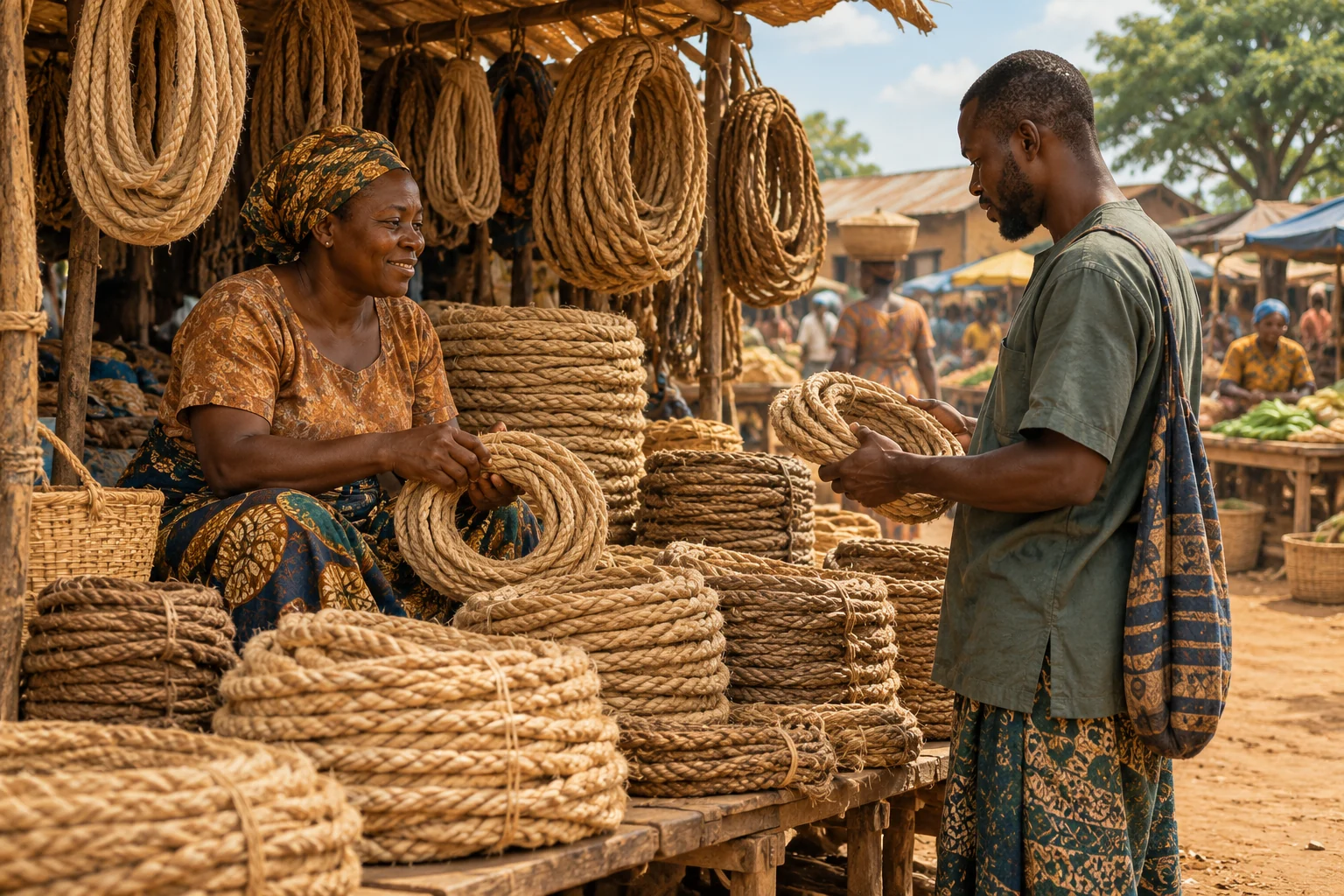
Obatala produces ropes and wants to sell them. His first approach to an elderly specialist does not help because that person’s work belongs to another setting and time. He then consults Orunmila, follows the guidance given, and his trade prospers. The story places the making of an ordinary useful object beside the search for an effective route to customers.
The contrast between the two advisers is about suitability, rather than age automatically conferring the right answer. Production and access to a market are separate problems. We can ask how an enterprise identifies the support it needs, while keeping the narrated prosperity within its ritual framework rather than turning it into a business guarantee.
Narrative setting: Cuban-labeled narrative in the accounts considered here; no independently established narrator or publication history.
A name at the council door
Osanyin calls a council whose participants must knock, identify themselves, and arrive with the expected contribution. Shango approaches without meeting those conditions and remains outside. Embarrassed, he consults Orunmila, returns correctly, and is admitted. The people inside explain that an earlier caller had not sounded like him, allowing his renewed entrance to restore recognition at the threshold.
The episode stages dignity through correction: Shango can change his approach without permanently losing his identity or his place. At the same time, admission depends on institutional requirements, which should remain open to examination rather than treated as automatically just. Its distinctive concern is how a community recognizes a person through a publicly acknowledged act of entry.
Narrative setting: Cuban-labeled narrative in the accounts considered here; no independently established narrator or publication history.
A benefactor’s roof becomes a test of recognition
Ogbe-Obara assists Shango when both are poor. After the religious work, Shango offers to accompany him home, but the diviner declines because he is ashamed of his dwelling. Later Shango prepares to attack wrongdoing in the human world, and a violent storm tears through houses. The absent diviner’s wife is left inside their poor home. Her song makes Shango recognize the dwelling as belonging to his earlier helper, and he stops the attack there. The particular relationship becomes visible only through her voice, because the benefactor had previously concealed the place in which that relationship’s labor was sustained.
The story does not merely ask a powerful recipient to remember a favor. It asks how a favor can be remembered accurately when shame has kept the recipient from knowing the benefactor’s circumstances. Ogbe-Obara’s poor house coexists with the capacity to perform valuable work, challenging the assumption that an impressive service must come from an impressive setting. The wife becomes the witness who supplies the missing connection at the dangerous moment. Her role should not disappear into a tale of two male religious actors.
The larger storm also leaves an ethical tension: personal recognition protects this household without examining Shango’s broad right to destroy others. The source’s appended phrasing about ingratitude is unstable about who benefits whom, so a careful reading should stay with the clear event. A private relationship interrupts indiscriminate force, but the episode does not prove that everyone outside that relationship was guilty or that selective mercy constitutes a just settlement.
Narrative witness and setting: Compilation attribution to Afolabi Epega; African Ifa narrative involving Shango and an impoverished diviner.
The road-blocking bandit and a public journey home
Akensheolu blocks the movements through which ordinary life continues: farming, trade, fetching water, and marriage journeys. After other attempts fail, elders seek Ogbe-Obara’s help. At a crossroads he pretends to be unresponsive, learning the direction of the bandit’s farm from passers-by discussing his position. A duel follows in which both opponents repeatedly deflect arrows through extraordinary speech. Ogbe-Obara eventually kills the bandit. The bandit’s wife then creates darkness to obstruct the return, but daylight is restored. The town receives the returning figure publicly, treating the reopening of its routes as an event that merits collective recognition.
The threatened resource is movement itself, not only stolen property. Blocking several routes makes the bandit’s power pervasive while leaving its victims dispersed across different daily tasks. The elders’ request joins those separate injuries into a public problem. Ogbe-Obara’s crossroads tactic is epistemic before it is martial: he gains information by hearing people interpret a scene in which he appears unable to participate. The duel then dramatizes rival control of words and trajectories, while the darkness episode makes returning with an account of victory a further obstacle.
A careful research reading should not present the incantations or killing as practical solutions. It can instead ask how a community identifies a harm that interrupts many kinds of life, who is expected to bear the danger of addressing it, and whether a triumphant reception remembers the ordinary people whose blocked journeys made the confrontation necessary. The widow’s resistance also shows that a public victory has another household’s loss outside its celebration.
Narrative witness and setting: Compilation attribution to Osamaro Iyamu Ibie; Yoruba/Bini-framed account of Akensheolu.
What was born in this Odù
“Born” can name an explicit traditional origin association or what emerges through a story: a capacity, relationship, practice or order of life. Interpretations drawn from a narrative are labelled below, so their basis remains clear.
Feeding young birds
Selected traditional source association.
The origin list twice associates the sign with birds feeding their young. This is a concrete image of provision across generations; the list does not establish a biological origin, nor do the selected market and council stories narrate it.
Linen cloth
Selected traditional source association.
Linen appears as an origin association without a supporting explanation in the selected material. Preserve the textile image as an attributed motif, rather than adding an invented etymology or claiming a documented historical invention.
Correlations to life dimensions
These questions bring the selected stories into contemporary life. They are interpretive invitations for study.
Work and resources
Obatala has a finished product but still needs a workable route to sale. The unsuccessful first consultation distinguishes having connections from having relevant help. We can connect this to the practical problem of matching an adviser’s experience with a particular undertaking.
Reflect: Does this adviser know the setting you are entering?
Relationships and family
The council allows Shango to return after an embarrassing failure. Recognition is repaired through a second encounter, with the other participants helping preserve his dignity. The episode offers material for studying correction that permits continued belonging without pretending the first approach succeeded.
Reflect: How can correction preserve someone’s dignity?
Character and inner life
Shango’s embarrassment leads him to seek instruction rather than insist that status alone should open the door. The story makes willingness to revise an approach a form of strength, while leaving space to ask whether particular entrance conditions deserve acceptance.
Reflect: Can you revise an approach without losing confidence?
Community and responsibility
A council needs an intelligible way to recognize participants, and trade needs trusted routes between makers and buyers. Both narratives locate achievement within social arrangements. Their shared question is how those arrangements can be clear enough to participate in and flexible enough to repair mistakes.
Reflect: Are the conditions of participation clear?
A deeper reading of the sacred relationships
Ritual recognition binds giver, recipient, and place
Ogbe-Obara’s aid to Shango establishes a religious relation before the threatened house becomes recognizable through the wife’s voice. Her intervention recalls more than a private favor: it identifies the dwelling of the practitioner through whom Shango received consequential assistance. In the council story, Osanyin’s assembly also requires an appropriate enacted entrance, including identification and contribution, before Shango participates. The rope narrative connects enterprise with consultation and acknowledgments to distinct powers. The bandit account locates extraordinary speech within a contest over access to communal life. These witnesses understand words, offerings, and named relations as efficacious, not ornamental. Contemporary questions about access or gratitude can deepen that logic without replacing it with a purely commercial model of exchange.
Recognition sometimes arrives through a supporting voice
The wife’s song links a threatened house to Shango’s earlier assistance. In the council episode, the participants’ explanation of the first failed knock allows a returning Shango to be recognized without remaining fixed to the embarrassment. The town’s reception after the bandit’s defeat is another public act of naming what happened. These witnesses do more than praise. They make a relationship legible at a moment when appearance alone would mislead or rank would be insufficient. The comparison also asks whose voice is not preserved: the merchants, water carriers, and brides whose paths were blocked remain a group rather than individually narrated participants in the final celebration.
The object of help is larger than the successful helper
Obatala’s rope sales benefit a maker and his customers; the council restores participation; the roof story protects a household; the bandit’s defeat restores routes used by many kinds of travelers. These different beneficiaries should remain visible when the narratives confer prestige on a central figure. Otherwise assistance becomes only evidence for the helper’s greatness. The bandit episode is especially useful because it explicitly lists ordinary activities before introducing the heroic response. A research supplement can preserve that sequence and ask whether recognition follows the actual scope of the repaired harm, including people whose labor and safety matter without making them protagonists of a dramatic confrontation.
Questions that deepen the study
Why is the poor house important to Shango’s recognition?
The house separates professional value from visible wealth. Ogbe-Obara has offered meaningful help but does not want the recipient to see his living conditions. That concealment becomes consequential when Shango later acts without recognizing the household in front of him. The wife supplies the connection through her own intervention. A contemporary interpretation can ask whether shame prevents a support relationship from being understood fully, while avoiding the claim that a benefactor must disclose private circumstances to deserve safety. The plot also leaves a question about the houses that lacked a personal connection able to interrupt the storm.
Is Akensheolu merely a stronger individual who must be replaced?
The narrative identifies him through the journeys he prevents, so the problem is not strength by itself. Farmers, traders, families, and children encounter his control in different places. The elders’ response makes those dispersed injuries a collective concern. The duel is the story’s chosen dramatic resolution, but the research question can be more precise: how does a community restore ordinary movement without allowing the rescuer to inherit the same unrestricted control? The source narrates a reception rather than a full political settlement, so a lasting distribution of authority should not be invented from its victorious ending.
What distinguishes respect for an entry rule from submission to coercion?
The council states what participants must do and permits Shango to return after correction. Akensheolu instead obstructs ordinary passage through personal threat. Those are materially different relations, even though both place a condition before movement. The rope story adds a third case, where practical advice makes a market accessible without a dramatic enemy. A contemporary reader can examine whether conditions are known, reciprocal, and open to reconsideration. The stories do not establish that every inherited rule is fair, but they give enough contrasting detail to ask how an arrangement serves the people who must pass through it.
What the four narratives reveal together
The four accounts explore access through different institutions and relationships. Obatala needs a workable passage from production to sale. Shango learns how to enter a council without treating status as a substitute for participation. The poor diviner’s household needs recognition from a powerful person who has never seen it, while a town needs routes freed from a bandit’s private control. The Epega-attributed roof story and Ibie-attributed bandit account therefore deepen the earlier Cuban material without repeating its plots.
They show why opening a door or winning a confrontation is not enough for analysis: the terms of access, the witnesses who make a relationship visible, and the people benefiting from a changed situation differ. The stories leave selective mercy and violent victory unresolved, allowing a depth study to examine legitimacy as well as success rather than adopting either ending as a universal model.
Living with this Odù
A continuing life or initiatory relationship
For someone whose received life or initiatory Odù is Ògbè Òbàrà, usefulness and recognition may repeatedly depend on entering the appropriate relationship. Obatala’s ropes need a route to a market, not merely more production. Shango’s council entrance requires an acknowledgment suited to that institution. These motifs distinguish a person’s capacity from the conditions in which it can become effective. A correction of approach need not mean that the person has no value.
The benefactor’s hidden dwelling adds a different tension. Shame can prevent others from knowing the material circumstances that sustain valuable work. His wife’s voice then becomes essential when recognition is urgently needed. The road-blocking bandit broadens the question from private standing to a community’s interrupted movement. A received sign can therefore invite attention to ordinary routes, thresholds, houses, and exchanges rather than a fixed identity as successful or excluded.
Religious agency remains differentiated among Orunmila’s counsel, Osanyin’s council, Shango’s dangerous force, and the extraordinary duel. Long development can involve seeking suitable help, accepting a revisable requirement, and making dependencies visible. It also requires judgment about power: admission is not automatically justice, selective mercy does not vindicate destruction, and public victory need not erase another household’s loss.
A particular consultation and its question
A consultation involving Ògbè Òbàrà can distinguish an unsuitable route from a rejection of the person traveling it. If an enterprise cannot reach others, the rope motif asks whether the missing resource is production, timing, or access. If an institution refuses entry, Shango’s return asks which requirement was unmet and whether it can be acknowledged without permanent humiliation. Neither story proves that every gatekeeper’s condition is justified.
The storm and bandit accounts direct attention toward who must make a relationship visible. A person asking about recognition may need to examine whether shame has hidden the circumstances in which their contribution is made. A question about public disruption may concern several interrupted activities that have not yet been recognized as one shared problem. The practitioner can ask who is being expected to face the danger and whose ordinary needs give the intervention its purpose.
The narrative’s speech and force are not contemporary tactics. A particular result does not promise customers, automatic admission, or a triumph over opponents. It can clarify the situation’s actual threshold: suitable counsel, intelligible entry, acknowledgment of support, or collective responsibility for a blocked route. Those distinctions belong to the question before the practitioner rather than a permanent personality assigned by the sign.
Constructive and adverse possibilities
Constructively, counsel can become appropriate to the problem, a failed entrance can be corrected, and a neglected benefactor can be recognized through another person’s testimony. A community can also join scattered injuries into a shared concern when ordinary movement is obstructed. The stories make relationship effective through particular acts rather than prestige alone. Religious assistance and human witnesses alter the conditions of recognition.
Adversely, shame can conceal material need, a gatekeeper can confuse procedure with unquestionable authority, and selective recognition can protect one household while leaving wider destruction unexamined. The bandit’s death also leaves a bereaved household outside the town’s celebration. These tensions do not make Ògbè Òbàrà uniformly fortunate or adverse. The condition of a reading remains specific. Interpretation can ask whether reopening a route also distributes responsibility fairly, and whether gratitude remembers those whose voices and circumstances made recognition possible.
An illustrative situation in everyday life
Hypothetically, a skilled repairer makes durable household equipment but cannot sell it through a venue designed for late-night entertainment. He experiences the failure as proof that customers reject his work. A community organizer suggests a daytime repair fair with a different audience. The rope narrative distinguishes a valuable product from an unsuitable route to users. When asked to demonstrate at the fair, he hides the poor workshop where his work is produced. The benefactor’s roof motif raises a second question: can shame make collaborators misunderstand the conditions sustaining a contribution? He may choose appropriate access while explaining his actual constraints. This hypothetical example illustrates relational suitability and recognition; it does not promise prosperity or equate a modern fair with the narrative’s religious council.
Sources and reading context
The first two narrative witnesses
The selected passages are labeled Cuban oral literature. The origin inventory and the two stories occupy separate textual units, so their thematic connections are contemporary interpretations. Ritual details and guaranteed outcomes are omitted, and no universal rule for council admission is proposed.
Narrative motifs are summarized independently. The life-dimension reflections are contemporary interpretation. How these reference studies are built explains the wider source approach and the distinction between a reference article and personal divination.
Additional named witnesses
-
Afolabi Epega. The explicit source unit contains Ogbe-Obara’s aid to Shango and the wife’s recognition song during the storm.
-
Osamaro Iyamu Ibie. The Akensheolu road-blocking and duel narrative appears under an explicit attribution.
The short Epega unit contains two episodes; only the Shango/benefactor account is selected. Its appended ingratitude wording is confused, so no moral is inferred from that gloss. The bandit account’s magical duel remains narrative; no ritual speech, weapons instructions, or universal justice policy is transmitted.
Bibliographic identification
-
C. Osamaro Ibie. Ifism: The Complete Work of Orunmila. Lagos; multivolume publication beginning 1986. Library catalogue record. Related bibliographic record for the named narrative witness. Exact volume, edition and page of the transmitted account have not been independently matched.
-
Afolabi A. Epega and Philip John Neimark. The Sacred Ifa Oracle. San Francisco: HarperSanFrancisco, 1995. Library catalogue record. First-edition bibliographic record. The particular edition underlying the narrative witness has not been established.
Read the source method and wider scholarly context.
The catalogue links identify published works and their authors. They are separate from proof of an individual episode’s wording or attribution. Contemporary comparisons and the synthesis above are editorial interpretation. The author’s books and Academy companions below provide further study; their sales links are separate from the source references.