
Ògúndá Òdí is a mixed Odù in Ifá’s 256-part corpus. Ogunda Odi joins a broken marriage and messenger relationship with a builder’s management of an exacting client. In the first, an entrusted journey ends in a breach that changes the household. In the second, resources exist but repeated interference prevents completion until Elegba protects the work’s intermediate stages. Both ask what trust permits another person to do, while leaving ethical questions about surveillance and manipulation unresolved.
A question to carry through the study: What agreement would protect a working relationship without requiring constant suspicion or concealment?
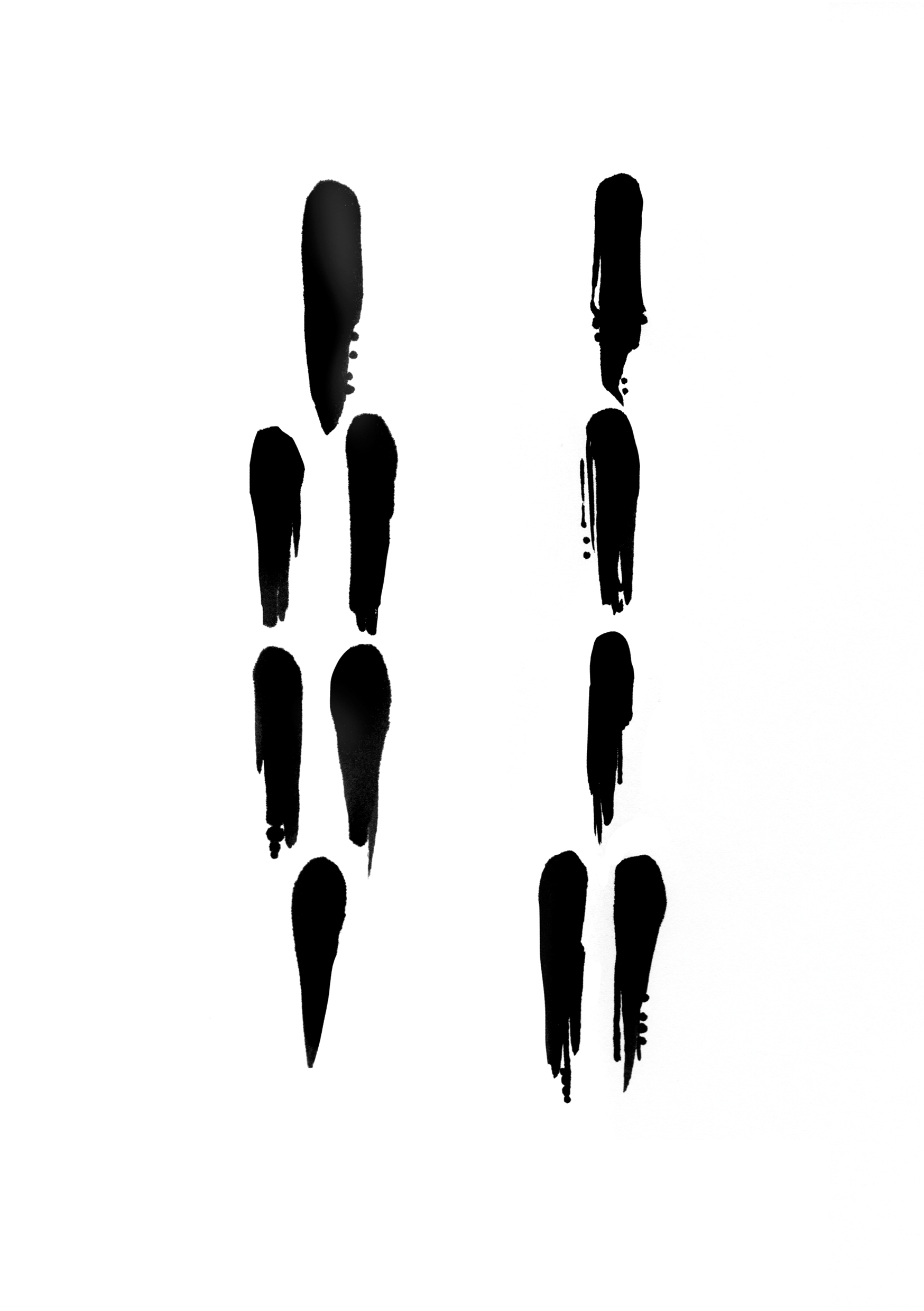
This Academy reads the right column first, then the left. Each row carries a single or double mark.
Where this Odù belongs
Ògúndá Òdí belongs to the Ògúndá family in this Academy’s study sequence. It is a mixed Odù, distinct from Òdí Ògúndá. The order matters. Its teaching is approached through its own narratives, rather than by adding two general descriptions of the principal signs together.
Key Òrìṣà and sacred relationships
The figures below are selected for their roles in the accounts discussed here. They offer connected reading paths through the tradition.
-
Ọ̀rúnmìlà. He sends his wife and messenger on a journey, observes their return through a mirror, and later counsels Elegba’s work for a demanding client.
-
Ògún. He is the trusted messenger who completes the errand but breaches the relationship surrounding it. Delivering the object does not restore the lost trust.
-
Èṣù. As builder he seeks counsel, shields unfinished work from disruption, and eventually presents a house that satisfies Obatala. His material skill becomes publicly recognized.
-
Obàtálá. He has ample building resources but repeatedly destroys work he dislikes. The narrative exposes a client’s own conduct as an obstacle to the home he wants.
Key myths and their meanings
The errand completed, the trust broken
Orunmila sends Daddi and Ogun on a distant errand and watches them through a seeing mirror. Near the end of the return journey, their relationship crosses the boundary he entrusted to them. They deliver the requested object, but Orunmila names the breach and separates from Daddi, who leaves with Ogun.
Successful delivery and faithful conduct are separate dimensions of the task. The story also relies on surveillance, making the observer’s power part of its ethical setting. It should not become a recommendation to monitor a partner or assume betrayal from distance. The bounded question is how a completed practical obligation can coexist with an irreparable relational change.
Narrative setting: Cuban/Lukumí patakín in a multilingual source compilation; no individual narrator is established.
A house allowed to become complete
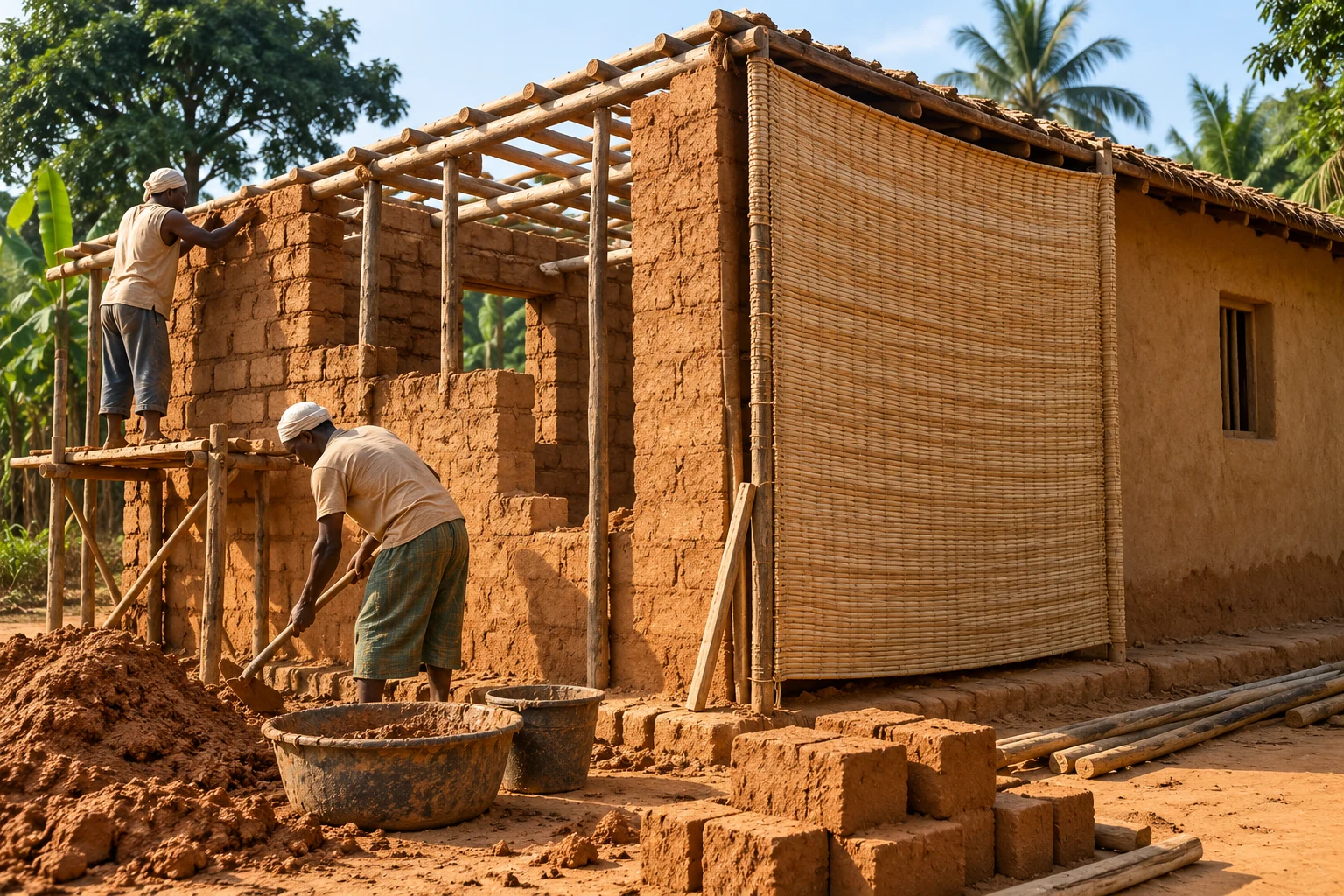
Obatala wants a better home but repeatedly interrupts or demolishes work before builders can finish. Elegba, whose trade needs support, consults and adopts a process that conceals completed sections until the project is ready. Obatala’s visits no longer derail construction, and the final unveiling establishes Elegba’s reputation.
The problem is not absence of money or ambition. A patron’s reactions prevent a process from reaching the point at which it can be judged fairly. The tale’s concealment is a specific tactic, not an ideal for professional communication. A contemporary discussion can ask how milestones, expectations, and permission to finish might achieve the same protection transparently.
Narrative setting: Cuban/Lukumí patakín in a multilingual source compilation; no individual narrator is established.
The wealth presence chooses a quiet host
A poor practitioner becomes able to build a large house but remains without a household. Iya Alaje, a mother-of-wealth presence seeking an earthly partner, is warned not to judge by impressive appearances. She encounters powerful but alarming hosts before arriving at the quiet man’s house. He offers lodging while concealing that he owns it, and her stay brings provision. Their continuing relation transforms the dwelling. Later, his conduct toward an earlier adviser and a neglected sacred obligation lead to a reversal, including a change to the house that conflicts with her requirements. The favorable arrival is therefore not the account’s final condition.
The house exists before it is fully habitable in a relational sense. Iya Alaje brings more than objects: she has a preference, a continuing movement between settings, and conditions under which she can remain. Within the witness, wealth is an active sacred presence, not only the owner’s state of mind. The later reversal should therefore be explained through that relationship rather than summarized as a generic punishment for becoming rich. The earlier building episode offers a related but distinct unfinished house, where the client’s interventions prevent completion until the process is protected.
Daddi’s departure supplies a different loss within a shared home and must not be conflated with Iya Alaje’s agency. A contemporary interpretation can compare material possession, welcome, and the behavior that sustains relation. It should not adopt the source’s marital arithmetic as destiny or turn the guest’s aversion into a public renovation procedure. The account’s depth lies in the difference between receiving a presence and maintaining a livable place for it.
Narrative witness and setting: Translated excerpt in the multilingual compilation’s expressly attributed Cromwell Osamaro sequence, with Yoruba/Bini-facing material. The compilation’s language is not evidence of a Brazilian tradition.
Ekiri leaves for the rite and misses the crown
Ekiri is preparing for succession and receives counsel concerning a dark garment he has reserved for the coronation. He refuses to surrender it for the advised sacred purpose because he wants it for the public ceremony. On the day, Esu appears as an elder and directs him toward an omitted preliminary act outside the settlement. Ekiri follows but becomes unable to find the route back. The kingmakers wait, then give the crown elsewhere. The narrative ends with a changed habitat and a lost public opportunity. It is a sacred account of incomplete preparation, not a map, a clothing taboo for readers, or an authenticated succession history.
The garment carries two competing uses: a visible ceremonial appearance and a relation meant to prepare the passage toward that ceremony. Ekiri protects the first while neglecting the second. The later guide appears authoritative but does not simply complete the missing preparation on his behalf. Within the witness, Esu’s agency makes the loss intelligible as a sacred consequence, not merely poor navigation. A contemporary reading can ask what a person reserves for display while leaving the conditions of a role unfinished.
That comparison must not become a universal demand to give away an item or follow any elder’s instruction. The earlier builder also manages appearance, but his white covering protects an unfinished process instead of replacing it. Iya Alaje’s host similarly owns a house before its continuing relation is secure. These cases make an achieved form and a realized role different conditions, without promising that every incomplete beginning will be punished or every public delay proves spiritual refusal.
Narrative witness and setting: Translated excerpt in the multilingual compilation’s expressly attributed Cromwell Osamaro sequence, with Yoruba/Bini-facing material. The compilation’s language is not evidence of a Brazilian tradition.
What was born in this Odù
“Born” can name an explicit traditional origin association or what emerges through a story: a capacity, relationship, practice or order of life. Interpretations drawn from a narrative are labelled below, so their basis remains clear.
Distrust
Selected traditional source association.
The source lists distrust as a named emergence. The messenger story makes it intelligible as a response to damaged confidence, but the association is not a reason to assume betrayal in any present relationship.
Deception and falsehood
Selected traditional source association.
These are explicit origin motifs. Alongside the builder’s concealment, they create a question about differences between protecting an unfinished process and hiding conduct that violates another person’s consent.
Fear of night’s darkness
Selected traditional source association.
The listed fear can frame the difficulty of acting without complete visibility. It is a religious-literary association, not a psychological diagnosis or a prediction of danger after dark.
Correlations to life dimensions
These questions bring the selected stories into contemporary life. They are interpretive invitations for study.
Work and resources
The building project has resources but lacks conditions that permit completion. Process design can matter more than adding money to an unstable arrangement.
Reflect: Which intervention is repeatedly undoing the work?
Relationships and family
The errand changes a marriage despite reaching its practical destination. Relationships need agreements beyond the completion of tasks.
Reflect: Which relational expectation has never been made explicit?
Character and inner life
The client judges partial work as though it were final. Patience includes tolerating an intermediate state that does not yet resemble the goal.
Reflect: What unfinished stage do you need to allow?
Community and responsibility
Elegba’s success becomes a public service for others’ homes. Recognition follows a completed contribution, but the method still invites ethical review.
Reflect: How can a successful workaround become a clearer shared practice?
A deeper reading of the sacred relationships
Dwelling and office remain answerable to sacred relation
Iya Alaje’s presence makes the house more than an inventory of rooms, while Ekiri’s garment concerns a sacred preparation for office that the public ceremony cannot substitute for. The earlier builder and Orunmila’s household also show that a completed task does not settle the relation around it. A religious lens should explain why divine persons, counsel, and continuing obligations remain effective after an exterior form is obtained. Contemporary ideas about readiness can follow, but must not replace the wealth presence with a psychological attitude or turn the rite into a mechanical admission ticket. The source gives particular relational conditions, not an instruction that every house or title requires identical acts.
Display and completion are not the same
Ekiri preserves a garment for the ceremony but misses the office; the demanding client repeatedly judges a house before it can be finished; and the quiet host owns rooms before they contain a sustained household. The messenger delivers the object while failing the relationship around the errand. These are distinct gaps between visible attainment and completion. A contemporary study can ask what an achievement actually includes rather than treating an object, title, or delivery as the whole result. The religious narratives supply specific histories behind those forms. Their different endings prevent a generic conclusion that every display is false or every unfinished process should be hidden from scrutiny.
A presence’s departure has different causes
Daddi leaves after a breach, Iya Alaje leaves after the dwelling’s conditions change, and Ekiri fails to return through a sacredly altered route. None should be reduced to the same disloyalty or misfortune. The builder’s successful unveiling offers a different movement toward welcome rather than away from it. The source-reading task is to trace what relation has changed and whose perspective is given. Contemporary interpretation can then ask about repair or recognition without assigning one fixed meaning to departure. A spiritually serious comparison also keeps the divine wealth presence distinct from a human wife and the lost path distinct from a verified historical journey.
Questions that deepen the study
Why does a house with many rooms still need Iya Alaje?
The witness distinguishes a material structure from a sustained, provisioned relation. The host can possess a large house yet lack the household and presence that make it flourish in the narrative. Iya Alaje is not merely a bundle of furniture; she acts, chooses, returns, and can depart. A contemporary reader may compare hospitality and continuing care, but should retain that sacred personhood. The account also does not make every unmarried or sparsely furnished home deficient. It describes one protagonist’s desire and religious relation, not a universal domestic ideal or a rule about how many partners a reader should have.
Does Ekiri’s loss mean visible preparation is worthless?
No. The conflict concerns one garment whose reserved ceremonial use replaces a sacred commitment the protagonist has been advised to undertake. The public form has value, but cannot supply every condition of the role. A contemporary comparison may ask what readiness includes beyond appearance. It should not infer a blanket rule against clothing, ceremony, or personal possessions, and should not advise following any apparently authoritative guide. Within the witness, Esu’s particular action and the missed return are sacredly consequential. The earlier builder’s careful presentation also shows that appearance can support a process rather than merely conceal its absence.
What does the new material add to the earlier broken confidence?
It differentiates several ways a material result can outlast or fail its relation. The messenger delivers an object but loses trust; a house is completed only after interference is managed; the quiet host receives a wealth presence whose ongoing conditions later fail; and Ekiri protects a ceremonial object but loses the office. A comparative study can ask what remains due after obtaining or delivering something. The question is contemporary analysis grounded in exact episodes. The religious witness still explains particular forms of efficacy and loss through divine persons and preparation rather than an abstract theory that every relationship is a contract.
What the four narratives reveal together
The added witness makes Ogunda Odi’s distinction between form and relation more exact. Iya Alaje’s arrival transforms a large but incomplete dwelling, while Ekiri’s reserved garment cannot secure an office whose preparation remains unfinished. The earlier errand and building accounts retain different breaches and protections of a process. Sacred agency remains active: wealth is a choosing presence, Esu affects passage, and counsel concerns more than outward performance. Contemporary interpretation can compare display, completion, and departure without making all houses deficient or every missed role a spiritual sentence.
The four stories should not be compressed into a warning against ambition. They ask what an object or position includes, whose relation sustains it, and what can remain unresolved after a practical achievement. Their uneven endings are part of that depth, not gaps to repair with a universal reassurance or a new prediction.
Living with this Odù
A continuing life or initiatory relationship
For someone whose received life or initiatory sign is Ògúndá Òdí, completing an object or task need not complete the relationship around it. The errand returns successfully despite a breach of trust, while the house cannot reach completion because its patron repeatedly interferes. Across changing commitments, these accounts can develop judgment about what an achievement includes and what remains outside its visible delivery. They do not justify surveillance of a partner or concealed professional terms.
The wealth presence and lost coronation add continuing conditions after an exterior form exists. A house can be large before it becomes a sustained dwelling, and a garment reserved for public display cannot replace the preparation associated with office. Iya Alaje has agency and conditions of welcome within the attributed witness, not merely the host's favorable mindset. Long-term character can include receiving a presence without assuming possession, and allowing a process enough form to be judged fairly. The sign does not predict a spouse's departure or prescribe surrendering clothing. It asks which relation has changed and why, preserving Daddi, the sacred wealth presence and Ekiri's lost path as different participants in different kinds of ending.
A particular consultation and its question
In consultation, Ògúndá Òdí can help distinguish an unfinished process from an attained form whose surrounding obligation remains unsettled. A question about work may need the builder's protection from premature demolition; one about trust may concern faithful conduct despite practical delivery. Those problems cannot be addressed by one command to finish the task. The mirror's surveillance and the builder's concealment also remain ethical features of their particular Cuban narratives, not general methods for managing relationships.
The attributed accounts add the difference between welcome and maintenance. Iya Alaje's arrival changes the house, but its continuing relation is not secure merely because provision has begun. Ekiri's ceremonial intention similarly leaves preparation incomplete, while Esu's altered route produces a specific loss. Consultation can ask what the desired role actually requires and what the person has reserved only for display. It cannot interpret every renovation or delayed appointment as sacred refusal, recommend following any apparent elder or equate a divine presence with a human partner. The present result does not define the client permanently through betrayal or failed succession. It illuminates a configuration whose concrete conditions must remain visible.
Constructive and adverse possibilities
Constructive relations may protect a process long enough for fair judgment, make a dwelling fit for an active presence and distinguish an actual obligation from its public display. The builder's sacredly supported completion and Iya Alaje's welcome remain different arrangements, not a single strategy of hiding information.
Adverse unfolding could include judging work before it can develop, treating delivery as proof of relational faithfulness or assuming arrival makes continuing conditions irrelevant. Ekiri's garment and missed office show a particular gap between appearance and realization, without creating a universal clothing rule. These contrasts leave the state of a real reading undetermined. They ask what has actually been completed and whose departure has what cause. A successful object, a secure household and an inhabited office are related achievements, but the narratives do not make them interchangeable.
An illustrative situation in everyday life
In a hypothetical commission, a patron changes or rejects each stage before builders can finish enough of the project for a fair assessment. The builders consider hiding their progress, but can instead seek explicit milestones and agreed periods without interruption. The house narrative identifies the process that needs protection without making concealment an ideal. The errand adds another distinction: delivering the finished object will not itself repair a breach of terms or trust along the way. This illustration does not recommend surveillance or claim a sacred outcome. It asks what completion means, which permission the work needs and what transparent arrangement could allow the result to become judgeable before another premature reversal.
Sources and reading context
The first two narrative witnesses
These Cuban narratives use a magical mirror and ritual building protections as literary devices. They do not endorse partner surveillance, deceptive contracting, or personal predictions of betrayal. Ogue’s separate born association is not merged with a differently named supported deity.
Narrative motifs are summarized independently. The life-dimension reflections are contemporary interpretation. How these reference studies are built explains the wider source approach and the distinction between a reference article and personal divination.
Additional named witnesses
- Cromwell Osamaro Ibie. The surrounding sequence is expressly attributed to Cromwell Osamaro. These selected episodes are read through the multilingual compilation’s translated renderings; exact edition and original translation chain remain unverified.
The wealth biography contains unstable translations and sweeping marital applications that are not adopted. Iya Alaje is not collapsed into every wealth-associated power. The lost coronation is a sacred etiology without a verified route or dynasty, and no clothing prescription or renovation method is supplied.
Bibliographic identification
- C. Osamaro Ibie. Ifism: The Complete Work of Orunmila. Lagos; multivolume publication beginning 1986. Library catalogue record. Related bibliographic record for the named narrative witness. Exact volume, edition and page of the transmitted account have not been independently matched.
Read the source method and wider scholarly context.
The catalogue links identify published works and their authors. They are separate from proof of an individual episode’s wording or attribution. Contemporary comparisons and the synthesis above are editorial interpretation. The author’s books and Academy companions below provide further study; their sales links are separate from the source references.