
Ògúndá Ìròsùn is a mixed Odù in Ifá’s 256-part corpus. Ogunda Irosun pairs a fish’s wish to enter wider waters with a ruler whose changing decisions confuse his people. The fish gains movement through a mediated agreement that preserves a return relationship; the ruler learns from a child’s kite that responsiveness without direction can become instability. The two motifs distinguish purposeful change from restless variation. Neither requires immobility: the issue is whether a chosen movement has understandable terms and responsibilities.
A question to carry through the study: What commitment would let you change your setting without losing the relationships that give it meaning?
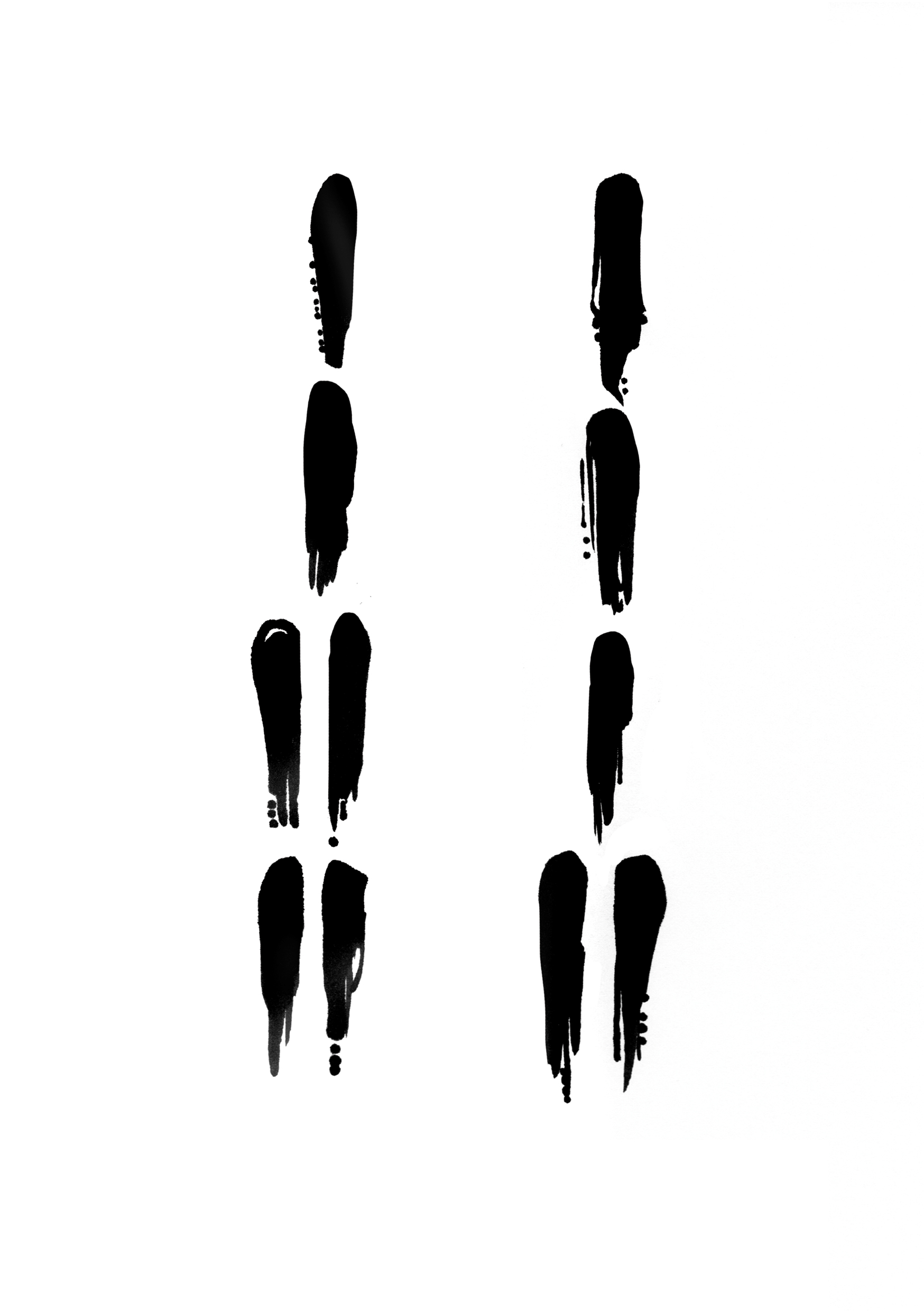
This Academy reads the right column first, then the left. Each row carries a single or double mark.

Where this Odù belongs
Ògúndá Ìròsùn belongs to the Ògúndá family in this Academy’s study sequence. It is a mixed Odù, distinct from Ìròsùn Ògúndá. The order matters. Its teaching is approached through its own narratives, rather than by adding two general descriptions of the principal signs together.
Key Òrìṣà and sacred relationships
The figures below are selected for their roles in the accounts discussed here. They offer connected reading paths through the tradition.
-
Nanã Buruku. She hears the fish’s dissatisfaction and negotiates rather than dismissing it, carrying the proposal between the fish and Olokun.
-
Olókun. He permits entry to the sea under a condition linking the fish’s offspring to river habitat. The agreement frames expanded access as a relationship rather than an unrestricted entitlement.
-
Òsanyìn. His relationship with the fish is considered in the negotiation. The story acknowledges an existing bond when a new domain becomes available.
-
Odùdùwà. An elderly figure presents himself as Odua’s representative and uses the child’s kite to confront the ruler’s unstable direction. The narrative does not identify the representative as Oduduwa himself.
Key myths and their meanings
The fish negotiates another water
A fish longs to leave its narrow surroundings for the sea. Nana Buruku listens and speaks with Olokun. Access is granted on a condition preserving a connection to river waters for the next generation. The fish accepts through its mediator, and the family’s movement thereafter holds both environments within one life pattern.
The wish for change is not condemned; it is given terms. Existing relationships remain relevant when a wider setting becomes available. This offers a nuanced approach to migration and opportunity without predicting that any person must return home to die. The source’s account of fish reproduction is mythic and not generalized to all fish species.
Narrative setting: Cuban/Lukumí patakín in a multilingual source compilation; no individual narrator is established.
The ruler and the kite
A ruler changes his ideas so often that people cannot know what to expect. He watches a child’s paper kite move through the air. An elderly representative connects the kite’s repeated shifts with the ruler’s governance, prompting consultation and a commitment to establish a course with the help of surrounding diviners.
The kite makes a public consequence visible through an ordinary scene. Movement is not itself wrong, but the ruler’s unexplained changes deprive others of a usable orientation. The ending also includes consultation with peers, so consistency should not become rigid self-certainty. A course can remain steady while its implementation is examined with others.
Narrative setting: Cuban/Lukumí patakín in a multilingual source compilation; no individual narrator is established.
The senior page manufactures a flawless accusation
Two palace pages consult while preparing for a change in seniority. The older maintains that legal executions can include innocent people; the younger insists that ruler and law cannot err. The senior then hides the ruler’s rooster and constructs detailed material signs implicating his colleague. The younger is seized without an effective defense and brought near execution. Only then does the senior produce the living rooster and explain the demonstration. The court recognizes the false accusation. The witness proves institutional fallibility through a staged danger, while leaving the demonstrator’s power over another person’s life ethically troubling.
The evidence is not merely incomplete; it is deliberately arranged by someone who understands how the institution will read it. That makes the junior’s confidence in procedure insufficient even before the ruler judges. Within the witness, their earlier consultation and different responses belong to the narrated vulnerability, but the researcher should not use that frame to blame real victims of fabrication. The senior’s true proposition about law does not make his method harmless. The earlier kite account criticizes a ruler’s unstable direction, and the migrating fish negotiates an altered relation between domains.
These are different forms of responsible judgment, not reasons to make deception a universal teaching method. The new episode also requires attention to speech: the accused cannot answer in a setting that treats arranged traces as decisive. A contemporary reading can ask about safeguards and authority while preserving the sacred frame, without claiming that divination is a forensic substitute or that a near-execution becomes acceptable because it teaches a lesson.
Narrative witness and setting: Translated excerpt in the multilingual compilation’s expressly attributed Cromwell Osamaro sequence, with Yoruba/Bini-facing material. The compilation’s language is not evidence of a Brazilian tradition.
A missing royal bead returns through the fish
Irosun guards a ruler’s valuable beads, and a friend knows both that responsibility and where the container is kept. The friend reports that one bead has been sold. When the ruler demands inspection, Irosun discovers a real absence and consults. The response includes attention to Ori and an encounter with a fisherman. At home, his wife opens the obtained fish and finds the missing bead within it. The complete container is returned and the accusation fails. The account attributes the preservation of his life to the inner head, while leaving the route by which the bead reached the fish unexplained.
The accusation has two components that must remain distinct: an object is missing, but the claim that its guardian sold it is not established. The recovered bead restores the inventory and exposes that unsupported inference. Within the witness, Ori is active in the sequence through which an otherwise unavailable fact becomes accessible. The wife’s practical action is equally specific and should not disappear beneath a summary of the male protagonist’s rescue. The senior-page demonstration offers a contrasting case, where the missing object was deliberately hidden and returned by the person controlling the test.
Here the source does not narrate the bead’s intermediate route, and an editor should not invent one to make the result ordinary or wholly seamless. The earlier fish migration gives another relation to water and return, while the kite concerns a ruler’s need for intelligible direction. Contemporary interpretation can compare evidence and custody without reducing Ori to luck or treating every missing item as a friend’s conspiracy.
Narrative witness and setting: Translated excerpt in the multilingual compilation’s expressly attributed Cromwell Osamaro sequence, with Yoruba/Bini-facing material. The compilation’s language is not evidence of a Brazilian tradition.
What was born in this Odù
“Born” can name an explicit traditional origin association or what emerges through a story: a capacity, relationship, practice or order of life. Interpretations drawn from a narrative are labelled below, so their basis remains clear.
The pelican and leaving the nest
Selected traditional source association.
The list associates the sign with birds leaving once they can fly. It can contextualize independence, while the fish story adds a different continuing bond; neither image supplies a universal rule for family departure.
Passing from breadth to narrowness
Selected traditional source association.
The source names a change from wide to narrow conditions. Read beside the fish’s outward wish, it cautions that movement can expand some possibilities while imposing new terms or limits.
Ogun and Oshosi traveling together
Selected traditional source association.
This explicit association concerns companionship between distinct powers. It is recorded without inventing a joint adventure in the two selected stories.
Correlations to life dimensions
These questions bring the selected stories into contemporary life. They are interpretive invitations for study.
Work and resources
The fish’s opportunity has conditions affecting descendants. An attractive expansion should be assessed beyond its immediate beneficiary.
Reflect: Who inherits the terms of your next opportunity?
Relationships and family
Mediation preserves a bond between old and new settings. Leaving does not have to erase the people or places involved in an earlier life.
Reflect: Which connection do you want to carry into change?
Character and inner life
The ruler mistakes repeated changes for active leadership. Others need to understand what remains stable enough to plan around.
Reflect: What principle should remain legible across your decisions?
Community and responsibility
Peers are included when a course is established. Consistency can be accountable and revisable rather than solitary insistence.
Reflect: Who should help review a direction before it hardens?
A deeper reading of the sacred relationships
Ori participates in preservation rather than mere self-belief
The bead narrative explicitly credits the inner head in a sequence involving consultation, a fish, the wife’s discovery, and a restored royal inventory. Ori should therefore be explained as a spiritually effective relation within the witness, not only confidence or positive thinking. The fish migration’s prior agreement and the kite ruler’s consultation offer different forms of direction and response. A contemporary lens on evidence can follow, but should not replace the sacred claim or publish a procedure for gaining the same outcome. The story also preserves distributed agency: divine orientation does not remove the wife’s concrete contribution or make the fisherman’s presence an irrelevant detail.
An apparent fact may support less than the accusation claims
A bead is absent but its guardian’s alleged sale is unproved. The junior page’s staged traces appear decisive but do not establish the rooster’s fate. The kite’s motion is a useful comparison for unstable rule because the source supplies a specific relation, not because every moving object proves a leader’s character. These distinctions are source-based ways to assess inference. A contemporary study can ask which part is observed and which part is an explanation supplied by someone with power or interest. The religious narratives remain meaningful while the researcher keeps those levels separate, rather than turning every favorable disclosure into permission for another unsupported allegation.
Teaching a true lesson can still cause unjust danger
The senior page’s argument about legal fallibility is vindicated, but his demonstration places a colleague’s life at real risk inside the story. The kite ruler is corrected through an encounter and consultation rather than a fabricated capital charge. The fish’s move is negotiated through a mediator, while the bead guardian must answer a claim he did not control. These contrasts matter because a correct conclusion does not automatically justify every means of reaching it. This is a contemporary ethical analysis made beside the religious witness, not a claim that the source endorses modern legal safeguards. It helps preserve the discomfort that gives the palace episode more depth than an uncomplicated wisdom tale.
Questions that deepen the study
What exactly does the bead’s recovery prove?
It proves that the missing object can be restored and that the accusation of a sale lacks the narrative’s support. The source gives no complete route from the guarded container to the fish, so an editor should not invent a thief, a journey, or a forensic explanation. Within the witness, consultation and Ori make the needed disclosure possible, with the wife’s action revealing it. A contemporary reader can distinguish the observed absence from the accused person’s supposed intent. The story does not authorize treating every friend as a saboteur or every fish as a sign that a particular loss will be reversed.
Why is the senior page not simply the wise hero?
He states a sound concern about legal error, but he also creates the danger he later interrupts. The junior is deprived of an effective defense and brought near an irreversible sentence so that the senior can demonstrate control over the facts. A reference study should describe the religious frame and the eventual recognition while keeping that power visible. Contemporary interpretation can ask whether a lesson could be taught without endangering an innocent person. It should not make the source say it supplied that alternative, nor treat a true conclusion as proof that the person producing it used acceptable means.
How do the new court narratives relate to the earlier movement stories?
They extend the question of direction into how public institutions arrive at a judgment. The fish’s movement requires a negotiated relation, and the ruler’s kite-like changes deprive the community of a stable course. The pages’ court follows staged traces toward a false conclusion, while the bead case changes course when a missing fact becomes available. These are contemporary comparisons, not a universal theory concealed in the sign. The religious narratives retain their own active mediators and Ori. Together they ask what makes a route intelligible, whether through a landscape, a life relation, or an official account that can endanger another person.
What the four narratives reveal together
The added witness gives Ogunda Irosun a precise account of custody and inference beside its earlier migration and governance motifs. The senior page proves law’s fallibility through a dangerous fabrication; the missing bead returns through a sequence the witness credits to Ori and the wife’s discovery. Those outcomes differ from each other as much as from a fish’s negotiated passage or a ruler’s unstable direction. Sacred agency remains substantial, while contemporary analysis can distinguish a fact from an accusation and a true lesson from its harmful method. The study should not fill the bead’s unexplained route or excuse the staged near-execution for narrative convenience. Its depth lies in showing how a person or institution follows a course, what can correct it, and whose vulnerability remains outside the principal speaker’s claim to wisdom.
Living with this Odù
A continuing life or initiatory relationship
For a person who has received Ògúndá Ìròsùn as a life or initiatory sign, a wider opportunity can have terms that preserve an older relationship. The fish's move is negotiated through Nana Buruku and Olokun rather than condemned as disloyalty, while the kite ruler must give others an intelligible direction without becoming uncorrectably rigid. Across changing places and roles, these accounts can support continuity that allows movement and steadiness that remains open to counsel.
The two palace accusations add exact limits to inference. A bead is missing, but its guardian's alleged sale is unproved; the junior page's incriminating traces are deliberately arranged. Long-term character can include asking what a fact supports before extending it into a total account of another person. Ori's agency in the bead's return remains spiritually effective alongside the wife's practical discovery, without reducing either to luck. The sign does not predict malicious friends, require migration or authenticate a legal teaching method that risks an innocent life. It asks what authority can know, how a claim is communicated and which contribution makes a favorable result possible, while retaining the unexplained route by which the bead entered the fish.
A particular consultation and its question
A consultation yielding Ògúndá Ìròsùn can help distinguish an observed absence from the explanation attached to it. The missing bead supports a question about custody but does not establish a sale. The staged rooster evidence is a different case in which someone intentionally controls what the court sees. A practitioner can examine which part is known, who supplies the inference and what additional fact could change it, without treating divination as a forensic substitute.
A question about direction may instead involve the fish's mediated change of waters or a ruler whose decisions shift too rapidly for others to act. These narratives preserve distinct roles for Nana Buruku, Olokun and the representative who interprets the kite. Ori's protection in the attributed bead account also remains more than confidence; the wife and fisherman do not disappear from the sequence. Consultation can illuminate a current need for terms, evidence or a steadier course, without making the client a permanent migrant, accused guardian or unstable ruler. The source's favorable disclosure cannot establish every future missing item as a conspiracy, and the near-execution does not become justified because its lesson about fallibility is true.
Constructive and adverse possibilities
Constructive relations may negotiate an expanded setting without severing continuity, make public direction usable and correct an accusation through a specific discovery. In the bead witness, Ori participates in preservation while the wife's action supplies the accessible fact. Sacred orientation and distributed human contribution remain joined.
Adverse unfolding could involve treating a missing object as proof of a particular offense, arranged traces as infallible evidence or a ruler's changing preference as sufficient direction for everyone else. The senior page's true conclusion does not justify the danger he creates for his colleague. These contrasts do not determine ìrè or òṣogbo for an actual reading. They ask what the evidence establishes and what means produced it, while preserving the difference between a negotiated passage, a public correction and a favorable ending whose intermediate route the source never explains.
An illustrative situation in everyday life
In a hypothetical archive, a valuable item is absent from its assigned container. A colleague reports that the custodian sold it, although the absence supplies no evidence of a sale. The missing-bead narrative distinguishes the fact from that accusation. The staged page's case adds a different possibility only if there is actual evidence that someone arranged the traces; suspicion alone cannot establish it. This illustration does not promise a miraculous recovery or make Ori a substitute for investigation. It asks what the inventory shows, who has supplied the explanation and what specific discovery would alter the account. The person who finds that discovery should remain visible in the story of restoration.
Sources and reading context
The first two narrative witnesses
The selected accounts are Cuban narrative material. Fish migration and reproduction are treated as sacred images, not biological generalizations or personal destiny claims. Nana Buruku, Olokun, Osanyin, and Odua’s representative retain their distinct roles; appended synthetic interpretations are excluded.
Narrative motifs are summarized independently. The life-dimension reflections are contemporary interpretation. How these reference studies are built explains the wider source approach and the distinction between a reference article and personal divination.
Additional named witnesses
- Cromwell Osamaro Ibie. The surrounding sequence is expressly attributed to Cromwell Osamaro. These selected episodes are read through the multilingual compilation’s translated renderings; exact edition and original translation chain remain unverified.
The palace demonstration has a related variant under another sign; this study uses its own detailed witness and does not merge the paragraphs. The bead’s intermediate journey is genuinely missing. Ori is the inner head, and neither account becomes forensic guidance, a personal enemy claim, or a ritual procedure.
Bibliographic identification
- C. Osamaro Ibie. Ifism: The Complete Work of Orunmila. Lagos; multivolume publication beginning 1986. Library catalogue record. Related bibliographic record for the named narrative witness. Exact volume, edition and page of the transmitted account have not been independently matched.
Read the source method and wider scholarly context.
The catalogue links identify published works and their authors. They are separate from proof of an individual episode’s wording or attribution. Contemporary comparisons and the synthesis above are editorial interpretation. The author’s books and Academy companions below provide further study; their sales links are separate from the source references.