
Ògúndá Ògbè is a mixed Odù in Ifá’s 256-part corpus. Ogunda Ogbe places imprisoned diviners beside a divine argument about authority distributed among children and representatives. Metalofin’s test hides its conditions, while Esu’s repeated encounters make useful information available to the returning youth. The cosmic account asks whether a ruler can grant capacity without losing control. Both concern accountability where a powerful person defines the situation, but their conclusions should not erase the manipulation through which that authority operates.
A question to carry through the study: Who controls the conditions by which another person’s competence or loyalty is being judged?
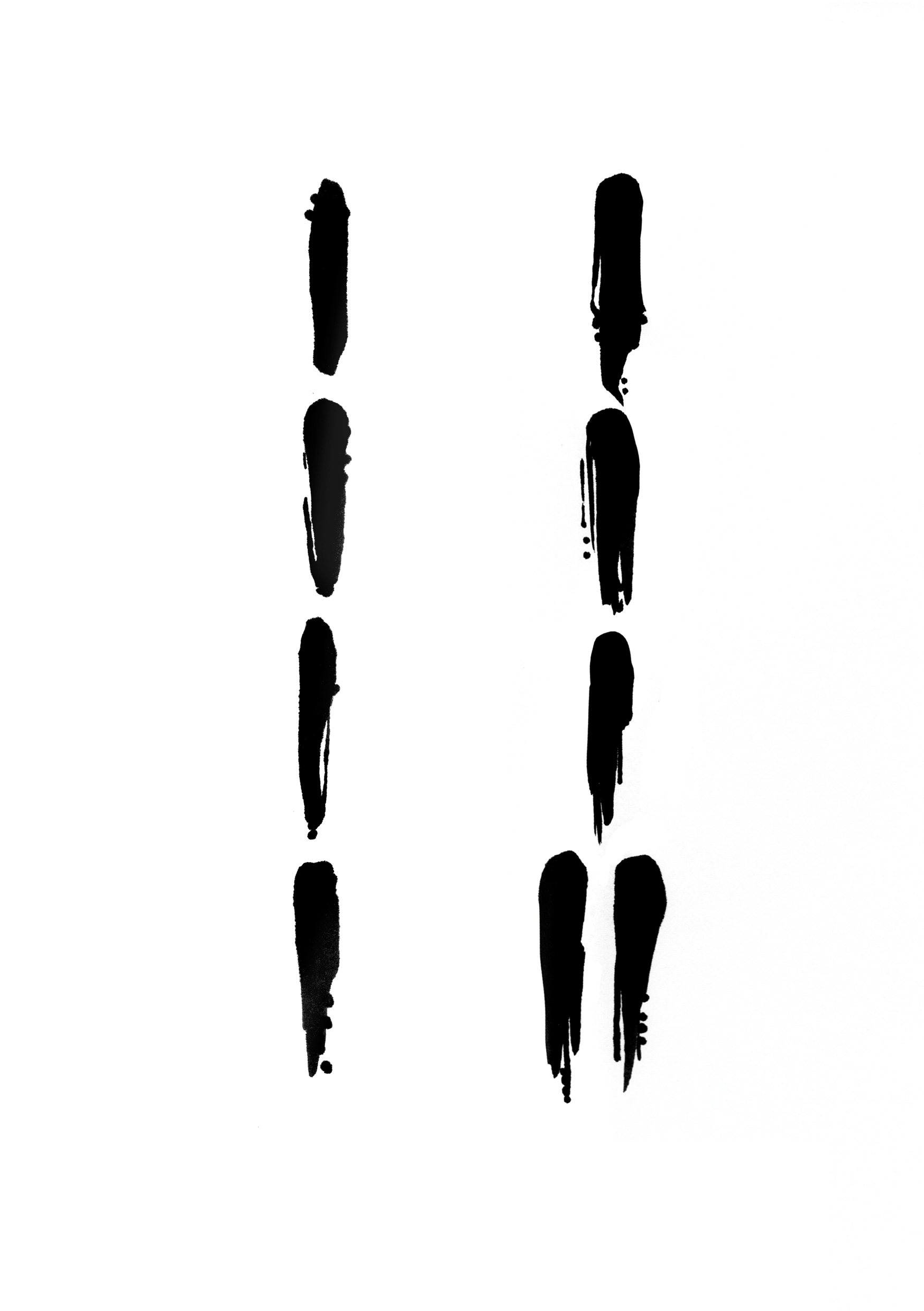
This Academy reads the right column first, then the left. Each row carries a single or double mark.
Where this Odù belongs
Ògúndá Ògbè belongs to the Ògúndá family in this Academy’s study sequence. It is a mixed Odù, distinct from Ògbè Ògúndá. The order matters. Its teaching is approached through its own narratives, rather than by adding two general descriptions of the principal signs together.
Key Òrìṣà and sacred relationships
The figures below are selected for their roles in the accounts discussed here. They offer connected reading paths through the tradition.
-
Èṣù. He meets the returning diviner repeatedly and eventually reveals the concealed test. In the cosmic episode he gathers information rather than accepting the conspirators’ account.
-
Ògún. He participates in the cosmic challenge to authority and later seeks forgiveness after losing access to necessary resources. This is a localized conflict role.
-
Babalú Ayé. The cosmic narrative specifically names Babalu Aye alongside Ogun. Their actions are not generalized into a statement that illness results from religious nonpayment.
-
Obàtálá. He receives delegated authority after Olofin withdraws but cannot resolve the conflict alone, making the limits of representation part of the account.
Key myths and their meanings
The court’s concealed conditions
Metalofin stages a false birth emergency and hides stone beneath the courtyard surface. Successive diviners fail the concealed test and are imprisoned. A returning youth shares provisions during repeated encounters with Esu, then receives the information needed to expose the arrangement. Confronting the deception results in the prisoners’ release.
The test does not fairly measure the task announced. The youth’s advantage comes through relationship and information, not simply superior force. A writer can examine why fear prevents people from naming a rigged process. The account should not be made into a universal endorsement of paying an intermediary, nor should its stage trick be presented as obstetric knowledge.
Narrative setting: Cuban compilation narrative using bokono vocabulary; a distinct regional textual strand is possible but its individual provenance is not established.
Authority withdraws from the earth
Olofin and Albita disagree about granting powers to others. After Albita withdraws, Ogun and Babalu Aye act beyond acceptable limits while Esu investigates. Olofin leaves the earth and appoints Obatala, who cannot settle matters alone. Resource deprivation eventually brings the challengers back to ask forgiveness.
The narrative asks how delegated power can remain answerable when the original authority is distant. Its resolution restores obedience through dependence on resources, leaving consent and proportionality unresolved. Albita’s identity and the division of good from evil should remain specific to this account. Neither illness nor death is explained through its religious economy in contemporary factual guidance.
Narrative setting: Cuban theological narrative with a strongly dualistic moral framework; the added claims about universal Yoruba identities are not independently established.
The palm’s offspring become resources for others
A palm and a woman named Ifatoun consult about having children and protecting what follows. The palm undertakes the first commitment but relies on height, beauty, and defensive growth rather than completing the second. Ifatoun responds to both and gives birth to a son. The palm also bears, but Esu makes its uses known to humans and other creatures. Harvesting, oil, fuel, and wine enter the account through that disclosure, and Ifatoun’s son becomes a principal harvester. The sacred etiology gives abundant usefulness and parental loss different meanings within the same tree, without providing a botanical or medical explanation.
The palm imagines that being impressive and difficult to approach will make its offspring secure. The narrative then turns the very source of pride into an accessible resource through knowledge, tools, and Esu’s agency. This is not merely a modern story about overconfidence. The witness treats preparation, divine disclosure, and the human child’s role as effective relations shaping earthly life. Its gendered language of a tree’s body also makes the harvest troubling rather than a purely celebratory origin of products.
The earlier Metalofin test similarly uses a hidden arrangement to determine what can happen, but its problem is deliberate deception by a ruler. The cosmic argument concerns delegated power that exceeds control. These comparisons can support contemporary questions about a capacity’s exposure and the difference between usefulness for others and well-being for the being used. They do not justify applying the palm’s fate to actual parents or treating its refusal as a cause of human bereavement.
Narrative witness and setting: Translated excerpt in the multilingual compilation’s expressly attributed Cromwell Osamaro sequence, with Yoruba/Bini-facing material. The compilation’s language is not evidence of a Brazilian tradition.
A covering hides Ogbe from Death
Ogunda receives counsel concerning his brother Ogbe, whom Death is seeking. A carried pot falls in the place where Ogbe is present, covering him without a plan that Ogbe fully understands. Esu holds the covering firmly so that the sought person cannot be found. Death abandons that search and goes elsewhere, and the brothers later recognize the protection together. The passage contains compressed and uncertain wording about the brothers’ initial actions, but its central sequence is clear: counsel, concealment, divine restraint, an interrupted search, and shared acknowledgment. The account does not supply a physical rescue procedure or an assurance about any reader’s lifespan.
The protection initially feels like confinement from the person beneath it. Ogbe tries unsuccessfully to get free, while the narrative identifies that very restriction as what keeps the search from succeeding. A religious reading should preserve Esu’s agency and the brothers’ later recognition rather than turn the pot into an arbitrary metaphor for discomfort. Contemporary interpretation can ask whether a limited view misreads an event, but it must not use the story to justify coercive confinement in actual life.
The death that moves on also leaves a boundary to the favorable ending: the story protects one person without ending mortality generally. Compare the palm, whose apparent defenses fail because another relation has not been addressed, and Metalofin, whose concealed conditions imprison rather than protect. The same exterior condition of being enclosed cannot carry one fixed meaning. Its religious and ethical significance depends on the particular relation, purpose, and consequence described.
Narrative witness and setting: Translated excerpt in the multilingual compilation’s expressly attributed Cromwell Osamaro sequence, with Yoruba/Bini-facing material. The compilation’s language is not evidence of a Brazilian tradition.
What was born in this Odù
“Born” can name an explicit traditional origin association or what emerges through a story: a capacity, relationship, practice or order of life. Interpretations drawn from a narrative are labelled below, so their basis remains clear.
Burial of the dead
Selected traditional source association.
The list names burial as an origin association. It can contextualize care of the dead without supplying a universal history of funerary practice or claiming one tradition invented burial.
Representation of Olofin on earth
Selected traditional source association.
The explicit association resonates with the delegated-authority story. Representation here is a local theological arrangement, not a secure equivalence between Olofin and every other supreme-being name.
Marks on the divining chain
Selected traditional source association.
The list names markings on a particular part of the chain. Their presence can be acknowledged without reproducing restricted technical instructions or assigning an invented meaning to each mark.
Correlations to life dimensions
These questions bring the selected stories into contemporary life. They are interpretive invitations for study.
Work and resources
A task with hidden conditions cannot support a fair evaluation. Access to relevant information matters as much as confidence or effort.
Reflect: What condition has the evaluator failed to disclose?
Relationships and family
Repeated sharing precedes Esu’s disclosure. Mutual recognition can produce information that formal authority withholds.
Reflect: Which relationship helps you understand what a formal process obscures?
Character and inner life
Fear helps sustain the false test. A factual challenge can be difficult when the person controlling the test also controls punishment.
Reflect: What support would make honest disagreement possible?
Community and responsibility
Delegation requires more than appointing a representative. The cosmic story leaves a gap between a title and the capacity to govern.
Reflect: What continuing oversight follows a transfer of responsibility?
A deeper reading of the sacred relationships
Sacred protection is not reducible to an outward defense
The palm’s height and spines do not replace the relation its counsel addresses, while Ogbe’s covering becomes protective through Esu’s active presence. The earlier treasury test likewise cannot be understood by appearances alone, and the cosmic account distinguishes delegated status from actual control. Within this witness, sacred agencies and preparation change what a material arrangement can do. A contemporary comparison about defenses may clarify one dimension, but should not replace that religious logic or offer an outward object as a guaranteed method. The four stories establish different effective relations, not a universal rule that enclosure, height, or possession is either safe or dangerous in itself.
Usefulness and the used being’s interest can diverge
The palm provides many resources while its personified experience is loss. The ruler’s court test gives him power while harming the diviners, and the cosmic challengers seek effective agency without preserving an acceptable public order. Ogbe’s protection gives a different outcome, though it does not end Death’s wider activity. These differences allow a contemporary study to ask who benefits from a capacity without reducing the sacred account to a politics lesson. The religious etiologies remain particular, and the material usefulness of palm products is not being denied. The point is that usefulness to consumers does not automatically describe the whole relation or settle the cost to another participant.
The same visible condition can carry opposed relations
A hidden courtyard surface deceives visiting diviners, the palm’s exterior promises defense but becomes penetrable, and the pot encloses a brother in protection rather than punishment. Appearance is therefore neither always false nor always reliable. What matters is the history and agency producing the visible arrangement. A contemporary reader can ask which additional fact would change the interpretation, while keeping the witness’s spiritual disclosures at their own level. The study should not claim that every distressing limit is secretly beneficial or that every impressive form hides danger. The accounts supply exact cases whose differences are more valuable than a general instruction to trust or distrust what one sees.
Questions that deepen the study
Does the palm story blame actual parents for a child’s loss?
It gives a personified tree a sacred history concerning fruitfulness, defense, and use by others. Converting that etiology into a cause of human bereavement would be an unsupported and harmful extension. The narrative can be explained within its religious world, where Esu’s disclosure and different preparations matter, without applying its verdict to a reader. Contemporary analysis may ask about the limits of visible defenses or the cost of being useful. Those are comparisons, not diagnoses. The witness’s literal plant uses also do not make its account a biological history of why palms developed their present forms.
Why must the pot’s protection not become an argument for coercion?
Because the account describes one sacred event whose purpose and hidden agency are supplied by the narrator. An actual person claiming to restrain another for their own good does not thereby possess those facts or authority. Within the witness, Esu keeps Ogbe concealed from Death and the brothers later understand the result. A contemporary reflection can distinguish immediate experience from a larger context without treating every confinement as secretly benevolent. The earlier Metalofin episode provides an internal contrast: concealment and imprisonment there serve a ruler’s rigged test. Material similarity does not establish moral equivalence.
What do the new motifs add to the earlier question of hidden conditions?
They show that hidden relations can produce very different outcomes. The palm’s apparent security omits a sacred condition, Ogbe’s enclosure contains an effective protection, and Metalofin’s concealed courtyard makes a fraudulent evaluation possible. The cosmic account adds authority whose visible delegation does not ensure control. A reference study can therefore ask who knows the conditions and what the concealment does, instead of assigning one moral value to secrecy itself. The religious witness remains active through Esu and divination, while contemporary evidence questions are offered separately. The result is greater precision, not a universal rule that every hidden thing must be exposed or accepted.
What the four narratives reveal together
The added witness makes Ogunda Ogbe’s hidden conditions more varied. The palm’s abundance becomes a resource for others despite its apparent defenses, while a pot’s confinement protects Ogbe from a sacred search. The earlier Metalofin test and cosmic dispute then retain different abuses of concealed advantage and delegated capacity. Divine agency should remain substantial in the explanation, especially Esu’s disclosure and restraint; contemporary analysis can ask about viewpoint and costs without replacing that religious world.
The four accounts do not make discomfort proof of protection or usefulness proof of virtue. They require attention to whose relation is changed and what fact gives an outward form its meaning. The study also preserves the boundary of a favorable ending: one brother is concealed, a tree remains used, and neither event settles every question of mortality, consent, or responsibility for others.
Living with this Odù
A continuing life or initiatory relationship
For a person who has received Ògúndá Ogbè in a life or initiatory setting, a visible defense can have a meaning different from the relation that makes it effective. The palm's height and spines do not secure its offspring within the sacred etiology, while Ogbe's covering initially feels restrictive but is maintained protectively through Esu. Across changing circumstances, these narratives can sharpen judgment without turning every distressing limit into hidden benevolence or every impressive form into a deception.
The rigged court and delegated powers add questions about authority. Metalofin announces an emergency while testing through concealed conditions, and a distant original authority cannot be replaced by a title that settles everything alone. Long-term character can include looking for the knowledge a situation actually requires and preserving the distinction between public usefulness and the used being's welfare. The palm serves others while experiencing loss in the personified account; that cannot explain human bereavement. The sign does not justify confinement, provide obstetric knowledge or promise protection from Death. It keeps sacredly supported concealment, coercive imprisonment and unsupported defense separate, while leaving the court narrative's regional vocabulary and Albita's identity within their limited provenance.
A particular consultation and its question
In consultation, Ògúndá Ogbè can help distinguish a test of an announced task from an arrangement designed to make failure unavoidable. Metalofin's hidden courtyard conditions require information the imprisoned diviners did not receive. The youth's repeated provision and Esu's help form a sacred relationship, not proof that paying any intermediary makes a process fair. A practitioner should relate that structure to the actual question rather than presume every authority is staging a trap.
The palm and covering narratives also prevent a fixed interpretation of enclosure or defense. An exterior can fail to protect, or a temporary covering can be protective within its specific divine relation. Neither supplies a physical procedure or a reason to accept coercive confinement. The delegated-power account adds the limits of formal appointment when resources and collective conduct remain unresolved. Consultation may ask who benefits, what knowledge is missing and which capacity a title actually confers. It cannot identify an unknown loss as a neglected sacred commitment or treat the source's dualistic identities as universal Yorùbá theology. A result for this question remains distinct from permanent identity as protected brother, deprived parent or exposed ruler.
Constructive and adverse possibilities
Constructive relations may make concealed conditions intelligible, sustain protection through an acknowledged sacred agency and release people trapped by a falsely announced test. The brothers' later recognition gives Ogbe's covering its narrated context, while the youth's relationship with Esu provides information rather than merely greater force.
Adverse unfolding could involve treating outward defenses as complete protection, delegated office as total command or usefulness to consumers as a full account of another being's welfare. The palm's abundant products do not erase its personified loss. The court's confinement also differs fundamentally from the covering's protection. These contrasts leave an actual reading's state undetermined. They ask what agency and purpose make a material arrangement effective, without guaranteeing lifespan, justifying coercion or assigning moral failure to an actual family's grief. No exterior form explains its own purpose.
An illustrative situation in everyday life
In a hypothetical accreditation process, applicants are told they face a practical test but are judged by hidden conditions. Repeated failure is then treated as proof of incompetence. A participant learns what was concealed through a trusted relationship and can challenge the process. Metalofin's narrative makes the missing information and the ruler's control visible. Ogbe's covering adds a separate caution: the same outward experience of restriction need not have the same purpose, so its relation must be investigated rather than assumed. This illustration supplies no rescue technique or promise that discomfort is secretly helpful. It asks who designed the conditions and what evidence could distinguish protection from an arrangement that prevents a fair response.
Sources and reading context
The first two narrative witnesses
Both narratives occur in the Cuban portion of a multilingual compilation. Bokono vocabulary and the Albita episode require provenance restraint; no African author or universal Yoruba identification is inferred. Later explanatory paragraphs, medical causation, and technical ritual directions are excluded.
Narrative motifs are summarized independently. The life-dimension reflections are contemporary interpretation. How these reference studies are built explains the wider source approach and the distinction between a reference article and personal divination.
Additional named witnesses
- Cromwell Osamaro Ibie. The surrounding sequence is expressly attributed to Cromwell Osamaro. These selected episodes are read through the multilingual compilation’s translated renderings; exact edition and original translation chain remain unverified.
The brothers’ opening action is compressed in translation, so no self-harm or confinement procedure is inferred. The palm’s bodily language is a sacred etiology, not a claim about actual parents, anatomy, or a guaranteed protective object. Its human products are not explained as verified botanical history.
Bibliographic identification
- C. Osamaro Ibie. Ifism: The Complete Work of Orunmila. Lagos; multivolume publication beginning 1986. Library catalogue record. Related bibliographic record for the named narrative witness. Exact volume, edition and page of the transmitted account have not been independently matched.
Read the source method and wider scholarly context.
The catalogue links identify published works and their authors. They are separate from proof of an individual episode’s wording or attribution. Contemporary comparisons and the synthesis above are editorial interpretation. The author’s books and Academy companions below provide further study; their sales links are separate from the source references.