
Ògúndá Òkànràn is a mixed Odù in Ifá’s 256-part corpus. Ogunda Okanran pairs an abandoned religious relationship with a practical exchange that changes a rivalry. A diviner relies on another source of power while his Ifa gathers dust, and restoration requires public effort to re-establish the bond. Elsewhere, Oya and Ogun discover that each holds weapons better suited to the other. Both stories concern fit and responsibility, though the first expresses a local hierarchy among religious powers rather than a universal judgment on other traditions.
A question to carry through the study: Which commitment or resource needs a better place in your life rather than more intensity?
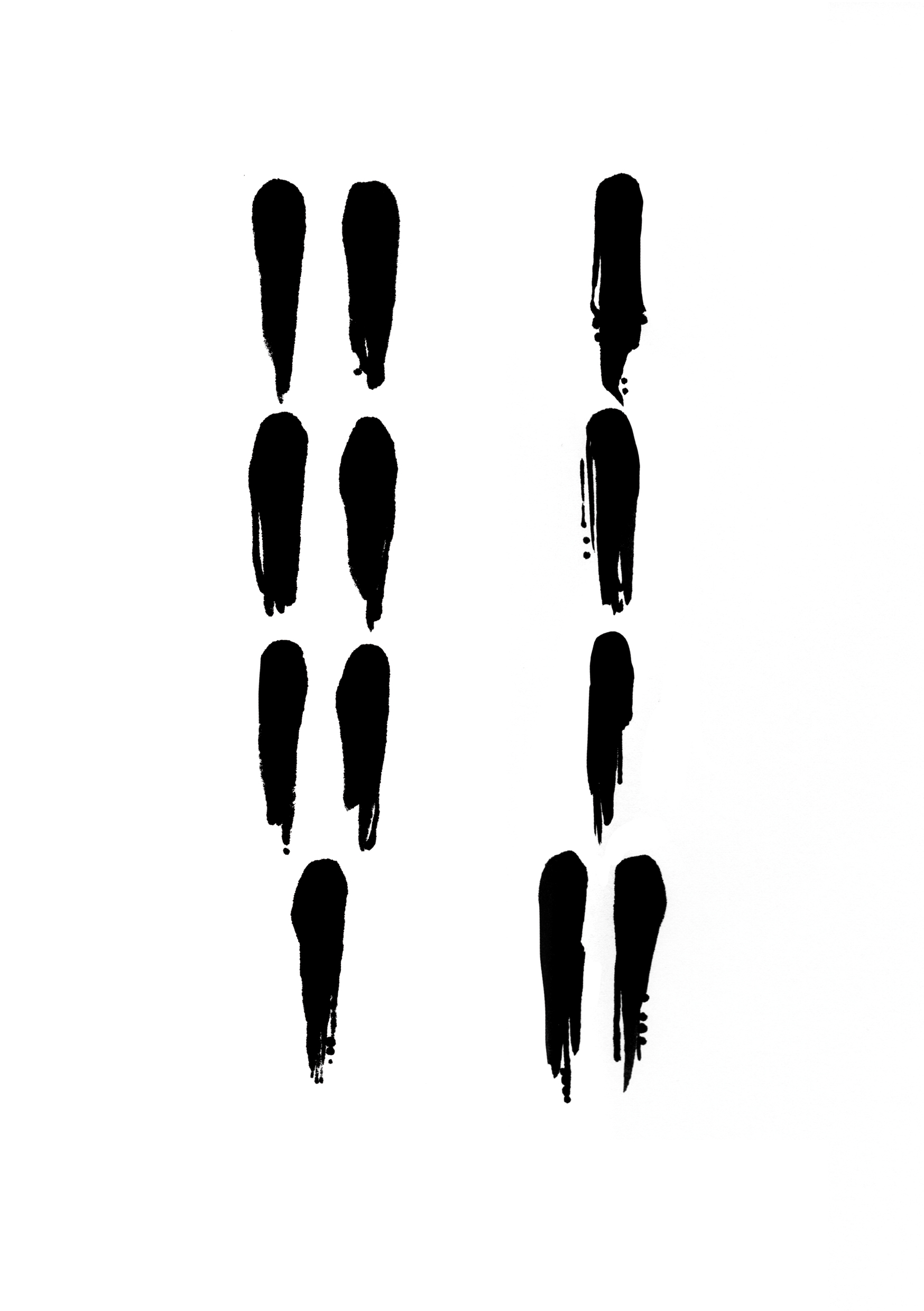
This Academy reads the right column first, then the left. Each row carries a single or double mark.
Where this Odù belongs
Ògúndá Òkànràn belongs to the Ògúndá family in this Academy’s study sequence. It is a mixed Odù, distinct from Òkànràn Ògúndá. The order matters. Its teaching is approached through its own narratives, rather than by adding two general descriptions of the principal signs together.
Key Òrìṣà and sacred relationships
The figures below are selected for their roles in the accounts discussed here. They offer connected reading paths through the tradition.
-
Ọ̀rúnmìlà. He visits the distracted godchild, withdraws after finding the neglected relationship, and later returns through a collective effort of reconciliation.
-
Èṣù. He is asked to carry the message seeking Orunmila’s return. The role links acknowledgment of neglect with a renewed channel of communication.
-
Ọya. She shares her difficulty with Ogun and exchanges an unsuitable heavy weapon for implements she can manage effectively, changing the balance with Shango.
-
Ògún. He likewise benefits from exchanging equipment, and the changed balance eventually leads to mutual respect among the three rivals.
Key myths and their meanings
The relationship beneath the dust
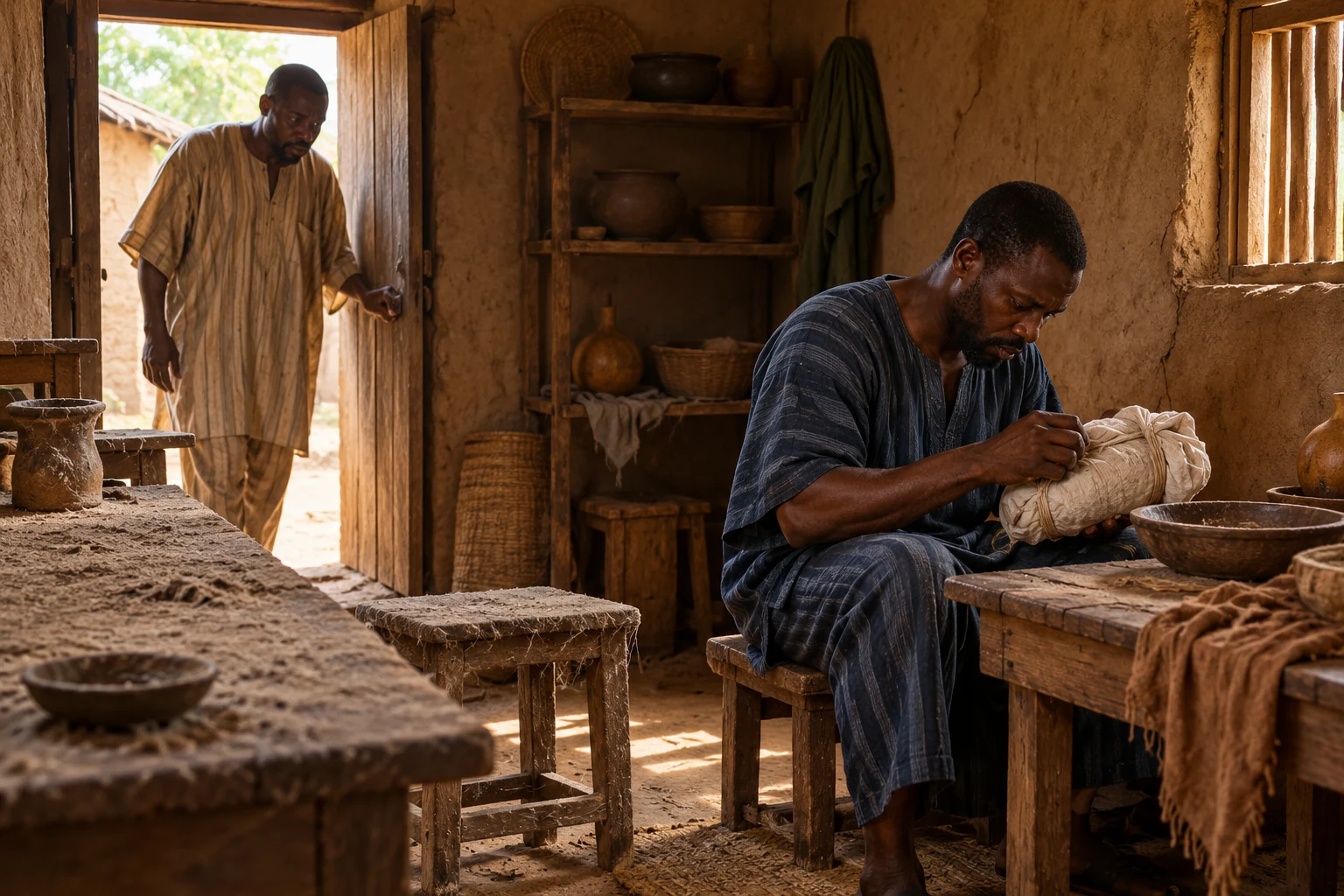
Maki Awo becomes absorbed in a powerful artifact and neglects Ifa. Orunmila visits, sees the change, and leaves in sorrow. A brother helps Maki recognize what he has set aside. A wider gathering then participates in calling Orunmila back, and renewed attention makes reconciliation possible.
The account stages religious continuity as a relationship requiring care rather than a title that remains sufficient by itself. It also asserts Ifa’s superiority within this local narrative. A responsible article should not project that hierarchy onto every Afro-Cuban practice or describe other religious systems as inherently corrupt. The more transferable issue is honesty about one’s stated commitments.
Narrative setting: Cuban/Lukumí patakín in a multilingual source compilation; no individual narrator is established.
The equipment exchanged between rivals
Oya and Ogun separately struggle in conflicts with Shango. On meeting, they compare their difficulties and exchange implements that suit the other better. Each becomes more effective, and Shango eventually seeks peace. The objects remain as narrative emblems of a relationship transformed through cooperation.
The change comes from rearranging existing resources, not acquiring a larger arsenal. Conversation reveals a problem of fit that each had faced alone. The violent encounters remain part of the myth, not practical advice. The ending’s mutual respect can be explored while asking whether respect founded on fear is as durable as recognition grounded in consent.
Narrative setting: Cuban/Lukumí patakín in a multilingual source compilation; no individual narrator is established.
The divine representative still meets another claim
Orisa Nla is appointed as a representative of higher divine authority and prepares to enter earth. He considers that standing sufficient and declines the advised acknowledgment of Esu. On the route, Esu arranges a fight. Orisa Nla tries to intervene, but the fighters turn against him. A companion recalls the neglected counsel, and Orisa Nla returns to complete the sacred relation before coming again. The witness then describes public honor and recognition. The account distinguishes an authorized role from the relationships through which its exercise becomes effective, without establishing a universal hierarchy for every lineage or excusing assault on a mediator.
The protagonist is not an impostor. His representative role is real within the witness, which makes the neglected relation more significant: genuine authority does not make every other agency irrelevant. Esu’s intervention is also not a simple moral rebuke delivered through conversation; it produces a humiliating and violent scene. A spiritually faithful study should explain the claim to acknowledgment while keeping the means visible. The earlier Maki account similarly questions whether one effective power can replace an ongoing relation with Ifa.
The weapon exchange gives another route to respect, where recognizing a difference in capacity makes cooperation possible. Contemporary interpretation can ask what a role leaves outside its mandate, but should not reduce Orisa Nla to a generic proud official. The divine person, the journey between domains, and the renewed sacred exchange belong to why recognition changes. The story does not imply that every loss of respect proves a reader has offended a hidden power.
Narrative witness and setting: Translated excerpt in the multilingual compilation’s expressly attributed Cromwell Osamaro sequence, with Yoruba/Bini-facing material. The compilation’s language is not evidence of a Brazilian tradition.
Two inseparable friends expose a shared breach
Arogundade and Dosumu are close friends and religious practitioners who cannot imagine a serious misunderstanding between them. They reject counsel aimed at sustaining the relationship and disparage the advised response. The narrative then gives Esu a role in mutual sexual betrayal involving their households. A conflict between the women exposes the conduct to the husbands, whose own dispute draws neighbors and elders. The eventual judgment treats the acts not only as private harm but as a breach affecting communal sacred order and the dignity of their religious role. A substantial restorative obligation follows, without the source describing a complete future reconciliation.
The source’s precise reversal is that both men become implicated, rather than one remaining a pure victim of the other. Their confidence has not created a practice capable of addressing the relationship’s limits. Within the religious witness, Esu’s agency and the elders’ concern with a polluted communal field are substantive, not simply labels for jealousy. A contemporary interpretation can ask about mutual responsibility while avoiding an accusation against a reader’s spouse or friend. The earlier return-to-Ifa narrative also makes repair visible to a wider religious community, and the weapon exchange turns shared difficulty into an intelligible new arrangement.
These are different forms of continuing relation, not one formula that all closeness is dangerous. The women’s perspectives are less developed than the men’s and the public judgment; an editor should not fill that absence by assigning them identical motives. The ending establishes a restorative claim, but does not prove that all trust is rebuilt or every participant’s experience has been heard.
Narrative witness and setting: Translated excerpt in the multilingual compilation’s expressly attributed Cromwell Osamaro sequence, with Yoruba/Bini-facing material. The compilation’s language is not evidence of a Brazilian tradition.
What was born in this Odù
“Born” can name an explicit traditional origin association or what emerges through a story: a capacity, relationship, practice or order of life. Interpretations drawn from a narrative are labelled below, so their basis remains clear.
Respect between Oya and Ogun
Selected traditional source association.
The explicit origin list names this relationship, and the exchange story develops it through conversation and complementary needs. It does not collapse the two powers or establish one universal account of their relationship.
Orunmila’s departure
Selected traditional source association.
The list names his leaving the land, directly developed in the neglect narrative. It is a local sacred event, not a prediction that a person’s present difficulties mean Orunmila has abandoned them.
Differentiated implements
Selected traditional source association.
The source associates nine sabers with Oya and a machete with Ogun. These are narrative attributes here; no procedures for obtaining or consecrating objects are given.
Correlations to life dimensions
These questions bring the selected stories into contemporary life. They are interpretive invitations for study.
Work and resources
The exchange improves capacity without new acquisition. Matching a tool to the user can matter more than its size or prestige.
Reflect: Which existing resource would work better in someone else’s hands?
Relationships and family
A brother notices Maki’s decline and helps reopen a relationship. Correction can be supportive when it offers a route back rather than only condemnation.
Reflect: Who can help you repair an abandoned commitment?
Character and inner life
Maki’s engrossment narrows his attention until another commitment disappears. Intensity is not the same as completeness.
Reflect: What has become dusty while your attention is elsewhere?
Community and responsibility
The return involves a wider community rather than a private apology alone. A publicly neglected role may require visible repair.
Reflect: Who needs to participate for a restored commitment to be credible?
A deeper reading of the sacred relationships
A private breach can affect a shared sacred field
The friends’ acts are judged through household harm, religious dignity, and the condition of the community’s ground. The restorative response therefore has more than the scale of a private apology. The earlier Ifa return also involves a gathering of practitioners and renewed relation with divine powers, while Orisa Nla’s route requires acknowledgment beyond his own appointment. A spiritually grounded article should explain those connections before translating them into modern social reputation. The witness regards sacred order as effective and shared. Contemporary ethical questions can follow, including whose voice the public process hears, but should not replace the religious meaning of repair or disclose its technical materials and procedures.
Closeness and status do not supply complete knowledge
The friends assume intimacy excludes misunderstanding, Maki assumes another power can make Ifa unnecessary, and Orisa Nla assumes a divine appointment completes every relation needed for the journey. The weapon exchange instead begins with an honest account of mismatched capacity. These are particular claims about what a relation or role establishes, not proof that trust and status are inherently false. A contemporary study can ask where an assumption exceeds the facts available. Religious persons and commitments remain active within the narratives, and their different scopes matter. The source’s depth is reduced if every example is turned into the same simple warning against pride.
Repair takes different forms of acknowledgment
Maki’s return requires a wider sacred gathering, the rival powers exchange implements and recognize one another, Orisa Nla renews a neglected relation, and the friends receive a collective restorative judgment. Each addresses a different breach or mismatch. The article should not pretend all are equivalent payments for a good ending. A contemporary comparative lens can specify what is acknowledged: an abandoned commitment, a complementary capacity, another agency’s claim, or harm to a shared field. The religious accounts supply different continuing responsibilities, and some endings remain incomplete. That precision permits a reader to reflect without receiving an invented universal ritual sequence or an automatic promise that one act restores every relationship.
Questions that deepen the study
Why does Orisa Nla’s genuine status not settle the journey?
The witness gives him a real representative role but also gives Esu an effective claim that the appointment does not erase. The problem is therefore not false credentials. It is the assumption that one legitimate relation makes every other one unnecessary. A spiritually grounded study should explain that plurality of agency before offering a contemporary analogy about authority. It should also retain the violent means as troubling rather than present humiliation as an ideal lesson. The account’s eventual honor is particular; it cannot tell a reader that any present disrespect proves a missing acknowledgment or that anyone claiming another sacred mandate must be obeyed.
Does the friends’ betrayal prove that close friendship is unsafe?
It proves no general rule of that scope. The story gives particular practitioners a confidence that excludes the possibility of future difficulty, then narrates a mutual breach within an active sacred field. A contemporary reader can ask how a valued relation handles limits and harm without beginning from suspicion. The source also makes both men accountable, complicating a simple victim-versus-enemy division. Its spiritual agency remains meaningful, while the researcher should not use it to accuse real spouses or friends. The ending’s public restoration is a responsibility to be described, not evidence that all participants have automatically regained intimacy.
Why is the community’s sacred condition relevant to an intimate act?
Within this witness, the practitioners’ conduct is not detached from the land, customs, and religious office they inhabit. The elders therefore frame repair as affecting a shared sacred order as well as private relations. A modern account limited to feelings or reputation would miss that reality. Contemporary analysis can still ask whose experience the collective judgment includes and what remains unresolved. Explaining the religious field does not require publishing a restorative recipe or treating every intimate disagreement as communal pollution. The claim belongs to this narrated breach and its particular participants, not a universal license for public control over private life.
What the four narratives reveal together
The added witness makes Ogunda Okanran’s continuing obligations more exact. Orisa Nla’s genuine authority leaves another sacred claim to acknowledge, while two close practitioners discover that confidence has not prevented mutual harm to households and a shared religious field. The earlier Ifa return and weapon exchange retain different routes toward renewed relation. Divine agency remains substantive across the comparison; contemporary interpretation can ask about assumptions and repair without reducing the stories to modern contract theory.
The four accounts do not make every intimate bond dangerous or every public role hollow. They distinguish what a relation actually establishes, what it leaves outside its scope, and which acknowledgment follows when that limit becomes visible. Their depth includes the uneven endings: restored presence, mutual respect, public honor, and a restorative obligation are different results, none of which automatically narrates every later consequence.
Living with this Odù
A continuing life or initiatory relationship
For someone whose received life or initiatory sign is Ògúndá Òkànràn, closeness and authority can remain real without completing every relationship needed for action. The friends assume their intimacy cannot fail; Orisa Nla holds a genuine appointment but meets another agency's claim on the journey. Across changing commitments, these narratives can develop attention to what a relation actually establishes and what remains outside it. Trust need not become suspicion, but neither can it replace practices for acknowledging limits and harm.
The equipment exchange and return to Ifa give different forms of repair. Oya and Ogun discover that existing resources fit the other better, while Maki's neglected commitment requires renewed attention through a wider gathering. The local narrative's hierarchy cannot condemn all intersecting Afro-Cuban religious worlds. Long-term character may include giving an honest account of mismatch, abandonment or shared breach instead of treating every response as the same payment for restoration. Within the attributed witnesses, Esu and communal sacred order remain effective. The sign does not predict sexual betrayal, justify assault on an intermediary or prove that one corrective act rebuilds every participant's trust. Some endings establish an obligation without narrating full reconciliation.
A particular consultation and its question
A consultation yielding Ògúndá Òkànràn can help distinguish an abandoned commitment from a mismatch in capacity or a breach affecting several households. Maki's absorbed attention, the implement exchange and the friends' mutual implication are not versions of one personality defect. A practitioner should identify what has actually changed and what kind of acknowledgment the present question requires before proposing a general lesson about loyalty.
The representative's route adds the difference between authorization and implementation. Orisa Nla's office is not false, but the witness makes its effectiveness relational, including Esu's active and troubling intervention. That does not establish a universal hierarchy or explain every public loss of respect as divine offense. The friends' restorative judgment also belongs to a shared sacred field rather than reputation alone, while the women's perspectives remain limited. Consultation can make those dimensions visible without inventing motives or disclosing procedures. The result addresses an occasion; it cannot identify the client permanently as neglectful devotee, betrayed friend or authorized representative. Nor does a successful exchange of equipment make respect founded on fear identical with a durable consensual peace.
Constructive and adverse possibilities
Constructive relations might acknowledge a capacity another can use, renew a commitment honestly and let shared harm be recognized at the scale where it occurred. The weapon exchange and Maki's gathering change different relations; neither needs to be reduced to a larger arsenal or a mechanical purchase of favor.
Adverse unfolding could involve treating status as complete authority, closeness as immunity from breach or one powerful artifact as sufficient for every stated obligation. The representative's assault and the friends' mutual harms remain troubling even where sacred response changes the continuation. These contrasts do not assign ìrè or òṣogbo to a particular reading. They ask what the actual repair acknowledges and whose experience the public process hears, while keeping the local Ifa claim from becoming a comparative condemnation of every other religious practice.
An illustrative situation in everyday life
In a hypothetical partnership, two practitioners believe years of friendship make explicit discussion of boundaries unnecessary. When both become implicated in a breach, each initially tries to occupy the position of sole injured party. The friends' narrative distinguishes mutual responsibility from one-sided innocence. The equipment exchange adds a different possibility if part of the problem concerns resources that fit the other person's work better. This illustration does not forecast sexual betrayal or equate a modern dispute with communal sacred pollution. It asks what was abandoned, what was mismatched and what harm now requires acknowledgment. An agreement to repair can be meaningful without proving that every participant's trust has already returned.
Sources and reading context
The first two narrative witnesses
The Cuban narrative includes omologu and artifact vocabulary associated with intersecting religious worlds. Its assertion of Ifa’s primacy remains local, not a comparative verdict on Palo or other traditions. Oya and Ogun retain distinct identities, and weapon attributes are described without ritual instructions.
Narrative motifs are summarized independently. The life-dimension reflections are contemporary interpretation. How these reference studies are built explains the wider source approach and the distinction between a reference article and personal divination.
Additional named witnesses
- Cromwell Osamaro Ibie. The surrounding sequence is expressly attributed to Cromwell Osamaro. These selected episodes are read through the multilingual compilation’s translated renderings; exact edition and original translation chain remain unverified.
The friends’ account leaves women’s perspectives comparatively undeveloped and does not establish a universal suspicion of intimacy. Orisa Nla’s encounter is a local sacred explanation, not an endorsement of assault or a general divine ranking. Technical restoration details and personal predictions are omitted.
Bibliographic identification
- C. Osamaro Ibie. Ifism: The Complete Work of Orunmila. Lagos; multivolume publication beginning 1986. Library catalogue record. Related bibliographic record for the named narrative witness. Exact volume, edition and page of the transmitted account have not been independently matched.
Read the source method and wider scholarly context.
The catalogue links identify published works and their authors. They are separate from proof of an individual episode’s wording or attribution. Contemporary comparisons and the synthesis above are editorial interpretation. The author’s books and Academy companions below provide further study; their sales links are separate from the source references.