
Ògúndá Òtúrúpòn is a mixed Odù in Ifá’s 256-part corpus. Ogunda Oturupon connects a smithing household’s tragic overreach with a duck whose unimpressive clothing makes it an object of contempt. The brothers possess strong inherited tools but do not share a clear boundary of authority. The duck’s appearance changes through an unexpected encounter after consultation. Together the motifs distinguish material capacity from judgment and outward display from worth, while refusing to make either an accident or ridicule evidence of a person’s moral standing.
A question to carry through the study: What vulnerability remains inside the area where you believe your household or team is strongest?
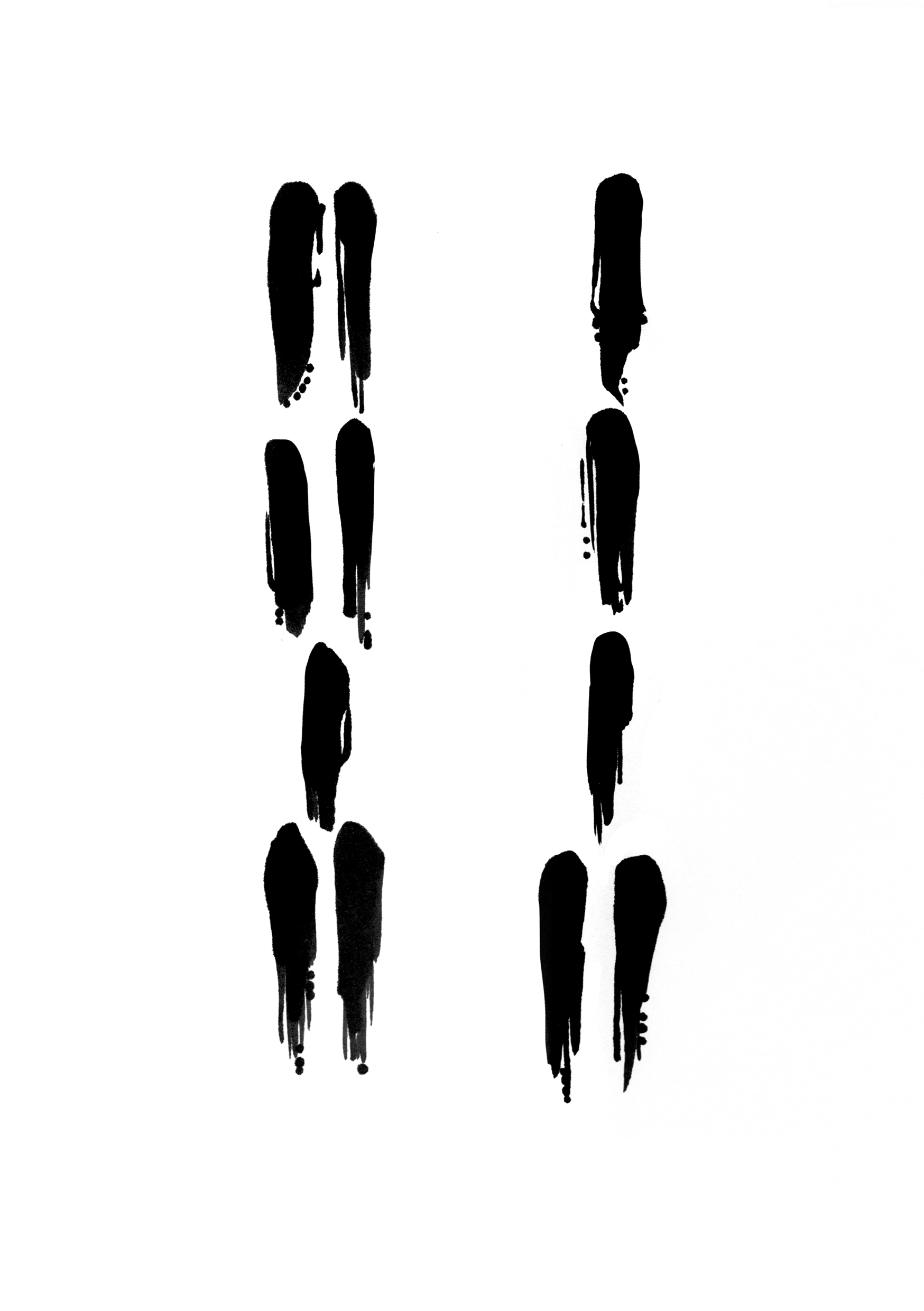
This Academy reads the right column first, then the left. Each row carries a single or double mark.
Where this Odù belongs
Ògúndá Òtúrúpòn belongs to the Ògúndá family in this Academy’s study sequence. It is a mixed Odù, distinct from Òtúrúpòn Ògúndá. The order matters. Its teaching is approached through its own narratives, rather than by adding two general descriptions of the principal signs together.
Key Òrìṣà and sacred relationships
The figures below are selected for their roles in the accounts discussed here. They offer connected reading paths through the tradition.
-
Ògún. He gives his sons the inherited implement supporting their work. His material legacy does not prevent conflict, unsafe independence, or the younger brother’s death.
-
Obàtálá. He is the authority whose commission and permission are crossed by Omotuto; later he receives and blesses the surviving brother within a renewed arrangement.
-
Ọ̀rúnmìlà. He counsels the surviving smith, making the household’s contradiction visible through an image of lacking proper tools at the very center of a tool-making trade.
-
Èṣù. The narrative directs a later acknowledgment toward him, but the selected smithing passage does not make him the cause of the accident or the primary reconciler.
Key myths and their meanings
The smith’s house and its missing judgment
Two sons of Ogun share a livelihood supported by an inherited implement. The younger secretly pursues independence and acts beyond a commission’s permission. A retaliatory intervention and a chaotic moment end in his death. The surviving brother consults and receives assistance toward a new relationship with Obatala and the work’s religious authorities.
Being skilled with tools does not settle questions of authority, communication, or safety. The source’s accident is embedded in supernatural retaliation, not an occupational explanation. A useful article should preserve the younger brother’s death as loss rather than a necessary step in the survivor’s advancement. The central question is what a capable household failed to discuss.
Narrative setting: Cuban/Lukumí patakín in a multilingual source compilation; no individual narrator is established.
The duck receives unexpected plumage
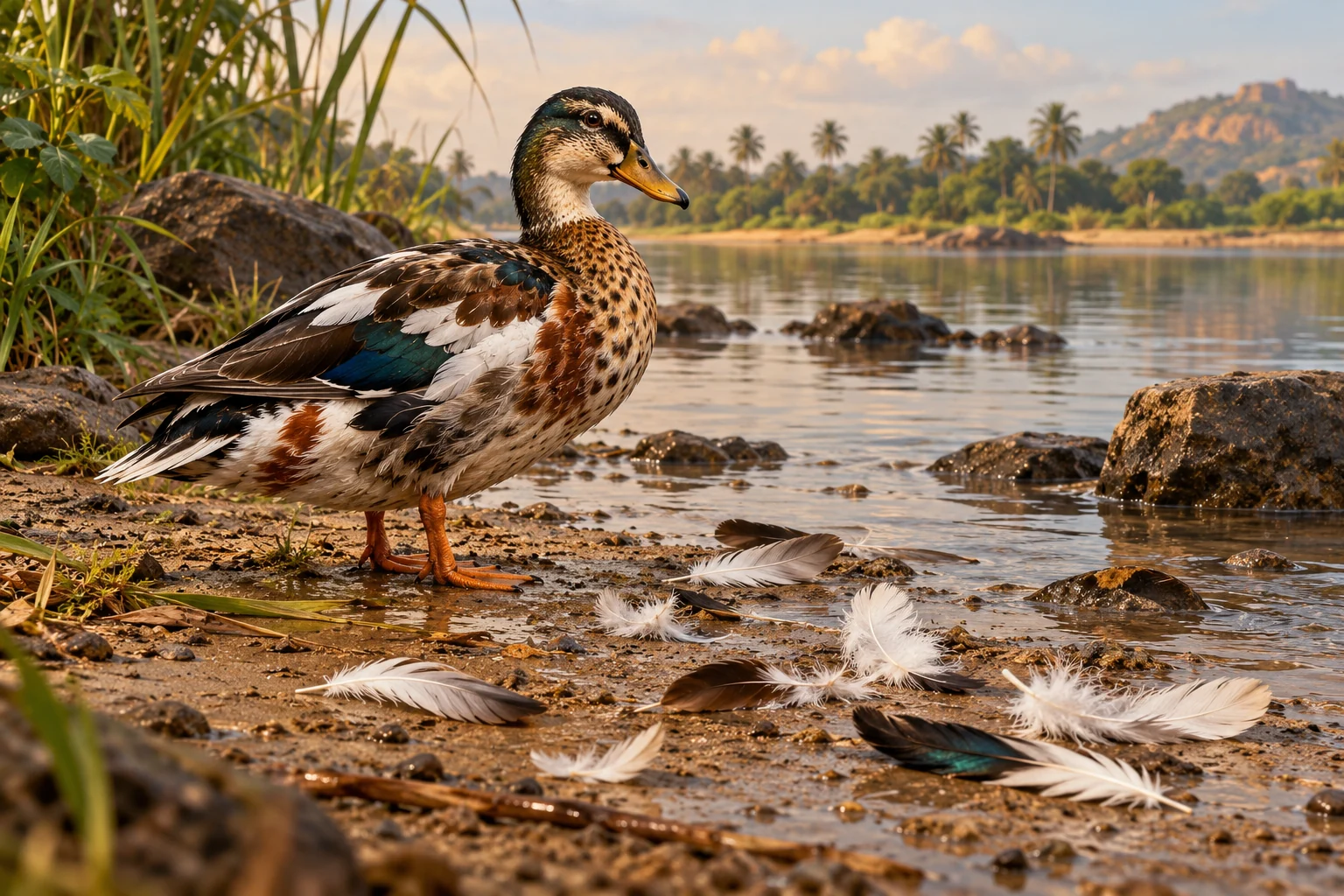
A duck with only one outfit is despised by its companions. It seeks consultation and later stands below a place where hunted birds’ feathers fall. Its appearance changes through those feathers, and the ending gives it a blessing and contentment. The account is brief and does not supply a wider history of its species.
The companions confuse limited clothing with limited worth. The changed plumage alters their visual basis of judgment, but the earlier contempt remains an ethical problem. Do not imply that a person must become attractive to deserve dignity. The narrative can ask how recognition depends on display while also noting the hunting-related cost concealed inside the beautifying event.
Narrative setting: Cuban/Lukumí patakín in a multilingual source compilation; no individual narrator is established.
The cow’s need becomes another person’s exclusion
A cow cannot provide enough for itself and its family. Consultation includes both a sacred response and a warning about greedy conduct. The cow fulfills only part of the response and takes so much from a farmer’s field that the owner blocks the route. It complains that the response has failed. Further consultation names the conduct, then supplies a new means by which Esu amplifies the cow’s threatening presence and the farmer flees. The cow regains access to food. The witness therefore gives the needy protagonist an effective result while leaving the crop owner displaced, rather than ending with a negotiated distribution.
The first counsel distinguishes ritual action from conduct, so the account cannot fairly be reduced to a claim that performing part of a rite earns complete success. The later response, however, does not resolve the owner’s grievance through restraint. It gives the cow an advantage through intimidation. Within the sacred witness, Esu’s agency makes that result effective; a spiritually serious article should not pretend the story instead narrates consensual sharing. Contemporary interpretation can ask whose need governs the final arrangement and what the source’s celebration leaves outside it.
The earlier smith household also possesses effective tools without adequate judgment, while the duck gains recognition through an unexpected change in appearance. Those episodes do not make the cow’s result harmless by analogy. A real need can coexist with conduct that deprives another, and a successful sacred intervention is not automatically a universal model of just action. The story’s tension is a source of depth rather than an error to be rewritten.
Narrative witness and setting: Translated excerpt in the multilingual compilation’s expressly attributed Cromwell Osamaro sequence, with Yoruba/Bini-facing material. The compilation’s language is not evidence of a Brazilian tradition.
The forest companions restore a troubled land and withdraw
Orunmila enters earth with Osanyin and Esu after preparing sacred relations and receiving divine permission. The companions live in forest rather than the settlement. A distressed community seeks their assistance, and the response joins provision for the companions with a demand that people change harmful conduct. Peace returns. Later, the beneficiaries arrange danger for Orunmila and persuade him toward residence among them. Consultation delays and protects his movement; after a later attack fails, he withdraws toward the celestial home. The passage ends with a comparison involving Jesus, which is a localized theological interpretation in the witness, not a claim about universal Ifa or historical causation.
The initial restoration is not represented as ritual action detached from behavior. Orunmila identifies the condition of the community and calls for a change while maintaining the roles of his sacred companions. Later hostility does not erase the earlier assistance or make every community member’s motive known. The witness’s final withdrawal gives the benevolent agent a limit, rather than endless duty to remain available to attack. A contemporary interpretation can ask about that boundary while resisting the source’s wider pessimism that goodness has no place on earth.
The cow account provides a contrast in which a beneficiary uses effective power to secure access at another’s cost. The smith and duck narratives offer still different relations between skill, danger, and recognition. Together they prevent one theory that the sign always rewards either service or force. The Christian comparison should remain visible as the narrator’s dialogue with another religious story, not be silently generalized into the origin or meaning of Ifa.
Narrative witness and setting: Translated excerpt in the multilingual compilation’s expressly attributed Cromwell Osamaro sequence, with Yoruba/Bini-facing material. The compilation’s language is not evidence of a Brazilian tradition.
What was born in this Odù
“Born” can name an explicit traditional origin association or what emerges through a story: a capacity, relationship, practice or order of life. Interpretations drawn from a narrative are labelled below, so their basis remains clear.
Care mediated through the mother
Selected traditional source association.
The source explicitly associates the sign with religious action for a child through the mother. This is a contextual ritual relationship, not a substitute for the child’s consent or a health intervention.
The duck’s blessing
Selected traditional source association.
The listed association is developed in the duck motif. Its literary movement is from ridicule toward contentment, without establishing a universal origin of duck plumage or divine approval based on appearance.
A firmly placed nail
Selected traditional source association.
The list names a nail that is difficult to remove. It offers a local image of established force or durability; any application to habits or commitments is interpretive rather than a traditional explanatory claim.
Correlations to life dimensions
These questions bring the selected stories into contemporary life. They are interpretive invitations for study.
Work and resources
The smiths have inherited capacity but incomplete coordination. Expertise can coexist with a serious gap in permission and communication.
Reflect: What must be agreed before someone works independently?
Relationships and family
The younger brother acts secretly within a shared household. Independence needs a conversation about what remains shared and what can change.
Reflect: Which boundary would make separation safer for everyone?
Character and inner life
The duck’s dignity precedes its improved appearance. Contentment should not be made conditional on meeting a group’s standards of display.
Reflect: What judgment are you making from someone’s clothing or resources?
Community and responsibility
The source’s prosperous household still loses a member. Community care should include grief rather than treating survival as a complete resolution.
Reflect: What loss needs acknowledgment alongside a story of recovery?
A deeper reading of the sacred relationships
Sacred response and changed conduct are not substitutes
The cow is warned about conduct as well as a prescribed response, and the forest companions require the community to change its ways while sacred relations are renewed. This is a substantial religious logic in which human behavior participates in the field of efficacy rather than standing outside it. The earlier smithing household likewise has powerful inherited tools but unfinished responsibilities. A contemporary ethical lens can follow, but should not replace Osanyin, Esu, and Ifa with abstract conscience. The source also supplies uneven outcomes, including a cow empowered without a full settlement. Explaining that tension is more faithful than claiming the witness always makes effective power a reward for good behavior.
The beneficiary’s need does not exhaust the situation
The cow needs food, but the farmer has a crop claim. The community needs restoration, but the companions’ care and safety matter. The smith’s surviving livelihood does not erase a brother’s death, and the duck’s changed appearance does not justify its earlier ridicule. These different claims make a contemporary analysis of benefit precise. The religious narratives remain particular in what agencies act and what arrangements they permit. A study should not award every protagonist a morally complete ending simply because the immediate need is met. It should name who receives the benefit and what another participant continues to bear, without inventing testimony the source does not provide.
A relation can end without erasing its earlier truth
Orunmila’s withdrawal follows a genuine restoration and later danger; it does not mean the original help was false. The cow’s renewed access likewise does not invalidate the farmer’s earlier grievance. The duck’s later contentment does not make contempt deserved, and the smith’s renewed sacred arrangement does not undo loss. A contemporary lens can therefore distinguish a changed continuation from a complete rewriting of the past. This also respects the witness’s spiritual reality: efficacy can occur at one stage and still be followed by a difficult boundary. The account need not promise permanent availability or universal reconciliation in order to describe a meaningful religious act.
Questions that deepen the study
Does the cow story present intimidation as just because it works?
The narrator gives an effective result, but the farmer’s earlier grievance remains part of the facts. A reference study should state that the cow regains access through a threatening display amplified by Esu, not rewrite the ending as fair sharing. Within the religious witness, divine agency is effective without thereby resolving every contemporary ethical question. The first counsel’s warning about greed makes the tension even more explicit. A reader can reflect on need and conduct without receiving a recommendation to frighten others or a claim that a sacred response entitles someone to another person’s food.
Why retain the comparison with Jesus only as a local interpretation?
It appears at the end of the attributed passage and places Orunmila’s experience beside another religious narrative. That is evidence of this witness’s theological dialogue, not proof of a universal doctrine or historical explanation of another tradition’s events. A study can acknowledge the comparison without repeating its causal claim as fact. The central episode already supplies a substantial Ifa logic of companions, restored conduct, protected movement, and withdrawal. Keeping those details intact avoids either erasing the source’s interreligious voice or allowing one appended comparison to define all African or diaspora understandings.
What makes withdrawal different from giving up on responsibility?
The forest account narrates actual assistance and a period of restored peace before later danger. Orunmila’s departure therefore follows a changed relation, not an initial refusal to respond to need. A contemporary interpretation can ask what continued service would require and whether a boundary becomes appropriate when the beneficiaries turn threatening. The source’s sacred account gives consultation and divine protection an active role in that decision. It does not establish that every conflict with a community means the community is beyond help or that a valued helper has no obligations. The specific history matters more than a universal command to stay or leave.
What the four narratives reveal together
The added witness makes Ogunda Oturupon’s relation between power and responsibility deliberately uneven. The cow obtains food through an advantage that leaves the farmer displaced, while a forest coalition restores peace before Orunmila’s later withdrawal from threatened service. The earlier smith and duck stories retain different costs of effective capacity and public recognition. A religious explanation should preserve sacred companions, counsel, and divine agency rather than recast all outcomes as modern strategy. Contemporary analysis can then distinguish need, behavior, benefit, and the limits of continued responsibility. The four stories do not make success a universal proof of justice or withdrawal proof that earlier help was unreal. Their depth lies in tracing what changes and who remains affected, including the source’s localized interreligious comparison without treating it as a doctrine shared by every Ifa community.
Living with this Odù
A continuing life or initiatory relationship
For a person who has received Ògúndá Òtúrúpọn as a life or initiatory sign, useful capacity can coexist with unfinished judgment. The smiths have an inherited implement without adequate communication about independence and permission; the cow has a real need but takes in a way that displaces the farmer. Across changing roles, these narratives can develop attention to what a benefit leaves outside its principal viewpoint. Effective tools and sacred assistance do not make every resulting arrangement fair.
The duck and forest companions add different continuations after a favorable change. New plumage alters recognition without making earlier contempt deserved, while a restored community later endangers the companions whose help was genuine. Long-term character can include sustaining conduct after relief and accepting a boundary that does not erase earlier care. The attributed witness's sacred relations remain active, including Esu and Osanyin, while its Jesus comparison remains a local theological dialogue. The sign does not require attractive display for dignity, promise that need justifies intimidation or make a brother's death necessary for the survivor's future. It asks whether a new relation addresses actual responsibility and what may legitimately end when continued availability exposes the helper to harm.
A particular consultation and its question
In consultation, Ògúndá Òtúrúpọn can help distinguish a need from the means used to secure it. The cow's hunger is real, yet its restored access relies on the farmer's flight rather than a negotiated settlement. The forest companions instead require conduct to change along with sacred provision, then face hostility despite an earlier restoration. A practitioner should not compress these into one rule that successful action rewards goodness.
The smith and duck require other distinctions. Skill does not provide authority, communication or a safe process by itself, while changed appearance cannot justify the contempt that preceded it. The smith's death remains embedded in supernatural retaliation rather than an occupational mechanism. Consultation can ask who benefits, which claim remains and whether a later boundary invalidates the original help. It cannot predict injury, explain actual families through a sacred accident or promise prosperity by altering display. The result belongs to its question rather than permanent identity as caregiver, hungry beneficiary or exposed artisan. The source's Christian comparison also cannot become a universal explanation of Ifa or historical evidence about another religion's origin.
Constructive and adverse possibilities
Constructive relations may join sacred response with changed conduct, make supporting needs visible and permit withdrawal when a genuine earlier service is followed by danger. The forest companions' restoration remains effective within the witness even though the relation later changes. The duck's contentment likewise need not erase the wrongness of earlier contempt.
Adverse unfolding could involve powerful tools without shared judgment, a real need pursued through another's exclusion or a favorable survival used to conceal an unresolved death. Esu's assistance to the cow works without turning the farmer's grievance into nothing. These contrasts do not assign the state of a particular reading. They ask whether the beneficiary's account exhausts the situation and what a changed continuation preserves or ends, rather than promising permanent availability, equal outcomes or complete reconciliation after every sacredly effective act.
An illustrative situation in everyday life
In a hypothetical aid project, a group receives essential support and agrees to change practices that had harmed members. Conditions improve, but leaders later pressure the helpers to remain available while exposing them to renewed hostility. The forest companions distinguish genuine restoration from an endless duty to stay. The cow adds a separate question if leaders justify excluding another group solely through their own need. This illustration does not map the community onto the witness's pessimistic theology or promise a particular result. It asks what was actually repaired, whose safety now matters and whether a boundary can end an unsafe continuation without denying that the original help was meaningful and effective.
Sources and reading context
The first two narrative witnesses
The Cuban smithing account includes ritualized retaliation and dense technical directions, omitted here. The duck episode is selected from an adjacent narrative paragraph as a distinct second motif. No anatomical, occupational-safety, or animal-origin claim is inferred from these sacred accounts.
Narrative motifs are summarized independently. The life-dimension reflections are contemporary interpretation. How these reference studies are built explains the wider source approach and the distinction between a reference article and personal divination.
Additional named witnesses
- Cromwell Osamaro Ibie. The surrounding sequence is expressly attributed to Cromwell Osamaro. These selected episodes are read through the multilingual compilation’s translated renderings; exact edition and original translation chain remain unverified.
The cow’s advantage is not recast as consensual access. The forest passage includes an explicit Christian comparison, retained as the witness’s local theology rather than fact about another religion. Dangerous procedures, personal persecution predictions, and the source’s sweeping judgment of humanity are not adopted.
Bibliographic identification
- C. Osamaro Ibie. Ifism: The Complete Work of Orunmila. Lagos; multivolume publication beginning 1986. Library catalogue record. Related bibliographic record for the named narrative witness. Exact volume, edition and page of the transmitted account have not been independently matched.
Read the source method and wider scholarly context.
The catalogue links identify published works and their authors. They are separate from proof of an individual episode’s wording or attribution. Contemporary comparisons and the synthesis above are editorial interpretation. The author’s books and Academy companions below provide further study; their sales links are separate from the source references.