
Òtúrúpòn Ògúndá is a mixed Odù in Ifá’s 256-part corpus. Òtúrúpòn Ògúndá’s selected narratives make dependence visible through movement and rescue. Two hungry companions combine sight and mobility to leave a town, but one conceals an unequal division of food. Oshún becomes trapped in river roots after an alarming encounter, and Orunmila notices movement beneath the surface and carefully releases her. The single listed origin is ceremonial. The specific focus is reciprocity within assistance and the difference between visible helplessness and a need that must be detected.
A question to carry through the study: What information or fair share does the person depending on me need in order to remain a partner?
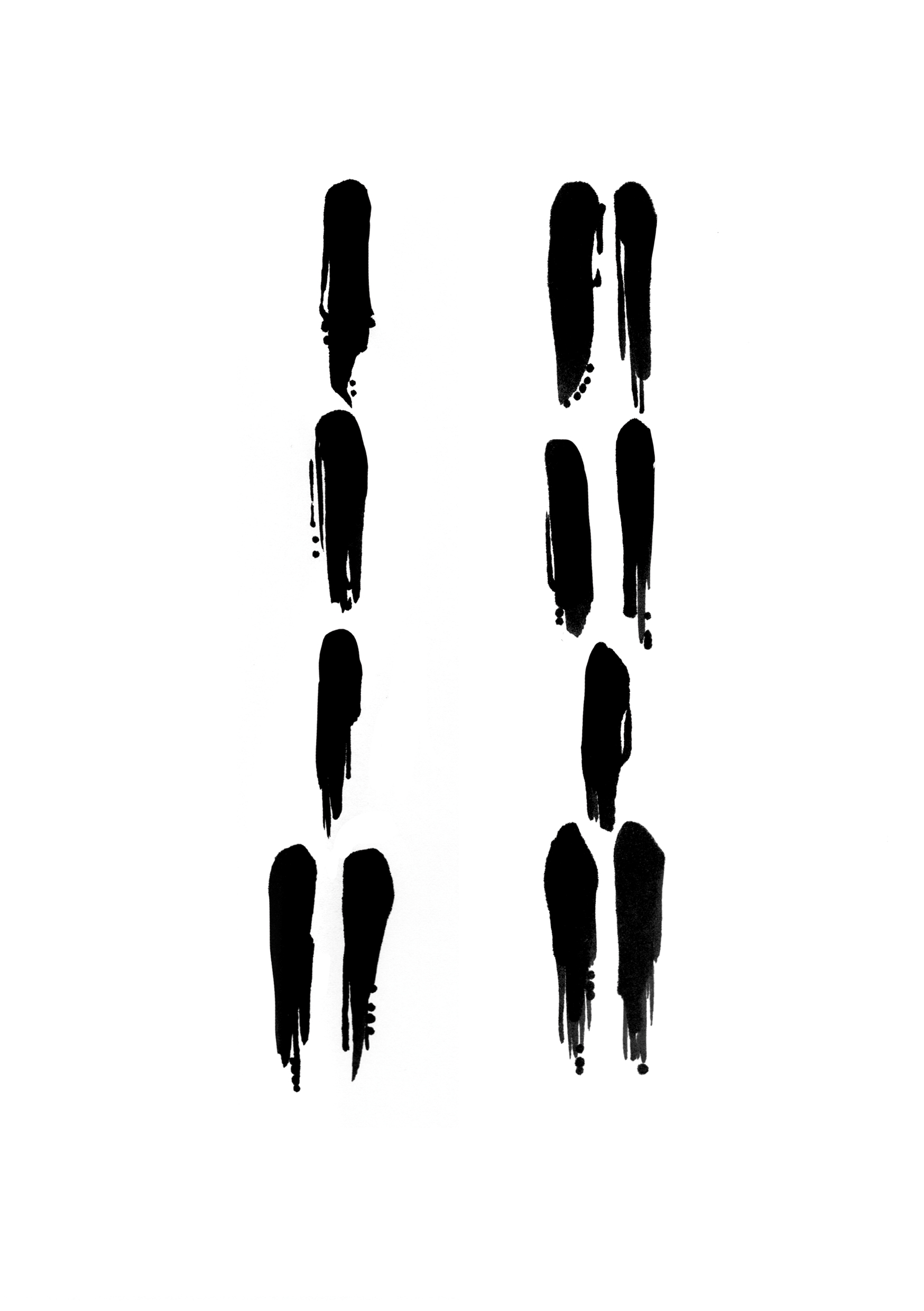
This Academy reads the right column first, then the left. Each row carries a single or double mark.

Where this Odù belongs
Òtúrúpòn Ògúndá belongs to the Òtúrúpòn family in this Academy’s study sequence. It is a mixed Odù, distinct from Ògúndá Òtúrúpòn. The order matters. Its teaching is approached through its own narratives, rather than by adding two general descriptions of the principal signs together.
Key Òrìṣà and sacred relationships
The figures below are selected for their roles in the accounts discussed here. They offer connected reading paths through the tradition.
-
Ọ̀rúnmìlà. Orunmila notices something moving beneath the river and patiently removes the entangling roots until Oshún emerges; his help begins with observation rather than prior certainty about what is hidden.
-
Òṣun. Oshún is the person trapped below the water after witnessing something frightening; the narrative’s curiosity warning does not erase her claim to care when she is in danger.
Key myths and their meanings
The companions do not share the same meal
Two companions with different impairments face starvation. One carries the other, who guides their route, and together they find a dead elephant. The sighted partner prepares food but gives the blind partner a toad while keeping elephant meat for himself. A miraculous reversal exposes the deception and is followed by retaliatory violence and another reversal. Their effective cooperation breaks at the moment one uses unequal information to control the other’s portion.
The story’s miraculous changes are not accounts of treatment or evidence that disability reflects morality. Its useful ethical issue is unequal access to information within a genuinely interdependent partnership. Carrying and guiding are both necessary, yet one person acts as if knowledge permits a larger share. The violent ending does not repair trust, reminding an editor to separate exposure of deception from a responsible response to it.
Narrative setting: Cuban/Lukumí narrative in the accounts considered here; no individual author established for this passage.
Movement beneath the river roots
Oshún tries to see what Ashikuelú is doing and becomes frightened, falls unconscious into the river, and is caught among submerged roots. Orunmila comes to the water within a religious errand and notices movement below. He uses his staff to draw the roots up gradually, discovering Oshún entangled in them. The account attributes her survival to his attention and patient action rather than to her ability to call for help.
The rescuer does not need to settle whether Oshún’s curiosity was wise before responding to danger. The source’s framing can invite reflection on boundaries around knowledge, but care remains the central act. The gradual removal of roots is an image of patient disentanglement, not a practical water-rescue instruction. No reader should be told that a frightening event proves violation of a sacred restriction.
Narrative setting: Cuban/Lukumí narrative in the accounts considered here; no individual author established for this passage.
Òòsàálá brings the drum whose absence the others discover
Òòsàálá Òsèèrèmògbò and many other divinities receive counsel before descending from heaven. Òòsà performs the advised response, and a skin becomes a drum. On earth the other deities gather to dance but have no drum, resorting to clapping or making rhythms with their mouths. Òòsà arrives dancing to his own instrument and sings of the absence of drums even for powerful Ṣàngó and Ògún. Ògún then conceives Àgèrè, Ṣàngó makes Sátà, and the deities begin making different kinds of drums. The ending links a fitting celebration with drumming rather than leaving the others permanently unable to dance.
The initial distinction becomes the beginning of further creation, not simply a permanent victory over excluded rivals. Òòsàálá’s response prepares an instrument the others lack, and the resulting encounter moves Ògún and Ṣàngó toward their own drums. Divine power does not automatically supply every form of expression: the verse deliberately names powerful figures who still lack this particular means of dancing. Within its religious logic, counsel, response, transformed material, and performed rhythm all belong to the arrival of celebration on earth.
A contemporary interpretation can ask how one person’s preparation reveals a missing capacity in a group, while keeping the drum’s sacred origin distinct from an ordinary productivity lesson. The source does not establish a complete historical sequence for African instruments, prove that every named drum originated in this event, or deny that the other deities had any power before it. Its particular movement runs from absence through comparison toward several differentiated musical responses.
Narrative witness and setting: Passage explicitly attributed to Ayo Salami, presented with Yoruba verse and Spanish translation; African testimony, not Brazilian provenance inferred from language.
Hyena delays while Leopard responds before the succession changes
Hyena and Leopard each receive divination concerning succession to their fathers’ leadership. The witness presents Hyena’s ancestors as the established leaders and Leopard as the deputy. Hyena delays the advised response, while Leopard acts promptly and fully. The response proves effective within the account, and Leopard rises into leadership while Hyena is removed. Only after Leopard has become established does Hyena stir from its delay. The introductory explanation also warns against damaging family relations and losing paternal property. The unit does not name a human kingdom, narrate a hereditary law, or describe a political campaign by either animal.
The account places inherited precedence beside a response that can change the actual succession. Hyena’s ancestral position does not operate as an unconditional guarantee, while Leopard’s subordinate position does not prevent elevation. The source explicitly attributes the shift to religious efficacy and timing; replacing that explanation with a claim about superior managerial talent would invent a cause. A contemporary interpretation can examine the difference between possessing a recognized claim and attending to the responsibilities attached to it.
It should not turn the narrative into an instruction for displacing another person or declare all established inheritance unjust. The introductory concern with family relations also complicates a purely competitive reading, since the desirable outcome is not described simply as winning at any relational cost. The witness supplies little of the animals’ later governance, their constituents’ views, or the precise relation between the two ancestral lines. Its strong succession claim remains local to this particular divinatory account.
Narrative witness and setting: Passage explicitly attributed to Ayo Salami, presented with Yoruba verse and Spanish translation; African testimony, not Brazilian provenance inferred from language.
What was born in this Odù
“Born” can name an explicit traditional origin association or what emerges through a story: a capacity, relationship, practice or order of life. Interpretations drawn from a narrative are labelled below, so their basis remains clear.
An inward ceremonial offering
Selected traditional source association.
The sole explicit origin is named ebbó wonu for men and women. Its specialized meaning and procedure are not expanded here; the association remains a local ceremonial classification rather than an instruction or guarantee.
A partnership requires truthful distribution
Contemporary interpretation from the selected myth.
As a contemporary interpretation, the companions’ journey generates an obligation of honest sharing once cooperation produces food. The motif concerns unequal information and contribution, not a traditional origin of partnership or an explanation of disability.
Correlations to life dimensions
These questions bring the selected stories into contemporary life. They are interpretive invitations for study.
Work and resources
The companions’ shared journey produces a resource neither could obtain alone. The deception begins when one partner treats control over preparation and information as permission to distribute the result unequally. The concealed difference appears only when the food is eaten.
Reflect: How can both contributors verify that the result is shared fairly?
Relationships and family
A person depending on another’s sight or mobility still remains a partner with a claim to truth. The story supports assistance that preserves agency rather than exploiting the very dependence that makes cooperation possible. Both companions supply a capacity the other lacks on the journey.
Reflect: What choice is the person receiving help still able to make?
Character and inner life
Orunmila’s attention is directed toward an uncertain movement rather than a ready explanation. The scene supports remaining curious enough to investigate a sign of need without immediately turning it into an accusation or doctrine. The movement under the water precedes recognition of Oshún.
Reflect: What have I noticed that deserves closer attention before interpretation?
Community and responsibility
The river tale distinguishes safety from moral judgment. A community can discuss the boundaries of inquiry later while first providing care to someone in danger, including someone whose earlier decision it questions. The rescuer does not first ask whether curiosity deserved punishment.
Reflect: Can help be offered without making agreement with the helper a precondition?
A deeper reading of the sacred relationships
Religious response differentiates particular capacities
The drum account gives Òòsàálá a prepared means of celebration that other powerful deities lack. The succession account makes Leopard’s prompt response consequential despite Hyena’s inherited precedence. Neither narrative treats power, seniority, or lineage as a substitute for the particular religious relation at issue. Their outcomes also differ: differentiated drums emerge among several deities, whereas the animals experience a displacement of leadership. A faithful lens should retain both the efficacy of the advised response and the specificity of its result. Contemporary questions about preparation can follow, but the sources do not say that every prepared person gains every good or that a single act cancels all later responsibilities.
Comparison may prompt creation or consolidate exclusion
Ògún’s recognition that he too can conceive a drum leads to Àgèrè, while Ṣàngó makes Sátà and others develop instruments. Hyena’s belated awakening occurs after Leopard’s position has become established. These are different consequences of discovering what another participant has obtained. One sequence expands a field of expression; the other records a leadership position no longer held. A contemporary interpretation can ask whether a comparative encounter opens new work or arrives after a decision has settled. The narratives do not establish a universal race in which being first always confers permanent ownership. Their concrete outcomes depend on the kind of good being pursued and the relations in which it is received.
An inherited position and a living practice require different evidence
Hyena’s ancestral leadership is explicitly stated, but the passage gives no comprehensive history of the line. The drum account likewise supplies an origin narrative without documenting every instrument’s historical development. Their authority lies in the religious precedents they transmit, not in a modern chronology inferred from a few names. A contemporary reference can compare how a position or practice is sustained while keeping those evidentiary forms distinct. The source’s claim that a response changes succession remains spiritually consequential inside the account; the claim that several deities make different drums remains a differentiated sacred explanation. Neither requires invented dates, imagined dynasties, or a reconstruction of material culture beyond the actual narrated actions.
Questions that deepen the study
Does Òòsàálá’s drum leave every other deity permanently without music?
The passage first emphasizes the absence of drums even for powerful Ògún and Ṣàngó, but it does not stop there. Ògún conceives Àgèrè, Ṣàngó makes Sátà, and the deities begin producing different drums. A summary ending at Òòsàálá’s distinction would omit the further creation that the encounter prompts. The religious precedent concerns preparation and the emergence of celebration, not an assertion that one deity alone may ever dance. A contemporary interpretation can value the way a visible capacity awakens other responses while keeping the actual named instruments and the source’s local account distinct from a verified historical origin for all music.
Why does Hyena’s ancestral precedence not settle the succession?
The verse explicitly places that precedence beside delayed response, while Leopard responds promptly and receives effective elevation. Within this witness, inheritance is consequential but not sufficient to secure the narrated outcome. The source does not explain the shift through better governance, greater popularity, or an independently documented law, so those causes should not be added. A contemporary reader can ask how a recognized claim is maintained through attention and responsibility. That interpretation cannot decide an actual inheritance dispute or justify taking someone else’s property. The account is a sacred animal succession narrative, and the introductory concern with family bonds should remain visible beside its competitive result.
Are the two accounts teaching that there can be only one winner?
Their endings differ. Leopard replaces Hyena in a leadership position, but Òòsàálá’s drum is followed by the creation of several instruments among the deities. Reading both as a single contest for exclusive possession would erase the expansive musical conclusion. The comparison instead asks what sort of good is at issue: a particular office and a field of sacred expression do not circulate in the same way. Contemporary reflection can distinguish opportunities that can multiply from positions that are held by particular occupants. That comparison remains interpretive; the witness supplies the named drums and the changed succession rather than a universal theory of competition.
What the four narratives reveal together
The additional Salami units deepen Òtúrúpòn Ogunda through prepared expression and changed succession. Òòsàálá’s drum reveals a missing means of celebration, after which Ògún, Ṣàngó, and others create differentiated instruments. Hyena’s inherited precedence meets a different result when delayed response allows Leopard’s elevation. These accounts do not reduce sacred efficacy to a rule about working harder or winning first. They present particular counsel, action, and relations whose outcomes differ according to what is sought.
Beside the earlier unequal meal and movement beneath river roots, the new units ask what participation requires and when a position is actually sustained. Contemporary questions about preparation, comparison, and inheritance can develop from those scenes while preserving their religious causes. The synthesis should retain the plural musical ending, the local character of the succession, and the absence of a verified historical chronology for either narrative.
Living with this Odù
A continuing life or initiatory relationship
For someone whose received life or initiatory Odù is Òtúrúpòn Ògúndá, cooperation depends on how its benefits and information are shared. The traveling companions function effectively together until one conceals the real portion, exposing a breach that disability must not be made to explain morally. Orunmila's notice of movement beneath roots supplies a contrasting attention to someone unable to call. Òòsà's drum reveals a missing capacity at a gathering and prompts other powers to develop different instruments, rather than permanently monopolizing celebration. The succession verse then distinguishes prompt sacred response from delay, without documenting a human law of inheritance.
Over time, character may develop through receiving a partner's partial competence without using their dependence as leverage. The inward temptation can include treating unequal information as private advantage or assuming that an initial place in an order guarantees its continuation. These witnesses do not prescribe rescue techniques or predict a loss of family property. Their sacred counsel, Orí and divine musical response remain active. Carrying the sign can invite a changing responsibility to the whole cooperative relation: who knows the terms, what an unvoiced need requires and whether a shared capacity produces more participation or becomes another way to hide the portion.
A particular consultation and its question
In consultation, the actual question can distinguish complementary effort, concealed distribution, patient recognition and a delayed response to a changing position. The companions' story asks whether one party knows what the other actually receives. Its miraculous bodily reversals are narrative devices, not explanations of real impairment or permission for retaliatory violence. Oshún's entanglement asks how a person unable to signal distress becomes perceptible, without offering practical water rescue instruction. The drum witness asks what a gathering lacks and whether a new capacity can multiply through others' responses.
The succession verse locates different outcomes in sacred response, not a dated political history or a universal guarantee for prompt action. A practitioner should not announce that a client is being cheated or will lose an inheritance. Contemporary reflection can examine the information and timing of the present arrangement, whose voice is missing and what kind of attention could reveal a need. A situational result is different from a lifelong identity of betrayal. Its religious interpretation belongs to the reading, while the narratives keep fair participation, specialized knowledge, bodily vulnerability and a changing opportunity related without treating them as the same problem.
Constructive and adverse possibilities
Constructive movement may include a concealed need being noticed patiently, a missing instrument enabling celebration and further capacities developing in response. Adverse movement appears when cooperation becomes unequal consumption or delay treats an unsettled opportunity as already secured. The companions' retaliation does not provide a just model of repair, and their impairments must not be moralized as evidence of character. Iré and osogbo require the actual religious situation. The drum's value emerges in a shared gathering, while succession involves a different relation to counsel and time.
The witnesses invite attention to how a capacity is used after it becomes effective. A contribution can enlarge participation or conceal an advantage. The account's sacred explanation remains active without promising that patient observation, promptness or any particular tool mechanically controls every outcome. The shared meal exposes what the journey’s cooperation had concealed.
An illustrative situation in everyday life
Hypothetically, two partners combine transport and specialist knowledge to deliver a project. One handles the accounts and quietly keeps the larger share while describing the result as equal cooperation. A colleague notices small inconsistencies but hesitates because the partnership appears mutually dependent. The companions' structure asks what the unequal information permits; the river roots story values patient attention to a need that is not being plainly voiced. The drum account adds a constructive alternative in which a useful capacity becomes available to a wider group. This is an illustrative interpretation, not a diagnosis or a claim that all unequal skills create deceit. The external responsibility is to make distribution intelligible, while the inward task is relinquishing the belief that dependence authorizes hidden advantage.
Sources and reading context
The first two narrative witnesses
These Cuban-labelled Spanish tales include miraculous changes of impairment, which are treated as literary devices and not moral or medical explanations. Ashikuelú is not assigned an unsupported deity equivalence. Only one explicit origin is listed, and the river episode is not used as rescue instruction. Added emergence motifs are explicitly distinguished from traditional origins.
Narrative motifs are summarized independently. The life-dimension reflections are contemporary interpretation. How these reference studies are built explains the wider source approach and the distinction between a reference article and personal divination.
Additional named witnesses
- Ayo Salami. Both the drum account and the Hyena–Leopard succession are contained in the explicitly attributed bilingual block.
The drum spellings Àgèrè and Sátà are retained as transmitted. No comprehensive instrument history or human dynasty is inferred. Hyena and Leopard remain the named animal participants; religious efficacy does not become legal advice about actual succession or property.
Bibliographic identification
- Ayo Salami. Ifá: A Complete Divination. Lagos: NIDD, 2002 catalogue record. Library catalogue record. Bibliographic identification of the named author and work; the edition behind the transmitted account remains to be matched.
Read the source method and wider scholarly context.
The catalogue links identify published works and their authors. They are separate from proof of an individual episode’s wording or attribution. Contemporary comparisons and the synthesis above are editorial interpretation. The author’s books and Academy companions below provide further study; their sales links are separate from the source references.