
Òtúrúpòn Òsá is a mixed Odù in Ifá’s 256-part corpus. Òtúrúpòn Òsá’s selected narratives join colored identification with communication between different times of day. Mayeleo solves disputes among workers by marking their utensils, but her partner then expects a larger business commitment she refuses. Owl and vulture serve as differentiated messengers, with night sound receiving sacred significance. The explicit head-painting origin is grounded in these material images of visible difference, ownership, and the need to understand a message within its setting.
A question to carry through the study: What useful contribution have others turned into an expectation I did not agree to carry?

This Academy reads the right column first, then the left. Each row carries a single or double mark.
Where this Odù belongs
Òtúrúpòn Òsá belongs to the Òtúrúpòn family in this Academy’s study sequence. It is a mixed Odù, distinct from Òsá Òtúrúpòn. The order matters. Its teaching is approached through its own narratives, rather than by adding two general descriptions of the principal signs together.
Key Òrìṣà and sacred relationships
The figures below are selected for their roles in the accounts discussed here. They offer connected reading paths through the tradition.
-
Obàtálá. Obatalá receives Mayeleo after conflict over her contribution and directs her toward consultation; she later returns with a gift acknowledging his advice.
-
Ọ̀rúnmìlà. Orunmila counsels Mayeleo after the dispute, and her journey leads to a relationship with Orisha Oko; the account does not make him the original inventor of the color system.
-
Òrìṣà Òkò. Orisha Oko treats Mayeleo well when they meet, and their later household produces a harvest from which she makes an acknowledgment to Obatalá.
-
Ọya. Oyá is associated with the owl’s nocturnal messages in the concluding part of the messenger narrative; that local link is not a universal claim about every owl call.
Key myths and their meanings
The marked utensils stop the quarrels
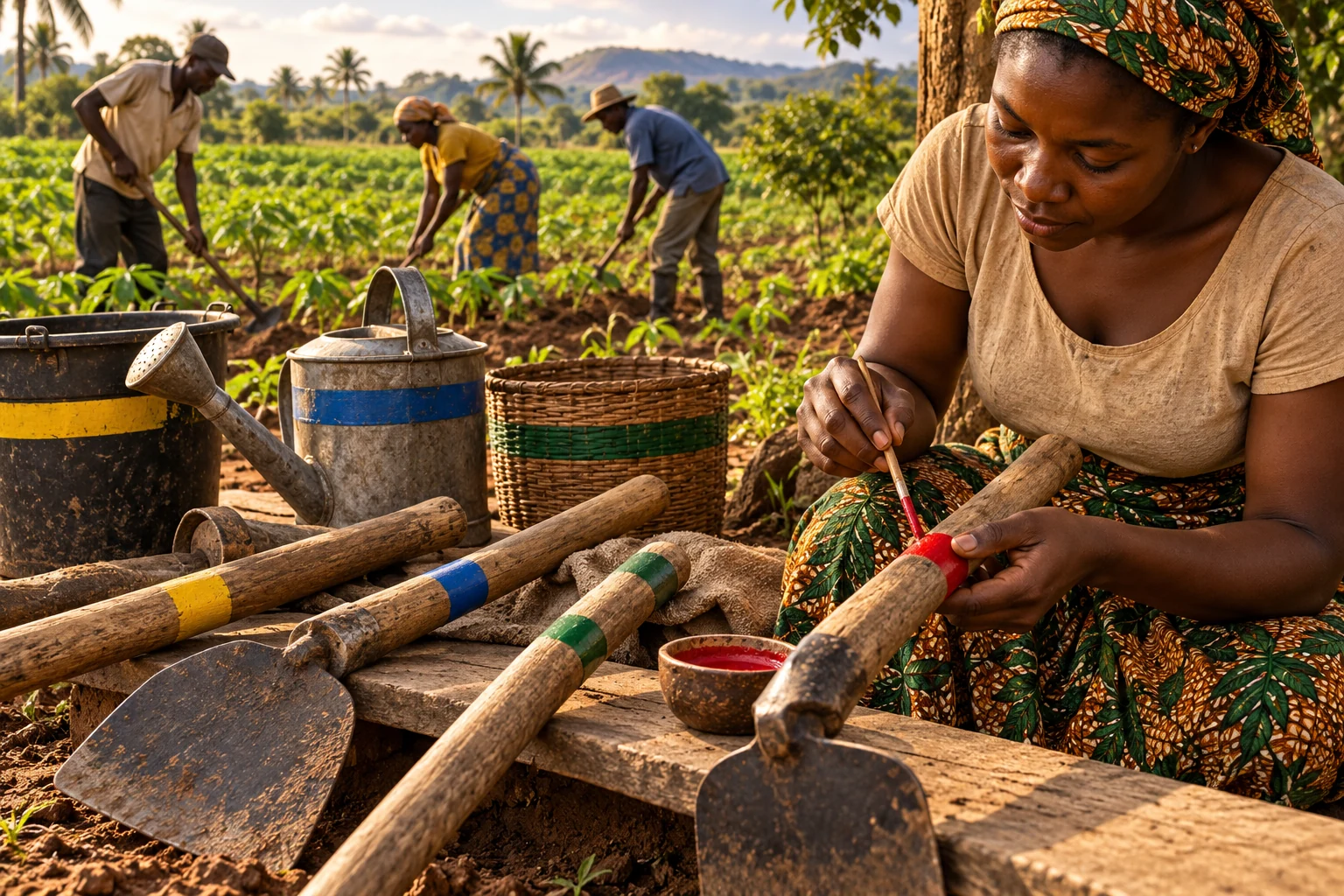
A mixed group of field workers brings utensils that become confused, producing repeated fights. Mayeleo hears the problem from her partner Alere, obtains colors, and marks the objects differently so they can be identified. The disputes stop. Alere then proposes a business based on her skill; she says she already has too much work. He interprets the refusal as unwillingness, conflict follows, and she eventually forms a different household after seeking advice.
The solution succeeds before the relationship fails. Her ability to help once does not establish consent to unlimited commercial labor. The story also gives a woman technical and organizational initiative, even while later advice is mediated through male sacred figures. A careful analysis can keep that agency visible and distinguish a collaborative opportunity from an obligation imposed because someone has proved competent.
Narrative setting: Cuban/Lukumí narrative in the accounts considered here; no individual author established for this passage.
Messages divided between day and night
Owl serves Olofin at night while vulture carries the daytime role, preventing their paths from conflicting. Their feeding habits and calls distinguish them. The account gives Owl’s whistle significance as a message within a sacred network, and a concluding passage connects that message with Oyá. The narrative organizes communication through different capacities and times rather than asking one messenger to perform every task.
The useful image is differentiated service: a message’s meaning depends on who carries it, when, and within which relationship. Its association with Death remains part of the religious story and cannot justify telling a reader that an owl predicts a death. The source’s short closing references to Oyá are fragmentary, so no elaborate shared adventure or universal doctrine should be invented around them.
Narrative setting: Cuban/Lukumí narrative in the accounts considered here; no individual author established for this passage.
Yemòó’s desired children arrive through a completed response
Yemòó, explicitly identified as Òòsà’s wife, consults while weeping because she lacks children. The verse precedes her case with images of a road reaching a house and a picture finding its place on a wall. Counsel assures her of children and directs a particular response through Òòsà. She responds, has one baby and then many, and rejoices while praising the diviners, who praise Ifá. The concluding lines place her visibly among children. The introduction broadens the concern to bringing an important undertaking to completion, but the narrated precedent itself remains her specific desire and favorable religious response.
The road and picture comparisons give completion a concrete form before the account presents a desired household good. They do not establish that Yemòó’s life was worthless before children; they orient the verse toward carrying a stated undertaking through to its fitting end. Her relationship to Òòsà also does not make counsel unnecessary. The deity’s spouse consults and responds within a religious order that includes diviners, offering, divine agency, and praise. A contemporary interpretation can ask what remains unfinished in an undertaking and whether its hoped-for conclusion has been clearly named.
It must not turn the account into a judgment on people without children or a promise about fertility. Yemòó’s name and stated marriage should remain exact rather than being replaced with a more familiar female deity. The witness supplies no medical history, biological mechanism, or account of a rival; its particular religious sequence is sufficient without inventing one.
Narrative witness and setting: Passage explicitly attributed to Ayo Salami, presented with Yoruba verse and Spanish translation; African testimony, not Brazilian provenance inferred from language.
Yéwándé’s lack opens into a community’s voice against loss
The introduction describes fear in one’s present dwelling and directs a religious response that includes sharing wine with people there. The poem then names Yéwándé, married for three years without a child and also lacking favorable conditions, before introducing the diviners Ògbuuru and Ògbààrà and people of Ìlógbòo Tàbú. The community responds and enjoys long life. Its rejoicing expands into first-person declarations involving Death, illness, loss, and Ajoguns, using an image of becoming heavy after taking water and moving with children and good things. The verse does not narrate a separate, explicit birth scene for Yéwándé.
The unit moves between a named person, a dwelling’s social setting, and a community that speaks its favorable condition. Those levels should remain visible rather than being repaired into a single extended biography. Sharing wine belongs to the introductory counsel, while the poem’s later claims concern a collective response and a voice no longer easily carried by adverse powers. Its heaviness is part of a religiously effective poetic declaration, not a physical account of how water protects a body from disease.
A contemporary interpretation can ask how fear changes when life is situated among others and a group voices continued belonging. That reading should not erase the Ajoguns or treat the account as only a lesson in sociability. Nor should it claim that Yéwándé certainly receives a child in a scene the passage does not supply. The transmitted shifts of subject and the difference between explanatory framing and narrated outcome are meaningful evidentiary limits.
Narrative witness and setting: Passage explicitly attributed to Ayo Salami, presented with Yoruba verse and Spanish translation; African testimony, not Brazilian provenance inferred from language.
What was born in this Odù
“Born” can name an explicit traditional origin association or what emerges through a story: a capacity, relationship, practice or order of life. Interpretations drawn from a narrative are labelled below, so their basis remains clear.
Head painting in initiation
Selected traditional source association.
The explicit origin names fifi okan osu, painting of the head in kariosha. The selected marking narrative gives a contextual motif of differentiated colors, but the ceremonial pattern and its application are not reproduced.
A contribution gains an explicit boundary
Contemporary interpretation from the selected myth.
As a contemporary interpretation, Mayeleo’s refusal makes workload and consent visible after her successful invention. This analytical emergence is not a traditional origin of labor rights and does not erase the later pressure she faces within the relationship.
Correlations to life dimensions
These questions bring the selected stories into contemporary life. They are interpretive invitations for study.
Work and resources
Mayeleo solves a recurring coordination problem with a clear identification system. The episode supports valuing practical design and asking how a new commercial proposal affects the workload of the person who created the solution. The markings resolve confusion before a business expansion is proposed.
Reflect: What additional labor would this opportunity require, and has it been agreed?
Relationships and family
Alere treats a refusal as evidence of poor intention rather than considering the workload Mayeleo names. The story supports hearing a boundary directly instead of interpreting competence as a promise of permanent availability. Mayeleo explicitly names existing work when declining the additional proposal.
Reflect: Can this relationship accept a useful person saying that they have no capacity left?
Character and inner life
Mayeleo’s later acknowledgment to Obatalá connects receiving counsel with remembering it after improvement. Gratitude need not erase her own ingenuity, which given the original solution before the conflict arose. Her later gift recognizes counsel without making it her invention.
Reflect: How can I acknowledge help without disappearing from the account of my own contribution?
Community and responsibility
The workers’ disputes end when belongings become distinguishable, and the messengers’ roles work through separation of time. Shared life can need clear distinctions rather than the assumption that all objects or roles are interchangeable. The utensils become distinguishable and the messenger roles use different times.
Reflect: Which ambiguity could be resolved by making ownership or responsibility visible?
A deeper reading of the sacred relationships
A sacred relation specifies the desired good
Yemòó’s case names children as the desired good and makes her response through Òòsà consequential. The second unit names a personal lack but develops a community’s long life and declarations against adverse powers. These outcomes are related without being identical. Religious efficacy should therefore be described through what each passage actually affirms, rather than a general bundle of prosperity, children, health, and immunity. The movement from counsel to response and praise remains central in both units. Contemporary readers can ask what they seek and what form of completion they recognize, while the reference preserves the source’s distinct divine relations and avoids converting those favorable precedents into predictions about their own lives.
A poem can change scale without supplying a missing biography
The second unit begins with Yéwándé and then speaks of people in Ìlógbòo Tàbú. Its closing declarations become a first-person voice repeated across Death, illness, loss, and Ajoguns. A modern summary may be tempted to assign every later good to the first named person, but the passage does not warrant that simplification. Yemòó’s unit offers a clearer individual sequence, including a baby and subsequent children. Comparison therefore helps distinguish a narrated event from a collective affirmation. Contemporary interpretation can hear shared hope in the second poem without inventing a birth, a recovery, or a precise chronology. Its changing scale belongs to the actual form of the transmitted evidence.
Completion is placed in a dwelling and among people
A road reaches a house, a picture rests on a wall, Yemòó stands among children, and the second introduction concerns fear within a present dwelling. These spatial and social images make favorable life more particular than an abstract possession of success. A contemporary interpretation can examine how an undertaking finds a place and how its completion is shared. The sources do not establish that every household must have the same form or that someone living alone lacks spiritual standing. Their stated participants and desired goods remain specific. The religious responses also matter: place and companionship are not offered as substitutes for Òòsà, Ifá, or the active powers named in the verses.
Questions that deepen the study
Is Yemòó being used as another name for Òṣun?
The selected passage names Yemòó and explicitly identifies her as Òòsà’s wife. That is the identity the reference should preserve. Substituting another female deity because both appear in accounts concerning children would erase the witness’s own relation and invent an equivalence it does not explain. Her consultation also shows that a divine household remains situated within counsel and response. A contemporary reader can engage the desire and the imagery of completion without requiring a global identification for every named figure. The passage supplies no independent etymology, comparative genealogy, or reason to collapse her into a more familiar name from another tradition.
Does Yéwándé’s verse explicitly show the birth of a child?
It names the lack of children and favorable conditions, then moves toward the people of Ìlógbòo Tàbú, their response, and their long life. The closing voice moves with children and good things, but no separate scene shows Yéwándé giving birth. A faithful summary can preserve hope and favorable affirmation without supplying that missing event. This distinction is especially clear beside Yemòó’s unit, which does explicitly say that a baby and then more babies arrive. The two passages can be compared without forcing the same narrative sequence on both. Their different forms are part of the evidence rather than problems to conceal.
Is the image of heaviness a physical protection against illness?
The repeated declarations belong to a sacred poem addressing Death, illness, loss, and Ajoguns. Becoming heavy after taking water appears within that poetic and religious sequence; the passage does not establish a physiological mechanism or advise water as treatment. Its collective response and celebration should remain spiritually meaningful without being converted into clinical guidance. A contemporary interpretation may hear an affirmation of continued presence and belonging, but that is distinct from the powers and actions the verse itself names. The account does not prove that every feared loss can be prevented, and its references to children and good things are not personal guarantees for readers.
What the four narratives reveal together
The new Salami units deepen Òtúrúpòn Osa through a desired completion and a collective voice of continuation. Yemòó’s counsel through Òòsà leads to an explicitly narrated household of children. The second unit moves from Yéwándé’s lack toward Ìlógbòo Tàbú’s response and declarations against adverse powers, without supplying the same individual birth sequence. Beside the earlier marked utensils and divided messages, these accounts ask how a stated need reaches a fitting conclusion and how different participants speak a favorable life. Their religious explanations remain active: divination, response, Òòsà, Ifá, and Ajoguns cannot be replaced by generic positivity. Contemporary questions about completion, dwelling, and shared hope may develop from the evidence while preserving the changes of narrative scale. No deity substitution, missing birth scene, or physical disease-prevention mechanism is needed to make the sources substantial.
Living with this Odù
A continuing life or initiatory relationship
A received life relationship with Òtúrúpòn Òsá can make useful invention and the limits of obligation recurring questions. Mayeleo solves a concrete conflict by differentiating utensils, but the solution becomes the basis of a demand for more work she has not agreed to carry. Owl and vulture perform different messages at different times rather than proving one messenger should do everything. Yemòó's verse gives a specific desire a completed sacred response, while Yéwándé's passage expands into communal declarations without narrating a separate birth scene that can be supplied by inference.
Over time, character may develop through recognizing a contribution without converting it into unlimited availability. The inward tension can include guilt about refusing work after being praised, or impatience that treats another person's capacity as proof they must accept a new undertaking. These witnesses do not guarantee children, diagnose fear or identify every inventor with a familiar deity. Their sacred communications, Ifá and named relationships remain particular. Carrying the sign can invite changing questions about what a task needs, whose time is available and how differentiation permits a community to function. A completed benefit can deserve acknowledgment while leaving the contributor free to define the next commitment.
A particular consultation and its question
In consultation, the actual question can distinguish an identification problem, an excessive demand, differentiated communication and a desired undertaking whose narrative evidence is compact. Mayeleo's marked utensils ask whether repeated quarrels require a practical distinction rather than another argument about character. Her refusal then asks whether a proposed business has been mistaken for an obligation already accepted. The day and night messengers ask which capacities and times the communication actually needs, without generalizing an owl's call into a personal death message. Yemòó's favorable verse remains specific, while Yéwándé's communal ending cannot be turned into an explicit individual birth.
A practitioner should not promise reproductive outcomes or infer a client's sacred identity from names in the account. Contemporary reflection can ask what has been completed, what remains an invitation and whose availability has been assumed. A situational result is not a lifelong personality of overwork or refusal. Its religious meaning belongs to the actual reading, while these witnesses sharpen the distinction between capable service, shared response and consent to a future role. A useful solution does not automatically settle every relationship that forms around the person who supplied it.
Constructive and adverse possibilities
Constructive movement can include distinctions that end avoidable quarrels, communication distributed across appropriate capacities and a desired blessing received through Ifá. Adverse movement appears when successful help is interpreted as consent to limitless work or a fragmentary message is expanded beyond what the source says. Iré and osogbo require the actual religious context, not a verdict from productivity or multiplication alone. Mayeleo's later household change should not become a universal prediction for conflict, and the verses do not establish medical efficacy. The witnesses invite a community to receive contribution without consuming its bearer. They also preserve different levels of completion: one verse narrates children arriving, another moves into communal declarations. A careful interpretation can honor both without making a desired result appear where the supplied narrative has left it unspoken.
An illustrative situation in everyday life
Hypothetically, a volunteer devises a simple labeling system that stops repeated conflict in a shared kitchen. Others immediately propose that the volunteer run a commercial service, despite existing work and caregiving responsibilities. When the volunteer declines, the refusal is described as lack of commitment. Mayeleo's structure distinguishes a completed contribution from consent to a new role. Owl and vulture add the possibility that different people and times can carry the work instead of demanding total availability from one expert. This is an illustrative interpretation, not a prediction about a household or a message from a bird. The inward conflict is guilt after praise. The external question is whether the group can organize differentiated service while respecting the contributor's actual capacity and choice.
Sources and reading context
The first two narrative witnesses
The selected Cuban-labelled Spanish passages use Mayeleo as a named woman and place; no universal Yemayá identification is imposed on the inventor. The owl passage is fragmentary and its death association remains contextual. The single head-painting origin is reported without ceremonial instructions or color prescriptions. Added emergence motifs are explicitly distinguished from traditional origins.
Narrative motifs are summarized independently. The life-dimension reflections are contemporary interpretation. How these reference studies are built explains the wider source approach and the distinction between a reference article and personal divination.
Additional named witnesses
- Ayo Salami. The explicitly attributed bilingual block provides Yemòó’s children and the Yéwándé/Ìlógbòo Tàbú unit.
Yemòó remains Òòsà’s named wife. The second unit shifts among introductory counsel, Yéwándé, and a community; its narrative levels are not silently merged. Heaviness and adverse powers remain sacred poetic claims, not clinical mechanisms, reproductive predictions, or instructions to drink alcohol.
Bibliographic identification
- Ayo Salami. Ifá: A Complete Divination. Lagos: NIDD, 2002 catalogue record. Library catalogue record. Bibliographic identification of the named author and work; the edition behind the transmitted account remains to be matched.
Read the source method and wider scholarly context.
The catalogue links identify published works and their authors. They are separate from proof of an individual episode’s wording or attribution. Contemporary comparisons and the synthesis above are editorial interpretation. The author’s books and Academy companions below provide further study; their sales links are separate from the source references.