
Òsá Òtúrúpòn is a mixed Odù in Ifá’s 256-part corpus. Òsá Òtúrúpòn pairs an unregarded bodily function with a household destroyed by planted evidence. In the first story the head claims sovereignty until an overlooked opening refuses to function, proving that the body depends on what it disdains. In the second a neighbor manufactures an accusation and a husband treats its visible appearance as proof. Secret societies, fishing nets, and Olokun’s hidden image give the origin list a related concern with concealed structures and unseen relations.
A question to carry through the study: What necessary contribution or missing evidence is being overlooked because the visible surface seems convincing?
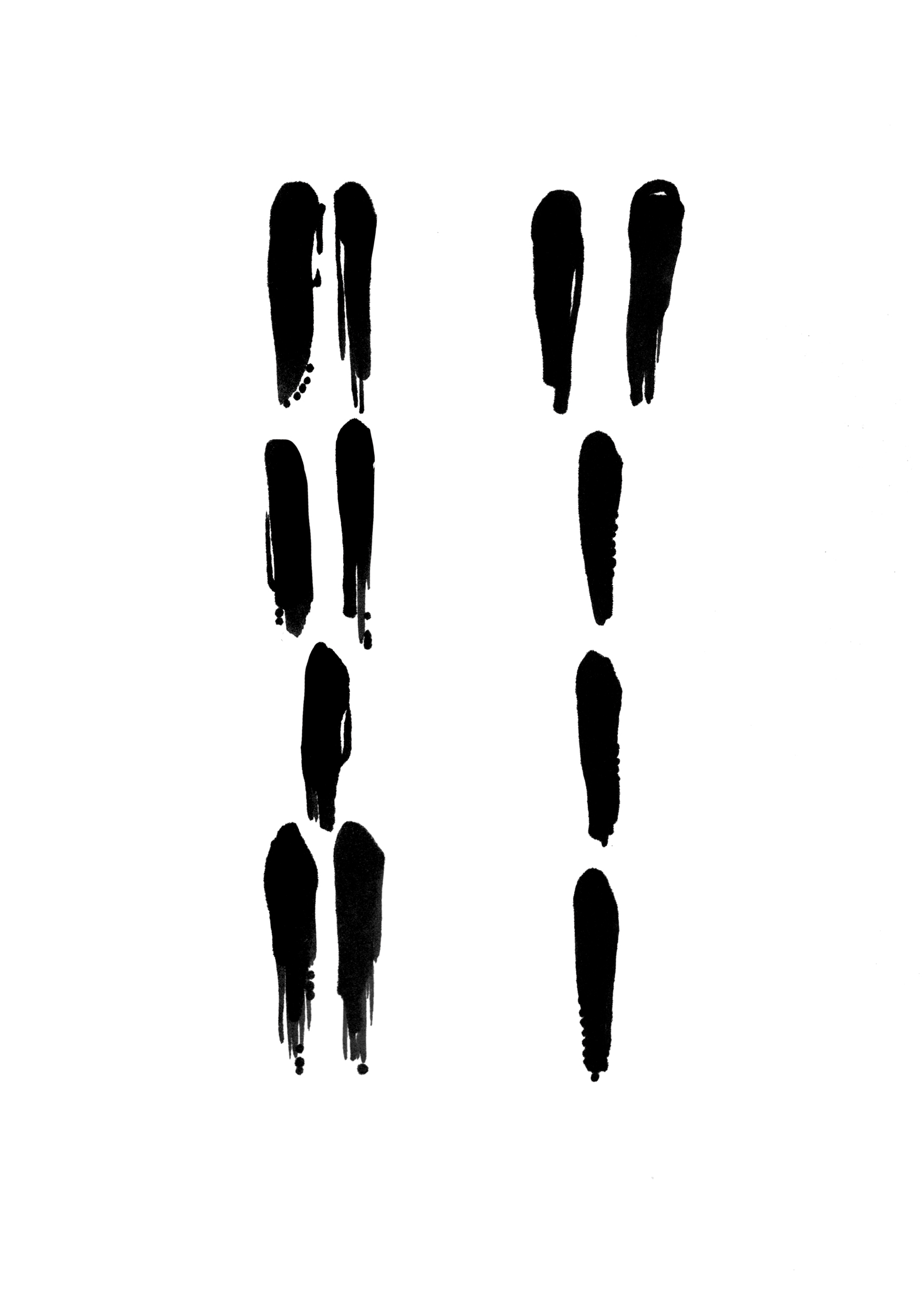
This Academy reads the right column first, then the left. Each row carries a single or double mark.
Where this Odù belongs
Òsá Òtúrúpòn belongs to the Òsá family in this Academy’s study sequence. It is a mixed Odù, distinct from Òtúrúpòn Òsá. The order matters. Its teaching is approached through its own narratives, rather than by adding two general descriptions of the principal signs together.
Key Òrìṣà and sacred relationships
The figures below are selected for their roles in the accounts discussed here. They offer connected reading paths through the tradition.
-
Orí. Orí is the inner head in the bodily fable, where its claim to rule is challenged by the dependence of the whole body on a despised function.
-
Ọ̀rúnmìlà. Orunmila helps the falsely accused wife after a neighbor’s staged evidence breaks her marriage; the brief account gives restoration but little detail about acknowledgment or investigation.
-
Olókun. Olokun appears in the origin list through a concealed doll in a vessel and the mermaid traditions of his daughters; these associations are kept separate from the bodily fable.
Key myths and their meanings
The disregarded opening stops serving
A bodily opening is despised while the head claims to rule the entire body. The opening closes, and the consequences spread gradually through stomach, limbs, and head until the whole organism cannot act. The head and other organs must finally appeal to the function they had dismissed. The fable makes hidden, low-status necessity visible through the breakdown that follows its withdrawal.
The point is interdependence, not an anatomical diagnosis. The head’s prominence does not make it self-sufficient, and shame attached to a function does not lessen its necessity. This can illuminate neglected maintenance and labor without reducing people to bodily parts. The gradual failure also matters: early lack of visible harm allows contempt to continue until the entire system is compromised.
Narrative setting: Cuban/Lukumí narrative in the accounts considered here; no individual author established for this passage.
Evidence planted across a boundary
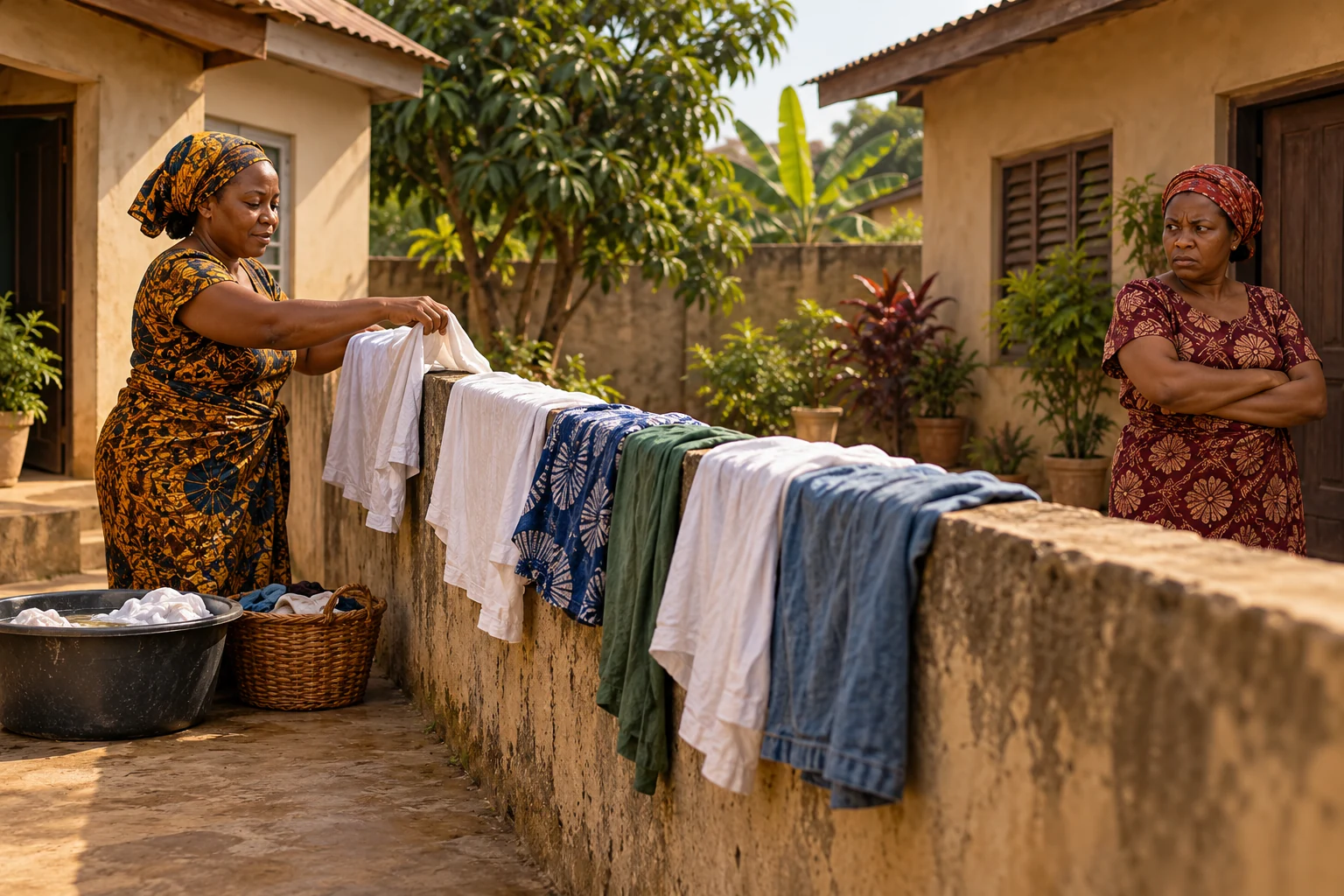
A prosperous couple attracts a neighbor’s envy. The neighbor takes her own washing and throws it into the couple’s yard, then tells the husband that his wife has stolen it. He accepts the visible clothing as proof and leaves his wife for the accuser. The wronged wife turns to Orunmila, and the account says that she eventually recovers the marriage. The crucial event is an accusation staged to look self-evident.
The story is specific about the manufacture of evidence but brief about repair. It therefore supports scrutiny of inference more firmly than it supports an ideal of reconciliation. Possession of an object does not establish how it arrived, and confidence in a spouse’s care does not excuse refusing to hear her account. The recovered marriage still leaves open whether trust and responsibility were addressed.
Narrative setting: Cuban/Lukumí narrative in the accounts considered here; no individual author established for this passage.
Ukpe’s children make a voice the public needs
Ukpe, identified in the source as Trumpet, receives counsel before entering the world and responds through relations with the head, Eshu, and Ogún. The narrative places Ukpe alongside other new arrivals and later within the sheltering growth of a young palm. Many offspring develop there. When people seek an effective voice to announce important occasions, Eshu directs them toward the newcomers. Other candidates fail to provide the needed sound, but Ukpe’s children are selected. They become heralds associated with royal movement and the remembrance of public occasions. Prosperity comes through a capacity that a wider community recognizes as useful, rather than through multiplication alone.
The account joins growth with a particular vocation. Ukpe does not become important simply because there are many offspring or because a royal title is desired. A public need and the children’s distinctive sound make their place effective, while Eshu’s direction and the earlier sacred response remain part of the cause. The source’s imagery moves between an instrument, family, and palm-supported development, and an editor should preserve that combination without inventing a botanical explanation. Beside the earlier disregarded bodily opening, the addition asks how a necessary function becomes acknowledged.
One function works in hidden darkness and must withdraw before the body recognizes it; the other becomes conspicuous because the community needs an audible announcement. Neither visibility nor concealment alone determines worth. Contemporary interpretation can examine recognition through service, but the sacred relations should not be reduced to networking or publicity. The source also retains an unequal royal setting in which human carriers serve the heralding instruments, complicating any simple celebration of universal recognition.
Narrative witness and setting: Portuguese rendering in the explicitly headed Cromwell Osamaro revelations; an African Ifá witness mediated by the compilation, not a Brazilian provenance established by language alone.
Riverbank abundance becomes an obstruction to other lives
Kpanrikpan, a plant named without a secure identification in the excerpt, seeks a place beside a river. Counsel addresses danger to the plant and its future offspring, but the response is neglected. Once settled, the plant multiplies rapidly and gathers many descendants around it. That growth changes the route by which people approach the water and fish. Eshu calls their attention to the obstructed access, and human clearing destroys the plant community. The story contrasts successful reproduction with an insecure relation to the surrounding place, ending collectively rather than providing an escape for one exceptional descendant or a reconciliation after the clearing.
The plant’s increase looks like prosperity from within its own family, while the people experience the same event as obstruction. That difference is a specific ecological and religious tension, not proof that growth is inherently wrong. Eshu’s intervention makes another relation to the river effective, and the earlier neglected counsel explains why the plant has not secured its own continuation in the witness’s sacred order. A contemporary interpretation should avoid making the human clearing automatically just simply because the narrative completes it. The plant and its descendants are living participants whose loss matters within the account.
Compared with the earlier marriage story, the problem is also different: the planted clothing is deceptive evidence, whereas the crowding beside the river is an actual condition interpreted differently by its users. The bodily-opening fable adds a third distinction, where a hidden necessary function is despised. Together they invite an editor to ask whose flourishing is being described and what other relationships it may interrupt, without asserting a universal policy about plants or rivers.
Narrative witness and setting: Portuguese rendering in the explicitly headed Cromwell Osamaro revelations; an African Ifá witness mediated by the compilation, not a Brazilian provenance established by language alone.
What was born in this Odù
“Born” can name an explicit traditional origin association or what emerges through a story: a capacity, relationship, practice or order of life. Interpretations drawn from a narrative are labelled below, so their basis remains clear.
Secret societies
Selected traditional source association.
The origin list assigns secret societies to this sign. It establishes a local association with organized hidden knowledge, not proof that any one historical society originated in this Odù or shares its full narrative content.
Casting net
Selected traditional source association.
A fishing net is named in the list. It supplies a material image of linked structure and capture, though the selected stories do not explain a specific invention or prescribe its ceremonial use.
Olokun’s concealed image
Selected traditional source association.
The list places an Olokun doll hidden within a vessel here. The association gives concealment a sacred dimension distinct from the neighbor’s deception; hiddenness is not automatically evidence of wrongdoing.
Correlations to life dimensions
These questions bring the selected stories into contemporary life. They are interpretive invitations for study.
Work and resources
The body’s overlooked function becomes visible only when the entire system is blocked. Maintenance work can be similarly discounted while it succeeds. The fable supports recognizing contributions before failure makes dependence unmistakable. The neglected function serves the body from an unhonored position.
Reflect: Which essential work receives attention only when it stops?
Relationships and family
The husband makes a major decision from an accusation and a staged object. The story asks how a partner’s voice, the object’s actual history, and an accuser’s interest should be considered before trust is broken.
Reflect: What account have I not heard before deciding what this evidence means?
Character and inner life
The head’s certainty rests on its visible prominence. Its humiliation makes room for a more accurate view of dependence, while the marriage tale shows a different certainty produced by a convincing surface. The head’s title cannot make the other organs unnecessary.
Reflect: Where am I confusing prominence or visibility with complete knowledge?
Community and responsibility
Secret societies and sacred hidden images complicate the idea that all concealment is harmful. Communities need ways to distinguish appropriate privacy from manipulation, and modest but necessary functions from supposedly inferior people. Olokun’s concealed image has a different purpose from staged evidence.
Reflect: What process can distinguish protected knowledge from a concealed abuse of trust?
A deeper reading of the sacred relationships
The head and divine exchange support a vocation, not increase alone
Ukpe’s preparation explicitly includes the head, Eshu, and Ogún, and the later public voice is narrated as a fulfillment of those relationships. Kpanrikpan’s multiplication, by contrast, occurs without the completed sacred response addressed to continued life beside the river. The difference is not that one grows and the other does not. Both increase, but only one finds an effective place in the larger order the account describes. This gives religious depth to the earlier bodily fable, where Orí’s claimed sovereignty cannot make another function unnecessary. A contemporary discussion can ask about integration and recognition, but should not replace the particular head, divine agencies, and counsel with a generic concept of harmonious self-development that the witness never supplies.
The scale from which prosperity is measured
Ukpe’s many children become a public voice, while Kpanrikpan’s many children impede another population’s route to sustenance. The earlier married couple appears prosperous from outside, and that appearance provokes a neighbor to fabricate a different account of the household. These are three distinct relations between increase and reception: a recognized contribution, a genuine shared-space conflict, and hostile appropriation through deception. A useful contemporary lens should therefore identify both the observer and the material relation before describing success as beneficial or threatening. It cannot assume that envy explains every complaint about growth. Conversely, it cannot infer from a conflict over access that the growing community has no legitimate claim to continuation or that its destruction settles every moral question.
A hidden function and an audible office make different claims
The bodily opening does work that others disdain until its closure makes life impossible. Ukpe’s children do work whose value depends on being heard in public. Kpanrikpan becomes highly present without securing a shared function acceptable to the people approaching the river. Visibility is therefore not a stable measure of significance across the four stories. The question is what a presence does within its relations, including the sacred relations that the witness describes. The marriage accusation supplies a warning about visibility of another kind: clothing found in a yard appears decisive while concealing the action that placed it there. Contemporary interpretation can distinguish unnoticed contribution, useful announcement, obstructive presence, and staged appearance instead of praising or condemning prominence by itself.
Questions that deepen the study
Does a large number of descendants prove that a life has found its proper place?
The two additions explicitly prevent that conclusion. Ukpe and Kpanrikpan both multiply, but their continued relations differ. Ukpe’s children answer a public need through the sacred pathway prepared before arrival; Kpanrikpan’s growth changes others’ access to the river and ends in clearing. The religious account makes answered counsel central to that difference. A contemporary reader can ask whether expansion is supported by a viable relationship with its setting, while avoiding any forecast about actual families or populations. The source does not establish that every numerous household is favored or endangered. Its evidence concerns these particular beings and the different functions their increase comes to perform.
Should the riverbank story be read as approval of destroying whatever obstructs people?
It narrates a specific sacred history in which Eshu directs attention to access and the plant has neglected counsel about its continuation. That is different from a universal permission for human convenience to decide the fate of other life. The plant and its descendants are active participants in the account, and their collective loss should not disappear from interpretation. A contemporary ecological reading may ask how needs for water, fish, and plant habitat could be understood together, but the passage does not record such a negotiated settlement. A responsible reference can state both the narrated outcome and that genuine absence, rather than manufacturing an agreeable ending or converting it into policy.
How does Ukpe’s public importance deepen the earlier story of the unregarded opening?
Both concern a function that acquires acknowledgment through its effect on others, but they work through opposite forms of presence. The bodily function is hidden, and its refusal exposes dependence. Ukpe’s children become useful by making an occasion audible and publicly memorable. The comparison therefore does not say that everyone must become more visible to gain worth. It asks whether a community recognizes what different capacities actually do, including work whose success makes it easy to overlook. Within the religious accounts, Orí’s limited claim and Ukpe’s sacred preparation also matter. Contemporary recognition of contribution should remain an additional interpretation, not a replacement for those specific spiritual relations.
What the four narratives reveal together
The additions distinguish multiplication, function, and recognized place within Òsá Òtúrúpòn. Ukpe’s descendants become an audible public capacity through answered counsel and divine direction; Kpanrikpan’s descendants fill a riverbank without securing a continuing relation to the people who use it. The earlier bodily fable makes hidden dependence unavoidable, while the marriage tale makes visible evidence unreliable because its history has been staged. These differences permit a deeper reference than a general lesson about importance or success.
The head, Eshu, Ogún, and divination remain consequential within the African-attributed witness, and Orí’s body-wide claim remains limited in the Cuban fable. Contemporary questions about ecological access, public memory, or recognition can then be explored openly as interpretations. They should not erase the lost plant community, invent a botanical identity for Ukpe, or turn either conspicuous growth or concealed service into a universal measure of spiritual fulfillment.
Living with this Odù
A continuing life or initiatory relationship
For someone carrying Òsá Òtúrúpòn through a received life or initiatory relationship, worth and visibility may require repeated differentiation. The despised bodily function becomes undeniable only after its withdrawal affects the whole. Ukpe's children become conspicuous because the community needs their particular voice, while Kpanrikpan's flourishing obstructs another relation to water. The planted clothing story adds an altogether different visibility: an object is made to look like self evident evidence while its history is concealed. A life cannot be organized responsibly by trusting either prominence or obscurity alone.
Character can develop through noticing hidden necessities before they fail, hearing an accused person's account and asking whose growth is being counted. The inward temptation may be to accept the head's claim to self sufficiency, or to assume that a large following certifies a beneficial place. Sacred counsel, relations with the head, Eshu and Ogún, and the consequences of neglected response remain active in their respective witnesses. The sign is not a diagnosis of bodily dysfunction or a prediction of marital deception. Its long term questions concern how relations become acknowledged, what evidence actually proves and whether one group's success leaves room for others to live.
A particular consultation and its question
A consultation can distinguish an ignored necessary function, manufactured evidence, an emerging public vocation and a real obstruction viewed differently by those affected. Those are not interchangeable forms of hidden danger. The bodily fable asks what has been shamed or taken for granted; it supplies no anatomical diagnosis. The marriage story asks how the clothing arrived before possession is treated as guilt. Ukpe's account examines the meeting between a specific capacity and a community's need, with Eshu's direction constitutive rather than ornamental. The riverbank plant asks whether internal increase has altered other beings' access, without declaring human clearing automatically just.
A practitioner can examine these structures in the actual question while refusing to announce that a client has a jealous neighbor or an obstructive destiny. The short recovered marriage ending does not establish that trust has been repaired. Contemporary reflection can ask what remains unrecognized, whose account has not been heard and what conditions make a contribution viable. A situational result need not become permanent identity. Its religious meaning belongs to the actual consultation, while the narratives sharpen differences among proof, service, visibility and a growth whose effects extend beyond its own household.
Constructive and adverse possibilities
Constructive movement can involve necessary service being acknowledged, staged evidence being examined and a useful voice finding a public place through sacred direction. Adverse unfolding appears when prominence licenses contempt, visible possession replaces investigation or one community's multiplication blocks another's access. Kpanrikpan's destruction remains a collective loss, not a universal policy about how growth should be controlled. The marriage's restoration also cannot stand in for a documented process of accountability. Iré and osogbo must be interpreted in the actual reading rather than assigned from apparent prosperity or concealment.
The sources allow an essential function to be hidden, a needed herald to be conspicuous and a flourishing plant to be insecure. Their difference matters: visibility alone determines neither worth nor danger, and the sacred relationships do not disappear when contemporary questions of evidence or maintenance are examined.
An illustrative situation in everyday life
Hypothetically, a rapidly growing community group occupies all available storage and meeting space in a shared building. Its members celebrate expansion while cleaners and neighboring users lose access to essential facilities. A separate accusation against one cleaner relies on an object found in the wrong room, without anyone asking how it arrived. Kpanrikpan's structure asks whose flourishing creates an actual obstruction; the bodily fable makes neglected maintenance visible; the clothing story distinguishes a condition from evidence of responsibility. This is an illustrative interpretation, not a diagnosis or a prediction of malicious planting. The group feels successful and defensive, while the cleaner feels both needed and unheard. A useful inquiry would preserve these different questions rather than solve them through one public display of authority.
Sources and reading context
The first two narrative witnesses
These Spanish narratives are Cuban-labelled. Orí is treated as inner head, not an Academy deity entry. Bodily dysfunction remains a fable, and the mermaid association is not generalized into a universal Olokun doctrine. The short marriage ending leaves the process of repair undocumented.
Narrative motifs are summarized independently. The life-dimension reflections are contemporary interpretation. How these reference studies are built explains the wider source approach and the distinction between a reference article and personal divination.
Additional named witnesses
-
Cromwell Osamaro. The Ukpe and Kpanrikpan episodes occur in the explicitly headed African-attributed revelation division.
-
Cuban/Lukumí-labelled collection. The earlier bodily-opening and planted-clothing narratives provide separate comparisons of function and visible evidence.
Ukpe’s instrument, family, and palm imagery is preserved without botanical reconstruction. Kpanrikpan is not assigned an unverified species. The river clearing is a narrated outcome, not environmental advice. No personal prognosis about children or a general claim that multiplication proves favor is inferred.
Bibliographic identification
- C. Osamaro Ibie. Ifism: The Complete Work of Orunmila. Lagos; multivolume publication beginning 1986. Library catalogue record. Related bibliographic record for the named narrative witness. Exact volume, edition and page of the transmitted account have not been independently matched.
Read the source method and wider scholarly context.
The catalogue links identify published works and their authors. They are separate from proof of an individual episode’s wording or attribution. Contemporary comparisons and the synthesis above are editorial interpretation. The author’s books and Academy companions below provide further study; their sales links are separate from the source references.