
Òsá Òtúrá is a mixed Odù in Ifá’s 256-part corpus. Òsá Òtúrá’s selected narratives contrast a difficult figure who can still serve the world with a disruptive figure who refuses repeated chances to change. Orunmila protects Ogún from Olofin’s irreversible order and later demonstrates why he was needed; Obatalá’s troublesome goat dismisses every warning until protection ends. The sign’s wider associations include precious stones, maternal sacrifice, and shared fortune, but the chosen focus is judgment about preservation, accountability, and the cost of acting too finally.
A question to carry through the study: What useful future would an irreversible response destroy, and what change would make preservation responsible?
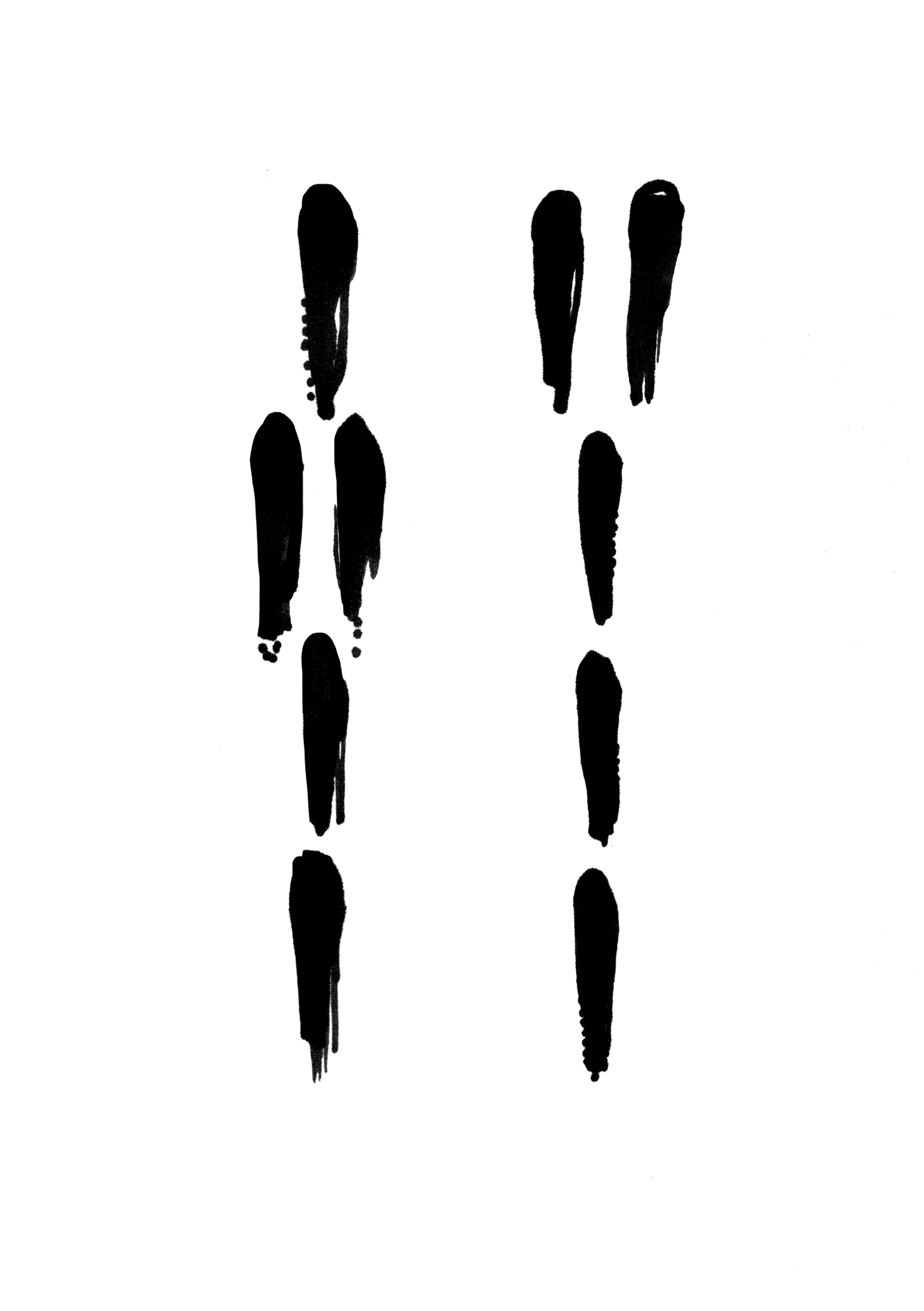
This Academy reads the right column first, then the left. Each row carries a single or double mark.

Where this Odù belongs
Òsá Òtúrá belongs to the Òsá family in this Academy’s study sequence. It is a mixed Odù, distinct from Òtúrá Òsá. The order matters. Its teaching is approached through its own narratives, rather than by adding two general descriptions of the principal signs together.
Key Òrìṣà and sacred relationships
The figures below are selected for their roles in the accounts discussed here. They offer connected reading paths through the tradition.
-
Ògún. Ogún is initially condemned because of repeated complaints, then protected by Orunmila and revealed as uniquely useful when Olofin confronts problems that require his knowledge.
-
Ọ̀rúnmìlà. Orunmila refuses to carry out the fatal order, conceals Ogún, and later reunites him with Olofin; his judgment preserves capacity that the authority had discounted.
-
Obàtálá. Obatalá repeatedly receives complaints about the goat and asks that it be taken away; his patience frames the successive chances the disruptive animal dismisses.
-
Ọya. Oyá represents the final authority reached after the goat refuses warnings; the story assigns her a severe disciplinary role without making that role a universal model for conflict.
Key myths and their meanings
The worker thought to be gone
Olofin hears so many complaints about Ogún that he orders Orunmila to kill him. Orunmila considers Ogún too important to lose and secretly shelters him instead. Later Olofin repeatedly describes problems that only Ogún could solve and regrets the order. Orunmila finally brings the hidden man back into view. Olofin embraces Ogún and elevates Orunmila, while the deception that preserved him remains their secret.
The story opposes immediate punitive certainty to a longer view of social usefulness. It does not prove that indispensable people should escape accountability: Ogún’s troublesome conduct is not resolved in the brief account. Orunmila’s concealment is also ethically difficult, though it prevents an irreversible loss. The unresolved question is how a community can preserve needed skill while still addressing the harm that prompted complaints.
Narrative setting: Cuban/Lukumí narrative in the accounts considered here; no individual author established for this passage.
The goat dismisses another warning
Obatalá’s goat repeatedly causes trouble, and Ogún is asked to take it away. Instead he warns the goat and sends it to Orunmila, where it receives counsel about restoring its relationship with Obatalá. The goat promises compliance but treats the matter as amusement and returns to disruptive conduct. Further warnings are again dismissed. The story ends when Oyá imposes the fatal consequence that earlier intervention had delayed.
Placed beside the preserved Ogún, the goat’s story makes a warning meaningful only if it changes conduct. Promises and cheerful dismissal do not repair repeated disruption. Its severe ending should not be translated into a recommendation for ordinary punishment. The tension is the difference between allowing another opportunity and allowing the same harm indefinitely, especially when intermediaries repeatedly intervene on someone’s behalf.
Narrative setting: Cuban/Lukumí narrative in the accounts considered here; no individual author established for this passage.
The royal musician is summoned to another court
A musician valued for serving the king receives counsel about a coming interruption and dismisses the proposed sacred response as too ordinary to matter. He continues rehearsing with his company for Ogún’s annual festival. Before the performance, Eshu calls the attention of a heavenly authority to the musician’s availability, and celestial officers take him away. His household cannot explain where he has gone when the earthly ruler sends for him. The festival proceeds without the familiar music, and the community recognizes the particular value of the absent performer. The narrative places public distinction within two courts whose demands the musician had not treated as equally consequential.
The passage does not deny the musician’s skill. Its force depends on his established worth and the loss felt by those who expected to hear him. The conflict concerns the assumption that a successful earthly role makes sacred counsel too commonplace to deserve response. Eshu’s intervention gives the heavenly court an effective claim that the visible king cannot overrule. This is a religious account of interrupted service, not merely a caution about professional scheduling. Compared with the earlier preservation of Ogún, it also makes absence reveal value: a ruler discovers that a capacity he expected to command is no longer available.
The reasons differ, since Ogún is hidden after a rash fatal order, while the musician is taken within a neglected sacred relation. Contemporary reflection can ask how expertise remains answerable beyond its immediate audience, but should not portray the episode as evidence that actual bereavement or unexplained absence proves a person rejected religious responsibility.
Narrative witness and setting: Portuguese rendering in the explicitly headed Cromwell Osamaro revelations; an African Ifá witness mediated by the compilation, not a Brazilian provenance established by language alone.
The hunter’s genuine catch becomes the king’s missing bird
Nanakuana cannot afford the response prescribed before a hunting journey and leaves without completing it. After little success, he catches a forest bird and returns. Eshu has meanwhile hidden the king’s favored peacock and shaped an accusation around a shot heard in the forest. Acting as an officer, he stops the hunter; the bird drawn from the bag appears to confirm the charge. At court Nanakuana recounts both his poverty and his earlier consultation. Eshu then argues that he should receive an opportunity to fulfill the obligation. After the hunter obtains the means, the living peacock reappears and the ruler releases him.
The narrative is deliberately harder than a conventional tale in which an innocent person is framed by an evil rival. Eshu participates in the false appearance and then in the route toward release. His role cannot be reduced to a neutral guarantor that ordinary evidence will speak for itself. The account explains the event through a neglected sacred relationship, while Nanakuana explicitly distinguishes inability to pay from disdain. That difference should remain visible rather than being absorbed into the musician’s contempt for an ordinary-looking response.
The older goat story adds another reason for noncompliance, repeated amusement after opportunities to change, and the preserved-Ogún account shows authority itself making the rash decision. Together the four episodes prevent refusal from becoming one moral category. Contemporary readers can ask about evidence and unequal means, but the reference should first explain the religious logic through which Eshu can obstruct, expose dependence, accept renewed exchange, and bring an accusation to an end without fitting a simplified division between kindly helper and malicious adversary.
Narrative witness and setting: Portuguese rendering in the explicitly headed Cromwell Osamaro revelations; an African Ifá witness mediated by the compilation, not a Brazilian provenance established by language alone.
What was born in this Odù
“Born” can name an explicit traditional origin association or what emerges through a story: a capacity, relationship, practice or order of life. Interpretations drawn from a narrative are labelled below, so their basis remains clear.
Sunflower oil
Selected traditional source association.
The explicit origin list names sunflower oil. This local association concerns a valued material, but the selected narratives do not explain its origin, use, or relation to the two stories; no invented ritual meaning is given.
Turquoise and inherited knowledge
Selected traditional source association.
A separate descriptive note says turquoise arises here and connects blue stones with lost wisdom left by earlier inhabitants of Ife. This is a narrative memory association, not archaeological evidence for a gemstone’s discovery.
Correlations to life dimensions
These questions bring the selected stories into contemporary life. They are interpretive invitations for study.
Work and resources
Olofin recognizes Ogún’s value only after assuming he is gone. The episode supports assessing what a person knows and contributes before making a final decision, while keeping the original complaints within that assessment. Olofin later needs the knowledge he had ordered removed.
Reflect: What capacity would disappear with the response I am considering?
Relationships and family
The goat benefits from intermediaries who repeatedly explain the problem and seek another chance. Relationships are strained when their work of protection produces promises without any visible change in the person’s behavior. The goat repeatedly dismisses opportunities that others preserve for it.
Reflect: What observable change would show that another opportunity has been taken seriously?
Character and inner life
Olofin’s regret follows an order made under accumulated frustration. The story invites a pause between understandable irritation and an irreversible judgment, particularly when the decision-maker has not considered future dependence. Regret follows only after the consequences of the order become apparent.
Reflect: Which part of my judgment comes from exhaustion rather than a full assessment?
Community and responsibility
Preservation and accountability need one another. A community loses if every difficult person is discarded, but also loses when usefulness becomes a reason to exempt someone from addressing repeated harm. Ogún’s continued usefulness does not resolve the complaints about him.
Reflect: How can continued participation include clear responsibility for what must change?
A deeper reading of the sacred relationships
Eshu’s intervention exceeds the role of a moral referee
In the musician account Eshu directs a heavenly summons; in the hunter account he shapes both the accusatory appearance and the opportunity for restored exchange. These actions preserve the witness’s theology rather than a comfortable principle that divine power only confirms ordinary innocence. Divination reveals a relation the protagonists must address, and Eshu can make its neglected terms effective in the world. The earlier Orunmila account shows another sacred power interrupting a ruler’s fatal order to preserve Ogún, while the goat story gives warnings a severe limit. A reference should explain these distinct agencies before offering modern evaluations of fairness. It need not manufacture a single systematic doctrine to make the episodes agree, but should not erase difficult divine action to produce only secular lessons.
Different reasons for an unfinished obligation matter
The musician considers the sacred response commonplace; Nanakuana says he lacks its means; the goat laughs off repeated counsel; Olofin initially fails to value the figure he orders removed. These are not four names for the same inner defect. Their material circumstances, prior relations, and opportunities to reconsider differ. A contemporary lens can identify those differences without denying that the African witness gives unfinished exchange spiritual consequence. In particular, poverty should not be rewritten as arrogance merely because two accounts eventually require action. The hunter’s later borrowing is a narrated resolution, not a universal financial recommendation. Comparing the stories allows an editor to explain responsibility with attention to what the person knew, could obtain, and had already been told.
An absence can disclose value without making its cause just
Ogún’s presumed death leaves Olofin unable to solve problems, while the musician’s removal leaves a royal celebration without its expected voice. Both absences reveal a contribution whose availability had been assumed. Yet recognizing that contribution does not settle the different causes of absence. One follows a ruler’s excessive order interrupted by Orunmila; the other follows a heavenly summons within the African-attributed sacred account. The hunter adds an opposite problem, where an object is visibly present but appears to mean something its bearer cannot explain. Together these scenes distinguish evidence of value from evidence about causation. Contemporary interpretation should preserve that distinction instead of treating a useful outcome, recovered capacity, or dramatic display as proof that every preceding act was fair.
Questions that deepen the study
Is Nanakuana’s lack of money equivalent to the musician’s dismissal of counsel?
No. The source gives different explanations: one cannot afford the prescribed means, while the other treats the response as beneath consideration. Both enter the witness’s religious account of unfinished obligation, but that shared structure does not erase their circumstances. A careful interpretation can explain sacred responsibility while refusing to turn material poverty into a fixed character judgment. The eventual borrowing belongs to Nanakuana’s particular narrative resolution, not advice that readers should take on debt. The comparison with the laughing goat makes the distinction clearer, since repeated refusal after an opportunity is again a different situation from either lack of means or dismissive professional confidence.
Why should the reference preserve Eshu’s role in the false accusation?
Because it is central to how this witness explains the event. Removing it would turn the story into a different and easier narrative about corrupt human officers, while treating Eshu only as a final rescuer would conceal the account’s actual tension. The source gives him power over obstruction and renewed passage through sacred exchange. A contemporary reader may still question the suffering of an accused person, but that evaluation should be marked as interpretation rather than substituted for the religious sequence. The living peacock’s return resolves the charge within the story; it does not establish that every real accusation has a hidden sacred cause or will be similarly reversed.
What does the missing musician add to the earlier preservation of Ogún?
It gives another image of indispensable capacity becoming visible through absence, but changes the authorities involved. Olofin regrets a decision he made about Ogún; the earthly king cannot explain or reverse the musician’s removal by a heavenly court. The comparison therefore asks who can claim a person’s service and which relationships the visible institution has taken for granted. It does not establish that usefulness exempts anyone from obligation, nor that a ruler’s need makes a contributor permanently available. The sacred difference matters: one account centers Orunmila’s preserving judgment, and the other centers divine summons following neglected counsel. Their common material loss does not make their religious causes identical.
What the four narratives reveal together
The additions deepen Òsá Òtúrá by distinguishing the reasons, authorities, and appearances surrounding an interrupted future. Ogún is preserved against a ruler’s premature finality; the goat repeatedly dismisses opportunities; the musician treats sacred counsel as commonplace despite professional value; Nanakuana lacks means and encounters an accusation whose evidence Eshu himself has shaped. The accounts therefore cannot be reduced to a uniform claim that adversity follows one kind of disobedience. Their religious worlds make divine agency, exchange, heavenly authority, and divinatory knowledge consequential in different ways.
Contemporary questions about poverty, evidence, usefulness, and proportionality remain legitimate second readings when clearly identified. A strong synthesis should keep the difficult Eshu episode and the absent musician’s value visible, rather than resolving every tension by declaring that the successful ending proves the justice of all preceding actions or guarantees a similar outcome for a reader.
Living with this Odù
A continuing life or initiatory relationship
A received life relationship with Òsá Òtúrá can invite sustained judgment about useful capacity and the possibility of correction. Orunmila preserves Ogún when complaints have prompted a destructive order; the ruler later discovers how much depended on the person he intended to remove. The goat presents a different configuration, repeatedly refusing opportunities to restore a damaged relation. Neither usefulness nor warning has one uniform meaning. The musician's disappearance places valued earthly service within a wider sacred order, while Nanakuana's poverty makes an earlier obligation difficult to fulfill and a staged accusation opens another chance.
Over time, character may develop through distinguishing a dismissed contributor from an uncorrected pattern, and a genuine inability from contempt for counsel. The inner temptations include treating familiar advice as too ordinary to matter or assuming one's public role secures permanent availability. The sources do not promise that all lost workers return or that every warning predicts death. They make sacred timing, hidden knowledge and a household's incomplete information consequential. Carrying the sign offers changing questions about what should be preserved, what must change and whether an apparently conclusive accusation allows an honest account of the person's actual circumstances.
A particular consultation and its question
In consultation, the actual question may concern a threatened contribution, repeated disregard, an interruption of service or evidence that conceals its own construction. The Ogún story asks whether a proposed removal accounts for the whole network of dependence. The goat's story asks whether earlier opportunities to change have been taken seriously. These cannot become a universal defense of a useful person's harmful conduct or a verdict that an unknown client has exhausted every chance. The musician's two courts preserve a sacred claim that cannot be reduced to scheduling conflicts, while the hunter's case makes lack of means and Eshu's intervention essential.
A practitioner can examine what is known, what was actually possible and whether an obligation remains open rather than mechanically interpreting every delay as defiance. The ruler's initial order and the manufactured bird evidence also keep authority from appearing infallible. A situational result does not establish a permanent identity of disobedience. Its reflective value can lie in distinguishing repairable conditions from repeated dismissal, and in making another person's contribution visible before its absence becomes the only evidence. The narratives' fatal consequences remain mythic outcomes, not forecasts for the person seeking guidance.
Constructive and adverse possibilities
Constructive unfolding can include essential capacity being preserved, regret becoming acknowledgment and a person without means receiving another opportunity to address a sacred obligation. Adverse movement appears when warning becomes an object of amusement or public usefulness hides a vulnerability before another court. The absent musician's value becomes visible through loss, but the community's recognition does not undo the absence. Nanakuana's release also cannot be made a guarantee that a falsely accused person will receive divine exoneration. Iré and osogbo require the actual divinatory context.
The witnesses help distinguish preservation from impunity, sacred timing from ordinary convenience and inability from contempt. Their different endings matter: hidden protection, repeated refusal, unexplained household loss and a reopened obligation should remain separate possibilities rather than one rule about the reward for obedience. The absent performer remains someone a household is awaiting.
An illustrative situation in everyday life
Hypothetically, a community dismisses an abrasive repair specialist after repeated complaints, then finds that essential systems cannot be maintained. Some members want immediate reinstatement without conditions; others refuse to acknowledge the lost competence. The preserved Ogún structure asks what capacity the removal overlooked, while the goat's warnings ask whether real opportunities to change conduct have been ignored. A junior worker's inability to afford required training adds Nanakuana's distinction between lack of means and dismissive refusal. This is an illustrative interpretation, not a prediction of fatal consequences or guaranteed rescue. The inward conflict joins pride, regret and fear of dependence. A responsible decision would need to preserve useful knowledge without making usefulness an exemption from accountable conduct.
Sources and reading context
The first two narrative witnesses
The selected Spanish narratives are Cuban-labelled and do not establish an individual author. Their fatal consequences are retained as mythic plot elements rather than personal forecasts. The explicit list also contains a disease origin, which is omitted; the second retained origin comes from a separate descriptive note.
Narrative motifs are summarized independently. The life-dimension reflections are contemporary interpretation. How these reference studies are built explains the wider source approach and the distinction between a reference article and personal divination.
Additional named witnesses
-
Cromwell Osamaro. The royal-musician and Nanakuana accounts occur in the explicitly named African-attributed division.
-
Cuban/Lukumí-labelled collection. The earlier preserved-Ogún and troublesome-goat accounts provide distinct comparisons of judgment and unfinished responsibility.
The source’s heavenly police and transformed evidence are retained as narrated spiritual realities. Nanakuana’s lack of means is not relabelled contempt. No legal, medical, financial, or personal divinatory conclusion is offered, and the account does not supply a universal explanation for loss or accusation.
Bibliographic identification
- C. Osamaro Ibie. Ifism: The Complete Work of Orunmila. Lagos; multivolume publication beginning 1986. Library catalogue record. Related bibliographic record for the named narrative witness. Exact volume, edition and page of the transmitted account have not been independently matched.
Read the source method and wider scholarly context.
The catalogue links identify published works and their authors. They are separate from proof of an individual episode’s wording or attribution. Contemporary comparisons and the synthesis above are editorial interpretation. The author’s books and Academy companions below provide further study; their sales links are separate from the source references.