
Òkànràn Òtúrá is a mixed Odù in Ifá’s 256-part corpus. Okanran Otura joins a community consumed by mutual hostility with a personified mouth that assumes its usefulness excuses responsibility. Orunmila circulates a shared act of care through the troubled land; the mouth’s self-importance instead leads to harmful conduct and rejection. The stories invite attention to everyday speech and interdependence. Their religious explanation of deprivation should not be mistaken for evidence that poor communities are cursed or morally deficient.
A question to carry through the study: Where has being needed become an excuse for refusing responsibility?

This Academy reads the right column first, then the left. Each row carries a single or double mark.
Where this Odù belongs
Òkànràn Òtúrá belongs to the Òkànràn family in this Academy’s study sequence. It is a mixed Odù, distinct from Òtúrá Òkànràn. The order matters. Its teaching is approached through its own narratives, rather than by adding two general descriptions of the principal signs together.
Key Òrìṣà and sacred relationships
The figures below are selected for their roles in the accounts discussed here. They offer connected reading paths through the tradition.
-
Ọ̀rúnmìlà. He enters a distressed community, consults about its condition, and carries a restorative action among its people. He also advises the personified mouth in the shorter motif.
-
Orí. The affiliated list associates the inner head with fulfillment, peace, and support. This is a separate orientation within the compilation, not an actor inserted into the selected stories.
Key myths and their meanings
Care travels through the land
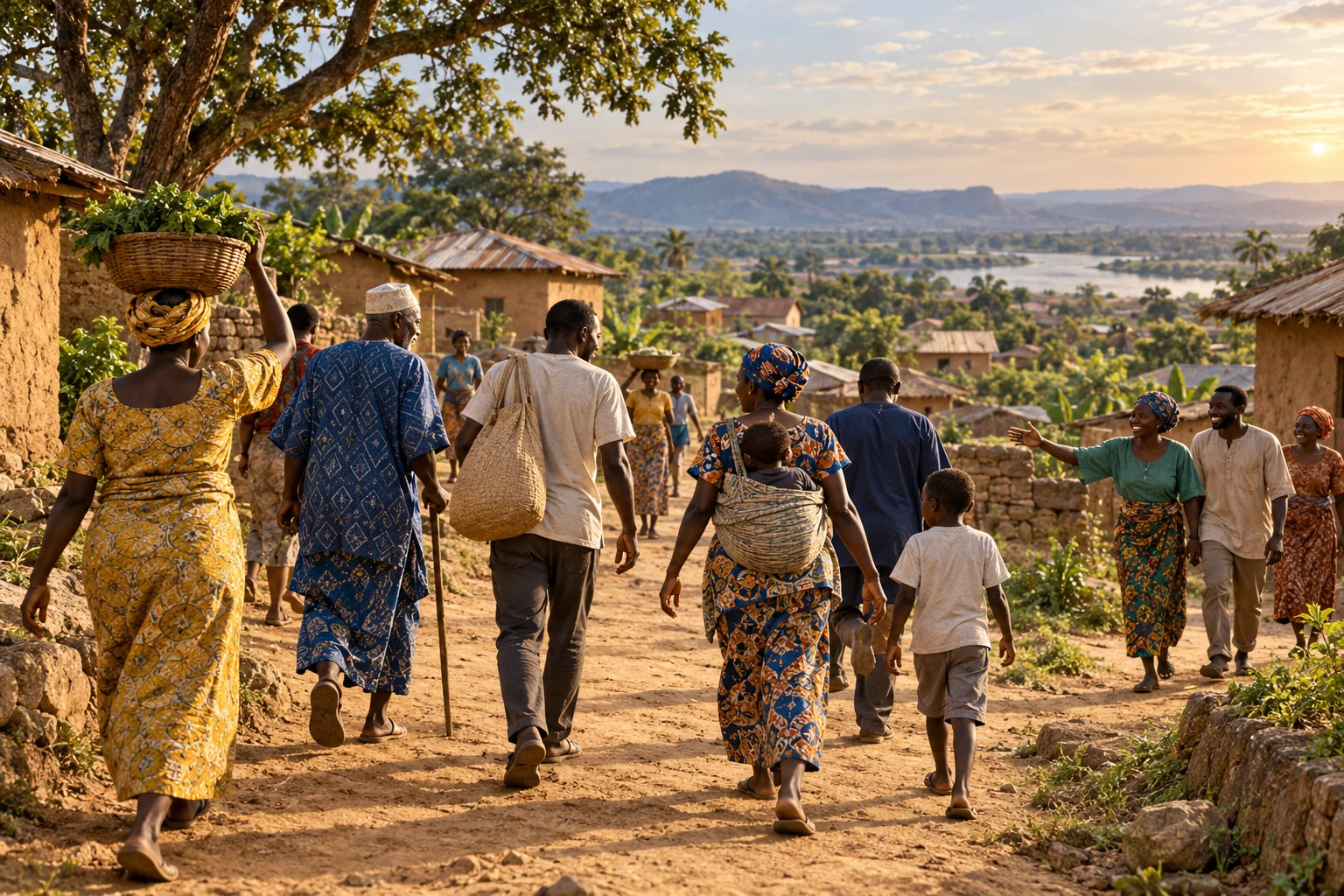
A land is described as impoverished and divided by envy, resentment, and betrayal. Orunmila arrives, gathers people, and identifies the fractured relations within a religious account of their circumstances. He then moves through the territory with a shared restorative act, bringing the dispersed population into one sequence of participation.
The movement through the land matters: repair is not confined to a ruler’s private audience. It reaches people where they live. A critical article can explore how hostility damages cooperation without claiming that it explains all poverty. The sacred account of curse removal remains a religious motif, and the actions are not reproduced as treatment or ritual instructions.
Narrative setting: Cuban/Lukumí patakín in a multilingual source compilation; no individual narrator is established.
The mouth thinks it is exempt
The mouth rejects counsel because it considers itself too necessary to have obligations. The account contrasts the pleasure of intake with what the body later expels, then describes harmful conduct that leads others to reject it. A short bodily image becomes a criticism of self-authorized exemption.
The mouth’s genuine usefulness does not establish independence from the rest of the body or community. This supports questions about leaders, specialists, and speakers who believe a valuable role places them beyond correction. It should not become an anatomical explanation or a shaming comparison applied to a person’s body. The target is the claim to exemption.
Narrative setting: Cuban/Lukumí patakín in a multilingual source compilation; no individual narrator is established.
Rain pursues Harmattan into earthly life
Harmattan is personified as a woman who declines Rain’s pursuit and leaves the celestial setting for earth. Her initial attractiveness and authority over living things later coincide with a stripped landscape and suffering among animals. Rain follows, and its arrival is welcomed as relief. Harmattan is taken back toward the celestial domain, while plants recover their flourishing. The witness explains a changing seasonal relation through divine courtship and movement. Its dated weather gloss and later marriage applications are not adopted as universal facts. The selected account concerns alternating conditions in an inhabited sacred world, not permission to force a person into a relationship.
The story gives the same presence different relations over time. Harmattan’s arrival is attractive, yet its continuation becomes burdensome; Rain’s pursuit is represented as ecological relief. That sequence is not a reliable ethical analogy for human consent. The distinction is important because the source’s religious personification can be taken seriously without making every plot action an instruction. The earlier mouth episode also describes a capacity becoming harmful when its own importance is treated as sufficient, while the troubled community requires a changed collective relation.
The seasonal story adds a material scale in which flourishing depends on conditions beyond any one inhabitant. Within the witness, celestial and earthly movements are active agencies, not merely a weather chart with decorative names. Contemporary interpretation can ask how an initially beneficial condition becomes excessive, while retaining the gendered and coercive elements as unresolved features rather than smoothing them into a wholly benevolent cycle.
Narrative witness and setting: Translated excerpt in the multilingual compilation’s expressly attributed Cromwell Osamaro sequence, with Yoruba/Bini-facing material. The compilation’s language is not evidence of a Brazilian tradition.
The second son is chosen for the shared future
Several sons of a ruler compete over succession and receive counsel concerning the contest. The eldest declines the advised commitment, while the youngest sees no reason to spend his hard-earned resources on a title for which tradition does not seem to qualify him. The second son responds. When the kingmakers later consult about which prince would bring peace and prosperity to the community, the second son is selected and becomes ruler. The narrative gives the public consequences of leadership a place alongside family order and personal expectation. It is a localized sacred succession account, not a universal constitutional rule or proof that payment secures office.
The choice is not described simply as the prince who wants the title most. The kingmakers ask what the candidate will bring to the community, and the account narrates a favorable public result. That religious criterion distinguishes a claim to office from a relation capable of sustaining its exercise. The eldest’s refusal and the youngest’s resignation are also different positions: one does not undertake the response, while the other believes inherited rank has already closed the possibility.
The story should not become a formula that costly acts overcome every institutional barrier. Within its witness, consultation and commitment disclose a future relation rather than a purchase. The earlier mouth’s claim to indispensability offers a counterpoint to seniority as self-sufficient authority; the community-repair story adds a collective setting in which people’s conduct matters. Contemporary analysis can therefore ask how a candidacy becomes answerable to those governed without claiming the account establishes one universally fair procedure.
Narrative witness and setting: Translated excerpt in the multilingual compilation’s expressly attributed Cromwell Osamaro sequence, with Yoruba/Bini-facing material. The compilation’s language is not evidence of a Brazilian tradition.
What was born in this Odù
“Born” can name an explicit traditional origin association or what emerges through a story: a capacity, relationship, practice or order of life. Interpretations drawn from a narrative are labelled below, so their basis remains clear.
Separation of sun and earth
Selected traditional source association.
The born list names a cosmic separation without developing it in the selected narrative. It can frame differentiation and relationship, but no physical account of the solar system or invented creation story follows.
Mamuraye
Selected traditional source association.
The list names this religious motif, and the community narrative places it in a shared restorative setting. Its exact wider meaning is not established here; verses and procedures are deliberately omitted.
Correlations to life dimensions
These questions bring the selected stories into contemporary life. They are interpretive invitations for study.
Work and resources
Conflict among participants can undermine shared work. Restoring cooperation requires identifying concrete conduct without making deprivation a moral verdict.
Reflect: Which repeated interaction is weakening your shared project?
Relationships and family
The mouth depends on a larger system despite its important role. Family and partnership require acknowledgment of less visible contributions.
Reflect: Whose contribution makes your own role possible?
Character and inner life
The claim to indispensability blocks learning. A necessary skill does not remove the need to receive feedback.
Reflect: What correction have you dismissed because people need you?
Community and responsibility
Orunmila’s circuit brings separate households into a common action. Repair gains public meaning when it reaches beyond those already near authority.
Reflect: Who should be included in a process of reconciliation?
A deeper reading of the sacred relationships
Religious authorization concerns what a role will bring
The succession account frames the final consultation around peace and prosperity for the community, not solely the claimant’s entitlement. The earlier collective repair similarly addresses the condition in which people live together, while the mouth’s importance does not excuse its conduct. These particulars give religious responsibility a public dimension. A contemporary discussion of accountable office can follow, but should not replace the sacred decision with a secular election theory or describe the commitment as a fee that mechanically purchases rank. The witness regards divination as able to disclose a prospective relation. Its authority is explained within that setting, while the modern reader’s questions about institutions remain a distinct layer.
An initially welcome condition can become excessive
Harmattan’s earthly attractiveness changes into a burdensome continuation, and the mouth’s necessary function becomes a reason it claims exemption. The troubled community’s repeated hostility also turns ordinary coexistence into an unlivable condition. These are not identical moral failures: one is a cosmic seasonal personification, another a bodily tale, and another a collective religious history. Their comparison can ask when a condition changes its effect and who can recognize that threshold. The succession account offers a further distinction, measuring a role through its future contribution rather than its mere existence. A strong study should retain the different scales instead of presenting excess as a fixed trait of everyone associated with the sign.
The source’s analogy does not determine every human application
The weather narrative uses gender and pursuit to explain movement between domains, but it cannot authorize coercive marriage. The mouth uses bodily processes to criticize exemption, but it is not anatomy or a diagnosis. The community and succession episodes describe sacred responses without proving that every deprivation is a curse or every title is earned through a specific rite. These limits are not a rejection of religious reality. They distinguish the account’s own participants and claims from a later editor’s decision to apply them to another situation. Contemporary interpretation is strongest when it states the comparison and its boundary rather than presenting a new rule as if the source had already settled it.
Questions that deepen the study
Does the seasonal story justify pursuing someone who refuses marriage?
No. Harmattan and Rain belong to a sacred account of seasonal movement, and its coercive courtship cannot become a general permission over another person’s consent. A study can explain that the witness sees Rain’s arrival as relief while keeping the gendered means visible. Contemporary interpretation may compare excess and renewal, but should state that it is doing so. The source’s later marital applications exceed what an ecological personification can responsibly establish about actual relationships. Respecting the tradition does not require treating every action in a myth as an instruction; it requires describing the world and the unresolved tension accurately.
Why does the second son’s choice not simply reject tradition?
The narrative retains a royal family, kingmakers, and religious consultation. What changes is the assumption that seniority or apparent ineligibility has already settled the outcome. The final question concerns which candidate will support the community’s well-being. Within the witness, divination and a prepared relation disclose that answer. A contemporary reader can ask how inherited procedures remain answerable to public consequences without claiming the story supplies a universal reform program. The youngest son’s hesitation also remains understandable in its setting; his view of tradition is not evidence that anyone facing a closed opportunity merely lacks faith or should spend beyond their means.
What connects the new succession story with the mouth’s claim to importance?
Both distinguish having a recognized position from being beyond responsibility. The mouth assumes its necessity excuses a refused obligation; the succession contest ultimately asks what a ruler will bring to the community rather than relying only on the existence of a family claim. The comparison is contemporary analysis, but it follows exact details. The religious accounts themselves make obligation and divination effective in their worlds. They do not merely illustrate a modern management principle. The larger study can therefore discuss authority calmly while avoiding a blanket claim that all senior people, useful specialists, or inherited institutions are inherently illegitimate.
What the four narratives reveal together
The added witness extends Okanran Otura’s collective responsibility into seasonal change and royal succession. Harmattan’s welcome becomes a burdensome condition before Rain’s return, while the second son’s candidacy is judged through a prospective relation to communal peace. The earlier mouth and troubled community retain different failures of responsibility. Their comparison should remain religiously grounded: divine movement, sacred obligation, and divination actively shape the accounts rather than functioning only as modern allegories.
Contemporary readers can ask when a useful role becomes an exemption or an inherited expectation becomes inadequate, but those questions must retain clear limits. The weather courtship is not a rule for human consent, and a succession outcome is not a purchase formula for office. The four stories contribute depth by distinguishing a capacity’s presence, its duration, and what its exercise brings to those around it.
Living with this Odù
A continuing life or initiatory relationship
For someone who has received Òkànràn Òtúrá as a life or initiatory sign, the contribution of a role can remain more important than a claim to exemption. The mouth is genuinely necessary but not independent of consequences; the second son's succession is framed through what his rule will bring to the community. Across changing responsibilities, these accounts can support a character willing to receive correction without denying its own capacity. Neither seniority nor usefulness supplies a complete answer to how authority should be exercised.
The troubled land and seasonal narrative widen the field beyond private conduct. Repair travels through inhabited places rather than remaining a ruler's private event, while an initially welcome condition changes its effects over time. Rain and Harmattan remain personified agencies in the attributed witness, including a gendered pursuit that cannot authorize coercive human relationships. Long-term judgment can ask when a continuation has become excessive and who is able to report its costs. The received sign does not explain poverty through envy alone, require costly action to obtain office or identify someone as a misunderstood indispensable speaker. It sustains questions about public consequence, changing conditions and what a role makes possible for others.
A particular consultation and its question
A consultation yielding Òkànràn Òtúrá can help distinguish a claimant's importance from the future relation their role may create. A succession question concerns more than who expects the title; the kingmakers ask about the governed community's conditions. The mouth gives a different structure in which an essential function is used to deny obligation. A practitioner can ask what the actual claim establishes and whose experience it omits before drawing a lesson about authority.
A question about deteriorating conditions may instead need the land's dispersed participation or the seasonal threshold at which a formerly attractive presence becomes burdensome. Those religious accounts cannot diagnose deprivation as a curse, determine real weather or justify pursuit after a person's refusal. Their different agencies should remain distinguishable from the contemporary comparison. Consultation can examine whether the concern involves excessive continuation, unaccountable speech or an overlooked public consequence, without making one interpretation fit every case. A particular result does not permanently assign the client the role of second son, harmful mouth or restoring visitor. Its significance remains situated in the actual question and the source-specific relation the reading brings into view.
Constructive and adverse possibilities
Constructive relations may make authority answerable to those affected, extend repair beyond a privileged audience and recognize when a role needs renewal rather than exemption. The succession's divination concerns a prospective public relation within its sacred witness; it is not a fee purchasing office. The community's participation also remains more specific than individual goodwill.
Adverse unfolding could involve treating necessity as immunity, believing inherited rank closes every future possibility or maintaining a condition after its effects have become burdensome. The seasonal narrative cannot convert ecological relief into approval of coercive marriage. These contrasts leave an actual divination's state undetermined. They ask how a condition changes over time and what evidence would make its costs visible, while refusing to identify a person's body, poverty or family structure with the moralized images of the source.
An illustrative situation in everyday life
In a hypothetical community organization, a long-serving speaker insists that criticism would endanger the whole group because no one else can perform the role. Members continue benefiting from the speaker's skill while finding meetings increasingly unlivable. The mouth distinguishes real usefulness from exemption, and the succession narrative adds a public question about what the next arrangement would bring to those governed. This illustration does not make the speaker a sacred bodily figure or prescribe one selection procedure. It asks whether the group can recognize a contribution and still examine its effects. An initially welcome public capacity may need different conditions, rather than endless continuation or complete denial of its value.
Sources and reading context
The first two narrative witnesses
The narratives are Cuban/Lukumí materials. Bodily images and curse language are treated as religious and ethical motifs rather than medical or socioeconomic explanations. The affiliated inner-head entry is labeled as such, and the named origin item is not furnished with an unsupported etymology.
Narrative motifs are summarized independently. The life-dimension reflections are contemporary interpretation. How these reference studies are built explains the wider source approach and the distinction between a reference article and personal divination.
Additional named witnesses
- Cromwell Osamaro Ibie. The surrounding sequence is expressly attributed to Cromwell Osamaro. These selected episodes are read through the multilingual compilation’s translated renderings; exact edition and original translation chain remain unverified.
The Harmattan passage contains a dated seasonal gloss and gendered courtship, neither generalized into weather science or relationship advice. The succession is a local sacred narrative without a verified dynasty or constitutional claim. No resource demand or ritual sequence is recommended to readers.
Bibliographic identification
- C. Osamaro Ibie. Ifism: The Complete Work of Orunmila. Lagos; multivolume publication beginning 1986. Library catalogue record. Related bibliographic record for the named narrative witness. Exact volume, edition and page of the transmitted account have not been independently matched.
Read the source method and wider scholarly context.
The catalogue links identify published works and their authors. They are separate from proof of an individual episode’s wording or attribution. Contemporary comparisons and the synthesis above are editorial interpretation. The author’s books and Academy companions below provide further study; their sales links are separate from the source references.
Continue within the family
Previous study: Òkànràn Òtúrúpòn · Next study: Òkànràn Ìrẹtẹ̀