
Òkànràn Ìrẹtẹ̀ is a mixed Odù in Ifá’s 256-part corpus. Okanran Irete pairs a falsely blamed bird with a skilled carver whose ambitions become entangled with incomplete learning and family tragedy. The first story restores responsibility through an eyewitness rather than public assumption. The second refuses to let artistic success appear costless, even though its ending is deeply troubling. Together they support attention to hidden causes and excluded people, especially when a community prefers a convenient explanation or an impressive finished object.
A question to carry through the study: Who or what disappears when a success story is told only through its finished result?
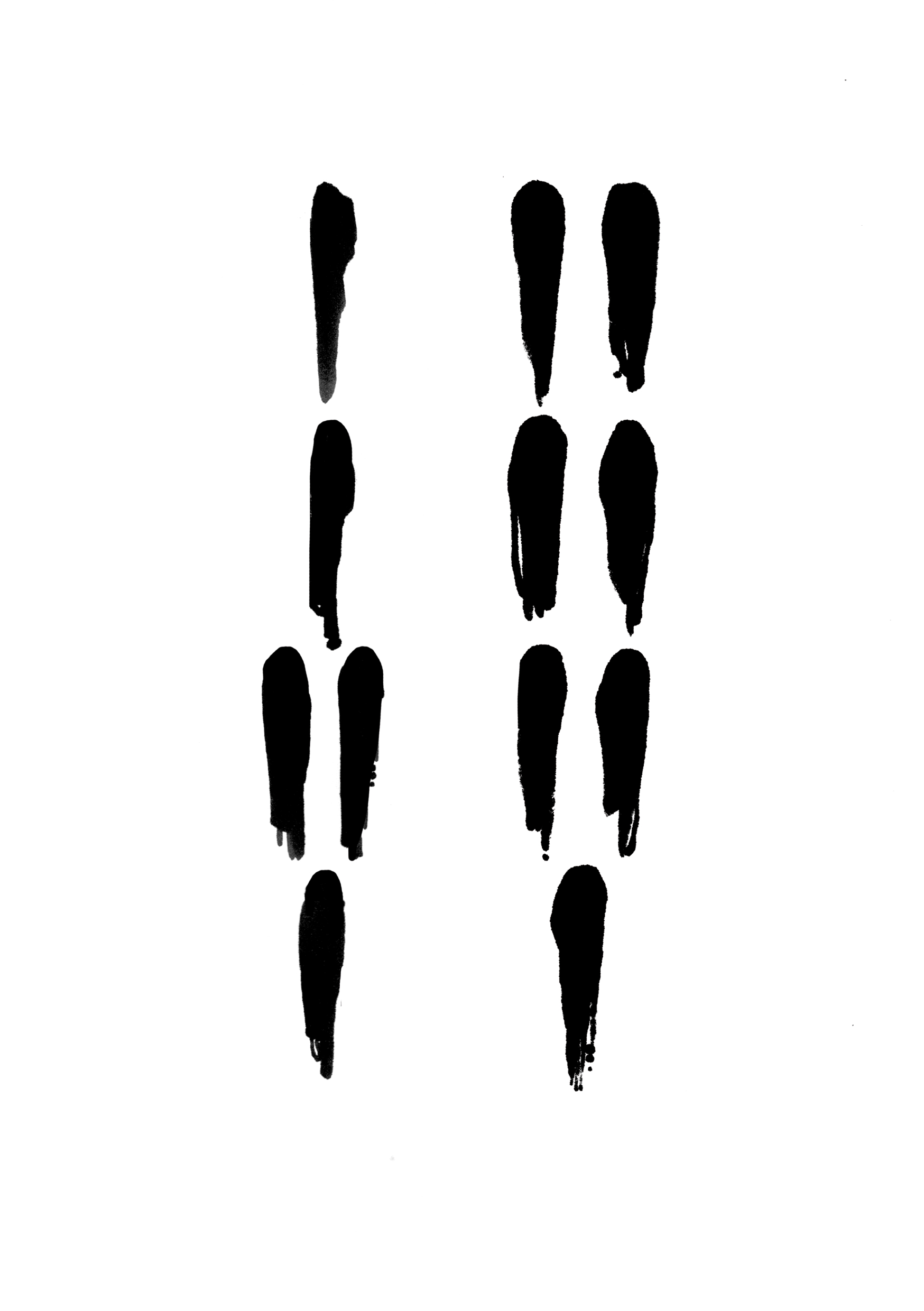
This Academy reads the right column first, then the left. Each row carries a single or double mark.
Where this Odù belongs
Òkànràn Ìrẹtẹ̀ belongs to the Òkànràn family in this Academy’s study sequence. It is a mixed Odù, distinct from Ìrẹtẹ̀ Òkànràn. The order matters. Its teaching is approached through its own narratives, rather than by adding two general descriptions of the principal signs together.
Key Òrìṣà and sacred relationships
The figures below are selected for their roles in the accounts discussed here. They offer connected reading paths through the tradition.
-
Èṣù. He witnesses the actual poisoning of the river and corrects the accusation against the bird who arrived later, distinguishing observed conduct from mere presence.
-
Òṣun. She notices the carver’s work and distress, introduces him to a teacher, and initiates a network of learning rather than merely praising his talent.
-
Ṣàngó. He provides a final consecrating role in the carving story, but the resulting animation is entangled with the child’s death and cannot be presented as an uncomplicated blessing.
Key myths and their meanings
The bird at the poisoned river
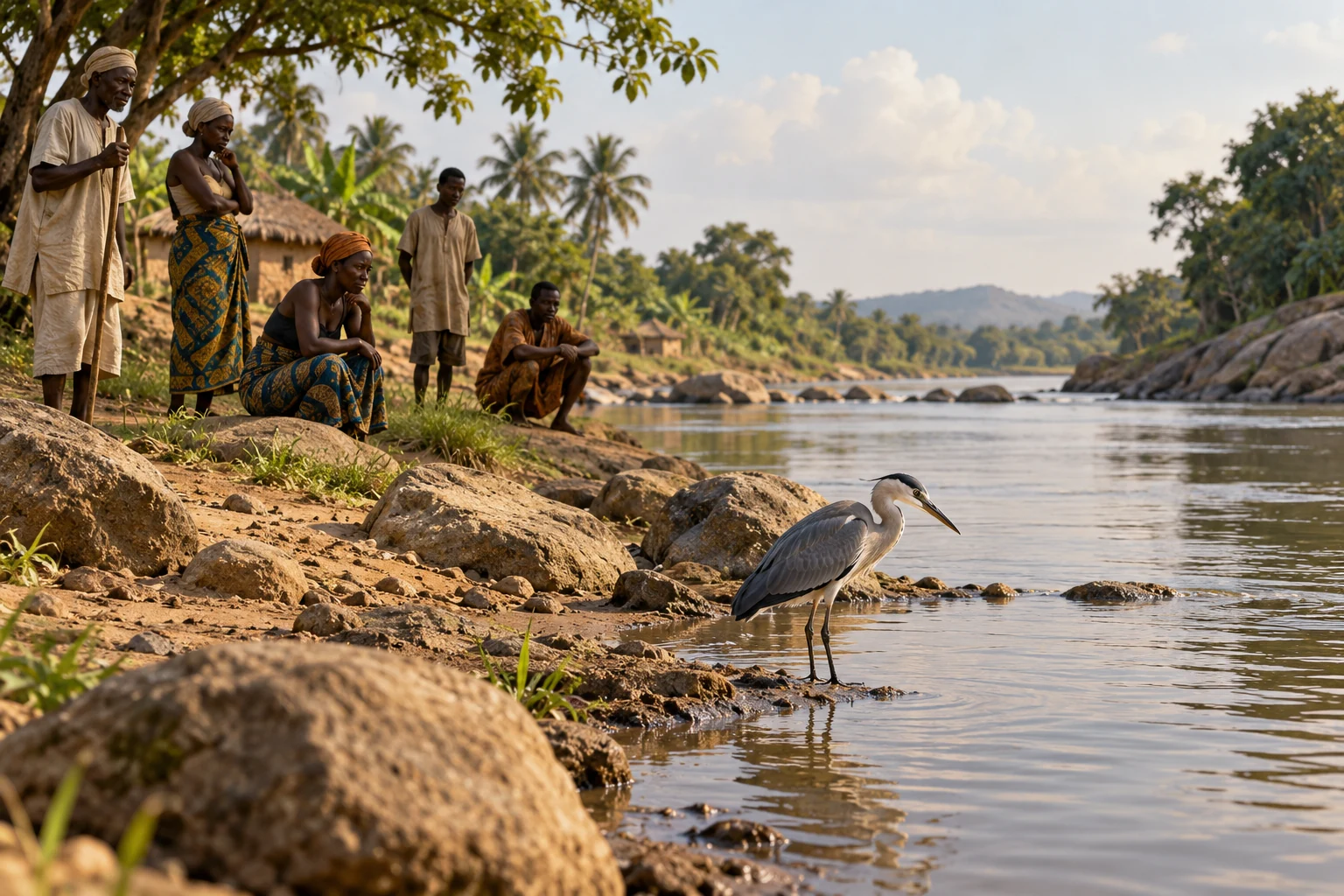
A fertile riverside community enjoys shared water until a hostile visitor contaminates it. As people panic, another bird arrives and is blamed. Elegua identifies the actor he actually saw, redirecting the accusation. The narrative ends with the community able to return to the river.
Arrival after a harmful event is mistaken for responsibility for it. The story therefore offers a concrete warning about scapegoating and the need to establish sequence. Its miraculous restoration of water is not an environmental remediation method. The ethical focus is how fear narrows inquiry and how an eyewitness can interrupt a socially convenient false charge.
Narrative setting: Cuban/Lukumí patakín in a multilingual source compilation; no individual narrator is established.
The carvings and the missing apprenticeship
A gifted carver cannot sell his beautiful figures. Oshun introduces him to a teacher, but he leaves believing his learning is complete. Further assistance reveals a missing stage. During the final process his enthusiastic son dies, and the figures’ animation is tied to the child’s presence. Accomplishment and loss remain inseparable in the ending.
The tale resists a cost-free account of mastery. Its sequence supports patience in apprenticeship, but the tragic mechanism must not be praised as necessary sacrifice or turned into instructions. The child’s work promoting the craft belongs in the account of achievement, and his loss demands attention rather than becoming a decorative explanation for the father’s greatness.
Narrative setting: Cuban/Lukumí patakín in a multilingual source compilation; no individual narrator is established.
Water receives different routes past three obstructions
Water is confronted by clouds, a stone, and projecting roots, each represented as obstructing its life and movement. It consults Orunmila rather than accepting fear as the only response. Esu then changes the field in different ways: rain is released, a passage is made around the stone, and rooted obstacles are removed. Water gains a route forward. The witness personifies forces and materials in a sacred account of flow. It does not say that every obstacle must be destroyed, and it is not a hydraulic explanation or proof that a reader has three hostile people opposing their prosperity.
The responses differ with the obstruction. A stone is bypassed, rooted barriers are removed, and the relation to rain changes. That precision prevents the story from becoming a general celebration of force. Within the religious witness, Esu’s effective work and Water’s consultation belong to why movement becomes possible; they are not optional symbolic names for engineering. The earlier poisoned-river account adds a distinct question: before acting, a community must know which participant is responsible instead of blaming the bird that arrives later.
The carver’s incomplete apprenticeship supplies another kind of blockage, one that cannot be solved by simply working harder at the same unfinished knowledge. The new episode therefore broadens the sign’s discernment of causes. A contemporary reader may ask whether a problem needs circumvention, removal, new provision, or corrected understanding, while leaving the actual natural processes and real people outside a literal application of the three antagonists.
Narrative witness and setting: Translated excerpt in the multilingual compilation’s expressly attributed Cromwell Osamaro sequence, with Yoruba/Bini-facing material. The compilation’s language is not evidence of a Brazilian tradition.
Osanyin’s challenge exposes an unrecognized remainder
Osanyin challenges Orunmila’s standing, interpreting the latter’s frail and harmless appearance as a sign of lesser efficacy. Higher authority appoints Elenini to test the rivals in a severe enclosed ordeal. Osanyin asks to be released before the stipulated end, while Orunmila completes it. The explanation afterward concerns knowledge: Orunmila has passed on only part of a larger domain of leaves, and Osanyin has mistaken that learned portion for the whole. The witness asserts a hierarchy through sacred capacity and incomplete transmission. Its dangerous ordeal is not a practice for readers, and the numerical leaf claims are not treated as botanical inventory.
The central misjudgment joins appearance with epistemic confidence. Osanyin sees a modest exterior and knows a substantial body of teaching, then infers that no important remainder exists beyond it. The trial produces a public result, but the later explanation locates that result in the limits of the challenger’s knowledge rather than physical bravado alone. Within the witness, the sacred knowledge has effective reality; it is not merely a metaphor for confidence. The earlier carver also leaves instruction too soon and discovers that the objects remain unable to act.
The parallel is specific, yet neither narrative should become a universal endorsement of hoarding instruction or humiliating learners. The hierarchy asserted here is local and does not erase other traditions’ accounts of Osanyin. A contemporary interpretation can ask how expertise remains open to what it has not received, while also noticing that an extreme ordeal is a morally and practically troubling means of settling a dispute about knowledge.
Narrative witness and setting: Translated excerpt in the multilingual compilation’s expressly attributed Cromwell Osamaro sequence, with Yoruba/Bini-facing material. The compilation’s language is not evidence of a Brazilian tradition.
What was born in this Odù
“Born” can name an explicit traditional origin association or what emerges through a story: a capacity, relationship, practice or order of life. Interpretations drawn from a narrative are labelled below, so their basis remains clear.
Wood carving
Selected traditional source association.
The explicit origin item is developed through the artisan narrative. It is a sacred account of a craft’s power, not an archaeological origin of carving or a technical method of making figures.
Chills
Selected traditional source association.
Chills appear as an origin association without a developed explanation in the selected stories. The item is not used diagnostically or connected to a claimed treatment.
Correlations to life dimensions
These questions bring the selected stories into contemporary life. They are interpretive invitations for study.
Work and resources
The carver’s talent needs both a market and a learning network. Beauty alone does not explain why work succeeds or fails to circulate.
Reflect: Which support system does your craft still need?
Relationships and family
The son actively promotes his father’s work before the tragedy. Family labor should be visible in accounts of individual achievement.
Reflect: Whose effort is being folded into your personal success?
Character and inner life
The carver leaves apprenticeship too early. Confidence needs an honest account of what has and has not been learned.
Reflect: What stage have you assumed you can skip?
Community and responsibility
Fear makes the wrong bird an easy target. Community responsibility includes resisting a satisfying accusation until the sequence is established.
Reflect: What fact would distinguish a witness from a culprit?
A deeper reading of the sacred relationships
Sacred knowledge changes what can become effective
Water’s consultation enables relations through which Esu opens movement, while the rivalry account explains Orunmila’s result through a domain of knowledge not exhausted by what Osanyin has learned. The earlier carver likewise needs more than an attractive form for his figures’ efficacy. These are claims within a sacred world, not only examples of problem-solving. A spiritually grounded study can explain that knowledge and divine agency participate in what happens, while declining to publish restricted procedures or present leaf numbers as pharmacology. Contemporary analysis may examine expertise and incomplete learning, but must preserve the difference between a modern analogy and the source’s account of effective sacred capacity.
Correct action depends on a differentiated cause
The poisoned river needs truthful attribution, the carver needs an unlearned stage, Water needs several distinct responses, and Osanyin needs recognition of a remainder beyond his instruction. Calling all four difficulties resistance would obscure their mechanisms. A contemporary analytical lens can ask whether the problem is evidence, training, access, or a claim that exceeds knowledge. The religious accounts give particular disclosures rather than a single technique. This specificity also prevents a harmful personal application: a real delay is not proof of an enemy, and an adviser’s confidence is not evidence that every cause has been identified. The source’s different actions provide a model of attentive reading, not a universal diagnostic system.
Appearances can understate or misassign capacity
The bird at the river is blamed because it is seen at the wrong moment, the beautiful carvings lack the expected efficacy, and Orunmila’s unimposing appearance encourages an incorrect estimate of his knowledge. Water’s route likewise appears closed before differentiated action changes it. These are not identical deceptions. Some are hasty inferences by observers; some concern a real incomplete condition; some involve a possible route not yet established. A reference study gains depth by separating those cases. The contemporary question is what additional fact would correct the estimate. Within the religious witness, that fact can arrive through divination or sacred teaching without making every reported revelation automatically authoritative elsewhere.
Questions that deepen the study
Why does Water not simply destroy every obstacle?
The narrative gives different conditions different answers. The stone receives a passage around it, roots are removed, and rain is released through Esu’s agency. That detail makes the episode more exact than a general praise of persistence or force. Within the witness, the route becomes possible through a sacred response; contemporary interpretation may compare a problem’s form with the intervention it needs. The comparison should not become an account of actual hydraulic processes or an instruction to remove natural features. Nor does the list of three antagonists justify telling a reader that three people must be blocking their success.
Does Osanyin’s defeat mean medicinal knowledge is inferior to all divination?
The account asserts a particular hierarchy between its divine protagonists and explains it through a larger body of knowledge than the challenger recognizes. That is a local theological claim, not a general judgment against medicine or every tradition’s account of Osanyin. The source also does not establish a scientific leaf catalogue or a safe human test. A contemporary reader can consider the danger of mistaking partial expertise for completeness while preserving sacred knowledge as real within the witness. The study should not turn a mythic result into grounds for rejecting medical care or devaluing practitioners outside the narrated relation.
How does the new challenge story deepen the earlier carver’s apprenticeship?
Both establish that possessing a meaningful portion of knowledge is not the same as knowing its full conditions. The carver leaves believing he is ready, while Osanyin makes a claim of superiority that overlooks what has not been taught. Their differences matter: one concerns animated craft and tragic family loss, the other a divine contest and asserted hierarchy. A reference study can compare epistemic limits without making either ending an endorsement of every teacher’s control. The religious logic gives the knowledge effective capacity, while contemporary analysis asks how a learner or expert can remain open to an unrecognized remainder.
What the four narratives reveal together
The added witness makes Okanran Irete’s discernment of causes and capacities more exact. Water does not receive one response for every obstruction, and Osanyin’s challenge exposes a remainder beyond substantial but partial learning. The earlier falsely blamed bird and unfinished carvings retain different failures of attribution and transmission. A spiritually grounded comparison preserves divination, Esu’s work, and effective sacred knowledge rather than reducing the narratives to modern technical metaphors. Contemporary readers can then ask what a problem requires and what a claim actually establishes.
The study should not equate a modest appearance with weakness, a beautiful form with efficacy, or one learned portion with a complete domain. It should also retain its limits: an extreme ordeal is not a model for readers, and a local divine hierarchy is not a universal verdict on medicine, teachers, or every other lineage.
Living with this Odù
A continuing life or initiatory relationship
For a person whose received life or initiatory Odù is Òkànràn Ìrẹtẹ̀, an obstacle can require a different kind of knowledge from the one already being used. The poisoned river needs truthful sequence rather than blame attached to the latest arrival; Water's obstructions need several distinct responses. Across changing difficulties, these narratives can develop the habit of asking what the evidence establishes before increasing effort or declaring an adversary. Their sacred agents remain active, but the stories do not authorize suspicion of three hidden enemies.
The carver and Osanyin bring another remainder into view. Attractive form and substantial expertise can still be incomplete, while an unimposing appearance can conceal effective knowledge. Long-term character can include openness to further instruction without treating humiliation or dangerous ordeal as necessary education. The carver's son's contribution and death must remain a serious loss, rather than a price that greatness rightly demands. The received sign does not prescribe tragedy, identify an actual child as a sacrifice or rank every tradition's Osanyin below Orunmila. It invites differentiated attention to evidence, training and access, preserving sacred efficacy without making a successful principal figure the measure of every affected life.
A particular consultation and its question
In consultation, Òkànràn Ìrẹtẹ̀ can help distinguish mistaken attribution from incomplete training or a blocked route. These are not all forms of resistance. The river's accused bird arrives after the contamination; the carver lacks a learned stage; Water receives different changes around different obstacles. A practitioner can ask what kind of addition would correct the current account rather than announce a single hidden cause for every delay.
The Osanyin challenge also asks what expertise has and has not received. Its severe trial and numerical leaf claims belong to a localized sacred hierarchy, not a botanical inventory or a model for testing an unknown person's competence. Orunmila's and Esu's effectiveness within the witnesses should remain explicit without becoming clinical or hydraulic mechanisms. Consultation may illuminate the scope of a claim, but a reported revelation elsewhere cannot automatically settle every practical question. The present result does not make the client an unrecognized master or prove a newcomer caused harm. It calls for attention to the identified narrative while leaving the carver's tragic cost and the ordeal's troubling means visible rather than converting success into complete vindication.
Constructive and adverse possibilities
Constructive relations may correct blame through an exact sequence, recognize a needed stage of learning or fit a response to the actual obstruction. Esu releases, bypasses or removes differently in Water's account; the religious world does not supply one undifferentiated force. The modest-looking Orunmila likewise exposes a knowledge claim whose scope had been overstated.
Adverse unfolding could involve confusing arrival with causation, beauty with efficacy or a substantial teaching with the whole domain. A favorable trial result does not make dangerous methods appropriate for readers, and mastery cannot justify the son's loss as a necessary human sacrifice. These possibilities do not determine ìrè or òṣogbo in a real consultation. They ask what additional fact or relation changes the field, whose contribution remains unrecognized and which cost persists after the principal problem appears solved.
An illustrative situation in everyday life
In a hypothetical workshop, a new worker is blamed for a failure discovered shortly after arrival. Records show that the damage began earlier, but the group keeps treating chronology as suspicion. The river bird's narrative makes sequence decisive. Once blame is corrected, the workshop discovers that a separate problem concerns an unlearned stage of a process, which the carver helps distinguish from deliberate obstruction. This illustration does not map Water's three antagonists onto colleagues or reproduce a dangerous ordeal. It asks whether the next response should correct evidence, complete training or alter access. The worker's relief and the group's need to repair the process can both matter without one replacing the other.
Sources and reading context
The first two narrative witnesses
The two Cuban narratives contain supernatural and tragic elements that are not treated as practical guidance. Oluwo Popo is retained as a source name rather than automatically merged with every disease-associated power. Ritual procedures, verses, and predictions concerning children are excluded.
Narrative motifs are summarized independently. The life-dimension reflections are contemporary interpretation. How these reference studies are built explains the wider source approach and the distinction between a reference article and personal divination.
Additional named witnesses
- Cromwell Osamaro Ibie. The surrounding sequence is expressly attributed to Cromwell Osamaro. These selected episodes are read through the multilingual compilation’s translated renderings; exact edition and original translation chain remain unverified.
The challenge passage contains duplicated sentences and later synthetic interpretation, which is not used as a second source. The severe ordeal and leaf counts are not instructions or scientific claims. Water’s antagonists remain sacred personifications, without identifying real enemies or giving environmental procedures.
Bibliographic identification
- C. Osamaro Ibie. Ifism: The Complete Work of Orunmila. Lagos; multivolume publication beginning 1986. Library catalogue record. Related bibliographic record for the named narrative witness. Exact volume, edition and page of the transmitted account have not been independently matched.
Read the source method and wider scholarly context.
The catalogue links identify published works and their authors. They are separate from proof of an individual episode’s wording or attribution. Contemporary comparisons and the synthesis above are editorial interpretation. The author’s books and Academy companions below provide further study; their sales links are separate from the source references.