
Òkànràn Ọ̀ṣẹ́ is a mixed Odù in Ifá’s 256-part corpus. Okanran Ose contrasts concealed intention in pursuit of sacred knowledge with a maker’s need to show the public what a useful object can do. The mask episode gains access through performed humility and parental intervention. The basket episode succeeds through transparent demonstration. Both concern how appearances shape opportunity, but their ethics differ. The first exposes the danger of treating ambition as sufficient justification; the second makes practical understanding part of honest exchange.
A question to carry through the study: Are you helping others understand what you offer, or arranging an appearance that hides your intention?
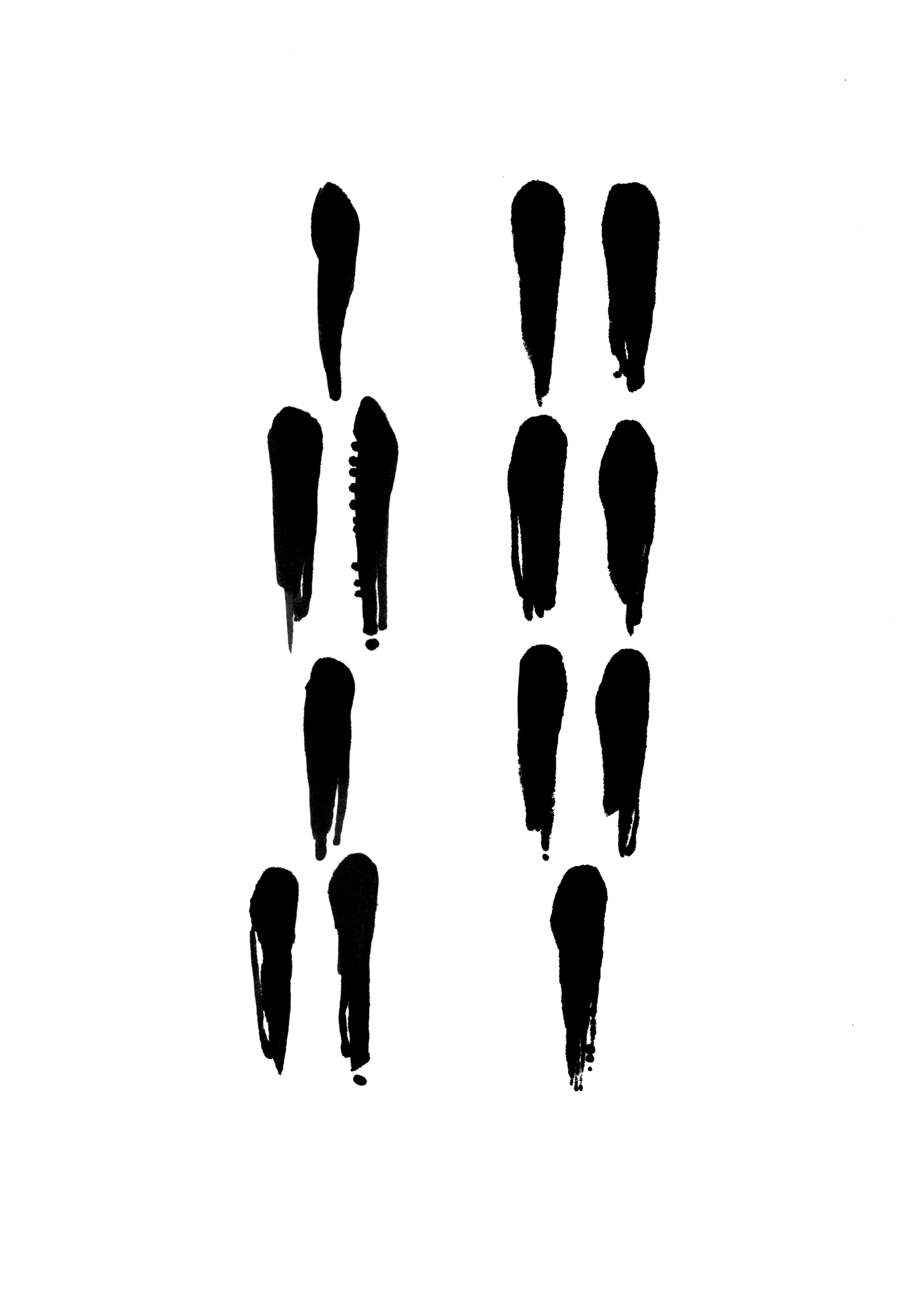
This Academy reads the right column first, then the left. Each row carries a single or double mark.

Where this Odù belongs
Òkànràn Ọ̀ṣẹ́ belongs to the Òkànràn family in this Academy’s study sequence. It is a mixed Odù, distinct from Ọ̀ṣẹ́ Òkànràn. The order matters. Its teaching is approached through its own narratives, rather than by adding two general descriptions of the principal signs together.
Key Òrìṣà and sacred relationships
The figures below are selected for their roles in the accounts discussed here. They offer connected reading paths through the tradition.
-
Ọya. She supports her son’s access to knowledge and participates in the transformation that allows him to appear differently before his mentor. Her care is entangled with deception.
-
Obàtálá. He initially resists the initiation, then joins the effort to alter his son’s presentation. His changing position gives the family conflict a specific sequence.
-
Ọ̀rúnmìlà. He receives the son in the initiation episode and later identifies the basket maker’s need for public recognition, sending Elegba to help make the product intelligible.
-
Èṣù. He demonstrates baskets in ordinary use to passing shoppers, converting an unfamiliar object into a recognized aid to carrying goods.
Key myths and their meanings
The appearance arranged for access
A son seeks knowledge his father initially withholds. His mother intervenes, and a chain of religious authorities becomes involved. The parents eventually help alter his presentation so that he can appear harmless and gain his mentor’s secrets. The narrative explicitly connects the mask with concealed intention as well as advancement.
The source does not present an innocent disguise alone; its conclusion names hypocrisy. A useful analysis should ask whether desired knowledge justifies manipulating the person entrusted with teaching it. Parental advocacy can help a learner, but it can also shield ambition from limits. The unstable names and mistranslated objects require restraint about details.
Narrative setting: Cuban/Lukumí patakín in a multilingual source compilation; no individual narrator is established.
Baskets placed into use
A basket maker struggles because people do not understand why they would need his products. Consultation leads Elegba to accompany him. Rather than merely announcing quality, Elegba invites shoppers to put their goods into baskets and experience the convenience. Public understanding grows through direct use, and the maker’s livelihood changes.
The problem is not inferior workmanship or moral failure. An unfamiliar tool needs an intelligible relationship to a real task. Unlike the mask, this presentation makes function more visible rather than less. The story supports demonstration, accessibility, and useful explanation without guaranteeing that any product shown well will become profitable.
Narrative setting: Cuban/Lukumí patakín in a multilingual source compilation; no individual narrator is established.
Three siblings choose different relations with the world
Poverty, Suffering, and Prosperity appear as siblings who consult before their earthly lives. All are offered a route toward enduring honor. The first two prefer to be feared rather than welcomed and decline the advised commitment. Prosperity responds because it wants satisfied followers. After an unsettled beginning, that different relation develops into flourishing and attraction. The account explains why people recoil from two conditions and seek the third through sacred personification and chosen orientation. It is not a claim that a poor or suffering human being has selected moral inferiority, nor a timetable promising that every difficult early life ends in material success.
The siblings are personified conditions, not interchangeable with the people affected by them. Keeping that distinction is essential to a faithful and humane reading. Their contrast concerns the relation they wish to establish with others: fear or satisfied attachment. Within the religious witness, the accepted commitment is part of how Prosperity’s relation becomes effective, and the initially unsettled period prevents instant reward from becoming the whole structure. The earlier mask narrative gives another way to attract access through a performed appearance that conceals intention, while the basket maker’s demonstration makes usefulness more intelligible.
The new siblings therefore sharpen a question about the grounds of following. Are others approaching because they recognize benefit, because they fear consequences, or because they have been shown a misleading face? Contemporary interpretation can ask that question without replacing the sacred personifications with a theory that individuals create their own deprivation or that every popular figure must be beneficial.
Narrative witness and setting: Translated excerpt in the multilingual compilation’s expressly attributed Cromwell Osamaro sequence, with Yoruba/Bini-facing material. The compilation’s language is not evidence of a Brazilian tradition.
The squirrel’s voice exposes the resting serpent
A serpent seeks counsel concerning a close friendship with a squirrel. It is warned that the relation can become dangerous, but declines the advised response because its confidence in the friend seems sufficient. Esu then prompts the squirrel to call near the serpent’s resting place and draws passersby’s attention to what the call reveals. People approach and kill the serpent. The witness connects the squirrel’s later cry with this event. The selected narrative gives a particular lethal disclosure and divine intervention, not evidence that friendship is inherently unsafe or that a reader can identify disloyal people by an animal sound.
The serpent mistakes the existence of a valued bond for certainty about every future condition within it. The squirrel’s voice then makes a hidden presence accessible to people whose response is fatal. Within the witness, Esu’s agency helps produce that change; the story is not merely a secular account of gossip. Yet a contemporary interpretation should not repeat the appended generalized warning as a reason for constant suspicion of friends. The earlier basket demonstration uses public communication very differently, making a function understandable without concealing the maker’s purpose.
The mask story also changes access through an arranged appearance. These contrasts make disclosure an exact subject: what is revealed, by whom, to which audience, and with what effect? The serpent’s death is not a desirable price for learning. It is a limit inside this particular etiology, and its presence should prevent an editor from converting the motif into a neat formula that all openness is foolish or all secrecy protective.
Narrative witness and setting: Translated excerpt in the multilingual compilation’s expressly attributed Cromwell Osamaro sequence, with Yoruba/Bini-facing material. The compilation’s language is not evidence of a Brazilian tradition.
What was born in this Odù
“Born” can name an explicit traditional origin association or what emerges through a story: a capacity, relationship, practice or order of life. Interpretations drawn from a narrative are labelled below, so their basis remains clear.
The basket
Selected traditional source association.
The list and narrative associate this sign with a carrying tool. Its significance here is making a practical function visible; no universal historical origin of basketry is claimed.
River sand
Selected traditional source association.
Sand in the river is a separate listed association. The selected stories do not explain its emergence, and an ecological or deity-specific origin should not be invented.
A fish’s sea-to-river movement
Selected traditional source association.
The source names a fish’s movement to spawn as an origin motif. It remains a local natural image, not a verified account of species behavior or a direction to impose on other traditions.
Correlations to life dimensions
These questions bring the selected stories into contemporary life. They are interpretive invitations for study.
Work and resources
The maker needs explanation tied to an actual task. Public usefulness becomes clearer when people can try something rather than hear grand claims.
Reflect: What small demonstration would make your work understandable?
Relationships and family
The parents’ support helps their son cross a boundary, but it also assists deception. Care and ethical permission are different questions.
Reflect: Which limit should support for a loved one still respect?
Character and inner life
Performed humility gains access while hiding ambition. Self-presentation deserves scrutiny when it prevents another person’s informed choice.
Reflect: What intention are you leaving out of your introduction?
Community and responsibility
The basket demonstration invites participation rather than dependence on prestige. Communities learn when function is made accessible.
Reflect: How can you let people test the value of an idea themselves?
A deeper reading of the sacred relationships
Sacred response shapes the relation a presence establishes
The siblings’ differing commitments participate in why one becomes sought while the others are feared. The serpent’s declined response likewise remains consequential within the witness, with Esu actively altering the encounter through voice and attention. These are religious accounts of effective relations, not only moral observations about attitude. The basket maker’s consultation also leads to a new capacity for people to recognize use. A contemporary comparison can explore attraction and risk, but should first explain what divination and sacred agency do in each narrative. That explanation must remain particular: it does not mean that poverty or suffering among actual people is evidence of refusal, or that every dangerous disclosure reveals a missed rite.
A following can rest on benefit, fear, or a managed appearance
Prosperity wants satisfied followers, its siblings prefer fear, the mask conceals an ambition to obtain knowledge, and the basket demonstration makes a practical function visible. These are four distinct grounds of response. The squirrel’s audience adds another, where attention is redirected toward a presence under threat. A reference study can ask why people gather without assuming that any gathering proves legitimacy or any popularity proves kindness. This contemporary lens follows the plots and leaves the sacred participants intact. The differences are especially valuable because a simple claim that communication creates success would obscure whether the resulting access is informed, coerced, mistaken, or dangerous to another being.
The audience changes what disclosure does
The basket’s use becomes helpful when shoppers experience it directly. The mask works by controlling what a mentor can infer, and the squirrel’s call brings people whose response destroys the revealed serpent. The siblings also imagine different audiences: fearful creatures or satisfied followers. These cases demonstrate that visibility is not a value by itself. A contemporary interpretation should identify the recipient and the consequences before praising transparency or secrecy. The religious narratives explain how particular agencies bring those conditions about, while the editor’s comparison remains additional analysis. It should not invent a universal information rule or assume every concealed thing would be safer if exposed.
Questions that deepen the study
Do the siblings blame poor people for their poverty?
The narrative personifies Poverty and Suffering as beings choosing a feared relation to the world; it does not provide a factual account of why a particular human lacks resources. Conflating those levels would create an unjustified moral accusation. A reference study can explain the sacred origin of the personifications and ask a contemporary question about leadership through fear or benefit. It should also retain Prosperity’s unsettled beginning without turning it into a promise about every reader’s later wealth. Spiritual responsibility can remain meaningful within the witness while material deprivation in actual life requires a different and much broader account of causes.
Is the serpent story an instruction never to trust a friend?
No general conclusion of that scale is warranted. The witness gives one warned relation, a declined sacred response, Esu’s intervention, and a particular disclosure with a lethal audience. Its later application urges caution, but an article should not turn that into a diagnosis of every close relationship. Contemporary reflection can ask what a bond does and does not make certain, especially when information can reach people outside it. The story’s religious agency also remains distinct from a modern claim that the squirrel independently proves all friendship unreliable. The exact chain matters more than an atmosphere of generalized suspicion.
What does the basket account contribute when read with these darker motifs?
It offers an instance in which explanation increases informed use instead of hiding intention or exposing someone to harm. Shoppers learn how a basket helps them carry goods, and the maker’s livelihood changes through that recognizable benefit. The contrast prevents the reference study from treating all attraction as manipulation. The mask and squirrel stories show very different information relations, while the siblings make the desired relation to followers explicit. Together they support a contemporary question about how people come to understand an offer. Within the sacred account, Orunmila and Esu still actively make that new understanding possible rather than merely naming an advertising technique.
What the four narratives reveal together
The added witness makes Okanran Ose’s concern with appearance and public response more exact. Personified conditions choose to be feared or to have satisfied followers, while the squirrel’s call makes a resting serpent fatally available to an outside audience. The earlier mask and basket narratives retain contrasting means of obtaining access: concealed intention and demonstrated usefulness. Religious agency is active throughout, shaping what relations can become effective. Contemporary interpretation can then distinguish benefit, fear, and manipulation without blaming actual poverty on spiritual failure or treating close friends as presumed enemies. The four stories do not make visibility inherently good or concealment inherently safe. Their depth lies in specifying who is invited to know, what they can infer, and which being bears the consequences of a successful act of communication.
Living with this Odù
A continuing life or initiatory relationship
For someone who has received Òkànràn Ọ̀ṣẹ́ in a life or initiatory setting, being seen can create informed access or dangerous exposure. The basket demonstration makes a function intelligible, while the arranged mask conceals the intention through which knowledge is obtained. Across changing opportunities, these narratives can support judgment about whether a presentation helps another person understand or controls what they are allowed to infer. Parental advocacy does not automatically make every route to instruction legitimate.
The siblings and serpent add different audiences and motives. Prosperity seeks satisfied followers within a sacred personification, not a claim that suffering people chose their deprivation. The squirrel's call changes who can reach a hidden being, with Esu's active involvement and a fatal ending. Long-term character can include noticing what a disclosure makes possible for the recipient rather than praising openness or secrecy in the abstract. The received sign does not predict betrayal by friends, guarantee popular success or diagnose a reader through the personified conditions. It asks why people gather, what kind of relation sustains their response and whether another being's safety or agency has been lost in an apparently successful presentation.
A particular consultation and its question
A consultation yielding Òkànràn Ọ̀ṣẹ́ can help distinguish clearer explanation from managed appearance. Is an unfamiliar product being demonstrated in an actual task, or is a learner hiding intention to bypass a teacher's boundary? The baskets and mask address different access problems, and a practitioner should not assume every obstacle to recognition requires better persuasion. The unstable names in the mask witness also limit reconstruction of its details.
A question about following or disclosure may need other distinctions. The sacred siblings seek different relations through fear or satisfied attachment, while the serpent's location becomes visible to an audience that harms it. Esu's agency and the consequences of declined preparation remain effective in their religious accounts without diagnosing modern poverty or friendship. Consultation can ask what is being revealed, to whom and with what foreseeable result. It cannot identify a disloyal friend from an animal sound or declare every hidden intention malicious. The actual result belongs to one question, not a permanent identity as suffering, prosperity, disguised learner or endangered serpent. Interpretation becomes more exact when it follows the audience and the specific consequence rather than treating visibility itself as the answer.
Constructive and adverse possibilities
Constructive relations might make real use available for direct, informed understanding, establish a following through recognized benefit and preserve another's agency in the process of gaining access. The basket maker's consultation and Elegba's accompaniment remain religiously consequential, not simply techniques for promotion. Prosperity's unsettled beginning also prevents instantaneous reward from becoming the only measure.
Adverse unfolding could involve deceptive presentation, fear mistaken for legitimate attachment or disclosure directed toward an audience whose response endangers the revealed being. The serpent's death cannot justify permanent suspicion of every friend. These contrasts do not assign ìrè or òṣogbo to an actual result. They ask whether a successful communication has informed, coerced or misled, and whether the person seeking recognition has examined the effects that recognition produces for someone outside their own immediate aim.
An illustrative situation in everyday life
In a hypothetical learning program, a student's family helps present the student as having no ambition to compete, hoping a guarded teacher will reveal protected methods. Elsewhere, a maker lets people try an unfamiliar tool so they can understand its actual use. The mask and baskets distinguish control of another's inference from demonstration that increases informed choice. This illustration does not assume every teacher's restriction is justified or every advocate deceptive. The squirrel's disclosure adds the need to consider audience if information about the teacher becomes public. The question is what each presentation reveals or conceals, who can consent and whether access gained through it can sustain an honest teaching relationship afterward.
Sources and reading context
The first two narrative witnesses
The mask narrative contains unstable personal names and questionable English glosses, so its central sequence is used without treating the added explanatory prose as verified Santeria doctrine. Both stories are Cuban materials. Natural-origin items remain local associations rather than scientific claims.
Narrative motifs are summarized independently. The life-dimension reflections are contemporary interpretation. How these reference studies are built explains the wider source approach and the distinction between a reference article and personal divination.
Additional named witnesses
- Cromwell Osamaro Ibie. The surrounding sequence is expressly attributed to Cromwell Osamaro. These selected episodes are read through the multilingual compilation’s translated renderings; exact edition and original translation chain remain unverified.
The siblings are sacred personifications rather than a socioeconomic explanation of real deprivation. The serpent’s fate is an etiology, not an accusation against a reader’s friend. No personal forecast, animal-control practice, verse, or ritual procedure is reproduced.
Bibliographic identification
- C. Osamaro Ibie. Ifism: The Complete Work of Orunmila. Lagos; multivolume publication beginning 1986. Library catalogue record. Related bibliographic record for the named narrative witness. Exact volume, edition and page of the transmitted account have not been independently matched.
Read the source method and wider scholarly context.
The catalogue links identify published works and their authors. They are separate from proof of an individual episode’s wording or attribution. Contemporary comparisons and the synthesis above are editorial interpretation. The author’s books and Academy companions below provide further study; their sales links are separate from the source references.