
Òsá Òdí is a mixed Odù in Ifá’s 256-part corpus. The two selected tales set royal identity against the ordinary work that sustains a town. A king conceals his status during an affair and later confronts the child and mother he abandoned. In another account, everybody becomes a king, and essential trades disappear. The sign’s listed origins include social grouping and a conflict between fish and hooks, making interdependence, concealment, and unequal encounters more precise themes than a general celebration of rank.
A question to carry through the study: Which obligation remains mine even when I step outside the role through which others know me?
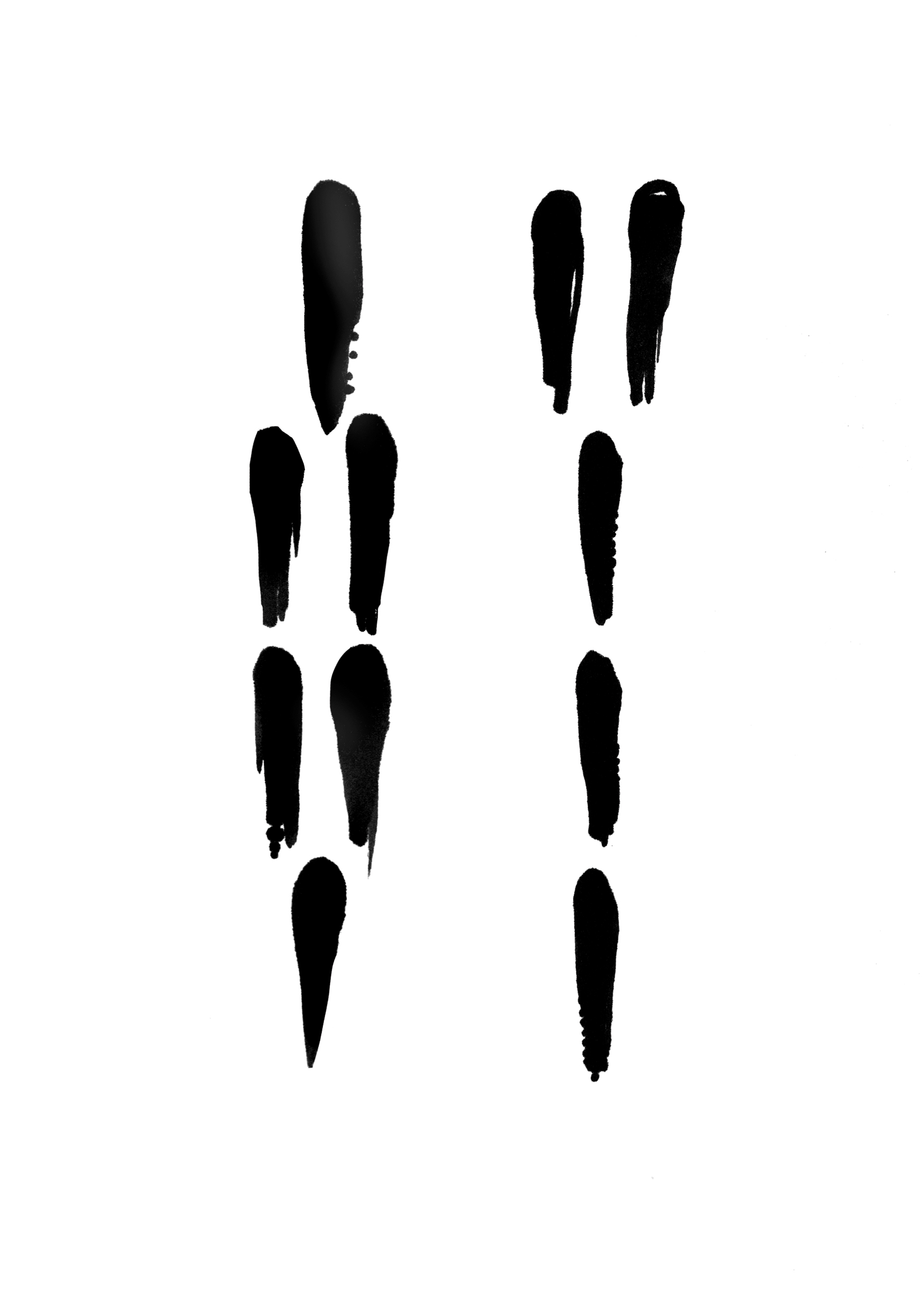
This Academy reads the right column first, then the left. Each row carries a single or double mark.

Where this Odù belongs
Òsá Òdí belongs to the Òsá family in this Academy’s study sequence. It is a mixed Odù, distinct from Òdí Òsá. The order matters. Its teaching is approached through its own narratives, rather than by adding two general descriptions of the principal signs together.
Key Òrìṣà and sacred relationships
The figures below are selected for their roles in the accounts discussed here. They offer connected reading paths through the tradition.
-
Ògún. In a separate bellows tale within this section, Ogún turns a freely offered labor-saving contribution into forced service; the association adds a concrete problem of work and power.
-
Ọ̀rúnmìlà. In the alternate bellows account, Orula advises Ogún and warns the bellows about losing its freedom; his role is supported by that passage, not by the unnamed royal Awó.
Key myths and their meanings
The king removes his mask
A newly enthroned ruler misses his former freedom and begins leaving the palace in ordinary clothes. At a carnival he forms a relationship with a woman who does not know his position. When her pregnancy and a dream bring his concealed family situation close to disclosure, he leaves. Years later she recognizes him at a public celebration, and he acknowledges their child and promises provision.
The king’s wish for ordinary life is understandable without excusing the unequal information on which the relationship rests. His later offer of support repairs one material absence but cannot restore the years of concealment. The story leaves a question about whether incorporating mother and son into the palace changes the original imbalance or merely puts it under royal management. Recognition is an obligation, not a complete resolution.
Narrative setting: Cuban/Lukumí narrative in the accounts considered here; no individual author established for this passage.
A town with nobody left to work
Tradespeople envy the ruler’s life and ask to share his position. Their wish is granted: each wakes with a palace and royal status. The town then loses the people who mend shoes, construct buildings, and perform its other necessary work. As everyday life stalls, the new rulers ask to return to their former occupations. The experiment reveals the dependence hidden behind the image of royal comfort.
The story makes specialized work visible by removing it. It can support equal regard for different contributions, but it should not be used to demand that people accept an unjust station permanently. The source resolves the crisis by restoring prior roles; a contemporary analysis can still ask whether those roles deserve better recognition, conditions, and reward once everyone has experienced their necessity.
Narrative setting: Cuban/Lukumí narrative in the accounts considered here; no individual author established for this passage.
The bellows becomes captive after proving its usefulness
Ogún struggles to keep his working fire alive until Bellows offers effective help. What Ogún cannot readily accomplish by himself becomes easy when Bellows supplies air. At the end of the work Bellows expects to leave, but Ogún declares that its usefulness makes continued freedom impossible and binds it into service. The alternate account adds an earlier consultation: Orula advises Ogún about the needed help and separately warns Bellows about the risk of passing from freedom into enslavement. Bellows dismisses the warning, later offers to be fastened in place to work, and discovers that temporary cooperation has become another person’s claim to ownership.
The story makes the point of captivity the successful contribution, not a failed task. Bellows is endangered because its capacity is valuable. That sharpens the earlier town of tradespeople: necessary work can deserve equal regard, yet recognition of necessity does not itself protect the worker. The alternate account also places two clients’ interests within Orula’s knowledge without making those interests identical. Ogún receives a route to increased production; Bellows receives a warning about the terms of participating.
The sacred counsel therefore reveals a conflict rather than replacing it with a harmonious division of labor. Contemporary analysis can name coercion without treating the tool-person as a disposable metaphor: within the narrative Bellows speaks, chooses, remembers counsel, and grieves its lost freedom. The closing material does not restore that freedom. An editor should retain the unresolved captivity instead of describing the outcome only as an origin of efficient metalwork or a reward for Ogún’s persistence.
Narrative witness and setting: Cuban/Lukumí-labelled Spanish narrative, with a separate alternate account that makes Orula’s warnings explicit.
A festival journey cannot be delegated without changing its meaning
Orunmila consults before preparing his annual celebration and is told to make the market journey himself. He completes one sacred obligation but sends a servant to obtain supplies, then another when the first does not return. Death and Disease stand along the route, and both messengers are lost. Renewed consultation recalls the instruction he had displaced. Orunmila then travels personally, recognizes the beings he encounters through their heavenly names, and establishes greeting and exchange with each. He reaches the market and returns with what the feast requires. The journey’s outcome depends on his particular relationship with those powers, not simply on someone completing a purchase.
The account distinguishes performing a task from fulfilling the relation disclosed by divination. A servant can carry money and goods, but cannot automatically carry Orunmila’s knowledge of heavenly identity or his standing as the one who greets. This is a religious account of non-interchangeability, not merely a lesson that leaders should avoid delegation. It also leaves a grave cost unresolved: two people die because they are sent into a route whose terms belong to another’s counsel. The earlier hidden king likewise discovers that changing outward presentation does not transfer private obligations away from him.
The bellows tale supplies the converse danger, where another person insists that a useful contributor must never be replaceable or free to leave. Together they ask who can decide the terms of substitution. Contemporary reflection should not imply that personally doing every errand prevents harm. The specific heavenly recognition and sacred exchange are essential to the source’s narrated distinction, and their practical application cannot be inferred mechanically.
Narrative witness and setting: Portuguese rendering in the explicitly headed Cromwell Osamaro revelations; an African Ifá witness mediated by the compilation, not a Brazilian provenance established by language alone.
What was born in this Odù
“Born” can name an explicit traditional origin association or what emerges through a story: a capacity, relationship, practice or order of life. Interpretations drawn from a narrative are labelled below, so their basis remains clear.
Formation of towns and societies
Selected traditional source association.
The list locates human grouping into communities here. The narrative of missing trades shows a specific condition of such grouping: people rely on differentiated contributions. This is a religious origin association, not archaeological evidence.
Conflict of fish and hooks
Selected traditional source association.
Fish and hooks are placed in conflict in the origin list. The image introduces an unequal encounter between attraction and capture, but the selected passages do not supply a full narrative that would justify a more elaborate interpretation.
Work involving nails
Selected traditional source association.
Nails appear as a source-specific association with forms of work. The terse entry can be retained as material symbolism of joining or fastening, while its technical ritual use is left undescribed.
Correlations to life dimensions
These questions bring the selected stories into contemporary life. They are interpretive invitations for study.
Work and resources
The town discovers that a palace depends on work done elsewhere. Prestige obscures this dependence until the trades disappear. The story supports reviewing whether the rewards and recognition of essential work match its practical value.
Reflect: Which contribution is indispensable but rewarded as though it were minor?
Relationships and family
The king’s concealed identity prevents the woman from understanding the relationship she is entering. Later recognition of the child creates a concrete duty of provision but does not make informed agreement retrospective. The mother recognizes the king at a public ceremony.
Reflect: What information does another person need before making a commitment with me?
Character and inner life
The ruler divides his desires from the public role he inhabits. The narrative invites examination of what secrecy promises to make possible and which responsibilities remain present even when the person changes clothes or social setting.
Reflect: What am I hoping a change of setting will let me forget?
Community and responsibility
The tradespeople’s experiment makes civic interdependence tangible. A community needs different skills, but that necessity does not settle how power should be distributed or whether every worker has meaningful opportunities to change roles. The returning workers recognize their contributions through the town’s paralysis.
Reflect: How can necessary differences of work coexist with equal regard?
A deeper reading of the sacred relationships
Divination discloses a relation the substitute cannot carry
The annual-feast account treats counsel as more than an instruction about logistics. Orunmila’s own presence allows recognition of celestial names, greeting, and exchange with beings who have not extended the same relation to his messengers. In the bellows variant, Orula similarly addresses two distinct subjects, each with a different responsibility and exposure. The sacred word is therefore particular rather than a general recipe detached from the person receiving it. This supplements the earlier kings’ stories: a royal title can be replicated across a town, but the functions supporting the town do not thereby become interchangeable. An interpretation should keep that religious specificity before asking contemporary questions about responsibility, since the account’s effective relationship is not reducible to ordinary managerial competence.
Useful breath and the personhood of a working instrument
Bellows is not introduced merely as equipment that Ogún acquires. It offers aid, expects a limit to the arrangement, and objects when that limit is denied. The fire’s changed condition reveals its actual contribution, while captivity reveals how another worker’s dependence can become a reason to control the contributor. This is a different problem from the earlier tradespeople’s envy of kingship: there the town must recognize functions it has temporarily removed, while here one function is recognized so intensely that its bearer loses freedom. Treating both as stories about accepting one’s station would reverse their most important difference. A contemporary labor reading can be useful, provided it retains the speaking instrument’s narrative agency and does not pretend the source resolves the captivity.
Visibility of identity and continuity of obligation
The hidden king removes the outward signs of office, but his relationship with the woman and child continues beyond the masquerade. Orunmila’s messengers carry the appearance of a sufficient commission, but not his celestial relationship with the powers along the road. Bellows agrees to be fixed temporarily for a particular task, and Ogún reinterprets that visible position as permanent servitude. In each, an outward arrangement is made to bear a meaning it cannot establish by itself. The lens concerns continuity: which responsibilities remain with a person when clothing, location, representation, or work changes? It does not deny the religious difference between royal recognition, divinatory counsel, and sacred name knowledge. Those distinctions explain why analogous appearances have unlike consequences.
Questions that deepen the study
Does the bellows tale tell useful people never to offer help?
It shows a specific passage from a bounded offer into captivity, not that assistance is inherently mistaken. The key event is Ogún’s refusal to let Bellows leave after the agreed work. The alternate warning makes that vulnerability known within the sacred account, but does not turn enslavement into the helper’s moral fault. A contemporary reading can ask whether a contributor has understood and retained control over the duration of participation. It should also ask whether the recipient is willing to acknowledge dependence without claiming ownership. The narrative gives no later release, so an editor should not invent a reassuring reconciliation or describe the worker’s loss of freedom as a successful outcome.
Why is personal presence necessary on Orunmila’s market journey?
The journey requires a relationship disclosed through divination, not just the transport of money and materials. Orunmila recognizes Death and Disease by identities connected with heaven and can greet and exchange with them on that basis. The servants are not shown possessing or receiving those relations. That is the account’s stated difference, so the episode should not be translated into a universal instruction against delegation. A contemporary comparison may concern responsibilities that cannot be shifted without preparation or consent, but the source’s claim is more specific and spiritual. It also preserves an unresolved burden on Orunmila: the messengers’ deaths remain part of what his eventual successful feast has cost.
What keeps these four stories from becoming one lesson about fixed roles?
They assess several different relations to a role. The town loses necessary trades when everybody becomes king; the concealed king remains responsible for a family he has not acknowledged; Bellows loses freedom when a useful task is made permanent; Orunmila learns that a particular sacred encounter belongs to his own presence. None establishes that every existing assignment is right. Together they ask whether a role is necessary, honestly represented, freely continued, or personally nontransferable. Those questions can conflict, which is why the narratives should remain distinct. Sacred counsel supplies knowledge within their worlds, while contemporary judgments about fair participation need to explain which relationship and which limits they are evaluating.
What the four narratives reveal together
The additions make Òsá Òdí’s earlier concern with public and private roles more precise. A role can be copied while its necessary work disappears, hidden while its obligations remain, valued while its bearer is deprived of freedom, or delegated while its sacred relation cannot be transferred. The speaking bellows and the named powers on the market road make these differences materially and spiritually concrete. They are not illustrations of a single fixed hierarchy.
The Cuban and African-attributed witnesses also handle counsel differently: one records warnings that leave captivity unresolved, while the other locates an effective route through remembered divine identity and exchange. A careful synthesis can therefore discuss responsibility and consent without pretending that modern ethical vocabulary exhausts the accounts. It should preserve the losses that make successful production or celebration morally incomplete, including the captive helper and the messengers who do not return.
Living with this Odù
A continuing life or initiatory relationship
For someone who has received Òsá Òdí as a life or initiatory Odù, the narratives make the terms of responsibility more important than the comfort of a role. The disguised ruler can leave royal clothing without leaving a child's claim behind. The town of new rulers reveals necessary work beneath public leisure, while Bellows shows that being necessary can become the reason someone refuses a worker freedom. These are different problems, so respect for contribution must include agency rather than merely praise. The Osamaro festival journey then identifies a responsibility that cannot be transferred through an ordinary errand.
Orunmila's particular heavenly relationships matter, and the messengers' deaths remain a grave cost of substitution. Over a life, these witnesses can invite discernment about what one must personally carry, what can be shared and what one has no right to impose. They do not prescribe doing everything alone or accepting a permanent social station. The inner response may include longing for freedom, shame about dependence or fear of losing a useful contributor. Character develops through meeting those feelings without making another person bear their hidden cost. The sacred accounts preserve noninterchangeable relations alongside the ordinary visibility of work.
A particular consultation and its question
In consultation, the actual question can be clarified by distinguishing concealed obligation from disputed labor or misplaced delegation. The king's private relationship asks whether changing appearance has prevented informed agreement. The town's experiment asks which necessary contribution a desired role assumes others will continue to perform. Bellows introduces coercion: usefulness does not establish consent to permanent service. A practitioner should not turn its captivity into an endorsement of efficient production or blame enslaved people for the violence imposed on them. The festival witness adds a different limit.
Orunmila cannot assume a messenger possesses his own standing before Death and Disease merely because the purchase is materially transferable. Contemporary reflection can ask what authority, knowledge or risk the proposed substitution actually carries. It cannot conclude that personally undertaking every journey prevents harm. The question may concern family recognition, an employment arrangement or a responsibility that has been passed down without adequate explanation. These are possible applications, not findings about an unknown client. A situational result need not define a lifelong character of evasion. It can direct attention to the specific person whose consent, contribution or claim has been omitted from the way the present task is described.
Constructive and adverse possibilities
Constructive unfolding includes a hidden child's claim being acknowledged, necessary trades receiving recognition, and a sacred journey being undertaken by the person whose relations make it possible. Yet recognition is incomplete when it merely moves others into the ruler's management. Adverse unfolding appears where useful assistance becomes captivity or a leader transfers danger together with an errand while retaining the benefit. Bellows' unresolved loss of freedom must remain visible; it cannot be translated into a happy division of labor. The two messengers likewise prevent the festival's eventual completion from becoming an uncomplicated success.
Iré and osogbo therefore require attention to whose life supports the arrangement, not simply whether the work gets done. The source's divine identities and counsel remain consequential, while contemporary interpretation can examine consent and accountability without claiming to replace that religious account.
An illustrative situation in everyday life
Hypothetically, an expert technician joins a small workshop for a short project. After the work succeeds, the owner insists the technician cannot leave because no one else can maintain the system. At the same time, the owner sends junior staff to negotiate obligations that only the owner fully understands. Bellows' structure distinguishes valued contribution from a claim of ownership; the festival journey asks what knowledge and risk have actually been transferred. The owner feels that dependence entitles them to control, while the technician fears that leaving would be disloyal. This is an illustrative interpretation, not an equation between employment and every feature of narrative enslavement. A responsible resolution would require clear terms and recognition that usefulness does not cancel another person's agency.
Sources and reading context
The first two narrative witnesses
The two royal tales are Cuban-labelled Spanish narratives with no individual author established. Ogún and Orunmila are associated through separate, explicitly identified bellows passages; the unnamed royal Awó is not equated with Orunmila. Origin statements remain local classifications rather than historical explanations.
Narrative motifs are summarized independently. The life-dimension reflections are contemporary interpretation. How these reference studies are built explains the wider source approach and the distinction between a reference article and personal divination.
Additional named witnesses
-
Cromwell Osamaro. The annual-celebration and market-journey account occurs inside the explicitly named revelation division.
-
Cuban/Lukumí-labelled bellows variants. The two Spanish bellows passages present Ogún’s claim over the helper, with Orula’s counsel added by the alternate version.
-
Cuban/Lukumí-labelled royal narratives. The earlier hidden-king and town-of-kings motifs support the comparison of non-interchangeable roles.
The market narrative has translation gaps around the first messenger, so only the loss of both servants is asserted. Heavenly names and exchanges are described without quoted forms or procedures. The bellows variants add information but are not counted as two separate new motifs; neither supplies a release from captivity.
Bibliographic identification
- C. Osamaro Ibie. Ifism: The Complete Work of Orunmila. Lagos; multivolume publication beginning 1986. Library catalogue record. Related bibliographic record for the named narrative witness. Exact volume, edition and page of the transmitted account have not been independently matched.
Read the source method and wider scholarly context.
The catalogue links identify published works and their authors. They are separate from proof of an individual episode’s wording or attribution. Contemporary comparisons and the synthesis above are editorial interpretation. The author’s books and Academy companions below provide further study; their sales links are separate from the source references.