
Òsá Ìròsùn is a mixed Odù in Ifá’s 256-part corpus. The selected material places an unequal marriage alongside the recognition of another person’s need. Oshún hesitates to seek help because Shangó might interpret it as hostility, and Obatalá intervenes when her suffering becomes visible. In a much shorter account, Shangó notices Orunmila’s hardship and offers help. Together these stories ask how power can either silence a vulnerable person or make another’s difficulty legible enough for support.
A question to carry through the study: Who can safely seek help in this relationship, and who fears being punished for doing so?
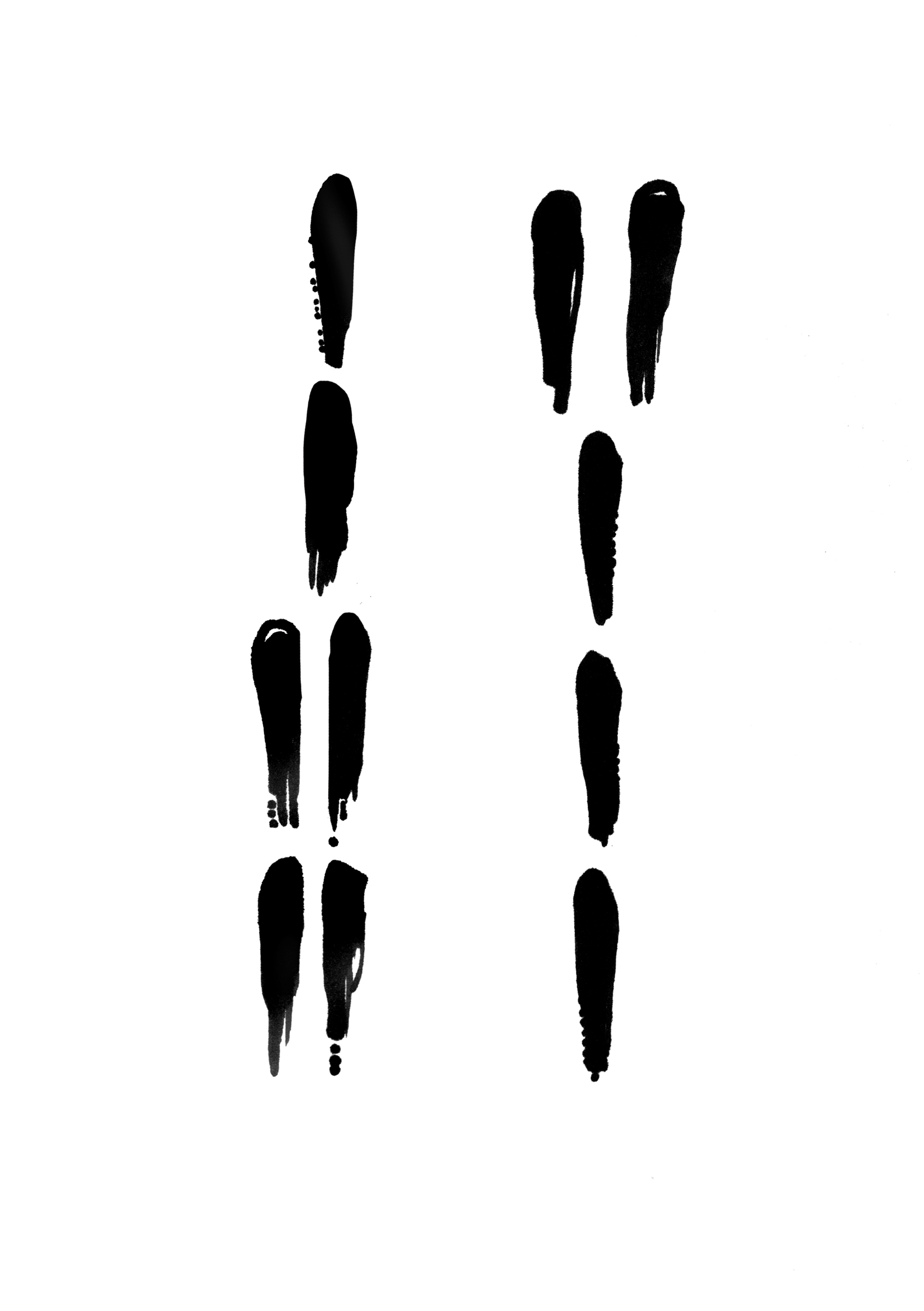
This Academy reads the right column first, then the left. Each row carries a single or double mark.

Where this Odù belongs
Òsá Ìròsùn belongs to the Òsá family in this Academy’s study sequence. It is a mixed Odù, distinct from Ìròsùn Òsá. The order matters. Its teaching is approached through its own narratives, rather than by adding two general descriptions of the principal signs together.
Key Òrìṣà and sacred relationships
The figures below are selected for their roles in the accounts discussed here. They offer connected reading paths through the tradition.
-
Òṣun. Oshún is the partner whose suffering is obscured by fear of Shangó’s reaction; she accepts support and participates in the narrative’s eventual reconciliation.
-
Ṣàngó. Shangó appears first as a harsh spouse and later seeks forgiveness; in the separate need narrative he recognizes Orunmila’s poverty and initiates assistance.
-
Obàtálá. Obatalá notices his daughter’s distress, recommends consultation, and then actively obtains help when she deteriorates; his role is practical advocacy rather than distant authority.
Key myths and their meanings
Help sought under marital intimidation
Oshún lives with Shangó in a marriage marked by harsh treatment. Her father Obatalá sees her distress and recommends Orunmila, but she fears that seeking counsel will make Shangó suspect an attack against him. When she worsens, Obatalá secures help. The narrative eventually brings Shangó back into relationship and has him ask forgiveness, presenting reconciliation as dependent on a change in his conduct.
The central concern is the barrier to help created by intimidation. The source’s reconciliation does not demonstrate that every harmful relationship can or should be repaired. Its meaningful movement is from a woman’s fear and isolation toward advocacy and an explicit acknowledgment of wrong. Care should be described as social and religious support in the story, without converting its ritual episode into medical advice.
Narrative setting: Cuban/Lukumí narrative in the accounts considered here; no individual author established for this passage.
A powerful friend notices need
Orunmila passes through an especially difficult material period, and Shangó observes it. Rather than waiting for Orunmila to disguise his hardship or petition repeatedly, Shangó proposes a response within the story’s religious framework. Orunmila follows the counsel and his circumstances improve. This brief account gives attention itself a central role: another person’s lack becomes visible to someone able and willing to assist.
Read beside the marital account, the short story makes Shangó’s power ethically variable. The same named figure can be implicated in harm in one narrative and responsive to hardship in another. This prevents a flat personality profile of the deity. The text supplies little detail about the economic setting, so a useful reading stays with noticing, offering support, and receiving help rather than inventing a business success narrative.
Narrative setting: Cuban/Lukumí narrative in the accounts considered here; no individual author established for this passage.
The ear cannot dismiss the mosquito’s complaint
Ear has taken Mosquito’s wife and is warned that a seemingly weak rival can still make the arrangement difficult. Counsel offers a concrete alternative if the relationship continues: compensate Mosquito for the marriage payment already made. Ear refuses to treat either the warning or the proposed restitution as worth attention. Eshu then directs Mosquito toward Ear at the time of sleep. The account explains an enduring disturbance through a conflict that the larger participant had assumed was beneath consideration. It does not describe reconciliation or establish the woman’s own account of the arrangement, leaving both the relational settlement and the question of her agency unresolved.
The image is unusually exact about the limits of dominance. Ear’s capacity to dismiss another person in daylight does not control the vulnerable threshold of sleep, where a small sound can become unavoidable. Yet the proposed compensation belongs to a social framework that treats a woman’s changed relationship partly through payments between men. An editorial treatment should retain that historical and religious setting without presenting its terms as a complete model of consent. The narrative is better able to expose contempt than to settle the marriage ethically.
Beside the earlier Oshún account, it shows two different barriers to a person being heard: an intimidated partner fears requesting help, while an underestimated rival is denied consideration. Eshu gives the denied claim a route into attention. That intervention remains part of the witness’s sacred understanding, not simply a metaphor for annoyance. A contemporary reader can ask what unresolved obligation keeps returning, while refusing the assumption that every persistent discomfort is deserved punishment.
Narrative witness and setting: Portuguese rendering in the explicitly headed Cromwell Osamaro revelations; an African Ifá witness mediated by the compilation, not a Brazilian provenance established by language alone.
The debtor uses the adviser’s method against the adviser
Goat owes several creditors and consults Orunmila when repayment has become difficult. The counsel provides a way to keep visitors waiting: Goat continually chews and says that business must wait until the meal is finished. Creditors eventually leave without collecting. Goat had also postponed paying for the consultation until after giving birth. When Orunmila later sends for that payment, he receives the same delaying response. He recognizes that he taught the method and cannot reasonably expect the debtor to suspend it for his own benefit. The tale therefore turns a successful evasion back toward its expert originator instead of ending with a one-sided triumph over creditors.
The narrative does not simply praise cleverness. Its second movement makes a technique answerable to the conditions of its own use: the adviser discovers that an exception for himself would contradict what he authorized for others. This is a concrete reciprocity problem that differs from the earlier story where Shangó notices Orunmila’s hardship and helps. Giving counsel about resources can itself create a resource relationship, including an obligation to the person who supplied the advice. Goat’s chewing also gives delay a bodily appearance that is difficult for visitors to challenge without seeming intrusive.
The apparent ordinary activity conceals a decision not to settle. A contemporary reading can distinguish a necessary pause from strategic postponement by asking whether an endpoint and an honest account have been provided. The account offers no model for resolving insolvency, and a real debtor’s difficulty should not be reduced to deliberate evasion. Its sharper issue is what happens when a generally endorsed tactic returns to someone who imagined being exempt from it.
Narrative witness and setting: Portuguese rendering in the explicitly headed Cromwell Osamaro revelations; an African Ifá witness mediated by the compilation, not a Brazilian provenance established by language alone.
What was born in this Odù
“Born” can name an explicit traditional origin association or what emerges through a story: a capacity, relationship, practice or order of life. Interpretations drawn from a narrative are labelled below, so their basis remains clear.
Determining a guardian through Ifá
Selected traditional source association.
The sole explicit item in the selected origin list concerns identifying a person’s guardian by Ifá. This is a Cuban religious authority claim within the compilation, not a universal procedure for every Òrìṣà community.
A safe route to seek help
Contemporary interpretation from the selected myth.
As a contemporary interpretation, a route out of isolation emerges when Obatalá acts on Oshún’s behalf. This is an analytical reading of the narrative’s movement from fear toward support, not an item in the traditional origin list.
Correlations to life dimensions
These questions bring the selected stories into contemporary life. They are interpretive invitations for study.
Work and resources
The account of Orunmila’s hardship begins with Shangó paying attention. Material difficulty can persist behind an esteemed role; the narrative supports offering concrete assistance without assuming that reputation makes someone self-sufficient. Shangó notices difficulty that Orunmila has not publicly resolved.
Reflect: Whose apparent competence is making their need easy to overlook?
Relationships and family
Oshún anticipates that seeking counsel could itself be punished. That fear is an important relationship condition, independent of whether the story later reaches reconciliation. Obatalá’s advocacy opens a route out of isolation. Oshún explicitly fears her partner’s interpretation of seeking counsel.
Reflect: Can each person obtain support without first securing the other person’s permission?
Character and inner life
Shangó’s request for forgiveness gives remorse a specific relational object: the person he has mistreated. The story supports examining the difference between wanting reunion and accepting responsibility for the conduct that made reunion difficult. The apology addresses a history of harsh treatment within marriage.
Reflect: What responsibility would have to be named before renewed closeness becomes meaningful?
Community and responsibility
Obatalá does more than notice distress; he follows through when his first advice cannot be acted on safely. The episode locates responsibility partly in supportive witnesses who recognize why an isolated person cannot simply ask for help.
Reflect: What practical step could a trusted witness take here?
A deeper reading of the sacred relationships
The head, Eshu, and the enforcement of counsel
The two additions portray counsel as a relationship that continues after the consultation. Goat’s response involves honoring the head before adopting a changed pattern of action; Ear’s refusal is followed by Eshu enabling the ignored claimant to approach. These are active sacred relations within the African-attributed witness, not merely narrative decorations around financial or marital behavior. The head should not be reduced to intelligence, and Eshu should not be reduced to an impersonal law of consequences. The earlier Cuban stories likewise place Orunmila, Obatalá, and Shangó within the practical restoration of relationship and livelihood. A contemporary analysis can ask about fairness, but it should distinguish that evaluative register from the account’s understanding that counsel, offering, and divine mediation affect how events unfold.
A claim’s size is different from its persistence
Mosquito appears unable to compete with Ear through ordinary scale or status, yet can reach a moment Ear cannot entirely protect. The creditor story uses an opposite imbalance: people with a legitimate demand lose access because Goat controls the tempo of the encounter. The earlier marriage story gives a third form of unequal access, in which Oshún cannot safely approach counsel without a family advocate. These distinctions prevent a vague reading that simply celebrates smallness or patience. Persistence can be a route toward being heard, an instrument of pressure, or a tactic that deprives someone else of a response. The useful question is which claim is being kept in circulation and what conditions would allow a fair answer rather than endless disturbance.
Testing a rule when the beneficiary changes
Orunmila’s unpaid fee exposes whether an adviser believes his own method should apply across persons. The earlier financial-help story, by contrast, places him at the receiving end of another power’s generosity without a concealed exemption. These are different relations to dependence: one accepts help, the other encounters the wider effect of advice that disadvantages creditors. The lesson is not that expertise must always be free, nor that every unpaid obligation is morally identical. It is that a rule’s ethical implications become clearer when its author becomes the person who bears its cost. The Ear narrative extends that test to assumed invulnerability: a dismissive judgment looks different when the rejected claimant controls a necessary condition of rest.
Questions that deepen the study
Why is the creditor tale more than a joke about an unpaid fee?
Its ending makes the adviser confront the generality of his own counsel. Orunmila cannot easily condemn Goat for using against him the method he supplied for use against other creditors. That self-recognition gives the episode an internal ethical turn instead of merely mocking someone who did not collect payment. A modern discussion can use the image to ask whether advice depends on exceptions left unstated because its giver assumes a privileged position. It should still separate Goat’s deliberate delay from genuine inability to pay. The story does not give the creditors’ circumstances or describe a negotiated settlement, so its wit cannot settle every question about debt.
Does the mosquito’s return justify revenge by a disregarded partner?
The account gives Mosquito a sacred route to insistence through Eshu, but its plot does not provide a general standard for proportionate response. It also leaves the woman’s choice underdescribed and frames compensation through the marriage payment. A responsible interpretation can acknowledge the religious reality of an ignored claim becoming effective while declining to make harassment exemplary. The more useful contemporary question is what would have allowed the dispute to receive attention before private rest became its battleground. Ear’s contempt blocks a possible discussion; the tale exposes that blockage more clearly than it specifies a complete fair resolution for everyone involved.
How do these additions change the earlier emphasis on caring support?
They show that being heard is not always achieved through benevolent help from a stronger figure. Oshún needs Obatalá’s advocacy because intimidation blocks her access to counsel, and Orunmila receives assistance when Shangó notices need. Mosquito instead gains a way to make an ignored obligation difficult to escape. Goat exploits control of access to avoid answering others. Care therefore requires more than identifying who is vulnerable at first glance; it needs attention to who can secure a response, who decides the timing, and whose account remains absent. The sign’s narratives supply several arrangements rather than one moral ranking of giver, receiver, claimant, and adviser.
What the four narratives reveal together
The original Cuban pair emphasized help made available through attentive divine and family relationships. The African-attributed additions complicate that pattern by showing attention compelled or strategically prevented. Mosquito can disturb the participant who dismissed him, while Goat can hold creditors outside an indefinitely extended meal. Orunmila’s eventual recognition that his own advice has returned to him makes reciprocity an issue within expertise itself. Together the four accounts concern the channels through which needs and claims reach another person, but they do not identify every claim as just or every helper as innocent.
Their distinct religious frameworks give the head, Eshu, Orunmila, Obatalá, and Shangó active roles in that field. Modern questions about consent, compensation, and professional consistency should be presented as interpretations of these particular relations, with the unrepresented woman and unheard creditors remaining genuine limits of the available narrative evidence.
Living with this Odù
A continuing life or initiatory relationship
A received life relationship with Òsá Ìròsùn can make the accessibility of help a recurring concern. Oshún's difficulty is not simply private distress; intimidation makes seeking counsel itself dangerous. Obatalá's advocacy changes the external relation that keeps her isolated. The brief account of Shangó noticing Orunmila's hardship shows power operating differently, through attention rather than domination. Ear's contempt for Mosquito adds the problem of a denied claim returning at a vulnerable threshold. Goat's tactic then asks what an adviser has authorized and whether they can accept its consequences when the same method affects them.
Over time, the sign can invite a person to distinguish silence from agreement, a necessary pause from evasion and generosity from an unspoken expectation of exemption. It is not a fixed prediction of marital fear or debt. The same person may need to ask for support in one circumstance and to notice an overlooked need in another. The sacred witnesses retain Eshu's intervention and the religious conditions of assistance. Their human relevance lies in how power makes another's voice more or less reachable, without assuming that every persistent disturbance is deserved punishment or that reconciliation is always possible.
A particular consultation and its question
A consultation can ask whether a difficulty persists because need is unseen, help is unsafe to request, a claim is dismissed or an agreed settlement is being indefinitely delayed. These configurations require different interpretations. Oshún's account may illuminate the barrier created when asking for support is treated as betrayal; it does not instruct an unknown person to remain in a harmful marriage. Shangó's attentive friendship offers another possibility, where someone capable of helping has recognized a lack without demanding repeated humiliation first. The Ear and Mosquito witness asks what a powerful party has refused to hear, but its marriage payment framework cannot settle the woman's consent.
Goat's chewing asks whether a pause has an honest endpoint and whether an adviser is claiming a private exception to a tactic they endorse publicly. A practitioner can examine such distinctions without presuming every debtor is deceptive or every complaint valid. Sacred agency remains explicit in the account, including Eshu's route for the ignored claim. The present result concerns the actual question and relationship. It need not turn a temporary difficulty into a lifelong identity, nor convert the narrative's reconciliation or changed material circumstances into a promised outcome for the reader.
Constructive and adverse possibilities
Constructive possibilities include intimidation giving way to accessible support, powerful attention noticing hardship, and an adviser recognizing the inconsistency of demanding exemption from their own counsel. The marital narrative makes an acknowledgment of wrongdoing part of reconciliation, rather than treating the injured person's endurance as sufficient. Adverse movement appears when dominance confuses another's quiet with consent, or a superficially ordinary activity conceals a continuing refusal to settle. Mosquito's return exposes a limit to contempt, but does not justify reading actual discomfort as punishment. Nor does compensation between men complete an ethical account of the woman's agency.
Iré and osogbo must remain contextual religious determinations. The narratives help examine whether relations are becoming more truthful and responsive, while preserving outcomes they leave unresolved and forms of sacred action that cannot be reduced to a modern communication technique.
An illustrative situation in everyday life
Hypothetically, a volunteer treasurer tells every creditor that an account will be settled after the next meeting, though no date or resources have been agreed. A senior adviser had recommended the tactic to protect the group from pressure, then becomes angry when their own fee receives the same response. Goat's structure exposes the wish for an exception without equating genuine insolvency with manipulation. The friend who notices Orunmila's hardship adds another possibility: practical support may be needed before an honest settlement is feasible. The treasurer feels shame and the adviser feels slighted; neither feeling establishes the whole situation. This is an illustrative interpretation, not evidence of spiritual punishment. The distinction is between a disclosed limitation and a delay designed never to end.
Sources and reading context
The first two narrative witnesses
These are two Cuban-labelled passages, one an extended edited narrative and one a brief account. The origin list supplies only one explicit association, and the additional emergence motif is explicitly interpretive. Reconciliation, care, and guardian identification remain contextual religious motifs rather than universal guidance or therapeutic promises.
Narrative motifs are summarized independently. The life-dimension reflections are contemporary interpretation. How these reference studies are built explains the wider source approach and the distinction between a reference article and personal divination.
Additional named witnesses
-
Cromwell Osamaro. The Ear/Mosquito and Goat/debt episodes occur in the explicitly named Portuguese revelation division.
-
Cuban/Lukumí-labelled collection. The earlier Oshún marital-distress account and Orunmila material-need account serve as distinct comparisons.
The translated source uses terse relational terms and does not provide the woman’s perspective in the Ear account. The creditor story gives no final settlement. No racialized warning, dietary procedure, prediction, or sacred mechanism is transferred into advice about an actual person’s relationships or finances.
Bibliographic identification
- C. Osamaro Ibie. Ifism: The Complete Work of Orunmila. Lagos; multivolume publication beginning 1986. Library catalogue record. Related bibliographic record for the named narrative witness. Exact volume, edition and page of the transmitted account have not been independently matched.
Read the source method and wider scholarly context.
The catalogue links identify published works and their authors. They are separate from proof of an individual episode’s wording or attribution. Contemporary comparisons and the synthesis above are editorial interpretation. The author’s books and Academy companions below provide further study; their sales links are separate from the source references.