
Òdí Òsá is a mixed Odù in Ifá’s 256-part corpus. The selected Òdí Òsá narratives ask what happens when powerful interventions are organized around secrecy or retaliation. Odi Sa bargains for his wife’s return but stakes his own life on a secret she eventually discovers. In another account, a conflict between neighbors threatens a child until Òrúnmìlà and Osanyin help force an exchange that ends it. Neither story offers a simple equation of power with care, or of a successful intervention with a just arrangement.
A question to carry through the study: What hidden condition makes an apparently helpful agreement unsafe?

This Academy reads the right column first, then the left. Each row carries a single or double mark.
Where this Odù belongs
Òdí Òsá belongs to the Òdí family in this Academy’s study sequence. It is a mixed Odù, distinct from Òsá Òdí. The order matters. Its teaching is approached through its own narratives, rather than by adding two general descriptions of the principal signs together.
Key Òrìṣà and sacred relationships
The figures below are selected for their roles in the accounts discussed here. They offer connected reading paths through the tradition.
-
Ọ̀rúnmìlà. Òrúnmìlà receives the endangered child’s father and helps interpret the conflict, working alongside Osanyin rather than appearing as an isolated rescuer in the selected neighborhood account.
-
Òsanyìn. Osanyin equips the father to interrupt the neighbor’s harmful power. His intervention ultimately supports a reciprocal settlement, though the method retains the story’s coercive imagery.
-
Èṣù. Elegbá directs the desperate father toward Òrúnmìlà and Osanyin. This referral makes recognition of appropriate help part of the narrative’s route away from uncontrolled conflict.
Key myths and their meanings
The bargain that knowledge breaks
Odi Sa can restore the dead through a pact with Death, yet cannot initially recover his own wife. Death agrees to her return on the condition that Odi Sa must die if she learns his secret. She later watches him work, learns the practice, and restores a dead person while he is absent. Death arrives to enforce the condition, and Odi Sa discovers that his private bargain has determined their shared future.
The wife is affected by a condition she did not negotiate and is not shown being told. Her learning becomes the trigger, but the unsafe structure precedes it. A careful reading avoids blaming curiosity or women’s knowledge; the sharper question concerns a loved one being restored under terms that keep them uninformed and make their ordinary agency dangerous to another person.
Narrative setting: Spanish Cuban-style account.
Two neighbors compelled to stop
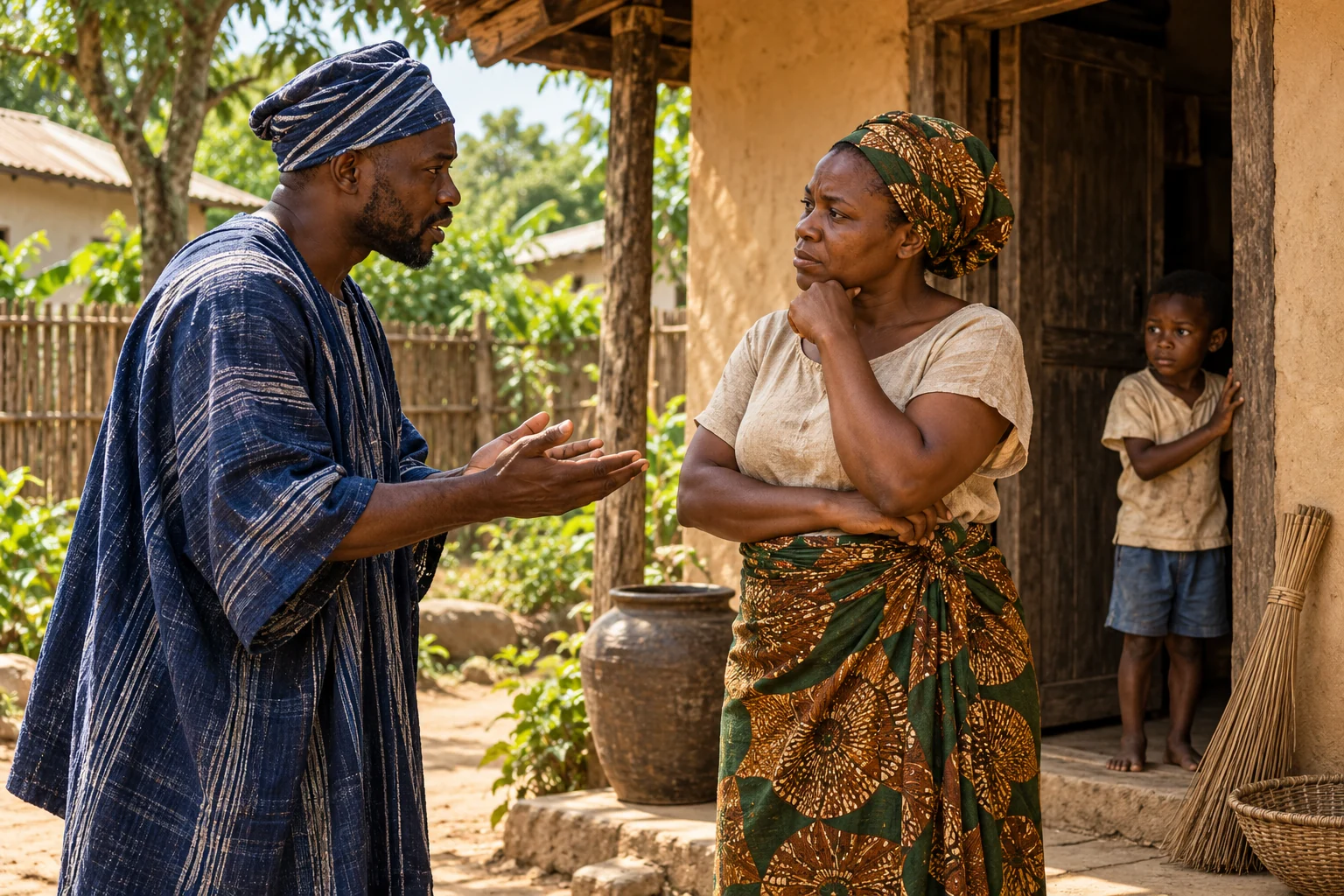
A harmful practitioner attacks the child of a neighbor who steals. The father promises to abandon theft if someone saves his child and is referred to Òrúnmìlà and Osanyin. Their intervention lets him seize something indispensable to the attacker. A negotiation follows: the child’s wellbeing and the attacker’s loss are linked, and both are restored once the harmful action is withdrawn.
The episode imagines mutual vulnerability as a way to interrupt otherwise unchecked power. Yet its settlement relies on coercion and does not erase the initial targeting of a child. The useful tension is how to stop retaliation without granting either neighbor innocence by default. The account should remain a religious narrative of conflict, never a method for identifying a real illness as an enemy’s action.
Narrative setting: Spanish Cuban-style neighborhood narrative.
Antelope loses the resting place called its brother
Antelope comes into the world with a brother identified as its dwelling or resting place. Before arrival, consultation concerns maintaining that companion’s presence on earth. Antelope does not complete the response and initially rests securely in the shared place. Èṣù later directs a farmer toward the site. When the farmer cuts the tree associated with the dwelling, the brother returns to heaven. Antelope consequently loses a permanent resting place and begins to wander. The episode personifies habitation as kinship, making the disappearance of a material refuge at the same time the loss of a related being.
The source does not present shelter as an inert possession that happens to belong to an animal. It is a companion whose continued earthly presence depends on a religious relation established before arrival. That logic deserves its own explanation before an ecological or psychological interpretation is added. Èṣù’s intervention and the farmer’s clearing connect spiritual obligation with a specific alteration of place. Read beside Odi Sa’s bargain with Death, the story describes another relation in which retaining someone’s presence is not automatically within an individual’s control.
Yet the relations differ: the wife’s return is negotiated through a dangerous secret, while Antelope loses the dwelling-brother through neglected exchange and a changed environment. The earlier neighbors’ dispute adds a more coercive form of mutual vulnerability. A contemporary reader may reflect on what makes a dwelling liveable, but should not turn the antelope’s loss into a judgment that displaced people failed spiritually. The narrative’s kinship language makes a place relational without supplying an explanation for every actual loss of home.
Narrative witness and setting: Account explicitly headed Revelações de Cromwell Osamaro
Òrúnmìlà remains when heaven’s gate closes
God summons the divinities to a heavenly celebration after earth has come under Èṣù’s dominance. They do not know that those entering will not be allowed to return. Òrúnmìlà receives a dream warning from his guardian and delays departure while attending to his head. Other divinities pass into heaven, reporting his explanation when asked where he is. God orders the gatekeeper to close the entrance and announces that earth is being relinquished to Èṣù. Òrúnmìlà may remain only if he can sustain himself there. The account explains his exceptional continuing relation to earthly life through this delayed crossing.
The decisive interval is a religious priority, not ordinary lateness or refusal to honor a gathering. Attending to the head maintains the relation through which Òrúnmìlà can remain in the world while a sovereign invitation conceals an irreversible passage. This gives the earlier resurrection bargain a larger theological comparison: a crossing between life and another realm can involve conditions the affected party does not fully know. The source, however, locates the two episodes differently. One concerns a household and a secret withheld from a returned wife; the other concerns a divine order in which Orí-related responsibility and a guardian’s warning preserve an earthly vocation.
Neither can be reduced to a general lesson that obedience is always right or that every invitation is deceptive. The account also leaves a demanding rather than effortless ending. Òrúnmìlà’s continued presence does not remove Èṣù’s power; it requires an ongoing way of living with that power. This is the narrative’s theological distinction, not a universal claim about all Òrìṣà cosmologies.
Narrative witness and setting: Account explicitly headed Revelações de Cromwell Osamaro
What was born in this Odù
“Born” can name an explicit traditional origin association or what emerges through a story: a capacity, relationship, practice or order of life. Interpretations drawn from a narrative are labelled below, so their basis remains clear.
The price hidden inside a rescue
Contemporary interpretation from the selected myth.
As a contemporary interpretation, the wife’s return reveals the emergence of an unsafe obligation when help is negotiated without everyone affected. This is drawn from the bargain narrative, not a traditional born-list claim.
A settlement between harmful neighbors
Contemporary interpretation from the selected myth.
As a contemporary interpretation, the reciprocal restoration at the story’s end suggests the emergence of limits on retaliation. It does not establish reconciliation as a canonical origin item or endorse the coercive means described.
Correlations to life dimensions
These questions bring the selected stories into contemporary life. They are interpretive invitations for study.
Work and resources
Odi Sa’s exceptional skill cannot safely solve the problem closest to him because the service is constrained by a dangerous contract. The story asks whether an intervention’s impressive result conceals conditions that undermine its purpose.
Reflect: What condition needs to be visible before accepting a service?
Relationships and family
The restored wife has no voice in negotiating the bargain that governs her knowledge. This makes informed participation a useful interpretive concern, especially where someone claims to act for a loved one’s benefit. The hidden condition makes her independent action consequential.
Reflect: Who needs a voice in a decision made for their sake?
Character and inner life
The neighbor story does not divide a wholly good person from a wholly bad one. One steals, another targets a child, and help arrives within that compromised field. Responsibility requires recognizing several wrongs without equating them.
Reflect: Can you name another person’s wrong without denying your own?
Community and responsibility
The ending interrupts reciprocal damage but leaves open how durable peace would be built afterward. A community must address the conditions that made retaliatory power available, rather than treating a single exchange as complete repair.
Reflect: What would prevent this conflict from beginning again?
A deeper reading of the sacred relationships
Orí-related responsibility precedes a cosmic invitation
The dream warning directs Òrúnmìlà to attend to his head before departing. Within the account, that act is spiritually effective and changes which side of the closed gate he occupies. It is therefore inadequate to explain the scene only as an allegory of personal boundaries or self-care. The head belongs to a religious order of destiny and continuation, while the guardian supplies knowledge unavailable in the invitation itself. Antelope’s earlier counsel likewise concerns a relation established before earthly arrival. These witnesses place responsibility across the boundary between heaven and earth, rather than beginning ethics only after visible events. Contemporary readers may draw questions about hidden conditions, but the sacred sequence remains the first explanation offered by the source.
Presence may depend on conditions another person does not know
The returned wife lives under a bargain she did not negotiate; the divinities travel under an invitation whose consequence is undisclosed; Antelope initially enjoys a dwelling whose continued presence requires attention. These are not equivalent failures. They place different kinds of knowledge around the continuation of a relationship. The neighbors’ dispute supplies a fourth case, where information about another’s vulnerability becomes leverage in a coercive settlement. A careful comparison can ask who knows an arrangement’s terms and who bears its consequences, while keeping the different religious mechanisms intact. It should not impose one account of consent on every cosmic scene or assume that an eventual narrated rescue resolves every asymmetry the stories expose.
Dwelling is a relation rather than merely a container
Antelope’s home is called a brother, so its loss is also bereavement within the fable’s world. The neighbors’ houses are spaces where one household’s conduct reaches another child, while Odi Sa’s private chamber becomes the site through which a shared life is governed by a hidden pact. Heaven’s gate then places the same question at a cosmic scale: entering a dwelling can alter whether return remains possible. These relations give Òdí Òsá’s places more depth than a map of safe and unsafe locations. What matters is which beings inhabit a place, which powers govern passage, and which obligations connect a resident to what appears to shelter them.
Questions that deepen the study
Does the heavenly episode simply condemn obedience?
The other divinities respond to a sovereign summons, while Òrúnmìlà follows a different religious instruction from his guardian concerning his head. The narrative therefore does not oppose obedience and independence in a simple way. It distinguishes obligations and forms of knowledge within its divine order. His delay is not an arbitrary preference or a rejection of sacred responsibility; it arises through another sacred responsibility. A contemporary reader can ask how competing duties are discerned, but should not use the story to claim that every authority conceals harm. Its result explains one particular account of Òrúnmìlà’s earthly continuation and his ongoing relation with Èṣù.
What does calling the dwelling a brother change?
It makes shelter a being in relation rather than only a resource. The dwelling can accompany Antelope into the world and can return to heaven when the connection is broken. Cutting the associated tree is therefore not merely a change of scenery in the episode. It ends a related presence through which rest had been possible. Contemporary ecological reflection may find this resonant, but the source’s spiritual kinship should not be reduced to an environmental slogan. Equally, the story does not establish that a displaced person has neglected a duty. Its religious causality belongs to this animal precedent, whose specific kinship makes loss intelligible within its narrated world.
Why retain the tension between Òrúnmìlà and Èṣù?
The heavenly account does not end with Èṣù removed from earth. Òrúnmìlà remains under the condition that he can live there in relation to a power that continues to matter. This is different from a final victory that makes responsibility unnecessary. Antelope’s story also gives Èṣù a decisive role in what becomes accessible or unavailable on earth. Retaining these particular actions avoids casting him as either a generic villain or a modern symbol of cleverness. The theological interest is the continuing arrangement among powers, including the limits and possibilities through which earthly life proceeds. That arrangement is not identical to every other witness’s account of the same figures.
What the four narratives reveal together
The added Osamaro-attributed accounts move Òdí Òsá beyond the earlier household bargain and neighborhood retaliation without leaving their concern with consequential relations behind. Antelope’s dwelling is a brother whose return to heaven changes earthly life. Òrúnmìlà’s attention to his head keeps him outside a gate that closes on the other divinities. The earlier wife’s return and neighbors’ negotiated restoration now belong beside larger questions about who can remain, what makes a place habitable, and which terms of passage are known.
These are religious accounts in which powers and exchanges are effective within the narrated world. Modern questions about knowledge and responsibility can deepen their reading but should not replace that world. The differences also matter: no single movement—remaining, leaving, returning, or receiving another being—has an automatic value. Its meaning depends on the relation, sacred authority, and continuing obligation involved.
Living with this Odù
A continuing life or initiatory relationship
A received relationship with Òdí Òsá can keep the terms of an apparently helpful arrangement in view. Odi Sa’s wife returns under a condition that makes her knowledge dangerous, although she is not shown negotiating that condition. The ethical problem begins before she learns the secret. The neighbor dispute adds another form of unequal vulnerability: a child becomes the target through whom adults force one another to change. A successful interruption does not make the initial arrangement just.
Antelope’s dwelling-brother gives habitation the reality of kinship, while Òrúnmìlà’s delayed crossing preserves an earthly vocation through his guardian’s warning and attention to the head. These religious relations cannot be reduced to clever avoidance of a bad contract. Across changing circumstances, the person may need to understand a hidden term, protect someone affected without consent, recognize the relational life of a shelter, or discern what an irreversible passage would foreclose. The sign does not require permanent suspicion of every invitation. It invites a character capable of asking who knows the terms, who bears them, and what continuing life will demand after a desired return or protection has been achieved. Remaining is not always an effortless reward.
A particular consultation and its question
When Òdí Òsá appears in consultation, the narratives can sharpen a distinction between the desired benefit and the arrangement through which it is obtained. A restored relationship may remain unsafe if another person’s ordinary agency activates a condition they never accepted. The wife’s learning therefore cannot be treated as the original fault. The neighbor episode likewise asks whether the vulnerable are being used to settle a dispute among the powerful.
Antelope’s loss introduces a different configuration: a dwelling is a related being whose continued presence involves sacred responsibility and material surroundings. That account cannot establish that displaced people caused their own loss. Òrúnmìlà’s remaining on earth adds a question about an invitation whose consequences are not known to those crossing. His guardian and Orí-related attention retain their religious agency. A practitioner may examine whether the client is trying to restore something without understanding the terms, or whether a necessary interval has been mistaken for mere delay. Those are interpretive possibilities, not announced findings. The actual result belongs to a particular question. It does not identify a family member as secretly dangerous, prescribe retaliation, or make the consultation equivalent to lifelong affiliation with the sign.
Constructive and adverse possibilities
Constructive unfolding may make a condition visible before it controls another person’s future, interrupt an unchecked threat, or preserve a vocation through attention to a sacred relation. Òrúnmìlà’s remaining depends on his guardian and head, while Antelope’s habitation remains more than an inert possession in its witness.
Adverse unfolding can involve obtaining help through concealed terms, treating another’s knowledge as disobedience, or using dependents as pressure points in a conflict. The negotiated restoration in the neighbor account does not erase coercion or establish either adult’s innocence. The wife’s return and the closed heavenly gate also have different religious settings and cannot become one universal claim that all invitations deceive. These contrasts concern the configuration of consent, knowledge, and irreversible consequence. They do not determine an actual reading’s direction or explain real bereavement and displacement through neglected spiritual duty.
An illustrative situation in everyday life
Consider a hypothetical couple who accept financial support to reopen a family workshop. One partner privately agrees that a relative will control major decisions, then tells the other only after the business is operating. The second partner’s independent work now appears to threaten an agreement they never made. Odi Sa’s bargain helps locate the unsafe structure before the conflict is blamed on curiosity or ambition. The closed-gate episode adds the importance of understanding an irreversible passage while there is still time to deliberate. The first partner may fear losing the workshop if the terms are questioned. Clarifying consent and consequences is therefore necessary to assess the apparent rescue. This is an illustration of the narrative structure, not a claim about a client or divine warning.
Sources and reading context
The first two narrative witnesses
The selected narratives are Spanish Cuban-style accounts without a securely identified author. No usable non-diagnostic origin list was found in the inspected introductory portion, so the two emergence motifs are explicitly contemporary interpretations. Medical causation, ritual procedures, and personal prohibitions are excluded.
Narrative motifs are summarized independently. The life-dimension reflections are contemporary interpretation. How these reference studies are built explains the wider source approach and the distinction between a reference article and personal divination.
Additional named witnesses
-
Cromwell Osamaro. The explicit heading covers Antelope’s dwelling-brother and the divinities’ return to heaven.
-
Spanish Cuban-style narrative sequence. The earlier Death bargain and two-neighbor accounts remain separate witnesses within the compilation.
The translation uses inconsistent pronouns and describes Òrúnmìlà’s exceptional status broadly; that claim remains inside this witness. The dwelling’s identification is retained without guessing a botanical species. No explanation is offered for actual homelessness, illness, death, or private family conduct.
Bibliographic identification
- C. Osamaro Ibie. Ifism: The Complete Work of Orunmila. Lagos; multivolume publication beginning 1986. Library catalogue record. Related bibliographic record for the named narrative witness. Exact volume, edition and page of the transmitted account have not been independently matched.
Read the source method and wider scholarly context.
The catalogue links identify published works and their authors. They are separate from proof of an individual episode’s wording or attribution. Contemporary comparisons and the synthesis above are editorial interpretation. The author’s books and Academy companions below provide further study; their sales links are separate from the source references.