
Òsá Ògbè is a mixed Odù in Ifá’s 256-part corpus. Òsá Ogbè’s selected narratives connect deceptive appearance with uncomfortable proximity to authority. Abita receives an honored place at Olofin’s table, provoking Elegbara’s attempt to expose or displace him; a transformed rat approaches Obatalá’s daughter as a desirable suitor. The stories distinguish discovering a deception from assuming that the discoverer is morally simple. Origins involving hypocrisy, musical instruments, and a two-faced Elegbá reinforce the sign’s concern with mediation and appearances.
A question to carry through the study: What am I learning about an appearance, and what motive drives my wish to expose it?
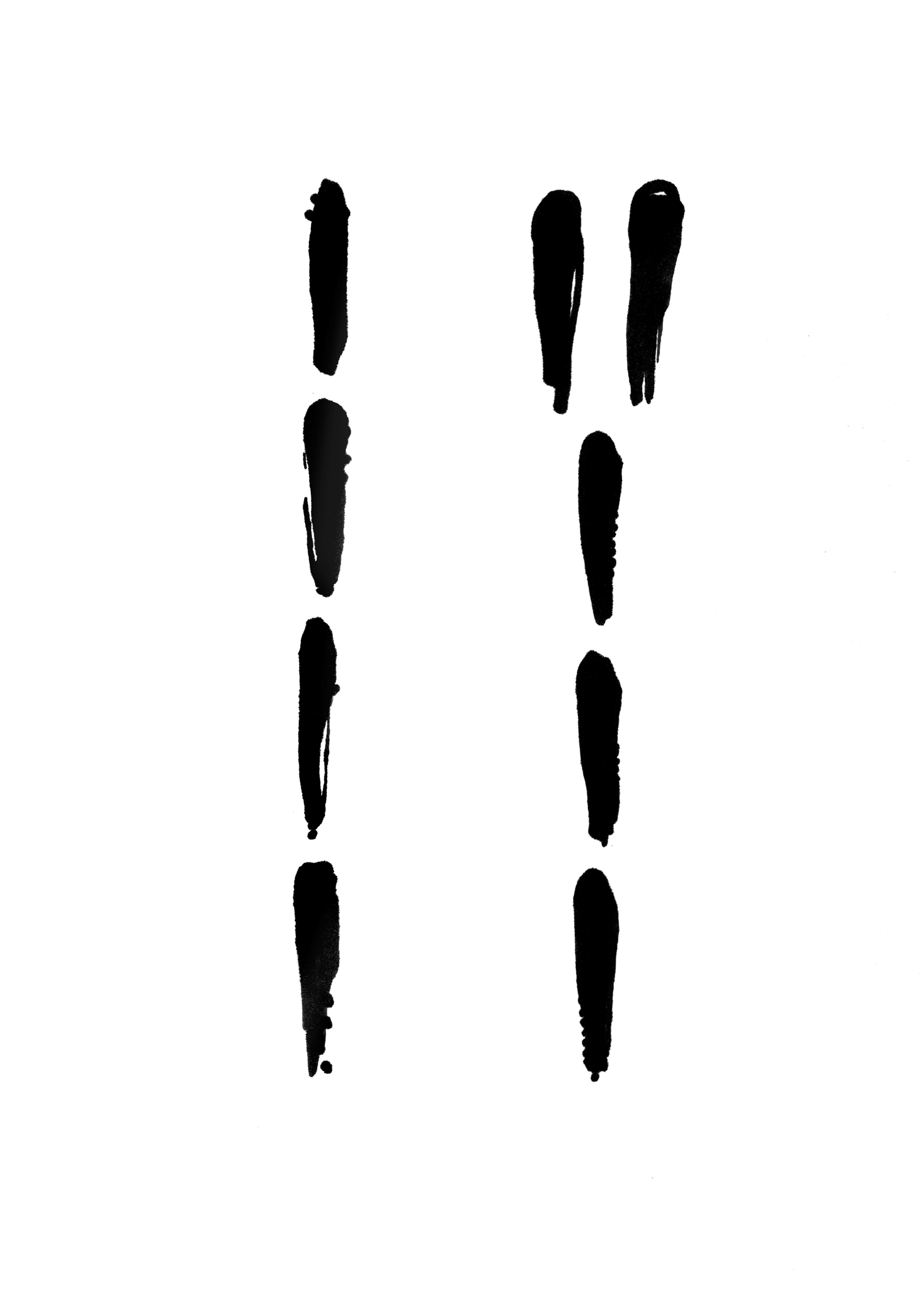
This Academy reads the right column first, then the left. Each row carries a single or double mark.

Where this Odù belongs
Òsá Ògbè belongs to the Òsá family in this Academy’s study sequence. It is a mixed Odù, distinct from Ògbè Òsá. The order matters. Its teaching is approached through its own narratives, rather than by adding two general descriptions of the principal signs together.
Key Òrìṣà and sacred relationships
The figures below are selected for their roles in the accounts discussed here. They offer connected reading paths through the tradition.
-
Èṣù. Elegbara serves Olofin’s table and attacks Abita because he resents the guest’s position; his actions lead to an ambiguous worldly role rather than uncomplicated moral victory.
-
Obàtálá. Obatalá suspects deception around his daughter’s suitor after a dream, seeks Orunmila’s counsel, and sees the visitor’s hidden identity revealed.
-
Ọ̀rúnmìlà. Orunmila recognizes the danger in the proposed marriage and advises Obatalá before the disguised visitor’s identity is exposed; he supplies discernment within a particular family crisis.
Key myths and their meanings
The troubling guest at the table
Olofin repeatedly shares his table with Abita, an honored guest whom Elegbara dislikes. Elegbara attempts to confuse and frighten Abita through an encounter involving spirits, but the disturbance also frightens its instigator. Olofin eventually explains that the world includes contrary moral forces and assigns Elegbara an ambiguous role within that condition. The attempt to remove the unsettling guest changes the servant’s own position and responsibilities.
The narrative refuses to make moral discomfort sufficient proof of moral innocence. Elegbara opposes what he sees as an evil presence but acts through hostility and manipulation. Olofin’s explanation concerns the organization of this particular sacred world; it should not be flattened into an equation between Èṣù and a Christian devil. Abita’s Christianized language and the Cuban setting require explicit care when translating the story into broader discussion.
Narrative setting: Cuban/Lukumí narrative in the accounts considered here; no individual author established for this passage.
The rat comes as a suitor
Tere Tere, a rat associated with sorcery in the land called Mina, takes human form and wins the affection of a ruler’s daughter. The ruler is represented by Obatalá. Before the marriage, a troubling dream leads him to Orunmila, who identifies a trap. At the next visit, the suitor loses the borrowed human appearance, and a night bird exposes and destroys the hidden animal identity.
The tale turns attraction and social presentation into questions of knowledge and protection. It does not supply the daughter’s account of the relationship, so its paternal rescue structure should remain visible. The useful theme is the danger of agreement based on a fabricated identity, not suspicion toward unfamiliar people. The place-name Mina is present in the story, but it does not establish a Fon provenance by itself.
Narrative setting: Cuban/Lukumí narrative in the accounts considered here; no individual author established for this passage.
A borrowed offering creates a second obligation before blessings arrive
Orunmila is told that three bearers of prosperity are approaching and that an immediate sacred response is needed. The required means are unavailable, so Eshu lends what is missing and receives the offering. Eshu then asks for the loan to be repaid separately. While Orunmila searches for repayment, Eshu intercepts the approaching bearers and tells them that their intended recipient can no longer receive them. They turn back. After settling the debt, Orunmila calls after the departing visitors and appeals to Ogún. Ogún corrects their mistaken understanding, holds them until Orunmila arrives, and the group finally reaches his house together.
The sequence distinguishes the offered object from the outstanding relation through which it was obtained. Completing the offering does not automatically erase the loan, even when the same being is lender and recipient. That distinction is theologically concrete: Eshu can enable an exchange and obstruct its unfinished return, while Ogún can intervene to keep an arriving blessing within reach. The passage should not be reduced to a financial lesson that prompt payment buys prosperity; the timing and identities of the heavenly bearers belong to the sacred order.
It also deepens the earlier table narrative, where Elegbara’s hostility toward Abita produces a role exceeding his intention. Neither witness permits Eshu to be confined to an uncomplicated identity of benevolent helper or malicious opponent. The correction of false information is essential in the new episode, since the visitors are not intrinsically unwilling to arrive. Contemporary interpretation can examine dependency and conditions while retaining the difficult divine relation in which assistance and immediate enforcement belong to the same being.
Narrative witness and setting: Portuguese rendering in the explicitly headed Cromwell Osamaro revelations; an African Ifá witness mediated by the compilation, not a Brazilian provenance established by language alone.
Two heavenly vows collide in an earthly sale
Two companions leave heaven with contrary commitments. One intends never to sell on credit, while the other intends never to pay for anything bought. On earth the second obtains palm oil from the first and refuses payment, and the disagreement reaches a ruler. A concealed parrot listens while each carries a burdensome testimony box along a difficult route. Their private remarks disclose the actual debt and their different intentions. The court orders repayment, but the debtor tries to evade collection by making others believe he has died. The creditor continues searching, discovers him, and eventually receives the money. The debtor dies afterward, leaving fulfillment and consequence tightly entangled.
The story asks what happens when an absolute commitment is carried into an exchange requiring another person’s participation. Each party presents his position as rooted in a prior sacred order, yet their claims cannot both govern the same sale. The parrot supplies knowledge unavailable from their public statements, but the demanding test raises a separate question about how testimony is obtained. The account does not establish a modern model of due process. More significantly, a court decision does not immediately alter the debtor’s understanding of fidelity to his vow.
Repayment settles the sale while undoing the identity he has insisted on preserving, and the final death refuses an uncomplicated picture of everyone restored. The earlier disguised suitor likewise makes an assumed identity consequential for another household, while Abita’s table presence reveals an unsettling role behind public honor. These are different relations between outward standing and hidden history. Contemporary analysis can examine their effects without dismissing the heavenly commitments as merely convenient excuses.
Narrative witness and setting: Portuguese rendering in the explicitly headed Cromwell Osamaro revelations; an African Ifá witness mediated by the compilation, not a Brazilian provenance established by language alone.
What was born in this Odù
“Born” can name an explicit traditional origin association or what emerges through a story: a capacity, relationship, practice or order of life. Interpretations drawn from a narrative are labelled below, so their basis remains clear.
Hypocrisy
Selected traditional source association.
The origin list explicitly locates hypocrisy here. The two narratives develop the concern through borrowed identities and morally mixed exposure, rather than establishing a fixed personality trait of everybody associated with this sign.
Musical instruments
Selected traditional source association.
Musical devices are named among this sign’s origins. Sound appears as an active medium in the surrounding religious narrative world, but the selected tales do not establish a specific historical invention of an instrument.
Two-faced Elegbá
Selected traditional source association.
The source places a two-faced Elegbá here. In context it can frame multiplicity and mediation; it must not be treated as a universal accusation of dishonesty against Èṣù or practitioners.
Correlations to life dimensions
These questions bring the selected stories into contemporary life. They are interpretive invitations for study.
Work and resources
A prestigious invitation can conceal unresolved motives, just as an attractive proposal can conceal identity. The stories support checking the basis of trust rather than accepting social access as sufficient proof of reliability. A place at Olofin’s table does not disclose its meaning.
Reflect: What evidence supports this person’s claimed role or offer?
Relationships and family
The marriage episode is organized around information unavailable to the daughter. A careful reading asks how protection and agency might work together, instead of assuming that paternal authority alone resolves every relational question. The daughter’s own later account is absent from the passage.
Reflect: How can the person most affected participate in finding out what is true?
Character and inner life
Elegbara’s hostility makes discernment entangled with resentment. Recognizing a genuine problem does not exempt the observer from examining the wish to humiliate, displace, or control the person who embodies it. Elegbara resents the privileged guest before seeking an explanation.
Reflect: Would I seek the same truth if it did not improve my own position?
Community and responsibility
The table story places conflict inside an ordered sacred household. Its unresolved moral proximity invites attention to institutions that manage contrary forces, while refusing the promise that every troubling element can simply be expelled. Olofin’s explanation leaves a continuing tension within the sacred household.
Reflect: Which tension needs accountable management rather than a claim of complete purity?
A deeper reading of the sacred relationships
Sacred exchange has a history, not only a completed act
The approaching blessings do not arrive simply because an object has been transferred to Eshu. The act belongs to a history of borrowing, an outstanding return, obstruction, repayment, recognition of names, and Ogún’s intercession. The companions’ heavenly vows similarly precede the visible sale and continue shaping its conflict. These stories understand a present exchange through relations extending beyond what an observer immediately sees. The earlier table account also gives the honored guest a place that Elegbara does not understand until Olofin explains it. Sacred obligation, cosmic coexistence, and personal pre-earth commitment are not interchangeable explanations. Contemporary questions about contracts can illuminate their differences, but should not replace the specific divine histories that make them consequential.
Intermediaries determine what another person is able to recognize
The prosperity bearers are willing to arrive, but Eshu’s report changes their route and Ogún’s intervention changes it again. In the earlier marriage account, Tere Tere’s assumed human form prevents the household from recognizing the suitor’s identity until counsel and a night bird expose it. The table story gives Elegbara another position as intermediary, serving a guest whose significance he initially cannot accept. These are not identical forms of mediation. One changes a message, another changes appearance, and another struggles with an acknowledged place in a sacred household. A contemporary reading can ask how access and interpretation are distributed without treating heavenly bearers, transformation, or divine coexistence as ordinary business information in disguise.
An absolute identity can close the possibility of revision
The debtor’s conflict continues after the court establishes the sale because payment would betray the commitment through which he understands his earthly life. The creditor likewise insists on collection beyond what others regard as a final limit. In the table narrative, Elegbara initially cannot tolerate the possibility that a troubling guest has a legitimate place opposite Olofin; in the marriage narrative, the suitor depends on an identity that cannot survive disclosure. These are distinct obstacles to revision, not one diagnosis of pride. A contemporary interpretation can ask what a participant believes would be lost by accepting another account. The religious witness must still be allowed its specific heavenly vows and cosmic explanations rather than being reduced to stubborn personality.
Questions that deepen the study
Why does Eshu’s original help not remove the later obstruction?
Because the passage distinguishes supplying the means for an offering from receiving repayment of a loan. Eshu acts within both relations, and Orunmila’s first completion does not finish the second. The narrative makes this distinction spiritually effective by giving Eshu access to the approaching bearers of prosperity. It should not be turned into a claim that a real financial delay proves divine hostility. The more limited contemporary question concerns obligations created while obtaining help and whether their terms were understood before acting. Ogún’s later intervention also matters: the sacred field contains another relationship that can correct the visitors’ understanding rather than leaving obstruction as the sole final authority.
Does the vow story make refusing payment an equally legitimate sacred right?
It gives the refusal a narrated heavenly history but does not make that history sufficient to settle the earthly dispute. The court establishes the debt and orders repayment. At the same time, the debtor’s death preserves a serious consequence of the collision rather than reducing his earlier commitment to an easily discarded pretext. A careful reference can state both features without inventing a universal hierarchy of vows and contracts. Contemporary readers might ask whether someone can freely enter an agreement whose basic return they have already ruled out. The account leaves the full theology of the opposed commitments unexplained, so it cannot serve as blanket permission for nonpayment or relentless collection.
What can outward standing establish about the hidden terms of a relationship?
By itself it establishes little beyond the standing that has been displayed. Abita’s place at the table has a meaning Elegbara initially refuses to understand; Tere Tere’s desirable human appearance conceals a different identity; Eshu’s loan enables an offering while leaving repayment outstanding; the sale proceeds despite incompatible heavenly vows. The contemporary question is which history, terms, and participants remain unavailable behind the visible arrangement. The religious accounts supply particular ways those histories become known, including Olofin’s explanation, divination, transformation, divine intervention, and concealed testimony. A reference can explain those means without replacing them with a universal checklist or assuming that every hidden condition is necessarily deceit.
What the four narratives reveal together
The new African-attributed pair gives Òsá Ogbè a richer language of obligation than a simple contrast between helpful and harmful appearances. A loan can enable the correct sacred act while remaining unpaid; a blessing can be available while information diverts it; two heavenly commitments can make one earthly sale impossible to settle without consequence. The earlier table and disguised-suitor narratives add a cosmic relation hidden behind public honor and a false identity hidden behind an attractive marriage prospect.
Their explanations are not interchangeable. Eshu, Ogún, divination, transformation, and pre-earth volition remain actual agencies and conditions within the witnesses rather than being translated away into finance or psychology. Contemporary analysis can examine disclosure and revision as additional questions. It should preserve the unsettled endings, especially the debtor’s death and Elegbara’s ambiguous role, instead of manufacturing a universal assurance that correct exchange always leaves every participant whole.
Living with this Odù
A continuing life or initiatory relationship
A received life relationship with Òsá Ògbè can make the difference between a declared identity and its effects a recurring question. The troubling table guest does not permit Elegbara to claim innocence merely because he opposes an unsettling presence; his own manipulation has consequences. The disguised suitor adds a separate problem of agreement built on fabricated appearance, without making unfamiliarity itself a reason for suspicion. The Osamaro loan witness brings obligation into sacred timing. Receiving the means to respond does not erase the relation through which those means became available, and Ogún's correction remains essential to the arriving benefit.
Finally, the incompatible heavenly vows show that absolute self definitions can collide in an exchange requiring another person's participation. Carrying this sign is not a prediction of deceitful partners or chronic debt. It can invite a long practice of distinguishing fidelity from rigidity and discernment from hostile certainty. A person may need different responses at different times: receive an uncomfortable truth about their own methods, verify a consequential claim, or acknowledge an unfinished obligation. The witnesses retain their distinct religious worlds, including Abita's Christianized framing, rather than becoming one universal explanation of Èṣù.
A particular consultation and its question
In a particular consultation, the first question is which discrepancy matters: hidden identity, ambiguous moral standing, an outstanding return, or incompatible commitments. The suitor narrative may help examine what an agreement assumes about another party, but it cannot establish that an actual suitor is fraudulent. The table scene asks whether an attempt to expose wrong has itself become manipulative. The loan sequence then complicates a simple picture of obstruction. Eshu enables a sacred response and enforces a separate debt; Ogún corrects information that would keep blessings from arriving.
An apparent delay may therefore be examined through relations and messages rather than immediately assigned to hostility. The vow dispute adds another distinction: a judgment can settle a claim publicly while the debtor remains committed to an identity that resists compliance. These narratives offer questions, not findings about an unseen reader. A practitioner can ask what each party believes they have promised, what has actually been received, and whose account has been verified. The religious explanation remains larger than financial prudence or modern investigative technique.
A situational result need not become a permanent label of dishonesty. Its value can lie in revealing the precise obligation or assumption that the present question has left unresolved.
Constructive and adverse possibilities
Constructive possibilities include a consequential appearance being tested, borrowed means being recognized as a continuing relation, and Ogún preventing false information from carrying an approaching benefit away. None turns prosperity into a purchased certainty. Adverse movement appears when moral disgust excuses manipulation, an attractive identity substitutes for knowledge, or a prior vow is treated as permission to impose costs on another person. The creditor's eventual payment does not make the final story painless; fulfillment and mortality remain entangled. Similarly, Elegbara's discomfort at Olofin's table does not establish that his methods are innocent.
Iré and osogbo must therefore be read in the actual consultation rather than derived from the protagonist's preferred self description. The sacred participants can assist, obstruct or correct within particular relationships. A modern ethical comparison is useful only while those differences and the unresolved consequences remain visible.
An illustrative situation in everyday life
Hypothetically, a small publisher accepts a sponsor's equipment to complete an important project. The editor assumes that using it for the promised work settles the arrangement, while the sponsor expects its separate return. During the dispute, a colleague tells prospective contributors that the project has closed. The editor feels obstructed by enemies and wants to defend an image of independence. The loan and Ogún correction structure suggests distinguishing the outstanding obligation from the inaccurate message. The vow story adds a question about the editor's absolute claim never to accept conditions from anyone. This is an illustrative interpretation, not a prediction that repayment secures a blessing. The practical tension is whether a desired identity can acknowledge an actual dependence without surrendering every legitimate boundary.
Sources and reading context
The first two narrative witnesses
The selected passages are Cuban-labelled Spanish narratives. Mina is a narrative place-name and does not establish Fon authorship. Abita’s Christianized framing is kept distinct from Èṣù; the notes avoid the collection’s synthetic etymologies, moralizing expansions, and categorical claims about personal character.
Narrative motifs are summarized independently. The life-dimension reflections are contemporary interpretation. How these reference studies are built explains the wider source approach and the distinction between a reference article and personal divination.
Additional named witnesses
-
Cromwell Osamaro. The approaching-prosperity and contrary-vows narratives occur in the explicitly headed African-attributed division.
-
Cuban/Lukumí-labelled collection. The earlier Abita/Olofin table and Tere Tere disguised-suitor accounts provide distinct comparisons of sacred standing and concealed identity.
The unnamed companions receive inconsistent translated labels, so they are described by their roles rather than assigned invented names. The prosperity bearers’ precise identities are not reconstructed from garbled wording. No offering sequence, oath, test procedure, or debt-collection method is proposed for present use.
Bibliographic identification
- C. Osamaro Ibie. Ifism: The Complete Work of Orunmila. Lagos; multivolume publication beginning 1986. Library catalogue record. Related bibliographic record for the named narrative witness. Exact volume, edition and page of the transmitted account have not been independently matched.
Read the source method and wider scholarly context.
The catalogue links identify published works and their authors. They are separate from proof of an individual episode’s wording or attribution. Contemporary comparisons and the synthesis above are editorial interpretation. The author’s books and Academy companions below provide further study; their sales links are separate from the source references.