
Ògbè Òsá is a mixed Odù in Ifá’s 256-part corpus. A concealed pit in a forest and an improbable victory in a public race distinguish the selected material. Orunmila survives a rival through attention and a hunter’s intervention; an impoverished contestant succeeds with help from Babalu Aye and Yemaya. The sign’s narrative field therefore joins vigilance to gratitude, while keeping the violent treatment of rivalry open to examination.
A question to carry through the study: Who provided decisive help that your account of success has left in the background?

This Academy reads the right column first, then the left. Each row carries a single or double mark.
Where this Odù belongs
Ògbè Òsá belongs to the Ògbè family in this Academy’s study sequence. It is a mixed Odù, distinct from Òsá Ògbè. The order matters. Its teaching is approached through its own narratives, rather than by adding two general descriptions of the principal signs together.
Key Òrìṣà and sacred relationships
The figures below are selected for their roles in the accounts discussed here. They offer connected reading paths through the tradition.
-
Ọ̀ṣọ́ọ̀sì. The hunter interrupts Abo’s ambush while Orunmila is investigating the hidden pit, turning an encounter in the forest into an intervention against concealed rivalry.
-
Yemọja. She lends the disadvantaged contestant an extraordinary mount and directs the race strategy, transforming a humiliating public comparison into an unexpected path toward office.
-
Babalú Ayé. He first approaches the impoverished person and directs them toward Orunmila; the successful contestant later brings the old helper into the renewed household.
Author’s further study: The Myths and Revelations of Odù Ògbè Òsá develops this sign at book length. The inherited accounts discussed here retain their named witnesses and religious settings.
Key myths and their meanings
The meeting above the hidden pit
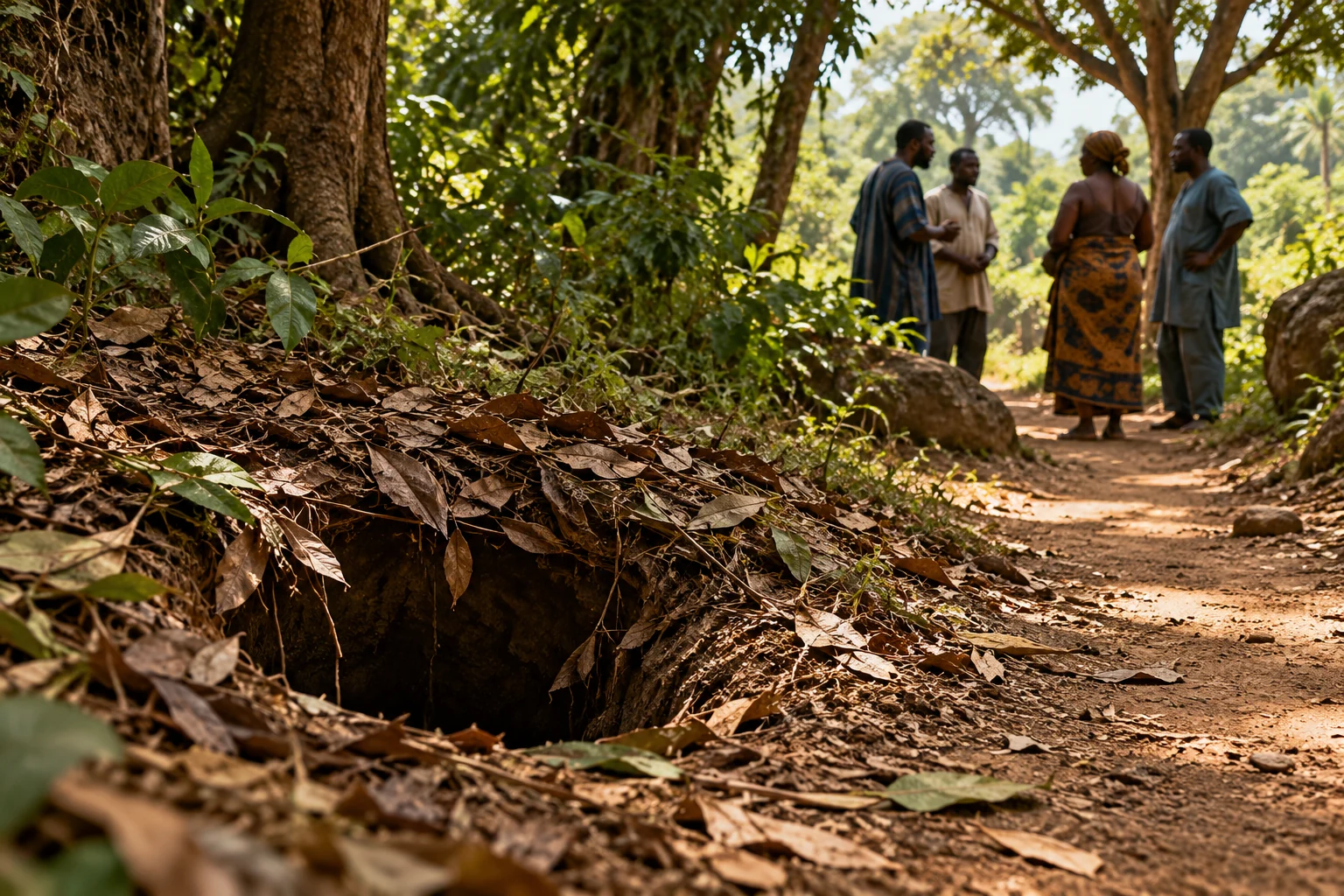
Abo and Orunmila share rule, but Abo wants sole authority. He prepares a concealed burning pit and invites Orunmila to settle their political conflict in the forest. Orunmila consults, approaches carefully, and discovers the trap. When Abo attempts the final ambush, a hunting Oshosi seizes him. The intended victim then participates in a lethal reversal against the plotter.
The invitation adopts the outward form of a peaceful political negotiation while concealing a lethal ambush. Attention to the environment and a third party’s intervention interrupt that deception. The ending should remain ethically difficult: self-preservation turns into violent punishment. We can distinguish the value of noticing a compromised meeting from an endorsement of the narrative’s retaliatory resolution.
Narrative setting: Cuban-labeled narrative in the accounts considered here; no independently established narrator or publication history.
A race entered without a horse
A poor person receives direction from the elderly Babalu Aye, consults Orunmila, and hears of a competition whose winner will govern. Yemaya tells the contestant to enter despite lacking a horse and lends an extraordinary creature that grows during the journey. The contestant arrives ahead of the riders, receives the prize, and returns to acknowledge the helpers.
The public horse-racing contest begins with radically unequal equipment, so its surprising result challenges the assumption that visible resources determine ability. Help comes through figures encountered during deprivation, not through established prestige. The source’s wording around the final coronation is unclear; the stronger point is the contestant’s return and recognition of assistance after the public victory.
Narrative setting: Cuban-labeled narrative in the accounts considered here; no independently established narrator or publication history.
A deadly game disguised as inherited friendship
Iki receives a warning concerning a ram-sized friend and follows the prescribed religious preparation. The ram has meanwhile offered to bring Iki to Olofin as a victim. It introduces a supposed game remembered from the fathers’ time, taking turns entering a container and carrying one another. After the ram demonstrates, Iki enters, but his requests to stop are ignored as the carrier continues toward Olofin. Iki invokes the diviners’ help. The ram later hears the container rattling and assumes its passenger remains inside. At the destination only bracelets are found, and the ram becomes the victim it had intended its friend to be.
The game manufactures apparent reciprocity before revealing unequal control. The first participant can leave the container, so Iki is offered a convincing model of harmless participation; the second is carried beyond the place where consent can be withdrawn. The appeal to the fathers adds another layer, lending an invented precedent the authority of inherited practice. Within the religious account, the diviners’ earlier warning and Iki’s invocation make a route out of an enclosure that physical pleading cannot open.
The substitution is not explained as ordinary escape technique, and should not be reconstructed as one. The ram’s rattle-based certainty also matters: sound confirms its desired interpretation without inspection. Finally, Olofin punishes the failed deceiver partly for failing to deliver, leaving the victim-taking system itself outside the judgment. A depth reading can preserve the rescue’s spiritual efficacy while asking why a narrative reversal may expose betrayal without resolving every hierarchy through which betrayal acquired its purpose.
Narrative witness and setting: Explicit compilation attribution to Afolabi Epega; African Ifa narrative of Iki and the ram.
The honest practitioner refuses prosperous imitation
Orunmila remains honest while apparently successful people around him profit through fraud and ridicule his poverty. He consults because integrity and visible outcome seem to contradict each other. The diviners tell him to continue truthfulness and remain patient. Some of the prosperous figures then urge him to adopt small lies as the practical condition of succeeding. He refuses, grounding his position in accountability before Olodumare. The surrounding frauds are subsequently exposed through theft, extortion, and false claims to authority, while Orunmila’s conduct receives public recognition. The unit joins direct religious teaching to a narrated reversal of what prosperity initially seems to prove.
This account makes need a serious pressure on integrity rather than assuming honesty costs nothing. Orunmila’s difficulty is not ignorance of wrongdoing; it is that wrongdoing appears to work while his own conduct does not. The persuaders present imitation as realism, implying that a modest distortion is merely the price of participation. His refusal appeals beyond immediate comparison to a religious horizon in which a life remains answerable to Olodumare. That commitment gives truth a meaning not exhausted by eventual profit.
The public exposure provides the narrative’s resolution, but a contemporary reader should distinguish that particular reversal from a promise that honest people always become prosperous or that poverty proves failure. The story can instead sustain a question about what makes a standard binding when visible rewards contradict it. Its named forms of fraud also keep the issue concrete: stealing, coercive extraction, and claiming authority one does not possess are not simply alternative personal styles deserving equal approval.
Narrative witness and setting: Explicit compilation attribution to Solagbade Popoola; African Ifa teaching and narrative.
What was born in this Odù
“Born” can name an explicit traditional origin association or what emerges through a story: a capacity, relationship, practice or order of life. Interpretations drawn from a narrative are labelled below, so their basis remains clear.
The moon
Selected traditional source association.
The origin list associates the moon with this sign. Preserve this as a cosmological attribution within the compilation, without deriving personality traits or astronomical claims from it; the two selected narratives do not explain the moon’s creation.
A transferred awakening duty
Selected traditional source association.
The list records that the power to wake Orunmila passes to Ogbe Di. This creates an inter-sign narrative relation about a particular responsibility, rather than a general ranking of the worth or power of different signs.
Correlations to life dimensions
These questions bring the selected stories into contemporary life. They are interpretive invitations for study.
Work and resources
The race contestant begins without the conventional equipment for a prestigious competition. Access to a suitable helper changes what participation can mean. We can examine barriers to entry while keeping the extraordinary growing mount within the story’s religious imagination.
Reflect: Which entry condition unnecessarily excludes someone?
Relationships and family
The contestant remembers the elderly person whose advice began the transformation. The account gives gratitude a material form through continued inclusion after success, rather than treating the helper as disposable once their usefulness appears to have ended.
Reflect: How does gratitude change a relationship after success?
Character and inner life
Orunmila notices disturbance around the concealed pit and investigates with his staff. The distinctive action is careful observation during fatigue. The narrative supports attention to evidence and surroundings without turning vigilance into a generalized expectation of betrayal.
Reflect: What concrete evidence calls for closer attention?
Community and responsibility
Shared rule fails when a rival substitutes ambush for negotiation. The story invites questions about how competing authorities can meet under conditions both accept. Its lethal ending shows the cost of having no trusted process for resolving an institutional disagreement.
Reflect: What makes a difficult negotiation credible?
A deeper reading of the sacred relationships
Accountability reaches beyond immediate visible success
Popoola’s episode explicitly grounds Orunmila’s refusal in responsibility before Olodumare. This makes honesty a religious commitment whose value is not created by the later punishment of frauds. Iki’s rescue likewise turns through a consultation and an invocation of diviners whose help remains active inside the dangerous container. The older pit story and Yemaya’s race assistance supply other specific relations through which spiritual knowledge alters an unequal encounter. These are not interchangeable guarantees of reward. Their religious logic concerns continuing obligations, heard words, and effective relationships with named powers. A contemporary reading can ask how those obligations guide judgment under pressure while preserving the accounts’ understanding that visible circumstances do not exhaust what is real.
The demonstration may conceal the missing right to stop
Iki sees the ram enter the container first, but that visible precedent does not secure his own ability to leave. The poisoned-pit invitation likewise presents a meeting as if it were a reciprocal negotiation while concealing an arrangement controlled by one side. Popoola’s prosperous deceivers offer another staged example: their apparent success is presented as proof that Orunmila should copy their methods. In each case, an offered model omits a condition essential to judging it. Research can therefore ask what a demonstration actually establishes, who controls its continuation, and which hidden constraint changes the meaning of an apparently reasonable invitation. The stories give different answers rather than one generalized warning against trust.
Public recognition and the burden of a prior wound
The race contestant returns to acknowledge helpers, while Orunmila receives honor after people who mocked him are exposed. Neither outcome necessarily describes how earlier humiliation is repaired. Iki escapes a friend’s design, but the text supplies no restored friendship; the pit account ends with the rival’s destruction. These endings distinguish gratitude, vindication, survival, and punishment. The differences matter because a community may celebrate the final visible success while overlooking the person’s earlier vulnerability or the losses outside the celebration. A deeper treatment can ask what acknowledgment would address the particular injury rather than using prestige as a universal substitute for safety, repair, or a trustworthy relationship.
Questions that deepen the study
Does the honest practitioner’s later honor make honesty merely a strategy for profit?
The narrative gives him a reason to refuse deceit before honor is available: responsibility before Olodumare. That sequence matters. The later exposure of fraud supports the teaching but does not create the standard he has already accepted. A contemporary interpretation can ask what grounds conduct when comparison makes dishonesty attractive, while avoiding a guarantee that a truthful person will obtain money or public vindication. The unit’s religious teaching also addresses care for a person in need, so integrity should not become an excuse to abandon someone whose circumstances remain difficult. The ethical commitment and communal responsibility belong together.
What makes the ram’s invitation different from ordinary shared play?
The ram has already promised Iki as a victim, and its demonstration is designed to secure a position from which the friend cannot leave. The decisive event is not entering a container by itself but the refusal to honor the request to stop. The ancestral reference is also false support for a predetermined plan. Within the story, religious preparation makes rescue possible when ordinary appeal fails. Contemporary reflection can distinguish that spiritual explanation from a practical question about consent: an activity is not reciprocal merely because participants take turns beginning it if only one participant controls how the other’s turn ends.
What changes when these accounts are read alongside the race and pit stories?
The earlier pair emphasizes unequal danger and unexpected assistance. The additions make the credibility of appearances more explicit: a demonstration can conceal captivity, and visible prosperity can conceal fraud. The race reverses a judgment based on equipment, while the pit reverses a judgment based on an invitation. Across the four stories, a person needs more than a favorable surface in order to understand a relation. That does not imply every welcome is false or every success corrupt. It asks what actual evidence, religious obligation, and available right of response make a particular appearance trustworthy.
What the four narratives reveal together
The four selected accounts place people under pressure created by rivalry, poverty, and misleading forms of invitation. The forest meeting hides a pit, the race disguises an unequal starting position, the ram’s game hides an intended delivery, and the prosperous circle disguises fraudulent means as practical wisdom. Their religious agencies are equally specific: divination and Oshosi interrupt an ambush; Yemaya supplies the contestant’s extraordinary assistance; Iki’s invocation activates earlier preparation; accountability before Olodumare sustains truth under material pressure.
The Epega and Popoola witnesses add distinct African material rather than new versions of the older Cuban plots. Their comparison supports inquiry into what an appearance proves and what obligation remains binding before success is visible. It also preserves difficult endings: survival may coexist with lethal punishment, and public honor may not fully repair earlier humiliation. No single triumphant outcome settles the sign’s religious and ethical range.
Living with this Odù
A continuing life or initiatory relationship
For someone whose received life or initiatory Odù is Ògbè Òsá, trust can require attention to the setting and control of an encounter. The hidden-pit meeting uses the appearance of negotiation to conceal lethal intent. Iki’s inherited game offers an initial demonstration of reciprocity, then removes the second participant’s ability to stop. These motifs make consent more demanding than a friendly invitation or a precedent supposedly received from the fathers. The person may need to ask whether withdrawal remains possible after participation begins.
The race and honesty narratives widen that vigilance. Assistance from Babalu Aye and Yemaya makes an unequal contest navigable, while Orunmila’s truthfulness remains answerable to Olodumare despite the visible success of fraud. Across a lifetime, the work can involve receiving unexpected help without forgetting it and sustaining a standard whose immediate rewards are uncertain.
A received sign does not predict betrayal or establish that poverty conceals a forthcoming coronation. It can make accountability more precise under changing conditions. Protective religious agency is active, yet the narratives’ lethal reversals do not become models for ordinary retaliation. Surviving a danger, acknowledging a helper, and living truthfully remain distinct responsibilities, each with consequences beyond the moment of success.
A particular consultation and its question
In consultation, Ògbè Òsá can distinguish an invitation whose terms are unclear from one whose structure removes a participant’s control. The forest meeting and container game both stage apparent agreement, but their mechanisms differ. One hides danger in the environment; the other makes an initial harmless turn into evidence for a later turn whose consent cannot be withdrawn. A practitioner can examine place, control, and exit without announcing that an unknown visitor has a secret enemy.
The race asks what assistance may be overlooked because the source lacks prestige. The honesty account asks whether an apparently successful practice remains legitimate when it depends on fraud or coercive extraction. These questions may be relevant to livelihood, partnership, or public authority, but the actual result must specify their relation to the question asked.
Religious relations remain particular: Oshosi’s intervention, Babalu Aye’s direction, Yemaya’s aid, the diviners invoked by Iki, and Orunmila’s accountability before Olodumare do different work. They cannot be replaced with one generic promise of protection. A consultation does not turn the sign into permanent suspicion or guarantee eventual prosperity for honesty. It can clarify how to distinguish assistance from leverage and durable commitment from imitation of an impressive outcome.
Constructive and adverse possibilities
Constructively, preparation and assistance can interrupt a compromised encounter, and success can return in gratitude toward those who made it possible. Orunmila’s refusal of profitable deceit preserves a religious accountability larger than immediate comparison. The poor contestant’s victory also challenges the assumption that visible equipment exhausts possible support. These outcomes make protection, truth, and acknowledgment relationally active.
Adversely, friendship can manufacture unequal consent, political negotiation can become camouflage for elimination, and need can make dishonesty appear to be the only realistic path. The stories’ reversals do not remove every ethical difficulty: Iki’s escape leaves a victim-taking order in place, while the pit’s ending involves lethal retaliation. Such tensions deepen rather than decide a reading’s condition. Iré and adverse circumstances belong to the actual consultation. The narratives ask what kind of safety and integrity becomes possible, and which unresolved system remains beyond a favorable escape.
An illustrative situation in everyday life
Hypothetically, a researcher is invited to demonstrate a project through a friendly arrangement presented as an old professional custom. The first demonstration allows the host to retain control; the second would require the researcher to surrender all files before learning the contract’s terms. Iki’s game makes the unequal ability to withdraw visible. At the same time, a financially successful colleague urges her to misstate results because everybody supposedly does it. Orunmila’s honesty motif asks what makes a standard binding when visible rewards favor its breach. She can distinguish a collaborative demonstration from irreversible surrender and an effective practice from fraudulent imitation. The hypothetical example concerns the structure of consent and accountability, not a prediction of betrayal or evidence that honesty guarantees public reward.
Sources and reading context
The first two narrative witnesses
The passages are labeled Cuban oral literature and contain unreliable appended translations of ritual vocabulary. Only the prose plot is used. Babalu Aye is kept under that explicit name, without collapsing him into Soponna or Asojano; the race’s coronation wording remains uncertain.
Narrative motifs are summarized independently. The life-dimension reflections are contemporary interpretation. How these reference studies are built explains the wider source approach and the distinction between a reference article and personal divination.
Additional named witnesses
-
Afolabi Epega. Explicit heading precedes Iki’s container game and the substitution that exposes the ram.
-
Solagbade Popoola. Explicit source heading precedes the teaching on truth under need and the narrative of Orunmila refusing profitable deceit.
The Epega name is misspelled locally but identifiable. Both attributions remain compilation witnesses without verified edition/pages. The container reversal is religious narrative, not escape instruction; the truth account does not guarantee material reward or justify blaming poverty on conduct.
Bibliographic identification
-
Afolabi A. Epega and Philip John Neimark. The Sacred Ifa Oracle. San Francisco: HarperSanFrancisco, 1995. Library catalogue record. First-edition bibliographic record. The particular edition underlying the narrative witness has not been established.
-
Solagbade Popoola Library Inc. and Awoyinfa Kori Ifaloju. Ifa Dida: An Invitation to Ifa Divination, Volume 1. Asefin Media, 2008; ISBN 9780981001319. Library catalogue record. Library catalogue record for the named author’s work; an exact source edition for the selected narrative remains unverified.
Read the source method and wider scholarly context.
The catalogue links identify published works and their authors. They are separate from proof of an individual episode’s wording or attribution. Contemporary comparisons and the synthesis above are editorial interpretation. The author’s books and Academy companions below provide further study; their sales links are separate from the source references.