
Òtúrá Ògbè is a mixed Odù in Ifá’s 256-part corpus. The selected Òtúrá Ogbè material juxtaposes a poor son negotiating with his deceased father and Ṣàngó discovering that fear cannot secure peace. Both episodes place powerful relationships behind misleading appearances: an impoverished father still possesses resources, while an apparently ordinary elder is Ọ̀rúnmìlà. Their shared tension concerns recognition without domination, including the difficulty of accepting obligations when their material basis remains invisible.
A question to carry through the study: Where are you measuring someone’s capacity to help only by what they visibly possess?
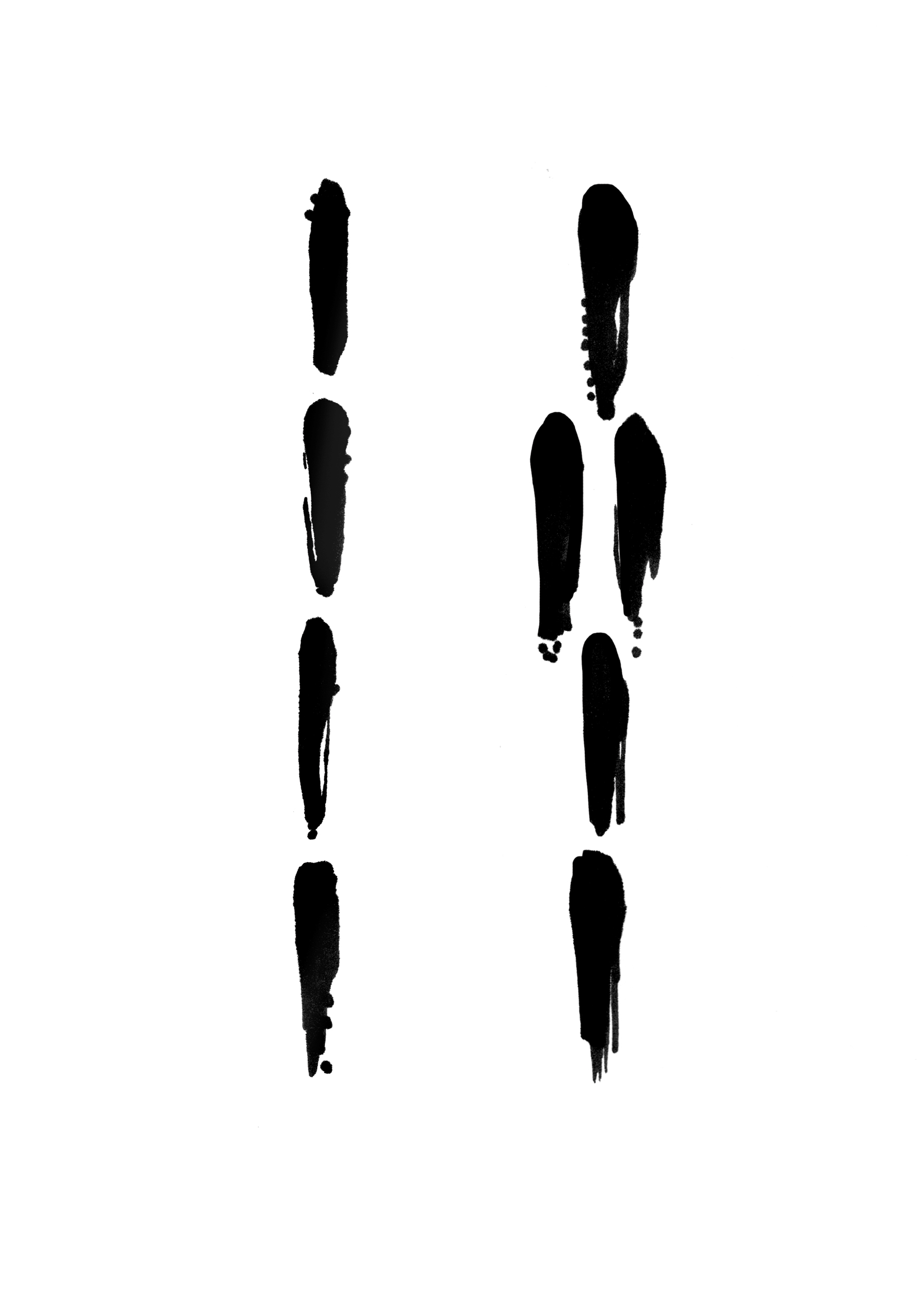
This Academy reads the right column first, then the left. Each row carries a single or double mark.
Where this Odù belongs
Òtúrá Ògbè belongs to the Òtúrá family in this Academy’s study sequence. It is a mixed Odù, distinct from Ògbè Òtúrá. The order matters. Its teaching is approached through its own narratives, rather than by adding two general descriptions of the principal signs together.
Key Òrìṣà and sacred relationships
The figures below are selected for their roles in the accounts discussed here. They offer connected reading paths through the tradition.
-
Baba Ẹ̀gún. The deceased father and assembled ancestral elders hold knowledge unavailable to the living son; an interceding elder turns condemnation toward a continuing relationship of service.
-
Ṣàngó. Ṣàngó attempts to frighten an elder through speed and force, then confronts his own conduct when that same elder becomes the counselor he seeks.
-
Ọ̀rúnmìlà. As the unshaken elder, Ọ̀rúnmìlà exposes intimidation as incompatible with tranquility and receives Ṣàngó’s acknowledgment of the harm he has caused.
Key myths and their meanings
The inheritance nobody could see
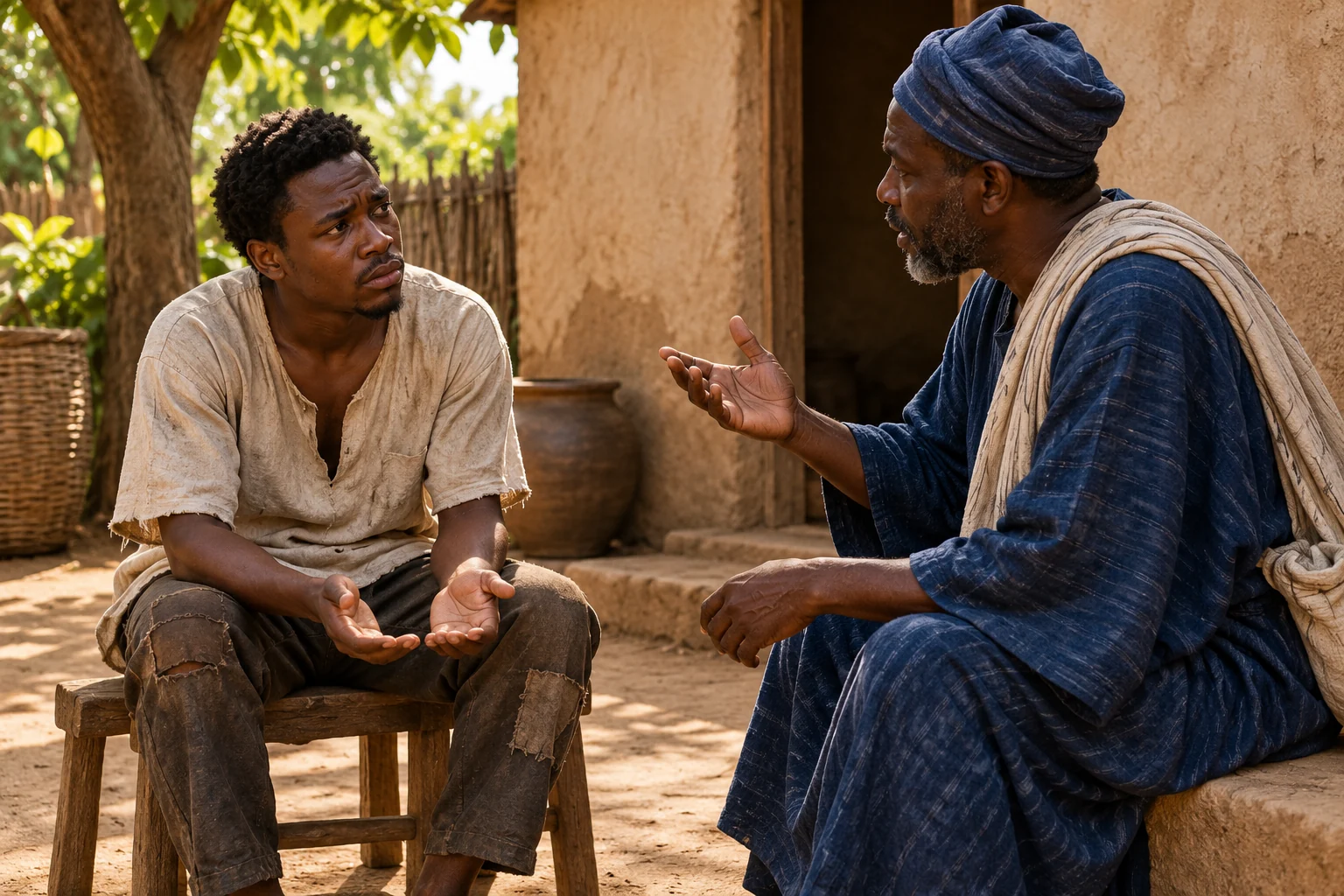
An impoverished young man receives requests from his deceased father through a messenger. He answers with bitter reminders that the father left no material means to meet them. Eventually the son has himself delivered to the ancestral assembly. There he discovers withheld possibilities and seeks forgiveness. An elder intervenes, and the father establishes a continuing form of ancestral work rather than simply restoring every lost possibility.
Poverty makes the son’s objections intelligible: obligations without resources can sound unreasonable. The narrative nevertheless insists that visible inheritance is not the only inheritance. Its most productive tension lies between resentment and reciprocity, followed by mercy that changes the future without erasing consequences. The episode supports reflection on inherited responsibilities, not demands that readers reproduce its ceremonial conditions.
Narrative setting: Cuban compilation, Otura Niko and Afiku Oro episode; no individual author identified.
Thunder meets an unshaken elder
Ṣàngó travels while presenting himself as respectable but troubling others. He repeatedly drives his horse near an elderly man to frighten him, escalating to displays of thunder when the elder remains calm. Distressed by his own failure, Ṣàngó follows Eleguá’s recommendation to seek Ọ̀rúnmìlà. The counselor proves to be the same elder. Recognizing the contradiction in his behavior allows Ṣàngó to change his relationship to others.
The elder’s steadiness interrupts a cycle in which escalating force is supposed to restore wounded pride. The narrative does not require the intimidated person to defeat the aggressor on the aggressor’s terms. It instead makes the aggressor responsible for recognizing his conduct. Eleguá’s referral also shows that accepting help can bring a person back to the very relationship they have damaged.
Narrative setting: Cuban compilation, Ṣàngó and the elder narrative.
Three sons enter a prohibited farm
Death, Ògún and Ọ̀rúnmìlà receive counsel before their sons gather firewood. Ọ̀rúnmìlà prepares his child and gives him a protective way of identifying himself. Death’s son directs the companions into his father’s restricted farm without making the danger clear. Death, already waiting for thieves, attacks before recognizing the children. Rain brings Ọ̀rúnmìlà’s son into the shelter where Death questions him. Hearing his own son’s name, Death returns to inspect the victims and discovers that his violence has struck his family. The surviving child’s explanation reveals an error produced before identity was established.
The account makes protection depend partly on information that is distributed unequally. Death’s son knows the restriction but leads the others inside; the other children do not possess the same context. Death then converts a sound into sufficient evidence for a violent response. This resembles the earlier Ṣàngó episode through a problem of power and interpretation, but the outcomes differ: the unshaken elder can expose an aggressor’s conduct, whereas the children cannot stop the attack before it occurs.
The surviving child’s self-description also deserves care. Ignorance and innocence are not universally interchangeable; here the words operate within a particular father’s preparation and the account’s naming device. The strongest contemporary question concerns procedures that prevent irreversible action before identities and circumstances are checked. That reading does not blame the children for missing information, promise safety through a name or treat disability as proof that preparation was inadequate.
Narrative witness and setting: Portuguese African narrative in the section explicitly credited to Cromwell Osamaro.
A condemned visitor receives the crown
Already prosperous, a diviner reluctantly follows advice to visit Oyo. Èṣù hides the ruler’s favored dog, and checkpoints search travelers. The visitor carries a different dog’s remains as part of his journey preparation and is convicted without a hearing. Just before execution, the living royal dog reappears, exposing the error. The ruler apologizes and offers compensation. The narrative then escalates through destructive disturbances until the throne itself passes to the visitor. Its ending explains a protected standing for Ifá practitioners, but the transfer follows both wrongful judgment and coercive pressure on a whole community.
This story refuses a narrow account of the original error: a ruler hears neither an explanation nor the accused person’s identity before ordering death. The return of the dog supplies disconfirming evidence, so the episode clearly supports criticism of summary judgment. Yet the subsequent transfer of power is not a neutral correction. Èṣù helped construct the misleading circumstances and later amplifies destruction when compensation is judged insufficient. People outside the original decision suffer as the ruler is forced to yield.
A reference study should therefore distinguish exoneration, compensation and acquisition of sovereignty rather than treating them as equivalent remedies. The earlier ancestral story also turns severe judgment toward a continuing role, but does so through intercession within an assembly; this episode uses catastrophe to establish professional immunity. Their shared interest in the Awó’s standing does not eliminate their differences in method, beneficiary or cost. Neither account supplies a modern legal rule or evidence for historical royal succession.
Narrative witness and setting: Portuguese African narrative in the section explicitly credited to Cromwell Osamaro.
What was born in this Odù
“Born” can name an explicit traditional origin association or what emerges through a story: a capacity, relationship, practice or order of life. Interpretations drawn from a narrative are labelled below, so their basis remains clear.
The shadow
Selected traditional source association.
The origin list associates the sign with the shadow. Alongside the ancestral episode, this can frame presence that is perceptible but not graspable, without claiming that every shadow represents an ancestor or a particular spiritual message.
Death respecting the living
Selected traditional source association.
The source lists occasions when Death fears or respects living people. This reverses the expected hierarchy of power and complements the unshaken elder motif; it remains a story-world association, never a promise that a person can evade death.
Movement of the sea
Selected traditional source association.
Sea agitation appears as a local origin association. It supplies an image of force and unrest, but the selected narratives do not explain an ocean cosmology; editors should resist extending this small listing beyond its evidential reach.
Correlations to life dimensions
These questions bring the selected stories into contemporary life. They are interpretive invitations for study.
Relationships and family
The son and father speak across an apparent failure of provision. The narrative makes resentment, shame and continuing care coexist rather than treating family obligation as simple gratitude. An intercessor creates room for a relationship after a serious rupture.
Reflect: What grievance needs acknowledgment before reciprocity becomes possible?
Character and inner life
Ṣàngó’s escalation follows the failure to produce fear. The elder’s calm exposes how much of that force serves injured self-image. A useful interpretive emphasis is recognizing the impulse to intensify a conflict merely because an earlier display did not work.
Reflect: When does your desire for a reaction become stronger than your original purpose?
Work and resources
The ancestral doors reveal resources that the son could not previously see. This supports reflection on nonmaterial inheritance, such as knowledge, relationships and obligations, while preserving the practical reality that poverty can prevent participation in costly expectations.
Reflect: Which inherited resource is useful without requiring money you do not have?
Community and responsibility
The ancestral assembly contains both judgment and an advocate for another chance. That combination permits accountability without permanent exclusion. Ṣàngó likewise benefits from a mediator who directs him toward repair rather than strengthening his grievance against the elder.
Reflect: Who can help your community combine consequences with a route back?
A deeper reading of the sacred relationships
Divination anticipates danger without eliminating divine agency
The three-sons episode begins before the journey because divination can perceive a danger not yet available to ordinary observation. Ọ̀rúnmìlà’s preparation and naming instruction participate in protection rather than merely reminding the child to be sensible. In the Oyo journey, the foreseen crown likewise depends on Èṣù’s active rearrangement of events, including an ordeal the traveler does not initially understand. The earlier ancestral account adds another spiritual relation: withheld possibilities become visible through an assembly of the dead and an intercessor’s appeal. These accounts preserve distinct causal roles for divination, Èṣù and ancestors. Contemporary inquiry into evidence and justice is a further interpretive layer, not a substitute for that religious architecture.
Who pays for a powerful person’s correction
Death’s error harms children, including his own. The Oyo ruler’s correction becomes inseparable from destruction among subjects and the royal household. Ṣàngó’s earlier intimidation is more contained, while the son’s ancestral encounter places responsibility inside a family and institutional lineage. Comparing these scales prevents a biography of great powers from overlooking bystanders. A person may learn, apologize or change position after others have suffered irreversible loss. The relevant analytical issue is not whether the powerful figure eventually recognizes an error, but whether the narrative accounts for those who cannot benefit from that recognition. Its silence can be recorded without inventing a restorative ending for people the source no longer follows.
Different foundations for the Awó’s authority
The earlier father-and-son story grounds a continuing role in ancestral disclosure, mediation and the obligation to serve after missed possibilities. The Oyo episode grounds protected status in public exoneration followed by overwhelming pressure. The three-sons episode gives preparation and restrained self-identification a protective function, while Ṣàngó encounters counsel through an apparently ordinary elder. Together these witnesses do not present authority as a single possession visible from the outside. Its recognition may arise through lineage, demonstrated knowledge, practical vulnerability or a narrated act of coercion. A careful article can identify those alternatives and ask what each permits others to question, rather than merging them into a universal claim of unquestionable expertise.
Questions that deepen the study
Does the story make Death incapable of caring about his own child?
No. Death’s shock after recognizing the victim depends on a relationship he failed to identify before attacking. The tragedy is therefore not an absence of every feeling but a method that allows violence before recognition. His son’s invitation also matters because the other children enter without the same knowledge of the restriction. Contemporary interpretation can distinguish love for a family member from reliable safeguards that protect anyone who might be mistaken for an intruder. The narrative does not show a procedure that prevents the attack; it lets the consequences expose why recognition arriving afterward is inadequate.
Is the Oyo ending simply a story of justice being restored?
It includes a clear injustice being exposed, but the ending does more than restore the visitor’s prior position. The ruler offers an apology and material compensation before coercive disturbances lead to a transfer of sovereignty. That escalation leaves other inhabitants bearing costs and involves an intermediary who helped create the original misunderstanding. It is therefore more accurate to identify several moral claims in tension: the right to be heard, compensation for mistreatment, protection of an office and the danger of collective punishment. Calling every later outcome justice would conceal those distinctions rather than explain what the source actually narrates.
What connects the poor son’s ancestral encounter with the new stories?
Each episode exposes a mismatch between visible circumstances and the relationship behind them. The poor son sees no inheritance, though the ancestral assembly holds possibilities; Death sees intruders before recognizing his children; the Oyo court sees incriminating remains before learning that its dog is alive. Their remedies differ sharply. Intercession gives the son another vocation, explanation comes too late for one child, and exoneration in Oyo expands into a struggle over rule. The connection supports patient inquiry into an incomplete appearance. It does not imply that every appearance conceals a benefit or that the stories agree about what repair requires.
What the four narratives reveal together
The new African-attributed material adds institutional and intergenerational stakes to the earlier Cuban stories of ancestral reciprocity and failed intimidation. The three sons reveal how an adult’s defensive violence reaches people whose identities have not been checked. The Oyo visitor reveals a comparable failure in formal judgment, but its remedy becomes a troubling foundation for power. These differences prevent a single slogan about humility from exhausting the material. The earlier Ṣàngó episode allows an aggressor to recognize his own behavior; the ancestral episode allows an advocate to reopen a relationship.
In the new episodes, recognition may arrive too late or acquire coercive force. Divination and spiritual mediation remain effective realities within these accounts. Contemporary comparisons concern the time allowed for inquiry, who may intervene and who bears the costs; they do not replace those religious realities with a universal doctrine of justice.
Living with this Odù
A continuing life or initiatory relationship
A received life or initiatory relation with Òtúrá Ògbè can make the use and recognition of authority a recurring subject of reflection. The son confronting his father's requests sees no resources with which to answer them; the ancestral assembly later reveals a relation more extensive than visible inheritance. Ṣàngó's encounter with the unshaken elder raises a different issue: force cannot secure the recognition he seeks, and accepting counsel returns him to the person he tried to intimidate. These are not personality predictions about a bearer.
Across changing circumstances, they invite examination of when resentment narrows the account of inheritance and when wounded standing provokes escalation. The children in Death's farm add a duty to establish identity before irreversible action. The Oyo visitor's exoneration then separates correction from the coercive acquisition of power, because bystanders suffer during the later reversal. Divine mediation, ancestral assembly and divinatory protection retain their distinct religious functions. A lifelong reading can therefore ask not simply whether one's authority is acknowledged, but how it becomes accountable and who pays when its errors are corrected. Recognition matters, yet a vindicated person is not thereby beyond scrutiny.
A particular consultation and its question
In a specific consultation, Òtúrá Ògbè can help distinguish a request for recognition from the methods being used to obtain it. The son lacks visible means to satisfy ancestral demands, while Ṣàngó possesses impressive force but cannot produce the response he wants. A practitioner should not answer those different conditions with the same demand for humility or greater effort. The three sons' journey directs attention to withheld information and premature judgment; the Oyo accusation asks whether an explanation has been heard before a decision becomes irreversible.
The religious accounts also make preparation and Èṣù's intervention causally consequential, so an ethical reading of evidence should remain an added layer rather than a replacement. Useful interpretive questions include whose identity remains unexamined, what resources an obligation actually requires and whether compensation addresses the original injury or expands into domination. The narratives do not authorize personal predictions of attack, inherited punishment or royal success. Nor does receiving this sign in one consultation establish a permanent spiritual identity. Its situational force lies in discriminating among ancestral responsibility, intimidation, protection and public justice while keeping the costs to children and other bystanders within view.
Constructive and adverse possibilities
Constructive movement can appear as intercession that makes a continuing responsibility possible, restraint that interrupts intimidation or procedures that hear a person's account before judgment. These are different forms of repair, not one interchangeable remedy. Adverse movement includes escalating displays after recognition fails, concealing a restriction from companions or treating partial evidence as sufficient for irreversible violence. The Oyo narrative complicates any simple celebration of vindication: Èṣù both constructs misleading circumstances and amplifies pressure, while subjects outside the original decision bear losses. A favorable change for the accused does not make every stage equitable.
Actual iré or òṣogbo belongs to the consultation and cannot be assigned from this reference alone. The sign's stories preserve religious agency alongside questions of responsibility, including the possibility that a powerful person's eventual insight comes too late for someone harmed by the earlier act. That difference should remain visible when discussing beneficial and dangerous outcomes.
An illustrative situation in everyday life
Imagine a hypothetical institution that accuses a visiting specialist after a restricted object is found in their luggage. Managers announce punishment before asking how it arrived there. A senior colleague remains calm under intimidation and requests a hearing; later evidence disproves the accusation. The visitor understandably wants redress, but proposes measures that would also penalize uninvolved staff. The narratives help separate establishing innocence, repairing damage and acquiring unchecked authority through the correction. The visitor's anger is intelligible without making every demand justified. This example is contemporary interpretation, not an equivalent of the stories' divine mechanisms or a remembered client case. It illustrates why a fair process must protect the accused before judgment and preserve bystanders' standing after the original authority has admitted its error.
Sources and reading context
The first two narrative witnesses
The selected stories belong to the Cuban compilation and use its Otura Niko naming. The ancestral assembly and Ṣàngó episode are distinct narratives, not evidence for one universal theology. Ceremonial descriptions, frightening health statements and promised outcomes are omitted; the study treats their ethical tensions as interpretive possibilities.
Narrative motifs are summarized independently. The life-dimension reflections are contemporary interpretation. How these reference studies are built explains the wider source approach and the distinction between a reference article and personal divination.
Additional named witnesses
- Cromwell Osamaro. The source explicitly credits the section containing the three sons and the Oyo wrongful-condemnation episode to this named witness.
The credited African section is transmitted through uneven Portuguese translation. Precise personal names and several actions are linguistically unstable, so the analysis relies on the clearer plot sequence. Oyo is a narrative setting, not a verified historical succession. The earlier Cuban passages retain their own limited attribution and are not reassigned to the African witness.
Bibliographic identification
- C. Osamaro Ibie. Ifism: The Complete Work of Orunmila. Lagos; multivolume publication beginning 1986. Library catalogue record. Related bibliographic record for the named narrative witness. Exact volume, edition and page of the transmitted account have not been independently matched.
Read the source method and wider scholarly context.
The catalogue links identify published works and their authors. They are separate from proof of an individual episode’s wording or attribution. Contemporary comparisons and the synthesis above are editorial interpretation. The author’s books and Academy companions below provide further study; their sales links are separate from the source references.