
Òtúrá Òwónrín is a mixed Odù in Ifá’s 256-part corpus. The selected Òtúrá Òwónrín episodes connect ethical movement with physical support. A struggling traveler refuses a wealthy criminal group and receives a place of responsibility from Odùduwà. A second story assembles the human body but exposes the legs’ difficulty sustaining their promise to bear it. Together they distinguish gaining a position from carrying it, placing choice, endurance and the conditions of commitment at the center.
A question to carry through the study: What responsibility are you prepared to carry after the opportunity you want has been obtained?
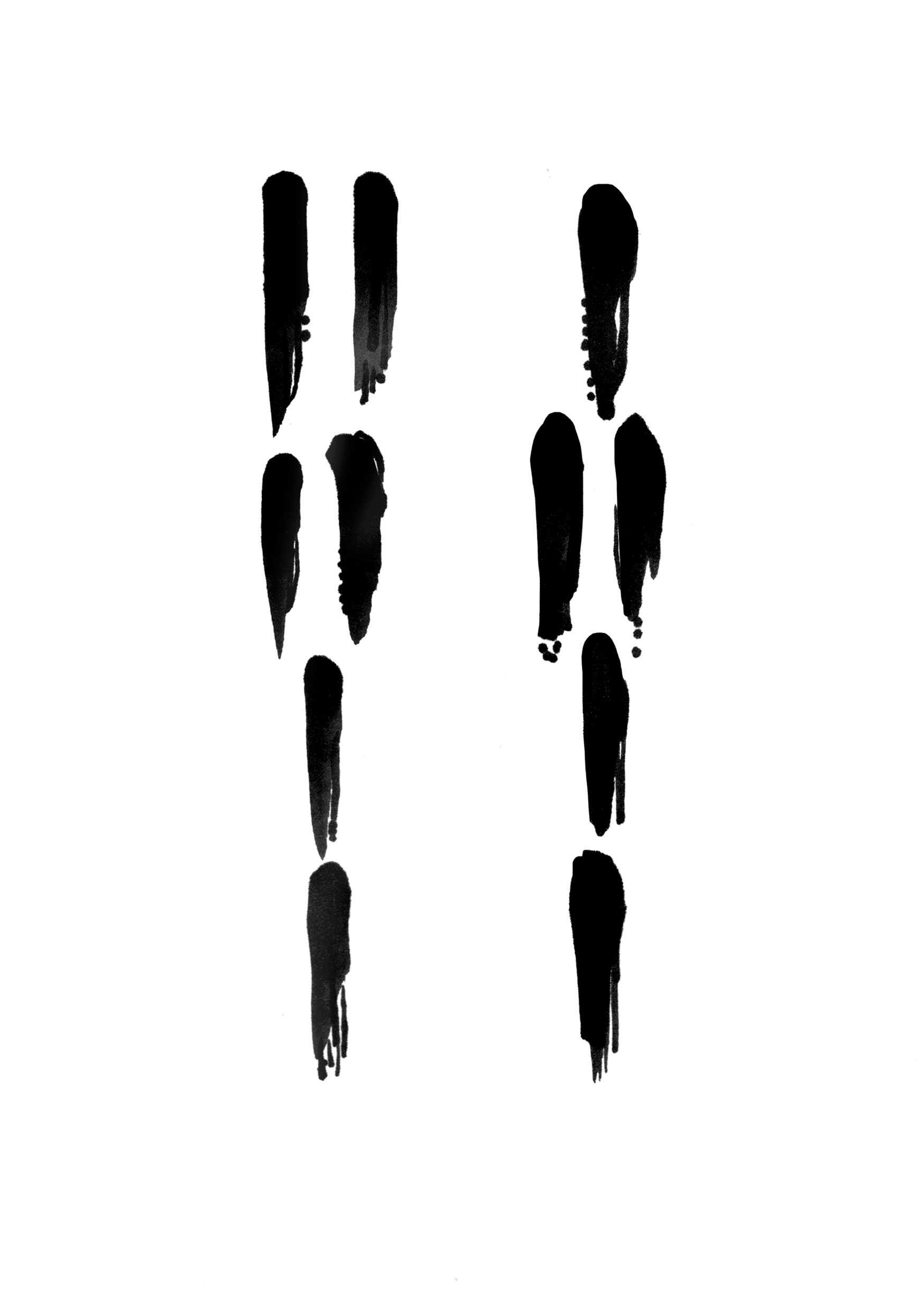
This Academy reads the right column first, then the left. Each row carries a single or double mark.
Where this Odù belongs
Òtúrá Òwónrín belongs to the Òtúrá family in this Academy’s study sequence. It is a mixed Odù, distinct from Òwónrín Òtúrá. The order matters. Its teaching is approached through its own narratives, rather than by adding two general descriptions of the principal signs together.
Key Òrìṣà and sacred relationships
The figures below are selected for their roles in the accounts discussed here. They offer connected reading paths through the tradition.
-
Èṣù. Eleguá notices the traveler’s difficulty and leads him to consultation; in the body narrative he belongs to the network supporting the specialist’s work, rather than acting alone.
-
Ọ̀rúnmìlà. He warns the traveler that apparent opportunity may divert him, making later refusal a remembered act of judgment rather than a reward detached from conduct.
-
Odùdùwà. Odùduwà receives the traveler after his refusal of the bandits and transfers governance of an unexpectedly rich dwelling to him while leaving for another mission.
-
Obàtálá. Obatalá participates in assembling and empowering the human body, then holds the legs to their undertaking even when they complain about the continuing load.
Key myths and their meanings
The plain house beyond the golden bandits
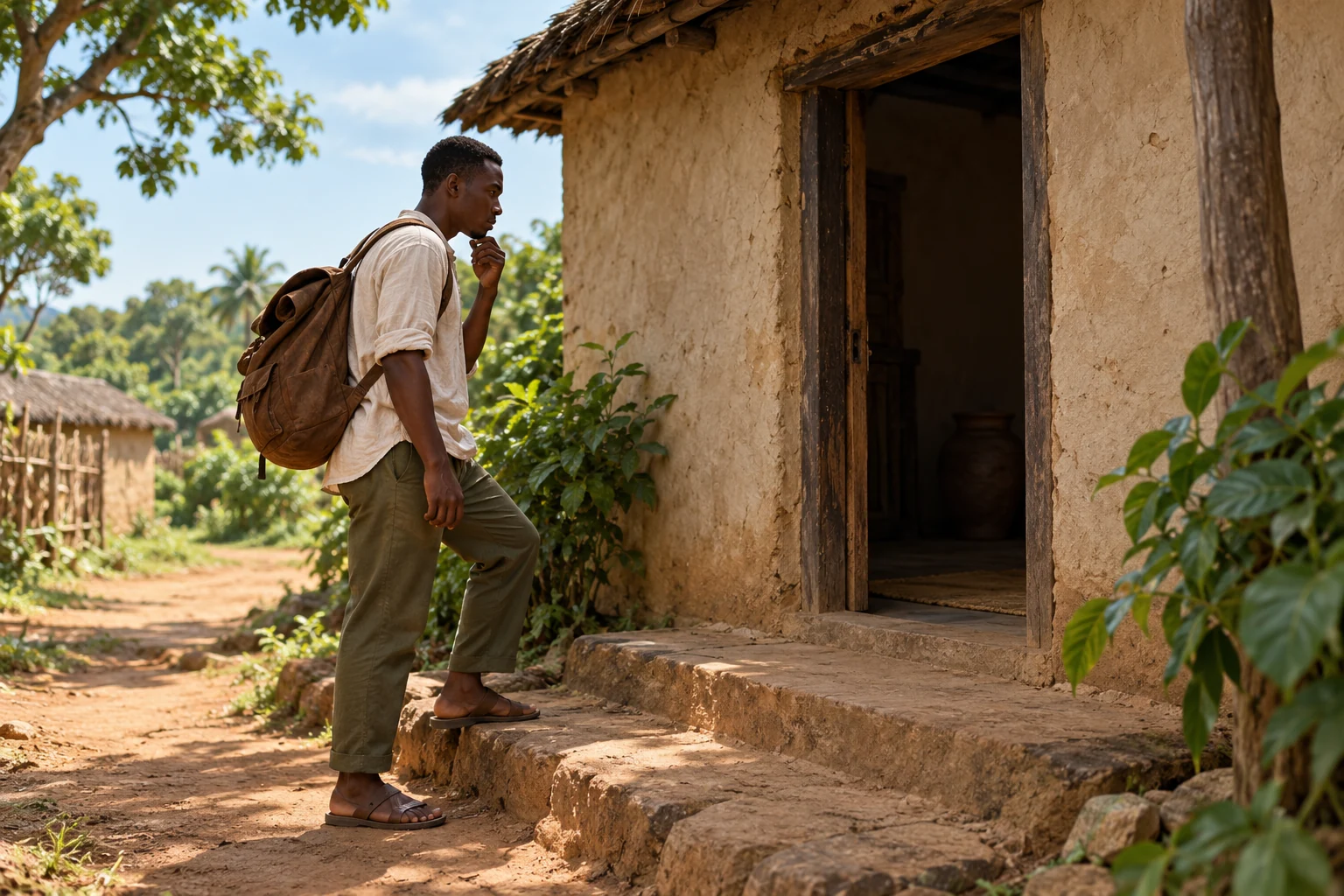
A young man leaves hardship behind in search of a future. Eleguá guides him to consultation, where he is warned about temptations along the way. Magnificently dressed bandits offer immediate abundance, but he declines. Continued difficulty leads him to a modest-looking house that proves splendid within. Its occupant, Odùduwà, entrusts the dwelling and its governance to him after recognizing that he followed the counsel received.
The spatial contrast does much of the thinking: obvious wealth conceals danger, while a plain exterior shelters responsibility. Success is not a claim that every refusal produces a palace. The story raises a question about what kind of future is being offered and what participation it requires. The ending grants governance, so the traveler’s test continues beyond obtaining material comfort.
Narrative setting: Cuban compilation, traveler and Odùduwà episode.
The legs accept more than they can sustain
Obatalá is asked to bring power to a body whose parts are not yet integrated. He seeks assistance, and the limbs begin joining together. The legs initially remain absent because they lack strength for the load. Once they appear, they promise to support the body and receive the capacity to do so. Later they complain of the burden, but Obatalá insists that the original undertaking continues.
This is an origin tale of support that leaves the supporters’ complaint unresolved. It can illuminate the difference between a solemn promise and the ongoing capacity required to fulfill it. The story invites questions about maintenance and shared load rather than telling exhausted people to endure indefinitely. The narrative’s bodily imagery carries ethical questions without supplying medical explanations.
Narrative setting: Cuban compilation, assembly of the body episode.
Ikin’s rivals receive different places in the world
Ikin prepares to leave heaven after consultation reveals three rivals who will follow and obstruct its earthly work. On arrival, the materials practice divination in competition, and the rivalry threatens Ikin’s place among clients. Renewed consultation brings Èṣù into the conflict. When the rivals themselves seek answers, Ọ̀rúnmìlà directs them toward differentiated occupations: performance, building or another relation to divinatory work. Ikin remains the principal medium within the account’s explanation of Ifá. The conclusion therefore reorganizes a field of related materials rather than simply describing the physical destruction of every competitor who challenged the first arrival.
The narrative gives divinatory materials a history of vocation and relation before their familiar earthly uses. They are not merely interchangeable objects later assigned human meanings. Ikin’s standing emerges through a pre-earthly undertaking, rivalry, sacred exchange and the redirection of other beings’ capacities. Èṣù’s intervention is decisive, yet the rivals’ eventual roles also prevent a simple equation of difference with uselessness. One remains associated with supporting divination, while the others find another field. The translation obscures parts of the taxonomy and the initial competition, so the analysis should not identify uncertain botanical materials with modern species or reconstruct a complete technical history.
Compared with the earlier legs’ irrevocable commitment to support the body, this account allows a role to change. Compared with the traveler’s refusal of the bandits, the problem is not choosing between honest and criminal livelihood, but finding a differentiated order among competing spiritually efficacious media.
Narrative witness and setting: Portuguese African narrative credited to Cromwell Osamaro, with Bini and Yorùbá material names inside the transmission.
A revelatory wife leaves as an antelope
The ruler of Jettu seeks help after his followers abandon him amid disorder. Ọ̀rúnmìlà consults before traveling and then identifies a sacred response for the ruler. During the exchange, a royal wife begins singing and revealing concealed meetings involving powerful people. The ruler interrupts her, and she returns to ordinary awareness without acknowledging the statements. Summoned before an assembly to repeat them, she changes into an antelope and escapes. The ruler nevertheless gathers the named people and requires an oath on the earth. The account associates later admissions and departures with that oath and explains an enduring antelope restriction.
The source distinguishes revelatory speech from ordinary remembered testimony. The wife’s altered state is effective within the narrative precisely because it gives access to a concealed order she cannot later restate as an ordinary report. Her transformation also makes her more than a convenient informant owned by the court. She leaves the institution that tries to hold her to the disclosure, while the ruler turns to an earth-bound oath as another sacred mode of verification.
A contemporary reading can ask about the vulnerability of a person through whom powerful speech passes, but should not replace possession and transformation with an unprinted psychological explanation. Nor should the episode become a method for identifying real conspirators. Compared with the earlier traveler who receives a palace, this ruler risks losing an existing constituency; compared with the legs’ vow, the communal oath binds people through a different relation to land and truth.
Narrative witness and setting: Portuguese African narrative in the section explicitly credited to Cromwell Osamaro.
What was born in this Odù
“Born” can name an explicit traditional origin association or what emerges through a story: a capacity, relationship, practice or order of life. Interpretations drawn from a narrative are labelled below, so their basis remains clear.
Family mourning and watching the dead
Selected traditional source association.
The origin list associates the sign with mourning and keeping vigil. This places care for the dead within collective time and presence, without implying one universal form of bereavement or reproducing ceremonial directions.
Legs supporting the body
Selected traditional source association.
The listed origin is developed by the second narrative. Its symbolic value is the often-unnoticed labor beneath visible movement: support is a continuing responsibility, and the story preserves the strain involved rather than depicting effort as limitless.
The dead seeing in darkness
Selected traditional source association.
The list gives the dead a perception different from ordinary human sight. As religious imagery it supports a distinction between visible circumstances and another order of knowledge; it is not evidence for practical claims about communication or prediction.
Correlations to life dimensions
These questions bring the selected stories into contemporary life. They are interpretive invitations for study.
Work and resources
The traveler is offered two economies: quick wealth through joining bandits and a less obvious future involving stewardship. The narrative makes refusing one path part of becoming available for another, while leaving the intervening hardship visible.
Reflect: What activity would an attractive source of income require you to join?
Character and inner life
The traveler remembers counsel at the moment when it costs him something to apply it. This makes integrity a situated decision rather than a self-description. The apparent palace ending should remain an image, not a guarantee attached to ethical choices.
Reflect: Which principle matters most when it slows an immediate gain?
Community and responsibility
The legs’ work becomes noticeable when it strains. The story invites examination of the people whose continuing daily effort lets others move, including whether their original agreement included the actual burden now expected of them.
Reflect: Whose support has become invisible because it is so dependable?
Relationships and family
Mourning and vigil connect this sign’s origin list to care that cannot be measured by productivity. Beside the body narrative, they support attention to accompaniment, sustained presence and the need to support those who regularly support everyone else.
Reflect: What would help a dependable caregiver rest without abandoning anyone?
A deeper reading of the sacred relationships
Materials, spirit and office belong to one religious field
Ikin’s history begins before earthly use, so its authority is neither just an efficient technique nor a conventional symbol. Divination, sacred preparation and Èṣù’s intervention establish a place among beings whose capacities can support different work. The earlier body-assembly account similarly gives material form, strength and obligation through coordinated divine action. The Jettu narrative adds possession and an oath on the earth as efficacious relations through which hidden conditions become consequential. These accounts preserve a world where materials, speech and spiritual agencies act together. A contemporary study may ask how institutions recognize expertise, but that question should not imply that the religious account is secretly only a history of professional competition.
A role can be redirected or made enduring
The legs promise to sustain the body and are held to that undertaking even when the burden grows difficult. Ikin’s rivals instead receive different work after the conflict over one function. The traveler is offered a ready-made place of governance after refusing another affiliation. The revelatory wife leaves the court altogether in another bodily form. These are four distinct answers to the problem of position: persistence, redirection, entrustment and departure. A single instruction to remain faithful to a role would suppress three of them. A contemporary interpretation can therefore ask what makes an undertaking binding and what permits a change, while acknowledging that each account locates the answer within a different spiritual relationship.
Truth appears through more than one kind of visibility
The traveler’s plain house conceals a splendid interior, while the bandits display wealth that invites a dangerous affiliation. In Jettu, ordinary social visibility conceals meetings until a different mode of speech exposes them. Ikin’s principal standing likewise cannot be judged only by the rivals’ apparent early success. These contrasts do not amount to a rule that every attractive appearance deceives. They distinguish surfaces, affiliation, revelation and spiritually established vocation as different ways of becoming known. A reference can ask what each observer is able to perceive and what remains inaccessible at that stage. The answer should remain specific rather than encouraging suspicion of every successful neighbor or unfamiliar material.
Questions that deepen the study
How can an object have a vocation before humans use it?
Within this account, Ikin and its rivals are beings whose earthly functions follow relationships established before arrival. Their capacities are spiritually situated rather than inert matter awaiting a human definition. Consultation reveals a contested future, and subsequent interventions differentiate how those capacities will serve the world. A contemporary reader can understand that as a religious account of material agency without claiming scientific proof or reducing it to decorative symbolism. The uncertain names in translation limit technical identification, but they do not obscure the central claim that an oracular medium’s standing belongs to a network of destiny, exchange and divine mediation.
Why can the wife not simply repeat the revelation?
The narrative moves her between a revelatory state and ordinary awareness. The ruler’s interruption ends one condition of speech, after which she denies having said anything. When the assembly demands repetition, transformation supplies another answer: she becomes an antelope and leaves. The source does not explain this as deliberate lying or a failed memory test. It presents a sacred disclosure whose bearer cannot be managed as an ordinary court witness. A contemporary question about consent and protection can follow, but the religious sequence should remain intact, including the oath on the earth as the ruler’s next means of addressing the names disclosed.
Do the stories tell someone to keep carrying every responsibility forever?
Only the body-assembly episode gives that particular irrevocable form to the legs’ promise. The new Ikin account redirects several beings into other work, and the Jettu wife departs from the court rather than remaining its instrument. The traveler’s future also begins with rejecting an offered affiliation. Their comparison therefore supports careful attention to the relationship authorizing an obligation, not a blanket demand for endurance. Within the narratives, divine entrustment, a spoken vow, divinatory redirection and transformation have different effects. A contemporary reader should not use one episode to cancel the alternatives made visible by the others.
What the four narratives reveal together
The new African-attributed witnesses add the histories of divinatory materials and revelatory speech to the earlier Cuban accounts of ethical travel and bodily support. Ikin’s place is established through sacred preparation and a redistribution of rival capacities. Jettu’s crisis is addressed through possession, transformation and an oath that makes hidden relations consequential. These are active spiritual mechanisms within their accounts, not merely ornaments around a modern theory of institutions.
Their comparison also exposes different conditions of responsibility. The legs remain bound, the traveler chooses an affiliation, the competing materials receive new work and the wife departs. A reference article can therefore explain commitment without treating immobility as its only form. The witnesses preserve both an enduring order and possibilities of redirection, while leaving the legitimacy and costs of particular positions open to careful contemporary interpretation.
Living with this Odù
A continuing life or initiatory relationship
A received life or initiatory relation with Òtúrá Ọ̀wọ́nrín can invite attention to the difference between receiving a role and sustaining its conditions. The traveler reaches a modest exterior that contains a greater responsibility, while the legs' solemn undertaking later meets the reality of ongoing load. Across changing circumstances, the question is not simply whether one accepted an honorable commitment, but what support makes its continuation possible. Ikin's rivals add differentiated vocation: beings need not be destroyed because their capacities belong elsewhere. The revelatory wife's departure gives another limit, refusing to leave a powerful speaker permanently available to an institution that wants to hold her testimony.
These are not predictions that a bearer must govern, support everyone or possess unusual sight. The accounts retain distinct religious agency through Odùduwà, Obatalá, Èṣù, divinatory materials and earth bound oath. Contemporary inner reflection can ask whether visible rewards conceal a role one has not understood, whether loyalty silences legitimate exhaustion and whether recognition permits someone to change position. The sign can therefore accompany a lifetime of revising responsibility without equating reassignment with failure or making an original promise an unlimited claim on a person's remaining capacity.
A particular consultation and its question
In consultation, Òtúrá Ọ̀wọ́nrín can help examine what an offer or obligation requires beyond its surface. The traveler must distinguish glittering temptation from a less obvious place of governance, but the legs' story asks whether a genuine undertaking has become unsustainable. Those are different questions; not every complaint means a person has abandoned counsel. Ikin's rivals show that a conflict may be reorganized through differentiated roles rather than endless competition. The antelope transformation places a further boundary around someone through whom powerful revelation passes. A practitioner can ask whose capacity is being assumed, what role is actually suited to it and whether a person is being treated as a resource that cannot leave.
These contemporary questions must not replace the narrative's possession, transformation or sacred oath with an unprinted psychological explanation. Nor can a story of revelation identify real conspirators. The actual divinatory result belongs to its own question and does not assign permanent identity. Consultation becomes more exact when it distinguishes enticing appearance, maintenance of support, spiritual vocation and verification, preserving the different settings and uncertain material taxonomy instead of constructing a single account of power from all four witnesses.
Constructive and adverse possibilities
Constructive unfolding may involve resisting an alluring but destructive offer, acknowledging the maintenance required by support and finding differentiated places for competing capacities. Ikin's account does not make every rival useless; some move into another field or supporting relation. Adverse unfolding includes accepting duties without conditions for continuation, enforcing a promise after capacity changes or holding a revelatory person as though institutional need establishes ownership. The legs' complaint remains unresolved and should not become advice that exhausted people endure indefinitely. Religious efficacy remains active in the accounts: divine assistance and earth bound verification are more than images of sensible management.
Actual iré or òṣogbo cannot be assigned from a public study. The transformed wife's escape also prevents a beneficial disclosure for the ruler from being described as an uncomplicated benefit for everyone involved. Standing, support and freedom to depart require distinct attention when evaluating an outcome.
An illustrative situation in everyday life
In a hypothetical nonprofit, an unglamorous coordinator receives responsibility after declining a wealthy sponsor's controlling offer. Over time, several reliable staff become the legs carrying the whole institution. New specialists compete for the same role even though their strengths could serve different functions. A colleague who reveals serious concealed practices is then expected to remain permanently available for questioning. The narratives distinguish responsible governance, unsupported promises, differentiated vocation and the limits of institutional access to a person. The coordinator may fear that changing roles dishonors earlier commitments, but continuation requires more than repeating the original pledge. This example is interpretive rather than a report of sacred revelation. It asks how an organization can preserve its work without consuming its supporters or treating an important disclosure as ownership of the speaker.
Sources and reading context
The first two narrative witnesses
These are selected Cuban episodes and origin associations. Odùduwà’s transfer of authority belongs to the story, not a promise of wealth. The body assembly is treated as mythic imagery; references to anatomy and supernatural sight are not used as medical or evidentiary claims.
Narrative motifs are summarized independently. The life-dimension reflections are contemporary interpretation. How these reference studies are built explains the wider source approach and the distinction between a reference article and personal divination.
Additional named witnesses
- Cromwell Osamaro. The named African section contains Ikin’s pre-earthly rivalry and the Jettu ruler’s encounter with revelatory speech and an antelope transformation.
The Portuguese account preserves Bini and Yorùbá terms but leaves several material identifications unclear. No botanical or technical taxonomy is reconstructed. The Jettu plot is treated within its own religious logic, without translating possession into a diagnosis or using the accusations as a method for judging actual people. The older Cuban witnesses remain distinct.
Bibliographic identification
- C. Osamaro Ibie. Ifism: The Complete Work of Orunmila. Lagos; multivolume publication beginning 1986. Library catalogue record. Related bibliographic record for the named narrative witness. Exact volume, edition and page of the transmitted account have not been independently matched.
Read the source method and wider scholarly context.
The catalogue links identify published works and their authors. They are separate from proof of an individual episode’s wording or attribution. Contemporary comparisons and the synthesis above are editorial interpretation. The author’s books and Academy companions below provide further study; their sales links are separate from the source references.