
Òwónrín Òtúrá is a mixed Odù in Ifá’s 256-part corpus. Òwónrín Òtúrá’s selected narratives place mistreated generosity beside rumor that turns a beneficiary against a helper. A boy shares freely but receives little welcome, then enters recurring trouble after a violent encounter. Yemayá supports Ògún in hardship, yet commercial rivals persuade him that she has exploited him until Ọ̀ṣọ́ọ̀sì intervenes. Both accounts ask how care can remain recognizable amid grievance, retaliation, and stories told by people who benefit from conflict.
A question to carry through the study: Who benefits if you accept a damaging story without asking the person concerned?
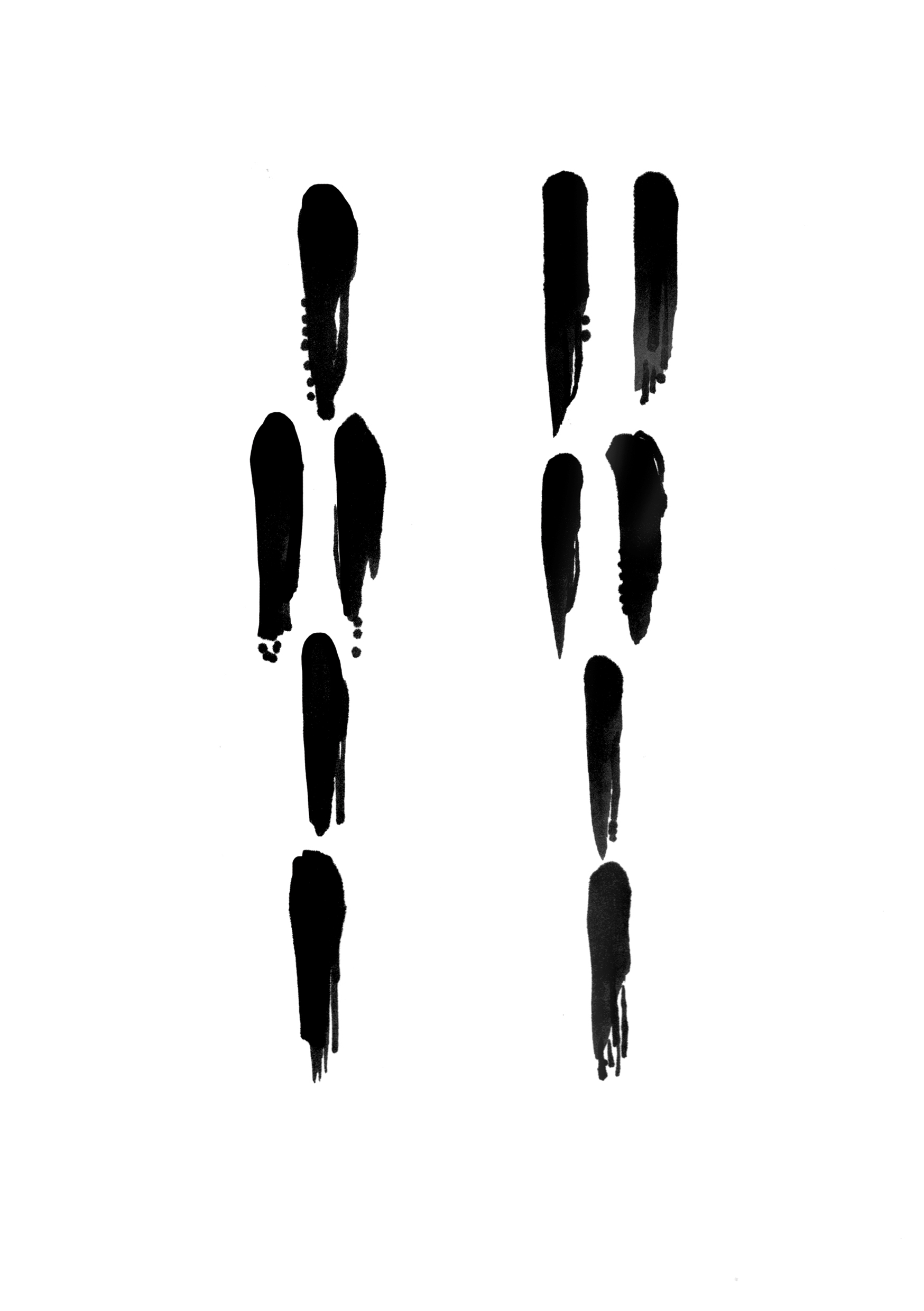
This Academy reads the right column first, then the left. Each row carries a single or double mark.
Where this Odù belongs
Òwónrín Òtúrá belongs to the Òwónrín family in this Academy’s study sequence. It is a mixed Odù, distinct from Òtúrá Òwónrín. The order matters. Its teaching is approached through its own narratives, rather than by adding two general descriptions of the principal signs together.
Key Òrìṣà and sacred relationships
The figures below are selected for their roles in the accounts discussed here. They offer connected reading paths through the tradition.
-
Ọ̀rúnmìlà. Òrúnmìlà receives the boy and mother after a violent incident, then advises the grown youth when trouble recurs. His role frames repeated action as requiring more than a single protective encounter.
-
Ògún. Ògún is helped by Yemayá and later reacts violently to rumors without checking them. The account shows a beneficiary becoming dangerous to the person whose support he has received.
-
Yemọja. Yemayá offers support from a modest business and becomes the target of rivals who want its trade. Her generosity is distorted into a claim of exploitation by people with a commercial interest.
-
Ọ̀ṣọ́ọ̀sì. Ọ̀ṣọ́ọ̀sì interrupts Ògún’s attack by clarifying the rumors. His intervention separates an accusation from evidence before the conflict becomes irreversible.
Key myths and their meanings
The generous boy and recurring trouble
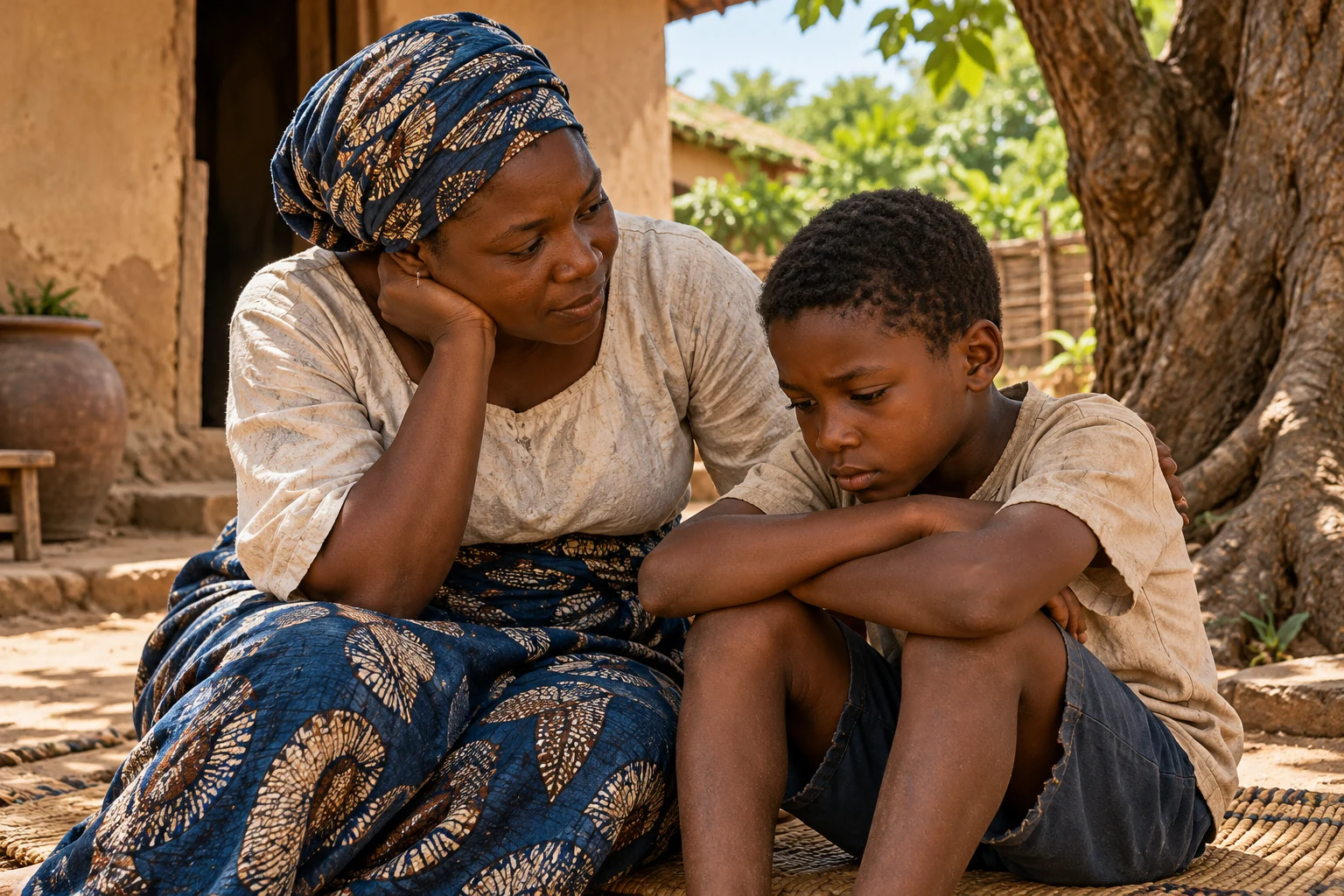
A boy shares what he has but is excluded by companions who do not reciprocate. His mother comforts him and encourages study. A confrontation with an older youth ends in serious injury, bringing the authorities into his life. She takes him to Òrúnmìlà. Later, after abandoning an earlier commitment, he again faces injury and pursuit, then returns for counsel and eventually enters a different religious role.
The account joins genuine exclusion with the danger of responding through force. Sympathy for the boy does not remove responsibility for the person he injures, while his mother’s care should not be reduced to securing his exemption from consequences. Its later religious resolution remains narrative rather than a promise. The useful concern is whether support also helps someone develop conduct that reduces harm to others.
Narrative setting: Spanish Cuban-style account.
The helper made into a target
Yemayá helps Ògún when he lacks food and clothing. Rivals seeking her herb business spread a story that she has used him and intends to report wrongdoing. Ṣàngó, a supplier, also considers shifting business toward the larger group of rivals. Ògún accepts the claims without asking Yemayá and attacks her. Ọ̀ṣọ́ọ̀sì intervenes, clarifies the deception, and prevents her killing.
The rumors are not idle speech: they have a commercial beneficiary and a foreseeable target. The supplier’s preference for a larger customer group joins the chain that makes the false story effective. A responsible reading can examine verification, gratitude, and conflicts of interest without accepting the source’s insult to Ògún’s intelligence or implying that violence is a natural response to feeling used.
Narrative setting: Account explicitly labeled Cuba.
Tortoise plants the evidence that defeats Elephant’s footprints
Tortoise and Elephant dispute land each connects with a father’s claim. Elephant declines counsel, trusting his superior position. Tortoise completes the response and receives beans to plant across the disputed ground. He waits until they spread before seeking judgment. Elephant points to footprints and recent clearing, but Tortoise argues that footprints occur wherever Elephant walks and identifies beans as the mark of his father’s cultivation. Inspectors find the growth and little remaining evidence of the clearing. They award the land to Tortoise. The reader knows that the apparently inherited crop trace has been deliberately produced during the dispute.
The outcome should not be flattened into a celebration of evidence-based justice. Inspection occurs, but the traces have been staged and the court does not possess the reader’s account of their creation. Tortoise’s religious response is effective within the witness even though his legal claim depends on a misleading presentation of recent work as ancestral proof. This distinction matters to an authoritative treatment: sacred efficacy, persuasive evidence, and moral legitimacy are not automatically identical. Compared with the earlier boy’s delayed transformation and the commercial gossip around Yemọja, the new episode shows how a visible fact can be made to support an incomplete story.
Contemporary interpretation can ask how a finding’s history affects what it proves. It should not become advice for manufacturing evidence, nor should Elephant’s arrogance be used to erase the ambiguity of Tortoise’s victory. The source gives a successful claim, not enough independent history to establish who originally owned the land.
Narrative witness and setting: Cromwell Osamaro, a disputed paternal estate
Cooling the world requires Wind to join a benevolent mission
Òwónrín sets out to make the world more habitable after counsel, preparation, and a divine blessing. On earth, his benevolent work cannot overcome the prevailing heat and disorder. He returns to heaven to investigate the failure. Èṣù questions Wind, while Òwónrín brings the problem before God. Wind is directed to visit earth when its heat becomes oppressive. He comes with a fan, drives away the forces making the world inhospitable, and leaves the fan with Òrúnmìlà before returning to heaven. The account connects that object’s place in Ifá work with a mission that required more than one practitioner’s effort.
The protagonist’s failure does not prove that his intention or initial preparation was false. The account explicitly makes his effort insufficient in relation to a wider condition. Returning to heaven is therefore inquiry into the missing relation, not simply repetition of a failed act. Wind’s closeness to God and occasional earthly visits also give cooling a cosmological structure. The fan remains a material relation with that power after Wind departs. Compared with the earlier Yemọja business episode, where rivals misread cooperation, this story addresses coordination among sacred agencies rather than interpersonal clarification alone.
Contemporary interpretation can ask whether an individual has been assigned a problem whose scale exceeds individual capacity. The witness’s heat should not be recast as a scientific weather explanation, and its fan should not be reduced to an emblem of calm self-talk. Cooling is an actual sacred intervention within this account, with a continuing object that recalls how the benevolent work became possible.
Narrative witness and setting: Cromwell Osamaro, Òwónrín’s return to heaven for help
What was born in this Odù
“Born” can name an explicit traditional origin association or what emerges through a story: a capacity, relationship, practice or order of life. Interpretations drawn from a narrative are labelled below, so their basis remains clear.
Fingerprints
Selected traditional source association.
The explicit origin list names fingerprints. This local sacred association supports a cautious image of a particular person’s trace, but does not establish the historical discovery of fingerprints or a forensic rule for evaluating accusations.
Glass
Selected traditional source association.
Glass appears in the origin list as a separate material association. It can remain alongside questions of seeing and mediation, without inventing a narrative etymology, a technology origin, or a universal spiritual meaning.
Correlations to life dimensions
These questions bring the selected stories into contemporary life. They are interpretive invitations for study.
Work and resources
Yemayá’s rivals seek control of an existing trade and use rumor to weaken her relationships. The account makes it useful to ask about material incentives behind a claim, especially when a proposed alliance promises greater profit to the listener.
Reflect: What commercial interest travels with the accusation?
Relationships and family
The boy’s mother acknowledges his exclusion and seeks help after he harms someone. Care can hold both facts together, supporting a vulnerable person without allowing their pain to erase the consequences of their response. The injured youth’s needs remain part of the event.
Reflect: How can you support someone without excusing harm they caused?
Character and inner life
Ògún moves from hearing to attack without questioning Yemayá. The story exposes the danger of a grievance that feels fully understood before the accused person has been allowed to speak, particularly when prior generosity is being reinterpreted.
Reflect: What should you ask before acting on your anger?
Community and responsibility
Ọ̀ṣọ́ọ̀sì’s intervention makes clarification an urgent public responsibility. A community needs people able to interrupt a dangerous false account, rather than waiting until the resulting violence provides a reason to investigate what was said. Clarification matters because the threatened person is immediately exposed.
Reflect: Who can safely interrupt a rumor before it becomes action?
A deeper reading of the sacred relationships
A sacred mission can need a relation not yet fully active
Òwónrín receives counsel and a blessing before departure, yet his work remains ineffective until Wind is sent to earth. The narrative therefore does not make initial authorization equivalent to complete capacity. Èṣù’s questioning, the renewed approach to God, and Wind’s fan each belong to the later opening. This religious logic matters because the problem is not solved by simply intensifying personal resolve. Contemporary interpretation can compare the need for help at the appropriate scale, but should retain the witness’s actual agencies and object. The tale does not authorize diagnosing every failed project as a missing deity or promising that a reader can reproduce the cooling through a simplified gesture.
An observed trace carries a history the observer may not know
The inspectors genuinely see beans on the land. Their error lies in accepting Tortoise’s account of what the growth signifies without knowing when it was planted. Elephant’s footprints are also real but judged insufficient to prove exclusive ownership. The episode distinguishes observation from the historical claim attached to it. Contemporary reflection can ask what an item of evidence actually establishes and what additional narrative has been supplied. The earlier commercial-gossip account offers another mismatch between an observed relationship and a hostile explanation. This does not mean evidence is useless. It means that a visible fact and a persuasive account of its origin remain separable questions.
Scale changes the meaning of an apparent failure
The benevolent practitioner’s effort looks inadequate because the world’s heat is produced and sustained beyond his immediate reach. Tortoise’s small act of planting, by contrast, becomes decisive because the court’s inquiry is bounded to visible traces. One episode requires a wider field of agency; the other reveals the limitations of a narrow field of inspection. Contemporary comparison can ask whether the frame of a problem is large enough to include its causes and small enough to test a claim. The stories do not supply a universal management principle. Their religious and legal settings differ, and the effectiveness of either response should not erase the moral ambiguity of the land judgment.
Questions that deepen the study
Does Tortoise’s victory establish that the court discovers the truth?
The court discovers planted beans and reduced evidence of Elephant’s footprints, but the reader has been told that Tortoise recently produced the growth. His claim presents that trace as evidence of his father’s cultivation. The inspection therefore confirms a visible condition without establishing the history attributed to it. Contemporary interpretation should preserve this ambiguity rather than praise the outcome as straightforward justice. The source does not independently settle the original title. Nor does Tortoise’s completed religious response make manufactured evidence a recommended practice. The episode is valuable precisely because efficacy and legitimacy do not become automatically identical.
Why does the benevolent practitioner return to heaven after receiving a blessing?
His work on earth has not changed a condition larger than his own effort. The return seeks an explanation and an active relation with Wind, whose role has not yet become effective in the earthly mission. The account therefore allows an authorized undertaking to need further help. Contemporary reflection can recognize the difference between a failed intention and an insufficient field of support. Within the witness, however, the answer is explicitly cosmological: God directs Wind, Èṣù intervenes, and the fan remains with Òrúnmìlà. Those agencies should not disappear into a general claim that confidence or persistence alone produces results.
What does the fan preserve after Wind returns to heaven?
It preserves a material relation to the cooling intervention and explains its place in Ifá work within this witness. Wind does not have to remain continuously on earth for the object to carry that history and capacity. Contemporary interpretation can discuss how an object remembers a consequential relation, but the narrative treats the fan as more than an optional reminder. An article should explain that religious significance without reproducing a ritual or promising a reader the same result. The account also concerns sacred heat and disorder, so it should not be presented as a scientific origin of wind or a practical explanation of climate.
What the four narratives reveal together
The new Òwónrín Òtúrá selections place two kinds of effectiveness beside one another. Tortoise wins a land judgment through traces whose recent origin the court does not know. A benevolent practitioner fails until Wind joins a mission whose scale exceeds one person’s effort. The first warns that a visible fact can support a misleading history; the second shows that a true intention may still require a wider relation. The earlier boy and Yemọja episodes add other differences between appearance, conduct, and recognition.
Religious logic remains explicit: counsel can be effective without making every ensuing act exemplary, and divine authorization can coexist with the need for further sacred assistance. Contemporary interpretation can examine evidence and scale while refusing to endorse manufactured proof, diagnose a reader’s missing power, or reduce Wind’s fan to a generic symbol of emotional calm.
Living with this Odù
A continuing life or initiatory relationship
For someone whose received life or initiatory history includes Òwónrín Òtúrá, generosity and benevolent intention do not settle the conditions through which help becomes safe. The boy’s giving does not secure reciprocal belonging, and his mother’s encouragement offers support beyond the companions’ response. Yemayá’s assistance to Ògún is later recast through rumor by rivals with material interests. The helper’s conduct and the story told about it become dangerously separated.
Tortoise’s planted beans add a harder question: evidence can persuade an inspection because its production has been concealed. The judgment’s success does not make the supposed inherited trace truthful. Wind’s contribution then distinguishes a benevolent mission from sufficient capacity to change the world alone. Òwónrín’s return for help and the roles of Èṣù, God, Wind, and Òrúnmìlà remain part of its religious explanation. Across changing circumstances, reflection may concern receiving support, verifying a report, understanding how evidence was made, or recognizing what a mission still needs. The sign does not authorize identifying the client with a historical Kimbisa origin or guarantee that generous intent will be understood. It invites agency able to receive help and examine the channels through which trust is formed.
A particular consultation and its question
In consultation, Òwónrín Òtúrá can distinguish lack of reciprocity from a deliberate recasting of assistance as harm. The boy’s companions fail to return his generosity; Yemayá’s rivals actively supply a false account that Ògún accepts without asking her. A practitioner may examine what has been experienced directly, what was reported, and which interests shape the report, without announcing a conspiracy around a real helper.
The land dispute adds the difference between a visible trace and the history claimed for it. Tortoise’s beans are real, but the inherited-cultivation account is manufactured. The Wind witness offers another configuration: the benevolent practitioner lacks a necessary partner rather than integrity of intention. A useful discussion can ask whether the issue is evidence, trust, or incomplete capacity. These questions keep the religious agents consequential without reducing Wind to a technique for cooperation. The actual result belongs to the particular concern and does not predict violence, identify another person’s motives, or make a present client’s life a repetition of the boy’s troubled journey. Consultation differs from permanent affiliation and cannot verify the source’s separate historical assertions about Kimbisa or Andrés Petit.
Constructive and adverse possibilities
Constructive unfolding may include reciprocal care that does not depend on pleasing an excluding group, reports checked with those they concern, and additional help sought when a benevolent mission proves insufficient. Wind’s participation changes the earthly conditions through a particular sacred encounter.
Adverse unfolding can involve a helper made vulnerable through unverified rumor, commercial interest disguised as concern, or evidence produced to support a history it does not establish. Tortoise’s favorable judgment leaves that deception visible to the reader. These contrasts do not make every conflict a conspiracy or every generous person innocent of all responsibility. They ask how assistance, interpretation, and actual capacity become related. No actual reading’s state follows automatically, and the narrative’s violence cannot become a prescription. The distinction between genuine traces and a false account of their origin remains especially important.
An illustrative situation in everyday life
Imagine a hypothetical neighborhood fund where a volunteer has quietly supplied food and clothing to a struggling member. Rivals seeking control of the fund spread a story that she intends to expose him publicly. He accepts their claims without speaking to her. Yemayá and Ògún’s account distinguishes actual assistance from the reported meaning imposed on it. The planted-bean dispute adds a question about apparently convincing evidence whose history has not been checked. The member’s fear of humiliation is understandable, yet cannot establish the accusation. A careful response could hear the helper and examine how the claim arose. This illustration identifies no real rival or hidden power; it shows why trust requires attention to both conduct and the production of a report.
Sources and reading context
The first two narrative witnesses
The boy’s account is Spanish Cuban-style and the gossip account is labeled Cuba. The source also claims a Kimbisa origin and names Andrés Petit, but those historical assertions are not verified or used as foundation here. Insulting and diagnostic language is excluded.
Narrative motifs are summarized independently. The life-dimension reflections are contemporary interpretation. How these reference studies are built explains the wider source approach and the distinction between a reference article and personal divination.
Additional named witnesses
- Cromwell Osamaro. Explicit heading supports the land dispute and the later cooling-of-the-world account.
The land’s original title is not independently established; staged evidence is not endorsed. Translated fan terminology is clarified by narrative context without inventing an etymology. Sacred heat, Wind, and the fan are not offered as weather science or ritual instruction.
Bibliographic identification
- C. Osamaro Ibie. Ifism: The Complete Work of Orunmila. Lagos; multivolume publication beginning 1986. Library catalogue record. Related bibliographic record for the named narrative witness. Exact volume, edition and page of the transmitted account have not been independently matched.
Read the source method and wider scholarly context.
The catalogue links identify published works and their authors. They are separate from proof of an individual episode’s wording or attribution. Contemporary comparisons and the synthesis above are editorial interpretation. The author’s books and Academy companions below provide further study; their sales links are separate from the source references.
Continue within the family
Previous study: Òwónrín Òtúrúpòn · Next study: Òwónrín Ìrẹtẹ̀