
Òtúrúpòn Òfún is a mixed Odù in Ifá’s 256-part corpus. Òtúrúpòn Òfún’s selected narratives connect a poorly chosen farm with a broken partnership over plants and healing. Orunmila responds to unproductive land by separating samples and trying different approaches; Osain and Oluo Popó turn an intended medicinal enterprise into conflict over profit and control, exposing whole populations to harm. Circle and the majesty of Death appear among the origins. The focus is how expertise can serve cultivation or become a weapon when ownership eclipses responsibility.
A question to carry through the study: Who bears the consequences when specialists treat a shared need as a contest over ownership?

This Academy reads the right column first, then the left. Each row carries a single or double mark.
Where this Odù belongs
Òtúrúpòn Òfún belongs to the Òtúrúpòn family in this Academy’s study sequence. It is a mixed Odù, distinct from Òfún Òtúrúpòn. The order matters. Its teaching is approached through its own narratives, rather than by adding two general descriptions of the principal signs together.
Key Òrìṣà and sacred relationships
The figures below are selected for their roles in the accounts discussed here. They offer connected reading paths through the tradition.
-
Ọ̀rúnmìlà. Orunmila buys unproductive land without prior consultation, then investigates different soils and changes his approach; the account presents effort and learning alongside the cost of an initial unchecked assumption.
-
Òsanyìn. Osain proposes combining plant resources with a healer’s clientele but insists on an equal share and escalates the dispute when Oluo Popó refuses; the ensuing conflict harms communities.
Key myths and their meanings
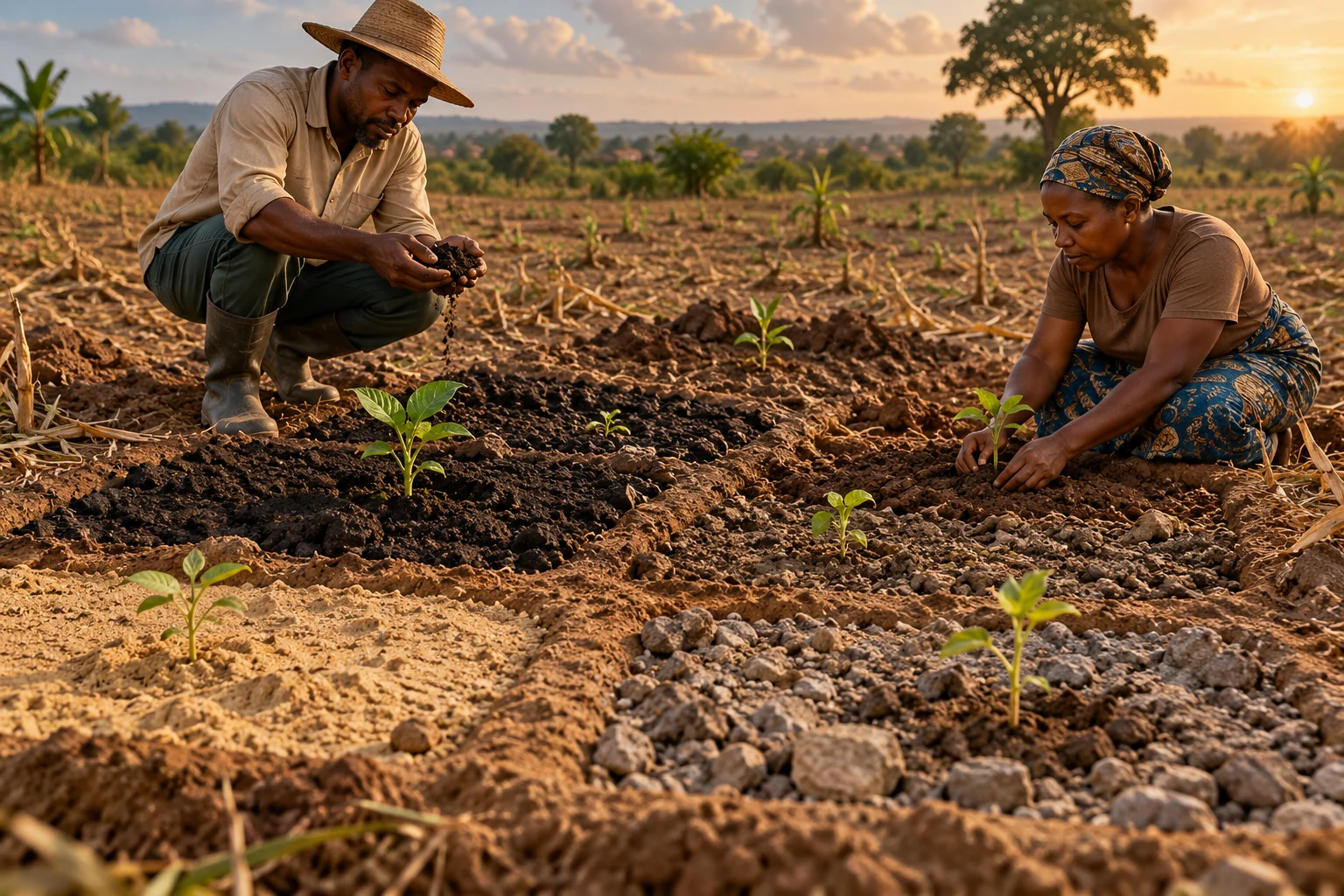
The farm must be understood in parts
Orunmila buys a farm in a district where earlier owners have repeatedly failed. After a year of losses, he separates different soils and plants samples to see which can sustain growth. Further attempts lead to a dramatic clearing of the land, after which the narrative describes fertility and profitable resale. The closing note says that consultation before purchase could have spared the hardship.
The sampling episode is a concrete image of inquiry after a costly assumption. Yet the story’s microbes, fire, and sudden fertility should not be treated as agronomic instruction or a verified account of soil science. The later resale also raises a question about who benefits from improved land. The defensible theme is attending to actual conditions and learning from differences rather than repeating effort on an undifferentiated problem.
Narrative setting: Cuban/Lukumí narrative in the accounts considered here; no individual author established for this passage.
The partners turn patients into a battlefield
Osain proposes a plant-growing enterprise with Oluo Popó, whose work reaches many sick people. They disagree about whether plant ownership or treatment should receive the larger share of profit. The negotiation becomes a contest: each deploys harmful powers, and weather changes allow insects and disease to spread through Osain’s land. As the population suffers, Osain asks for help and acknowledges the other specialist’s greater knowledge in this encounter.
The people needing care become collateral participants in a dispute about revenue and status. Neither specialist’s claim of ownership settles an ethical duty to them. The narrative’s disease mechanisms remain religious plot elements, not instructions, scientific history, or claims that illness is intentionally sent. Its strongest contemporary issue is how profit conflict can corrupt cooperation around an essential service and make dependence a source of leverage.
Narrative setting: Cuban/Lukumí narrative in the accounts considered here; no individual author established for this passage.
Edun and Irò change how they approach an unaccepted offering
Edun repeatedly addresses the Orí of Olú without having the offering accepted. Counsel directs attention to bodily preparation, and acceptance follows a changed approach. A parallel case concerns Irò’s unaccepted address to Òrun Àjùwònlèsì, followed by counsel and acceptance. The unit distinguishes the occasions of these approaches and joins their favorable outcomes with children, houses, and well-ordered affairs. Its surrounding explanation urges cleanliness and perseverance in religious service. The local glossary identifies Olú with God and Òrun Àjùwònlèsì with heaven, while giving Edun and Irò as names without requiring a single exhaustive identity for every use of those words.
The difficulty is not presented as proof that divine address has no efficacy. The recipients inquire into why repeated approaches have not been accepted, and the answer concerns the manner and preparation of the encounter. Bodily cleanliness belongs to the sacred relation, not merely to a modern account of hygiene. The parallel cases also preserve differentiation: their named destinations and occasions are not silently made identical. A contemporary interpretation can ask whether perseverance includes examining how an action is performed rather than only increasing its repetition.
That reading should not imply that an actual person’s unanswered prayer proves bodily impurity, nor turn the verse into a transferable procedure for securing acceptance. The witness supplies a religious precedent with favorable outcomes, not a universal test of worth. The local glossary helps explain the names, but its multiple associations for Edun caution against inventing a monkey biography or an ordinary human family history where the selected plot provides neither.
Narrative witness and setting: Passage explicitly attributed to Ayo Salami, presented with Yoruba verse and Spanish translation; African testimony, not Brazilian provenance inferred from language.
Spider’s threads span what other weavers cannot make
Spider asks whether it can accomplish things that appear marvelous or like magic. Divination directs a response, Spider performs it, and an aid is prepared within the Ifá relation. Spider then anchors threads to branches and extends them across open space. The verse declares that fabrics other weavers cannot produce are woven there. Celebration and praise follow, and the refrain extends the image toward desired goods of life. The account supplies no named human inventor, workshop, loom, or experimental demonstration. Its concrete sequence joins counsel, religious response, and the visible capacity to connect distant supports through threads in the air.
The marvel is not described as the absence of material action. Spider attaches a thread to one branch and connects it with another, giving the wondrous accomplishment a visible form. Within the witness, that capacity still follows counsel, response, and an aid prepared through Ifá; the practical movement does not displace the religious explanation. A contemporary interpretation can ask how a result that looks impossible becomes possible through connections and sustained technique. It should not flatten the account into an engineering demonstration or claim that human innovation proves the same sacred sequence.
The refrain’s extension to wealth, partners, children, and other goods belongs to the poem’s favorable declaration rather than a documentary report that Spider personally acquires each item. Nor does it establish effortless success: the text gives repeated movement and attachment, even as it calls the outcome marvelous. The precise biological species and a historical origin for weaving remain outside its evidence.
Narrative witness and setting: Passage explicitly attributed to Ayo Salami, presented with Yoruba verse and Spanish translation; African testimony, not Brazilian provenance inferred from language.
What was born in this Odù
“Born” can name an explicit traditional origin association or what emerges through a story: a capacity, relationship, practice or order of life. Interpretations drawn from a narrative are labelled below, so their basis remains clear.
The circle
Selected traditional source association.
The circle is explicitly named and repeated in the origin list. The selected stories do not provide a developed explanation, so it remains a local form association without invented numerology or a universal symbol system.
The majesty of Death
Selected traditional source association.
The origin list names recognition of Death’s majesty, with a separate narrative elsewhere in the section. It marks a religious meditation on limits rather than a forecast or a claim that care can overcome mortality.
Correlations to life dimensions
These questions bring the selected stories into contemporary life. They are interpretive invitations for study.
Work and resources
Orunmila’s repeated losses change only when he examines differences within the land. The story supports investigation before further investment, while recognizing that learning after purchase can be costly and does not make the initial decision sound.
Reflect: What condition needs to be understood before more resources are committed?
Relationships and family
The proposed partnership has no shared agreement about how contributions will be valued. The dispute illustrates why expectations about resources, labor, clientele, and responsibility should be discussed before dependence becomes established. The parties assign different value to plants and treatment work.
Reflect: What does each partner believe their contribution entitles them to receive?
Character and inner life
Both specialists treat a challenged claim as a reason to escalate. The narrative invites examining when professional pride makes compromise feel like loss of identity, even as the people served are harmed. The population’s suffering grows while the specialists continue their contest.
Reflect: What would I protect if winning the disagreement stopped being the main goal?
Community and responsibility
The patients’ need gives the partnership public consequences. Expertise carries responsibility beyond the parties negotiating profit, especially when those affected cannot choose to withdraw safely from the resulting conflict. The patients are not represented in the negotiation over profit.
Reflect: Who represents the interests of people dependent on this service?
A deeper reading of the sacred relationships
Religious efficacy includes a fitting manner of action
Edun and Irò do not merely repeat an unaccepted offering indefinitely; counsel changes the preparation of their approaches. Spider likewise receives a favorable declaration but then moves between supports and extends threads. These accounts give religious response a form enacted in the body and material world. Cleanliness is sacred preparation in one unit, while the capacity to weave follows Ifá’s counsel and aid in the other. A contemporary comparison can ask how an intended result is approached without reducing either sequence to technique alone. The sources affirm effective relations, not a universal mechanism through which any repeated act, bodily condition, or material connection necessarily guarantees the desired outcome.
Marvel and visible work can coexist in the same account
Spider’s accomplishment is called marvelous, yet the verse also describes branches, attachment, and the extension of threads. Edun and Irò receive acceptance after attention to the embodied manner of address, rather than through an invisible change reported without any action. The comparison resists treating sacred efficacy and concrete activity as rival explanations that cannot appear together. A contemporary interpretation may examine the connections that support an impressive result, but should preserve the source’s religious aid and acceptance as real within its world. It also should not convert those details into scientific verification. The narrative describes meaningful action, not a controlled test or a general theory of biological weaving.
Refrains can widen a precedent without adding biographical scenes
The Spider refrain names goods beyond the actual weaving scene, while the first unit gathers favorable life through children, houses, and coordinated affairs. These closing declarations should not be treated as a license to invent every missing scene in the participants’ lives. The concrete precedents remain acceptance after a changed approach and threads extended through open space. A contemporary reference can explain how a favorable claim widens from a particular action while preserving the difference between narrative event and prayerlike extension. The local glossary likewise provides useful meanings without turning every association of a name into an additional actor or episode. Precision about those forms creates depth without requiring an imagined household, workshop, or genealogy.
Questions that deepen the study
Does unaccepted prayer prove that an actual person is impure?
The witness gives two particular precedents in which counsel about bodily preparation precedes acceptance. It does not supply evidence about any reader’s unanswered prayer or establish a universal test of religious worth. Cleanliness should be explained as part of the sacred approach described here, rather than converted into blame or a guaranteed procedure. The parallel cases also have particular names and occasions, which belong to their local sequence. A contemporary reflection can ask whether perseverance includes attention to manner, but that interpretation cannot determine why another person’s desired outcome has not occurred. The account remains a religious precedent rather than a diagnosis.
Is Spider’s result effortless because the poem calls it magical?
The verse describes an actual sequence of movement, attachment to branches, and the spreading of threads. The marvel is the accomplished weaving in space, including what other weavers cannot make, rather than an explicit absence of action. Its religious preparation also matters: Spider receives counsel, responds, and is aided through Ifá before the work is described. A contemporary interpretation can value connections and practice without replacing that sacred explanation. The refrain extends hope toward other goods of life, but does not document a separate scene for each one or establish that every difficult human task can be completed with the same ease.
Must Edun be turned into a monkey character to explain the unit?
The local glossary lists Edun as a diviner’s name and also notes other associations of the word. The selected narrative gives the name but does not require a complete monkey biography to explain the unaccepted and then accepted address. A careful account can retain the ambiguity while using the same local glossary for Olú, Orí, Irò, and Òrun Àjùwònlèsì. Those explanations should not become an invitation to add every possible association to the plot. The religious sequence is already specific: repeated address, counsel, changed preparation, acceptance, and praise. An unsupported species identification or domestic history would make it less precise.
What the four narratives reveal together
The additional Salami units deepen Òtúrúpòn Ofun through a fitting approach and a marvelous capacity enacted in visible work. Edun and Irò receive counsel when repeated sacred address remains unaccepted; Spider responds within Ifá and extends threads between branches where other weavers cannot make cloth. These sources add to the earlier differentiated farm and harmful practitioner rivalry by asking how an activity becomes effective without treating success as an automatic possession.
Their religious logic includes preparation, acceptance, counsel, and aid, alongside concrete bodily and material action. Contemporary questions about perseverance, manner, and connection can follow while remaining interpretations. The synthesis should preserve the local glossary’s limits, distinguish the Spider refrain from a sequence of biographical events, and avoid turning sacred cleanliness into blame for unanswered prayer or marvelous weaving into scientific proof of a religious mechanism.
Living with this Odù
A continuing life or initiatory relationship
For someone carrying Òtúrúpòn Òfún through a received life or initiatory relationship, knowledge may become more responsible through differentiation rather than a claim of total control. The farm requires attention to distinct parts after earlier failures, while the partners' contest turns a population's need for care into a battlefield over standing and profit. Edun and Irò change the approach of an unaccepted address within specific sacred relations, rather than merely increasing repetition. Spider's threads then show a capacity whose efficacy joins supports across a space that other weavers cannot cover.
Over time, character may develop through learning what a particular condition requires and recognizing when useful expertise has become a monopoly of authority. The inward temptation can include defending one's share at the expense of those the work serves, or assuming that a failed approach needs only more of the same effort. These witnesses do not provide agricultural procedures, diagnoses or a universal remedy for rejected offerings. Their sacred identities remain distinct, including Oluo Popó and the glossary's local terms. Carrying the sign can invite changing questions about the scale of inquiry, the ethics of collaboration and the relations that let a specialized capacity connect rather than dominate.
A particular consultation and its question
In consultation, the actual question can distinguish a heterogeneous condition, a destructive partnership, an unaccepted sacred approach and a capacity seeking effective form. The farm story asks what a broad label has hidden about its different parts, without offering a tested soil method or endorsing the source's dramatic clearing. The care partnership asks whether negotiations over value have made those needing help carry the conflict. Edun and Irò preserve different recipients and occasions; their acceptance cannot become a universal instruction or proof that every difficulty arises from inadequate cleanliness.
Spider's account locates its extraordinary weaving in Ifá rather than a documented invention or ordinary demonstration. A practitioner cannot infer that a client's land, health or offering has the same cause. Contemporary reflection can ask which distinction would change the inquiry, who bears the cost of rivalry and whether another approach is actually being received. A situational result is not a lifelong identity of mastery. Its religious meaning remains with the actual reading. The narratives sharpen the relation between expertise and responsiveness while refusing to turn the population's suffering into a neutral mechanism through which one specialist proves superiority.
Constructive and adverse possibilities
Constructive unfolding may include a condition being understood in parts, an approach changing through counsel and a specialized capacity forming a useful connection within Ifá. Adverse movement appears when care becomes a contest for profit and sacred power is deployed against a partner through the people who need the work. The farm's favorable resale does not establish a generally effective method, and one specialist's concession does not erase the population's suffering. Iré and osogbo require the actual context rather than a verdict based on expertise or a profitable result alone. The witnesses distinguish investigation, relationship, acceptance and creative capacity. Their sacred agency remains active without supplying harmful procedures. A more adequate approach can be meaningful while leaving the ethical responsibility for its methods and its effects on others fully intact.
An illustrative situation in everyday life
Hypothetically, two specialists jointly run a community service. One controls essential supplies and the other contact with clients; disagreement about payment leads both to restrict access, leaving the public caught between them. The care partnership structure asks whether those needing help have become instruments in a contest over recognition. The farm's differentiation adds a constructive question about which parts of the problem require separate knowledge, while Spider's threads suggest the value of connecting capacities rather than claiming total mastery. This is an illustrative interpretation, not a medical recommendation or a promise that collaboration secures success. The inward conflict is fear that acknowledging another's competence diminishes one's own. The external responsibility is to keep the shared service answerable to those it exists to support.
Sources and reading context
The first two narrative witnesses
The selected Cuban-labelled Spanish passages are distinct from the nearby Abakuá consecration account. Oluo Popó remains named as in the story and is not silently equated with Babalu-Aye, Soponna, or Asójanò. Soil, insect, and epidemic claims stay within narrative context; no harmful procedures are reproduced.
Narrative motifs are summarized independently. The life-dimension reflections are contemporary interpretation. How these reference studies are built explains the wider source approach and the distinction between a reference article and personal divination.
Additional named witnesses
- Ayo Salami. Both the Edun–Irò acceptance unit and Spider’s weaving are in the explicitly named bilingual block. The identity explanations cited here are in the same canonical sign’s own concluding glossary.
Edun’s multiple glossary associations do not establish a monkey biography. Orí of Olú and Òrun Àjùwònlèsì retain their local religious wording. Spider’s species and a historical invention of weaving are not established. No ritual procedure, clinical blame, or guaranteed result is supplied.
Bibliographic identification
- Ayo Salami. Ifá: A Complete Divination. Lagos: NIDD, 2002 catalogue record. Library catalogue record. Bibliographic identification of the named author and work; the edition behind the transmitted account remains to be matched.
Read the source method and wider scholarly context.
The catalogue links identify published works and their authors. They are separate from proof of an individual episode’s wording or attribution. Contemporary comparisons and the synthesis above are editorial interpretation. The author’s books and Academy companions below provide further study; their sales links are separate from the source references.