
Òtúrúpòn Ọ̀ṣẹ́ is a mixed Odù in Ifá’s 256-part corpus. Òtúrúpòn Òṣẹ’s selected narratives concern instability within a divine household and depletion through uncontrolled favors. Shangó’s hope to transmit his capacities to a child is complicated by conflicting parental handling of sacred knowledge. Orunmila’s indiscriminate giving leaves him unable to live, and Olofin arranges a collective fund while warning against the same pattern. Savings and the money box are explicitly born here, making provision for continuing life a precise material theme.
A question to carry through the study: What must be kept available so that generosity and teaching can continue tomorrow?
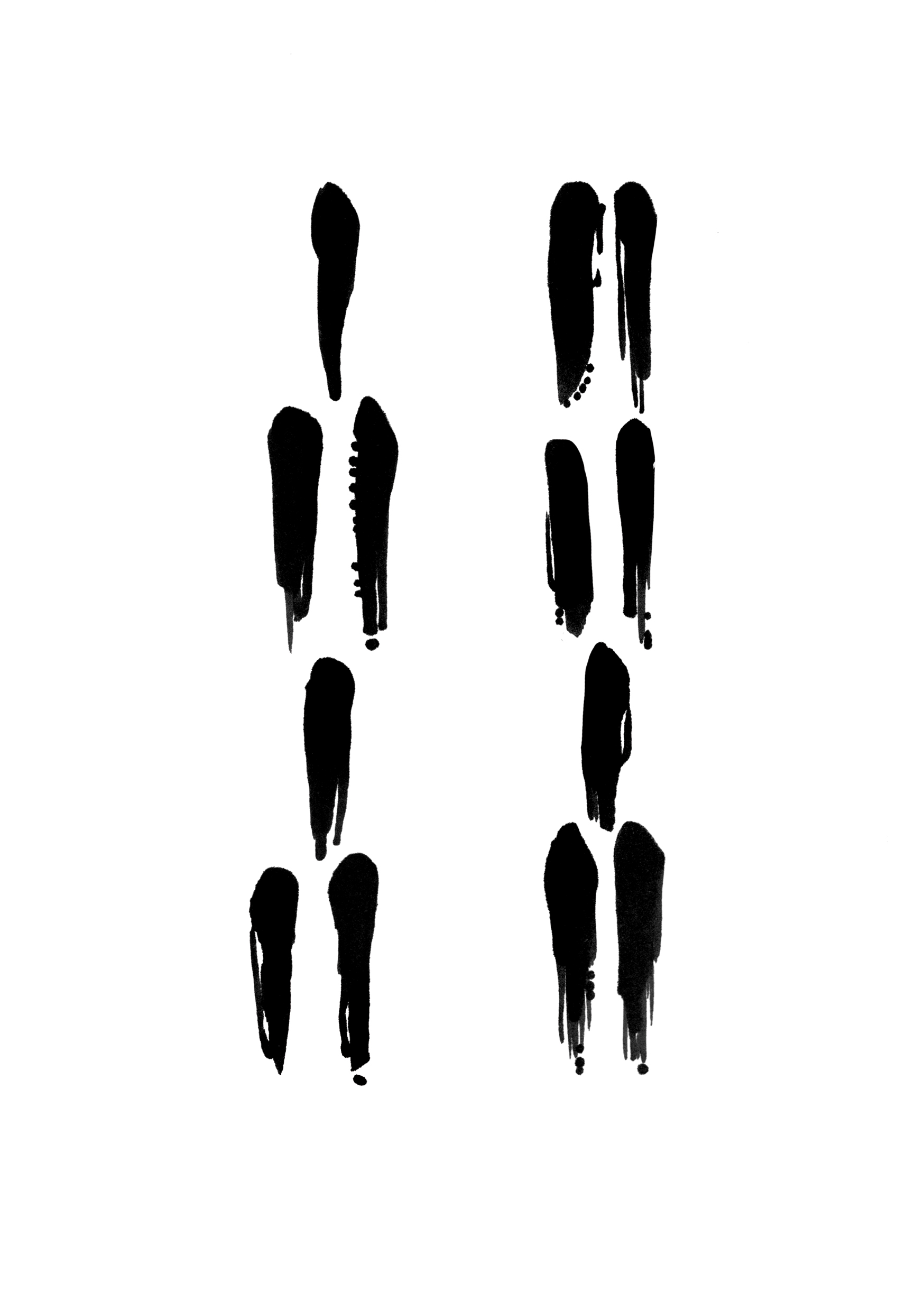
This Academy reads the right column first, then the left. Each row carries a single or double mark.

Where this Odù belongs
Òtúrúpòn Ọ̀ṣẹ́ belongs to the Òtúrúpòn family in this Academy’s study sequence. It is a mixed Odù, distinct from Ọ̀ṣẹ́ Òtúrúpòn. The order matters. Its teaching is approached through its own narratives, rather than by adding two general descriptions of the principal signs together.
Key Òrìṣà and sacred relationships
The figures below are selected for their roles in the accounts discussed here. They offer connected reading paths through the tradition.
-
Ṣàngó. Shangó seeks stability and intends to transmit his knowledge gradually to his son; conflict develops when the household does not share the same boundaries around that transmission.
-
Ọya. Oyá participates in the household and asks for the child’s future blessing, then speaks of secrets in Shangó’s absence; the passage does not independently explain the causal link to the child’s illness.
-
Ọ̀rúnmìlà. Orunmila becomes materially depleted through favors and wastefulness, receives help, and is explicitly asked to change the pattern rather than assume the rescue makes it sustainable.
Key myths and their meanings
A child receives conflicting transmissions
Shangó lacks stability and comes to the land where Oyá lives. Their relationship produces a son, and Oyá repeatedly asks whether Shangó will pass on his powers. He agrees to teach gradually as the child grows. During an absence, Oyá speaks about secrets already taught. Shangó returns to find the boy ill, and the account connects the resulting conflict with the parents’ separation. The passage leaves the precise mechanism largely unstated.
The account’s limited explanation should prevent a confident diagnosis of why the child suffers or an accusation that a real mother caused illness by speaking. Its analytical tension concerns parents sharing responsibility without agreeing on timing, content, or boundaries. The child becomes the place where adult differences are registered. A careful reading asks how transmission can be coordinated without reducing one parent to an obstacle to the other’s authority.
Narrative setting: Cuban/Lukumí narrative in the accounts considered here; no individual author established for this passage.
A collective fund rescues the giver
Orunmila has spent and given so freely that he reaches serious financial difficulty. Olofin summons the Òrìṣà for a public occasion, where heavy rain and lack of food leave the gathering uncomfortable. He directs contributions into a vessel, and when the collection is full the rain ends. After everyone leaves, Olofin gives the money to Orunmila and warns him against exhausting it through the same uncontrolled favors.
The rescue does not make the prior pattern virtuous simply because it involved helping others. Continuing generosity needs material limits and a means of living. The source also leaves the contributors unaware of the fund’s eventual beneficiary, raising a separate question about transparency. The story can support reserves and mutual aid while still asking whether a collective collection should disclose its purpose to those who give.
Narrative setting: Cuban/Lukumí narrative in the accounts considered here; no individual author established for this passage.
Three recipients prosper without losing the ancestral legacy
The introductory explanation addresses three people and directs them to protect wealth belonging to a predecessor rather than allow the inheritance to disappear. The verse names Onílé Owó, Oníkáa Wùsi, and Ato Òfòrí, identifying the last as the youngest of the family. Each receives counsel, each responds, and all three become prosperous and rejoice. The closing lines distinguish their destinations and forms of abundance, with Ato Òfòrí going to a spiritual house. The account does not narrate a quarrel, a division of shares, or one recipient gaining wealth by dispossessing the others. Their common response precedes differentiated favorable outcomes.
The inheritance is not treated as a resource whose mere existence guarantees its own continuation. The introduction asks for protection, while the verse gives all three participants an active response. This is a religious account of maintaining a received good across generations, not only of accumulating something new. The shared favorable result also differs from a contest in which the youngest must defeat the others. Ato Òfòrí’s distinct destination belongs to the ending, but the source does not give enough detail to reconstruct that spiritual house as a named institution, a death scene, or a historical location.
A contemporary interpretation can ask how a group preserves what it receives while allowing different lives to develop. It should not invent a financial partnership, equal legal shares, or a modern estate plan. The passage’s named participants, ancestral responsibility, counsel, and shared praise provide the actual structure; the precise administration of the inherited wealth remains unreported.
Narrative witness and setting: Passage explicitly attributed to Ayo Salami, presented with Yoruba verse and Spanish translation; African testimony, not Brazilian provenance inferred from language.
Ato’s changed cloth prevents recognition by a heavenly counterpart
Ato trades prepared food in Èjìgbòmekùn market and becomes popular with customers. A heavenly counterpart decides to come buy from Ato and is told to look for a trader wearing Àdìre cloth. Ato’s sleep is troubled, and consultation directs a response involving the worn garment. Ato responds, and Èṣù changes the cloth. The arriving counterpart searches for the previously described appearance and cannot identify the trader, so the intended encounter does not occur. The ending affirms continued life. The account does not describe a completed purchase, a physical battle, or the counterpart’s explicit reason for seeking that particular transaction.
The threatened meeting turns on recognition across the boundary between heaven and earth. A heavenly counterpart is a real participant in the witness, not simply another customer or a metaphor for Ato’s private anxiety. The religious response changes the identifying sign through Èṣù’s action, allowing the trader to remain present in the same marketplace without being found in the expected form. A contemporary interpretation can consider how a visible marker makes someone available to a particular demand, but that interpretation must not become advice to evade customers or diagnose a reader’s dreams.
The closing affirmation supports the encounter’s relation to continued life; it does not supply every detail of what a purchase would have caused. Likewise, the shared short name does not prove that this trader is Ato Òfòrí from the preceding unit. The source offers two separately structured precedents, and their names, pronouns, and outcomes should not be merged into one invented biography.
Narrative witness and setting: Passage explicitly attributed to Ayo Salami, presented with Yoruba verse and Spanish translation; African testimony, not Brazilian provenance inferred from language.
What was born in this Odù
“Born” can name an explicit traditional origin association or what emerges through a story: a capacity, relationship, practice or order of life. Interpretations drawn from a narrative are labelled below, so their basis remains clear.
Savings and the money box
Selected traditional source association.
The explicit origin joins saving with a container for money. The fund story gives a material image of accumulation serving continued life; it does not prescribe a particular savings practice or promise financial security.
A reserve allows care to continue
Contemporary interpretation from the selected myth.
As a contemporary interpretation, Olofin’s fund creates the possibility of generosity with a material limit. The motif extends the listed savings association through the story, while retaining the unresolved transparency problem and making no promise of financial security.
Correlations to life dimensions
These questions bring the selected stories into contemporary life. They are interpretive invitations for study.
Work and resources
Orunmila’s inability to live exposes the difference between useful generosity and unbounded depletion. The story supports identifying the reserve necessary for a person to remain able to work and help over time. The rescued giver is warned against repeating the earlier depletion.
Reflect: What amount of capacity or resource must remain available after this gift?
Relationships and family
The parents’ different handling of knowledge reaches the child without a shared agreement. The episode supports discussing timing and responsibilities directly before asking a dependent to carry incompatible expectations. The child receives teachings while adults retain incompatible expectations.
Reflect: Which agreement between adults should exist before the child is involved?
Character and inner life
A giver may find meaning in being repeatedly needed, even when the pattern becomes unsustainable. The fund’s warning invites examining whether refusal feels like failure and whether that feeling is producing avoidable scarcity. The funds provide a livelihood rather than another public title.
Reflect: What makes a necessary limit feel like a betrayal of generosity?
Community and responsibility
The collection helps an individual, but its purpose is not clear to contributors in the narrative. Mutual aid works differently when people understand the intended use and can give with that knowledge. The eventual beneficiary is revealed only after the gathering ends.
Reflect: What information should contributors have before resources are gathered in their name?
A deeper reading of the sacred relationships
Continuation depends on particular sacred relations
The three recipients protect an ancestral good through counsel and response, while the trader’s continued life is linked to a changed identifying garment and Èṣù’s intervention. These are distinct relations across generations and across heaven and earth. The accounts do not present wealth or life as possessions entirely independent of the powers and predecessors through which they continue. A faithful religious explanation should retain that specificity before drawing modern comparisons about stewardship or privacy. Neither passage establishes a universal transaction in which one response secures every future good. The actual outcomes are shared prosperity in one unit and an averted encounter with a heavenly counterpart in the other.
Differentiated outcomes do not require a family rivalry
The three named recipients all respond and all prosper, while the closing lines distinguish their destinations. That difference does not by itself imply competition or unequal religious worth. The trader account supplies a different distinction, between the visible appearance expected by the counterpart and the changed appearance actually encountered. A contemporary comparison can ask how people remain connected without becoming indistinguishable, or how a visible sign selects the relation another person seeks. Those questions remain interpretations. The source does not narrate a struggle over shares, a deceptive commercial practice, or a hierarchy among the three recipients. Its concrete differences deserve to be described before additional social explanations are supplied.
A repeated name does not establish a continuous biography
Ato Òfòrí appears as the youngest in the three-person unit, while Ato appears as a trader in the next. The compilation places the passages together but does not explicitly identify them as successive chapters in one life. Their contexts also differ: ancestral wealth and shared prosperity on one side, a market encounter with a heavenly counterpart on the other. A reference should keep those units distinct unless further evidence establishes continuity. Contemporary comparison can still explore receiving, protecting, and remaining available to relations. It does not require inventing a family business, a change of gender, or a journey from the spiritual house back into the market to connect the two narratives.
Questions that deepen the study
Do the three recipients compete for one inheritance?
The introduction asks them to protect an ancestral good, and the verse records that each responds and all become prosperous. It does not narrate a competition, a disputed share, or one participant’s dispossession by another. Ato Òfòrí is identified as youngest, but the account does not require the youngest to defeat the others to receive a favorable outcome. A contemporary interpretation can consider shared stewardship alongside different paths. It should not present the passage as a modern estate plan or invent equal financial divisions. The precise form and administration of the inherited wealth remain outside the narrative supplied here.
Is the heavenly counterpart simply an ordinary dissatisfied buyer?
The witness explicitly locates the counterpart in heaven before the visit and concludes the averted encounter with an affirmation of continued life. That setting should be preserved rather than replacing the figure with a generic customer. At the same time, the source does not state every consequence a completed purchase would have had. It describes a planned visit, an identifying garment, troubled sleep, religious response, Èṣù’s change, and failed recognition. A contemporary reflection on visibility or demands can follow, but it should not become a diagnosis of dreams, a prediction of death, or commercial advice about avoiding someone who wishes to buy goods.
Does Ato leave the market to escape the encounter?
The decisive change is the cloth by which the counterpart expects to identify the trader. The passage does not narrate relocation or a physical flight from Èjìgbòmekùn. Ato remains a trader whose expected appearance has been changed through the response and Èṣù’s action. That distinction makes recognition central to the religious sequence. A contemporary interpretation can ask how an identifying sign makes a relation possible, while avoiding a claim that clothing automatically controls fate. The particular counsel belongs to this account; no general rule about wearing or abandoning Àdìre follows for readers, and the counterpart’s wider identity remains unreported.
What the four narratives reveal together
The additional Salami units deepen Òtúrúpòn Òṣé through the continuation of ancestral wealth and the avoidance of a heavenly encounter. Three named recipients respond together and prosper through differentiated paths, while a trader’s changed cloth prevents a counterpart from making the intended recognition. Beside the earlier conflicting transmissions and collective rescue fund, these accounts ask how a received good is protected and what relations an identifying sign makes possible.
Their religious worlds remain specific: predecessors, divination, Èṣù, and a heavenly counterpart cannot be replaced by generic stewardship or privacy. Contemporary questions about shared responsibility and visibility can follow while remaining distinct from the plot. The synthesis should not merge the two Ato names into a single biography, invent rivalry among the three recipients, or specify a fatal consequence for a transaction the source never actually narrates.
Living with this Odù
A continuing life or initiatory relationship
A received life relationship with Òtúrúpòn Òṣé can make generosity and continuity recurring questions about limits. Orunmila's giving exhausts his resources, and the collective fund restores means through an arrangement whose purpose is not transparent to every contributor. The child's conflicting transmissions make timing and authority within a household consequential while leaving the mechanism of illness unexplained. The three recipients then preserve an ancestral legacy through shared response and differentiated outcomes, rather than one flourishing at the others' expense. Ato's changed cloth supplies another relation between public familiarity and a particular heavenly encounter.
Over time, character may develop through distinguishing care from uncontrolled availability, shared inheritance from uniformity and visible identity from everything a person is. The inward temptation may include equating a reserve with selfishness or assuming that a successful collective contribution needs no clear account of its use. These witnesses do not diagnose a child's illness or promise protection through clothing changes. Their sacred agency and sparse details remain active. Carrying the sign can invite a changing responsibility to what must remain available for the future, and to the truthful agreements through which others are asked to help restore it.
A particular consultation and its question
In consultation, the actual question can distinguish conflicting transmission, exhausted generosity, protection of a legacy and an encounter dependent on a recognizable appearance. The household story requires care because it does not explain precisely what caused the child's condition; a practitioner cannot infer that disclosure makes a real child ill. The fund account asks whether giving has undermined continuation and whether contributors understood the arrangement. The three recipients show that shared acknowledgment can support different favorable destinations without supplying a dispute over shares that can be invented.
Ato's verse keeps Èṣù's change of cloth inside a particular sacred response, without establishing the heavenly counterpart's full motive. Contemporary reflection may ask what must be reserved, how assistance is represented and which differences a common inheritance can sustain. A situational result is not a lifelong identity of overgiving or concealment. Its religious meaning belongs to the actual consultation. The narratives can clarify limits and continuity while preventing a public benefit from being treated as automatic justification for opaque collection, and preventing an unfamiliar appearance from becoming evidence that every significant relation has changed.
Constructive and adverse possibilities
Constructive movement can include a depleted giver retaining a reserve, multiple recipients preserving a legacy and a threatened encounter failing within the verse's sacred relation. Adverse movement appears when generous action repeatedly consumes the means of continuation, or differing authorities transmit without a clear shared understanding. The fund's transparency problem remains even though it helps Orunmila. Iré and osogbo require contextual religious determination rather than a verdict from giving or saving alone. The child's illness is not a clinical explanation, and Ato's continued life is not a transferable clothing procedure.
The witnesses distinguish help, reserve, inheritance and recognizable identity. A favorable outcome can create a duty to explain resources and preserve future capacity, rather than establish that every method used to obtain support was ethically complete. A reserve concerns the future recipients as well as the giver.
An illustrative situation in everyday life
Hypothetically, a generous organizer repeatedly pays others' costs until rent and essential work become insecure. Friends raise a fund at a public event without clearly stating who will receive it, then present the collection as proof that the organizer's pattern should continue unchanged. The collective fund structure distinguishes restoring means from repeating exhaustion and asks what contributors were told. The three recipients' legacy adds a longer measure of continuity in which different people can prosper without consuming the common foundation. This is an illustrative interpretation, not a promise of rescue or a claim that a child's illness results from mixed messages. The inward conflict is guilt about keeping a reserve. The external task is to make support truthful and preserve a viable capacity to give later.
Sources and reading context
The first two narrative witnesses
These Cuban-labelled Spanish accounts leave the household story’s causal mechanisms unexplained. Illness and weather remain mythic rather than diagnostic. The explicit savings origin is supplemented by a marked contemporary interpretation. The collective fund is analyzed alongside its transparency problem rather than presented as an ideal fundraising method.
Narrative motifs are summarized independently. The life-dimension reflections are contemporary interpretation. How these reference studies are built explains the wider source approach and the distinction between a reference article and personal divination.
Additional named witnesses
- Ayo Salami. Both the three-recipient legacy unit and the trader with a heavenly counterpart occur in the explicitly named bilingual block.
Ato Òfòrí and the trader Ato are not assumed to be one person. The spiritual-house line remains unexpanded, and the counterpart’s full identity and the consequence of a completed purchase are not specified. No personal clothing prohibition, dream diagnosis, or financial instruction follows.
Bibliographic identification
- Ayo Salami. Ifá: A Complete Divination. Lagos: NIDD, 2002 catalogue record. Library catalogue record. Bibliographic identification of the named author and work; the edition behind the transmitted account remains to be matched.
Read the source method and wider scholarly context.
The catalogue links identify published works and their authors. They are separate from proof of an individual episode’s wording or attribution. Contemporary comparisons and the synthesis above are editorial interpretation. The author’s books and Academy companions below provide further study; their sales links are separate from the source references.