
Òtúrúpòn Ìrẹtẹ̀ is a mixed Odù in Ifá’s 256-part corpus. Òtúrúpòn Ìrẹtẹ’s main Cuban narrative makes a house depend on someone physically holding its single pillar. The owner delays feeding that helper because he does not want to give his best produce, and the structure collapses when the helper leaves. A separate short revelation concerns Orunmila’s honest words being treated as lies. Swamp and unstable ground in the origin list make reliability, delayed obligation, and the conditions of trust the distinctive shared focus.
A question to carry through the study: What essential support am I taking for granted while withholding the agreed return?
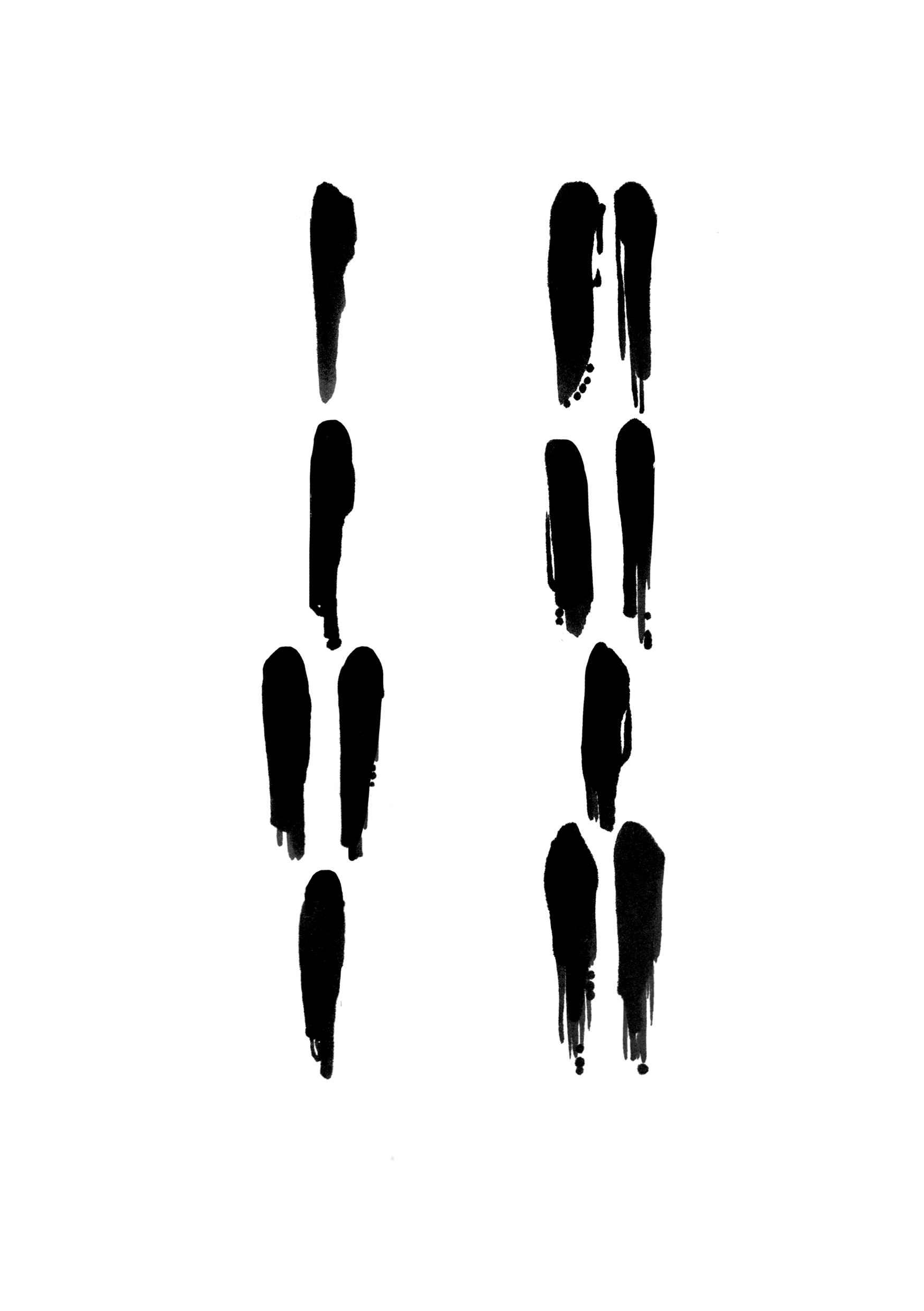
This Academy reads the right column first, then the left. Each row carries a single or double mark.
Where this Odù belongs
Òtúrúpòn Ìrẹtẹ̀ belongs to the Òtúrúpòn family in this Academy’s study sequence. It is a mixed Odù, distinct from Ìrẹtẹ̀ Òtúrúpòn. The order matters. Its teaching is approached through its own narratives, rather than by adding two general descriptions of the principal signs together.
Key Òrìṣà and sacred relationships
The figures below are selected for their roles in the accounts discussed here. They offer connected reading paths through the tradition.
-
Èṣù. Eleguá temporarily holds the owner’s single house pillar while waiting for food; when the owner delays and withholds good produce, his departure exposes the structure’s dependence.
-
Ọ̀rúnmìlà. Orunmila warns the farmer about an unmet obligation and appears in a separate revelation as a truthful speaker whose words others regard as lies.
Key myths and their meanings
The helper releases the pillar
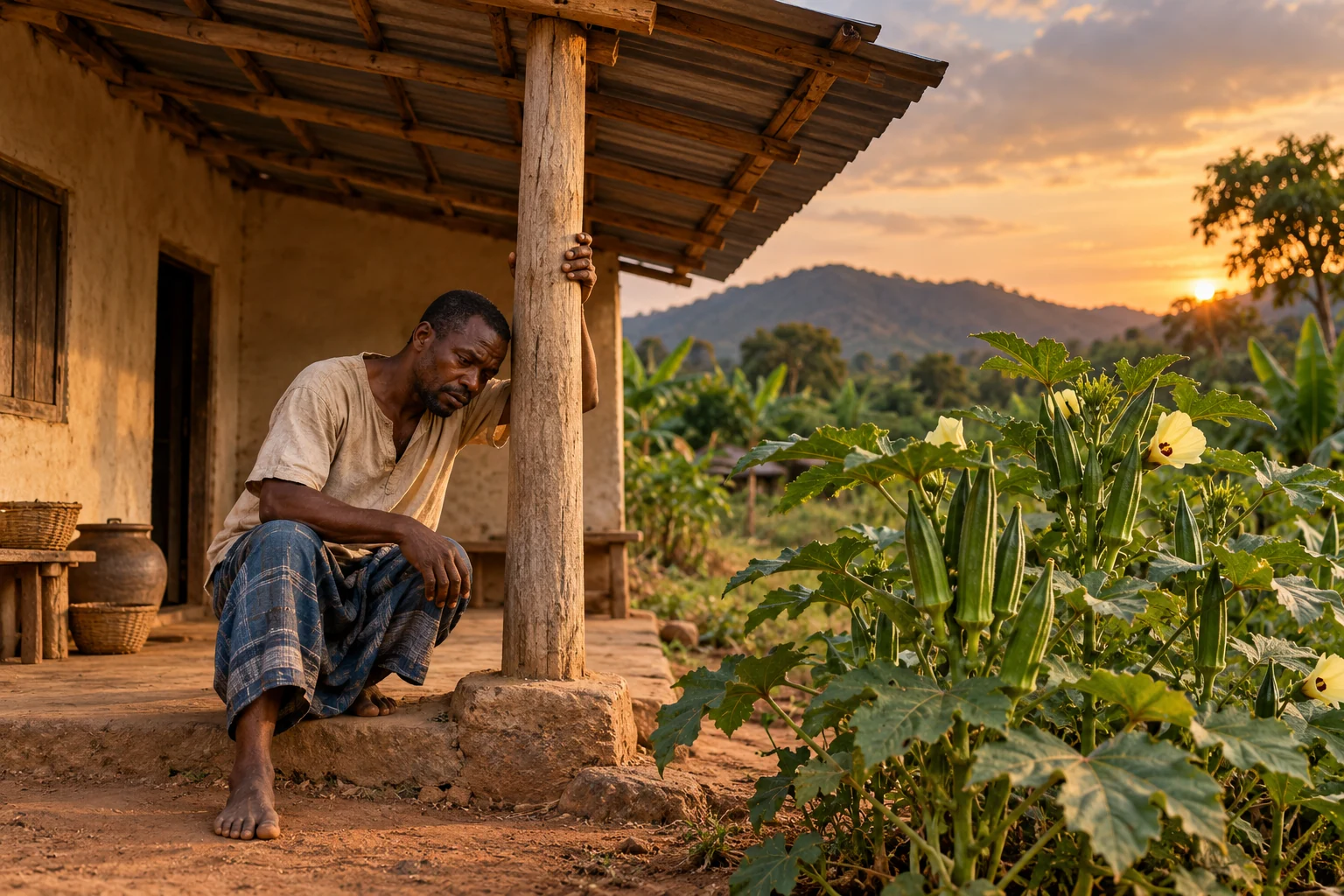
A farmer has neglected an obligation to Eleguá. His house has one central support that must be held upright. When Eleguá arrives hungry, the farmer offers okra and asks him to hold the pillar while he fetches it. Mature produce is nearby, but the farmer goes farther away to find smaller, less desirable pods. Eleguá tires of waiting, leaves his post, and the house falls.
The dramatic weakness is not caused solely by an external enemy: the house already rests on an untenable dependence. The owner then makes the helper carry that burden while minimizing the return. The story supports examining the infrastructure hidden within a favor and the cost of delay. It does not establish that a deity causes a reader’s housing problem or that ritual payment is a guarantee of stability.
Narrative setting: Cuban/Lukumí narrative in the accounts considered here; no individual author established for this passage.
Truth heard as an accusation of lying
A short revelation describes a person who acts honestly yet finds that others repeatedly interpret the effort as deceit. Its verse identifies Orunmila in that situation and frames the response through Ifá. The selected passage supplies the contrast between truthful speech and hostile reception but no developed episode showing who makes the accusation, what evidence is disputed, or how the perception changes.
The limited form matters: the excerpt supports a tension about credibility, not proof that every person who feels misunderstood is correct. Trust depends on how conduct is made legible to others as well as on the speaker’s conviction. A responsible interpretive use can ask what evidence and relationships might clarify a claim while refusing to turn the passage into automatic validation of a reader against all criticism.
Narrative setting: Additional English revelation explicitly attributed to Popoola within the compilation; that attribution has not been independently authenticated here.
Àwòko keeps the father’s forest against a planned seizure
Àwòko is named as the child of a wealthy person whose property includes a deep forest. Other people conspire to seize it. Counsel directs a religious response so the forest will not be taken, and Àwòko performs that response. The attempted dispossession does not succeed, and the verse returns to praise and the retained forest-house of the father. Its introduction also speaks of a practitioner facing an Ajogun and urges inquiry into which inherited property is at risk. The narrative itself does not identify the conspirators, narrate a courtroom dispute, or describe the exact means by which their plan fails.
The inherited forest is a relation to a predecessor as well as a valuable place. Its continued possession is not represented as automatic: counsel calls for response and attention to a threat that may not yet be fully recognized. Within the witness, religious efficacy protects what the father held, while the opening instruction also asks the person to inquire about the property at risk. A contemporary interpretation can distinguish acknowledging an inheritance from assuming that nothing can happen to it.
That reading should not transform a local sacred precedent into a judgment about a present land claim or identify actual rivals as Ajoguns. The plot’s missing details matter: no named legal authority, physical contest, or historical boundary is supplied. Nor does the text explain the claim by asserting that wealth proves spiritual superiority. It presents one threatened continuity preserved through a particular divination and response, with its wider social history left outside the short account.
Narrative witness and setting: Passage explicitly attributed to Ayo Salami, presented with Yoruba verse and Spanish translation; African testimony, not Brazilian provenance inferred from language.
Sùgùdù recognizes too late what a fixed carved form entails
Sùgùdù is advised to respond against a destructive or wasteful bodily condition but refuses. The verse then describes Sùgùdù as carved with an erect penis that remains fixed, neither shortening nor softening. Sùgùdù had not understood that it would remain so and wishes that time could be reversed. Praise for the diviners comes belatedly. The ending explicitly says Sùgùdù is not human. The translated introduction connects the precedent with destructive expenditure, but the narrative does not describe a human patient, a medical diagnosis, a sexual partner, or an act of sexual violence.
The account gives a fixed bodily representation a voice of regret. Its significance lies partly in the difference between appearing to possess a capacity and being able to vary or direct it. The verse’s carving and explicit nonhuman statement must remain visible; otherwise a reader may mistake the episode for a diagnosis of a person’s body. Within its religious sequence, the refusal of counsel precedes a form whose consequence cannot be revised by later praise. A contemporary interpretation can ask what decisions become difficult to change once a structure or commitment has been established.
That interpretation should not replace the source’s sacred personification with an engineering parable, nor assume that every lasting condition results from ignored advice. The source supplies neither a treatment nor an explanation for an actual person’s sexuality. It also does not provide enough local evidence to assign Sùgùdù a complete identity, ritual function, or genealogy beyond the carved and nonhuman figure named here.
Narrative witness and setting: Passage explicitly attributed to Ayo Salami, presented with Yoruba verse and Spanish translation; African testimony, not Brazilian provenance inferred from language.
What was born in this Odù
“Born” can name an explicit traditional origin association or what emerges through a story: a capacity, relationship, practice or order of life. Interpretations drawn from a narrative are labelled below, so their basis remains clear.
Swamp
Selected traditional source association.
The explicit list names swamp. The association can frame uncertain footing and a place where appearances conceal depth, but the selected house story does not claim to explain the geological origin of wetlands.
Unstable ground
Selected traditional source association.
The second origin names shifting ground. It offers a local image of support that cannot be assumed secure; no prediction about land, property, or a person’s physical safety follows from it.
Correlations to life dimensions
These questions bring the selected stories into contemporary life. They are interpretive invitations for study.
Work and resources
The farmer has suitable produce close at hand but chooses a delay to preserve it. The story supports calculating the risk imposed on a larger structure when a small return to an essential helper is minimized.
Reflect: What is the real cost of withholding the better or timely contribution?
Relationships and family
The house rests on another person’s continued effort. A request that sounds temporary may hide an indefinite burden, especially when the person benefiting does not explain how long the support will be needed. Eleguá holds the structure while the owner leaves to fetch food.
Reflect: Is the helper agreeing to the actual burden or only the smaller one described?
Character and inner life
The short truthfulness passage distinguishes self-understanding from social credibility. Feeling honest is important but does not replace the need to examine why others cannot recognize the claim or whether correction is warranted. The short excerpt does not identify the evidence behind the disagreement.
Reflect: What independent evidence could help me test as well as explain my position?
Community and responsibility
The single pillar is a fragile arrangement even before the dispute. A community should not depend on one unacknowledged person holding everything together while every other participant treats that support as naturally available. The entire roof depends on one person maintaining the support.
Reflect: What would distribute this support so one departure does not collapse the whole?
A deeper reading of the sacred relationships
Counsel concerns continuity before the consequence settles
Àwòko responds before the planned loss of the father’s forest, while Sùgùdù recognizes the consequence only after refusing counsel and receiving a fixed form. Both sequences make timing part of religious responsibility, but they should not be merged into a rule that every difficult condition proves a prior failure. The first preserves an inherited relation; the second voices regret within a nonhuman carved precedent. Divination and praise remain meaningful within each account, yet belated acknowledgment does not automatically reverse what has occurred. A contemporary comparison can ask what needs attention before an action settles, while retaining the distinct sacred participants and the limited outcomes actually narrated by the sources.
Holding something differs from governing its conditions
Àwòko’s connection to the father’s forest does not remove the need to attend to a threat. Sùgùdù’s permanently erect representation does not become a flexible or productive capacity merely by appearing powerful. These are different relations to possession and form. A contemporary interpretation can ask what a person can actually sustain or direct, rather than equating ownership, display, or permanence with adequate agency. The sources do not establish a shared economic or physiological theory. Their comparison remains interpretive and grounded in the forest’s continued retention and the carved figure’s unchanging condition. The religious counsel in both accounts supplies more than a decorative ending to an otherwise secular discussion of management.
A precise limit can preserve an account’s religious force
The forest narrative leaves the conspirators and the means of their failure unnamed. The Sùgùdù narrative identifies carving and nonhuman status without providing a full account of the figure’s wider ritual identity. Those limits do not make the witnesses empty; they indicate where interpretation must remain explicit. A contemporary reference can explain the protected continuity and the regret over an irreversible form without inventing litigation, species, genealogy, or clinical mechanism. Repeated descriptions of truthful and upright diviners also belong to the transmitted framing. They support attention to the counsel’s standing, but do not authorize a researcher to declare every contemporary practitioner infallible or every disagreement a moral failure.
Questions that deepen the study
Does Àwòko’s forest story decide a present inheritance dispute?
The selected unit narrates a particular father’s forest, a conspiracy, and an effective religious response. It supplies no legal record, mapped boundary, named human claimant, or account of the property’s wider history. Its sacred precedent can therefore be represented faithfully without using it to settle an actual dispute or label present rivals as adverse powers. A contemporary interpretation may ask how inherited goods are attended to and protected. The source’s own introduction also urges inquiry about what is at risk, rather than leaving the person with an entirely abstract assurance. The narrative affirms retention in its world, not a transferable guarantee for readers.
Why is Sùgùdù’s explicit nonhuman status essential?
The carving and the statement that Sùgùdù is not human prevent the fixed bodily condition from being silently presented as an ordinary medical case. The figure speaks and regrets within a sacred personification whose form remains unchanging. A faithful account can report that unsettling image without diagnosing readers, attributing actual bodily differences to religious refusal, or supplying a cure. Contemporary interpretation about irreversible commitments is possible, but it should be marked as an extension beyond the plot. The selected paragraphs do not establish every aspect of Sùgùdù’s wider identity, so a familiar name from another context should not be substituted without separate evidence.
Does belated praise reverse the consequence for Sùgùdù?
The verse reports belated acknowledgment of the diviners and a wish to turn time back, but it continues to describe the condition as fixed. No reversal is narrated. This differs from Àwòko’s response before the attempted seizure, which is followed by retention of the forest. A comparison can therefore distinguish receiving counsel in time from recognizing it after a consequence has settled, without declaring that every later regret is useless or every loss irreversible. The specific religious outcomes belong to these two witnesses. An editor should not add a cure, a reconciliation, or a later favorable chapter merely to make their endings more alike.
What the four narratives reveal together
The additional Salami units deepen Òtúrúpòn Irete through preserved continuity and regret over a settled form. Àwòko responds before a planned seizure and retains the father’s forest; Sùgùdù refuses counsel and later wishes to reverse a carved condition the verse continues to describe as fixed. These accounts add to the earlier supporting pillar and truth misheard as accusation by distinguishing a relation that can still be maintained from a consequence already established.
Their religious logic includes timely counsel, response, and the standing of truthful diviners, without making every difficult human condition proof of spiritual failure. Contemporary questions about inheritance, agency, and irreversible commitments can develop from those specific sequences. The synthesis should retain the forest narrative’s unnamed mechanism, Sùgùdù’s nonhuman status, and the absence of a narrated reversal rather than manufacturing legal, clinical, or historical explanations.
Living with this Odù
A continuing life or initiatory relationship
For someone whose received life or initiatory Odù is Òtúrúpòn Ìrẹtẹ̀, support and the terms that sustain it may become recurring concerns. The farmer's house depends on a helper whose promised food is delayed while poorer produce is deliberately sought. The short truth witness makes honest speech vulnerable to hostile reception, but offers too little history to identify an accuser or a resolved outcome. Àwòko's forest gives inheritance a concrete place whose retention depends on the sacred relation disclosed. Sùgùdù's fixed carved form supplies a different structure of belated recognition, explicitly outside an ordinary human case.
Over time, character may develop through distinguishing a supporting relation from a resource one can indefinitely keep waiting, and a genuine promise from the appearance of compliance. The inward temptation may include protecting the best portion for oneself or demanding that every truthful intention be immediately believed. These witnesses do not predict a collapsing home, seizure or bodily condition. Their distinct sacred frames remain active, including the limits of the Popoola attribution. Carrying the sign can invite changing questions about what holds a life upright, what inheritance requires and which conditions become difficult to revise after a decision has taken durable form.
A particular consultation and its question
In consultation, the actual question can distinguish an unhonored agreement, a credibility problem, threatened inheritance and belated recognition of a fixed condition. The pillar account asks whether the helper's dependence has been treated as permission to delay or diminish what was promised. It does not explain real structural failure or identify a client's helper with Eleguá. The brief truthful speech passage supplies no developed evidence dispute, so a practitioner cannot use it to declare the client innocent of all criticism. Àwòko's verse preserves sacred protection of a particular forest without inventing conspirators or legal proceedings.
Sùgùdù's nonhuman carving must remain a fable rather than a sexual or medical prediction. Contemporary reflection may ask what is sustaining the present arrangement, what can still be changed and whose agreement has been assumed. A situational result differs from a lifelong identity of instability or misunderstood virtue. Its religious meaning remains with the actual reading. The witnesses can sharpen the outer terms of dependence and continuation while leaving honest limits around their sparse detail, so neither a desired favorable outcome nor a severe narrative consequence is made mechanically transferable.
Constructive and adverse possibilities
Constructive unfolding can include a sustaining agreement being honored, an inherited place remaining secure through the disclosed sacred response and truthful speech retaining a relation to Ifá despite hostile reception. Adverse movement appears where delay conceals an attempt to give less, or a durable form makes an unexamined choice difficult to reverse. The pillar's collapse is a narrative outcome, not proof about an actual home, and Sùgùdù is explicitly nonhuman. Iré and osogbo require the actual religious situation. Àwòko's retained forest does not authorize identifying unseen enemies, while the short credibility witness does not establish how an accusation ends. The accounts invite accuracy about support and reversibility. A promise can be physically small and still hold up an extensive arrangement; belated praise does not automatically supply what earlier participation required.
An illustrative situation in everyday life
Hypothetically, a community venue relies on one volunteer to remain on duty while a coordinator collects the meal promised in exchange. The coordinator takes a longer route to obtain inferior food, assuming the volunteer cannot leave without harming everyone. The pillar structure asks what the supporting relation actually permits. A separate public complaint then makes the coordinator insist that truthful intentions should settle the issue; the sparse credibility witness reminds the reader that an accusation needs its actual history. This is an illustrative interpretation, not a prediction that a building will collapse. The inward conflict is a wish to preserve resources without appearing ungenerous. The external responsibility is to honor the specific agreement rather than making the helper's importance a reason to keep them waiting.
Sources and reading context
The first two narrative witnesses
The house narrative is Cuban-labelled Spanish; the short credibility revelation is separately attributed to Popoola by the compilation. Its attribution remains limited and its missing narrative detail is explicit. The two versions of the pillar story are not counted as separate myths, and wetland imagery is not prognostic.
Narrative motifs are summarized independently. The life-dimension reflections are contemporary interpretation. How these reference studies are built explains the wider source approach and the distinction between a reference article and personal divination.
Additional named witnesses
- Ayo Salami. The explicitly attributed bilingual sequence supplies Àwòko’s forest and the Sùgùdù unit, whose separate B heading appears inside the same block.
Àwòko is retained without importing a cross-sign species identification. Sùgùdù is explicitly carved and nonhuman, not a clinical patient. No cross-sign glossary is used to establish a fuller identity, and neither account supplies a modern property judgment, treatment, or personal prediction.
Bibliographic identification
- Ayo Salami. Ifá: A Complete Divination. Lagos: NIDD, 2002 catalogue record. Library catalogue record. Bibliographic identification of the named author and work; the edition behind the transmitted account remains to be matched.
Read the source method and wider scholarly context.
The catalogue links identify published works and their authors. They are separate from proof of an individual episode’s wording or attribution. Contemporary comparisons and the synthesis above are editorial interpretation. The author’s books and Academy companions below provide further study; their sales links are separate from the source references.