
Òtúrúpòn Òtúrá is a mixed Odù in Ifá’s 256-part corpus. Òtúrúpòn Òtúrá’s selected accounts link a drought council’s failure to hear a quiet figure with two lost children finding a light in the forest. Orunmila receives crucial information from children outside a gathering of specialists and later shelters strangers without knowing their royal identity. The explicit origins include light on both sides of a ceremonial room and the ability to work at night. Attention to overlooked persons and continued hospitality connects these particular images.
A question to carry through the study: Who is already present but unheard, and who might find safety if the light remains available?

This Academy reads the right column first, then the left. Each row carries a single or double mark.
Where this Odù belongs
Òtúrúpòn Òtúrá belongs to the Òtúrúpòn family in this Academy’s study sequence. It is a mixed Odù, distinct from Òtúrá Òtúrúpòn. The order matters. Its teaching is approached through its own narratives, rather than by adding two general descriptions of the principal signs together.
Key Òrìṣà and sacred relationships
The figures below are selected for their roles in the accounts discussed here. They offer connected reading paths through the tradition.
-
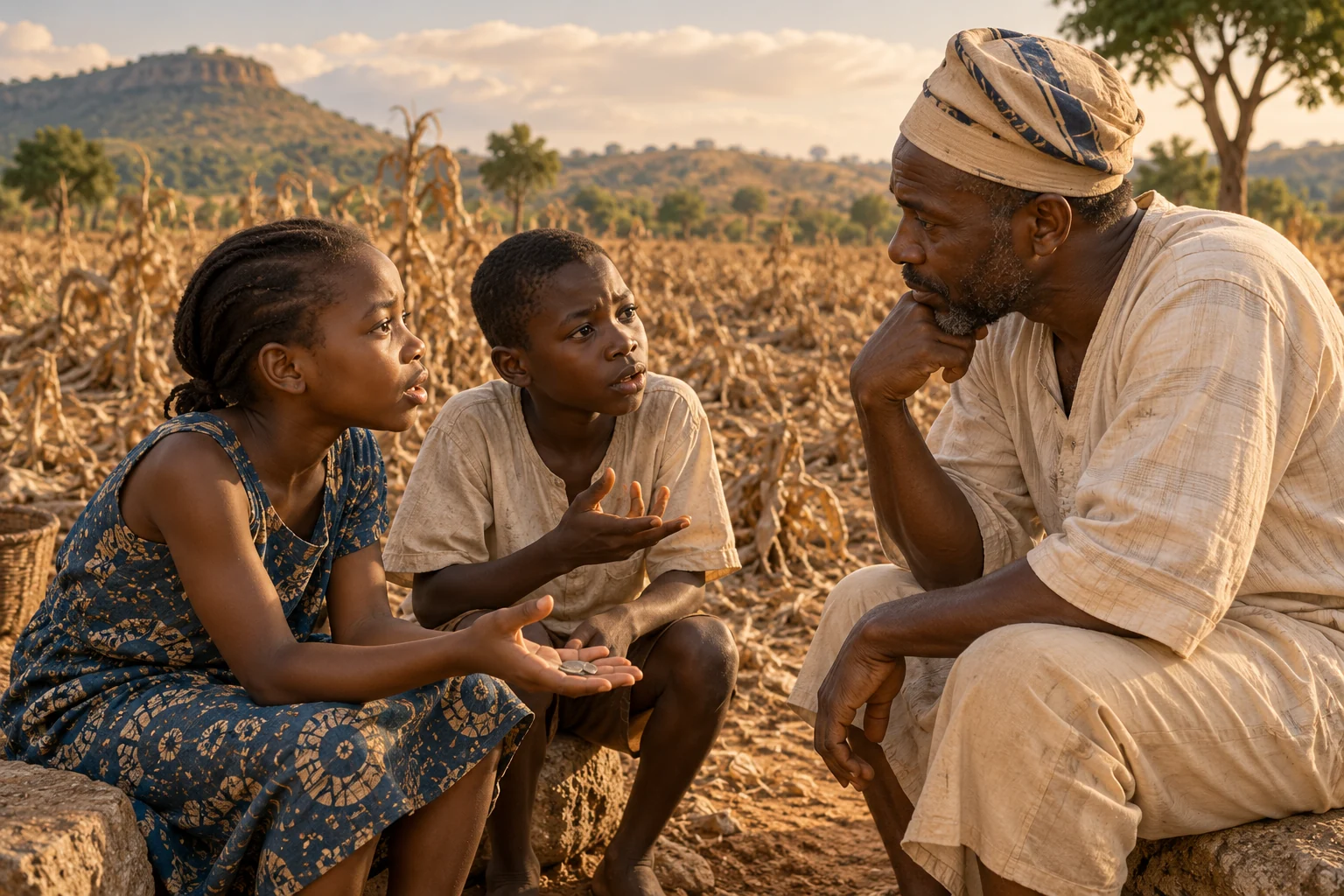
Olúfọ̀n. Oshalufón is the silent figure whose wishes the diviners have failed to ask about; children identify that omission, allowing Orunmila to redirect the drought discussion.
-
Ọ̀rúnmìlà. Orunmila listens to children outside the council and helps lost boys before learning their rank; both stories connect his authority with receptiveness to people outside the formal center.
Key myths and their meanings
Children identify the unasked question
A couple’s land suffers drought, and assembled diviners offer incompatible explanations without resolving it. During a break, Orunmila meets children who ask for coins. After he shares what he has, they point out a silent figure at the meeting: Oshalufón has not been asked what he wants. Orunmila raises that question when he arrives, the omitted concern is addressed, and the narrative says rain returns to the land.
The useful insight is not that children are automatically right or that one question causes weather. It is that a formal gathering can overlook somebody already in its midst, while relevant knowledge comes from outside its hierarchy. Orunmila’s giving is followed by listening, not merely by receiving a reward. The account supports widening attention without replacing careful assessment with a romantic ideal of marginal voices.
Narrative setting: Cuban/Lukumí narrative in the accounts considered here; no individual author established for this passage.
The light guides unknown children
Poor and considering a move, Orunmila keeps a light burning at night as he has been counseled. Two boys lost in the forest see it and come to his house. He feeds and shelters them, then shows them the route home. Only later does their father, a king, summon him to give thanks. Orunmila says he would have offered the same help to anyone, and the king appoints him at court.
The care precedes knowledge of status, so the later reward does not explain why help was given. The light is a material invitation visible from outside the helper’s immediate circle. The story also makes continued presence unexpectedly valuable, though it should not be generalized into advice against moving. Its strongest issue is impartial hospitality and the difference between service offered freely and service directed only toward possible patrons.
Narrative setting: Cuban/Lukumí narrative in the accounts considered here; no individual author established for this passage.
The unrecognized visitor leaves a household under a curse
Òrúnmìlà travels through the hills and stops at his student’s house. He finds the student’s wife pounding food and asks where the husband has gone. She gives directions without stopping her work or going to seek him, and the translation characterizes her answer as arrogant. Òrúnmìlà leaves and meets the student on the road, where the student welcomes him warmly. His first question concerns the identity of the woman at the house. Learning that she is the student’s wife, he pronounces a curse. The account does not narrate its later fulfillment or a subsequent reconciliation within the household.
The witness presents hospitality as a consequential encounter with religious authority, not simply a preference for cheerful manners. The wife does give useful directions, yet the account treats her failure to recognize and attend to the visitor as a serious breach. The student’s enthusiastic greeting then exposes a difference between two relations to the same arrival. A contemporary interpretation can examine how a household receives someone whose importance is not immediately visible, while also questioning the severity and gendered allocation of the narrated consequence.
That ethical question should be identified as contemporary rather than used to deny the curse’s religious force within the story. Conversely, the account does not authorize a modern teacher to threaten a learner’s family or establish that ordinary domestic work must always be interrupted for any visitor. Its particular circumstances include a named sacred visitor, a student relationship, a judgmental translation, and an ending that leaves the woman’s later life unreported.
Narrative witness and setting: Passage explicitly attributed to Ayo Salami, presented with Yoruba verse and Spanish translation; African testimony, not Brazilian provenance inferred from language.
Ojodu’s named kinship stops the threatened sacrifice
Osu, connected with the royal house of Oyo, and Arera, connected with Ite, each consult while lacking children. After their separate counsels, they meet, Osu conceives, and Arera names the child Ojodu. People of Ife later seek to obtain the child for the Oni to sacrifice. Bound captive, Ojodu protests that his own people have taken him. He requests divination, whose favorable result leads into a song naming him as Arera’s son and insisting that an animal, rather than a relative’s head, be taken. The commentary presents this as an explanation for animal sacrifice replacing human sacrifice to Ifá.
The threatened person’s voice changes the meaning of the proposed offering by making kinship publicly recognizable. Ojodu is not only an available captive; his name and paternal relation identify someone who belongs among those claiming him. Divination and song participate in that recognition, so the account’s religious logic cannot be reduced to a secular declaration that a crowd suddenly becomes sympathetic. The substitution also occurs within the sacred relation rather than through abandoning it. A contemporary interpretation can examine how naming and testimony restore a person’s standing when others treat that person as expendable.
It should preserve the disturbing fact that the child must speak while already bound. The source’s commentary gives a local origin account for replacing human sacrifice to Ifá, not independently verified evidence that every historical community followed one identical change at one moment. Osu’s gender also needs care: the opening translation calls her a king’s son, while the conception and explanatory note identify her as daughter.
Narrative witness and setting: Passage explicitly attributed to William Bascom, with a note that the verse was recorded in Igana; Portuguese rendering of Yoruba material.
What was born in this Odù
“Born” can name an explicit traditional origin association or what emerges through a story: a capacity, relationship, practice or order of life. Interpretations drawn from a narrative are labelled below, so their basis remains clear.
Lights to right and left
Selected traditional source association.
The origin list locates candles on both sides of the ceremonial room here. The selected forest light gives a related narrative image of visibility, but no ceremonial placement or instruction is given.
Working at night
Selected traditional source association.
The list explicitly names the practitioner’s capacity to work at night. The boys’ arrival shows help needed outside ordinary hours; this remains a local religious association rather than an expectation of permanent personal availability.
Correlations to life dimensions
These questions bring the selected stories into contemporary life. They are interpretive invitations for study.
Work and resources
The council’s expertise does not compensate for the question nobody asks. The story supports checking whether a process has excluded relevant information before adding more competing explanations from the same circle. Oshalufón is present before anyone asks the missing question.
Reflect: Whose perspective has the current method made difficult to hear?
Relationships and family
The boys receive shelter before anyone knows their family position. The account makes a need sufficient reason for care, while the parents’ gratitude acknowledges help that was never negotiated as a transaction. The boys’ royal identity becomes known after the care is given.
Reflect: Would this offer of help remain the same if the person had no useful connections?
Character and inner life
Orunmila can receive insight from children even while joining a specialist meeting. The episode supports authority that remains open to correction without treating listening as a loss of standing. The children offer relevant knowledge outside the gathering’s formal hierarchy.
Reflect: What would I learn if I did not need the useful answer to come from my own role?
Community and responsibility
A light allows vulnerable strangers to locate safety. Communities need such recognizable points of assistance, while responsibility for keeping them available should be shared rather than resting indefinitely on one poor household. The distant light supplies a recognizable destination in the dark forest.
Reflect: What makes help visible and reachable to someone outside the usual network?
A deeper reading of the sacred relationships
Religious recognition changes what an encounter requires
The visitor account treats Òrúnmìlà’s arrival as more than an ordinary request for directions. The Bascom unit makes Ojodu’s kinship, disclosed through voice, divination, and song, consequential for what can be offered. Both ask participants to recognize a relation that an immediate practical action has missed. Their outcomes differ sharply: the visitor pronounces a curse, while the captive’s recognition leads toward substitution. A faithful religious lens should keep authority, kinship, and sacred exchange distinct rather than making recognition a neutral technique that always produces kindness. Contemporary questions about attention and belonging can follow, while the sources’ powers and ritual relations remain the first terms in which the events are explained.
A person’s voice may be present but judged insufficient
The wife answers the visitor and gives directions, yet the account judges the manner and the lack of further attention. Ojodu’s protest begins only after he is bound, and his voice must become publicly effective through divination and a song identifying his father. Neither scene is adequately described as simple silence or absence of information. A contemporary interpretation can ask who decides whether a person has been properly heard and what relation makes speech consequential. That question should not flatten their unequal stakes. One concerns hospitality before a sacred teacher and an unreported later outcome; the other concerns an immediate threat to life within a proposed offering.
An origin explanation differs from a complete historical record
The Bascom commentary explicitly explains why animals replace human victims in the narrated Ifá relation. That is meaningful religious testimony, but the local note that the verse was recorded in Igana does not establish a universal historical date or exhaustive map of practice. The visitor account likewise supplies a curse without narrating a later fulfillment, so its ending cannot become a documented family history. Contemporary reference work can preserve a source’s claims while being exact about their evidentiary form. Sacred etiology, local recording information, translated characterization, and historical verification are different things. Keeping them distinct allows the religious account to remain substantial without manufacturing corroboration or extending a short passage beyond what it records.
Questions that deepen the study
Does the visitor account show that the wife gave no help at all?
She gives directions to her husband’s location, and Òrúnmìlà follows them. The witness judges her negatively because she continues working and does not recognize or attend to the visitor in the expected way, not because she supplies no information. Keeping that distinction matters when describing the religious demand of hospitality and when considering its severity from a contemporary perspective. The student’s later warm welcome makes the contrast explicit. The selected passage ends with a curse rather than a reported disaster or reconciliation, so an article should not invent either outcome or generalize the scene into a rule for every domestic encounter.
Why does Ojodu’s paternal name matter to the threatened offering?
The song repeatedly identifies him as Arera’s son while declaring that a relative’s head should not be taken. His identity is therefore part of the change in what the proposed offering can mean, alongside the favorable divination. A summary that treats him as an anonymous rescued child would lose this sacred and relational logic. A contemporary interpretation can consider how a person’s testimony counters being treated as an expendable object. The witness still leaves wider questions about captives and community boundaries unresolved. It does not narrate a universal declaration about every possible victim or establish that kinship recognition was the only historical reason for changing sacrifice.
Is the Bascom passage proof of one universal abolition event?
Its commentary presents the story as an explanation for replacing human sacrifice to Ifá with animal sacrifice. That claim should be reported as the witness’s sacred origin account. The recording note supplies Igana as a collection location, not a date for a change across all Yoruba communities or every religious institution. A responsible reference should therefore distinguish the account’s religious explanation from independently established history. The threatened child’s voice, divination, kinship, and substitution remain concrete within the narrative. No invented chronology or claim that every tradition holds the same version is needed to explain why this particular precedent matters.
What the four narratives reveal together
The added accounts deepen Òtúrúpòn Otura through recognition at a household threshold and recognition under a threat to life. Òrúnmìlà’s student welcomes a visitor whom his wife has not attended to in the expected way; Ojodu’s name and kinship become decisive within a proposed sacrifice. These sources add to the earlier unasked question and guiding light by asking what makes an arrival or a person rightly understood. Their outcomes do not form one reassuring pattern.
One ends in a curse whose later course is unreported, while the other explains a sacred substitution that preserves the captive child. Contemporary questions about hospitality, authority, voice, and belonging can follow while remaining distinct from the witnesses’ own religious claims. The synthesis should retain Osu’s translation problem, the local Igana recording note, and the difference between an origin narrative and a universally documented historical change.
Living with this Odù
A continuing life or initiatory relationship
A received life relationship with Òtúrúpòn Òtúrá can make impartial help and the hearing of an omitted voice recurring responsibilities. The children identify a question the assembled specialists have not asked, while the maintained light receives lost boys before their father's rank is known. The student household account supplies a troubling counterpoint: a working woman's response is characterized as arrogance and followed by a curse without her fuller account or a later reconciliation. Bascom's Ojodu witness then gives captive speech and named kinship a role in interrupting a threatened sacrifice.
Over time, character may develop through asking who has not been consulted, what an ordinary answer is being made to prove and whether help depends on prestige. The inward temptation can include expert certainty, offense at insufficient recognition or the wish to make a benefactor's identity determine the worth of a need. These witnesses do not forecast drought, royal reward or a curse on a household. Their sacred relations and distinct attributions remain active. Carrying the sign can invite a changing responsibility to hospitality and voice, including the capacity to hear a person who challenges the public classification through which others have already decided what may be done to them.
A particular consultation and its question
In consultation, the actual question can distinguish an omitted concern, service before status, an authoritative reading of conduct and a threatened person seeking a hearing. The drought meeting asks whether expertise has circulated around a silent participant without addressing that presence. The light story asks what help would be offered before the recipient's influence becomes known. The household verse cannot become a command that every working person abandon a task to satisfy an elder's expectations; its severe interpretation remains part of the source's unresolved tension.
Ojodu's account, separately attributed to Bascom, describes a specific interruption of sacrifice and commentary on substitution, not independently verified universal history. A practitioner should not infer a client's hidden kinship, future appointment or spiritual offense. Contemporary reflection can ask whose account has been excluded, what the visible response actually means and which classification prevents a person from being heard. A situational result is not a lifelong identity of generosity or rejection. Its religious meaning belongs to the actual reading, while the narratives help distinguish impartial care from expected deference and sacred recognition from the assumption that every powerful speaker's judgment is ethically complete.
Constructive and adverse possibilities
Constructive movement can include an unasked question becoming audible, a light serving unknown travelers and a captive's named relation interrupting threatened violence. Adverse movement appears when expert disagreement overlooks a silent presence or a brief response receives a severe authoritative verdict without a fuller hearing. The student's wife's later fate is not narrated, so the curse cannot be extended into an invented outcome. Iré and osogbo require contextual religious interpretation, not a verdict from hospitality or respect alone. The light's eventual court appointment does not establish that helping strangers purchases reward.
The witnesses preserve different routes by which a person becomes recognized. Their comparison invites attention to the agency of those being helped, judged or threatened, while retaining the sacred relations through which the accounts describe changed conditions. Ojodu’s own protest interrupts the classification imposed upon him.
An illustrative situation in everyday life
Hypothetically, a team of experts debates why a community project has stalled while the caretaker who understands a key local concern remains silent. A child notices that nobody has asked the caretaker what is needed. Elsewhere, a volunteer shelters two unknown visitors and learns their influential connections only afterward. The drought and light structures distinguish an omitted question from service selected by rank. The household account adds a caution about making a busy person's short answer proof of disrespect. This is an illustrative interpretation, not a promise of reward or a finding of sacred offense. The experts feel their authority should produce the answer. The external task is to hear the missing account and keep help available before prestige supplies a reason to care.
Sources and reading context
The first two narrative witnesses
The selected Cuban-labelled Spanish stories name Oshalufón, indexed here under Olufon without merging every Obatalá form. Drought relief and nighttime religious capacity remain contextual. The two chosen light associations come directly from the origin list, while the narratives do not become travel or housing prescriptions.
Narrative motifs are summarized independently. The life-dimension reflections are contemporary interpretation. How these reference studies are built explains the wider source approach and the distinction between a reference article and personal divination.
Additional named witnesses
-
Ayo Salami. The visitor, student, wife, and curse are located in the explicitly attributed bilingual unit.
-
William Bascom. The explicitly named block contains the Osu–Arera–Ojodu precedent and states that the verse was recorded in Igana.
Osu is called a son in one translated opening but daughter in the explanatory note and is the conceiving parent; the discrepancy is preserved. Ojodu/Ojudo spelling varies. No later fulfillment of the visitor’s curse or universal historical date for substitution is invented; procedures are not reproduced.
Bibliographic identification
-
Ayo Salami. Ifá: A Complete Divination. Lagos: NIDD, 2002 catalogue record. Library catalogue record. Bibliographic identification of the named author and work; the edition behind the transmitted account remains to be matched.
-
William Bascom. Ifa Divination: Communication between Gods and Men in West Africa. Bloomington: Indiana University Press, 1969. Library catalogue record. University library record for the named scholar’s Ifá study; citation does not imply a verified page for every narrative summarized here.
Read the source method and wider scholarly context.
The catalogue links identify published works and their authors. They are separate from proof of an individual episode’s wording or attribution. Contemporary comparisons and the synthesis above are editorial interpretation. The author’s books and Academy companions below provide further study; their sales links are separate from the source references.