
Òtúrúpòn Òyèkú is a mixed Odù in Ifá’s 256-part corpus. Òtúrúpòn Òyèkú’s selected narratives place a crop-trading community and a royal family under obligations they have discounted. The merchants neglect their relationships with Shangó and Orisha Oko; a prince enters a private garden without permission and draws his household into escalating demands. Both stories concern the cost of assuming that an established position secures continuing access. The explicit origin of facial cosmetics adds an image of outward presentation, without supplying a full explanatory story here.
A question to carry through the study: What continuing permission or reciprocal relationship am I treating as already guaranteed?

This Academy reads the right column first, then the left. Each row carries a single or double mark.
Where this Odù belongs
Òtúrúpòn Òyèkú belongs to the Òtúrúpòn family in this Academy’s study sequence. It is a mixed Odù, distinct from Òyèkú Òtúrúpòn. The order matters. Its teaching is approached through its own narratives, rather than by adding two general descriptions of the principal signs together.
Key Òrìṣà and sacred relationships
The figures below are selected for their roles in the accounts discussed here. They offer connected reading paths through the tradition.
-
Ṣàngó. Shangó is one of the patrons of the peanut trade whose neglected relationship is central to the community’s crisis and later restoration in this narrative.
-
Òrìṣà Òkò. Orisha Oko shares patronage of the cultivated trade with Shangó; the account connects agricultural productivity and commercial wellbeing through renewed recognition of both.
-
Ọ̀rúnmìlà. Orunmila receives the merchants during their crisis and cautions the king about his son before the garden episode; counsel is available but not initially valued by the powerful ruler.
Key myths and their meanings
The merchants forget the sustaining relationship
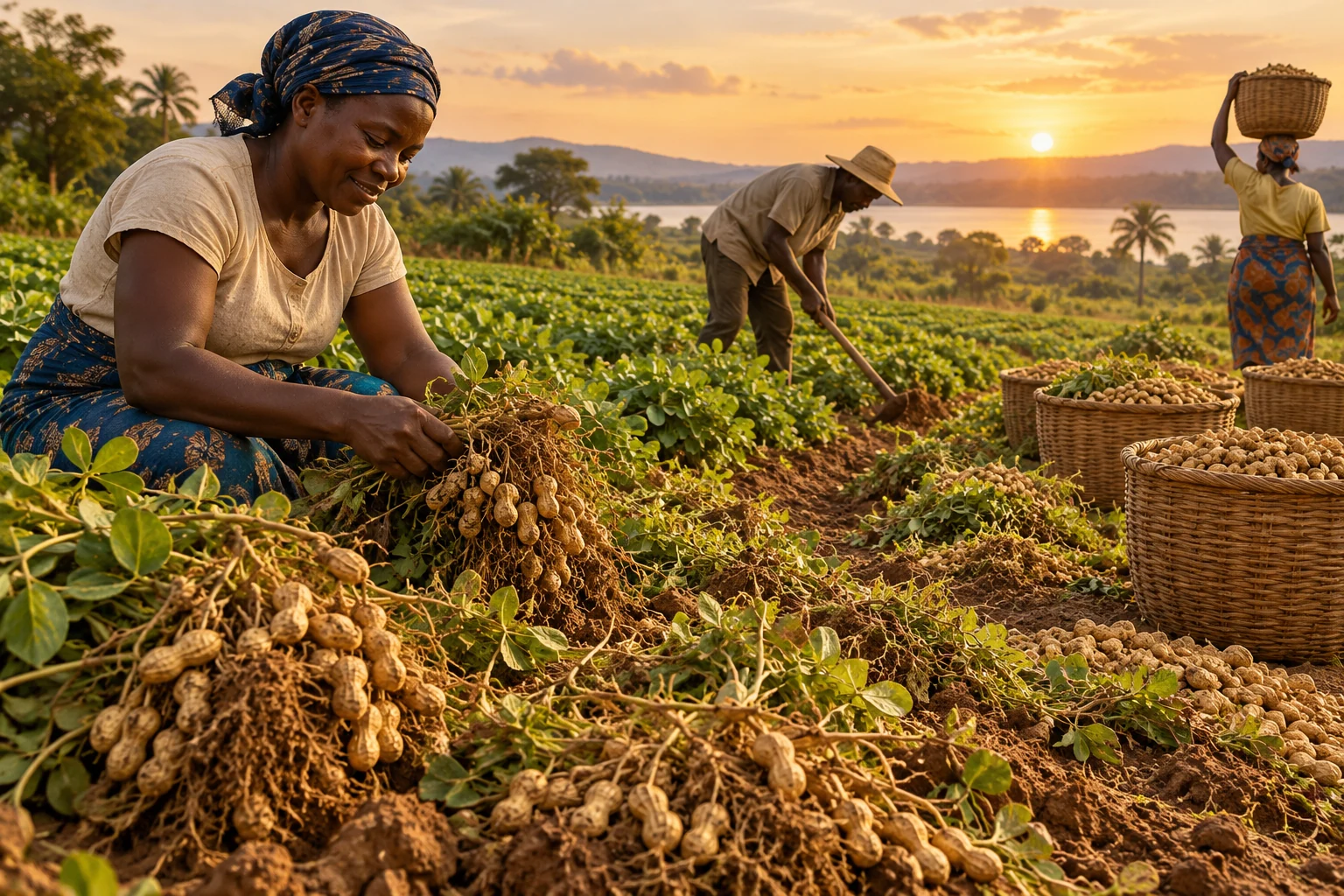
A community in Imalé lives by growing and trading peanuts. Its people cease attending to Shangó and Orisha Oko, named as patrons of the trade. Crops fail and hardship spreads, prompting them to consult Orunmila. They restore their religious acknowledgments, and the account describes a more abundant harvest. Economic continuity is presented as dependent on relationships the traders had begun to regard as unnecessary.
The story’s divine causation belongs to its religious world and should not be used to explain actual crop failure or blame suffering communities. Its analytical value is the forgetting made possible by routine success: repeated benefit can conceal the relationships and conditions that sustain it. The community acts together, so restoration is presented as a shared responsibility rather than one exceptional person’s achievement.
Narrative setting: Cuban/Lukumí narrative in the accounts considered here; no individual author established for this passage.
A prince enters another person’s garden
A king dismisses a warning because he considers his power sufficient. His son then enters a private yard and climbs a fruit tree without permission, becoming unable to leave. A servant follows and is similarly held. The king asks permission to enter but sits without asking and is caught too. The owner demands land for releasing the others and the crown for releasing the king, stripping royal confidence of practical protection.
The initial trespass makes permission significant, but the owner’s escalating demands are coercive and disproportionate. The narrative should not be reduced to approval of extracting a kingdom for a minor breach. It offers a difficult picture of two powers: inherited rank that presumes access and localized expertise that exploits dependence. Both need scrutiny when discussing the difference between respecting boundaries and profiting from another person’s inability to leave.
Narrative setting: Cuban/Lukumí narrative in the accounts considered here; no individual author established for this passage.
Òrúnmìlà and Olódùmarè face Ajogún at the doorway
Ajogún surround Òrúnmìlà and Olódùmarè, whose knowledge of the world is explicitly affirmed. Olódùmarè calls attention to the hostile presence at their doorway, and Òrúnmìlà declares that they can overcome it. They make a sacred offering to Ifá and defeat the adversarial powers. Òrúnmìlà then sings in an Ìjàsì exchange that greets diviners and celebrates the driving away of death. A recurring image presents a great river flowing onward rather than backward. The prose applies the narrative to an approaching ordeal despite a favorable consultation. Its represented victory belongs to a sacred encounter, not a dated conflict or a human military campaign.
The divine protagonists are not made powerless by the presence of a threat. The account emphasizes their knowledge and shows them acting through the sacred relationship that the consultation directs. Their response therefore cannot be reduced to uncertainty overcome through positive thinking. Ajogún are adversarial powers within the religious world represented, and the victory concerns their effective removal. The doorway makes proximity concrete: danger is close enough to be announced as present at the threshold. The onward river image accompanies the successful outcome but does not establish that every divine or human process is irreversible.
A contemporary analysis can consider preparation for trials even when an initial answer is encouraging, which the prose explicitly anticipates. It should avoid turning the scene into a universal promise that no adversity can reach a faithful person. The passage is instead a particular account of disclosed danger, responsive sacred exchange, and acknowledged victory, with Òrúnmìlà’s performance carrying the result into a community of diviners.
Narrative witness and setting: African Ifá verse in the explicitly named Ayo Salami division, transmitted with Yoruba text and a Spanish rendering in the compilation.
Mother Earth receives the rain that threatens to drown her
The previous year’s rain vows to submerge Earth. Mother Earth gathers resources and consults her priests about the declared threat. They tell her that it will not achieve its purpose and advise a sacred response. She offers extensively, and the verse emphasizes the completeness of her response. When rain falls repeatedly, Earth drains or absorbs it rather than being overcome; the ending says the rain is swallowed by her. She praises her diviners. The prose frames the episode through proposals whose correctness will be established. No named flood, human settlement, or geographical site is supplied, and the verse gives no measured account of water movement.
Rain’s aggressive intention is part of the narrated sacred world, while Earth’s capacity to receive it becomes the form of her victory. The account reverses the direction of domination: what arrives intending to engulf is itself taken in. This makes a more specific interpretation possible than a vague triumph of resilience. Mother Earth does not merely declare herself unaffected; she consults, gathers resources, responds, and then manifests a different relation to the incoming force. Her abundant offering is explicit, but it should not be converted into a universal tariff or set against another sign’s limited offering as proof that sacred efficacy is purchased by volume.
The account gives a particular complete response within a particular confrontation. Contemporary reflection can examine receiving pressure without being defined by its stated intention. That is an interpretive analogy, not hydrological science or advice to ignore flood danger. The source’s personified rain and Earth remain agents whose actions take place inside a divinatory explanation of protection.
Narrative witness and setting: African Ifá verse in the explicitly named Ayo Salami division, transmitted with Yoruba text and a Spanish rendering in the compilation.
What was born in this Odù
“Born” can name an explicit traditional origin association or what emerges through a story: a capacity, relationship, practice or order of life. Interpretations drawn from a narrative are labelled below, so their basis remains clear.
Facial cosmetics
Selected traditional source association.
The sole explicit origin associates women’s facial painting with this sign. The selected excerpts do not establish why, so the association is kept local without inventing a history of cosmetics or a universal gender rule.
Permission brought into the foreground
Contemporary interpretation from the selected myth.
As a contemporary interpretation, the garden episode makes permission newly visible where royal rank had obscured ordinary boundaries. This is not a traditional origin of property rights, nor approval of the owner’s disproportionate and coercive demands.
Correlations to life dimensions
These questions bring the selected stories into contemporary life. They are interpretive invitations for study.
Work and resources
The merchants’ success rests on cultivation and trade functioning together. The narrative prompts attention to relationships and ecological conditions that become easy to neglect when a business repeatedly produces enough to live on. The community trades the same crop that sustains its households.
Reflect: Which sustaining condition has become invisible because it has worked for so long?
Relationships and family
The prince’s conduct brings a servant and parent into dependence. Family status does not eliminate the need to learn consent around other people’s spaces and possessions, even when the later penalty is unjust. The servant enters without asking while trying to recover the prince.
Reflect: What boundaries should be understood before somebody acts in the family’s name?
Character and inner life
The king treats power as evidence that a warning cannot apply to him. The garden reverses that assumption by placing him in a setting where someone else controls the immediate terms. The king invokes power before encountering the garden’s different authority.
Reflect: Where am I assuming my status will protect me from ordinary limits?
Community and responsibility
The garden owner’s leverage grows because the visitors cannot withdraw. The story supports examining whether a demand restores a boundary or takes advantage of captivity to obtain an excessive benefit. The final demand takes the crown rather than merely restoring permission.
Reflect: What would a proportionate remedy look like if both parties could leave freely?
A deeper reading of the sacred relationships
A favorable answer still calls for sacred response
The first prose application explicitly combines an encouraging answer with an approaching ordeal and the need to respond. Mother Earth likewise receives assurance before making her complete offering. Within this religious logic, affirmation is not an excuse to detach the outcome from the relationship that discloses and supports it. The divine pair’s knowledge does not cancel action, and Earth’s promised preservation does not make her consultation meaningless. An article can explain that structure without promising immunity from danger to readers. It should preserve the effective relationship to Ifá inside the accounts, while distinguishing a narrated victory from an unlimited statement about every believer’s future or every circumstance in which adversity occurs.
The form of arrival does not determine the final relation
Ajogún arrive as encircling adversaries, and rain arrives with a vow to engulf. Neither declared intention becomes the final outcome. The divine pair drives hostile powers away, whereas Earth receives and absorbs the threat. These are distinct ways of prevailing: expulsion is not the same as incorporation. The earlier merchants’ dependence on sustaining sacred relationships and the prince’s intrusion into a garden add other forms of approach whose consequences depend on what an entrant recognizes. An analytical comparison can therefore trace thresholds and arrivals without asserting that every unwelcome presence should be treated identically. The account’s actual mechanism determines whether boundary, reception, acknowledgment, or changed conduct becomes central to interpretation.
Images of water carry different narrative work
The onward river accompanies the divine pair’s victory, while hostile rain becomes the substance Earth can absorb. Their common material does not make them the same image. The first emphasizes directed continuance in a praise context; the second stages a reversal of intended engulfment. The article should not conflate river, rain, and ocean into a single aquatic symbolism unsupported by the passages. Nor should it add a deity of water simply because water appears. Careful distinction allows the imagery to remain strong and particular. The religious agents actually named are the divine pair, Ajogún, Mother Earth, rain, priests, and Ifá; other familiar sacred figures are unnecessary to complete the interpretation.
Questions that deepen the study
Does the Ajogún scene imply that divine knowledge eliminates the need to act?
The account does the opposite. It explicitly affirms the protagonists’ knowledge, announces the danger at their doorway, and represents their sacred response before victory. Knowledge and action belong together in its religious explanation. An article should therefore avoid translating their confidence into passive certainty that events will solve themselves. The same structure also limits a modern maxim about preparation: the source is not simply a planning lesson, because its adversarial powers and sacred exchange remain real within the tradition. The comparison can show how an encouraging consultation includes responsibility while keeping the represented divine encounter distinct from a prediction about every reader’s challenges.
Is Mother Earth’s absorption of rain a scientific flood account?
The passage personifies rain as a declared enemy and Earth as a consulting sacred client. Its outcome is represented as protection through her complete response, expressed through drainage, absorption, and the reversal of intended engulfment. It supplies neither measurements nor a geographical event that would establish a scientific explanation. The article can report the material imagery accurately while retaining its narrative register. Contemporary readers may draw an analogy concerning a threat whose arrival does not determine its outcome, but that analogy must not become advice to disregard actual flood risk. The religious account explains this represented confrontation; it does not substitute for evidence about present environmental conditions.
Does the second title’s proposal framing fully explain the Earth story?
The prose introduces competing suggestions and says that the client’s proposal will prove correct, but the verse itself dramatizes rain’s threat and Earth’s response. A study can report that framing while not inventing a council meeting or a named human proposer inside the narrative. The actual sequence concerns a declared danger, consultation, complete offering, absorption, and praise. The collection also repeats an A label where the editorial title calls this passage B; that internal lettering inconsistency does not change the sign, but it should remain a provenance note. The episode’s substance is securely present without reconstructing a missing debate to make title and narrative correspond more neatly.
What the four narratives reveal together
The earlier merchants forget sustaining relationships, and the prince’s entry into another person’s garden reveals the cost of taking rank as sufficient entitlement. The African verses approach responsibility from another direction: even a favorable revelation and affirmed knowledge accompany an active sacred response. Òrúnmìlà and Olódùmarè expel Ajogún, while Mother Earth receives the rain that intended to engulf her. Their distinct victories prevent protection from becoming one universal technique. Together the four stories allow a study of entry, sustaining exchange, threatened boundaries, and the consequences of acknowledgment or its absence.
The religious explanation remains explicit where Ifá’s disclosed response enables the represented outcome. Contemporary reflection can compare preparation and the limits of an aggressor’s intention without replacing sacred agents with abstractions or treating the water imagery as scientific proof. The internal lettering inconsistency and the proposal framing’s distance from the verse remain visible textual limits.
Living with this Odù
A continuing life or initiatory relationship
A received life relationship with Òtúrúpòn Òyèkú can make permission and sustaining relation recurring tests of standing. The Imalé traders begin treating their patrons as unnecessary, while the royal household assumes rank can substitute for the owner's consent. The Ajogún doorway verse supplies a different problem: knowledge and a favorable relation do not mean that no ordeal approaches. Mother Earth's response then preserves the capacity to receive a declared threat without being submerged, within its particular sacred account. Over time, character may develop through acknowledging the relations an established livelihood still needs, and distinguishing confidence from entitlement to enter another's space.
The inward temptation can include embarrassment at requesting permission or certainty that past prosperity has made ongoing acknowledgment redundant. These witnesses do not explain actual crop failure, paralysis or flooding. Shangó, Orisha Oko, Olódùmarè, Ifá and the living earth remain agents in their respective settings. Carrying the sign can invite changing questions about what one may use, what a boundary protects and how a threatened relation can respond. Power becomes more dependable when it can recognize consent and sustaining conditions without pretending that good standing abolishes every future difficulty.
A particular consultation and its question
In consultation, the actual question can distinguish neglected continuity, unauthorized access, approaching opposition and the capacity to receive pressure. The garden narrative asks which permission was sought and which was assumed; royal rank does not answer that question. The traders' account asks what relation has been treated as finished when the livelihood still depends upon it. The doorway verse preserves an ordeal within a sacred world whose protagonists are not ignorant or simply unprepared. Mother Earth's extensive response and the rain's declared intent belong to another religious configuration, not a scientific account of absorption or a promise about a real flood.
A practitioner should not infer that a client has lost patronage or entered a forbidden place. Contemporary reflection can examine what access has actually been granted, what continued acknowledgment means in the received tradition and whether a favorable result has been confused with exemption from response. A situational consultation is not a permanent identity of obstruction. The narratives can clarify the terms of standing and threat while leaving the actual religious determination to the reading, rather than converting rank, prosperity or confidence into proof that the present path is secure.
Constructive and adverse possibilities
Constructive movement can include neglected acknowledgments being restored, adversarial powers being met through Ifá and a threatened earth retaining its capacity to receive rain. Adverse movement appears where a profitable relation is treated as dispensable or authority enters another's space without consent. The garden owner's severe demands remain a narrative sanction, not a model of proportionate remedy. Iré and osogbo require the actual context, and a favorable consultation need not mean no ordeal is present. The witnesses distinguish permission, patronage, threat and capacity rather than gathering every difficulty beneath one explanation.
Contemporary reflection can examine boundaries and continuing dependence while preserving sacred agency. It cannot turn the crop, bodily or elemental outcomes into diagnoses, forecasts or evidence that present hardship proves an omission by the person experiencing it. The garden’s boundary remains consequential even before anyone is trapped.
An illustrative situation in everyday life
Hypothetically, a successful cooperative assumes that a neighbor's land remains available because it has crossed it for years. A new project increases use without asking, and the neighbor objects. Meanwhile, the cooperative has stopped maintaining the relationships and shared work on which its trade depends. The garden and merchants' structures distinguish permission from habit and prosperity from continued support. The doorway verse adds that a favorable position does not remove the need to respond to a real challenge. This is an illustrative interpretation, not a prediction of crop failure or punishment. The members feel their history entitles them to proceed. The external question is which rights were actually granted and what sustaining relations the new undertaking still requires.
Sources and reading context
The first two narrative witnesses
The selected narratives are Cuban-labelled Spanish. Imalé is retained as the named setting, not assigned a broader ethnic provenance without evidence. One explicit origin is available. Crop failure, paralysis, and release remain mythic plot conditions rather than diagnoses, forecasts, or endorsed sanctions. Added emergence motifs are explicitly distinguished from traditional origins.
Narrative motifs are summarized independently. The life-dimension reflections are contemporary interpretation. How these reference studies are built explains the wider source approach and the distinction between a reference article and personal divination.
Additional named witnesses
- Ayo Salami. Explicit Òtúrúpòn Òyèkú division supplies the divine pair and Mother Earth/rain. The second title is B, but the inner Spanish label repeats A; the sign itself remains unchanged.
The second passage has an internal A/B lettering inconsistency and a prose proposal framing not enacted as a debate in the verse. No scientific flood model, historical conflict, universal immunity, or Brazilian transmission is inferred.
Bibliographic identification
- Ayo Salami. Ifá: A Complete Divination. Lagos: NIDD, 2002 catalogue record. Library catalogue record. Bibliographic identification of the named author and work; the edition behind the transmitted account remains to be matched.
Read the source method and wider scholarly context.
The catalogue links identify published works and their authors. They are separate from proof of an individual episode’s wording or attribution. Contemporary comparisons and the synthesis above are editorial interpretation. The author’s books and Academy companions below provide further study; their sales links are separate from the source references.